Illustrations
Browse all11 images extracted
This diamond-shaped emblem features a complex, stylized symbol, likely representing a monad or a specific Pythagorean concept. Set against a blue field, the gold-stamped design serves as a visual focal point for Fabre d'Olivet's interpretation of the 'Golden Verses', signaling the work's esoteric and philosophical nature.
This illustration depicts the 'Akephalos' or headless deity, a powerful figure frequently invoked in ancient magical rituals for protection, exorcism, or divination. The figure's body and the surrounding space are inscribed with magical names and symbols, demonstrating the essential role of visual diagrams in the performance of Greco-Egyptian magic.
This illustration reproduces a hematite seal, formerly in the Berlin Museum, depicting a crucified figure identified by the Greek inscription as 'Orpheus Bakkikos.' It serves as a compelling example of religious syncretism in late antiquity, where the figure of the mythical musician Orpheus is conflated with the iconography of the crucified Christ. The celestial symbols of seven stars and a crescent moon above the cross highlight the mystical and cosmic significance attributed to this hybrid deity.
This plate presents eighteen numbered geometric diagrams designed to accompany and clarify the mathematical arguments in Plato's works. The figures illustrate fundamental concepts of proportion and spatial relationships, which Plato considered essential for the soul's journey toward understanding the world of Forms.
This circular portrait depicts Antoine Fabre d'Olivet, the French author and polymath known for his esoteric interpretations of ancient texts. Based on a 1799 miniature by Jean-Baptiste Jacques Augustin, the image captures the intellectual intensity of the man who sought to revive the 'Golden Verses of Pythagoras' for a modern audience.
This circular printer's mark for the Weidmannsche Buchhandlung in Berlin depicts a seated scholar intently reading a book. Such devices were used by publishers to establish brand identity and signify the intellectual quality of their publications, here appearing on the title page of Otto Kern's 'Orphicorum Fragmenta' (1922).

This page displays a 'pterygoma' or wing-shaped magical arrangement of Greek letters, a characteristic feature of ancient magical papyri. The diminishing lines of text were intended to focus or dissipate magical energy, serving as a visual component of a spoken or written incantation.

This detailed ground plan depicts the Sanctuary of the Mistress at Lycosura, an important religious site in ancient Arcadia. The illustration clearly delineates the layout of the temple, the long colonnade, and various altars dedicated to Demeter, the Mistress, and the Great Mother, providing a crucial spatial context for understanding the sanctuary's ritual functions.
Visual Art
Browse all art →26 works of visual art in this collection
 mythological
The Satyr Family
Albrecht Dürer
A male satyr stands playing a shawm while a female satyr reclines on a fur-covered rock, nursing an infant.
 sculpture
Bronze bust of Minerva
Anonymous
A bronze bust of the Roman goddess Minerva, identifiable by her characteristic Corinthian-style helmet.
 sculpture
Bronze statuette of Hermes
Anonymous
A bronze statuette of the god Hermes standing in a contrapposto pose, wearing a chlamys (cloak) and winged sandals.
 object
Chalcedony winged head of Mercury (Hermes)
Anonymous
A miniature sculpted head of the god Mercury (Hermes) carved from chalcedony.
 object
Glass cameo: Apollo
Anonymous
This opaque white glass cameo depicts the god Apollo standing in profile.
 sculpture
Limestone votive relief fragment of a seated deity with an inscribed dedication to Apollo
Anonymous
A limestone votive fragment depicting the profile of a seated deity, likely Apollo, accompanied by an incised dedicatory inscription in the Cypriot Syllabary.
 sculpture
Marble column from the Temple of Artemis at Sardis
Anonymous
A monumental Ionic column capital and base from the Temple of Artemis at Sardis.
 sculpture
Marble head of Apollo
Anonymous
A marble sculpture depicting the head of the deity Apollo, characterized by his classicized, youthful features and stylized hairstyle.
 sculpture
Marble head of Athena
Anonymous
A marble head of the Greek goddess Athena, depicted wearing a floral stephane (diadem).
 sculpture
Marble relief with Hermes
Anonymous
A marble relief depicting the god Hermes in profile, holding a caduceus.
 sculpture
Marble statue of Hermes
Anonymous
A headless and limbless marble torso representing the classical god Hermes.
 sculpture
Marble statue of the so-called Apollo Lykeios
Anonymous
A fragmentary marble torso of the Greek god Apollo, shown in a relaxed standing pose with a weight-bearing leg.
 sculpture
Marble torso of the so-called Apollo Lykeios
Anonymous
A marble torso depicting the idealized, youthful male anatomy of Apollo, specifically in the style of the 'Apollo Lykeios' type.
 sculpture
Right corner of a marble sarcophagus with the myth of Apollo and the satyr Marsyas
Anonymous
A fragmentary marble sarcophagus relief depicting the punishment of the satyr Marsyas by the god Apollo.
 sculpture
Right corner of a sarcophagus with the myth of the musical contest between the satyr Marsyas and the god Apollo
Anonymous
A fragmentary marble relief depicting the myth of the musical contest between the god Apollo and the satyr Marsyas, showing Apollo holding a lyre and the flayed or bound Marsyas.
Hesiod's Theogony, the Homeric Hymns, and Works and Days — the theology of ancient Greece.
Essential Reading
The foundational texts of this tradition
Works and Days, Theogony, and Theocritus's Idylls
Hesiod, 1495
Contains Hesiod's 'Works and Days' and 'Theogony,' central texts for ancient Greek theology.
Orphic and Homeric Hymns
Orpheus; Homer; Callimachus, 1560
Includes the Homeric Hymns, a core text, and the significant Orphic Hymns for ancient Greek religion.
The Homeric Hymns (Allen & Sikes Critical Edition)
Homer, 1904
A critical edition of the Homeric Hymns, a core text for ancient Greek religion.
Important Works
Significant texts that deepen understanding
Works and Days with the Commentary of Proclus
Hesiod, 1983First Translation
Contains Hesiod's 'Works and Days' with a significant Neoplatonic commentary, directly engaging with a core text.
John Tzetzes' Commentary on Hesiod's Works and Days
John Tzetzes, 1465
Provides scholia on Hesiod's 'Works and Days,' offering valuable insights into the reception and interpretation of a foundational text.
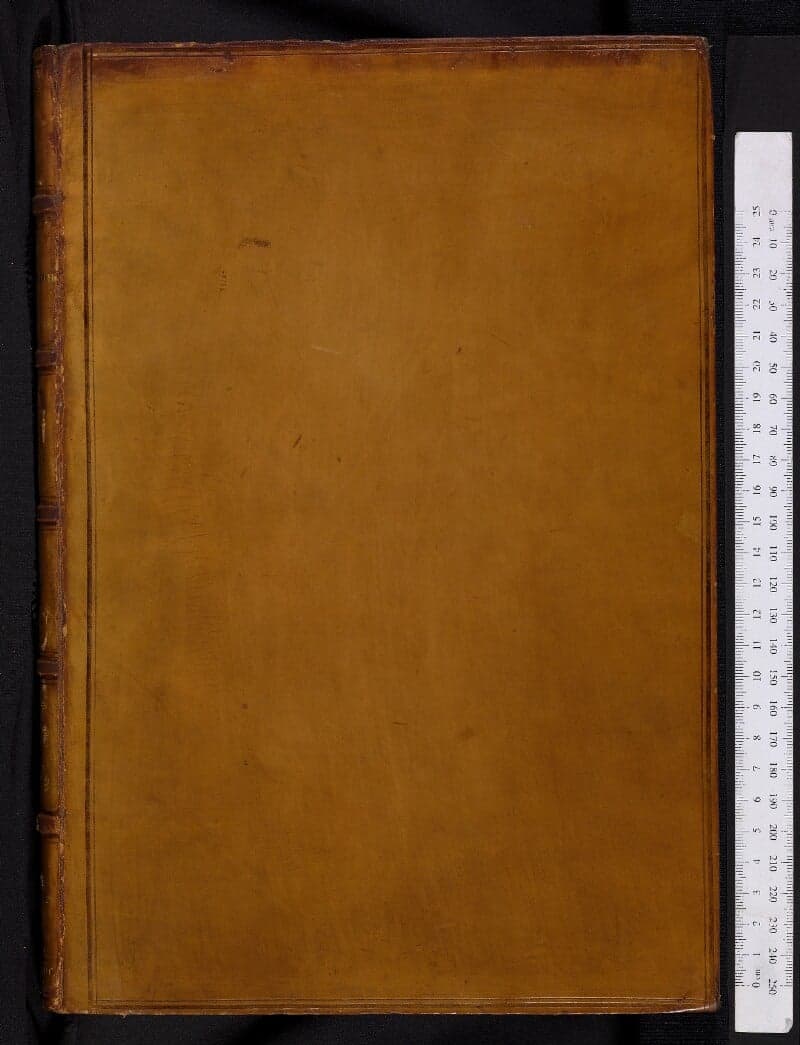
Parallel Lives
Plutarch, 1460
A manuscript of Plutarch, whose works provide important insights into ancient Greek religious beliefs and practices.
Description of Greece
Pausanias, 1491
Pausanias's 'Description of Greece' is an invaluable source for understanding the sites, cults, and myths of ancient Greek religion.

Pausanias's Description of Greece, Vol. 4 (Frazer)
Pausanias; J.G. Frazer (trans.), 1898
A volume of Pausanias's 'Description of Greece,' offering vital information on the religious landscape of ancient Greece.
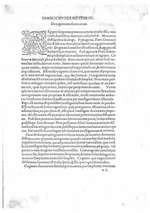
On the Mysteries of the Egyptians
Iamblichus; Proclus; Porphyry; trans. Marsilio Ficino, 1497First from Latin
A foundational Neoplatonic text that explores ancient religious mysteries, rituals, and the nature of the divine, including Greek traditions.