Illustrations
Browse all60 images extracted from 9 books
This woodcut illustration, titled 'Qin Xiao Rong Tu,' depicts a small war chariot from the state of Qin, as referenced in the Classic of Poetry (Shijing). The scene meticulously details the four armored horses, the driver, and various military accoutrements, providing a visual interpretation of ancient Chinese ritual and military life as understood during the Ming Dynasty.
This refined engraving portrays a scholar surrounded by the tools of his trade, emphasizing the connection between physical exploration and literary knowledge. The inclusion of the terrestrial globe and the surrounding volumes serves as a visual testament to the intellectual ambitions of the early modern period.
This refined engraving captures a scholar in his study, surrounded by the tools of intellectual inquiry. The presence of the globe and the open book emphasizes the period's dedication to the synthesis of geographical knowledge and classical learning.
This landmark engraving from 1687 presents Confucius as the 'Prince of Chinese Philosophers' standing in the Imperial Academy. Surrounded by the classic texts of his tradition and diligent scholars, the image reflects the Jesuit mission's effort to translate and transmit Chinese wisdom to a European audience. The blend of Western artistic style with Chinese motifs illustrates the early modern period's burgeoning intellectual curiosity regarding the East.
A formal portrait of the Ming dynasty philosopher Wang Yang-ming, depicted in the traditional attire of a scholar-official. He is shown wearing a distinctive ceremonial cap and holding a ritual tablet (hu), symbols of his status and intellectual authority. This image is a reproduction from a Chinese edition of his works, serving as a 'transmitted picture' to connect readers with the historical teacher.
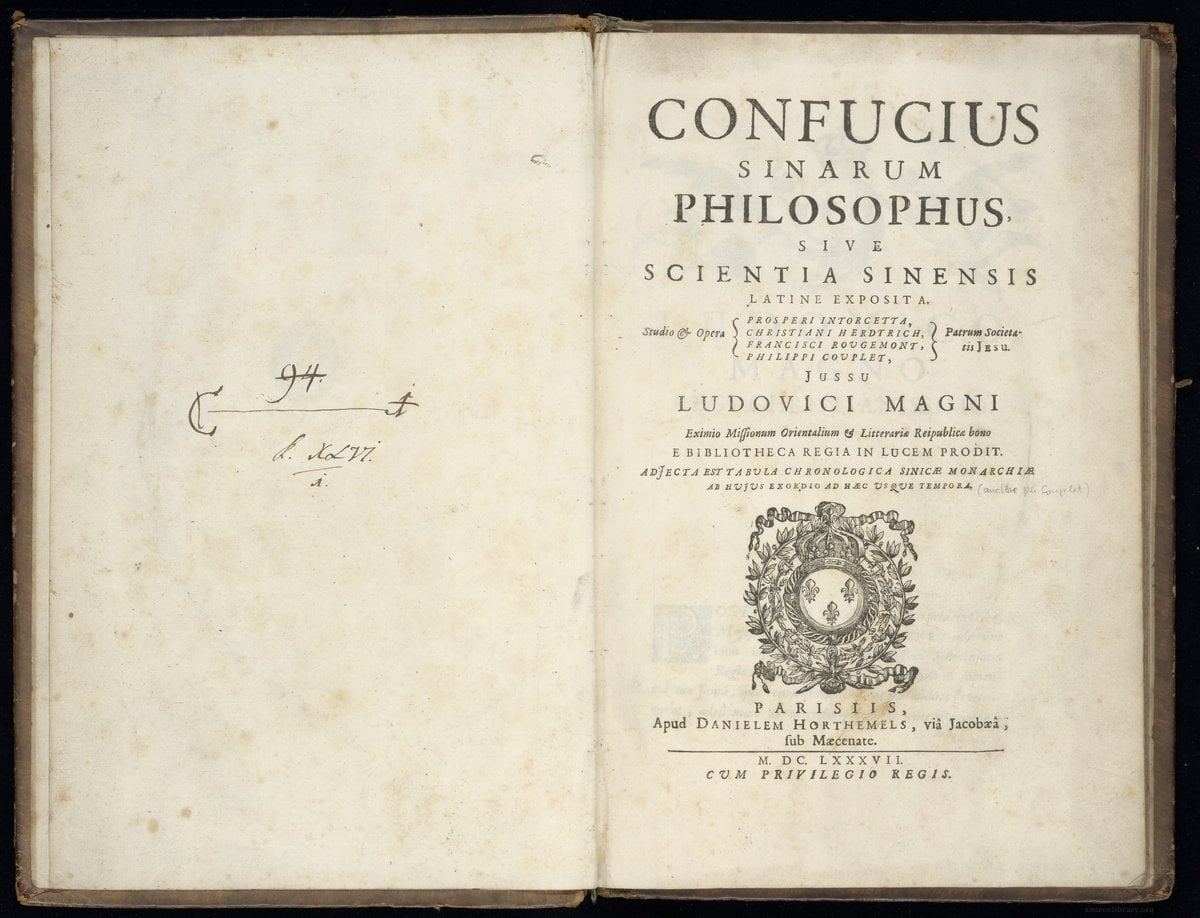
This 1687 engraving from 'Confucius Sinarum Philosophus' is one of the most influential early European depictions of Confucius. Shown as a venerable sage within the 'Gymnasium Imperii' (Imperial Academy), he is surrounded by the foundational texts of Chinese philosophy, reflecting the Jesuit missionaries' project to translate and introduce Confucian thought to the Western world.

This finely detailed engraving captures a scholar in his private study, surrounded by the tools of his trade, including globes and open volumes. The composition emphasizes the intellectual rigor and contemplative nature of the early modern academic, serving as a testament to the period's reverence for knowledge and discovery.

This evocative woodcut captures a traveler pausing in a rural landscape, his gaze directed toward a distant, fortified city. The stark lines and expressive posture of the figures exemplify the narrative power of early Renaissance printmaking, inviting the viewer to contemplate the themes of journey and destination.

This detailed engraving depicts the Chinese philosopher Confucius standing within the 'Gymnasium Imperii,' or Imperial Academy. He is shown in traditional robes holding a ceremonial tablet, surrounded by an extensive library that symbolizes the depth of Confucian learning. This image, from Philippe Couplet's 'Confucius Sinarum Philosophus' (1687), represents a significant early European attempt to visualize and honor Chinese intellectual traditions for a Western audience.