Illustrations
Browse all26 images extracted from 10 books
This ex libris plate features the stoic motto 'Otium sine litteris mors est' (Leisure without literature is death), attributed to Seneca. The composition is framed by putti and scholarly instruments, anchored by the iconic Aldine dolphin-and-anchor device, symbolizing the vital connection between classical learning and the preservation of knowledge.
This woodcut depicts the biblical story of Tobias and the Angel, where the Archangel Raphael provides guidance and protection to the young Tobias on his journey. Such imagery was frequently employed in early modern printing to symbolize divine oversight, even in secular works like this grammar by Aldus Manutius.
This central panel, stamped into the pigskin binding, illustrates the biblical story of Jael and Sisera from the Book of Judges. Jael is shown at the moment she kills the sleeping enemy general Sisera by driving a tent peg through his head, an act celebrated in the Latin motto below as the destruction of God's enemies.
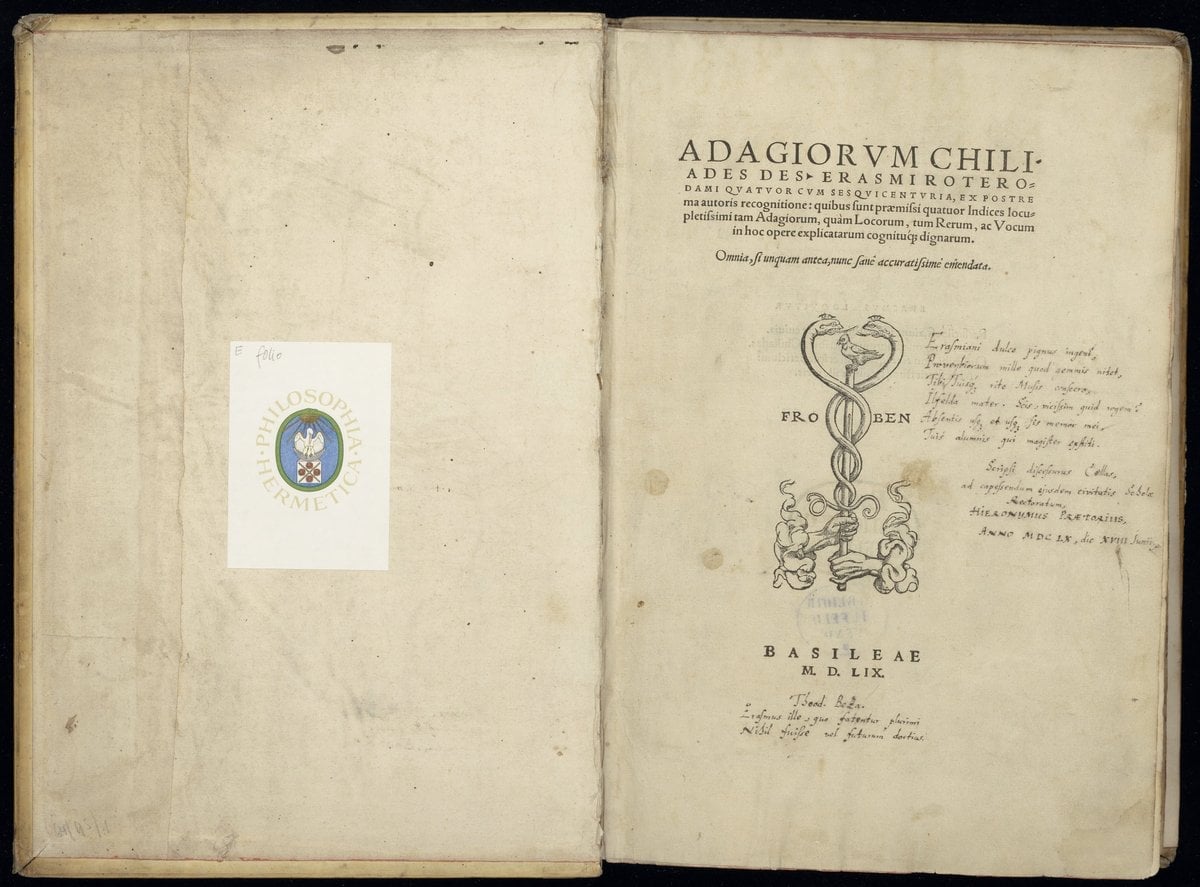
This circular emblem, titled 'PHILOSOPHIA HERMETICA,' depicts the 'pelican in her piety,' a powerful alchemical symbol of sacrifice and the transformative process of the Great Work. Below the pelican, a shield bearing four roses and a cross further emphasizes the Rosicrucian or Hermetic themes of spiritual rebirth and the union of opposites.
This intricate engraving from Justus Lipsius's 'Saturnalium Sermonum Libri Duo' depicts the brutal reality of Roman gladiatorial games. The scene captures various classes of gladiators in mid-combat, surrounded by the architectural elements of the arena and a crowded gallery of spectators, serving as a visual reconstruction of ancient Roman customs for the 16th-century humanist reader.
This formal engraved portrait depicts Johann Jakob Brucker (1696–1770), the German historian of philosophy and author of the monumental 'Historia Critica Philosophiae'. He is presented as a dignified scholar in a wig and academic robes, his hand resting on a book to signify his erudition and intellectual authority. The elaborate frame and pedestal, featuring his coat of arms and Latin titles, underscore his prominent status within the 18th-century Republic of Letters.

This woodcut emblem depicts the Roman goddess Minerva, identified by her traditional attributes: a spear, a helmet, and the Aegis shield bearing the head of Medusa. Accompanied by her sacred owl, she represents wisdom and strategic warfare, embodying the intellectual spirit of Theodore Gaza's work on the Attic calendar.

This intricate engraving serves as a symbolic centerpiece for the title page of Erasmus's 'Opera Omnia' (1705). It depicts the scholar's portrait atop a classical monument, surrounded by allegorical figures and crowned by putti, signifying the enduring triumph of his intellectual contributions. The entire scene is encircled by an ouroboros, a serpent devouring its own tail, representing eternity and the cyclical nature of knowledge.

This frontispiece for Justus Lipsius's work on Roman greatness depicts a personified Roma standing triumphantly within an architectural arch. She holds a shield bearing the book's title and a small figure of Victory, symbolizing the enduring power and cultural reach of the Roman Empire. The inclusion of a globe at her feet and fasces in the background further emphasizes Rome's global dominance and legal authority.
The humanist project of recovering, editing, and translating ancient texts. From Petrarch's rediscovery of Cicero to Erasmus's Greek New Testament, these scholars rebuilt European intellectual life on classical foundations.
All Books
Browse Full Catalog→117 books in this collection