

Illuminati & Radical Orders
The Bavarian Illuminati, Asiatic Brethren, and Enlightenment-era secret orders
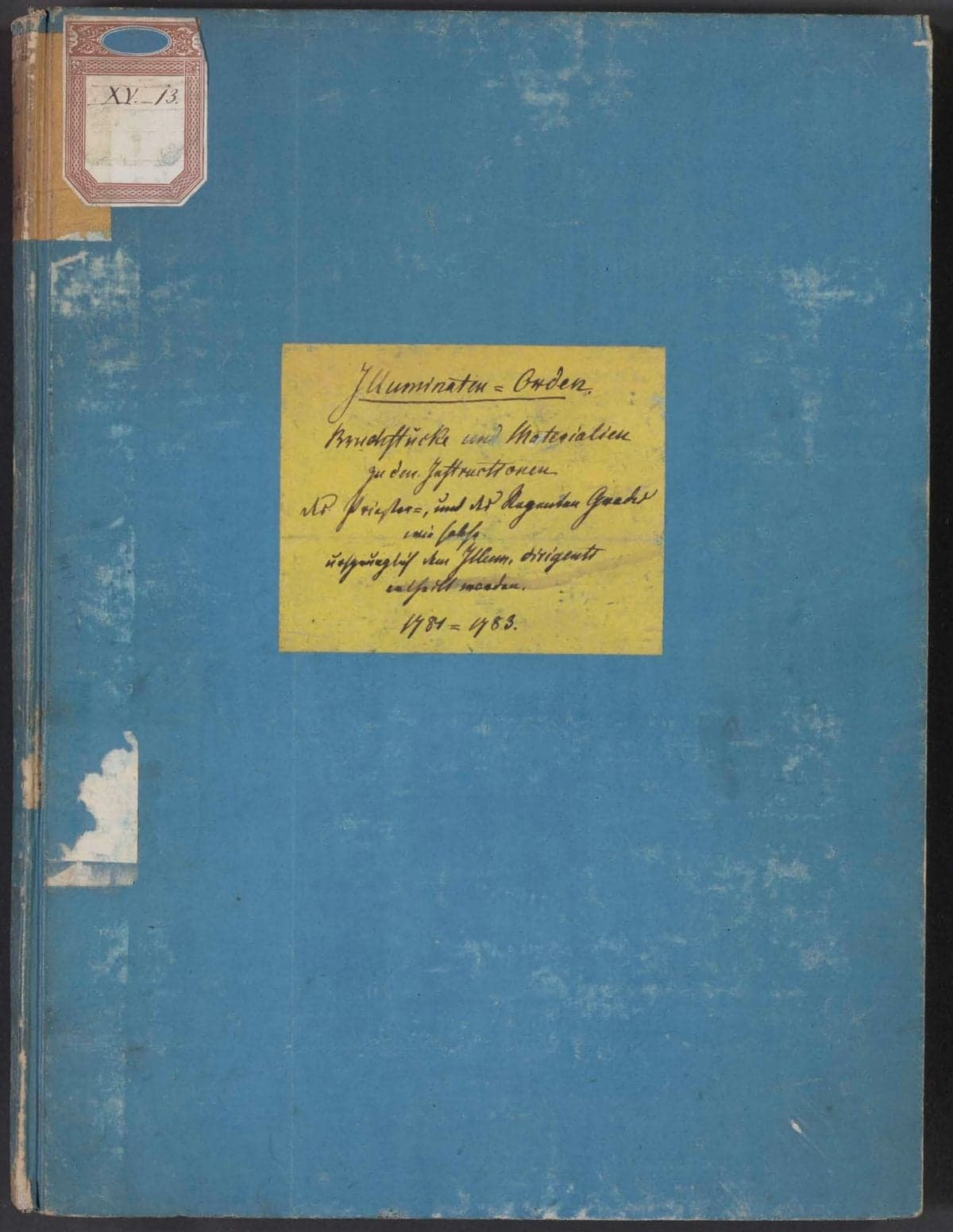
Illustrations
Browse all2 images extracted from 1 books
This hand-colored illustration depicts a venerable bearded figure, likely an allegorical representation of a high-ranking initiate or a biblical patriarch, seated upon clouds. He holds a red volume inscribed with Hebrew characters, flanked by a crown and a white cloth, symbols of spiritual authority and purity. The image originates from a 1785 German work concerning the instructions for higher degrees of a secret society, reflecting the rich visual language of Enlightenment-era esotericism.
This hand-colored engraving depicts a venerable figure, likely representing a sage or biblical patriarch, seated upon clouds in a celestial realm. He holds a book inscribed with Hebrew characters, symbolizing divine wisdom, while a discarded crown and a heraldic seal suggest a transition from earthly power to spiritual authority. This imagery is characteristic of the esoteric and Masonic traditions prevalent in late 18th-century Germany.
The radical secret societies of the late eighteenth century — orders that used the structures of Freemasonry for purposes that went far beyond fraternal fellowship. Adam Weishaupt's Bavarian Illuminati (founded 1776) sought nothing less than the gradual reformation of society through a hidden network of initiated members placed in positions of influence. The Asiatic Brethren (Fratres Lucis) pursued a syncretic esotericism that drew on Kabbalistic and alchemical traditions, admitting Jews and Christians to the same lodge at a time when most Masonic bodies excluded non-Christians.
These texts include internal degree rituals, organizational documents, and the correspondence of key figures like Adolph Freiherr von Knigge, whose presentation of the Illuminati Regent Degree reveals the order's ambitions with remarkable candour. The Order of the Asiatic Brothers documentation preserves the ceremonial and administrative framework of an order that combined Masonic ritual with theosophical and Kabbalistic instruction. J.J.C. Bode's biographical account provides an insider's perspective on the intersection of Illuminism and Freemasonry at the highest levels.
Essential Reading
The foundational texts of this tradition
Order of the Asiatic Brothers: Volume of Documents II
Unknown, 1790First Translation
The collected documents of the Order of the Asiatic Brothers (Fratres Lucis) — a syncretic Masonic order that combined Kabbalistic, alchemical, and Rosicrucian elements.
J.J.C. Bode: On His Life and Work as a Freemason and Illuminatus
Bode, J.J.C. (Eques a Lilio Convallium), 1794First Translation
The life and work of J.J.C. Bode — Freemason, Illuminatus, and key intermediary between the Illuminati and the Masonic establishment.
Important Works
Significant texts that deepen understanding
The Highest Symbolic Degree of True Magic
Unknown, 1796First Translation
The Highest Symbolic Degree of True Magic — an advanced degree text from the esoteric fringe of Illuminist practice.
Preparation for the Instructions of the Second and Third Main Levels
Unknown, 1785First Translation
Preparatory instructions for the second and third classes of the Illuminati — the internal educational curriculum of the order.
Order of the Asiatic Brothers
Unknown, 1832First Translation
Further documents of the Asiatic Brothers — organizational and ritual materials from this remarkable cross-confessional order.
Order of the True Ones
Unknown, 1806First Translation
The Order of the True Ones — a lesser-known radical fraternity operating alongside the better-known Illuminati.
Also Notable
Theosophy: Introduction to the First Section of the Second Main Level of the Asiatic Brethren
Unknown, 1785First Translation
Authentic Account of the Knight and Brother Initiates from Asia
Münter, Friedr., 1787First Translation
On the Admission of a Masonic Knight and Master to the First Probationary Degree
Unknown, 1780First Translation
All Books
Browse Full Catalog→30 books in this collection