


French Higher Degrees
Kloss Collection, Sections XXV–XXVI
Illustrations
Browse all9 images extracted from 6 books
This complex frontispiece illustrates the esoteric themes of high-grade Freemasonry and Rosicrucianism. It features a symbolic archway leading to an inverted triangle inscribed with 'Anima' and 'Spiritus', centered around a hexagram surrounded by the names of seven archangels, representing a path to spiritual enlightenment through secret knowledge.
This intricate engraving from a 1766 exposé on Freemasonry depicts a collection of symbols and allegorical scenes associated with the 'high grades' of the order. It features ritual objects like the seven-branched candlestick and the Masonic apron alongside complex scenes such as figures standing before a radiant triangle and a landscape strewn with bones near the river Stabuzanai. Such plates served as visual aids for initiates to contemplate the moral and philosophical lessons of their degree.
This engraving depicts a 'tableau' or tracing board for the Masonic degree of Chevalier Prince d'Orient (Knight Prince of the East). The scene illustrates key allegorical elements of the degree's ritual, including the crossing of a river filled with the remains of those who failed the trial, symbolic objects like the seven-branched candlestick, and the letters J and B representing the pillars of Solomon's Temple.
This intricate frontispiece serves as a visual summary of the book's esoteric themes, blending Masonic architecture with alchemical and kabbalistic symbolism. It depicts a path of enlightenment, from the physical archway at the base to the divine light (Lux) and the names of archangels at the summit.
This intricate engraving serves as a 'tableau' or tracing board for the Masonic degree of Chevalier Prince d'Orient (Knight of the East). It presents a dense array of symbolic motifs—including the sun and moon, architectural tools, and a celestial throne—designed to guide the initiate through the moral and philosophical lessons of the rite.
This hand-colored emblem, titled 'PHILOSOPHIA HERMETICA,' depicts the 'pelican in its piety,' a symbol of self-sacrifice and spiritual rebirth central to alchemical and Masonic thought. The image shows the pelican feeding its young with its own blood, an allegory for the transformative process of the Great Work and the dedication required of the initiate.

This detailed engraving captures the romanticized ruins of a site attributed to the Knights Templar, marked by the date 1314—the year of the order's dissolution. The inclusion of the red cross and the cryptic 'B.M.B.A.' initials highlights the enduring fascination with Templar lore within 19th-century esoteric and historical circles.

This hand-colored illustration depicts the symbolic punishment of one of the assassins of Hiram Abiff, a central narrative in the 'Elect' (Elu) degrees of Freemasonry. The severed head on a pike, accompanied by a laurel wreath and a dagger, represents the themes of justice, vengeance, and the restoration of order found in the 10th degree of the Rite of Mizraim.
Rituals and instruction for the French higher degrees — Élu, Écossais, Chevalier du Soleil, Parfait Maçon, and others. These manuscripts document the proliferation of Masonic degrees in 18th-century France, many of which were later incorporated into the Scottish Rite.
All Books
Browse Full Catalog→155 books in this collection
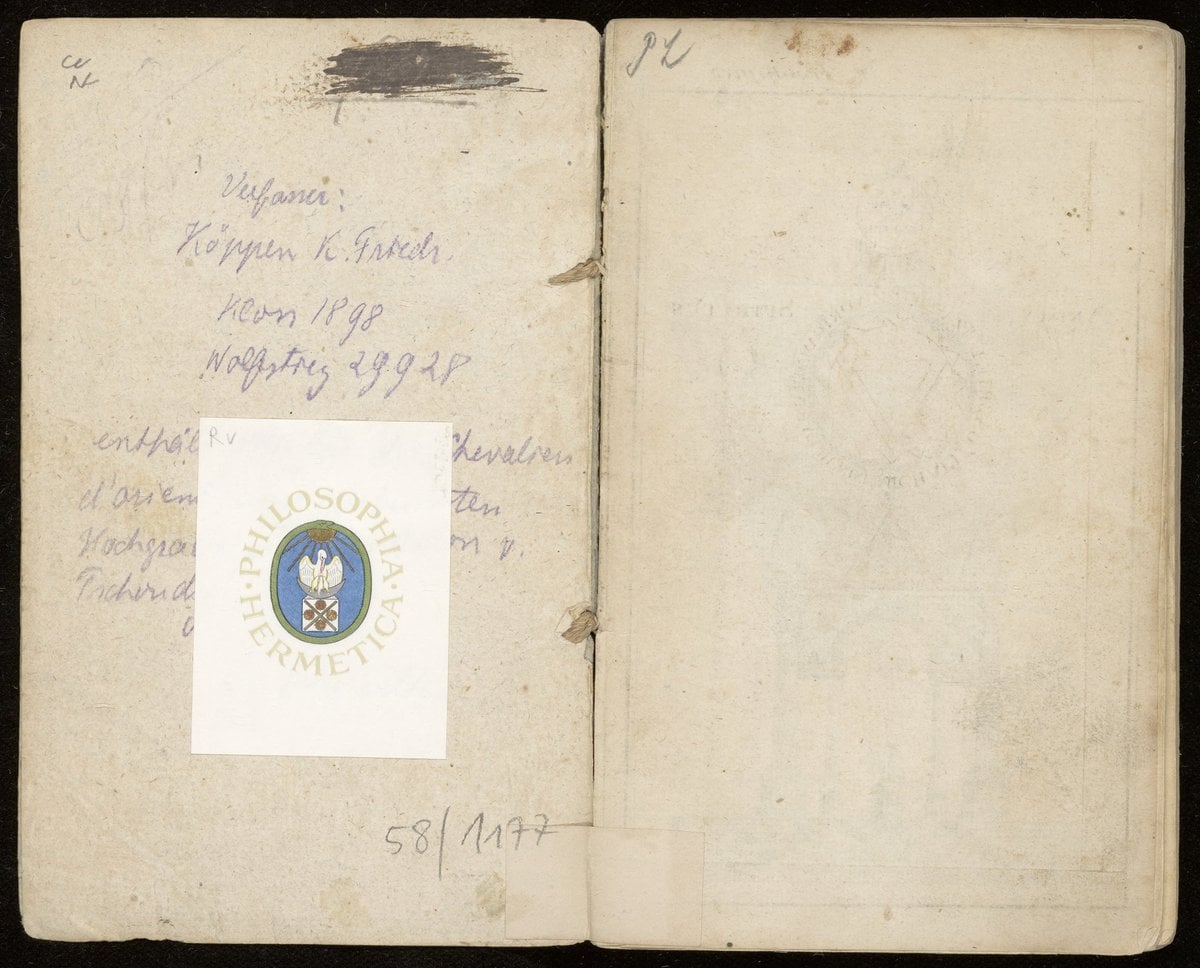
The Most Secret Mysteries of the High Degrees of Masonry Revealed
attr. Köppen, Karl Friedrich
The Most Secret Mysteries of the High Degrees of Freemasonry Revealed
attr. Köppen, Karl Friedrich
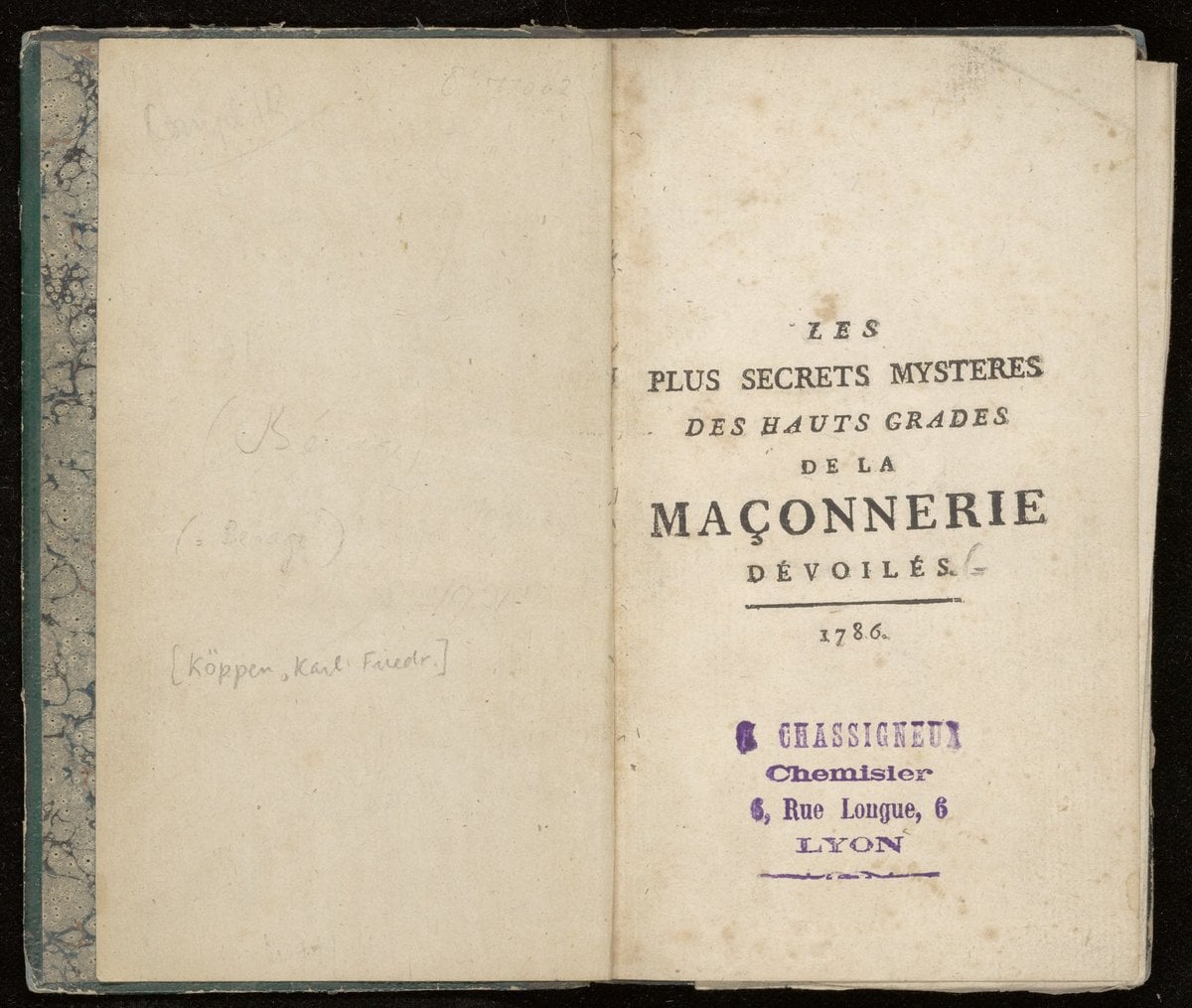
The Most Secret Mysteries of the High Degrees of Masonry Unveiled
attr. Köppen, Karl Friedrich