Russian Theosophy & Occultism
Blavatsky, Ouspensky, Gurdjieff — the Russian contribution to the Western esoteric tradition
Illustrations
Browse all11 images extracted from 5 books
This intricate engraving presents a complex esoteric emblem centered on a hexagram and an inverted triangle. It features a central human countenance flanked by lion heads, surmounted by a crowned eagle, and inscribed with the divine name 'ADONAI'. This illustration from Helena Blavatsky's 'Isis Unveiled' synthesizes various mystical traditions, including Kabbalah and Gnosticism, to represent divine emanations and spiritual hierarchy.
This emblem is the official seal of the Theosophical Society, founded in 1875. It incorporates symbols from various traditions—the Egyptian ankh, the Hindu swastika, the Jewish hexagram, and the Gnostic ouroboros—to represent the synthesis of science, religion, and philosophy.
This is the official seal of the Theosophical Society, founded in 1875. It incorporates several ancient symbols: the hexagram (interlaced triangles), the Egyptian ankh, the swastika, and the ouroboros (a serpent biting its tail), collectively representing the unity of all religions and the cyclical nature of existence.
This intricate publisher's device for J.W. Bouton features a personification of learning alongside symbols of stability and growth. The seated figure with a book and the anchor entwined with a sea monster represent the firm's commitment to scholarly pursuits and enduring quality, marking the establishment of the business in 1857.
This intricate emblem features a hexagram containing the four living creatures of the Tetramorph—the man, eagle, lion, and bull—surrounding a central human face. The word 'ADONAI,' a Hebrew name for God, is inscribed across the top, signifying the divine nature of this symbolic synthesis. This illustration from H.P. Blavatsky's 'Isis Unveiled' reflects the 19th-century synthesis of Kabbalistic, Gnostic, and Hermetic traditions.
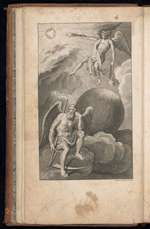
This intricate engraving serves as an allegorical frontispiece for Karl von Eckartshausen's mystical work. It depicts Father Time seated with his scythe below a celestial figure who illuminates the path toward divine truth, represented by a radiant triangle in the heavens. The composition reflects the book's central themes of uncovering the hidden secrets of nature through spiritual enlightenment and the passage of time.

This illustration depicts Ardhanarishvara, the composite androgynous form of the Hindu deities Shiva and Parvati, representing the essential unity of masculine and feminine principles. The figure is framed within a hexagram and a triangle, geometric symbols that in this context signify the intersection of the divine and the material worlds. This image reflects the 19th-century fascination with comparative mythology and the synthesis of Eastern and Western mystical traditions.

This intricate engraving serves as the title vignette for the 1804 Russian edition of Karl von Eckartshausen's 'Key to the Mysteries of Nature'. The central figure, emerging from a lyre, represents the divine harmony that links the celestial realms—symbolized by the sun and globe—with human knowledge, represented by the stack of books. The inscription 'LIRA ZARABTALAM' further emphasizes the mystical and musical themes central to Eckartshausen's esoteric philosophy.
All Books
Browse Full Catalog→13 books in this collection