Illustrations
Browse all40 images extracted
This historiated initial 'C' marks the beginning of a chapter on the science of ascending degrees in an early printed astronomical or astrological treatise. It depicts a scholar using a scientific instrument to observe the stars, reflecting the text's focus on celestial calculation and the empirical study of the heavens.
This hand-drawn diagram from a 14th-century manuscript illustrates the medieval geocentric model of the universe. It depicts concentric circles representing the celestial spheres, a fundamental concept in pre-Copernican astronomy used to explain the movement of planets and stars.
This woodcut diagram represents a 'Figura celi generalis' or a general figure of the heavens, a standard format for astrological charts in the late 15th century. It divides the celestial sphere into twelve 'houses', each associated with different aspects of life and influence, as discussed in Ptolemy's influential astrological treatise, the Quadripartitum.
This woodcut diagram illustrates principles of spherical geometry, likely related to astronomical calculations. It features a sphere with various intersecting arcs and points labeled for reference in the accompanying Latin text, demonstrating the visual aids used in early modern scientific publishing.
This historiated initial 'P' features a complex allegorical scene within its form. A winged figure and other human forms interact with a dragon-like creature, a common motif in Renaissance book illustration that blends classical and medieval imagery.
This oval seal identifies the volume as part of the 'Bibliotheca Manuscript Sloaneiana,' the vast collection of Sir Hans Sloane (1660–1753). The heraldic shield features a lion and two boars' heads, marking the book's origin in one of the foundational collections of the British Museum.

This circular stamp identifies the volume as part of the 'Bibliotheca Sloaneiana,' the vast collection of Sir Hans Sloane (1660–1753). The heraldic design features a central sword flanked by animal heads, topped by a lion passant, serving as a formal mark of ownership and provenance for one of the founding collections of the British Museum.

A second technical diagram depicting a celestial sphere with complex geometric constructions. Such illustrations were essential for early modern scholars studying planetary motion, navigation, and the mathematical structure of the heavens.

This intricate circular diagram from a 1444 astrological compendium illustrates complex geometric principles used in medieval astronomy. Labeled with terms such as 'Corda recta' (straight chord), it demonstrates the mathematical foundations required for calculating celestial movements and astrological charts during the 15th century.
For most of human history, reading the sky meant both calculating planetary positions and interpreting their meaning. Ptolemy's Tetrabiblos, Manilius' Astronomica, Albumasar, Regiomontanus, and the vast Jyotish tradition — this collection gathers 2,000 years of star science from before the split.
Essential Reading
The foundational texts of this tradition
Ptolemy's Tetrabiblos, or Quadripartite
Ptolemy; J.M. Ashmand, 1822
Ptolemy's Tetrabiblos is explicitly mentioned in the collection description as a foundational text for interpreting celestial meanings.
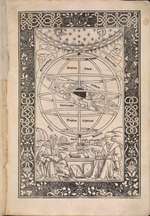
Epitome of Ptolemy's Almagest
Johannes Regiomontanus (1436-1476), 1496
Regiomontanus' Epitome of Ptolemy's Almagest is a crucial work that made Ptolemy's astronomy accessible for later astrological use.
Astronomicon
Manilius, 1930
Manilius' Astronomicon is explicitly mentioned in the collection description as a key poetic work integrating astronomy and astrology.
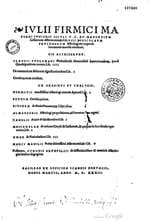
Eight Books on Astrology
Julius Firmicus Maternus, 1533
Julius Firmicus Maternus' Eight Books on Astrology is a major Roman astrological treatise, essential to the collection's scope.
Introduction to Astronomy
Albumasar (Abu Mashar), 1489First from Latin
Albumasar's Introductorium in Astronomiam is a comprehensive introduction to the combined discipline of astronomy and astrology.
Important Works
Significant texts that deepen understanding
Manilius, Hyginus & Ptolemy — 15th-Century Astronomical MS
Manilius; Hyginus; Ptolemy, 1465
This manuscript collects works by Manilius and Ptolemy, two central figures in the 'star science' tradition.
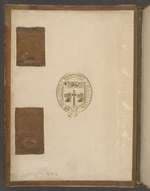
sloane ms 2030
Various (Bede, Pseudo-Ptolemy, Masha'allah, Avicenna), 1250First Complete Translation
This manuscript contains works by Pseudo-Ptolemy and Masha'allah, both influential figures in the history of astrology.
Theonis Expositio magnae constructionis Ptolemaei . Theonos ermeneia tes megales suntaxeos Ptolemaiou
Theon of Alexandria, 950First Translation
Theon's Expositio is a significant commentary on Ptolemy's foundational Almagest, crucial for understanding its astronomical principles.
One Hundred Sentences of Ptolemy and On Celestial Matters
Giovanni Pontano, 1519First Translation
This work includes Ptolemy's 'One Hundred Sentences' (Centiloquium), a collection of influential astrological aphorisms.
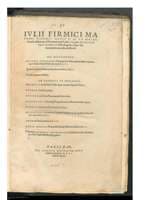
Astronomicon Libri VIII (Firmicus, Ptolemy, Hermes, Mashallah, Omar, Zahel, Manilius)
Nicolaus Pruckner (ed.), 1559First from Latin
This collection features works by multiple foundational astrologers including Firmicus, Ptolemy, and Manilius.
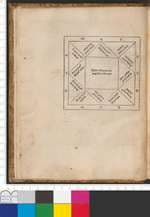
Tetrabiblos and Centiloquy
Claudius Ptolemy; Hali (commentary), 1484First Complete Translation
This edition of Ptolemy's Tetrabiblos, with Hali's commentary, highlights the interpretive tradition of this core astrological text.
Books of Astronomy (Firmicus, Manilius, Aratus)
Julius Firmicus Maternus; Marcus Manilius; Aratus, 1499First Complete Translation
This collection features works by Firmicus Maternus and Manilius, both central authors in the 'star science' tradition.
Albumasar, On Celestial Influences and Fate
Abu Ma'shar (Albumasar), 1550First Translation
Albumasar's 'On Celestial Influences and Fate' is an important astrological work by a key figure in the collection.
Collected Astronomical and Astrological Treatises
Johannes de Sacro Bosco; Albumasar; Alcabitius; Messahala; Al-Kindi, 1350First Complete Translation
This manuscript contains works by Albumasar and other influential astrologers like Alcabitius and Messahala.
All Books
Browse Full Catalog→59 books in this collection