


Illustrations
Browse all60 images extracted from 15 books
This elegant engraving depicts Sibylla Ursula, Duchess of Brunswick-Lüneburg (1629–1671), a daughter of Augustus the Younger. The portrait is featured in Johann Valentin Andreae's 'Seleniana Augustalia', a work celebrating the ducal family, and reflects the sophisticated artistic and intellectual culture of the Wolfenbüttel court. The duchess is shown in contemporary noble attire, framed by an architectural structure that emphasizes her high social standing.
This elaborate frontispiece from Athanasius Kircher's work on the 'Great Art of Knowledge' depicts Divine Wisdom presiding over the various branches of human learning. Personified figures of sciences such as Physics, Medicine, and Mathematics stand within a classical architectural setting, illustrating the Baroque ideal of a universal, interconnected system of knowledge under divine guidance.
This striking emblem, titled 'Hic Pater devorat Filium' (Here the Father devours the Son), illustrates the alchemical process of 'solutio' or the dissolution of the fixed into the volatile. The king represents the prime matter consuming its own offspring to achieve a higher state of spiritual purity, while the winged figure symbolizes the release of the soul and spirit from the body. It is the thirteenth figure from the influential 'Book of Lambspring' included in the 1678 edition of the Musaeum Hermeticum.
This intricate woodcut serves as the title page for John Dee's seminal 1564 work, Monas Hieroglyphica. The central oval displays Dee's 'Hieroglyphic Monad,' a complex symbol intended to represent the unity of the cosmos through a synthesis of astrological and geometric forms. Surrounded by an architectural frame adorned with elemental labels and celestial figures, the page encapsulates the Renaissance quest to decode the hidden laws of nature.
This intricate alchemical diagram from the 'Buch der heiligen Dreifaltigkeit' illustrates the interconnectedness of the cosmos, featuring a central double-headed eagle and dragon representing the union of opposites. Radiating lines connect these central figures to personified celestial bodies, including the Sun and Moon, and various planets. This manuscript is one of the earliest to combine Christian theology with alchemical theory, using complex symbolism to describe the process of spiritual and material transformation.
This striking engraving illustrates the moment of creation, where the divine command 'FIAT' (Let there be light) pierces the primordial darkness. A dove, representing the Holy Spirit, descends within a burst of light, symbolizing the infusion of divine intelligence into the material world. This image is a quintessential example of 17th-century cosmological thought, blending theology with early scientific inquiry into the origins of the universe.

This radical monochrome engraving represents the primeval darkness or 'Great Void' that preceded the creation of the universe. Created by the English physician and mystic Robert Fludd for his encyclopedic 'Utriusque Cosmi Historia' (1617), the image is bordered by the phrase 'Et sic in infinitum' (And so on to infinity), emphasizing the boundless, unformed state of the cosmos before the divine light of creation.

This hand-colored woodcut depicts a philosopher or alchemist holding a green vessel, a key symbol in the 'Splendor Solis' alchemical tradition. The figure, dressed in exotic robes and a turban, stands before a large, unscribed scroll, representing the silent transmission of hermetic knowledge. This image serves as an introductory figure to the complex allegorical stages of the alchemical process described in the text.

This striking illumination from Michael Scot’s 'Liber Introductorius' depicts the planet Sol (the Sun) as a crowned monarch riding in a chariot. Uniquely, the chariot is driven by a dark, horned demon, reflecting medieval views on the complex forces governing the heavens. Below, the 'children of the Sun' are shown in various states of terrestrial life, illustrating the astrological belief that celestial bodies directly influenced human health and destiny.
Visual Art
Browse all art →5 works of visual art in this collection
 print
printAlchemists Revealing Secrets from the Book of Seven Seals, The Ripley Scroll (detail), ca. 1700
George Ripley
A central diagram from the Ripley Scroll depicting two figures holding the Book of Seven Seals, surrounded by seven alchemical operations.
 print
printSplendor Solis 18
Splendor Solis
An alchemical emblem depicting a solar king within a glass flask, presided over by the planetary deity Luna in her chariot.
 print
printSplendor Solis 10 severing head of king
Splendor Solis
A man in a white tunic and red leggings stands over the dismembered body of a king, holding a sword and a severed golden head.
 print
printSplendor solis das grosse waschfest vor der stadt 1531
Splendor Solis
A group of women washing, boiling, and bleaching white linens in a rural landscape near a city.
 print
printRipley Alchemical Scroll
Various
The alchemist George Ripley is depicted as a pilgrim at the conclusion of an alchemical scroll.
The moon is the most versatile symbol in the library. It serves simultaneously as astronomical object, alchemical principle, cosmological boundary, and literary destination — and Source Library holds significant texts in each of these registers.
The earliest tradition is cosmological. Cicero's Dream of Scipio, composed in the first century BCE and transmitted through Macrobius's influential late-antique commentary, established the lunar sphere as the border between the mortal and the divine. Below the moon: generation, corruption, the realm of the four elements. Above it: the celestial spheres, the music of the planets, the abode of purified souls. This Macrobian geography of the cosmos persisted through the entire medieval period and shaped how European thinkers understood the place of human life in the universe. Every Macrobius edition in the collection — from ninth-century manuscripts to the 1550 printed text — carries this framework.
In alchemy, Luna is silver, queen, the feminine receptive principle. She is paired with Sol in virtually every major alchemical text the library holds: the Splendor Solis, the Musaeum Hermeticum, the Ripley Scroll, the Ars Chemica, the Rosarium Philosophorum (Reg.lat.1278), and the oldest German alchemical manuscript, the Book of the Holy Trinity. The chemical wedding of Sun and Moon — the conjunction of masculine and feminine, gold and silver, sulfur and mercury — is the central drama of Western alchemy, and the library's illuminated manuscripts depict it with extraordinary visual richness. John Dee's Monas Hieroglyphica synthesizes lunar symbolism into a universal hieroglyphic language, placing the crescent at the foundation of his symbolic system.
A third tradition is observational. The Sanskrit lunar mansion texts — the Chandra Bhavadhyaya, the Tithi Nirnaya Deepika — record the nakshatras, the twenty-seven or twenty-eight divisions of the ecliptic that formed the basis of Indian calendrical science. Chinese imperial star catalogs mapped the lunar mansions independently. Peurbach's eclipse tables and Riccioli's reformed astronomy represent the European mathematical tradition. These are parallel but entirely separate systems for tracking the moon's motion, each embedded in its own cosmology. The collection also reaches the moon as a destination: Kepler's Somnium (1634), Godwin's Man in the Moone (1638), and Cyrano de Bergerac's Comical History of the States and Empires of the Moon (1657) are the founding texts of science fiction, born from the collision of Copernican astronomy and literary imagination. Kircher's Iter Exstaticum Coeleste sends its protagonist on an angelic tour of the planetary spheres, pausing at the moon. Andreae's Seleniana imagines a lunar reformed society. These are not idle fantasies — they are thought experiments about what it would mean for the Earth not to be the center of the cosmos.
Essential Reading
The foundational texts of this tradition
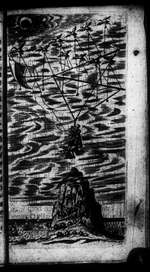
The Man in the Moone
Francis Godwin, 1638
Bishop Francis Godwin's lunar voyage tale, written before Kepler's Somnium was published but appearing in print four years later. Domingo Gonsales flies to the moon on a chariot drawn by wild swans, discovering a utopian Christian lunar civilization. A founding text of English science fiction.
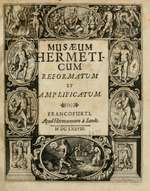
The Hermetic Museum
Various; ed. Luca Jennis, 1678
The 'Museum of the Hermetic Art' is the single most important printed anthology of alchemical texts. Sun and Moon, Sol and Luna, appear on nearly every page — as planetary metals, as gendered principles, as the royal couple whose chemical wedding produces the Philosopher's Stone.
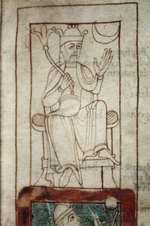
Wonders of the East and Astronomical-Calendrical Treatise
Anonymous, 1150
A remarkable twelfth-century English manuscript containing astronomical diagrams, marvels of the East, and a series of planetary roundels that personify the Sun and Moon as medieval royals riding celestial chariots. The most vivid medieval depiction of Luna in the library's holdings.
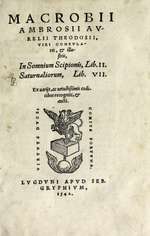
Commentary on the Dream of Scipio and the Saturnalia
Macrobius, 1550
Macrobius's late-antique commentary on Cicero's Dream of Scipio established the moon as the boundary between mortal and divine realms — the point where souls descend into bodies and ascend after death. One of the most influential cosmological texts of the Middle Ages.
Important Works
Significant texts that deepen understanding
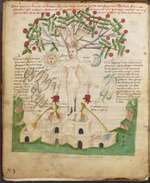
Book of the Holy Trinity
Anonymous, 1420First Translation
The oldest alchemical manuscript in German, painted c. 1420. Its allegorical emblems systematically depict the Great Work as a marriage of Solar and Lunar principles — king and queen, gold and silver, active and receptive.
Lunar Mansions
Unknown, 1780First Translation
A Sanskrit treatise on the lunar mansions (nakshatras), the twenty-seven or twenty-eight divisions of the ecliptic used in Indian astronomy and astrology. Represents an entirely independent tradition of lunar observation, unconnected to European celestial science.
All Books
Browse Full Catalog→62 books in this collection
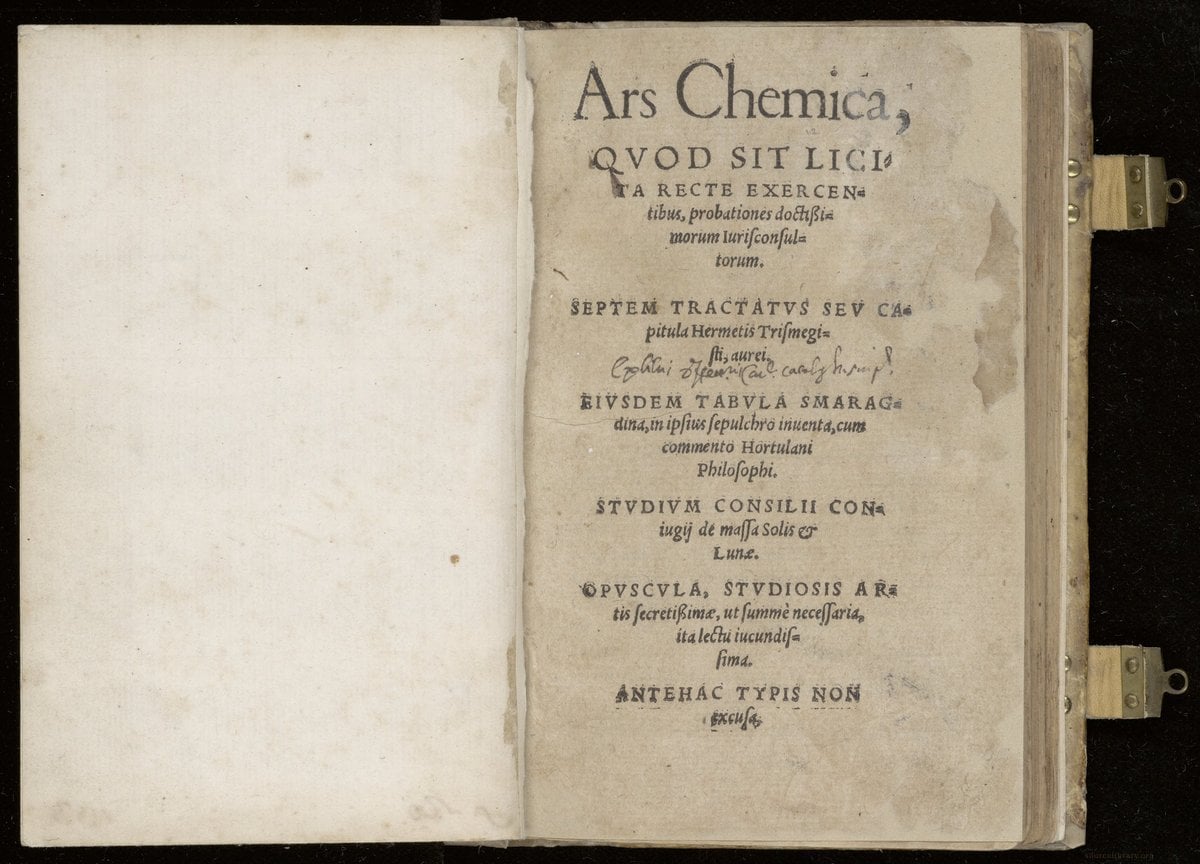
The Chemical Art
Hermes Trismegistus
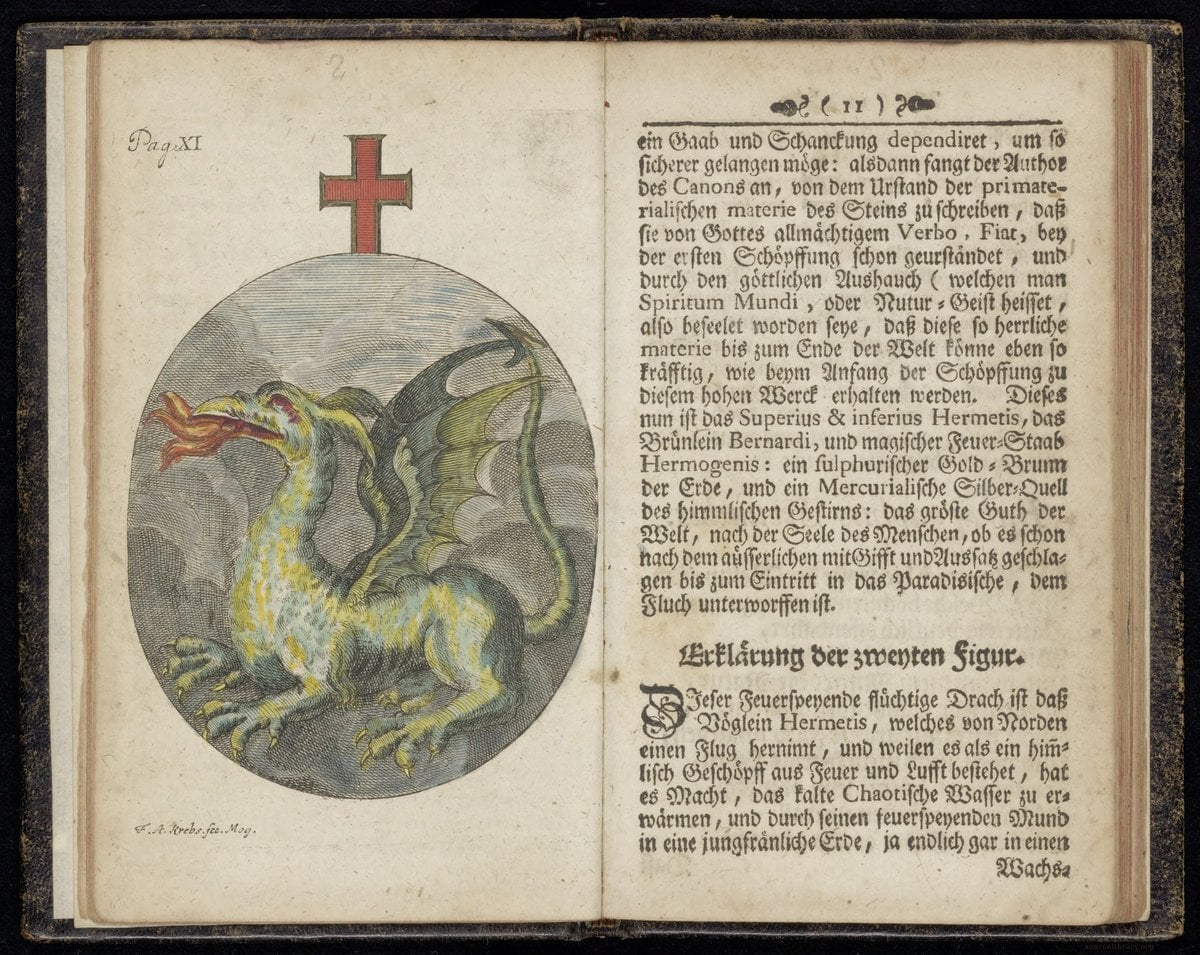
Hermaphroditic Child of the Sun and Moon
attr. Brunnhofer, Johann Augustin
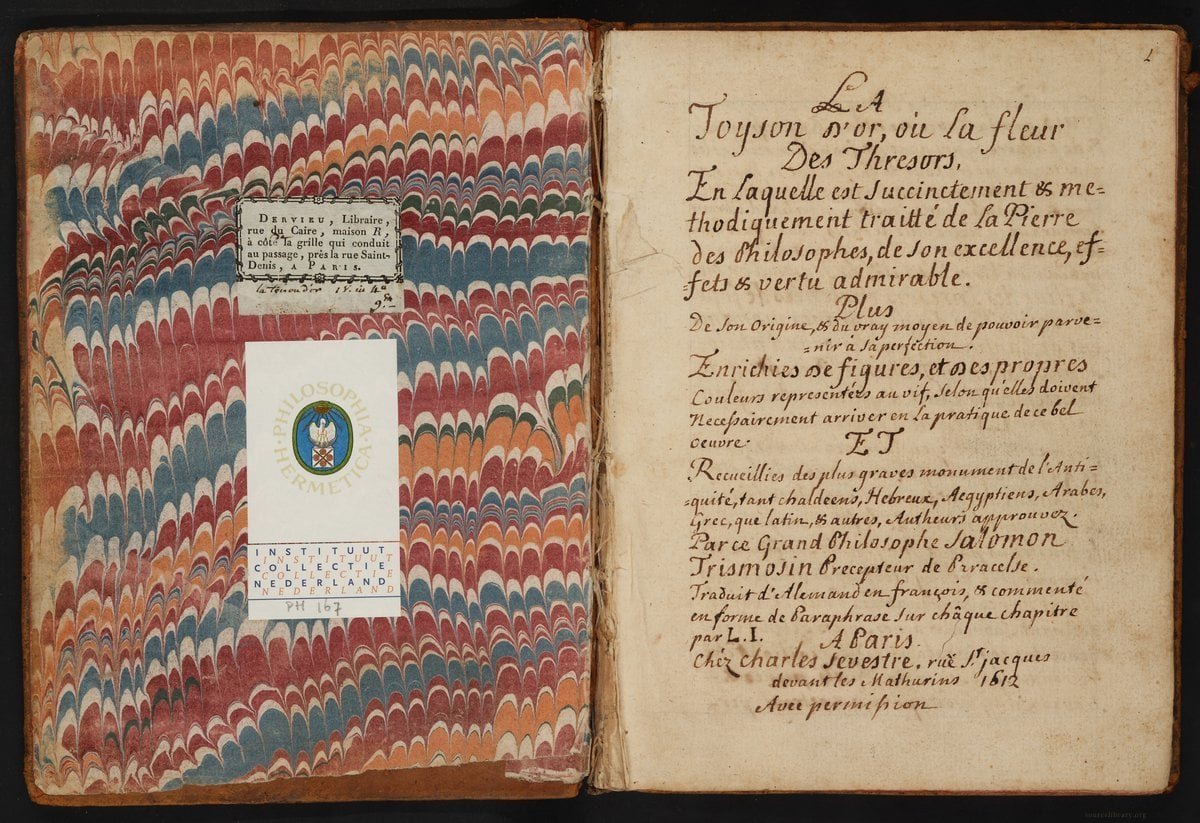
Golden Fleece — Trismosin (Splendor Solis Author), 18th-Century MS
Salomon Trismosin
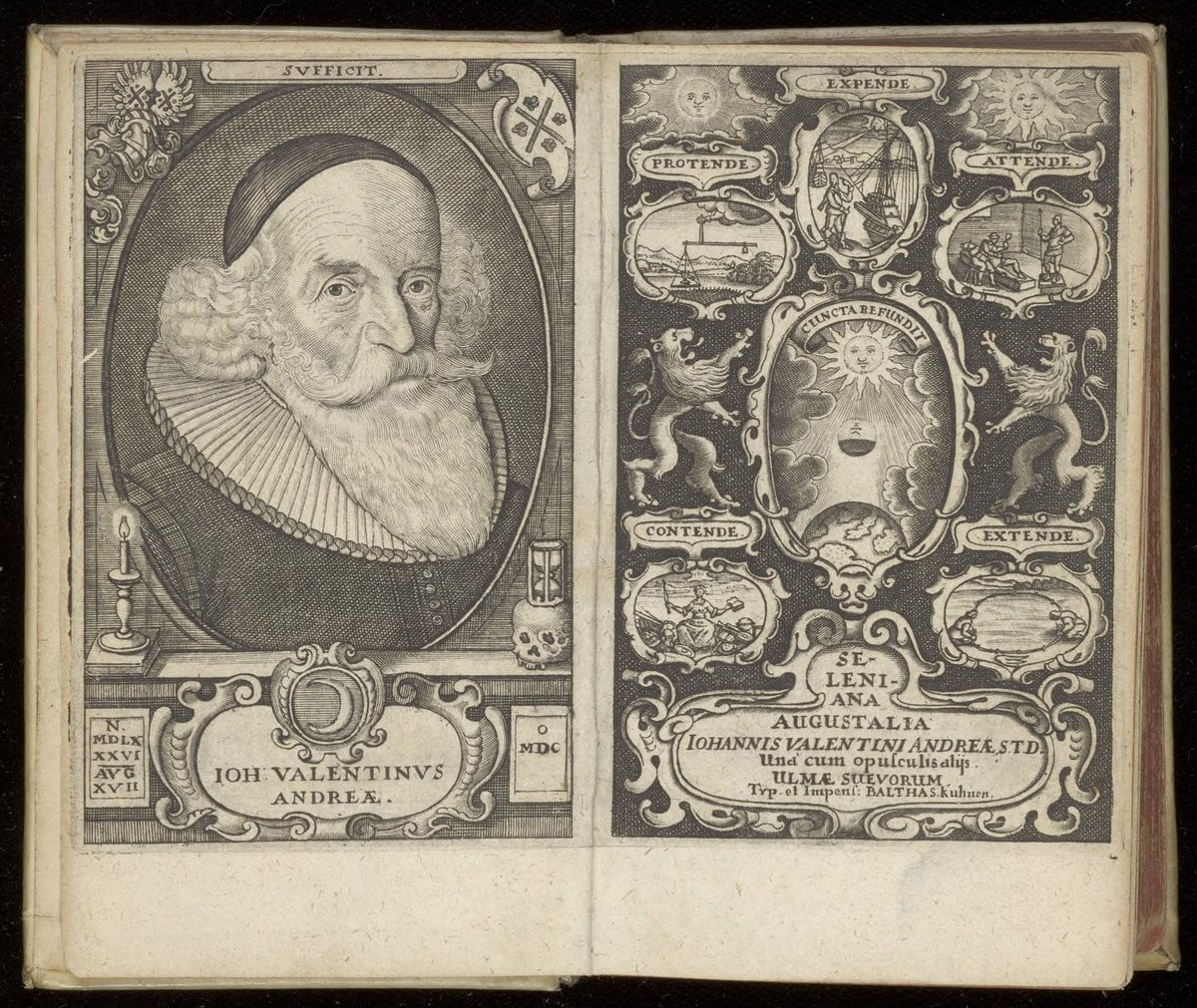
Augustan Moon-Writings
Andreae, Johann Valentin