


Illustrations
Browse all60 images extracted from 11 books

This portrait depicts Bi'äñk'i, a prominent Kiowa dreamer and leader during the Ghost Dance movement of the late 19th century. He is shown seated, holding a sacred painted hide that likely contains symbolic representations of his visions. The illustration, created by Mary Irvin Wright for the Bureau of Ethnology, captures both the individual's dignity and the material culture associated with his spiritual practices.

This 1888 photograph by James Mooney captures Sawănu'gĭ, a Cherokee man, in the attire of a traditional ball-player. He holds a ball-play stick, an essential tool for the 'little brother of war' game, which served as both a sport and a ritualized alternative to conflict within Cherokee society.

This detailed engraving depicts a dramatic scene from the Spanish conquest of Mexico, where Hernán Cortés and his men oversee the destruction of indigenous idols and the installation of a Christian cross. The image captures the intense religious and cultural conflict of the era, highlighting the forced imposition of European beliefs on the native population. The fine line work and complex composition are characteristic of early 18th-century Dutch book illustrations, reflecting European perspectives on the 'New World'.

A full-length portrait of Chief Joseph (Hin-mah-too-yah-lat-kekt), the renowned leader of the Nez Perce people. He is depicted in traditional regalia, including a distinctive striped blanket and beaded moccasins, reflecting his status and cultural heritage. This photograph, published in James Mooney's seminal work on the Ghost-Dance religion, serves as a poignant record of a leader who became a symbol of resistance and dignity.

This image depicts a portion of a sacred Navajo dry painting, or sandpainting, used in the Mountain Chant ceremony. These intricate designs are created by medicine men using colored sands to invoke healing and restore harmony, featuring stylized deities and botanical elements that represent the interconnectedness of the Navajo spiritual world.

This intricate engraving illustrates Aztec acrobats performing for a seated ruler, possibly Montezuma, within a city square. The scene captures various feats of physical prowess, including foot-juggling and pole-balancing, reflecting European fascination with the diverse cultures encountered during the conquest of Mexico. It serves as a valuable, albeit Eurocentric, visual record of indigenous customs and courtly life in the early 16th century as documented by Antonio de Herrera.

This intricate illustration records the 'Second Dry Painting' of the Navajo Mountain Chant ceremony. It features two highly stylized female deities with tiered triangular bodies, surrounded by ritual symbols and a protective rainbow guardian. These ephemeral artworks were traditionally created with colored sands to invoke spiritual healing.

This intricate engraving depicts a formal meeting between Hernán Cortés and indigenous leaders during the Spanish conquest of Mexico. The scene captures the exchange of gifts, including precious metals and textiles, highlighting the initial diplomatic interactions and the perceived wealth of the New World. Through the archway, a lush tropical landscape provides a sense of place, while the presence of armed soldiers underscores the underlying tension of the encounter.

This photograph depicts a Kwakiutl individual dressed for the Na'naquaualil dance, wearing a complex headdress and ceremonial cloak. It serves as a vital record of Indigenous ceremonial practices and regalia from the late 19th century, as documented by Franz Boas during his extensive ethnographic fieldwork.
Pre-Columbian and early colonial texts from the civilizations of Mesoamerica and South America — Maya and Aztec codices, Nahuatl poetry, K'iche' sacred narratives.
All Books
Browse Full Catalog→64 books in this collection
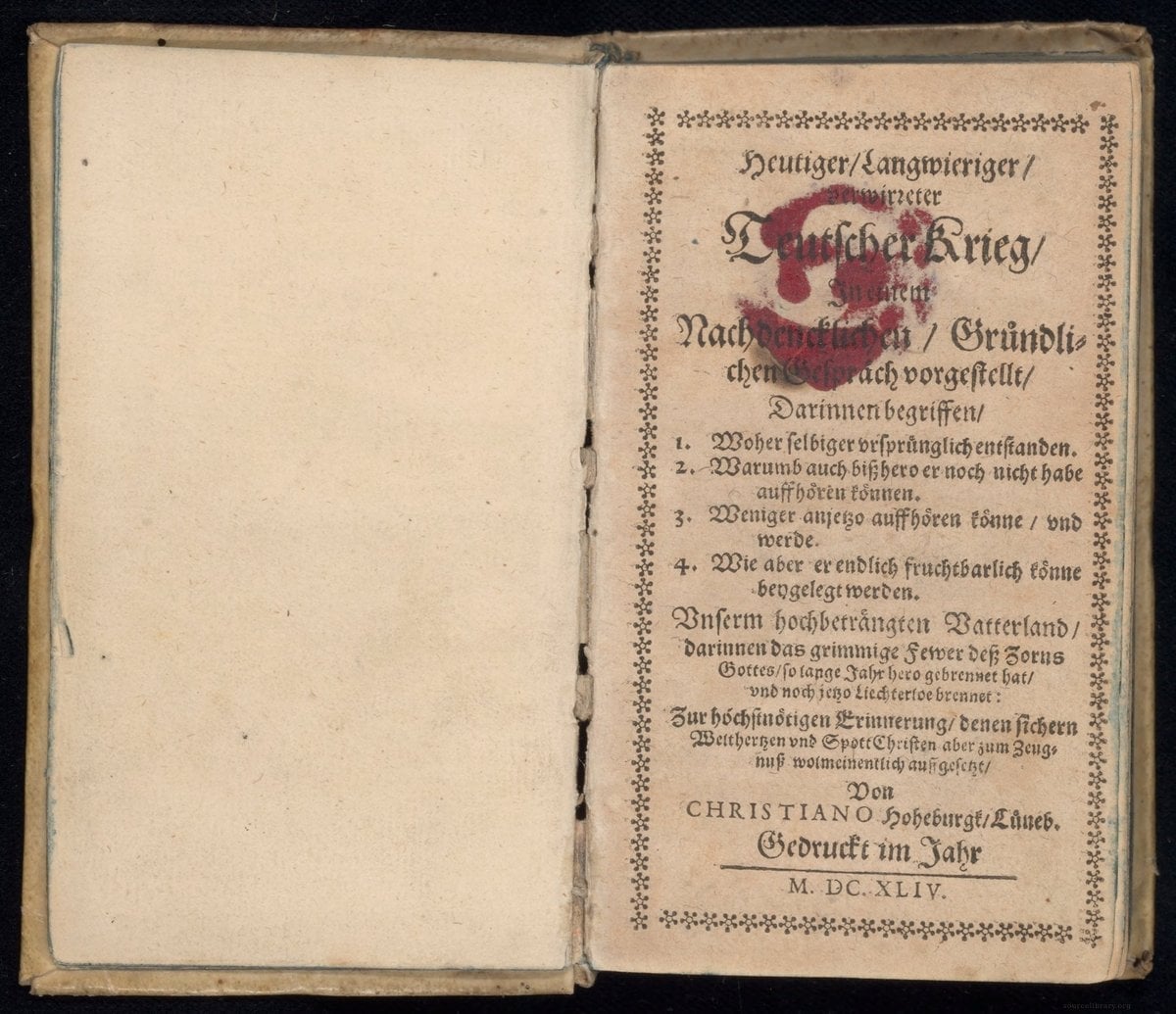
Heutiger, langwieriger, verwirreter teutscher Krieg, in einem nachdencklichen, gründtlichen Gespräch vorgestellt
Hoburg, Christian
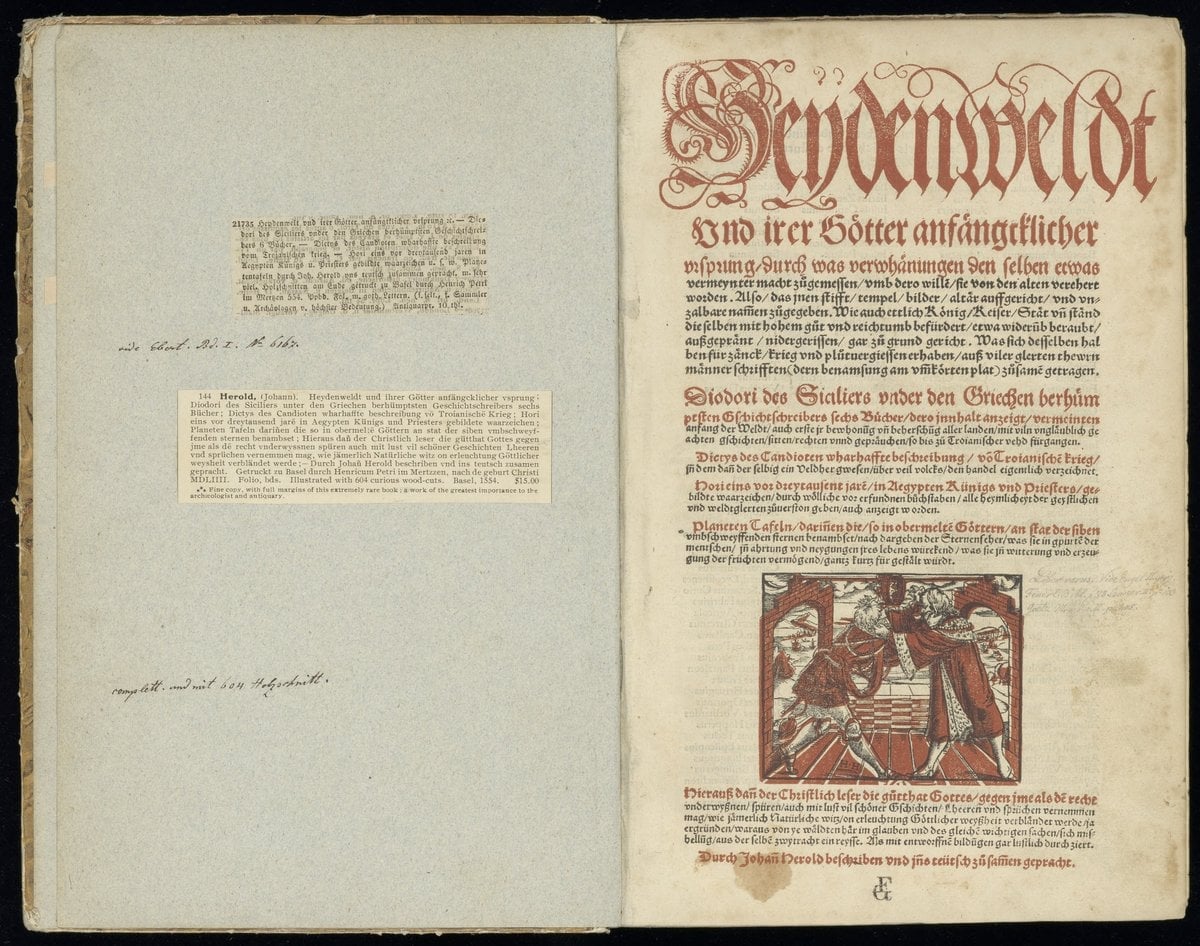
The Pagan World and the Origin of its Gods
Herold, Johann
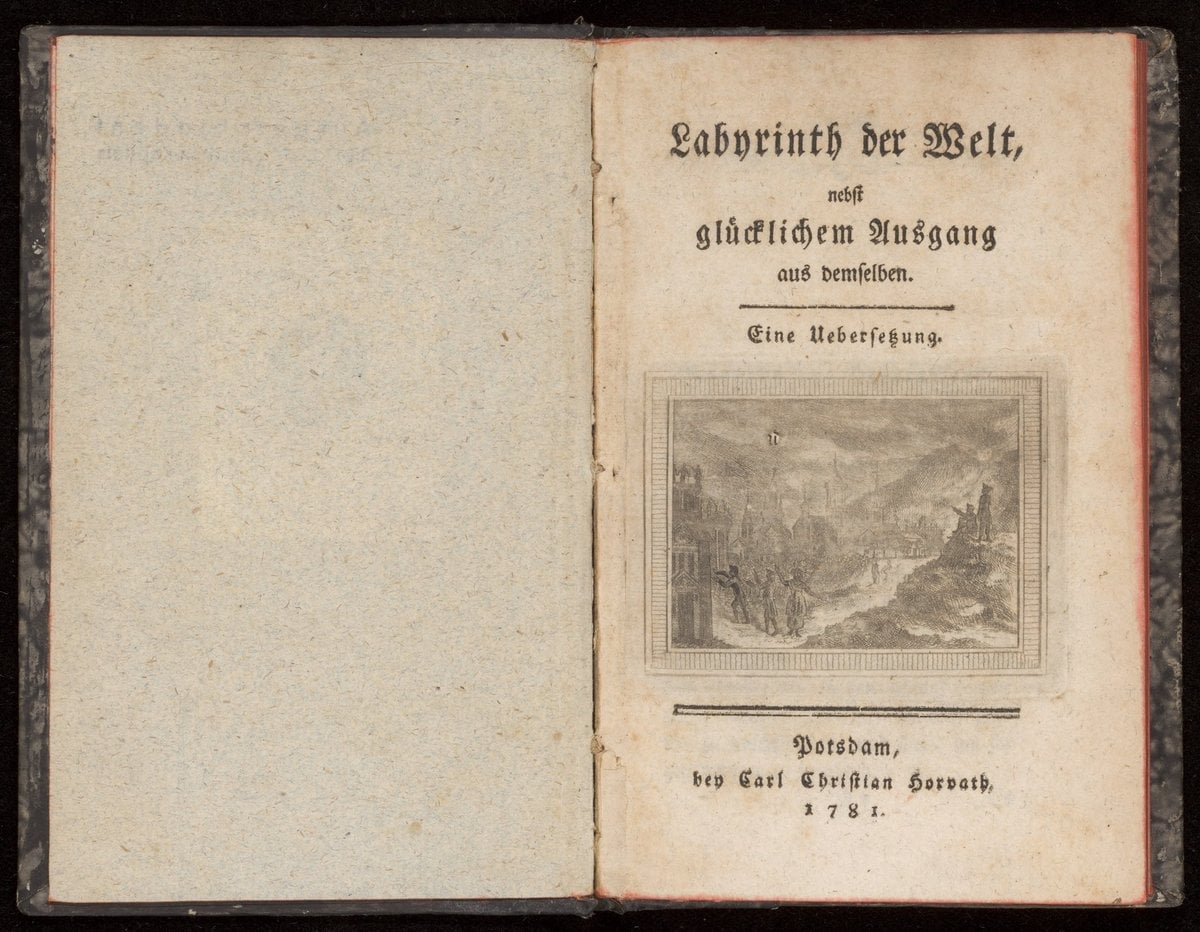
Labyrinth der Welt, nebst glücklichem Ausgang aus demselben
Comenius, Jan Amos