


Ancient Engineering
What the ancients actually built — and what was lost until the Renaissance.
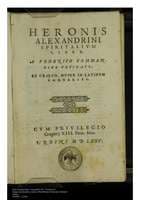
Illustrations
Browse all22 images extracted
This woodcut diagram illustrates a complex multi-tiered siege engine, reflecting the advanced military engineering of the late 16th century. The detailed rendering shows the internal structural supports and wheels, providing insight into the mechanical designs described by Hero of Alexandria and translated by Francesco Barocci.
This woodcut illustrates a multi-story siege tower, a formidable engine of ancient warfare described by Hero of Alexandria. The diagram meticulously details the internal framework, including ladders for soldiers to ascend and wheels for mobility, reflecting the Renaissance fascination with recovering and visualizing classical military technology.
This technical diagram illustrates a component of an ancient war machine, as described by Hero of Alexandria. The use of alphabetical labels allows the reader to follow the complex mechanical explanations in the accompanying Greek and Latin text. Such illustrations were crucial for the early modern rediscovery and reconstruction of classical engineering feats.
This intricate engraving illustrates a sophisticated canal lock system designed for river navigation, likely from Agostino Ramelli's 'Le diverse et artificiose machine' (1588) or a similar engineering treatise. The scene depicts three boats within a circular basin, managed by massive wooden gates and surrounded by supporting structures and workers, showcasing the advanced hydraulic engineering of the late 16th century. The use of lettered labels (A-F) indicates its function as a technical diagram intended to explain the mechanical operation of the lock.
This intricate engraving from Vittorio Zonca’s 1607 treatise illustrates the 'Carro delle Zaffosina,' a specialized mechanism designed for heavy transport. The plate masterfully combines technical plan views of the machine's components with a dynamic perspective scene showing the device in operation within a riverside structure, exemplifying the sophisticated mechanical engineering of the early 17th century.
This technical drawing illustrates the hydraulis, or water organ, an ancient musical instrument powered by water pressure. Attributed to Hero of Alexandria, this diagram demonstrates early sophisticated understanding of pneumatics and hydraulics, preserved here in a 16th-century Greek manuscript.

This woodcut diagram illustrates a gastraphetes, or 'belly-bow,' an early form of crossbow described by Hero of Alexandria. The drawing meticulously details the mechanical components, including the sliding mechanism and the bow, serving as a visual aid to the technical Greek and Latin text.
Hero of Alexandria built steam-powered automata. Archimedes calculated the mathematics of levers and spirals. Vitruvius codified Roman architecture. Frontinus documented the Roman water supply. These texts were lost, rediscovered, and translated in the Renaissance — where they sparked the engineering revolution. This collection gathers the ancient originals alongside their Renaissance recoveries.
Essential Reading
The foundational texts of this tradition
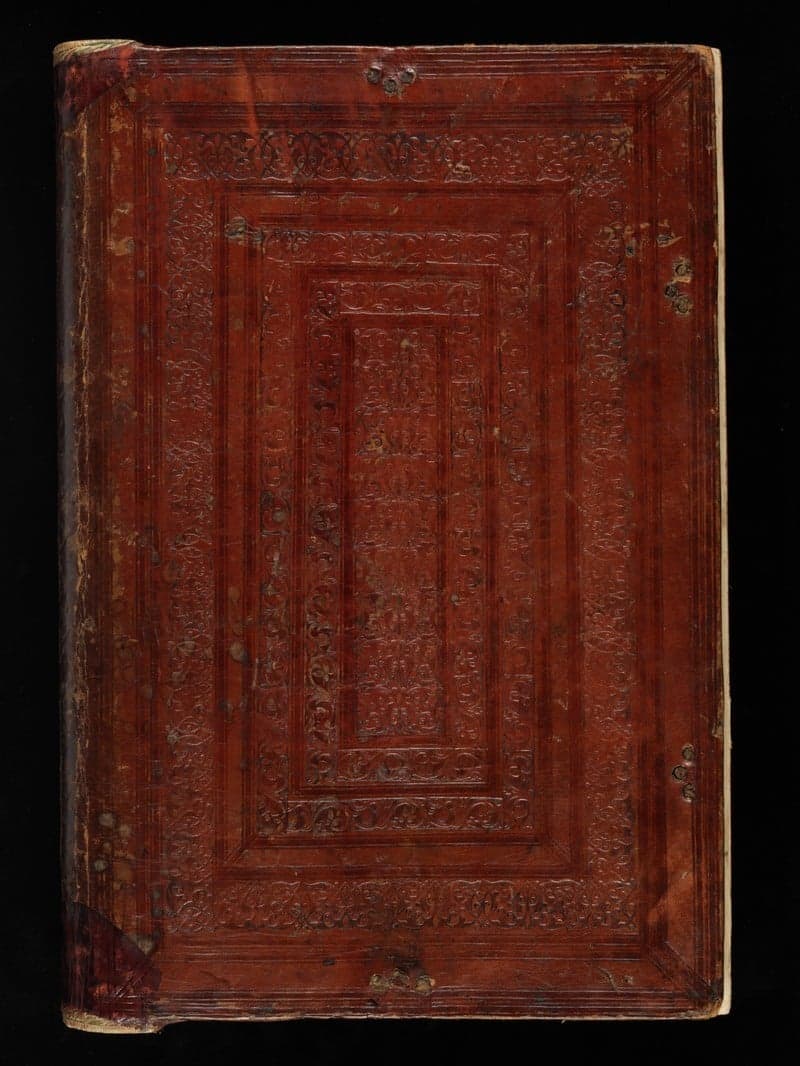
Cologny, Fondation Martin Bodmer, Cod. Bodmer 8
Archimedes; Eutocius; Hero of Alexandria, 1541
This significant 1541 codex contains foundational works by both Archimedes and Hero of Alexandria, representing a direct Renaissance recovery.
The Complete Works of Archimedes
Archimedes; Thomas Geschauff (Venatorius), 1544First from Latin
This 1544 complete works edition by Venatorius is a foundational Renaissance recovery of Archimedes' engineering and mathematical texts.
Archimedis Syracusani Opera (1544 Basel Editio Princeps)
Archimedes, 1544First from Latin
As the 1544 Editio Princeps, this is the first printed edition of Archimedes' works, a monumental event in the Renaissance recovery of ancient engineering.
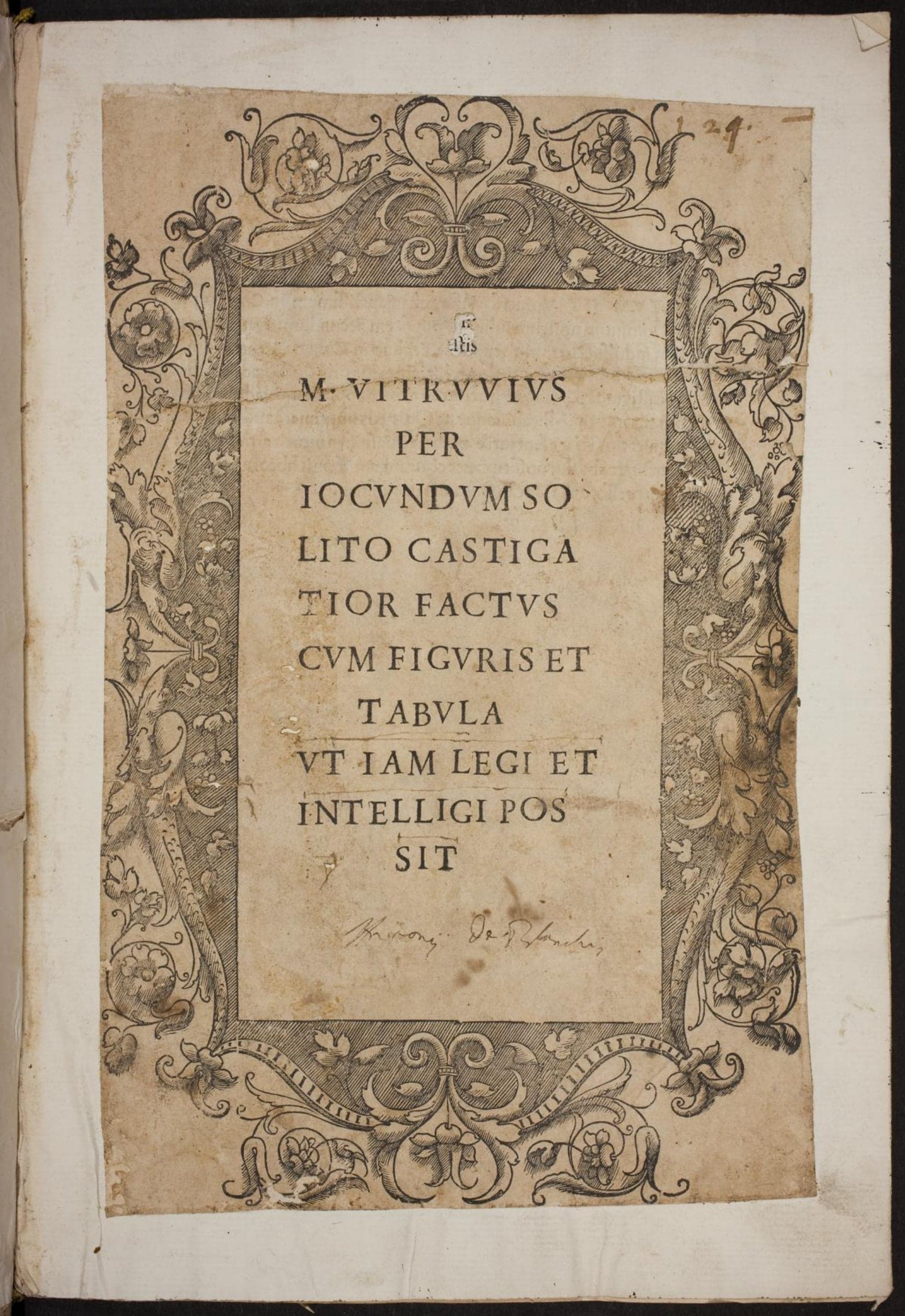
M. Vitruvius per Iocundum solito castigatior factus cum figuris et tabula ut iam legi et intelligi possit
Vitruvius, 1511
The 1511 Giocondo edition is a critical and influential Renaissance recovery of Vitruvius's 'De Architectura,' central to its architectural impact.
Vitruvius, Ten Books on Architecture
Vitruvius, 1523
This Aldine Press edition of Vitruvius's 'De Architectura' is a significant Renaissance publication, crucial for the dissemination of Roman architectural principles.
Important Works
Significant texts that deepen understanding
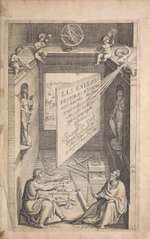
The Reasons of Motive Forces
Salomon de Caus, 1615First Translation
This early 17th-century work directly demonstrates the practical application and development of mechanical principles inspired by ancient engineers.
Works of Aristotle, Ptolemy, and Hero of Alexandria
Aristotle; Ptolemy; Hero of Alexandria, 1450
This 1450 Bodleian manuscript containing Hero of Alexandria's work represents an important early Renaissance recovery of ancient engineering knowledge.
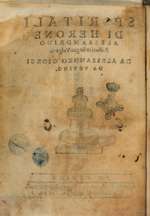
The Pneumatics of Hero of Alexandria
Hero of Alexandria; Alessandro Giorgi (trans.), 1592First Translation
This 1592 translation by Alessandro Giorgi is a significant Renaissance recovery of Hero's influential 'Pneumatics'.
The Pneumatics of Hero of Alexandria
Hero of Alexandria; Giovanni Battista Aleotti (trans.), 1589First Translation
This 1589 translation by Giovanni Battista Aleotti is a significant Renaissance recovery of Hero's influential 'Pneumatics'.
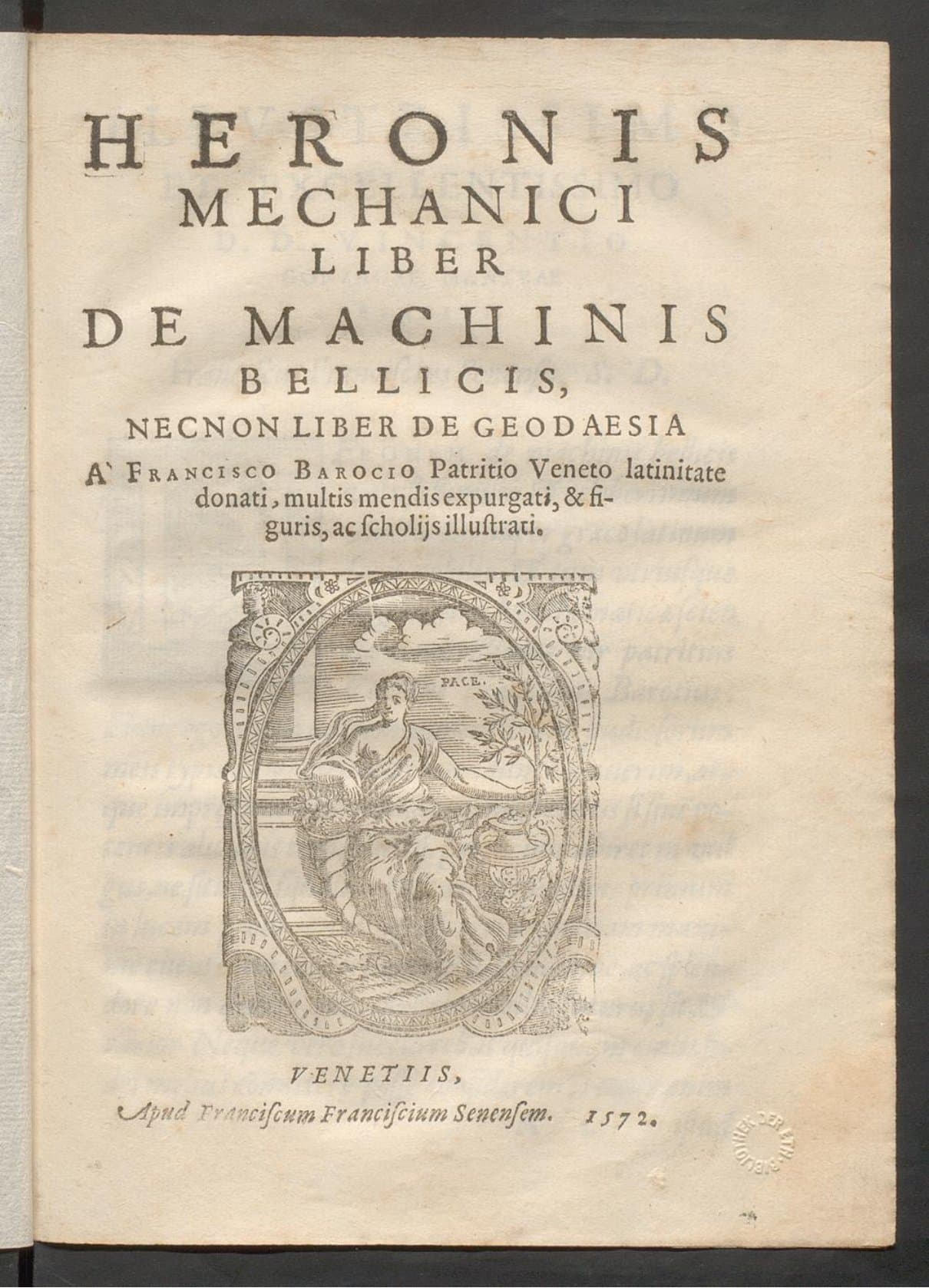
Heronis mechanici liber de machinis bellicis, necnon liber de geodaesia
Hero Byzantius, 1572
This ancient text by Hero Byzantius on war machines and geodesy contributes to the broader understanding of ancient engineering traditions.

On Automata, or Self-Moving Machines
Hero of Alexandria; Bernardino Baldi (trans.), 1589First from Italian
This 1589 translation by Bernardino Baldi is a key Renaissance recovery of Hero's work on automata, as mentioned in the collection description.
Book on War Machines and Geodesy
Hero of Alexandria; Francesco Barocci (trans.), 1572First from Latin
This 1572 translation by Francesco Barocci is a significant Renaissance recovery of Hero's work on war machines and geodesy.

On the Construction of Engines of War (Belopoeeca)
Hero of Alexandria; Ctesibius; Bernardino Baldi (trans.), 1616First Translation
This 1616 translation by Bernardino Baldi features works by Hero of Alexandria and Ctesibius, two important ancient engineers, demonstrating their continued influence.
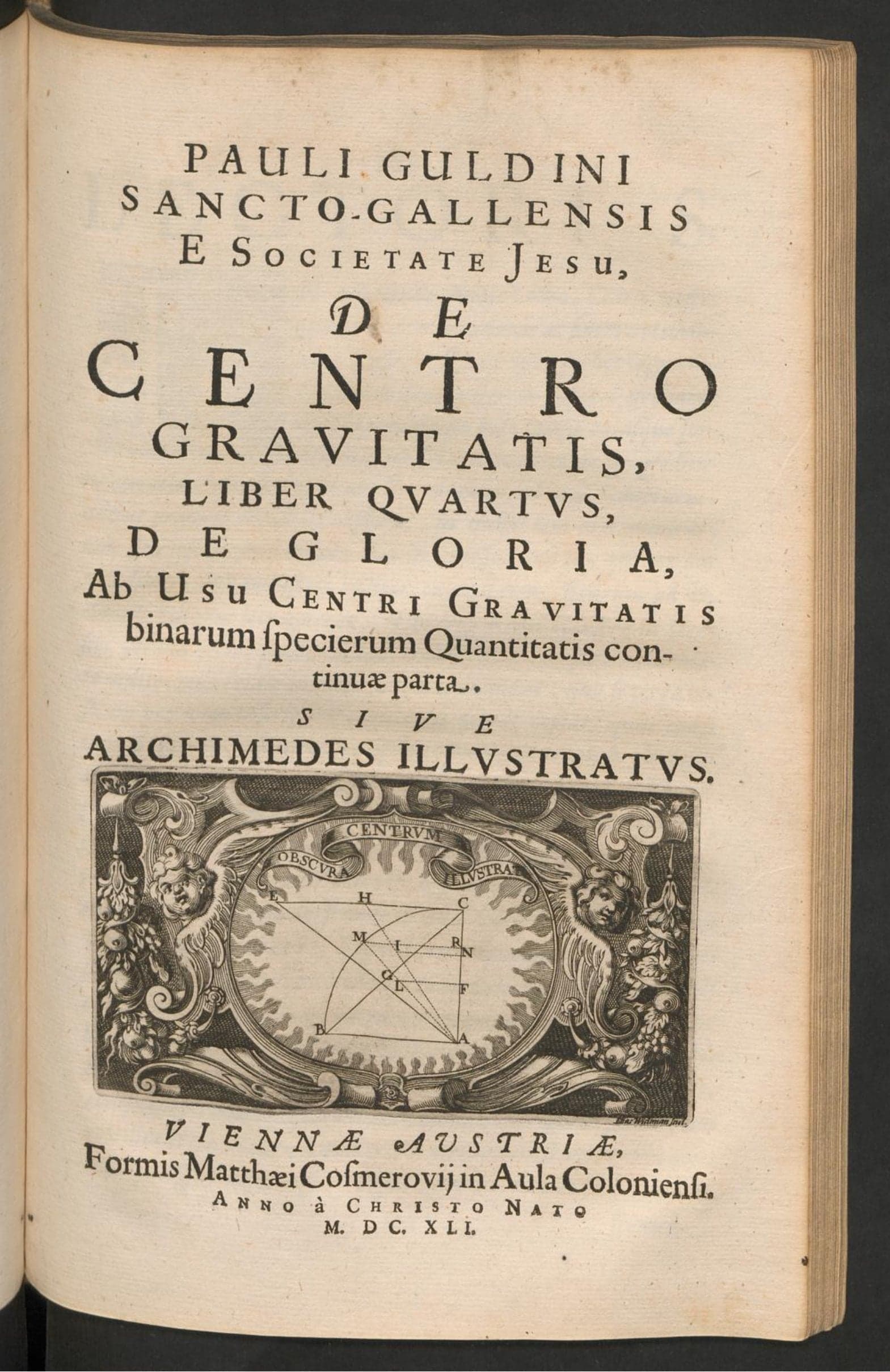
De Centro Gravitatis, Liber Quartus, De Gloria, Ab Usu Centri Gravitatis binarum specierum Quantitatis continuae parta. Sive Archimedes Illustratus
Guldin, Paul, 1641
This 17th-century work by Paul Guldin directly builds upon and illustrates the principles of Archimedes, showcasing his enduring impact.
All Books
Browse Full Catalog→57 books in this collection