


Natural Philosophy & Science
From Aristotle to Newton
Sub-collections

The Cosmos
Music, Sound & Cosmic Harmony

Mathematics & Sacred Number

Cosmology & Astronomy

Natural History

Geography & Exploration

Chinese Natural Knowledge

Encyclopedic Works

Ancient Engineering

Nova Reperta

Theatres of Machines

Mechanical Engineering

The Invention of Method

The Kepler-Fludd Debate

The Encyclopedists

Indian Natural Philosophy

The Dutch Golden Age of Science

Experimental Philosophy

Robert Hooke, Polymath

Making Things Visible

The Indian Mathematical Tradition

Optics
Illustrations
Browse all455 images extracted
A formal portrait of the Danish astronomer Tycho Brahe (1546–1601) from his seminal work on astronomical instruments. He is depicted within an architectural frame adorned with the coats of arms of his ancestors, emphasizing his noble status alongside his scientific achievements. The inscription below identifies him as the founder of the Uraniborg observatory on the island of Hven.
This iconic engraving from Robert Fludd's 'Utriusque Cosmi Historia' presents a visual summary of the universe as a 'Mirror of Nature.' At the top, the hand of God holds a chain linked to the female personification of Nature, who in turn guides a monkey representing human Art or ingenuity. The surrounding concentric circles detail the hierarchy of existence, from the terrestrial elements and biological kingdoms to the celestial spheres of the planets and fixed stars.
This intricate engraving, likely from Robert Fludd's monumental work 'Utriusque Cosmi' (1617-1621), illustrates a pneumatic experiment designed to demonstrate the principles of air expansion and contraction. The apparatus consists of a large leaden sphere (A) connected by a curved tube (E) to a water-filled vessel (C), showing how heat—symbolized by the sun in the upper corner—affects the pressure and movement of fluids. Fludd's work is a prime example of the early modern synthesis of empirical observation, mechanical philosophy, and hermetic mysticism.
This celebrated engraving depicts Tycho Brahe’s mural quadrant, a massive brass instrument used to measure the altitude of stars as they crossed the meridian. Within the arc of the quadrant, a life-sized portrait of Brahe is shown directing his assistants, while the background reveals the interior of his observatory, Uraniborg, including his library, laboratory, and even his faithful hound. This image serves as both a technical diagram of a revolutionary instrument and a powerful statement of Brahe's status as the preeminent astronomer of the 16th century.
This woodcut, titled 'Atrium Apollinis,' serves as a complex mnemonic and cosmological device designed by the philosopher Giordano Bruno. It utilizes sacred geometry, including overlapping circles and a central hexagram, flanked by celestial moons and stars to represent the interconnectedness of the physical and divine realms. Such diagrams were central to Bruno's 'Art of Memory,' intended to help the practitioner visualize and organize universal knowledge within the mind.
This intricate engraving illustrates a sophisticated water-powered clock or musical automaton from Robert Fludd's 'Utriusque Cosmi Historia'. The device features a rotating ring of bells and a central hexagonal pillar marked with hours, powered by a hydraulic system fed through a decorative lion's head spout. Such designs exemplify the Renaissance and early Baroque interest in complex machinery and the intersection of art and science.

This intricate hand-colored volvelle from Peter Apian's 'Astronomicum Caesareum' (1540) is a sophisticated paper instrument designed to calculate the position of the planet Saturn. A divine hand emerges from a cloud at the top, symbolizing the celestial order, while the rotating discs allow the user to simulate complex planetary movements within the zodiac. This work is celebrated as one of the most beautiful and technically advanced examples of 16th-century scientific printing.

This detailed woodcut provides an 'orthographia' or elevation view of Uraniborg, the castle-observatory built by Tycho Brahe on the island of Hven. The illustration uniquely captures the integration of living quarters, astronomical observation decks, and subterranean alchemical laboratories, representing the pinnacle of 16th-century scientific infrastructure.

This intricate woodcut from Andreas Libavius’s 'Alchymia' (1597) serves as a visual summation of the alchemical quest for the Philosopher's Stone. The central sphere contains a hierarchy of transformation, supported by figures representing labor and divine blessing, while the union of the solar King and lunar Queen at the summit symbolizes the 'Chymical Wedding.' It represents a transition in alchemical history from mystical obscurity toward a more structured, proto-scientific classification of chemical knowledge.
Visual Art
Browse all art →60 works of visual art in this collection
 print
printZeichnung - Skizzenbuchblatt - Marx Ulstat und Die schöne Jungfrau zu Antwerpen - Albrecht Dürer - um 1520
A. Dürer
A detailed design for an ornate, multi-tiered silver table fountain decorated with rustic figures, intertwined vines, and clusters of grapes.
 scientific
Addax nasomaculatus (Addax)
Adolf Giltsch
A scientific illustration of an Addax, an antelope with spiral horns, standing in profile facing left.
 botanical
Juniperus communis
Adolf Giltsch
This botanical illustration depicts a sprig of Juniperus communis, or common juniper, featuring its needle-like leaves and several dark, rounded berry-like cones.
 print
printAcht Boheemse landschappen
Aegidius Sadeler
A rugged Bohemian landscape featuring a river with a wooden dam, towering fir trees, and hunters with dogs.
 print
printAcht landschappen uit Bohemen
Aegidius Sadeler
A mountainous Bohemian landscape with a rushing stream, a watermill, and travelers crossing a high timber bridge.
 print
printBerglandschappen uit Tirol
Aegidius Sadeler
A rugged forest landscape in Tyrol featuring towering fir trees, fallen logs, and a marshy foreground under a sky with dramatic shafts of light.
 print
printBoslandschap met houten brug
Aegidius Sadeler
A dense forest landscape featuring a rustic wooden bridge crossing a stream, with a view of a city on the horizon.
 print
printBoslandschap met twee jagers en een hond
Aegidius Sadeler
A forest landscape featuring two hunters and a dog resting in the foreground while a path leads up to a village on a hill.
 print
printDe twaalf maanden
Aegidius Sadeler
An allegorical engraving for the month of April depicting elegant figures and gardeners on a formal palace terrace under the zodiac sign of Taurus.
 print
printDe vier seizoenen
Aegidius Sadeler
A pastoral allegory of Summer (Aestas) depicting peasants washing and shearing sheep in a river near a watermill.
 print
printFabel van de bizon en de andere dieren
Aegidius Sadeler
A large bison or aurochs stands in a landscape surrounded by a gathering of animals, including a camel, a goat, a donkey, and a hound.
 print
printFabel van de eland en de mens
Aegidius Sadeler
An elk with broad antlers stands in a landscape facing a man in early 17th-century attire.
 print
printFabel van de olm en de eik
Aegidius Sadeler
An elm tree and an oak tree standing in a dense forest landscape with birds in flight.
 print
printHeilige Albertus Magnus in gesprek met monniken
Aegidius Sadeler
The Dominican friar and polymath Albertus Magnus is depicted seated in a high-backed chair, lecturing or debating with a group of monks in a vaulted hall.
 print
printHelenus van Troyes als kluizenaar
Aegidius Sadeler
The Egyptian hermit Helenus of Troyes is depicted gathering and examining wild herbs in a wooded landscape near his rustic dwelling.
Where the music of the spheres met the anatomy of man
In 1650, Athanasius Kircher argued that the universe is a musical instrument played by a God who is the ultimate organist.

Natural philosophy was the precursor to modern science, a time when the study of the stars, the human body, and the transmutation of metals were parts of a single, unified inquiry. In this collection, the mechanical precision of Nicolaus Copernicus in On the Revolutions of the Celestial Spheres sits alongside the mystical geometry of John Dee. These thinkers did not see a conflict between faith and formula; they believed that by decoding the 'Book of Nature,' they were reading the mind of the Creator.
The shift from medieval speculation to empirical observation is captured in the revolutionary plates of Andreas Vesalius. His work, On the Fabric of the Human Body, replaced centuries of hearsay with the cold reality of the dissection table. Meanwhile, polymaths like Leonardo da Vinci filled their private journals, such as the Forster Notebook I, with observations on hydraulics and flight that remained centuries ahead of their time. This collection tracks that transition—from the symbolic world of the alchemist to the measurable world of the physicist.
Global perspectives enrich this narrative, showing that the quest for technical mastery was universal. The Chinese military strategist 茅元儀 compiled the Treatise on Armament Technology to standardize logistics and river crossings, while Albrecht Dürer applied the rigor of perspective to the human form in his Instruction in Measurement. Whether through the lens of a telescope or the heat of a furnace, these authors sought the underlying laws that govern existence.
The Architecture of the Heavens
1543-1687The radical shift from an Earth-centered cosmos to a sun-centered system, driven by mathematical necessity and the first telescopic observations.
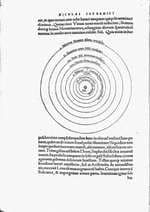
On the Revolutions of the Celestial Spheres
Copernicus, Nicolaus, 1473-1543, 1543
The book that moved the Earth, providing the mathematical framework for the heliocentric universe.
New Astronomy
Johannes Kepler, 1609
Johannes Kepler's breakthrough work that replaced perfect circles with elliptical planetary orbits.
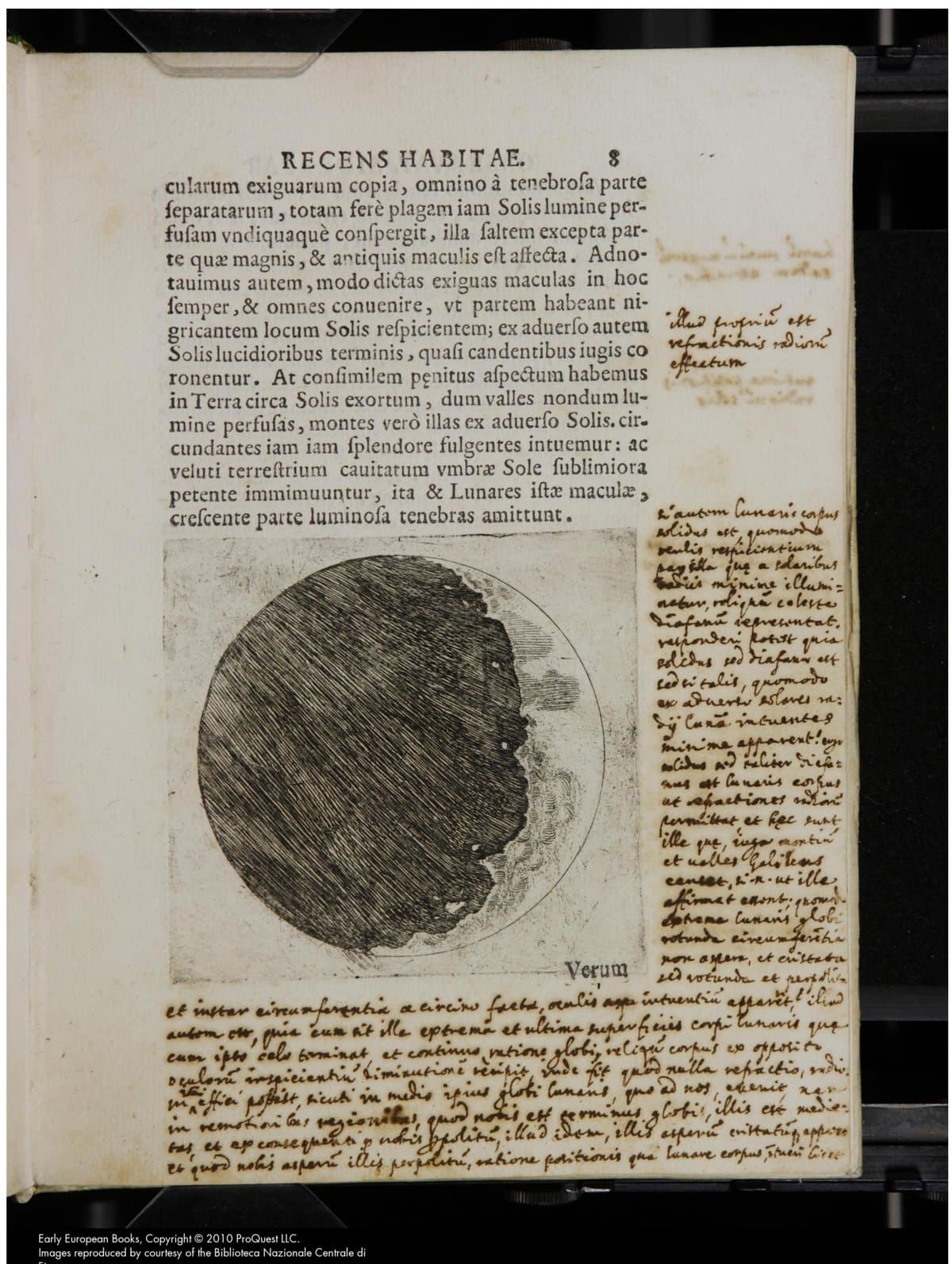
Starry Messenger
Galileo Galilei, 1610
Galileo's first report on the mountains of the moon and the moons of Jupiter.
The Microcosm: Mapping the Human Machine
1480-1650When the human body became a territory for exploration, moving away from Galenic tradition toward direct anatomical observation.
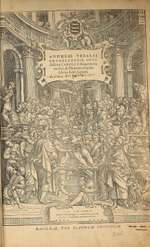
On the Fabric of the Human Body
Andreas Vesalius, 1543
A foundational text of modern anatomy that revolutionized medical education through public dissection.
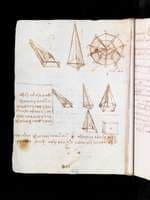
Forster Notebook I
Leonardo da Vinci, 1487
A private record of Leonardo's investigations into geometry, weight, and the movement of water.
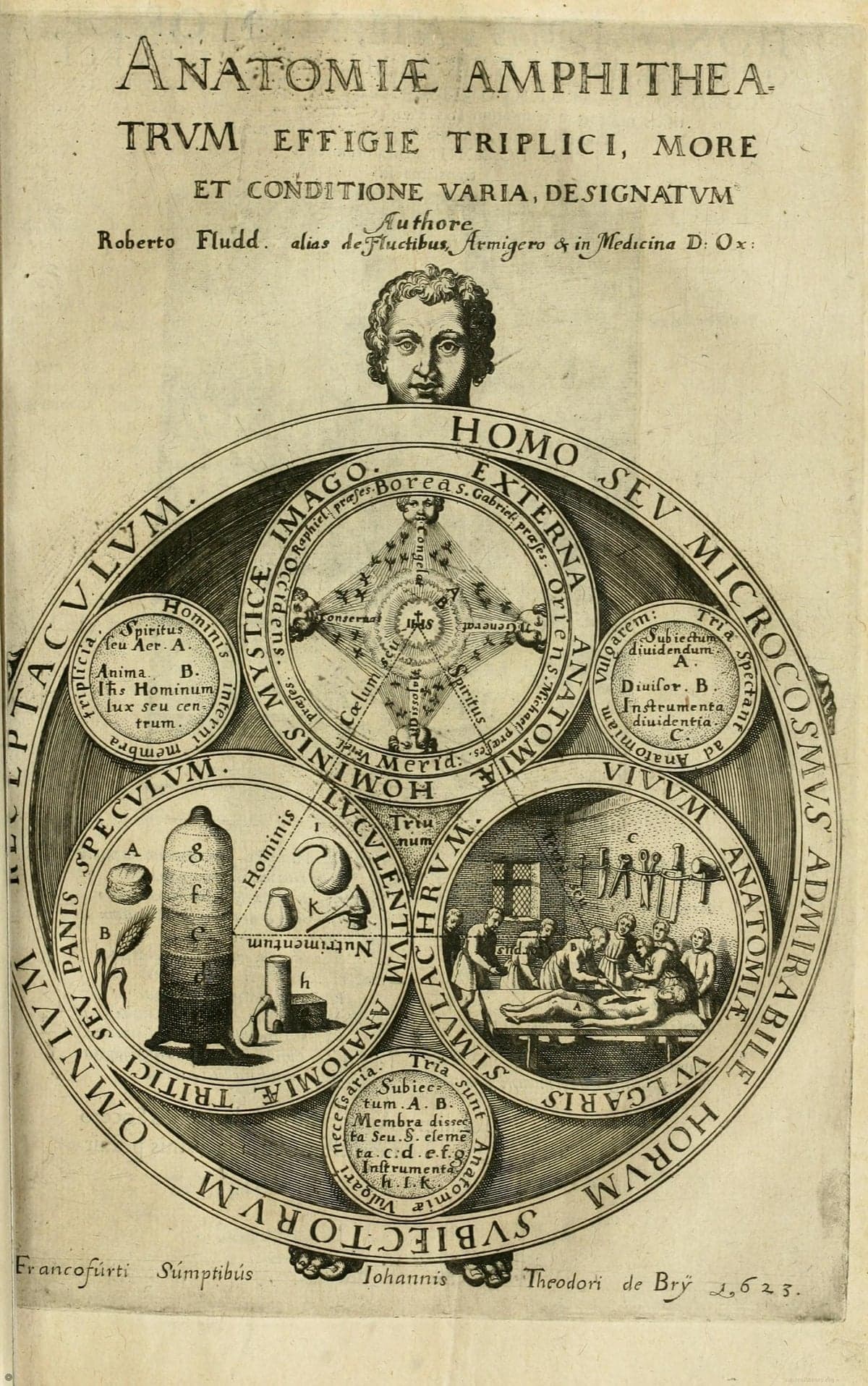
Amphitheatre of Anatomy
Robert Fludd, 1617First Translation
Robert Fludd's attempt to map the anatomical structures of man to the celestial structures of the universe.
Universal Harmony and the Hidden Arts
1560-1680Explorations into the underlying spiritual and mathematical codes that link music, light, and matter.
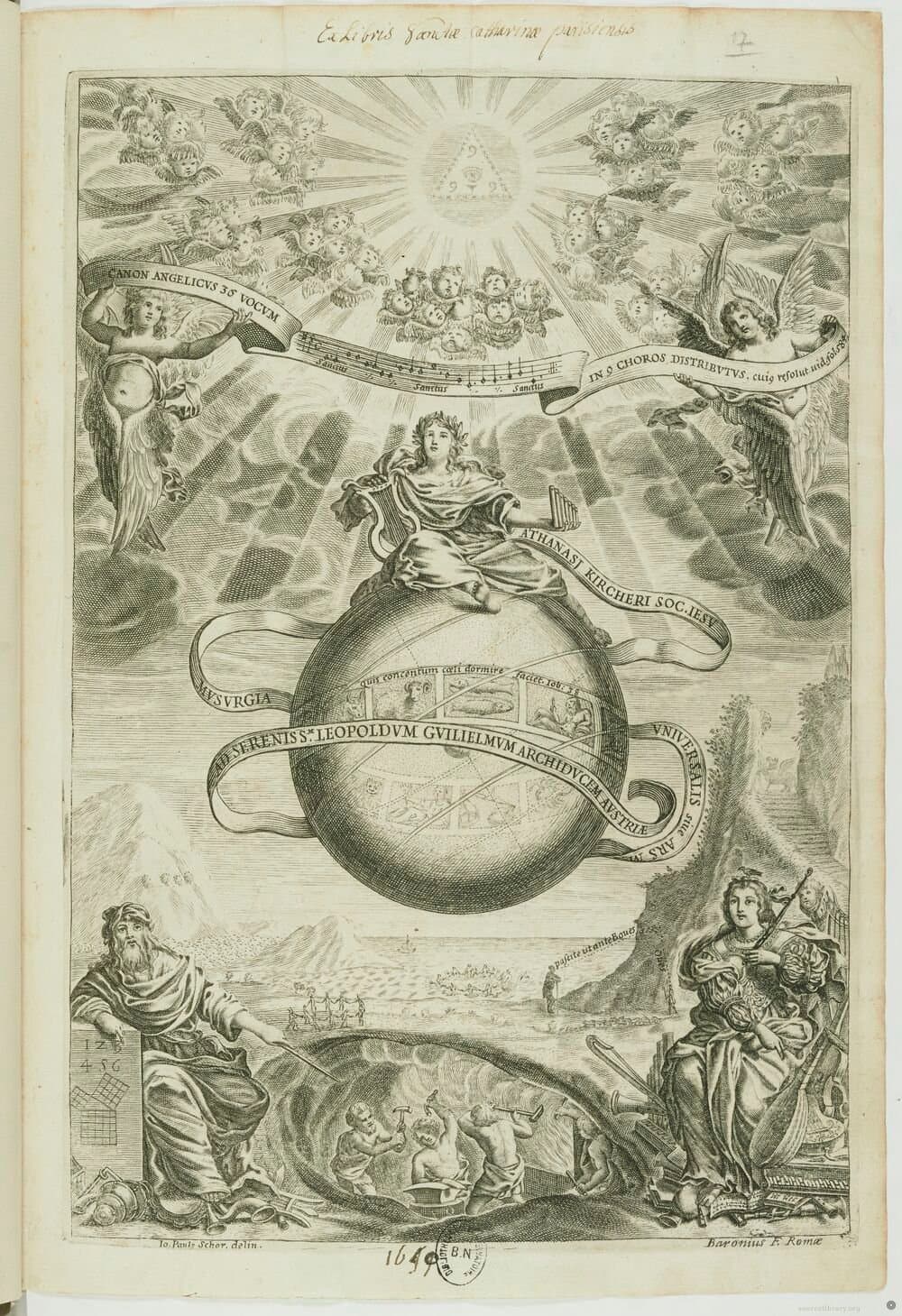
Universal Music-making (Musurgia Universalis), Volume I
Athanasius Kircher, 1650First Complete Translation
A massive encyclopedia of acoustics that treats music as the fundamental law of the cosmos.
The Hieroglyphic Monad
John Dee, 1564
John Dee's esoteric treatise on a single symbol that supposedly contains all alchemical and astronomical knowledge.
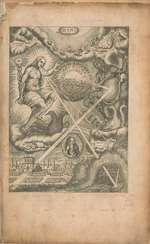
The Great Art of Light and Shadow
Athanasius Kircher, 1671First Complete Translation
Kircher's study of optics, including early descriptions of the 'magic lantern' and the behavior of light.
Key Figures
Athanasius Kircher
1602–1680
The 'Master of a Hundred Arts' who attempted to synthesize all human knowledge into a single Jesuit worldview.
Universal Music-making (Musurgia Universalis), Volume ILeonardo da Vinci
1452–1519
The quintessential polymath whose notebooks bridge the gap between artistic intuition and scientific rigor.
Forster Notebook IRobert Fludd
1574–1637
An English physician and Rosicrucian who defended the occult sciences against the rising tide of mechanical materialism.
The History of the Two Worlds“DOES NOT UNDERSTAND, SHOULD EITHER BE SILENT OR LEARN.”
“For arts are very easily lost, but only with difficulty and over a long time are they rediscovered.”
Illustrations from the Collection


Where to Start
The Visual Learner
A journey through the most iconic diagrams and illustrations that defined early science.
- 1On the Fabric of the Human Body
Examine the muscle men of Vesalius to see how anatomy was first mapped.
- 2The History of the Two Worlds
Follow Fludd's intricate engravings to understand the macrocosm-microcosm theory.
- 3The Great Art of Light and Shadow
Explore Kircher's visual experiments with light and shadow.
The Alchemical Historian
Trace the evolution of chemistry from laboratory secrets to public science.
- 1Alchemy
Start with Libavius, who attempted to organize alchemical knowledge into a textbook format.
- 2
- 3The Hermetic Museum, Restored and Enlarged
Consult this massive compendium for the diverse philosophical voices of late alchemy.
All Books
Browse Full Catalog→4,215 books in this collection
Two Treatises on the Nature of the Elements and the Fifth Essence
Drebbel, Cornelius
Key to the Secrets of Nature
Eckartshausen, Karl von
Eight Books on Astrology
Julius Firmicus Maternus
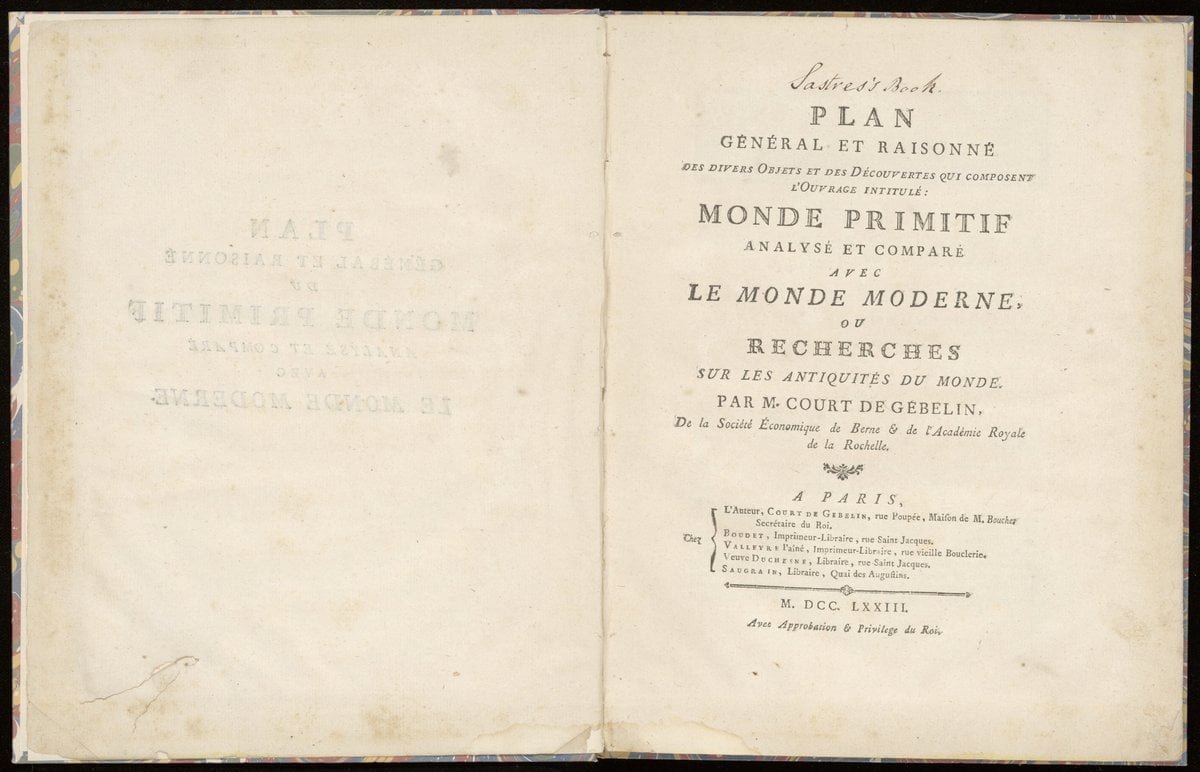
On Presages, Prophecies, and Divinations
Paracelsus, Theophrastus
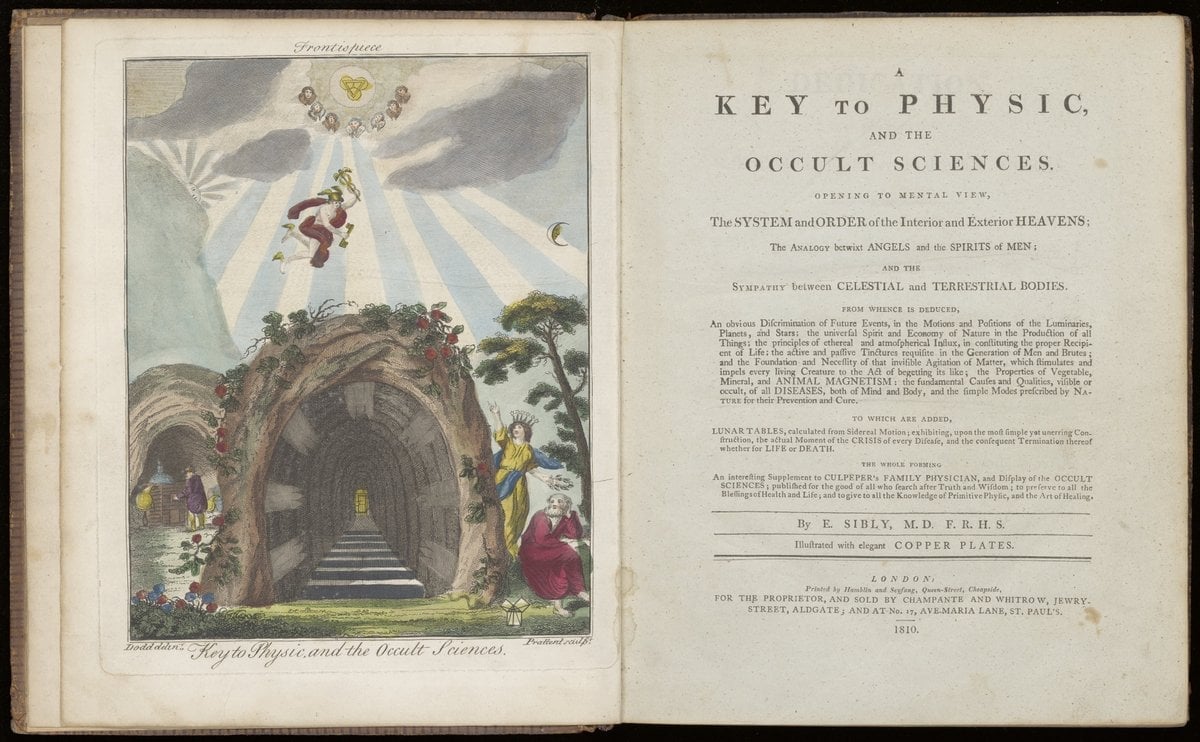
A key to physic, and the occult sciences
Sibly, Ebenezer
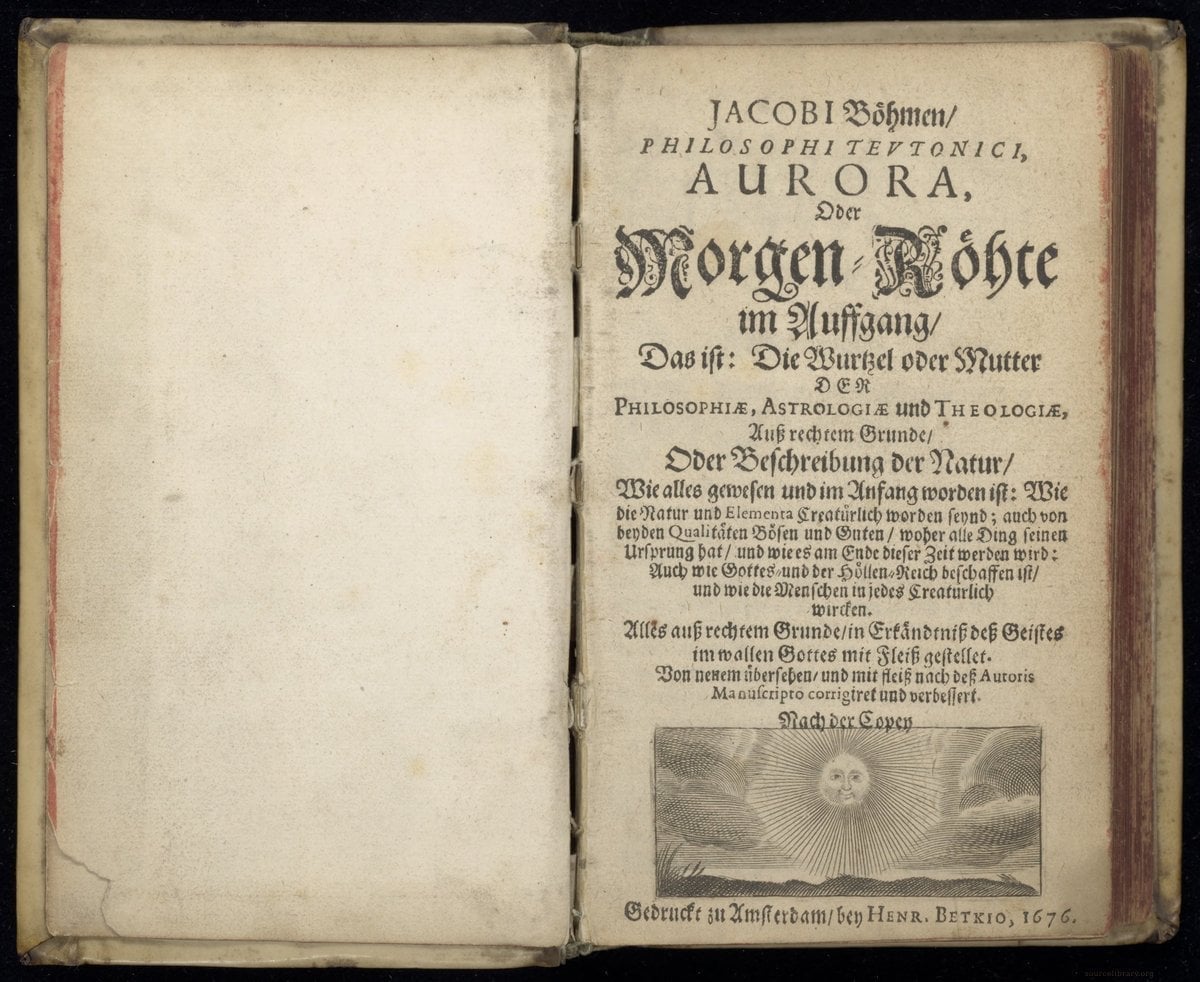
Aurora, or the Day-Spring
Boehme, Jacob
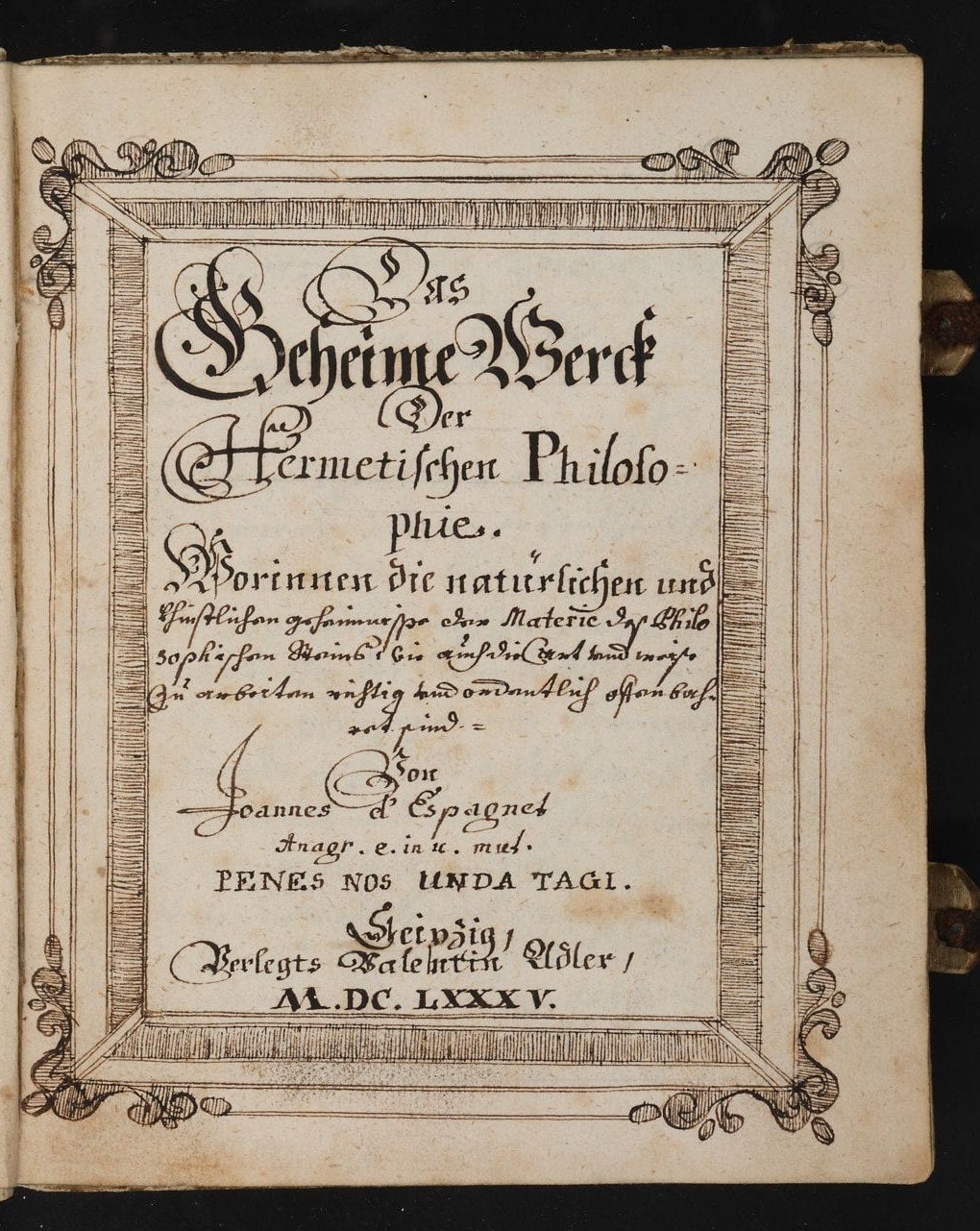
d'Espagnet — Secret Work of Hermetic Philosophy, post-1685
Jean d'Espagnet
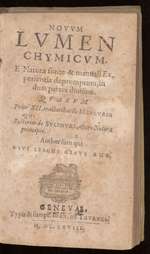
A New Light of Alchemy
attr. Sendivogius, Michael
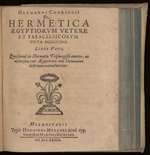
On the Ancient Hermetic Medicine of the Egyptians and the New Paracelsian Medicine
Conring, Hermann
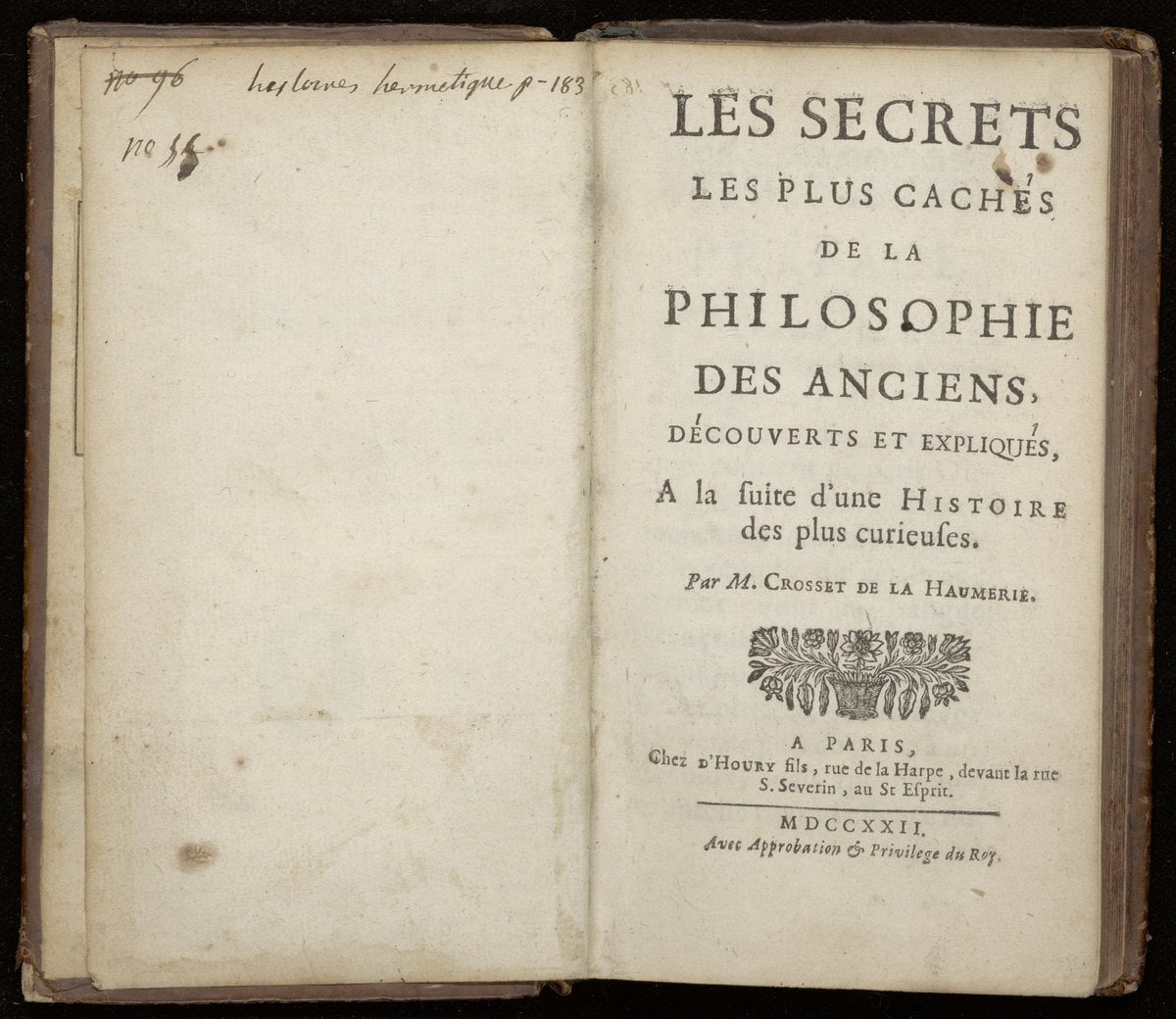
The Most Hidden Secrets of the Philosophy of the Ancients
attr. Colonne, François-Marie-Pompée
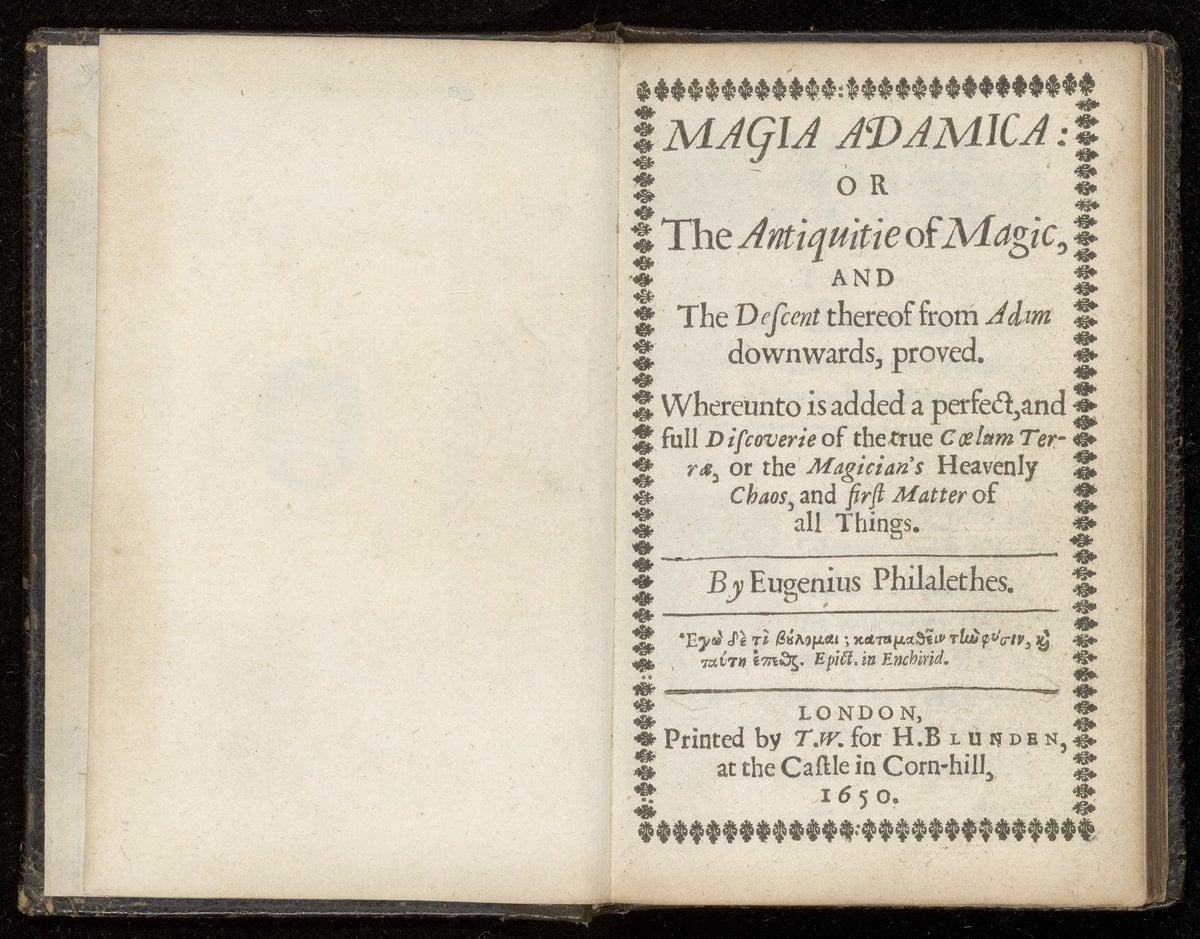
Adamic Magic, or the Antiquity of Magic
attr. Vaughan, Thomas
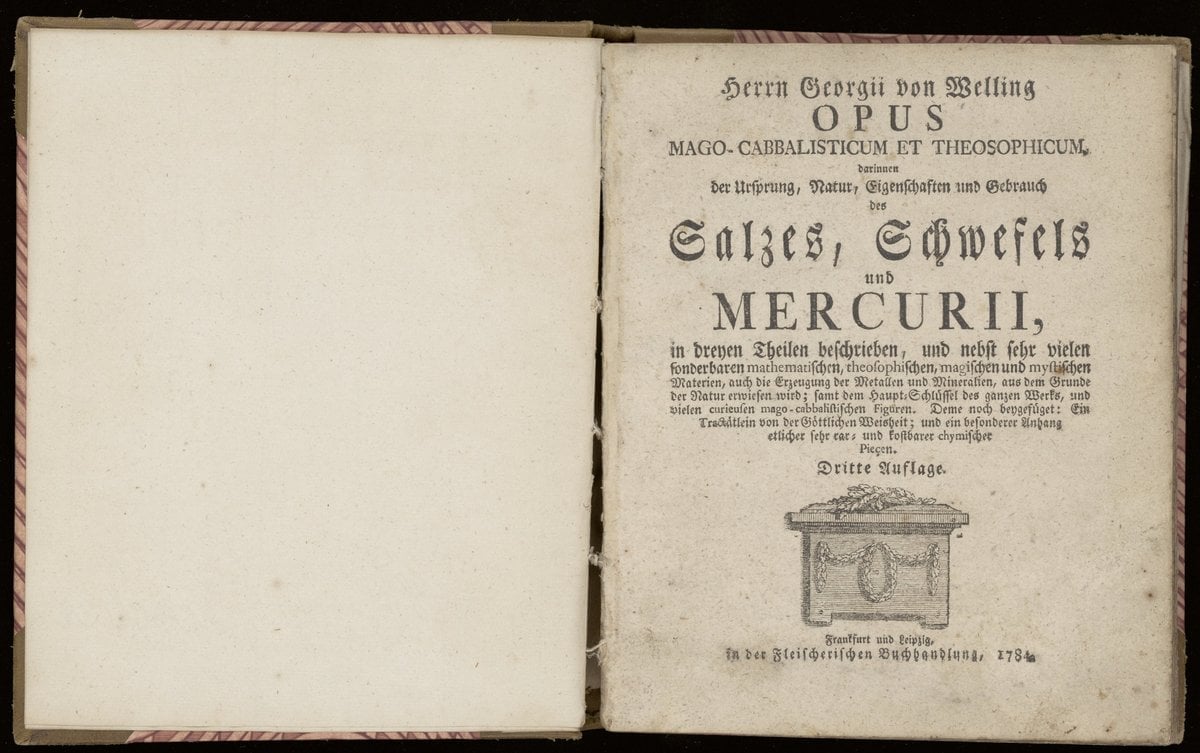
Magico-Cabbalistic and Theosophical Work
Welling, Georg von
Detailed Report on the Use of the Physico-Astrological Instrument
Hafenreffer, Samuel

Stonehenge
Stukeley, William