


Illustrations
Browse all17 images extracted
This woodcut depicts a scorpion, likely serving as a talismanic or astrological symbol within the text. Such illustrations were common in early modern Arabic manuscripts and printed books dealing with the occult sciences and astrology, where specific images were believed to harness celestial influences for protection or healing.
This striking portrait depicts a sage or philosopher, characterized by a long, flowing white beard and an intense, weathered expression. The bold use of red and blue creates a powerful visual contrast, suggesting the intellectual and spiritual depth of the figure. It likely serves as a representation of the author of the text, 'Ghayat al-Hakim' (The Goal of the Wise), a famous medieval work on magic and astrology.
This striking solid black woodcut from Robert Fludd's 'Utriusque Cosmi Historia' (1617) represents the 'Et sic in infinitum'—the infinite darkness and chaos that preceded the creation of the universe. It is one of the earliest and most radical examples of conceptual illustration, using total abstraction to depict a state of non-existence before the divine light of creation.
This woodcut from the 'Rosarium Philosophorum' depicts the resurrection of the alchemical King, a potent symbol for the completion of the Great Work. The figure emerges from a tomb, radiant and triumphant, signifying the final purification and spiritual rebirth of the philosopher's stone. The accompanying German text reinforces this theme of transformation through suffering into a clarified, stainless state.
This woodcut from the 'Rosarium Philosophorum' (1550) illustrates the final stage of the alchemical process, likened to the Resurrection. A figure emerges from a tomb, symbolizing the 'clarified' and perfected state of matter and spirit after undergoing the 'great suffering' mentioned in the accompanying German text. The imagery bridges Christian iconography with hermetic philosophy to represent the successful attainment of the Philosopher's Stone.
This historiated initial 'C' marks the beginning of a new section of text. Within the letter is a small, delicately rendered portrait of a male figure, likely representing the author or a scholar associated with the work. Such illuminations served both as decorative elements and as visual cues to help readers navigate the manuscript.
All Books
Browse Full Catalog→19 books in this collection
On Alchemy
Geber|Bacon, Roger|Richardus Anglicus|Calid|Hermes Trismegistus|Hortulanus
Books of Alchemy
Geber
Three Books on Alchemy
Geber
The Art of Gold-making
Morienus
On the Great Art
Democritus
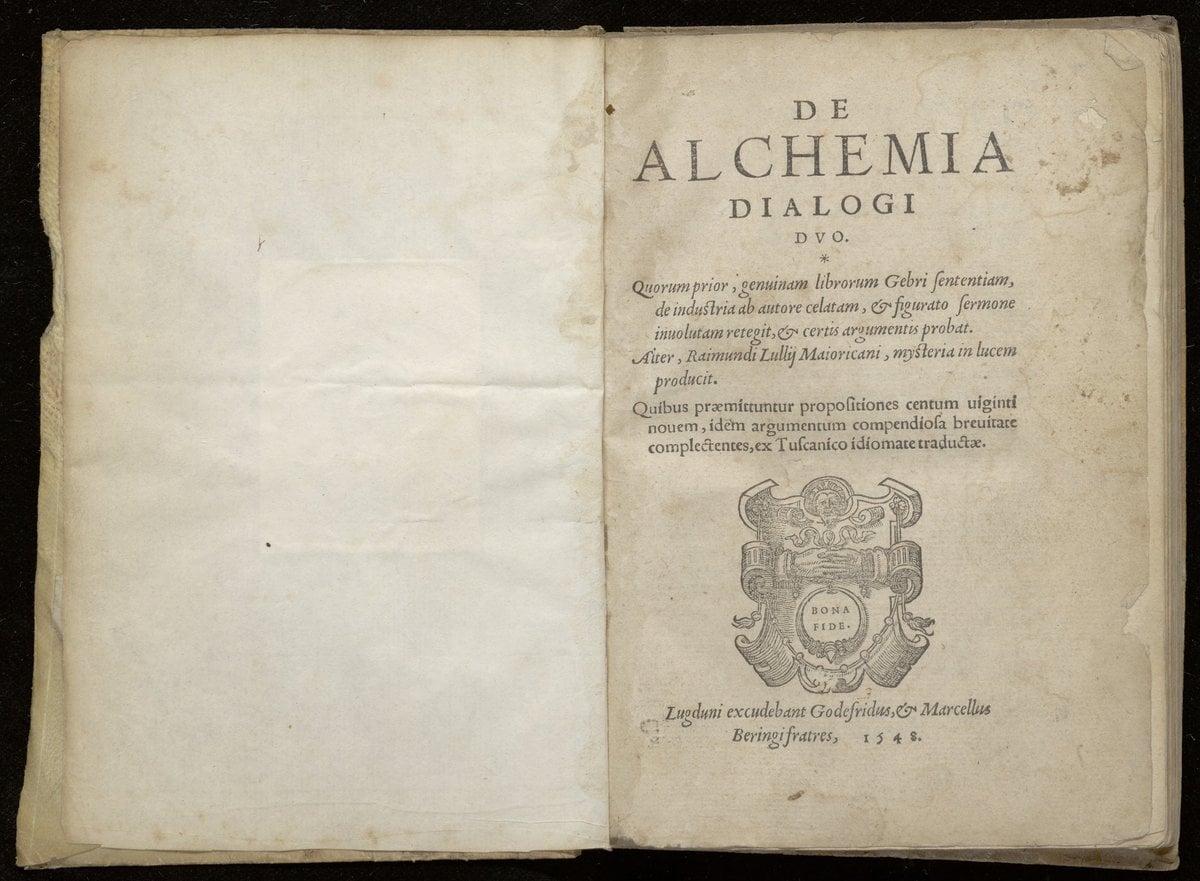
Two Dialogues on Alchemy, The Sentence, and the Tree of Life
[Bracesco, Giovanni]|Geber|Lull, Ramón
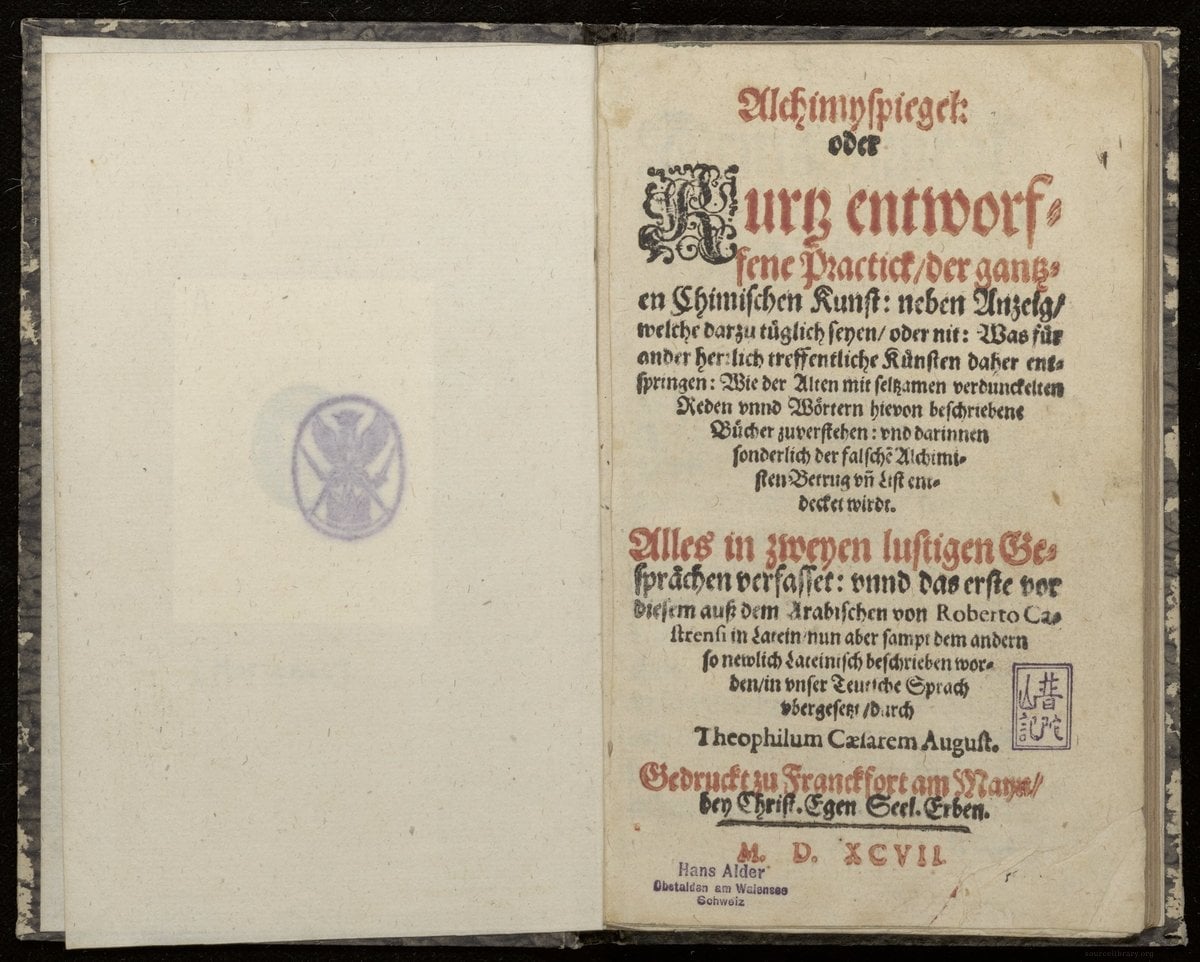
Mirror of Alchemy
attr. Morienus
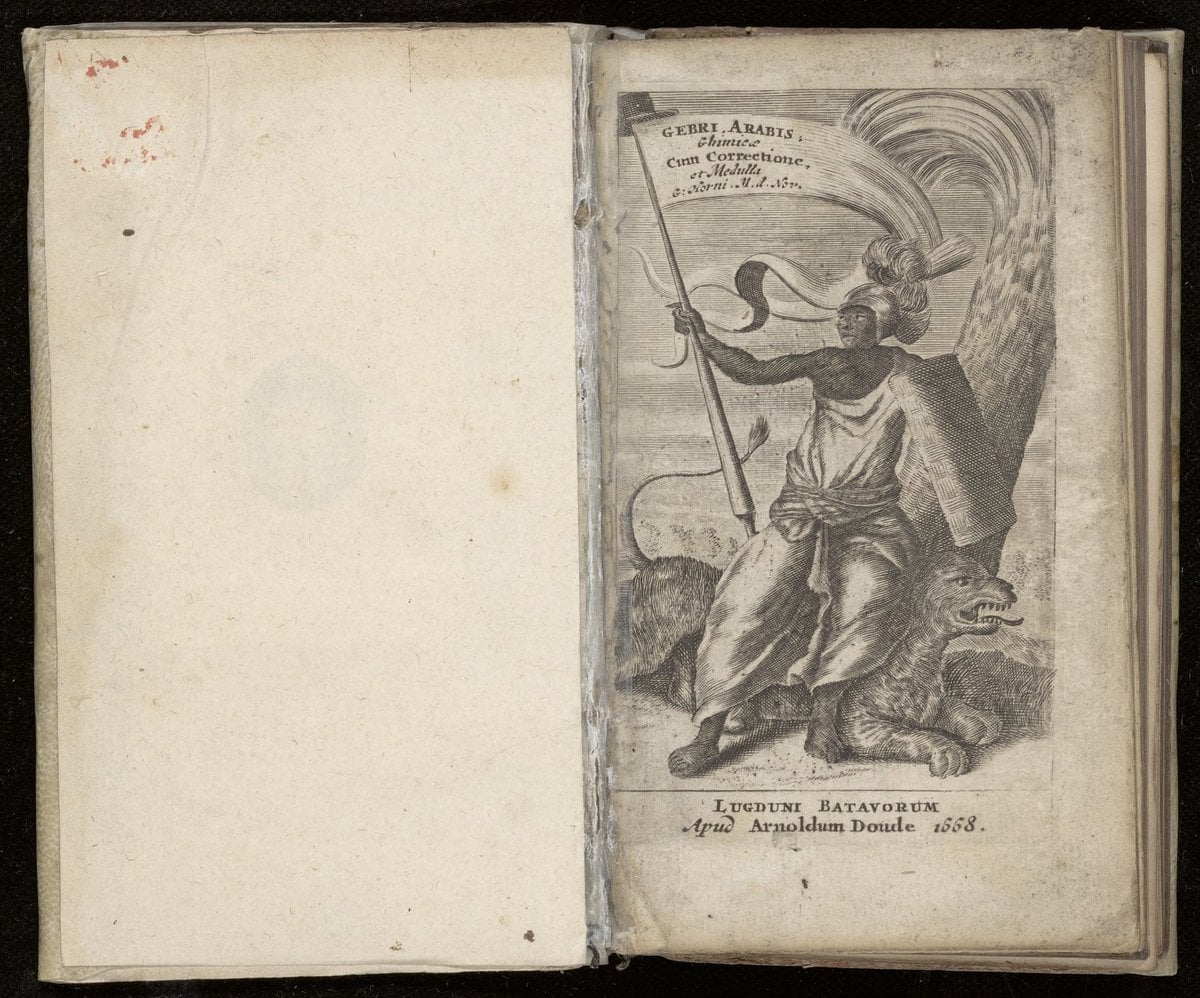
The Sum of Perfection and the Marrow of Alchemy
Geber
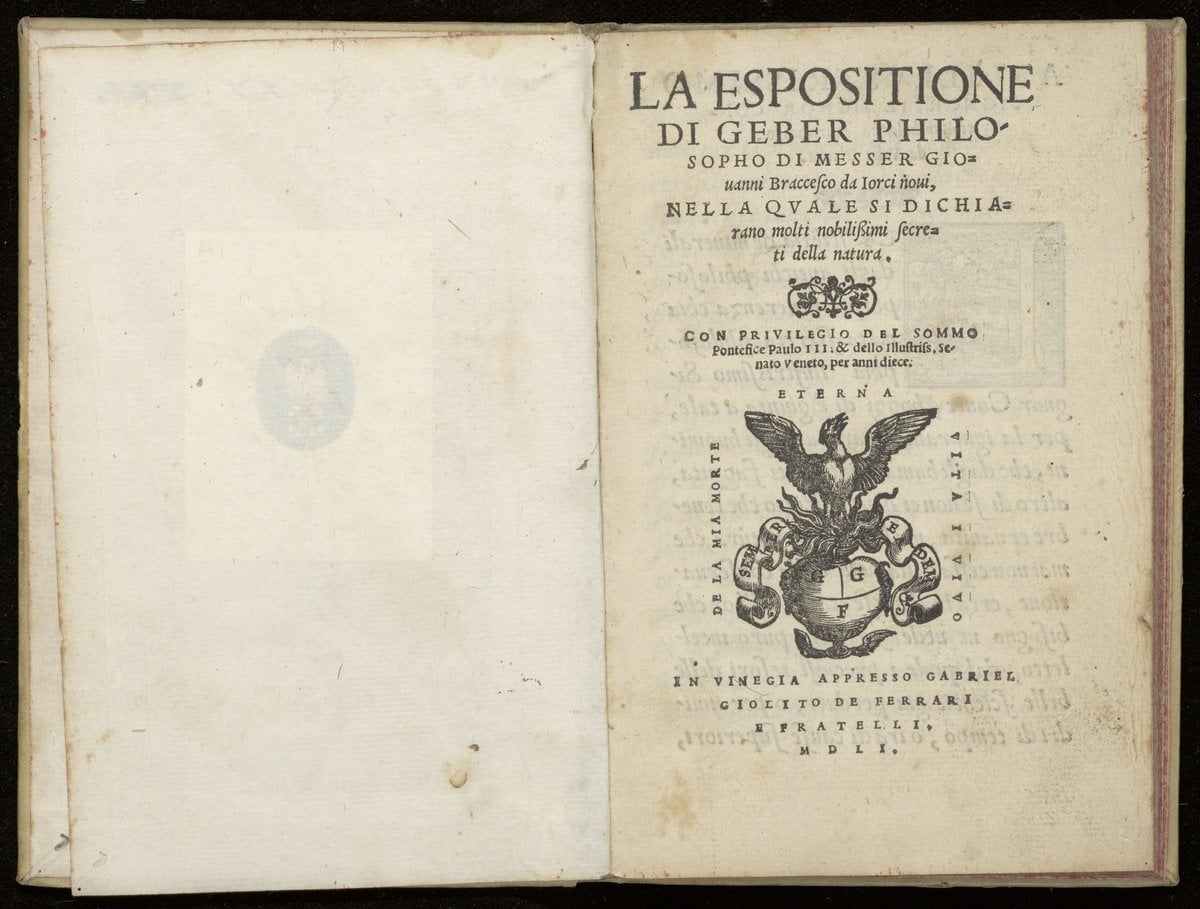
The Exposition of Geber
Bracesco, Giovanni