


The Art of Memory
Memory palaces, combinatorial machines, and the theatre of Giulio Camillo.
Illustrations
Browse all252 images extracted
This detailed engraving presents a portrait of the renowned Italian philosopher and astronomer Giordano Bruno. Created for an 1830 edition of his works, the image reflects the 19th-century's renewed interest in Bruno as a martyr for science and free thought.
This geometric diagram from Giordano Bruno's works illustrates complex theories of perspective and visual perception. It uses a series of nested triangles and arcs to demonstrate how the horizon and visual angle change in relation to distance and the curvature of a sphere, reflecting Bruno's deep engagement with the science of optics.
This woodcut depicts an allegorical representation of Venus, identified in the text as one of the 'seven images of Venus.' The figure is shown with celestial and planetary symbols, illustrating Giordano Bruno's intricate use of astrological imagery within his systems of memory and philosophy.
This intricate engraving from Robert Fludd’s 1619 treatise illustrates the 'Divine Numbers' and their role in the structure of the universe. The diagram maps the descent of the soul from divine unity into the multiplicity of the material world and its subsequent return to perfection, categorized through celestial, ethereal, and elemental realms.
This intricate woodcut illustrates Mount Randa in Mallorca, a location central to the life and mystical experiences of the philosopher Ramon Llull. The image depicts a winding path that serves as a metaphor for spiritual ascent, guiding the viewer from the bustling activity of the coast and valley up to the quiet contemplation of the mountaintop sanctuary. The inclusion of a procession and various architectural landmarks highlights the site's importance as a place of pilgrimage and intellectual retreat.
This woodcut, titled 'Area Democriti' (The Area of Democritus), illustrates Giordano Bruno's theories on the 'minimum' or the fundamental building blocks of the universe. The arrangement of seven circles demonstrates the geometric packing of atoms, reflecting Bruno's synthesis of Pythagorean geometry and ancient Greek atomism. The four stars in the corners anchor the diagram within a celestial or metaphysical framework typical of Bruno's hermetic philosophy.

This woodcut diagram, titled 'Antiphontis Tetragonismus' (Antiphon's Quadrature), illustrates Giordano Bruno's philosophical approach to the problem of squaring the circle. Found in his 1591 treatise 'De Triplici Minimo et Mensura', the image synthesizes Euclidean geometry with Hermetic symbolism to represent the relationship between the finite and the infinite. The central figure integrates a circle, square, and star, serving as both a mathematical proof and a mnemonic device for Bruno's complex cosmological system.

This woodcut depicts the zodiac sign Virgo as a seated woman surrounded by floral motifs. It serves as a visual mnemonic for the astrological descriptions provided in the accompanying Latin text, illustrating the first 'face' or decan of the sign.

This intricate frontispiece from Robert Fludd’s monumental work on the microcosm illustrates the Renaissance concept of man as a reflection of the universe. A central human figure is positioned within a series of concentric spheres that map out the physical, celestial, and divine hierarchies, all illuminated by the radiant light of the Creator. Engraved by Johann Theodor de Bry, this image is a masterpiece of early 17th-century scientific and mystical illustration.
Before hard drives, there were memory palaces. Simonides invented the technique; the Romans perfected it; Giulio Camillo built a physical theatre to embody it; Bruno turned it into a tool for cosmic knowledge; Llull made it a combinatorial engine. This collection traces the ancient art of artificial memory through its Renaissance apotheosis.
Essential Reading
The foundational texts of this tradition
The General Great Art
Ramon Llull; ed. Bernardus la Vinheta, 1517First Translation
This is a foundational text of Ramon Llull's Ars Magna, explicitly mentioned as a 'combinatorial engine' in the collection's description.
Giulio Camillo: Tutte le Opere (1555)
Giulio Camillo Delminio, 1550First Translation
The collected works of Giulio Camillo are essential for understanding his memory theatre, a central element of the collection.
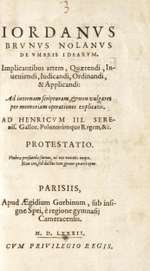
Giordano Bruno: De Umbris Idearum (1582 First Edition)
Giordano Bruno, 1582
This is a seminal work by Giordano Bruno, directly detailing his system of memory and ideas.
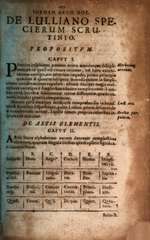
The Works of Ramon Llull on the Universal Art with Commentaries by Giordano Bruno
Lullus, Raimundus, 1651First Translation
This work uniquely combines the contributions of Ramon Llull and Giordano Bruno on the Universal Art, directly linking two central figures of the collection.
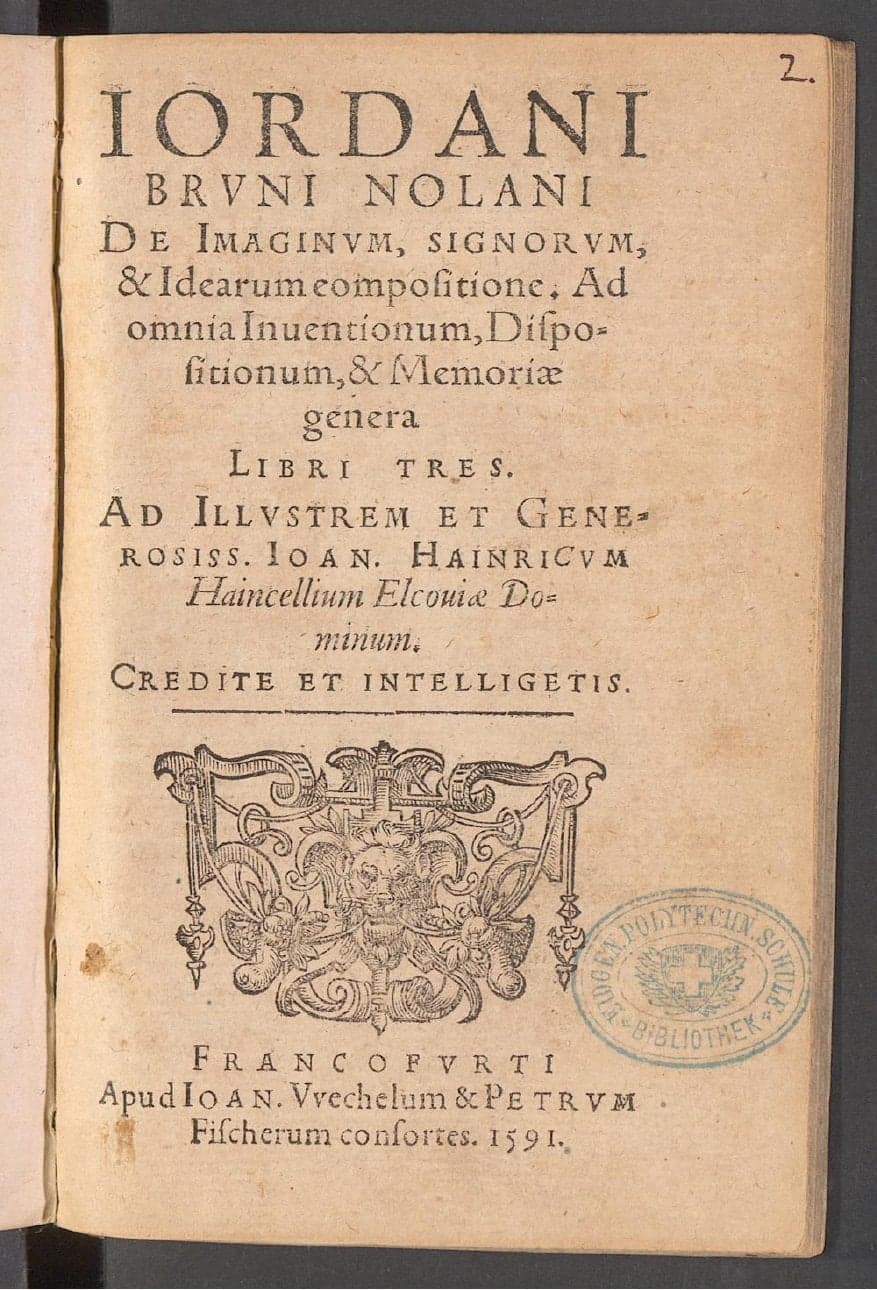
Iordani Bruni Nolani de imaginum, signorum, & idearum compositione
Bruno, Giordano, 1591
This work by Bruno directly addresses the composition of images, signs, and ideas, which are fundamental to his advanced memory systems.
Important Works
Significant texts that deepen understanding
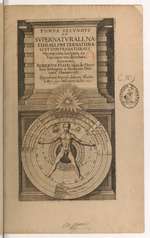
History of the Microcosm, Volume II
Robert Fludd, 1619First Complete Translation
Fludd's work often integrates memory techniques within a broader Hermetic and philosophical system, reflecting the Renaissance expansion of the art.
Invitation to an Inaugural Oration on the Faculty of Extemporaneous Speaking and the Art of Ramon Llull
Schmid, Johann, 1685First Translation
This work directly references Ramon Llull's Art, connecting it to rhetoric and its practical applications.
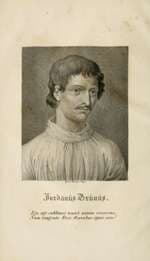
Collected Works of Giordano Bruno the Nolan
Giordano Bruno, 1830First Translation
These collected works provide comprehensive insight into Giordano Bruno's philosophical output, which underpins his memory systems.
The Incantation of Circe
Giordano Bruno, 1582First Translation
Bruno's work on magic and images is closely related to the symbolic and imaginative components of his memory systems.
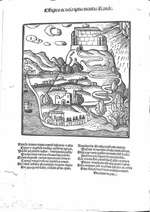
Ramon Llull Ars Inventiua Veritatis (1515)
Ramon Llull, 1515First Translation
This is a key work by Ramon Llull demonstrating his combinatorial method for discovering truth.
The Great Art
Ramon Llull / Bernardus de Lavinheta, 1523First Translation
This edition of Llull's 'Great Art' is a foundational text for understanding his combinatorial engine.
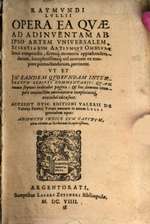
The Works of Ramon Llull Pertaining to the Universal Art
Lullus, Raimundus, 1609First Translation
This collection provides comprehensive insight into Ramon Llull's Universal Art, a key combinatorial memory system.
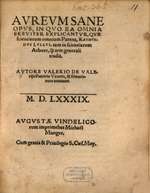
A Golden Work Explaining the Tree of Science and General Art of Ramon Llull
Valeriis, Valerius de, 1589First Translation
This work provides an explanation of Ramon Llull's 'Tree of Science' and 'General Art,' making his complex system more accessible.
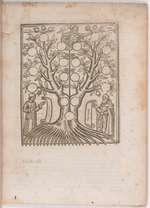
The Tree of Science
Ramon Llull, 1515First Complete Translation
This is a significant work by Ramon Llull that illustrates his universal system of knowledge, which underpins his combinatorial art.
All Books
Browse Full Catalog→45 books in this collection
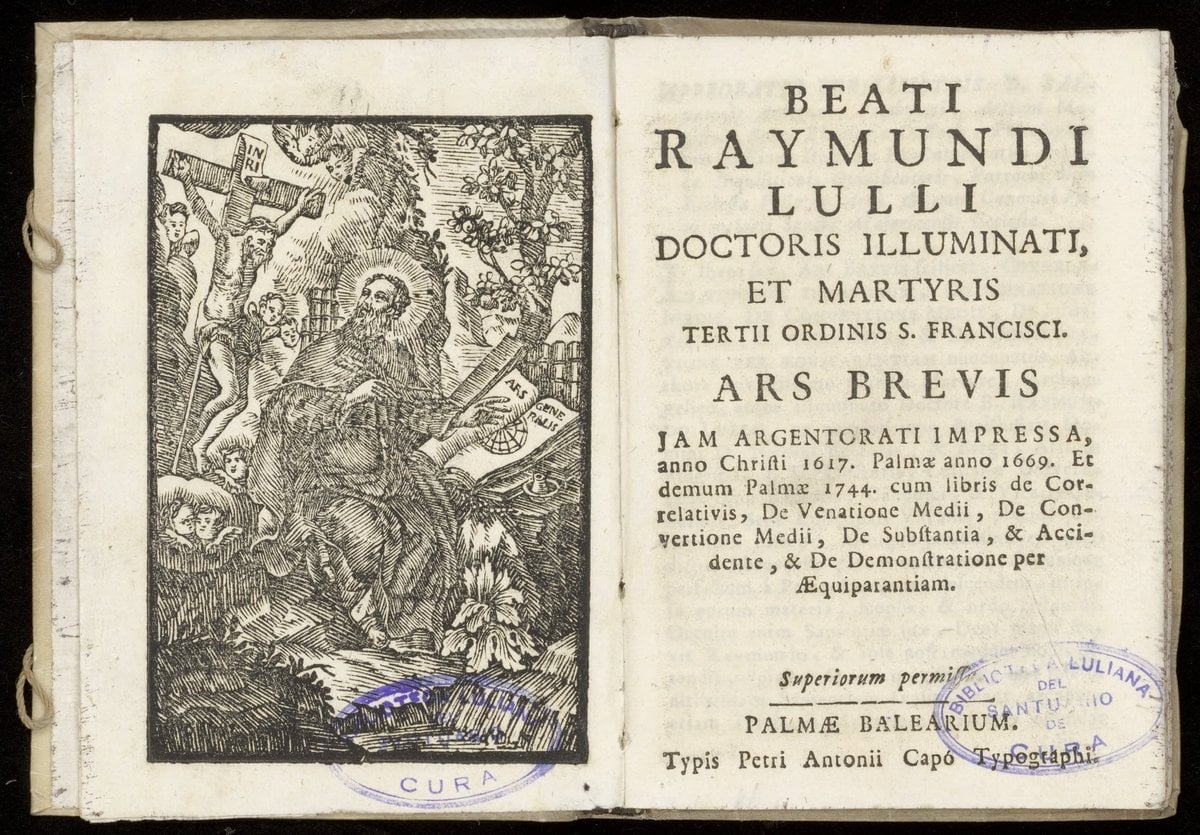
The Short Art
Lull, Ramón
Llull — Tree of Desired Philosophy, ca. 1600 Latin MS
Ramon Llull
The Wonder-Working Word
Reuchlin, Johann
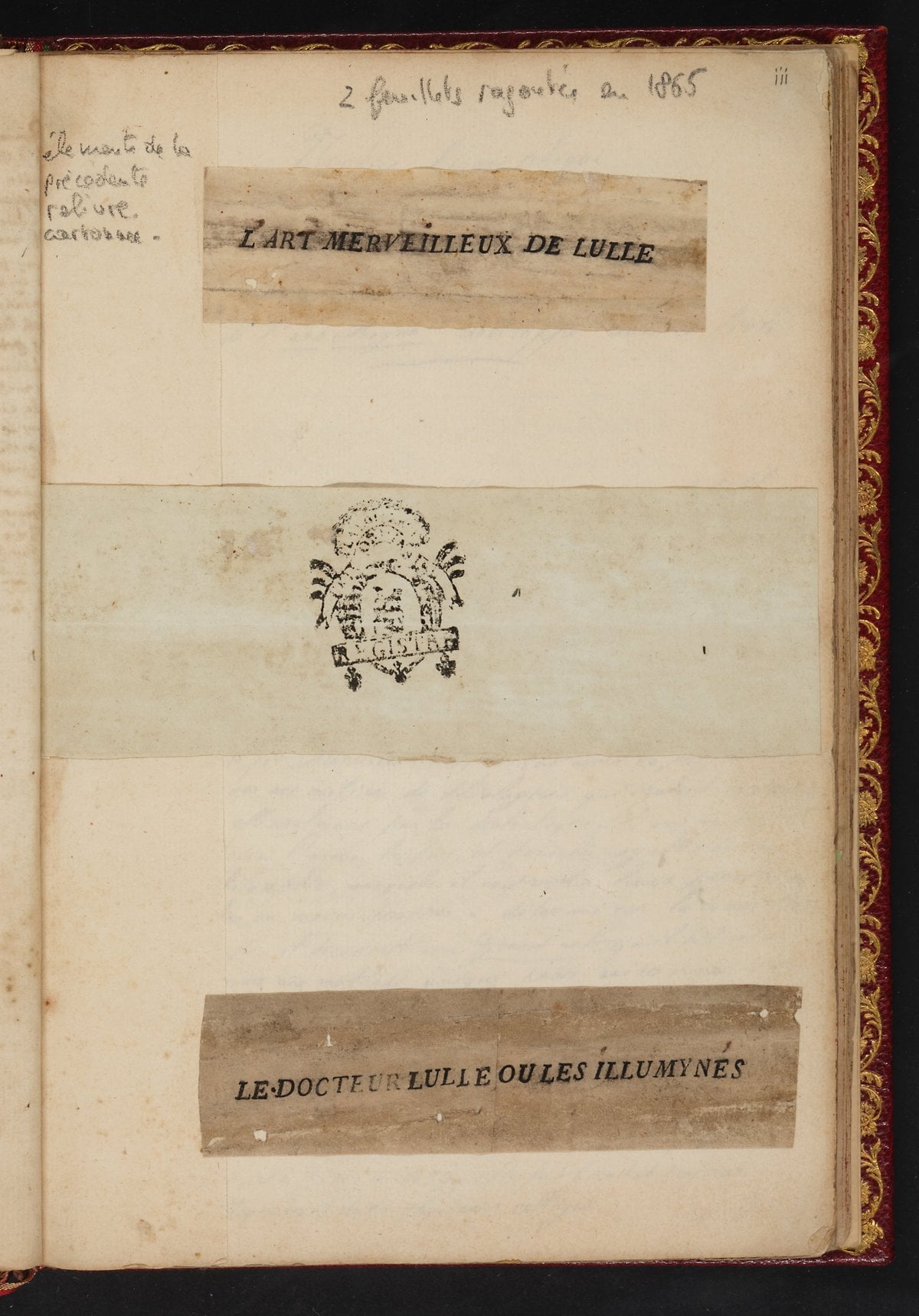
Ramon Llull — Ars Magna, 1686 MS Copy
Ramon Llull
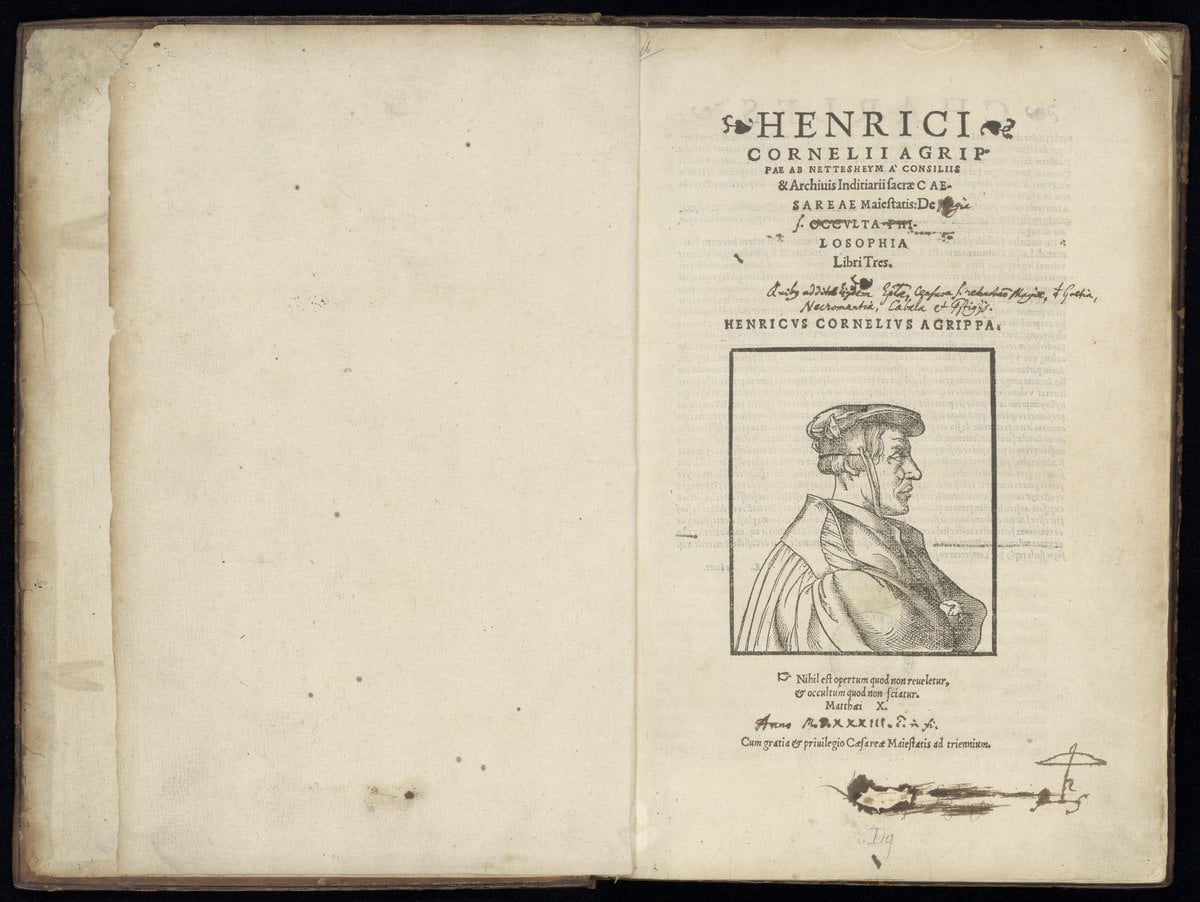
Three Books of Occult Philosophy
Agrippa, Henricus Cornelius
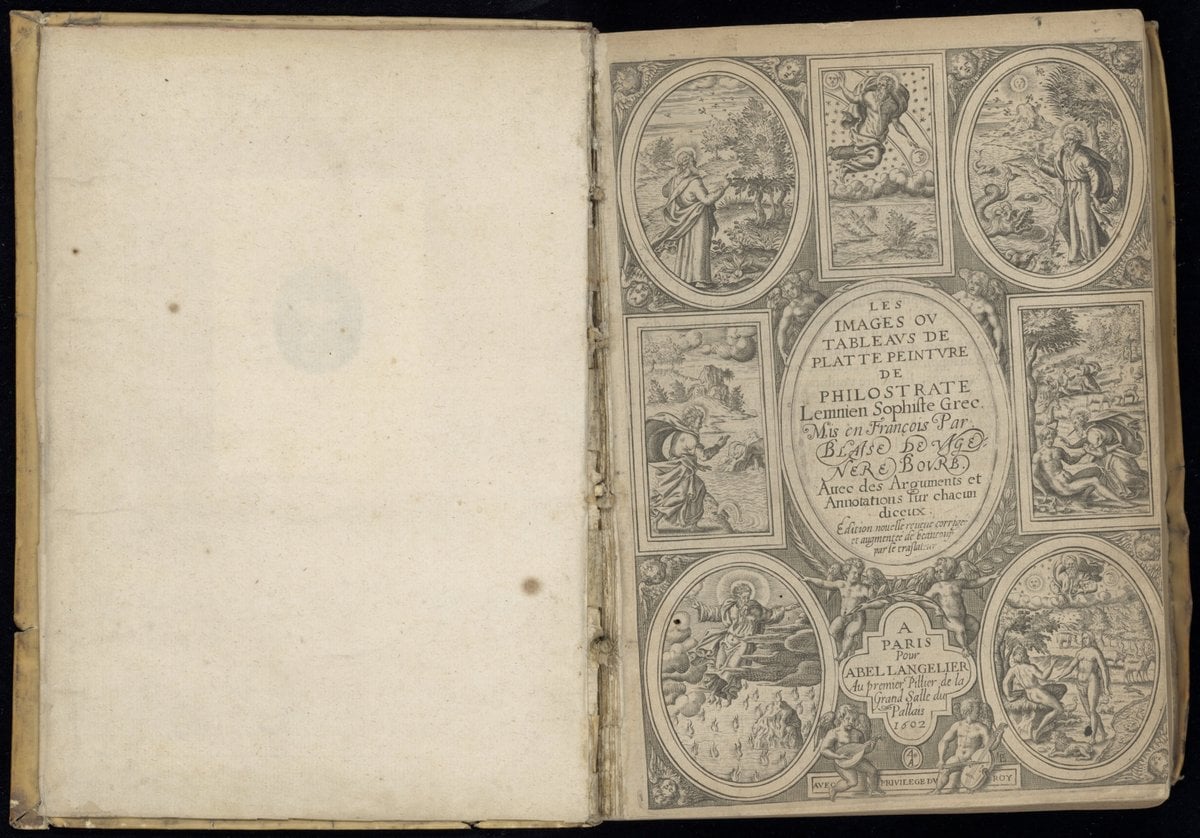
The Images of Philostratus
Philostratus
The Metamorphosis
Paracelsus, Theophrastus
Giordano Bruno — Infinite Universe, 17th-Century English MS
Giordano Bruno
Short Treatise on the Kabbalistic Hearing
Lull, Ramón
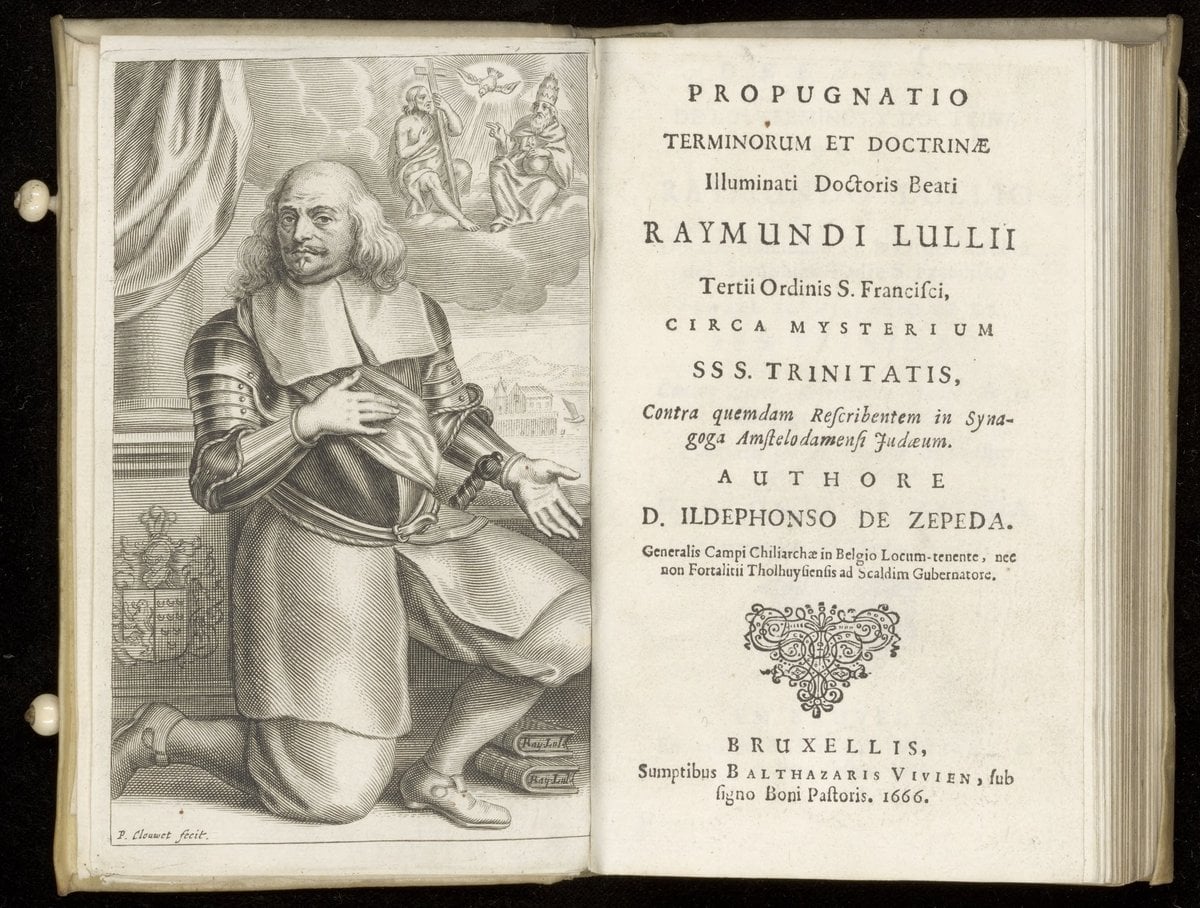
Defense of the Terms and Doctrine of Ramon Llull
Zepeda, Alonso de