


Illustrations
Browse all500 images extracted
This striking woodcut from Ulisse Aldrovandi's encyclopedic works depicts a father and son afflicted with hypertrichosis, a condition causing excessive hair growth over the entire body. Identified as members of the famous Gonsalvus family, who were treated as 'wild men' in various European royal courts, these portraits exemplify the Renaissance era's scientific curiosity regarding the 'monstrous' and the limits of human nature.
This striking 12th-century illustration from an astronomical treatise personifies the Sun and Moon. Sol is depicted in the upper register driving a four-horse chariot across a red sky, while Luna occupies the lower register in a chariot drawn by oxen against a blue background, illustrating the medieval conception of the heavens.
This detailed engraving reproduces a miniature from a 12th-century Psalter held in the Vatican Library. It depicts a classical pastoral scene where a young man plays a lyre for a seated woman, surrounded by goats and set against a backdrop of ancient ruins and lush foliage. The image reflects the enduring influence of classical motifs in medieval manuscript illumination.
This ornate frontispiece introduces Ulisse Aldrovandi's monumental work on cloven-hoofed quadrupeds, published in 1621. The architectural frame is populated by classical figures and heraldic symbols, including the coat of arms of the dedicatee, Paris von Lodron, Archbishop of Salzburg. The two powerful lions at the base, embodying 'Fortitude and Magnanimity,' reflect the noble virtues associated with both the patron and the scientific endeavor itself.
This woodcut depicts a 'Homo, ore & collo Gruis' (Man with the mouth and neck of a Crane), a monstrous hybrid from Ulisse Aldrovandi's works on natural history. The figure is shown in contemporary Renaissance attire, emphasizing the unsettling blend of the human and the avian. Such illustrations were part of a broader early modern fascination with 'monsters' and the limits of the natural world.
This intricate engraving serves as the author portrait for Ulisse Aldrovandi's monumental work on birds. Aldrovandi is shown at age 77, framed by a collection of animals—including an owl, eagle, and peacock—that represent his lifelong dedication to documenting the natural world and his status as a premier naturalist of the Renaissance.

This elaborate architectural frontispiece serves as the title page for Ulisse Aldrovandi's monumental study of serpents and dragons. The design features a central title panel flanked by formidable dragons, topped by a coat of arms supported by putti, and grounded by a base containing symbolic medallions representing health and immortality. It exemplifies the fusion of scientific inquiry and allegorical art characteristic of early modern natural history publications.

This engraving reproduces a 15th-century panel painting from the Prague school, depicting Saint Augustine in the role of an Episcopal scribe. He is shown in full liturgical vestments, including a mitre, meticulously recording text in a large volume. The original work, characterized by its delicate relief and gilding, was part of the decorative scheme for the Chapel of the Castle of Karlstein.

A medieval T-O map (Mappa Mundi) from an 11th-century manuscript. It depicts the world divided into three continents—Asia, Europe, and Africa—with Jerusalem prominently placed at the center, reflecting the theological worldview of the period.
Visual Art
Browse all art →60 works of visual art in this collection
 painting
Kangaroo — Aboriginal Bark Painting
Aboriginal Australian artist, Western Arnhem Land
A stylized depiction of a kangaroo rendered in an X-ray style, showing both its external silhouette and internal anatomical features.
 print
printFabel van Jupiter en de slang
Aegidius Sadeler
Jupiter, presiding over a banquet of gods on a cloud, looks down at a serpent on the ground holding a rose in its mouth.
 print
printFabel van de aap en de vos
Aegidius Sadeler
An anthropomorphic monkey and a fox are seated facing each other in a landscape featuring a hilltop castle and a watermill.
 print
printFabel van de aap en vrouw
Aegidius Sadeler
A group of people observe a costumed monkey standing in their midst while another monkey steals food from a woman's basket and a man plays the bagpipes.
 print
printFabel van de barende berg
Aegidius Sadeler
The print illustrates Aesop's fable of the Mountain in Labor, showing a group of onlookers watching as a massive, rumbling mountain produces only a tiny mouse.
 print
printFabel van de beer en de bijen
Aegidius Sadeler
A bear is swarmed and stung by bees after overturning their hives.
 print
printFabel van de beer en de twee reizigers
Aegidius Sadeler
An engraving illustrating Aesop's fable of the Bear and the Two Travelers, where one man feigns death to avoid a bear's attack while another watches from a tree.
 print
printFabel van de bizon en de andere dieren
Aegidius Sadeler
A large bison or aurochs stands in a landscape surrounded by a gathering of animals, including a camel, a goat, a donkey, and a hound.
 print
printFabel van de boer en de muizen
Aegidius Sadeler
A peasant attempts to catch a mouse on the ground while a large bonfire burns in the background.
 print
printFabel van de boer en de ooievaar
Aegidius Sadeler
Aegidius Sadeler's engraving illustrating the Aesopic fable of the Farmer and the Stork.
 print
printFabel van de boer en de sater
Aegidius Sadeler
The peasant and the satyr from Aesop's fables, depicting the moment the man blows on his soup to cool it.
 print
printFabel van de buffel en de boer
Aegidius Sadeler
A peasant in a fur hat and rustic clothing leads a large water buffalo by a rope through a forest.
 print
printFabel van de egel en de slang
Aegidius Sadeler
A hedgehog and a coiled snake confront each other at the entrance of a rocky cave within a mountainous landscape.
 print
printFabel van de ekster met de pauwenveren
Aegidius Sadeler
A group of peacocks attack a jackdaw that has attempted to disguise itself by attaching peacock feathers to its tail.
 print
printFabel van de eland en de mens
Aegidius Sadeler
An elk with broad antlers stands in a landscape facing a man in early 17th-century attire.
The 2nd-century Physiologus — the ur-text of the genre — described the pelican feeding its young with its own blood and the phoenix rising from ashes. Medieval bestiaries like Bodley 764 added gold-leaf miniatures. Aldrovandi and Gesner attempted encyclopedic catalogs. This collection traces the bestiary from moral allegory to natural history.
Essential Reading
The foundational texts of this tradition
Texts on Prognostication
Matthew Paris; Bernardus Silvestris (attributed), 1250First Translation
This is a significant medieval bestiary manuscript, exemplifying the genre's development with its descriptions and potential illuminations.
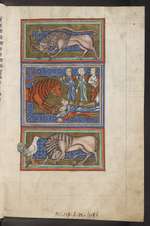
Bestiary
Anonymous, 1240
This is a direct example of a medieval bestiary, central to the collection's focus on the genre.
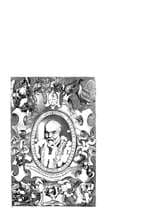
Ornithologiae: de avibus historiae libri XII
Ulisse Aldrovandi, 1599First Complete Translation
This encyclopedic work on birds by Aldrovandi exemplifies the shift towards systematic natural history, moving beyond purely allegorical descriptions.
Important Works
Significant texts that deepen understanding
On the Properties of Things
Bartholomaeus Anglicus, 1275
This influential medieval encyclopedia includes extensive sections on animals, reflecting and expanding upon bestiary traditions within a broader descriptive context.

Physica - Hildegard von Bingen
Hildegard of Bingen, 1533
This medieval natural history text describes animals alongside plants and minerals, reflecting a broader understanding of nature that complements the bestiary tradition.
Wonders of the Lands
Zakariya al-Qazwini, 1400First Complete Translation
This Arabic cosmography provides extensive descriptions of animals, including fantastical ones, offering a parallel tradition to European bestiaries in imagining the natural world.
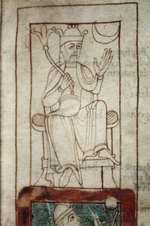
Wonders of the East and Astronomical-Calendrical Treatise
Anonymous, 1150
This text, particularly the 'Wonders of the East' component, describes exotic and monstrous creatures, directly contributing to the medieval imagination of animals and peoples.
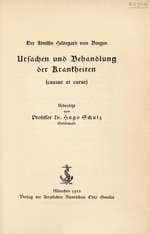
Causes and Cures (Causae et Curae)
Hildegard of Bingen, 1628
Like her Physica, this work by Hildegard von Bingen contributes to medieval natural history by describing animals and their properties within a broader cosmological framework.
Vat.lat.4275
Pseudo-Albertus Magnus, 1280First Translation
This manuscript, likely related to the tradition of Albertus Magnus, represents medieval efforts to systematically describe animals, bridging bestiary lore with early scientific inquiry.
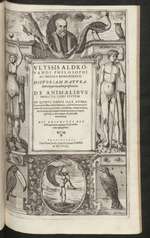
Ulyssis Aldrovandi ... De animalibus insectis libri septem
Aldrovandi, Ulisse, 1618
This extensive work on insects by Aldrovandi is a crucial example of early modern attempts at comprehensive zoological classification.
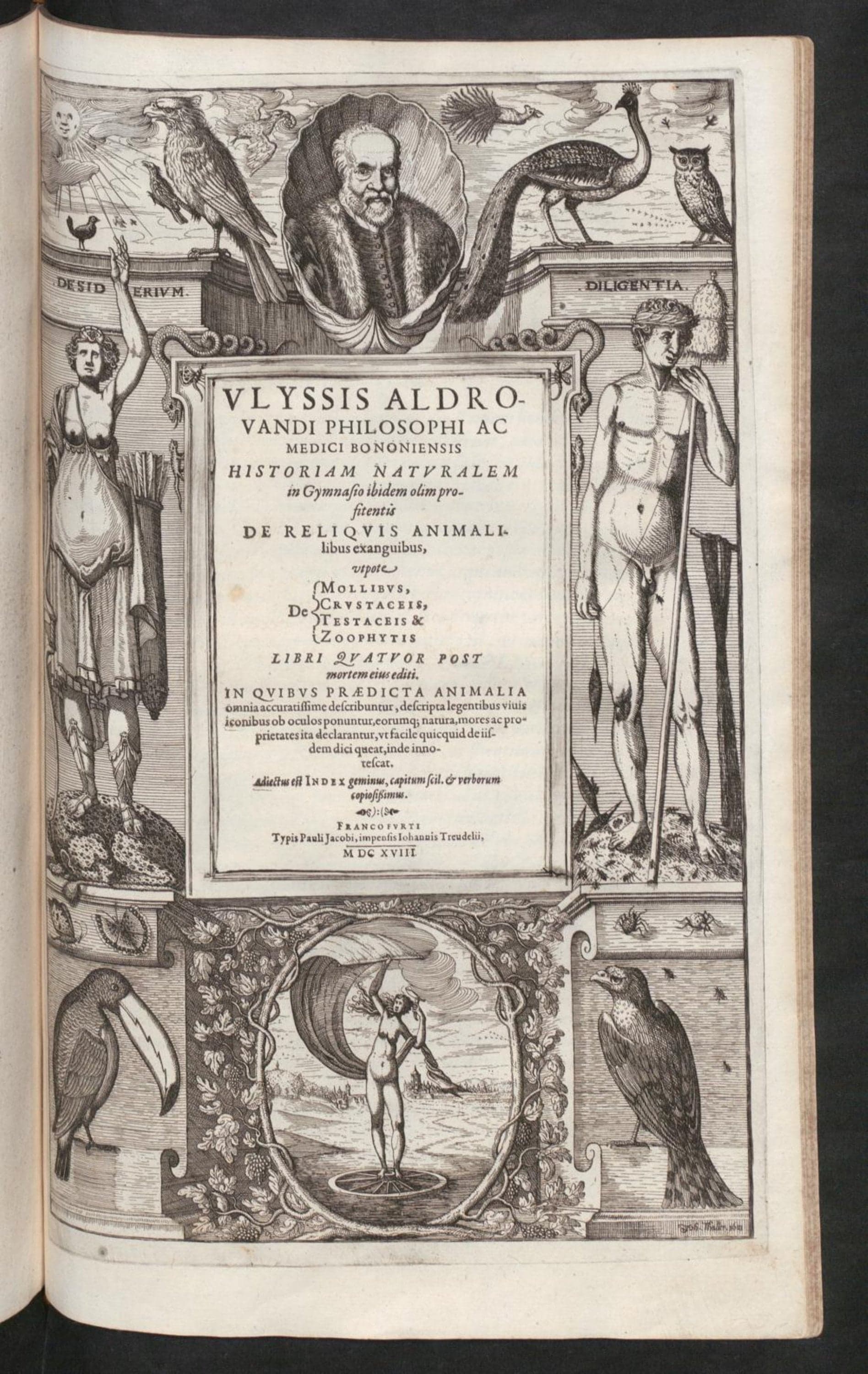
Ulyssis Aldrovandi ... De reliquis animalibus exanguibus, utpote de mollibus, crustaceis, testaceis & zoophytis, libri quatuor post mortem eius editi
Aldrovandi, Ulisse, 1618
This posthumously published work on invertebrates by Aldrovandi further demonstrates his comprehensive approach to natural history.
History of Monsters
Ulisse Aldrovandi, 1642First Translation
Aldrovandi's catalog of monsters reflects the enduring fascination with unusual creatures, bridging medieval bestiary traditions with early modern attempts at comprehensive natural history.
All Books
Browse Full Catalog→261 books in this collection