


Illustrations
Browse all500 images extracted
This celebrated frontispiece depicts Andreas Vesalius performing a public dissection in a packed anatomical theater, a scene that revolutionized medical study by emphasizing direct observation over ancient texts. Vesalius himself is the central figure, shown with his hands inside the cadaver, surrounded by a diverse crowd of onlookers and a symbolic skeleton that presides over the scene. Published in 1543, this woodcut is a masterpiece of Renaissance scientific illustration, capturing the dawn of modern anatomy.
This page features a detailed botanical illustration of an unidentified plant species, a hallmark of the Voynich Manuscript's herbal section. The drawing depicts a complex root system, distinctive lobed green leaves, and a tall flowering spike, all rendered in a characteristic stylized manner that has defied botanical identification for centuries.
This woodcut from Andreas Vesalius's 'De humani corporis fabrica' (1543) displays the array of instruments required for anatomical dissection. The meticulously rendered tools, including scalpels, hooks, and saws, reflect the systematic and empirical approach to medicine that Vesalius championed during the Renaissance.
A comparative anatomical illustration from a late 19th or early 20th-century Indian treatise, likely relating to Yoga or Ayurveda. The top figure shows a conventional Western-style sagittal section of the head with English labels, while the bottom figure maps the brain according to Tantric subtle anatomy as the Sahasrara, or thousand-petaled crown chakra. This work represents a historical attempt to reconcile ancient spiritual traditions with modern medical science during the colonial era.
This iconic woodcut from Andreas Vesalius's 1543 masterpiece, De Humani Corporis Fabrica, depicts a human skeleton in an anterior view. The figure is posed naturally within a landscape, leaning on a spade, a composition that merges rigorous anatomical observation with the artistic tradition of the memento mori, reminding the viewer of mortality while advancing medical knowledge.
This intricate engraving serves as the central visual argument for Robert Fludd's 'Philosophia Moysaica' (1638). It presents a complex cosmological diagram illustrating the relationship between the divine, the celestial, and the terrestrial realms through a series of interlocking circles and symbolic figures. Fludd, a prominent Hermetic philosopher and physician, used such imagery to synthesize biblical narrative with contemporary scientific and mystical thought, representing the unfolding of creation from the divine unity.

This woodcut depicts the 'Lung God' (Feishen), personified as a tiger-like mythical beast. It is an illustration from the Sancai Tuhui, a comprehensive Ming Dynasty encyclopedia, reflecting traditional Chinese beliefs that linked internal organs to specific deities and symbolic animals.

This vibrant illumination depicts the legendary Peridexion tree from medieval bestiaries, whose sweet fruit attracts doves. The dragons at the base represent the devil, who is unable to enter the tree's shadow, symbolizing the protection offered by the Church or Christ to the faithful. The use of burnished gold leaf and rich lapis lazuli blue indicates a high-status commission, likely from a 13th-century English or French workshop.

This page features a detailed botanical illustration of an unidentified plant, a hallmark of the Voynich Manuscript's herbal section. The drawing depicts a central stem with large, multi-toned green and brown leaves, topped by a single blue flower and anchored by two prominent red bulbous roots. Like much of the manuscript, the plant does not correspond to any known species, contributing to the work's enduring mystery.
Visual Art
Browse all art →20 works of visual art in this collection
 anatomical
Anatomy of the Brain — Boerhaave
After Herman Boerhaave
This engraving depicts six distinct anatomical studies of the human brain and spinal cord, labeled Fig. 1 through Fig. 6, including horizontal cross-sections, a vertical view of the brain stem and spinal cord, and internal structures of the cerebellum.
 anatomical
Anatomy Theatre with Vesalius and Spigelius
After Isbrando de Diemerbroeck
This engraving depicts an anatomical theater scene featuring portraits of historical anatomists Andreas Vesalius and Adriaan van den Spiegel (Spigelius) standing on plinths flanking a central curtain, beneath which lies a cadaver on a table, all framed by an architectural colonnade containing small figures of figures in various stages of dissection.
 anatomical
De Humani Corporis Fabrica — Muscle Figure
Andreas Vesalius
A flayed, dissected human figure is depicted suspended by a rope tied around its neck to a vertical wooden post, with its musculature exposed for anatomical study.
 portrait
Portrait of Paracelsus
Anonymous (Dutch)
A portrait of the physician and alchemist Paracelsus, shown in bust-length profile, wearing a hat and a medallion.
 object
Ivory Skull — Memento Mori
Anonymous (European)
A finely carved anatomical representation of a human skull.
 drawing
Anatomical Drawing — Musculature
Anonymous (French, 18th century)
A drawing featuring a clothed female figure seated on the left and an anatomical human skeleton seated in an identical pose on the right.
 drawing
Anatomical Drawing — Skeletal Structure
Anonymous (French, 18th century)
A pair of side-by-side studies showing a draped male figure in a classical helmet and a matching human skeleton, both posed with their right arms extended in a pointing gesture.
 object
Japanese Anatomical Figure — Ivory
Anonymous (Japanese)
A miniature ivory carving of a human figure serving as an acupuncture anatomical model.
 anatomical
Dissection of the Side of the Neck
G. H. Ford
The image depicts a clinical anatomical dissection of the lateral neck region of a human cadaver, showing the superficial and deep structures including muscles, nerves, and major blood vessels.
 anatomical
Anatomy Theatre with Specimens and Skeleton
J. C. Stadler (after A. Pugin)
Two men stand on the tiered seating of a circular anatomy theatre looking toward a human skeleton suspended by a rope from the center of the domed skylight; a table below holds glass jars containing anatomical specimens.
 anatomical
Dissection of the Trunk — Seated Man
J. Maclise
A coloured lithograph depicting the dissected torso of a seated man, exposing his thoracic and abdominal organs.
 anatomical
Skeleton Leaning on a Spade — after Vesalius
J. Tinney (after Andreas Vesalius)
A human skeleton is depicted standing in a contrapposto pose, leaning its right elbow on the handle of an upright spade.
 anatomical
Skeleton on a Tombstone — after Vesalius
J. Tinney (after Andreas Vesalius)
A human skeleton stands in profile leaning its elbow on a stone pedestal, resting its chin on one hand while the other hand rests upon a detached human skull placed on the pedestal surface.
 anatomical
Skeleton with Right Hand Raised — after Cowper
J. Tinney (after William Cowper)
A line engraving depicting a posterior view of a human skeleton standing on a small mound of earth, with its right arm extended outward and its left arm raised with the index finger pointing upward.
 print
printNamurcum comitatus / Petrus Kaerius cælavit.
Keere, Pieter van den, 1571-ná 1646
This is a detailed topographical map of the County of Namur, depicting the rivers, towns, villages, and fortified settlements in the region, surrounded by extensive descriptive text in Latin.
The Human Body as a Microcosm of Cosmic Harmony
Before the microscope, physicians treated the human body as a musical instrument that required tuning to the frequency of the stars.

The transition from medieval scholasticism to modern science was not a straight line, but a radical reimagining of the 'vital spirit'. In 1489, Marsilio Ficino published Three Books on Life, a manual for scholars that blended dietary advice with astral magic, suggesting that the human spirit could be 'tuned' like a lyre. This vitalist tradition persisted even as Andreas Vesalius began to peel back the skin of the microcosm in On the Fabric of the Human Body, replacing the diagrams of the ancients with the raw evidence of the dissecting table.
This collection bridges the gap between the laboratory and the oratory. Here, the chemical experiments of Paracelsus in Philosophy Reformed meet the monumental acoustic theories of Athanasius Kircher in Universal Music-making (Musurgia Universalis). It is a library where the 'Natural Magic' of Giambattista della Porta is as essential to understanding the world as the mechanical observations in The World: Works of Descartes.
Beyond Europe, the collection highlights the sophisticated botanical and physiological systems of the East. The Collected Illustrations of the Three Realms by 王圻 (Wang Qi) and the massive Compendium of Materia Medica by 李時珍 (Li Shizhen) demonstrate a parallel revolution in natural history, documenting thousands of substances with a precision that rivaled and often predated Western herbals.
Key Figures
Leonardo da Vinci
1452–1519
The ultimate polymath who treated the human body as a masterpiece of engineering and proportion.
Notes and Drawings on the Human BodyMarsilio Ficino
1433–1499
The Florentine philosopher who revived the idea that medicine must treat the soul and the body as a single unit.
Three Books on LifeAthanasius Kircher
1602–1680
The 'Last Renaissance Man' who sought to find the mathematical and musical laws governing all of nature.
Universal Music-making (Musurgia Universalis), Volume IParacelsus
1493–1541
The iconoclast who burned the books of Galen and sought the 'signature' of God in minerals and herbs.
Complete Medical, Chemical, and Surgical Works of ParacelsusThe Anatomical Revolution
1540-1650The shift from theoretical anatomy to direct observation of the human frame.
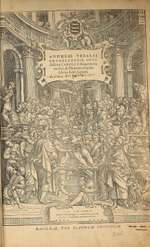
On the Fabric of the Human Body
Andreas Vesalius, 1543
The foundational text of modern anatomy, featuring the famous 'muscle men' woodcuts in landscape settings.
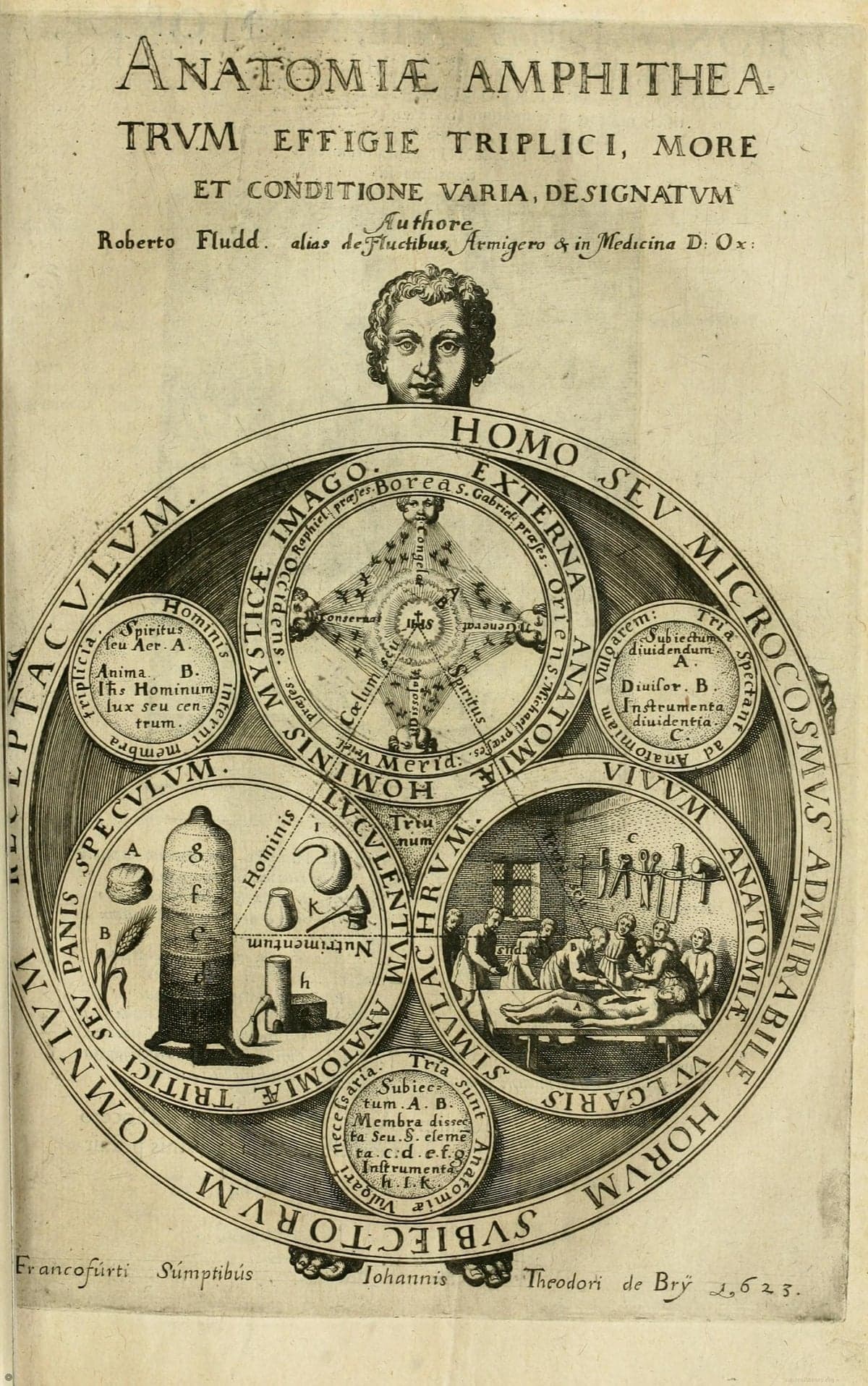
Amphitheatre of Anatomy
Robert Fludd, 1617First Translation
A Rosicrucian physician's attempt to map the anatomical structures of the body to the architecture of the universe.
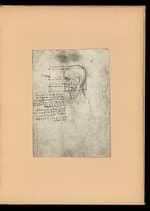
Notes and Drawings on the Human Body
Leonardo da Vinci, 1880
Private observations that remained unpublished for centuries, revealing the valves of the heart and the mechanics of the foot.
Vitalism and the Astral Body
1480-1700Texts exploring the 'spiritus'—the subtle vapor that connects the physical body to the celestial influences.
Three Books on Life
Ficino, Marsilio (1433-1499), 1489
The definitive guide to using music, scents, and diet to maintain the health of the 'spiritus mundi' within the scholar.
Know Thyself
attr. Reger von Ehrenhart, Ernestus Aurelius, 1678First Translation
A rare BPH volume that synthesizes Ficinian vitalism with 17th-century chemical medicine.
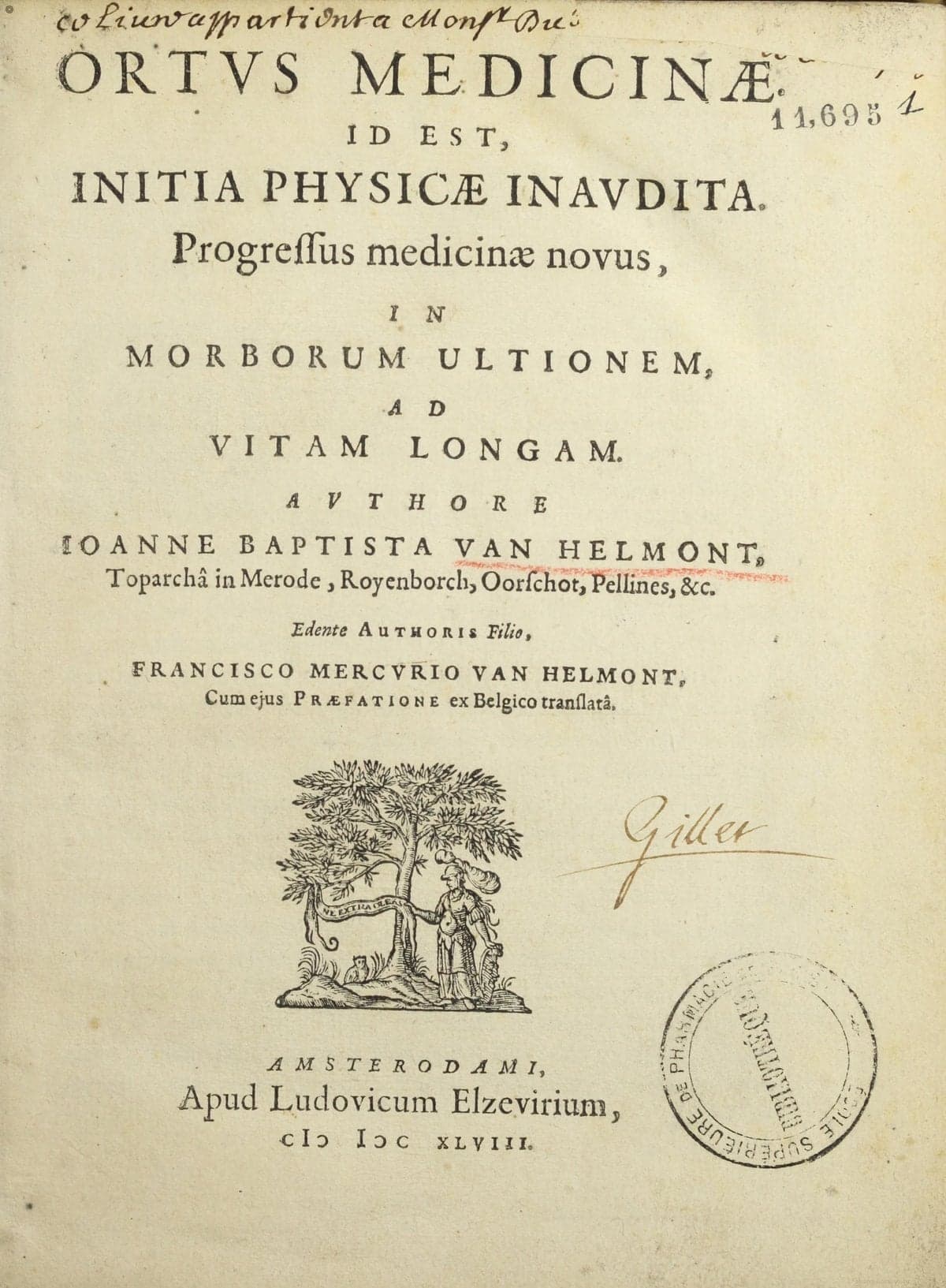
The Origin of Medicine
Jan Baptist van Helmont, 1648
A radical rejection of traditional humors in favor of 'archei' or spiritual seeds that govern health.
Global Materia Medica
1550-1850The cataloging of the natural world across continents, from the Aztec empire to the Ming Dynasty.

Compendium of Materia Medica, Vol. 49
李時珍, 1596
A monumental Chinese encyclopedia classifying over 1,800 substances, including minerals and animal parts.
The Aztec Herbal
Martin de la Cruz / William Gates, 1552
The first book on American medicinal plants, written by a Nahua physician at the College of Santa Cruz.
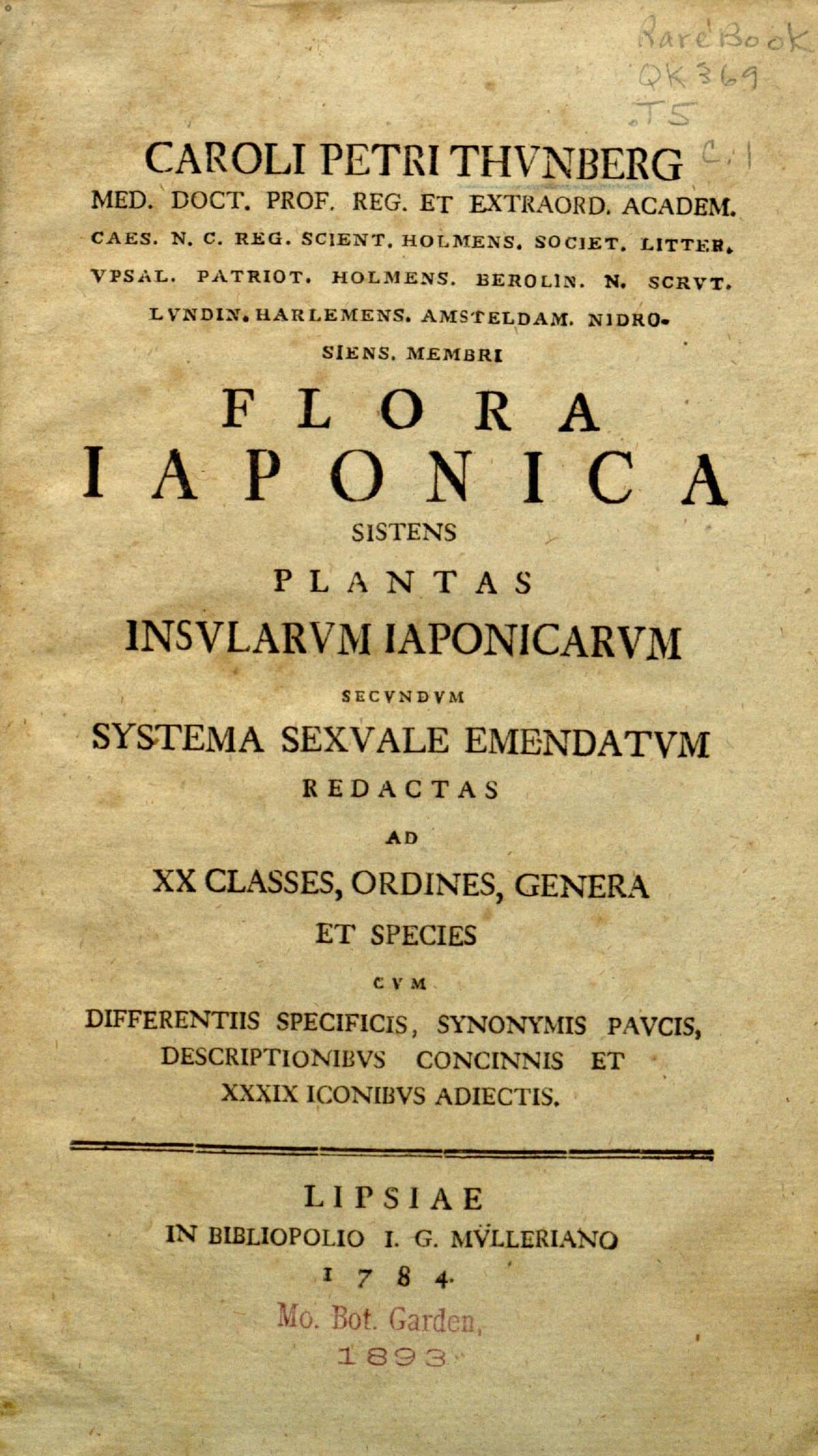
Flora of Japan
Carl Peter Thunberg, 1784First Translation
A seminal work documenting the flora of the then-isolated Japanese archipelago.
“An instrument of this kind is the spirit itself: which among physicians is defined as a certain vapor of the blood—pure, subtle, hot, and clear.”


Where to Start
The Aspiring Alchemist
Follow the path from plant lore to the transmutation of the self.
- 1On the secrets of women. On the virtues of herbs, stones, and animals. On the wonders of the world. On falcons, goshawks, and hawks.
Begin with the 'Secrets' of Albertus Magnus to understand the basic virtues of herbs and stones.
- 2Philosophy Reformed: Four Profound Tractates
Advance to Paracelsus to see how these virtues are unlocked through chemical 'spagyrics'.
- 3Amphitheater of Eternal Wisdom
Conclude with Khunrath to see the laboratory transformed into a sanctuary of divine wisdom.
The Modern Scientist
Trace the evolution of empirical observation and mechanical philosophy.
- 1On the Fabric of the Human Body
Start with Vesalius to witness the first accurate mapping of the human interior.
- 2Sylva Sylvarum (1631 English edition)
Read Bacon's Sylva Sylvarum for the methodology of the 'Great Instauration' of science.
- 3The World: Works of Descartes, Volume 11
End with Descartes to see the body finally described as a sophisticated machine.
All Books
Browse Full Catalog→1,191 books in this collection
Key to the Secrets of Nature
Eckartshausen, Karl von
Know Thyself
attr. Reger von Ehrenhart, Ernestus Aurelius
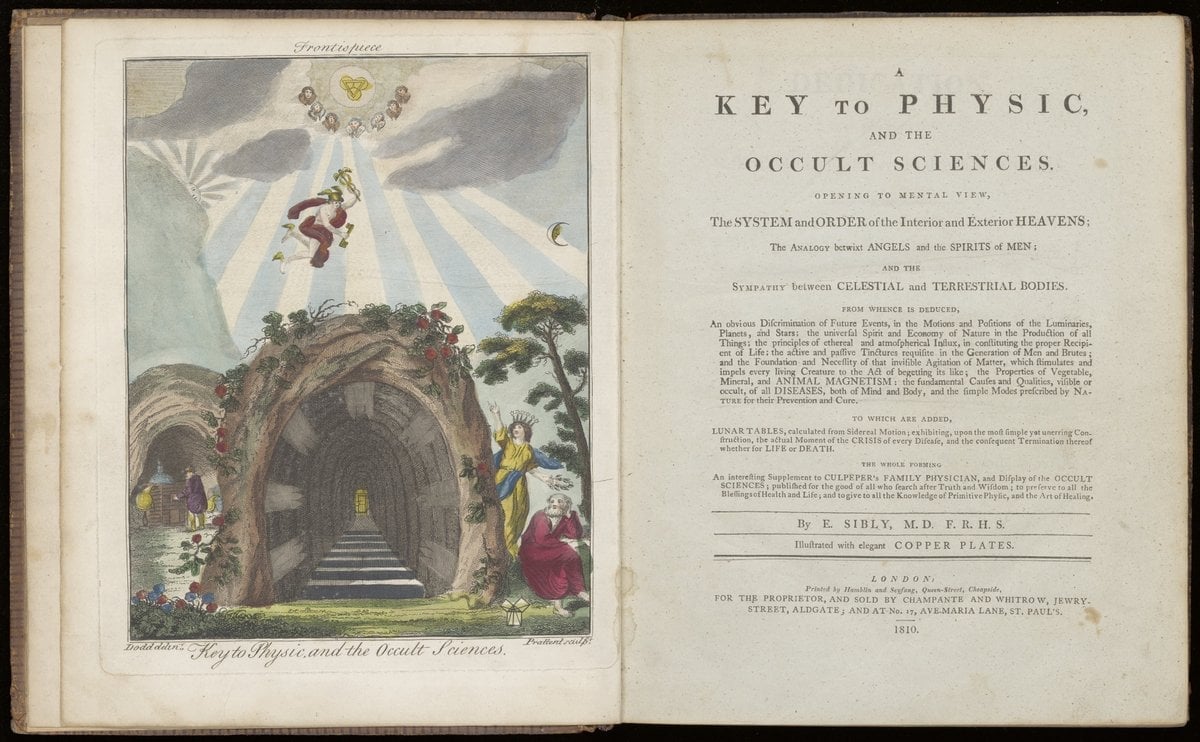
A key to physic, and the occult sciences
Sibly, Ebenezer
Aphoristic Astrology of Ptolemy, Hermes, and Others
Anonymous
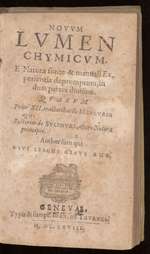
A New Light of Alchemy
attr. Sendivogius, Michael
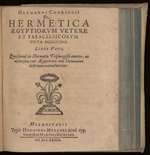
On the Ancient Hermetic Medicine of the Egyptians and the New Paracelsian Medicine
Conring, Hermann
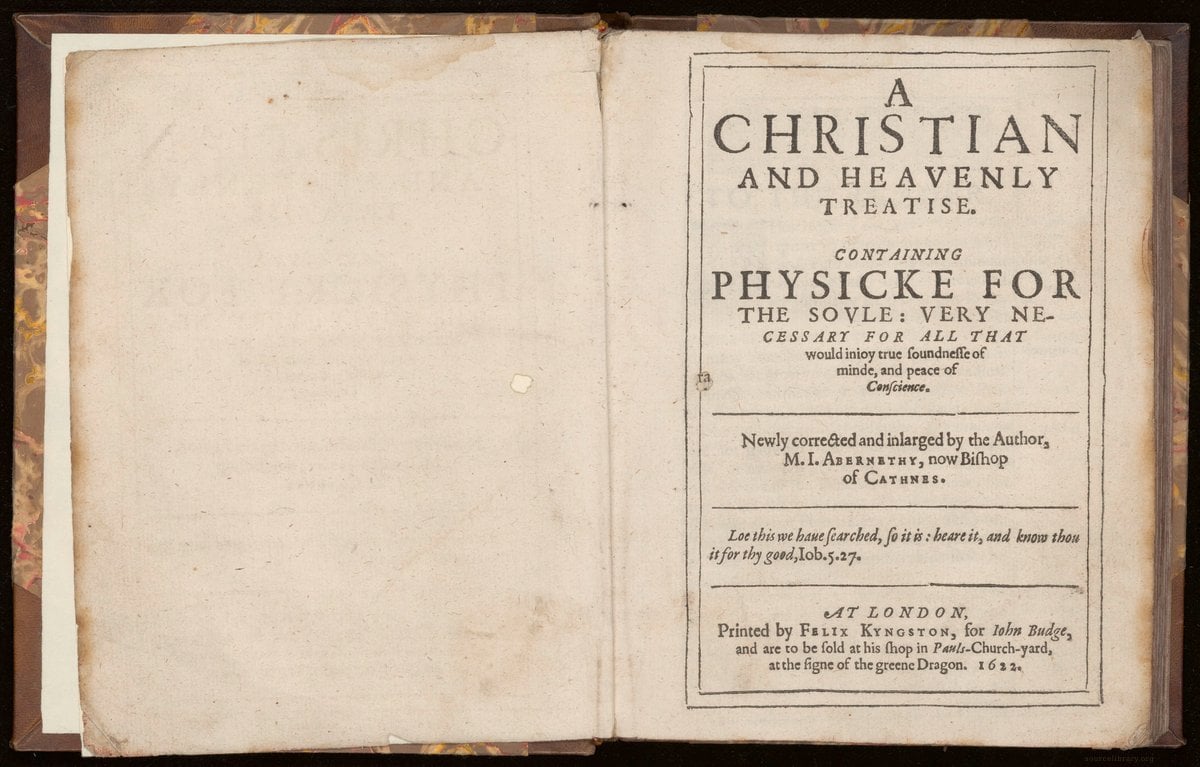
A Christian and Heavenly Treatise: Containing Medicine for the Soul
Abernethy, M.I
Detailed Report on the Use of the Physico-Astrological Instrument
Hafenreffer, Samuel
Raphael Explaining the Art of Medicine
Hafenreffer, Samuel
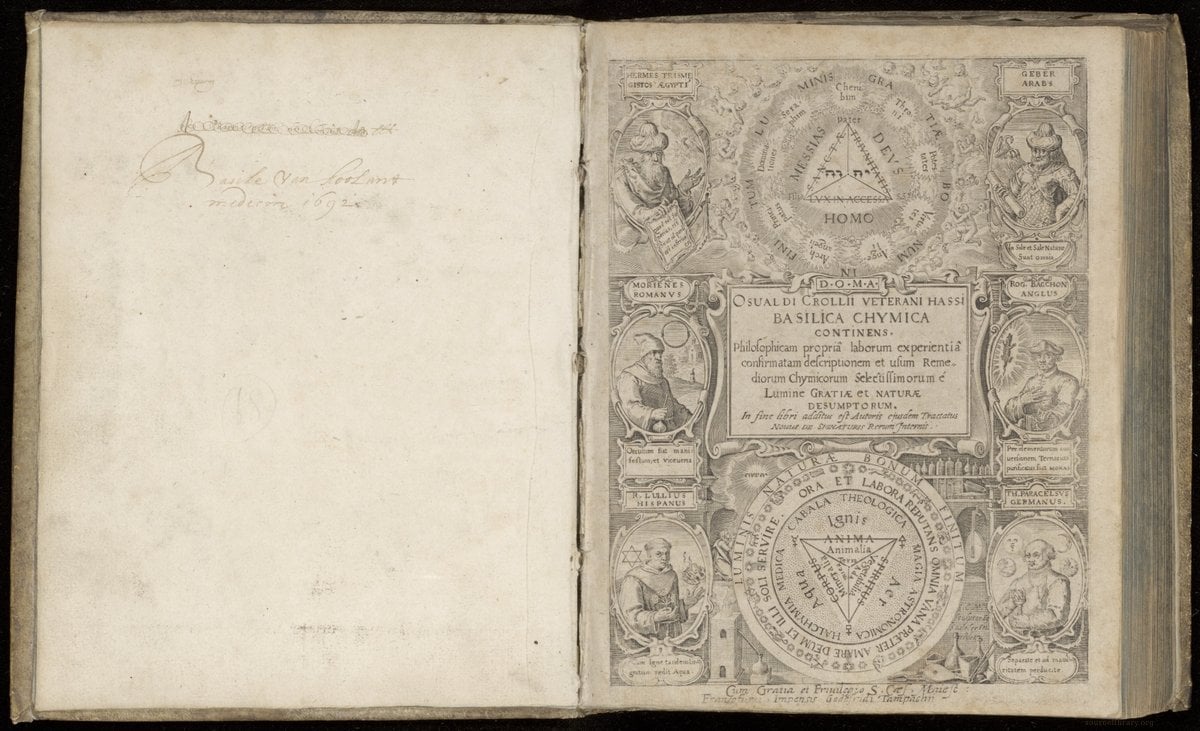
The Chemical Basilica and Treatise on Signatures
Crollius, Oswaldus
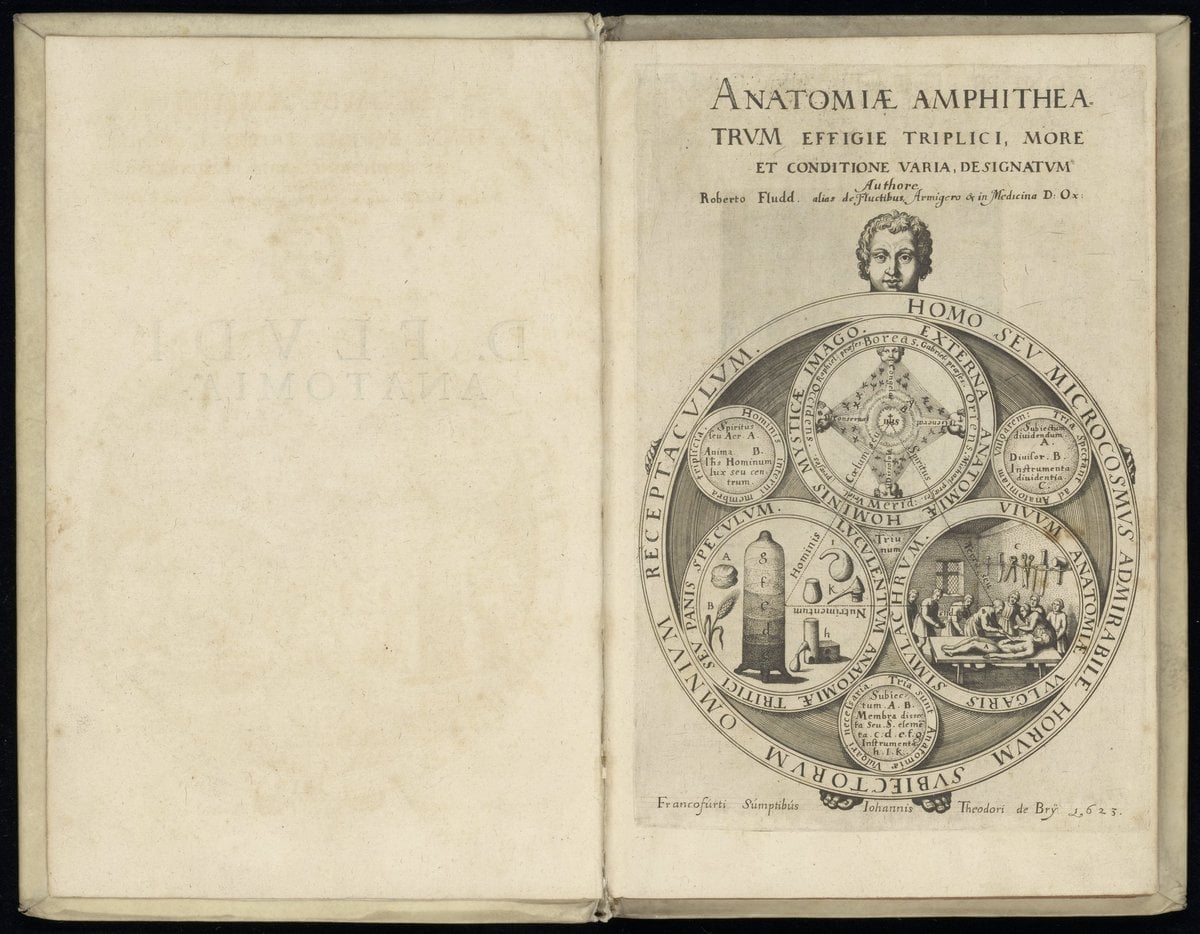
On the Triple Anatomy
Fludd, Robert
On the secrets of women. On the virtues of herbs, stones, and animals. On the wonders of the world. On falcons, goshawks, and hawks.
Albertus Magnus
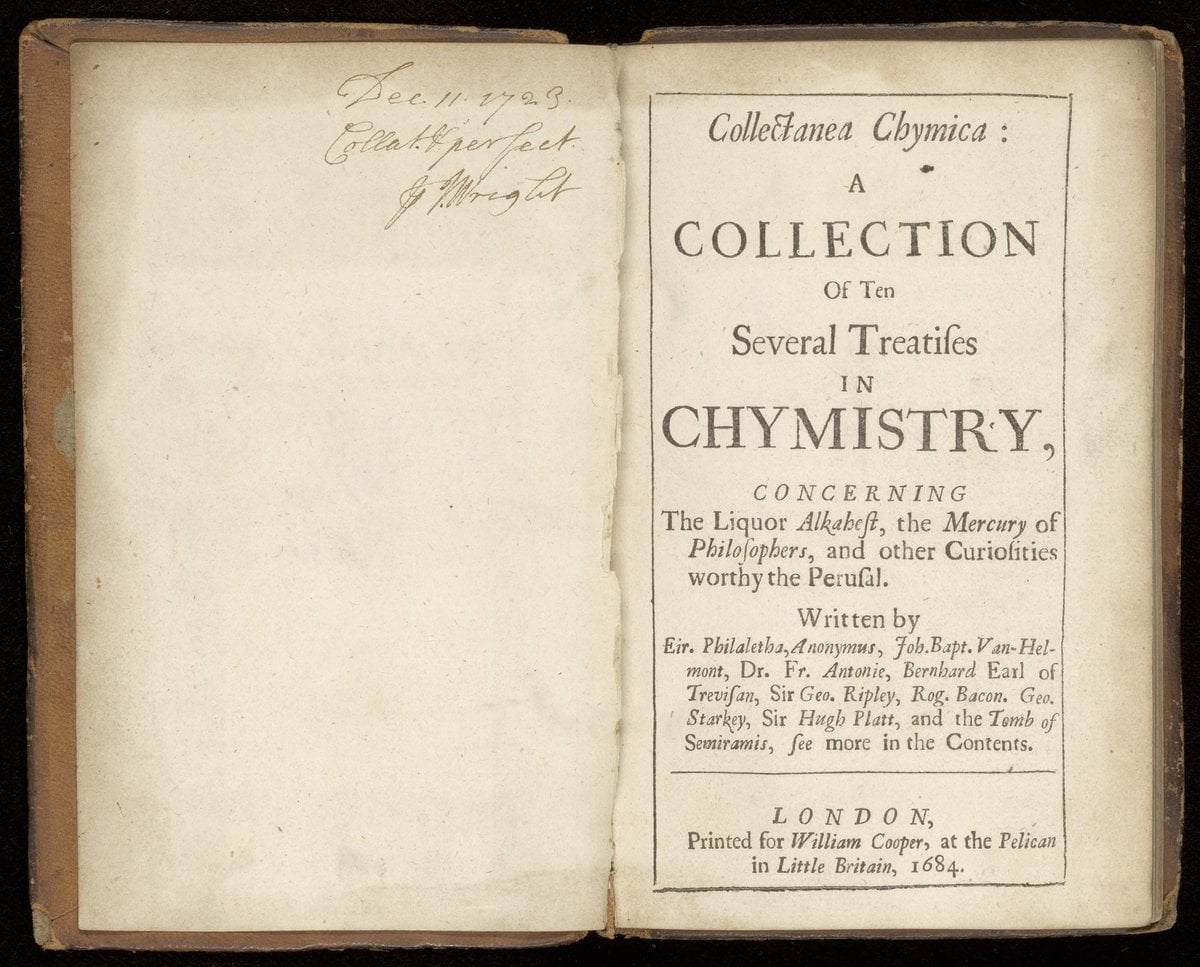
Collectanea chymica: a collection of ten several treatises in chymistry
Anonymous
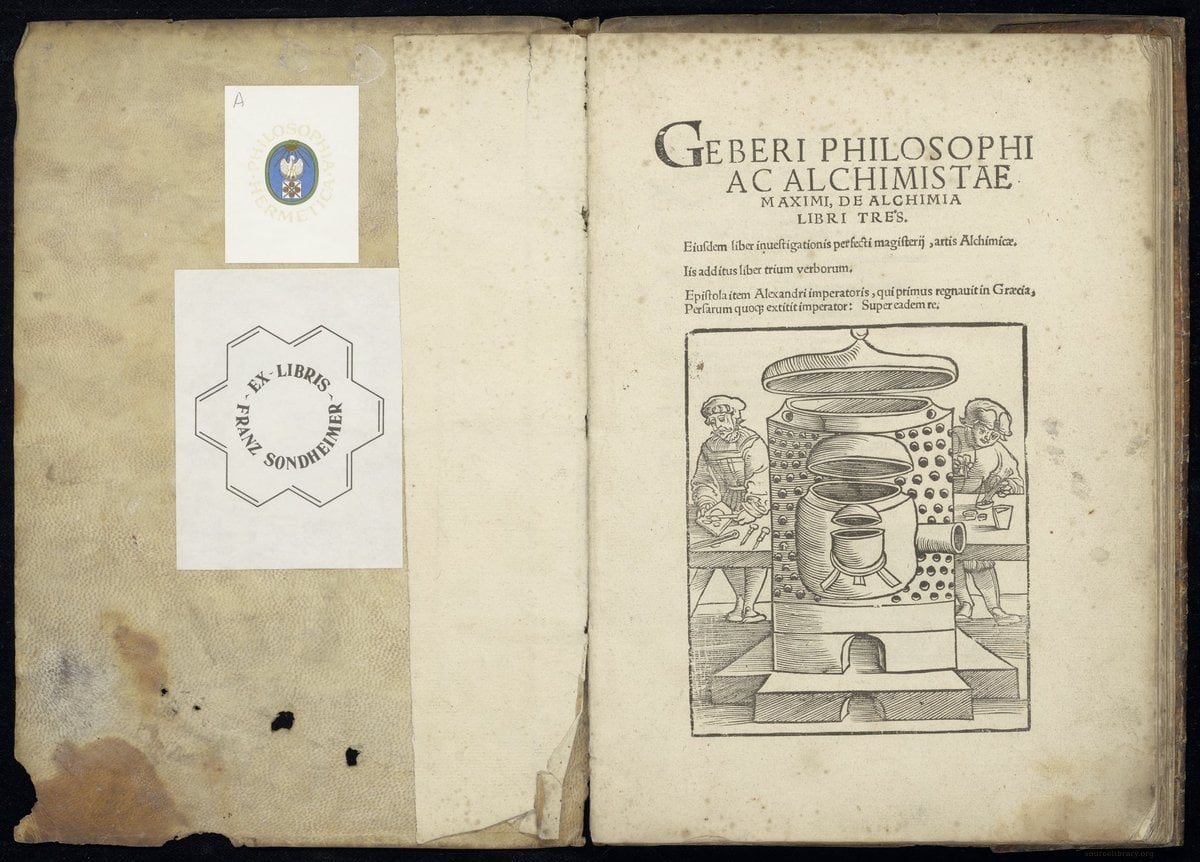
Three Books on Alchemy
Geber