The Canon of Avicenna
The most influential medical textbook in history.
Illustrations
Browse all6 images extracted from 3 books
These three woodcut panels from Avicenna's Canon Medicinae illustrate the treatment of spinal dislocations. The scenes depict a physician applying manual pressure and traction to a patient's back, demonstrating the practical application of Greco-Arabic medical knowledge in a 16th-century European context. The figures are shown in contemporary Eastern attire, reflecting the work's origins while serving as a vital instructional tool for Renaissance surgeons.
This series of woodcuts from the 1595 Latin edition of Avicenna’s Canon of Medicine illustrates mechanical methods for treating spinal dislocations. The panels depict the use of traction and leverage, showing a physician—distinguished by his turban—applying pressure to a patient’s back. These images highlight the enduring influence of Islamic medical knowledge on European surgical practice during the early modern period.
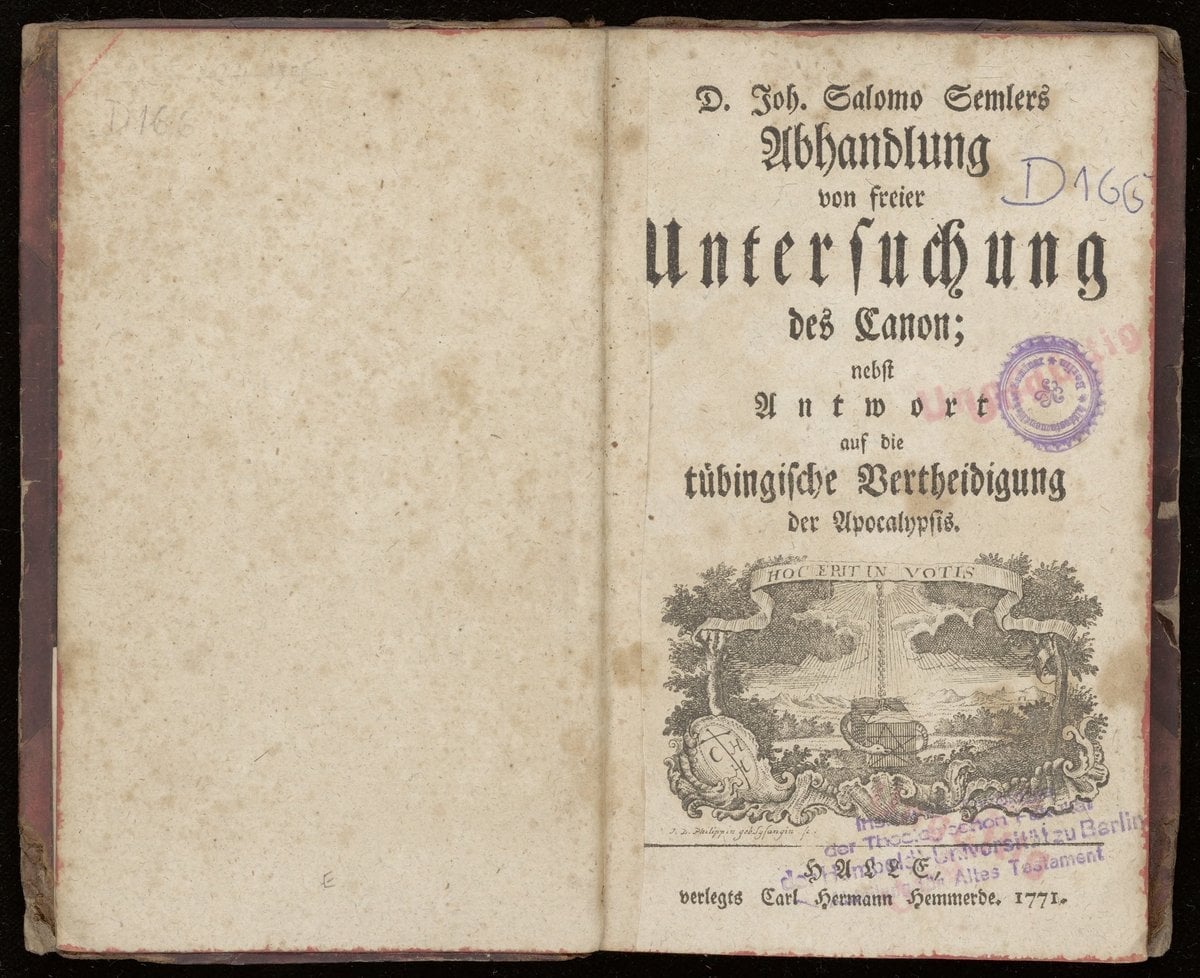
This intricate title page engraving for Johann Salomo Semler's treatise features a symbolic landscape centered on a serpent confined within a cage, bathed in rays of light descending from the heavens. Above the scene, a banner bears the Latin motto 'HOC ERIT IN VOTIS' (This will be in my prayers), reflecting the author's theological aspirations. Signed by the engraver J. D. Philippin, this work exemplifies the sophisticated use of emblem-like imagery in 18th-century German academic publishing.
This intricate woodcut diagram illustrates the anatomy of the human eye as understood in the early modern period, based on the teachings of Avicenna. It depicts the various layers (tunics) and fluids (humors) of the eye, as well as its connection to the optic nerve and the protective layers of the brain. Such diagrams were essential for medical students and practitioners, bridging the gap between ancient Greek medical knowledge and emerging Renaissance anatomical studies.
This circular emblem for 'Philosophia Hermetica' depicts a pelican in its piety, a traditional symbol of self-sacrifice and Christ-like devotion, here applied to the process of alchemical transformation. The bird is shown atop a cubic stone adorned with roses, representing the stability and completion of the Great Work.
Ibn Sina's al-Qanun fi al-Tibb was completed around 1025. It was translated into Latin in the 12th century. It was taught in European universities until the 17th century. This collection gathers multiple editions — Arabic originals and Latin translations — of the work that defined medicine for 600 years.
Essential Reading
The foundational texts of this tradition
The Canon of Medicine (Canon Medicinae), Vol. II
Avicenna (Ibn Sina), 1595First from Latin
The Canon of Medicine, Books 1-7 (Canon medicinae)
Avicenna (Ibn Sina), 1490First Complete Translation
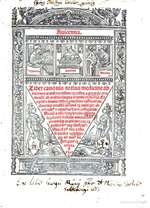
The Canon of Medicine
Avicenna (Ibn Sina), 1522First from Latin
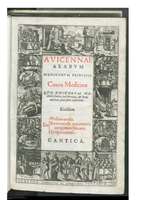
The Canon of Medicine (Canon Medicinae), Vol. I
Avicenna (Ibn Sina), 1595
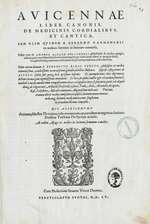
The Canon of Medicine
Avicenna (Ibn Sina), 1555
Important Works
Significant texts that deepen understanding

Treatise on the Free Investigation of the Canon
Semler, Johann Salomo, 1771First Translation
This is a scholarly treatise that directly analyzes and discusses Avicenna's Canon of Medicine.
Avicenna, Selected Books
Avicenna (Ibn Sina), 1450First Translation
This collection of selected works by Avicenna is highly likely to include significant portions of his most influential medical text, the Canon.
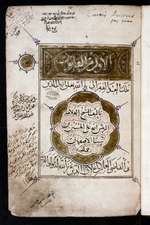
The Canon of Medicine
Avicenna, 1450First Translation
As an Arabic manuscript by Avicenna, it is a strong candidate for an original or early copy of the Canon or a closely related medical work.
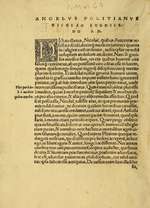
De Plinii et aliorum medicorum erroribus
Niccolò Leoniceno, 1509First Translation
This work critiques established medical authorities, including those like Avicenna, reflecting the intellectual shifts that eventually challenged the Canon's dominance.
All Books
Browse Full Catalog→16 books in this collection