Illustrations
Browse all500 images extracted

This woodcut from the 1609 encyclopedia Sancai Tuhui illustrates a martial arts technique known as the 'Facing Heaven Stance' (朝天勢). It depicts a practitioner holding a long spear aloft, demonstrating the dynamic and instructional nature of Ming dynasty military manuals.

This woodcut portrait depicts Emperor Lizong, the fourteenth emperor of the Song dynasty, as identified by the inscription above the figure. He is shown wearing traditional imperial court attire, including the characteristic winged hat and flowing robes, rendered in the bold, linear style of traditional Chinese woodblock printing.

This vibrant illustration from the 'Shishi Yuanliu' depicts the Buddha in a celestial assembly. He is seated on a lotus throne, flanked by his principal disciples and guarded by the Four Heavenly Kings below, all set against a backdrop of auspicious five-colored clouds.

This vibrant polychrome woodcut illustrates a scene from a Buddhist narrative, likely the birth or early life of Siddhartha Gautama. The central infant figure is surrounded by celestial beings and attendants amidst a stylized landscape of swirling clouds and lush greenery. Such illustrations served to visually communicate sacred stories to a wide audience, combining artistic skill with religious devotion.

This woodcut from the 1609 encyclopedia Sancai Tuhui illustrates a specific hand position for playing the guqin, a traditional Chinese zither. The gesture, named 'Crying Pigeon Calling for Rain' (鳴鳩喚雨勢), is depicted alongside a bird on a branch to evoke the poetic and naturalistic qualities associated with the musical technique. Such illustrations served as both technical guides and aesthetic inspirations for scholars and musicians of the Ming dynasty.

This woodcut illustration from the 1609 encyclopedia Sancai Tuhui depicts the practice of horse archery (majian). It captures a rider in a dynamic pose, skillfully aiming a bow while mounted on a galloping horse, illustrating a key military and athletic skill of the period.

This woodcut depicts the 'Lung God' (Feishen), personified as a tiger-like mythical beast. It is an illustration from the Sancai Tuhui, a comprehensive Ming Dynasty encyclopedia, reflecting traditional Chinese beliefs that linked internal organs to specific deities and symbolic animals.

This woodcut depicts one of the eighty-four manifestations of Avalokiteshvara (Guanyin) as described in the Great Compassion Mantra. The figure is portrayed as a powerful guardian in ornate armor, standing atop auspicious clouds and framed by a simple halo, representing the protective aspects of Buddhist compassion.
Visual Art
Browse all art →29 works of visual art in this collection
 painting
Krishna Sporting with the Gopis in the Jumna River — Bhagavata Purana
Anonymous (Northern India)
This painting depicts a cluster of bamboo stalks bending in the wind alongside a rugged rock formation and tall grasses.
 painting
Laozi Riding an Ox
Chen Hongshou
The Daoist philosopher Laozi is depicted riding a water buffalo through a landscape with bamboo and rock formations.
 painting
Tiger
Fachang Muqi
A tiger depicted in a crouching pose, rendered in ink wash on silk.
 painting
Ten Kings of Hell — Scroll I
Jin Chushi
A Yama king sits in judgment behind a desk while a demon drags a condemned soul toward a karma mirror in a scene depicting the underworld judiciary.
 painting
Ten Kings of Hell — Scroll II
Jin Chushi
A Buddhist judge presiding over the trial and punishment of souls in one of the levels of the underworld.
 painting
Ten Kings of Hell — Scroll III
Jin Chushi
This painting depicts the third of the Ten Kings of Hell, King Songdi, presiding over a bureaucratic trial where a clerk examines a register of deeds while demons punish the condemned.
 painting
Zhong Kui Supported by Ghosts
Luo Ping
The mythological demon-queller Zhong Kui is depicted being supported and assisted by a group of small, grotesque ghosts or demons beneath a tree.
 painting
Courtly Odes, Beginning with "Wild Geese" — Book of Odes
Ma Hezhi
A handscroll painting depicting wild geese among reeds, accompanied by calligraphic text from the Shijing (Book of Odes).
 painting
Odes of the State of Bin — Book of Odes
Ma Hezhi
A landscape scroll illustrating the 'Odes of the State of Bin' from the Book of Odes, depicting figures engaged in seasonal agricultural and ritual activities amidst trees and rolling hills.
 painting
Nine Dragon Pool
Mei Qing
A hanging scroll painting depicting two scholars seated on a rocky outcrop beside a cascading waterfall and mist-filled mountain gorge.
 painting
Wang Xizhi Watching Geese
Qian Xuan
The calligrapher Wang Xizhi stands on a terrace, observing geese swimming in the water below.
 painting
Zhong Kui
Ren Yi (Ren Bonian)
The mythological demon-queller Zhong Kui is depicted sitting on a bamboo bench with a sword at his hip, accompanied by a tray of offerings including fruit and a bronze vessel.
 painting
Buddhist Luohans Crossing the Sea to the Palace of the Dragon King
Unidentified artist
A group of Luohans (enlightened Buddhist sages) are depicted traversing the sea, some walking on water or clouds and others accompanied by supernatural creatures.
 painting
Daoist Immortals in a Landscape
Unidentified artist
A handscroll painting depicting several Daoist figures, including an equestrian, within a mountainous, mist-filled landscape.
 painting
Dragon
Unidentified artist
A Chinese-style dragon, rendered in ink on silk, emerges from swirling clouds or vapor.
Texts from the Confucian, Daoist, and Buddhist traditions of China, spanning from medieval manuscripts to early modern printed editions. The collection includes canonical philosophical works, religious scriptures, divinatory manuals, and scientific treatises that shaped Chinese civilization over more than a millennium.
Holdings include the Daozang (Taoist Canon, 1445 edition), multiple editions and commentaries on the Yi Jing (Book of Changes), the Pelliot chinois 3594 Dunhuang Star Chart (c. 900 CE) — one of the earliest surviving astronomical manuscripts — and a 1657 astrological manual attributed to Yuan Tiangang. The collection also encompasses texts on the Five Elements, Buddhist sutras, and works from the Dunhuang cave library. Most texts are in classical Chinese and are being systematically translated into English for the first time.
Essential Reading
The foundational texts of this tradition
Essence of the Taoist Canon
Various Taoist Masters, 1922First Complete Translation
This compilation provides a vital entry point into the vast Daoist tradition, synthesizing centuries of spiritual and philosophical teachings that emphasize harmony with nature and inner cultivation. It offers a comprehensive overview of Daoist thought and practice.
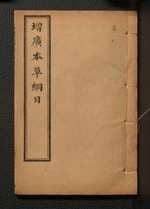
Compendium of Materia Medica, Vol. 8
Li Shizhen, 1596
As part of the most comprehensive medical text in Chinese history, this volume showcases Li Shizhen's meticulous classification of medicinal substances and his rigorous approach to correcting centuries of medical misconceptions. It is essential for understanding the foundations of Traditional Chinese Medicine.
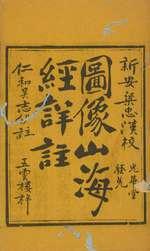
Classic of Mountains and Seas
Guo Pu (郭璞) commentary, 1667
This ancient text is a foundational pillar of Chinese mythology, geography, and natural history, offering a fantastical yet systematic view of the world filled with mythical creatures, strange lands, and early cosmological ideas. It provides a rich tapestry of early Chinese imagination and knowledge.
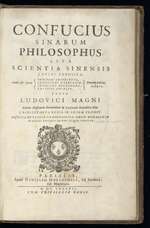
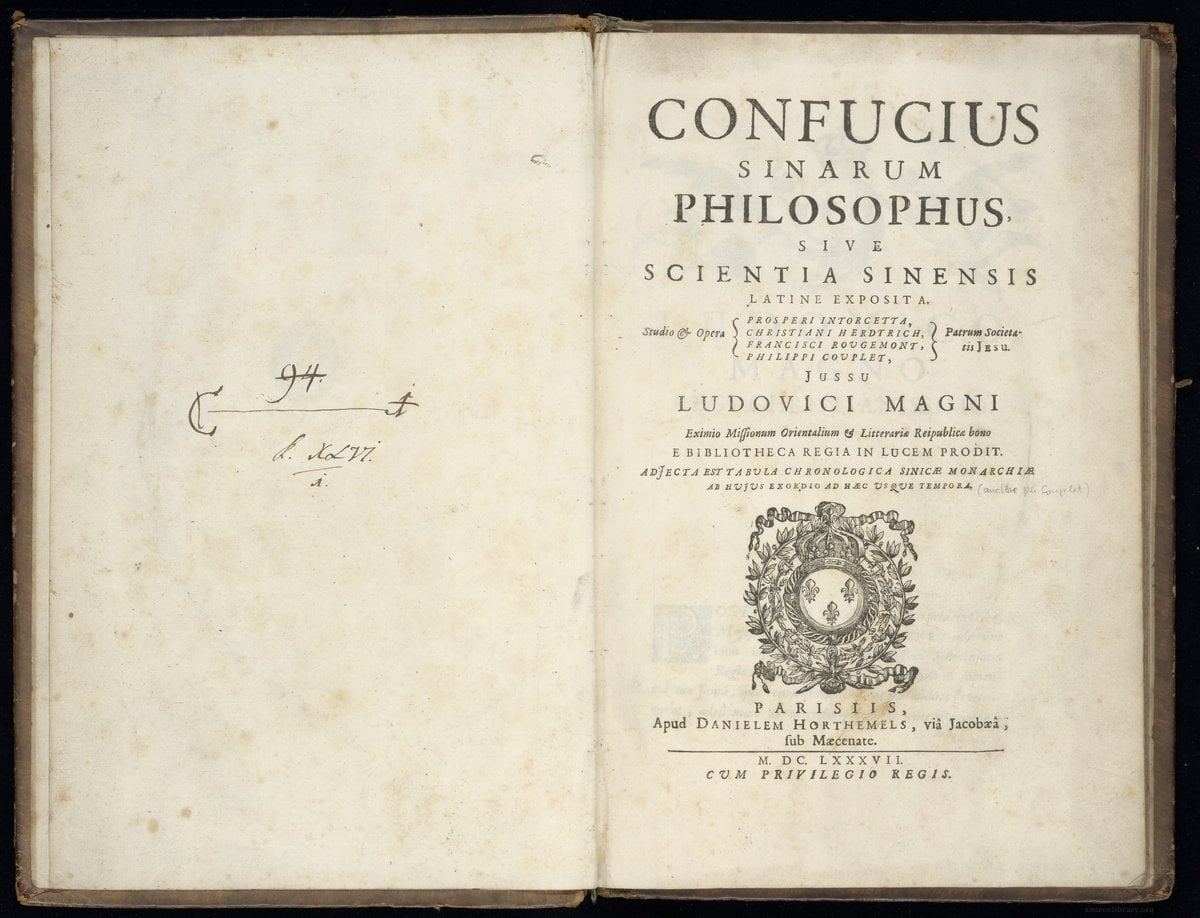
Confucius, Philosopher of the Chinese
Intorcetta, Prosperus|Herdtrich, Christianus|Rougemont, Franciscus Couplet, Philippus, 1687
This landmark Jesuit work offers a crucial early Western interpretation of Confucianism, demonstrating how European scholars sought to synthesize ancient Chinese philosophy with their own intellectual traditions. It highlights the global impact and reception of Confucian thought.
Wubei Zhi (Vol. 2)
茅元儀, 1621First Complete Translation
This volume from Mao Yuanyi's monumental military encyclopedia provides a profound philosophical inquiry into the nature of power and survival, dissecting foundational works like Sun Tzu's Art of War. It offers essential insights into classical Chinese military strategy and its philosophical underpinnings.
Important Works
Significant texts that deepen understanding
Great Compendium of Acupuncture and Moxibustion
Yang Jizhou (楊繼洲), 1601First Complete Translation
This comprehensive work by Yang Jizhou is a foundational text for acupuncture and moxibustion, synthesizing ancient medical heritage with clinical mastery. It offers detailed insights into these core practices of Traditional Chinese Medicine.
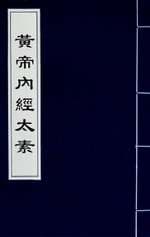
The Yellow Emperor's Classic: Grand Basis (Huangdi Neijing Taisu), Vol 1
attributed to Huangdi, 1924First Translation
Attributed to the legendary Yellow Emperor, this foundational text of Traditional Chinese Medicine explores the profound philosophical connections between human physiology, cosmology, and the art of nurturing life. It provides the theoretical bedrock for Chinese medical thought.
Soushen Ji
干寶, 1608
This definitive ancestor of Chinese 'zhiguai' literature blends historical intent with fantastical tales of spirits, gods, and strange occurrences. It offers a captivating window into the supernatural beliefs and storytelling traditions of early China.
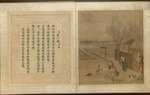
Imperial Pictures of Tilling and Weaving
Jiao Bingzhen (焦秉貞), paintings; Kangxi Emperor, poems, 1696
Commissioned by the Kangxi Emperor, this illustrated work is a profound meditation on the moral and physical foundations of an empire, depicting the essential agricultural and sericultural labors that sustained Chinese society. It offers a unique blend of art, social commentary, and imperial ideology.
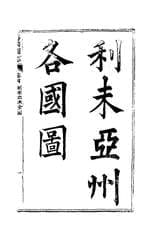
Illustrated Gazetteer of the Maritime Kingdoms, Volume 3
魏源, 1844First Complete Translation
This pivotal 19th-century work by Wei Yuan marks a significant intellectual shift, synthesizing Western cartographic methods with classical Chinese understanding to inform China's engagement with the global maritime world. It is crucial for understanding China's response to Western expansion.
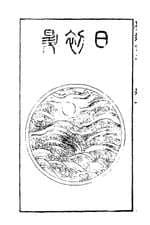
Chengshi Moyuan
程大約, 1595First Complete Translation
This extraordinary Ming Dynasty masterpiece elevates the craft of ink-making to a profound metaphysical art, showcasing intricate designs rooted in Neo-Confucian cosmology and Daoist philosophy. It offers a unique perspective on Chinese art and its spiritual dimensions.
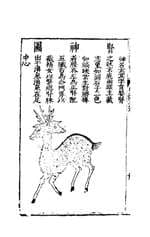
Collected Illustrations of the Three Realms: The Human Body
王圻, 王思義, 1609First Complete Translation
This volume from the Sancai Tuhui provides a monumental synthesis of anatomical precision and spiritual cosmology from the Ming Dynasty, challenging medical conventions through detailed woodblock illustrations. It is essential for understanding historical Chinese anatomy and medical theory.
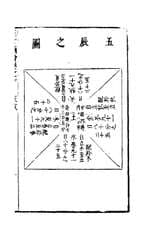
Collected Illustrations of the Three Realms, Volume 4: Astronomy
王圻, 王思義, 1607First Complete Translation
Part of the Sancai Tuhui, this volume masterfully integrates traditional Chinese cosmology with empirical observation, detailing celestial phenomena, calendrical systems, and their profound implications for imperial governance. It offers a comprehensive view of Ming astronomical knowledge.
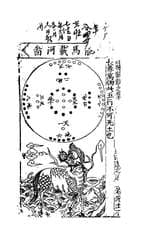
Complete Compendium of Five-Star and Three-Fate Astrology, Volume 1
attributed to Yuan Tiangang, 1657First Translation
Attributed to Yuan Tiangang, this monumental work synthesizes Chinese astrological wisdom, bridging cosmic alignment with social reality and offering insights into fate calculation and divination. It is a key text for understanding traditional Chinese astrology.
Also Notable
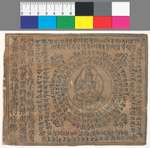
Printed Images of Avalokitesvara
Unknown, 900
Esoteric Buddhist Ritual Mandalas and Iconography
Unknown, 900First Complete Translation
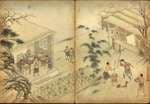
Customs of Taiwan's Indigenous People
Anonymous (Qing Court painters), 1747First Translation
Illustrated Explanation of the Earth
Unknown, 1605First Translation
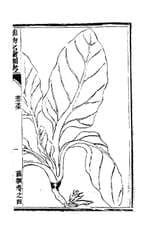
Illustrated Investigation of the Names and Realities of Plants, Volume 4
吳其濬, 1848First Complete Translation
Sun Zi's Mathematical Classic
Sun Zi, 400
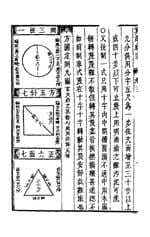
Systematic Treatise on Arithmetic, Vol. 3
Cheng Dawei, 1592First Complete Translation
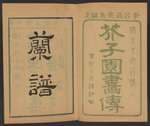
Mustard Seed Garden Manual of Painting: Orchid Manual
Wang Gai, 1868