


Early Modern Medicine
Vesalius, Harvey, Sydenham — observation and experiment displacing ancient authority
Illustrations
Browse all495 images extracted
This intricate engraving illustrates the 'mystery of unhealthy meteors' and their connection to disease, as conceptualized by the 17th-century polymath Robert Fludd. At the center is the Earth, surrounded by a celestial wheel of winds personified by blowing heads and governed by powerful archangels—Raphael, Gabriel, Michael, and Uriel—alongside planetary spirits. The image visualizes the macrocosmic forces believed to influence human health and the terrestrial environment, drawing on both biblical prophecy from the Book of Revelation and Renaissance occult philosophy.
This seminal engraving illustrates William Harvey's 1628 discovery of the circulation of blood. Through these diagrams, Harvey demonstrated how valves in the veins ensure blood flows in only one direction toward the heart, fundamentally overturning centuries of medical belief. The precise use of line and crosshatching captures the physical experiment, showing a hand pressing on a vein to prove the presence of these internal structures.
This plate presents a series of meticulous anatomical studies of the human foot and lower leg, reproduced from the notebooks of Leonardo da Vinci. The drawings exhibit a profound understanding of skeletal and muscular structures, complemented by Leonardo's famous mirror-written notes which detail his observations. These studies exemplify the Renaissance fusion of art and science, marking a critical step in the development of modern anatomical knowledge.
This page presents a series of anatomical and physiognomic studies, dominated by a meticulously rendered head of an elderly man showing the physical markers of age, such as prominent temporal veins. The surrounding faint sketches of a torso and the use of mirror-written text are hallmarks of Leonardo da Vinci's scientific notebooks, illustrating his profound commitment to understanding the mechanics and appearance of the human body.
This iconic frontispiece from Andreas Vesalius's 1543 masterpiece, 'De humani corporis fabrica', depicts the author himself performing a public dissection of a female cadaver. Surrounded by a dense crowd of students and scholars in a grand anatomical theater, Vesalius challenges traditional medical authority by demonstrating the importance of direct observation and hands-on investigation. The scene is rich with symbolic detail, including a skeleton presiding over the scene, representing the intersection of life, death, and the pursuit of scientific knowledge.
This plate presents a detailed anatomical study by Leonardo da Vinci, focusing on the human cardiovascular system and major internal organs. The drawing exemplifies Leonardo's revolutionary approach to scientific observation, combining artistic precision with a deep inquiry into the mechanics of the human body. The characteristic mirror-written notes provide further insight into his investigative process.

This woodcut portrait depicts the author Johann Weyer at the age of sixty, as indicated by the Latin inscription. Weyer, a physician who famously challenged the persecution of supposed witches, is shown with a human skull, a classic memento mori symbol reflecting on mortality and wisdom. The motto 'VINCE TE IPSVM' (Conquer thyself) underscores the humanist values of self-discipline and reason that characterized his work.

This celebrated frontispiece depicts Andreas Vesalius performing a public dissection in a packed anatomical theater, a scene that revolutionized medical study by emphasizing direct observation over ancient texts. Vesalius himself is the central figure, shown with his hands inside the cadaver, surrounded by a diverse crowd of onlookers and a symbolic skeleton that presides over the scene. Published in 1543, this woodcut is a masterpiece of Renaissance scientific illustration, capturing the dawn of modern anatomy.

These anatomical sketches by Leonardo da Vinci illustrate the branching structures of the bronchial tubes and associated blood vessels. The drawings demonstrate Leonardo's pioneering use of cross-sectional observation and his attempt to understand the mechanical function of the respiratory and circulatory systems. The accompanying text is written in his signature 'mirror writing,' intended to be read with a reflective surface.
All Books
Browse Full Catalog→103 books in this collection
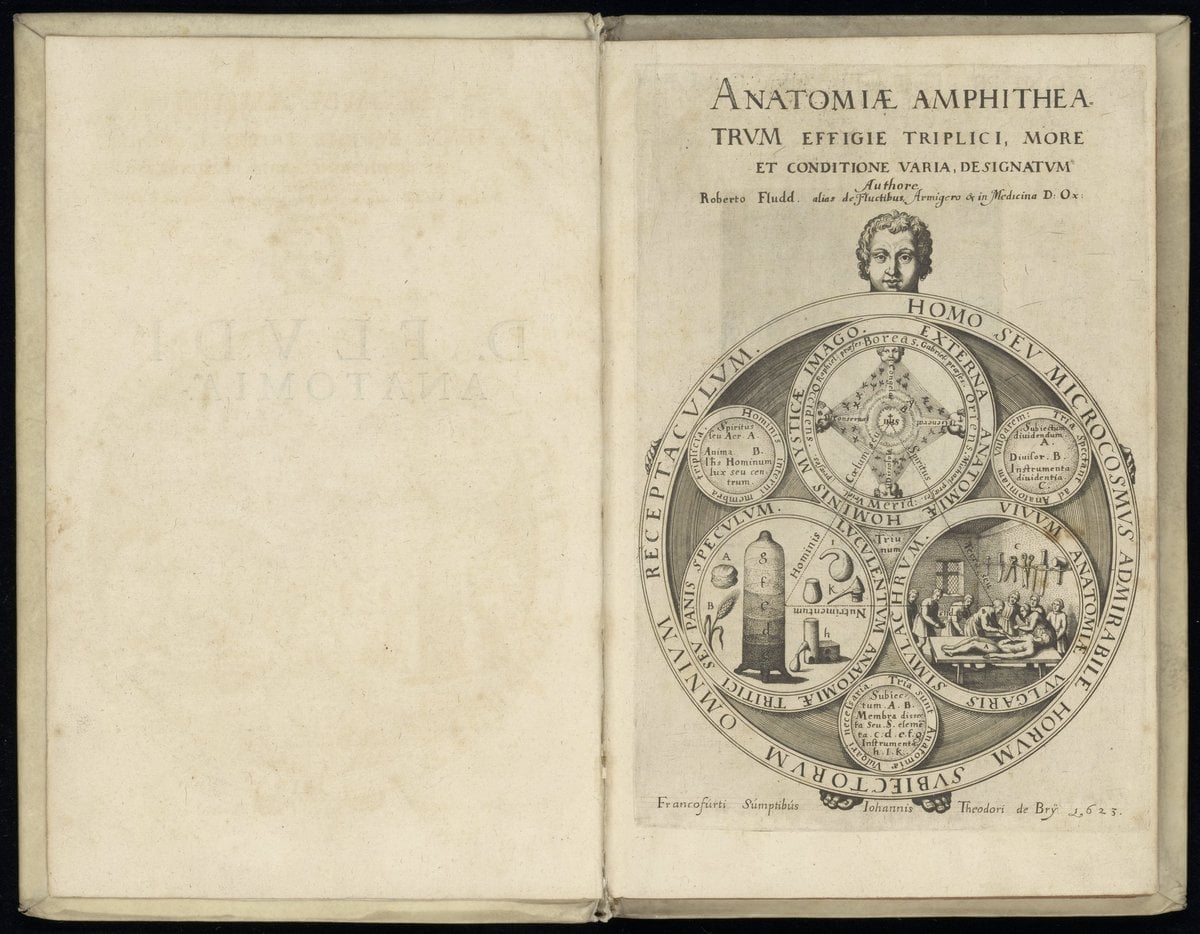
On the Triple Anatomy
Fludd, Robert
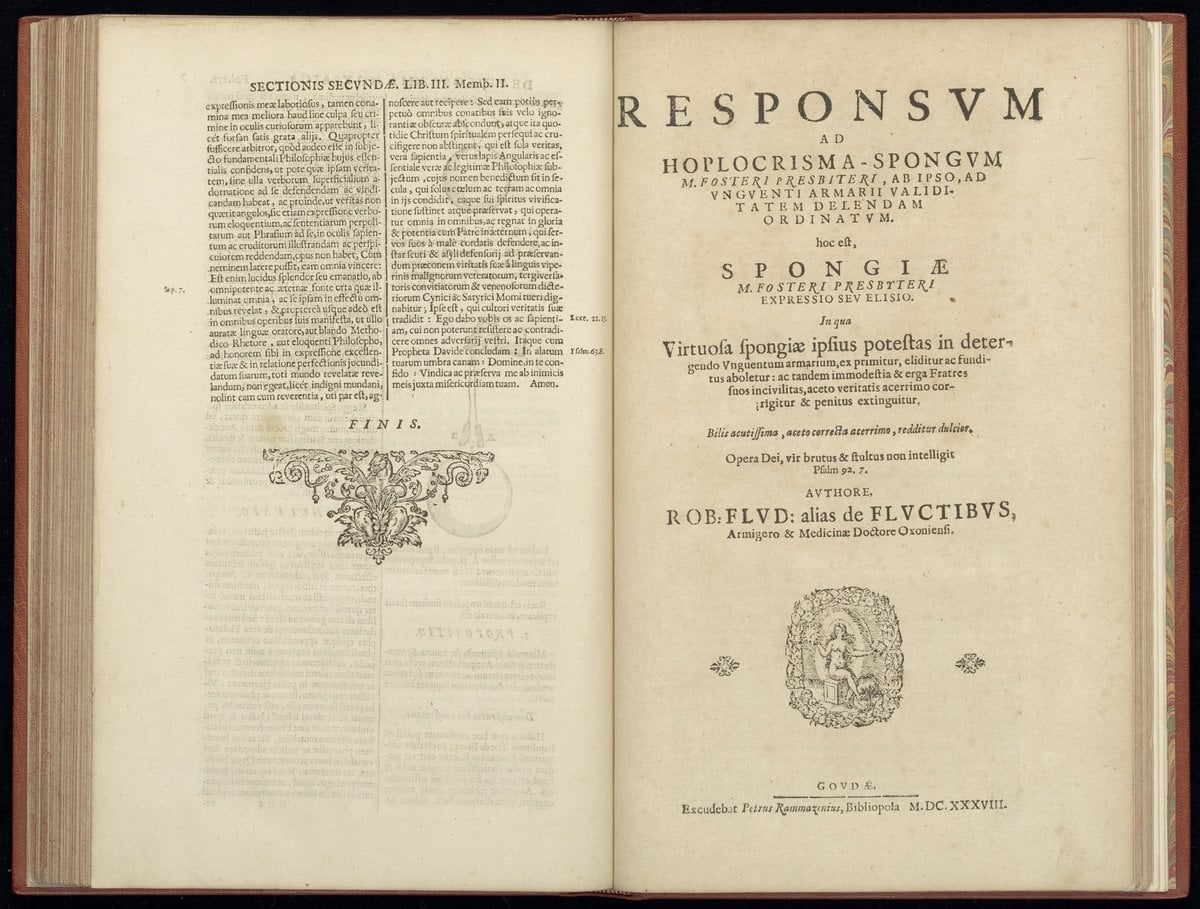
Response to Foster's Weapon-Salve Sponge
Fludd, Robert
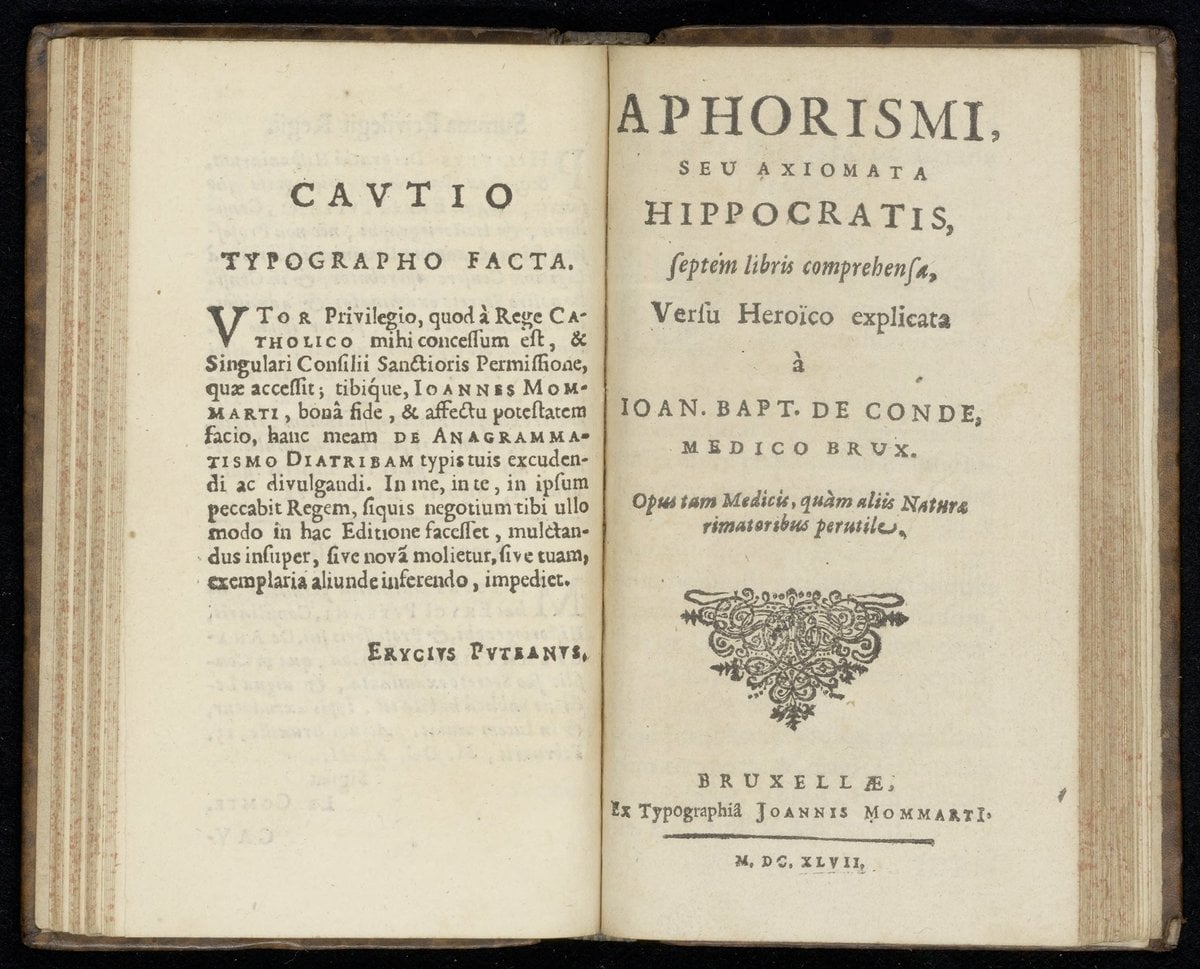
The Aphorisms of Hippocrates in Heroic Verse
Condé, Johannes Baptista de
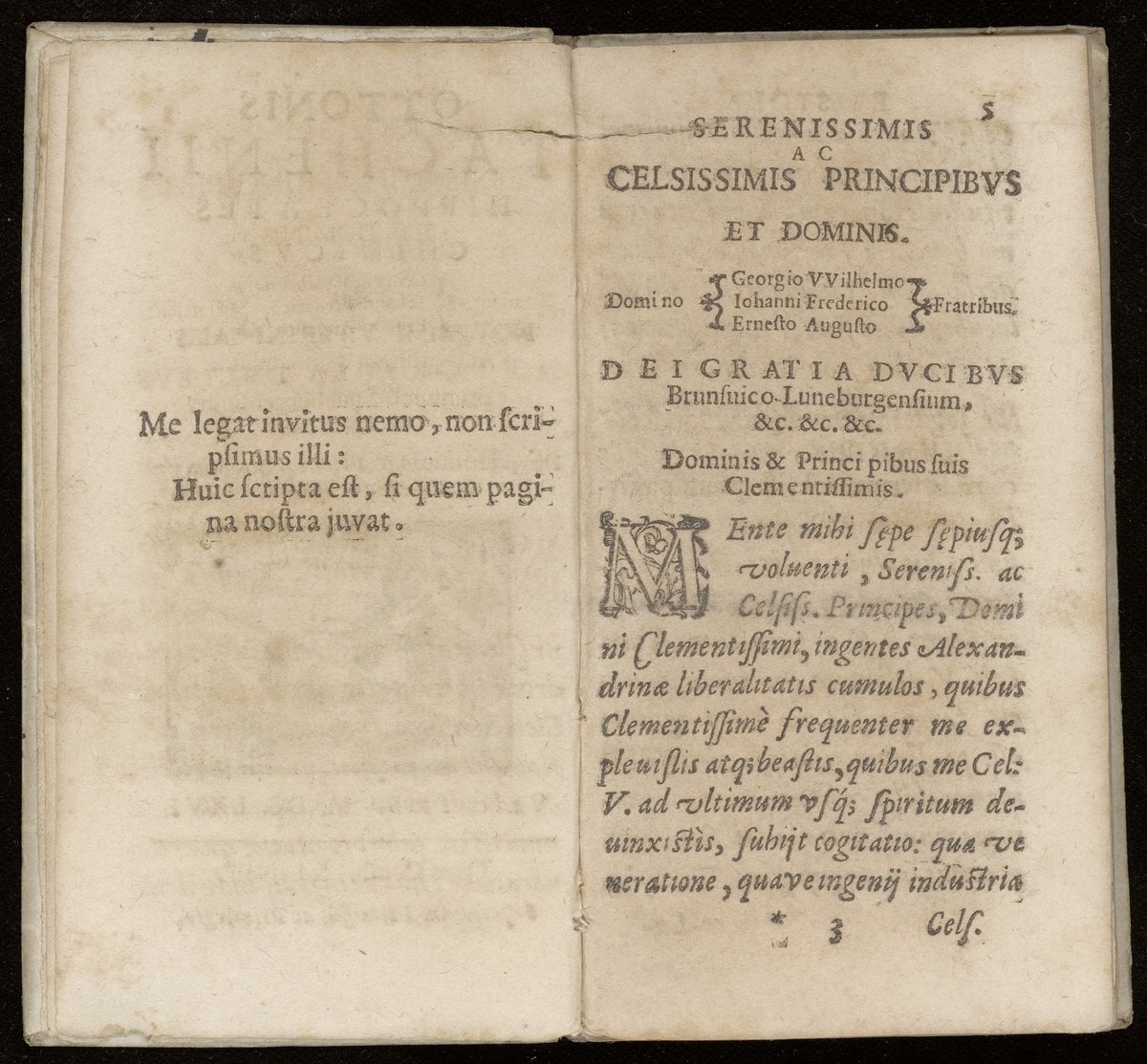
The Chemical Hippocrates
Tachenius, Otto
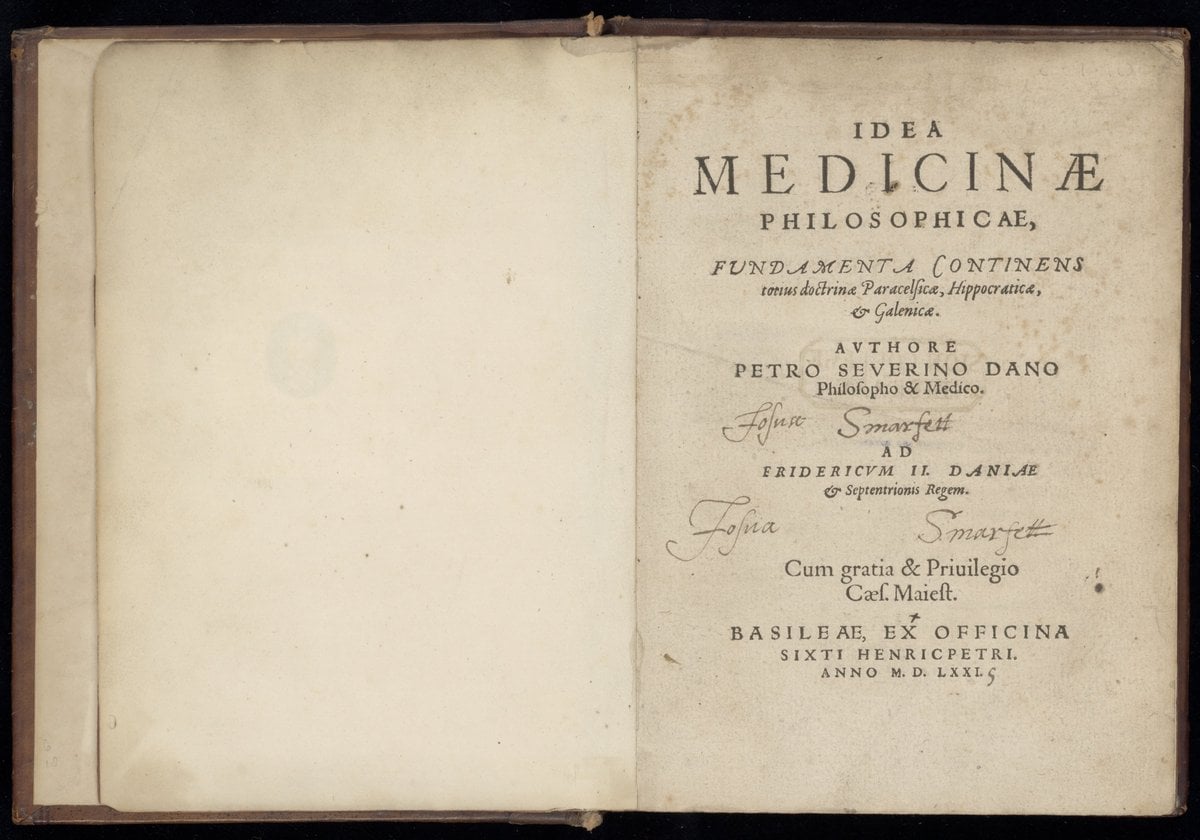
The Idea of Philosophical Medicine
Severinus, Petrus
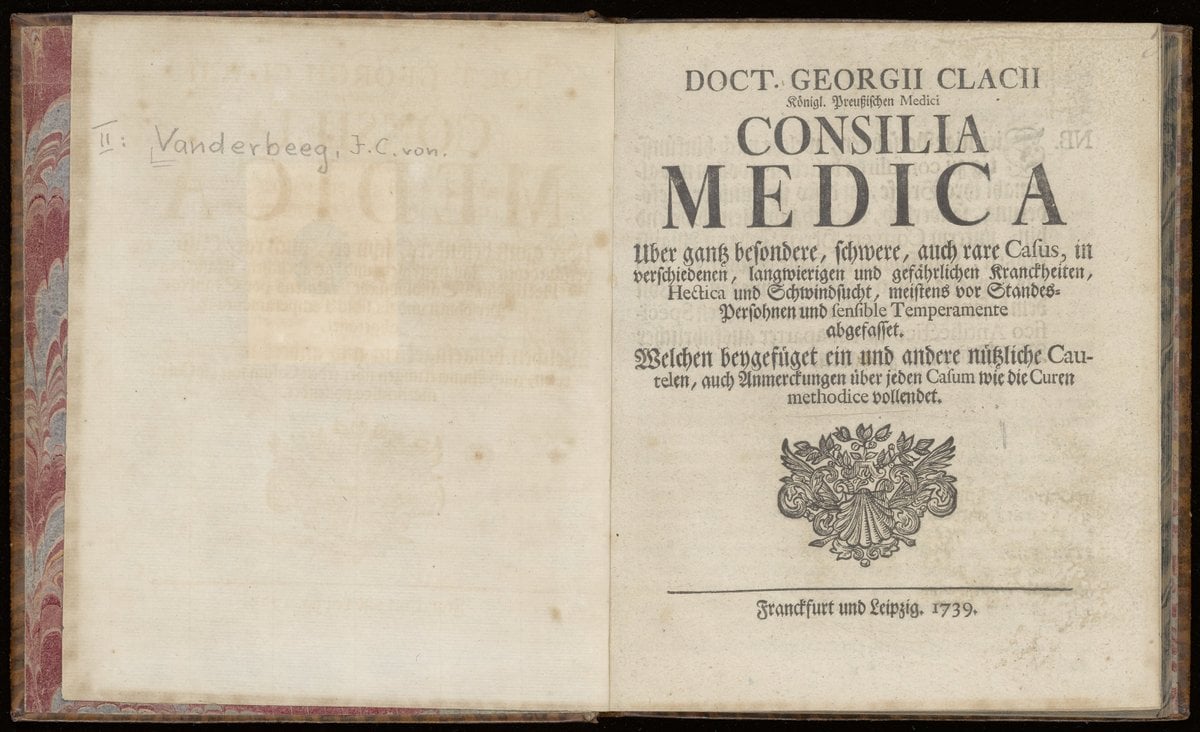
Medical Consultations on Rare Cases
Clacius, Georgius
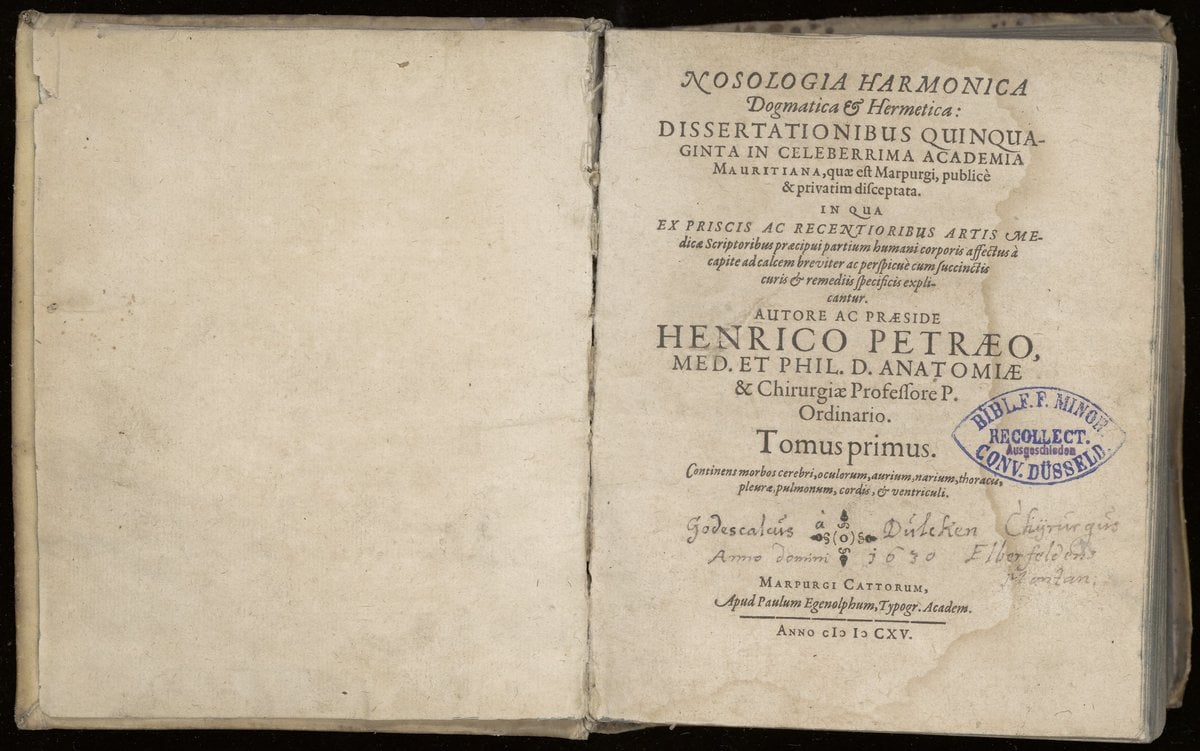
Harmonic, Dogmatic, and Hermetic Nosology
Petraeus, Henricus
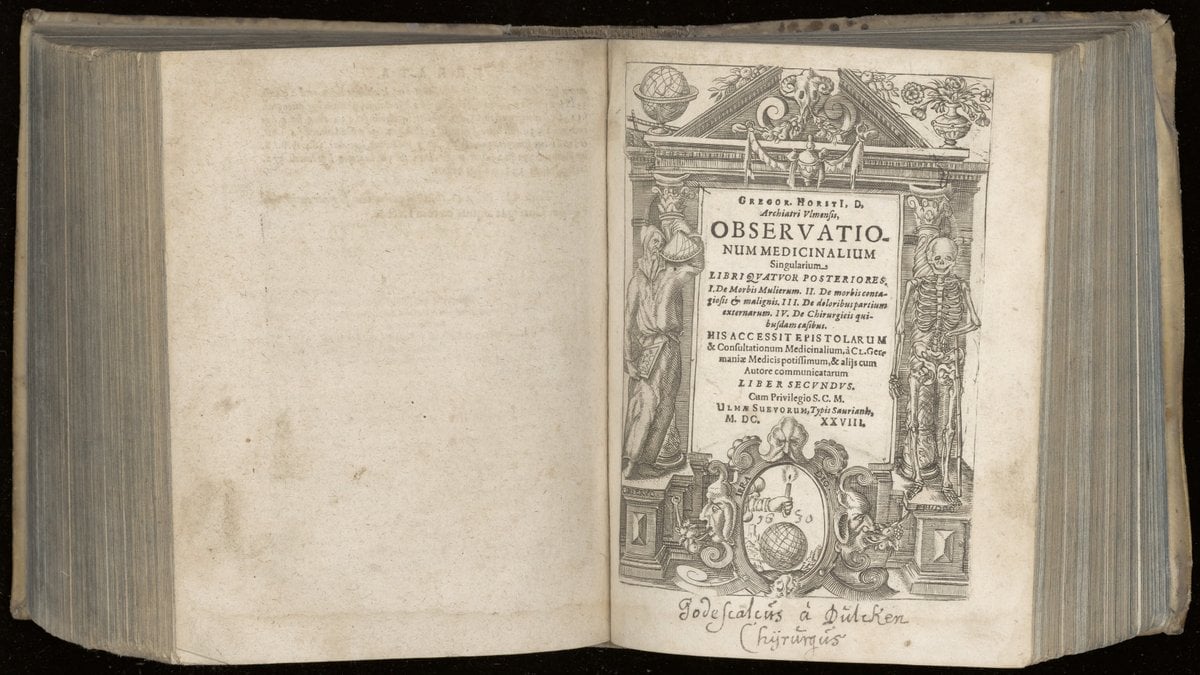
Singular Medical Observations, Book Two
Horst, Gregorius