


Illustrations
Browse all32 images extracted
This intricate memorial engraving commemorates the German mystic Jacob Böhme (1575–1624). It features a central cartouche with biographical details surrounded by three medallions representing the stages of spiritual life through the mottos 'Vidi' (I saw), 'Vici' (I conquered), and 'Veni' (I came), culminating in a radiant cross bearing the Hebrew name of God.
This engraving depicts John Pordage (1607–1681), an English physician and mystic who was a prominent follower of Jakob Böhme. He is presented in a formal oval frame resting on a pedestal that identifies him as a 'Med: Doctor,' reflecting his dual role as a man of science and spirit. The portrait serves as the frontispiece to his work on metaphysics, establishing the author's authority and intellectual stature.
This frontispiece portrait depicts Karl von Eckartshausen (1752–1803), a prominent German Catholic mystic and philosopher. The profile view is framed by an oval wreath and rests upon a stone inscribed with a quote from Jean-Jacques Rousseau, emphasizing the balance between reason and sentiment—a central theme of the Enlightenment era.
This intricate engraving illustrates Jakob Böhme's concept of 'Divine Revelation' (Von Göttlicher Offenbarung). It depicts a central human figure as a microcosm, positioned between the celestial realm of divine light—represented by the triangle and angelic host—and the terrestrial realm of elemental forces, symbolized by the lamb and the beast amidst flames. The composition uses a wealth of alchemical and Christian symbols to represent the spiritual transformation and the relationship between the human soul and the divine.
This intricate hand-colored diagram from Georg von Welling's 1719 work illustrates the complex relationship between the planetary spheres and the celestial hierarchy of angels. At the top, a hexagram is surrounded by the seven classical planets, while the lower section maps out the various orders of angels, from Seraphim to Angeli, within a series of concentric circles representing the structure of the universe.
This hand-colored diagram, titled 'Systema Magicum Universi,' presents a geocentric model of the cosmos common in early modern magical and alchemical traditions. Concentric spheres are labeled with planetary symbols and populated with stars, illustrating the hierarchical structure of the heavens as understood in Hermetic and Cabalistic thought. The central point represents the core of the universe, radiating outwards through various celestial layers towards the 'Coelum Coelorum' or Heaven of Heavens.

This detailed engraving depicts the Ascension of Christ, a pivotal moment in Christian theology where Jesus rises to heaven in the presence of his disciples. The artist uses fine line work and dramatic lighting to emphasize the divine nature of the event, contrasting the ethereal clouds above with the grounded, awestruck figures below. The German inscription at the bottom, 'Sieh! Ich bin bey Euch alle Tage bis ans Ende der Welt,' translates to 'Behold! I am with you always, even unto the end of the world,' reinforcing the spiritual message of the image.

This intricate engraving depicts a central holy figure, likely Saint Joseph, holding lilies as a symbol of purity and a staff of authority. He is framed by a celestial clock face with Roman and Arabic numerals, suggesting his role within divine providence and the eternal nature of sacred time. The fine crosshatching and radiating light effects are characteristic of high-quality 17th-century devotional prints.

This set of three symbols represents the 'Tria Prima' or three primary principles of Paracelsian alchemy: Sulphur, Mercury, and Salt. In Jakob Böhme's mystical philosophy, these represent the spiritual qualities of the 'Spirit of Nature' and the foundational forces of the material and spiritual worlds.
All Books
Browse Full Catalog→99 books in this collection
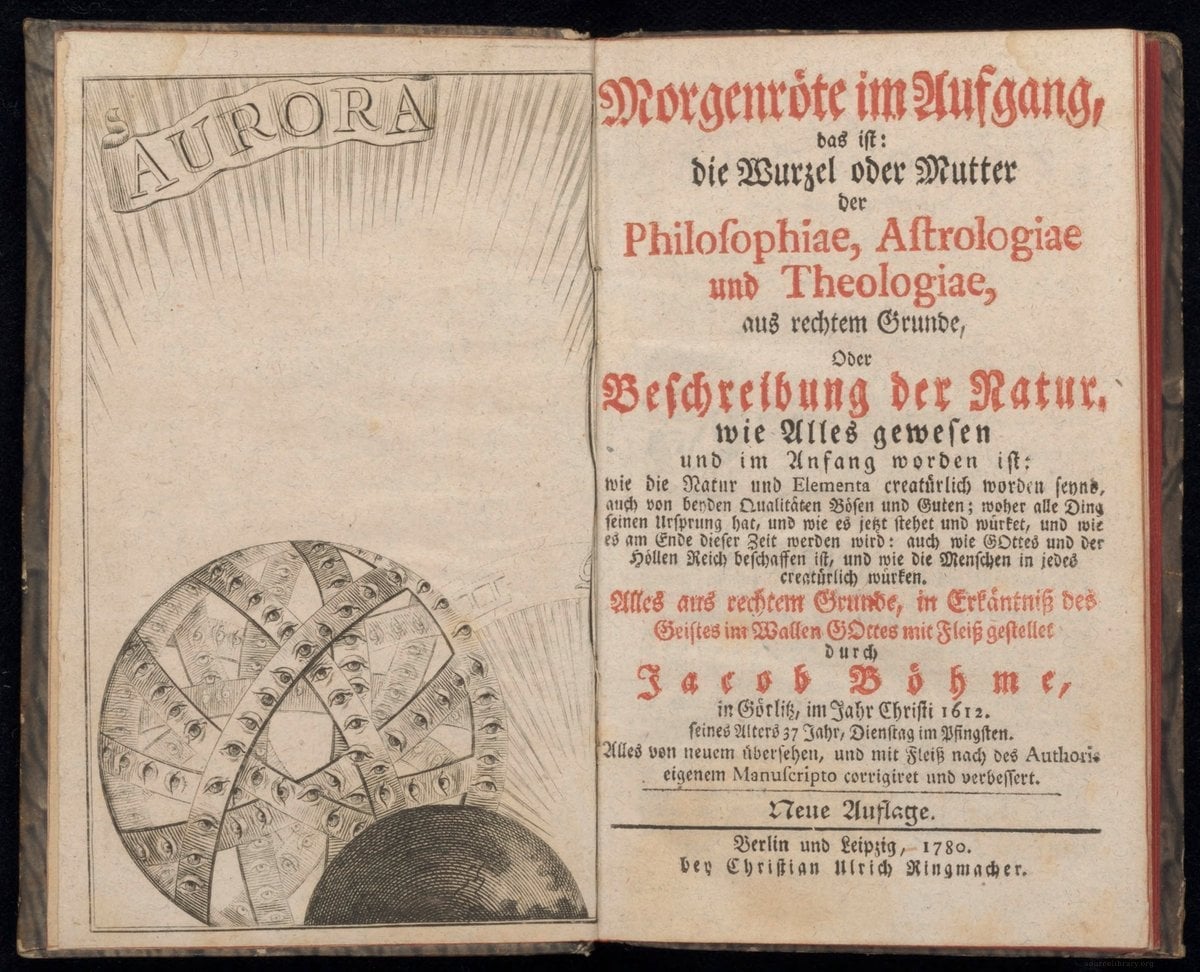
Dawn rising
Boehme, Jacob
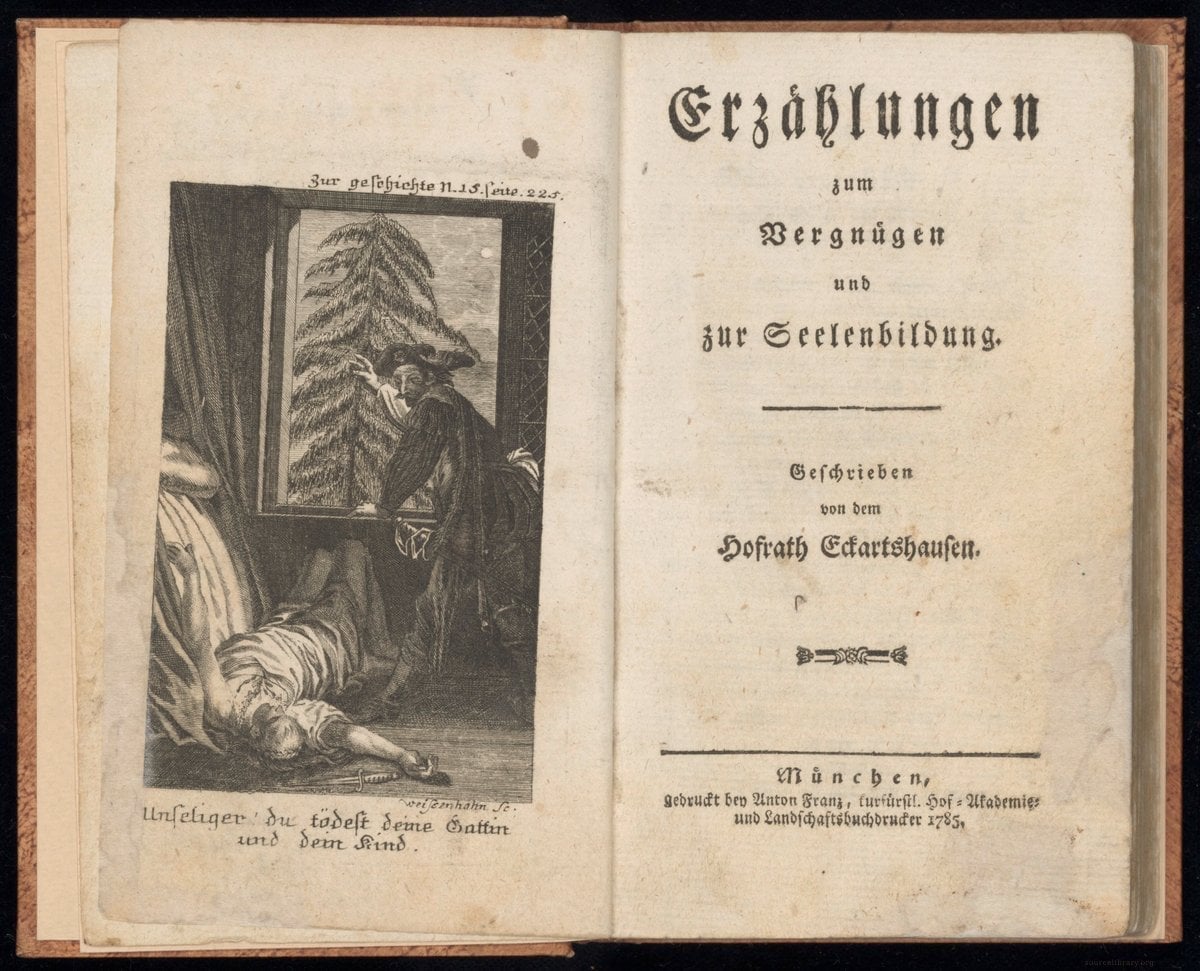
Stories for Pleasure and Edification
Eckartshausen, Karl von
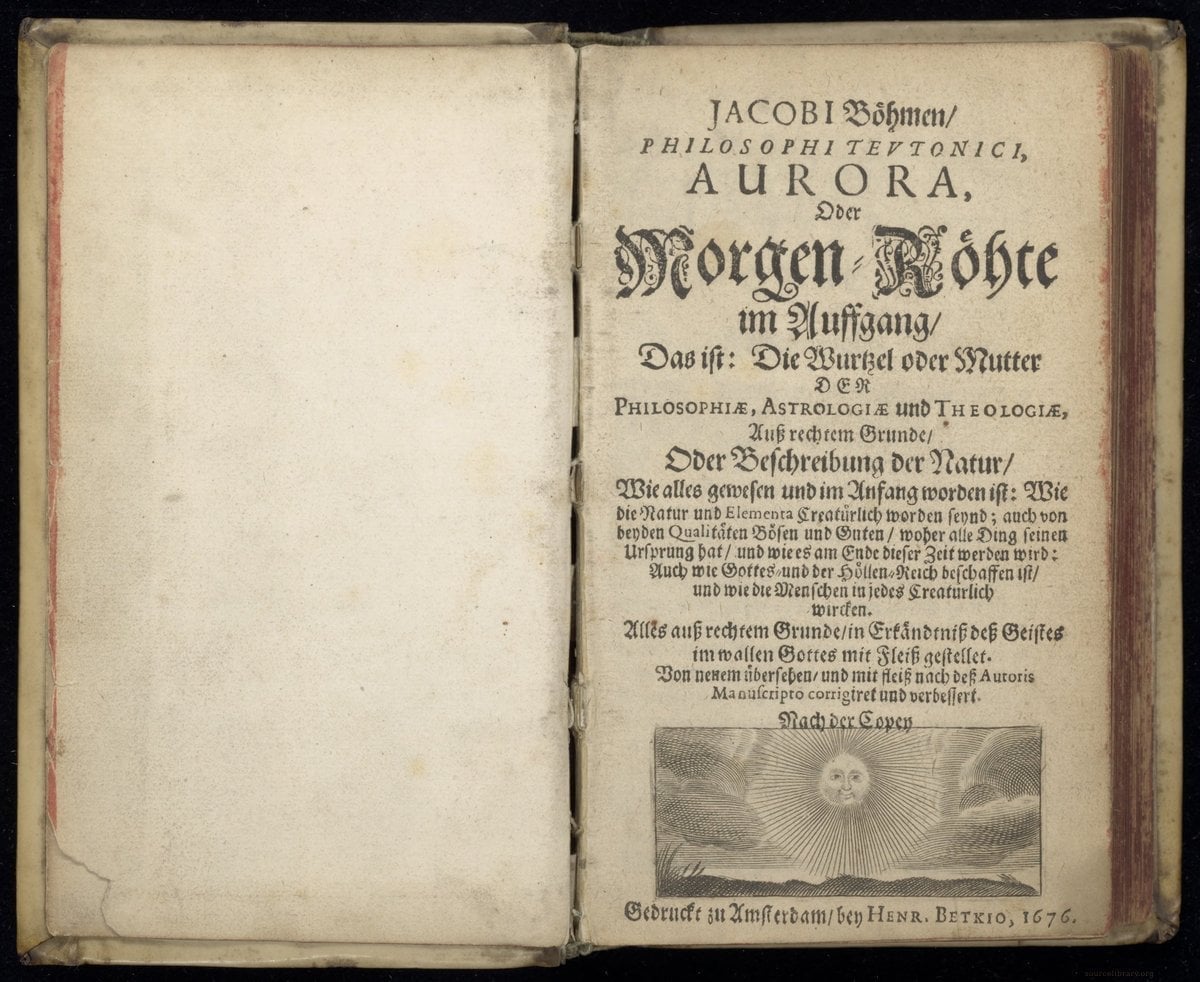
Aurora, or the Day-Spring
Boehme, Jacob
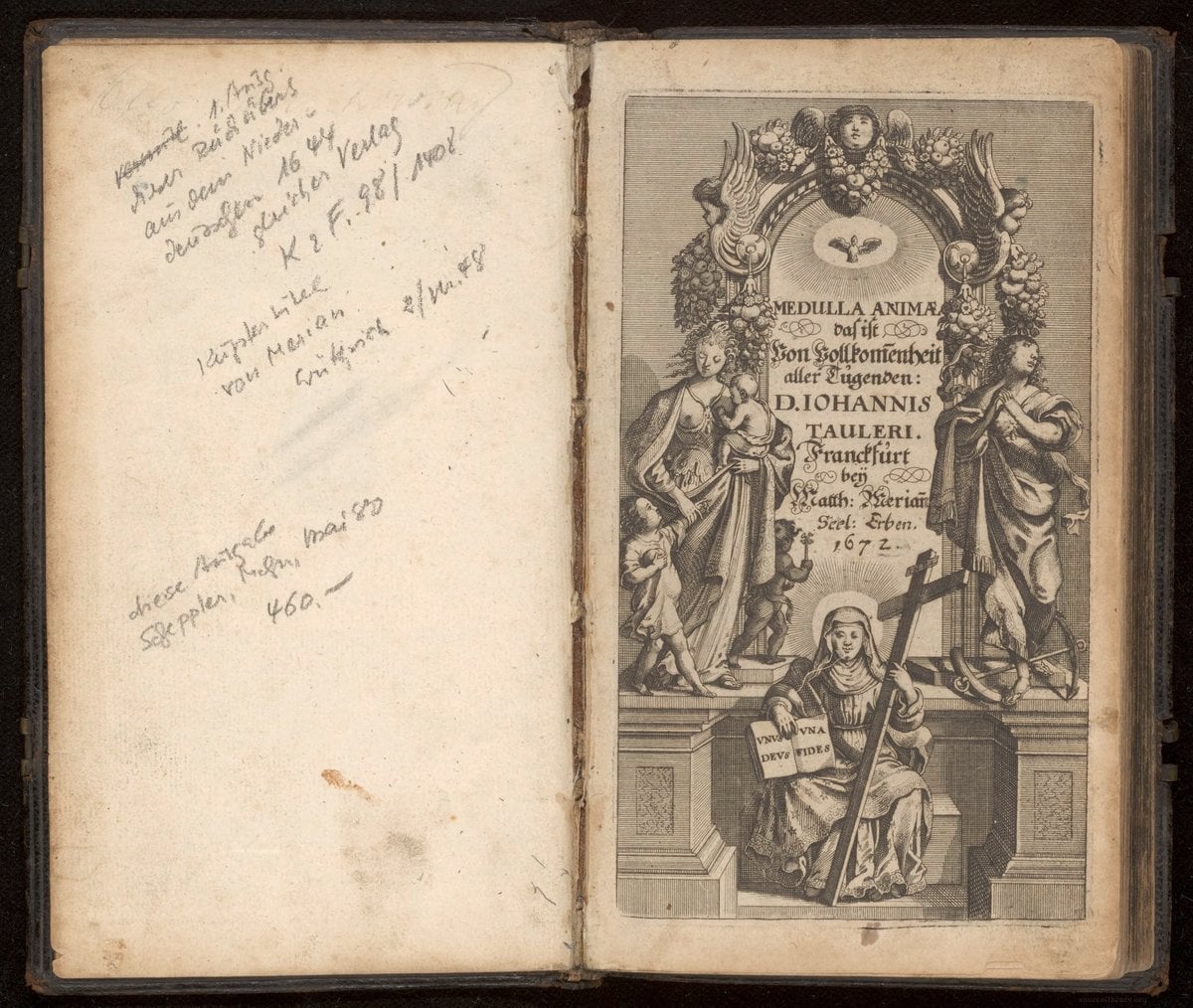
The Marrow of the Soul
Tauler, Johannes
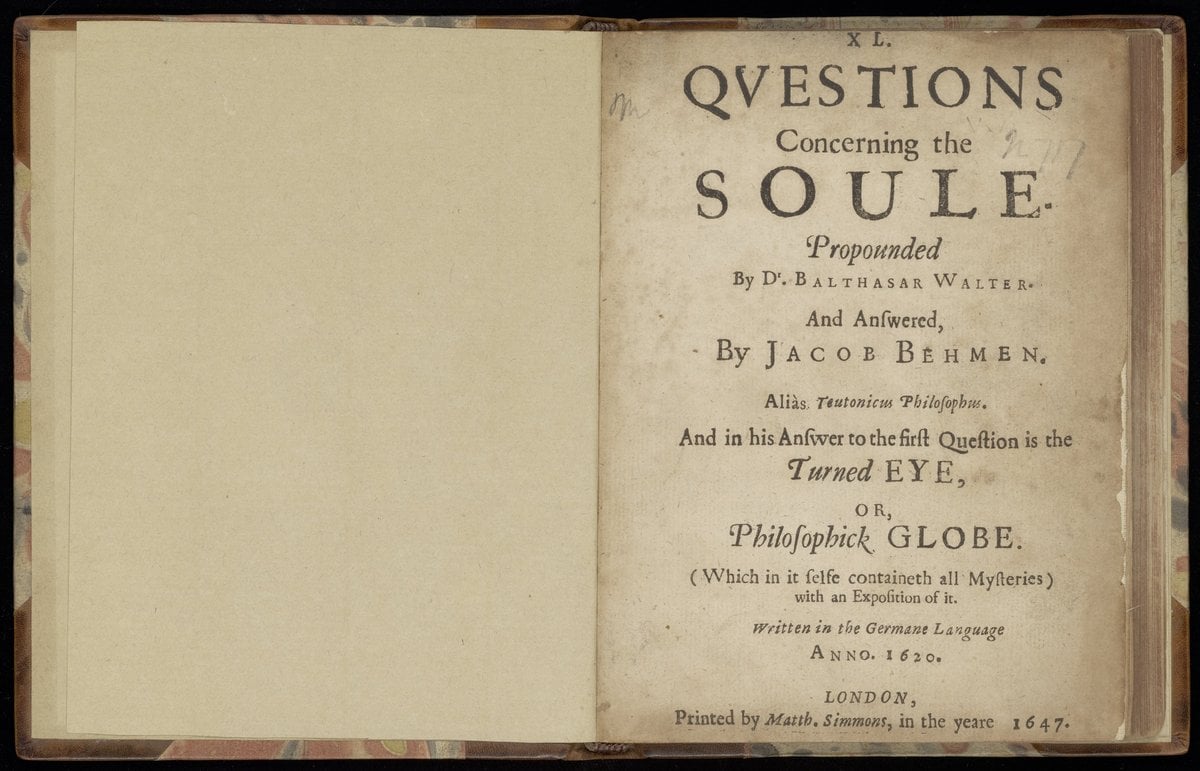
40 questions concerning the soule. Propounded by dr. Balthasar Walter
Boehme, Jacob
High and Deep Grounds of the Threefold Life of Man
Boehme, Jacob
Astrologie theologized
Weigel, Valentin
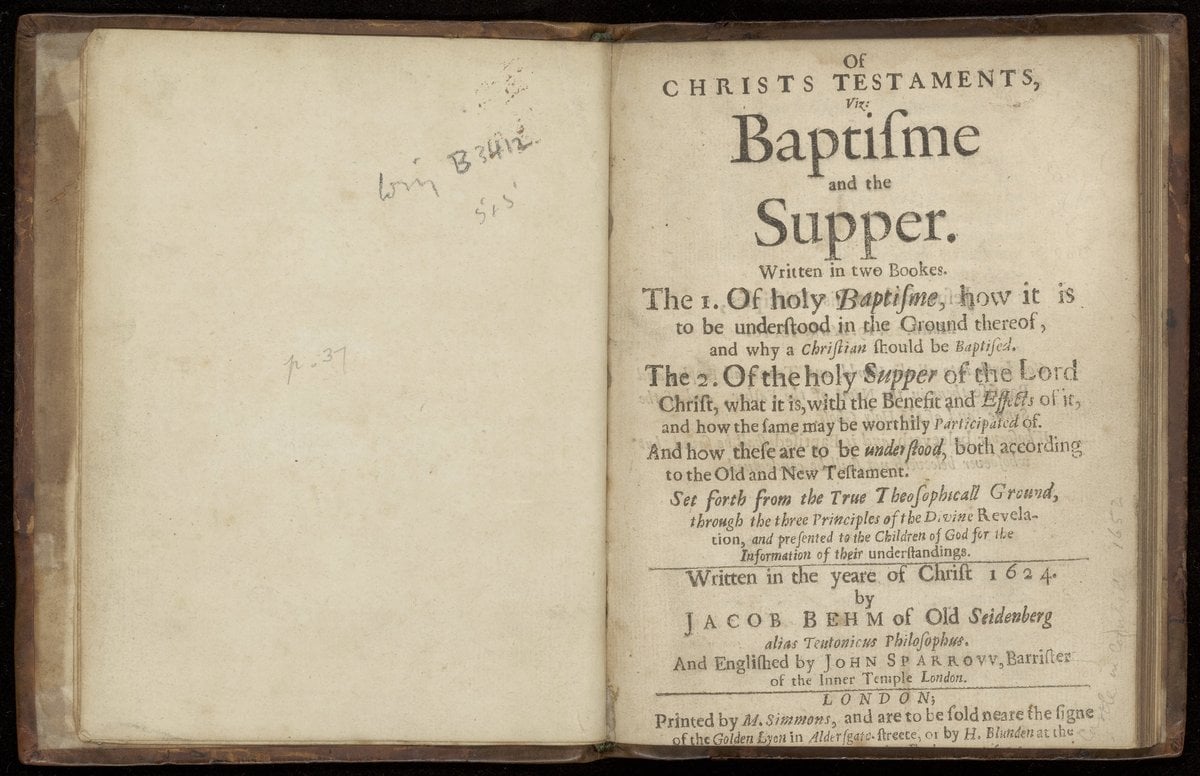
Of Christs testaments
Boehme, Jacob
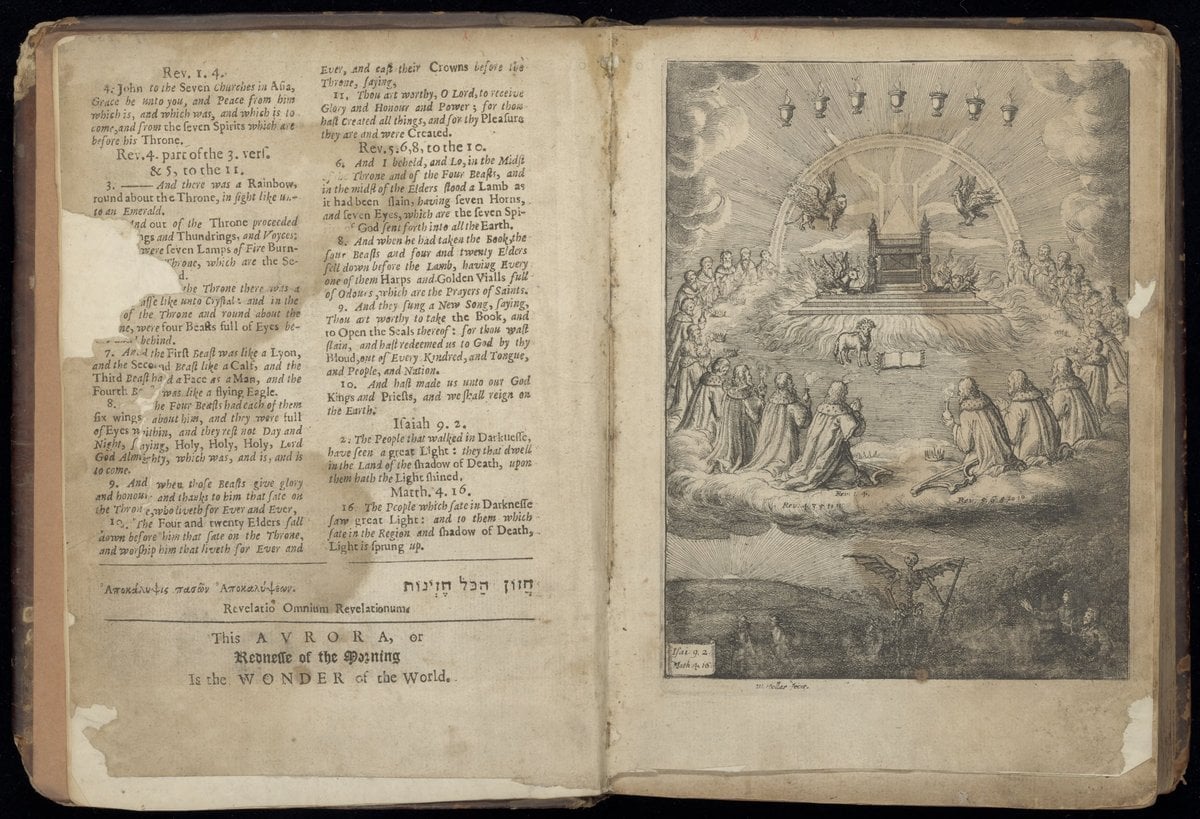
Aurora. That is, the day-spring
Boehme, Jacob
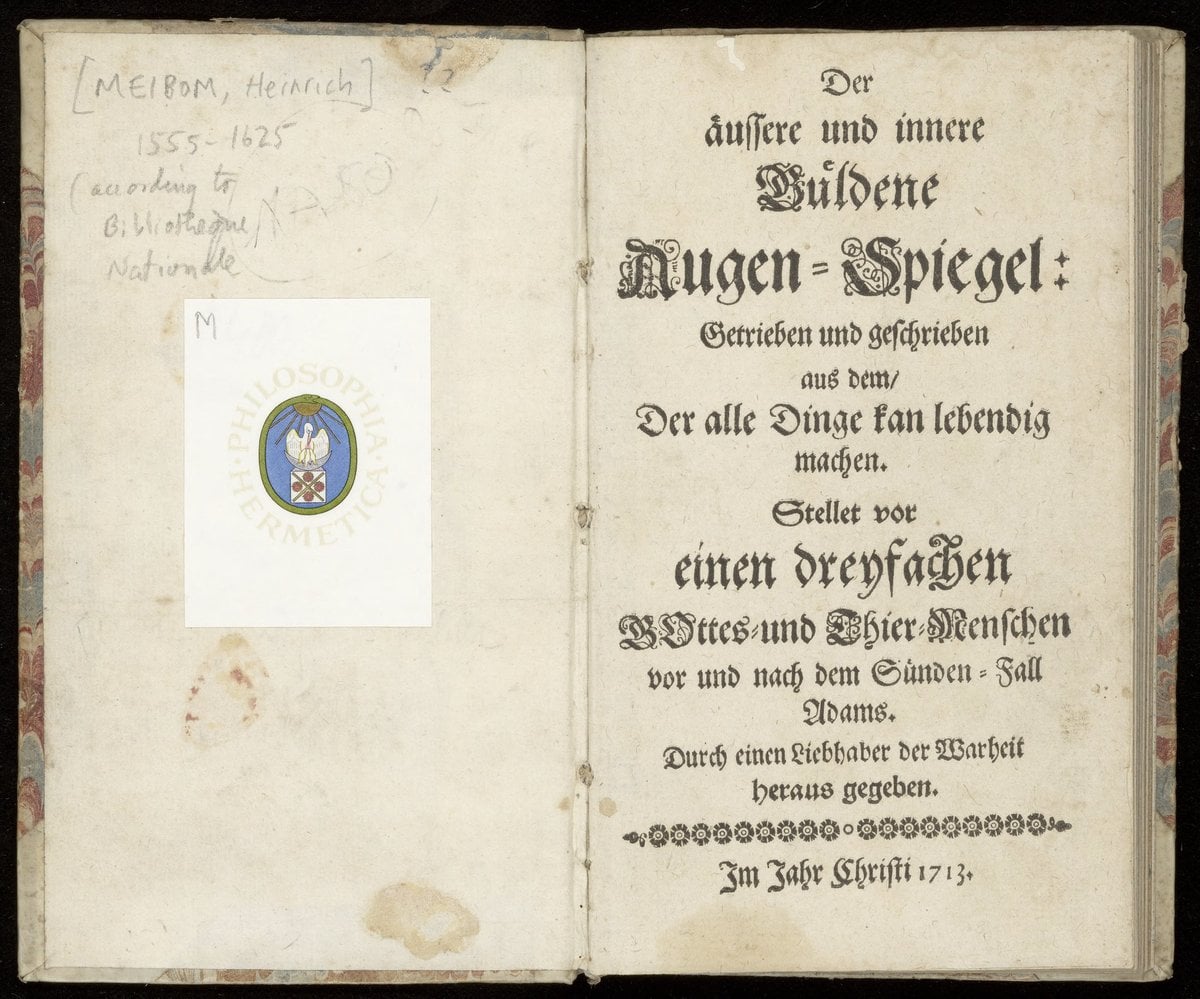
The Outer and Inner Golden Eye-Mirror
Anonymous
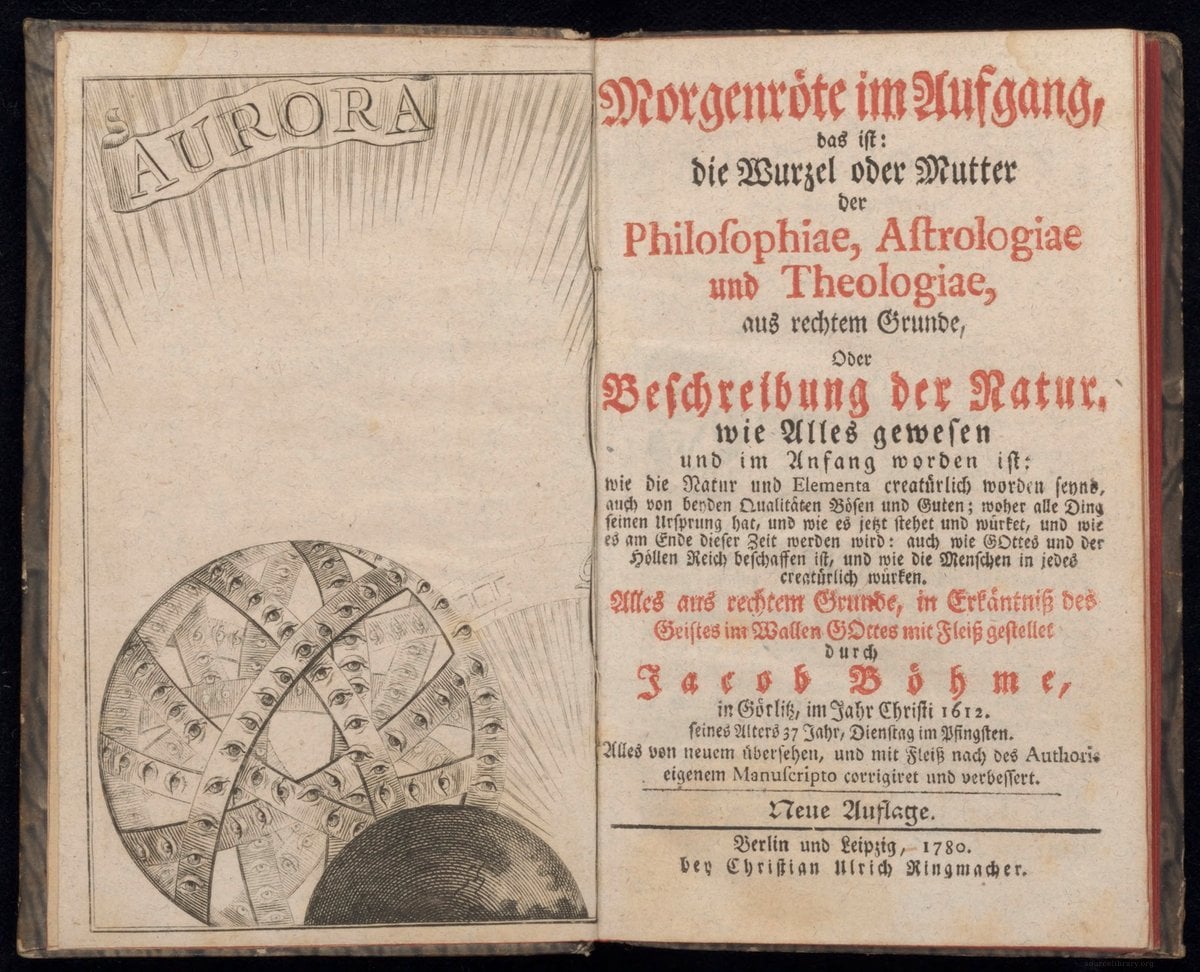
Aurora, or Day-Spring: The Root of Philosophy, Astrology, and Theology
Böhme, Jacob
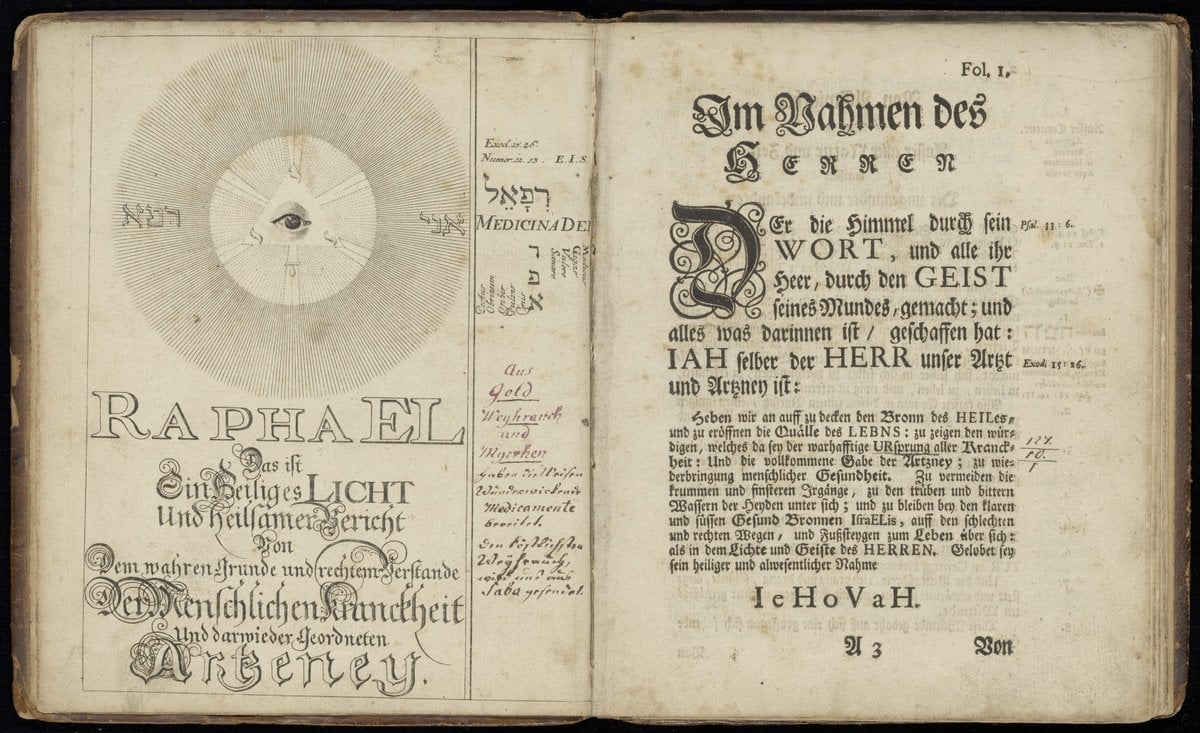
Raphael, or the Physician-Angel
Franckenberg, Abraham von
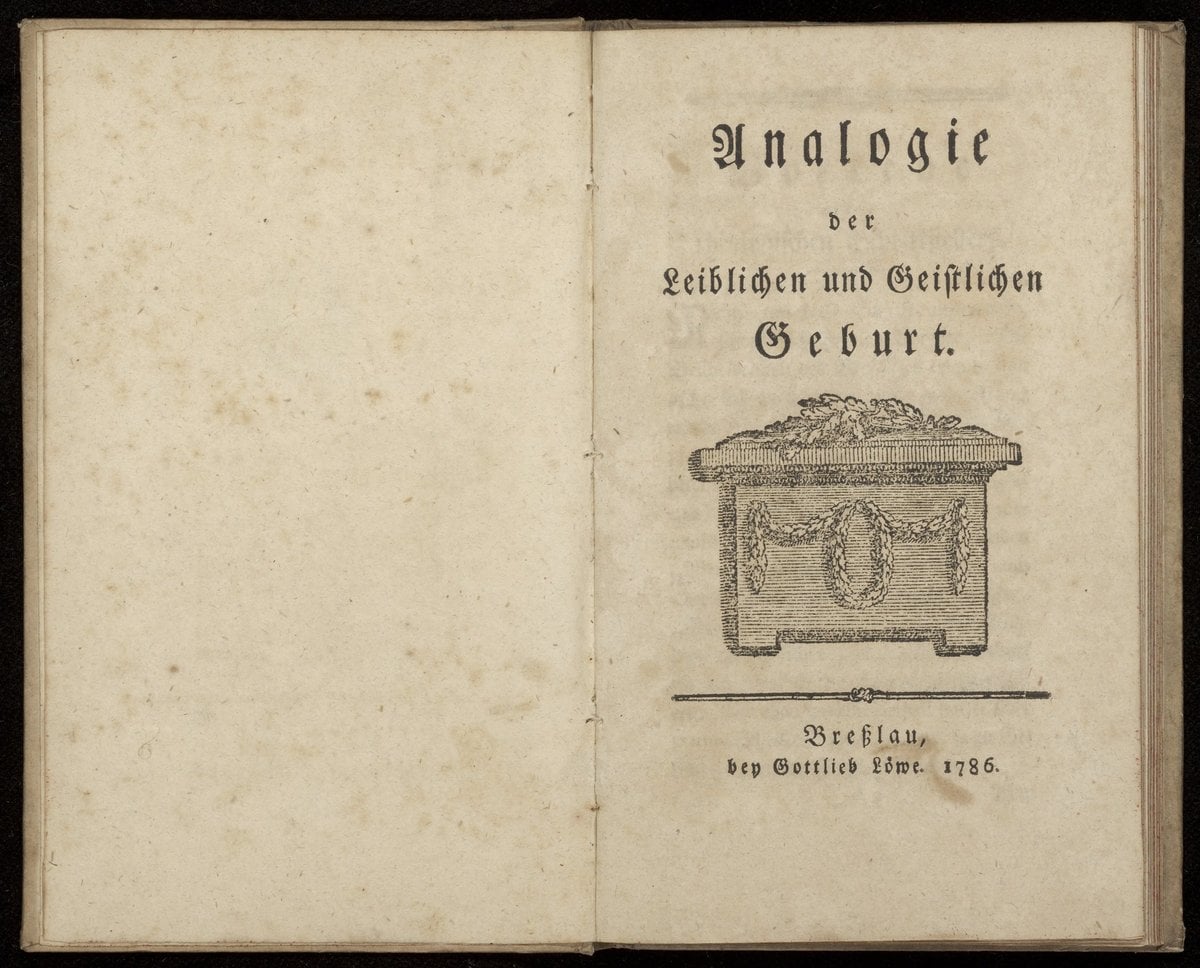
Analogy of Physical and Spiritual Birth
attr. Oswald, Heinrich Siegmund
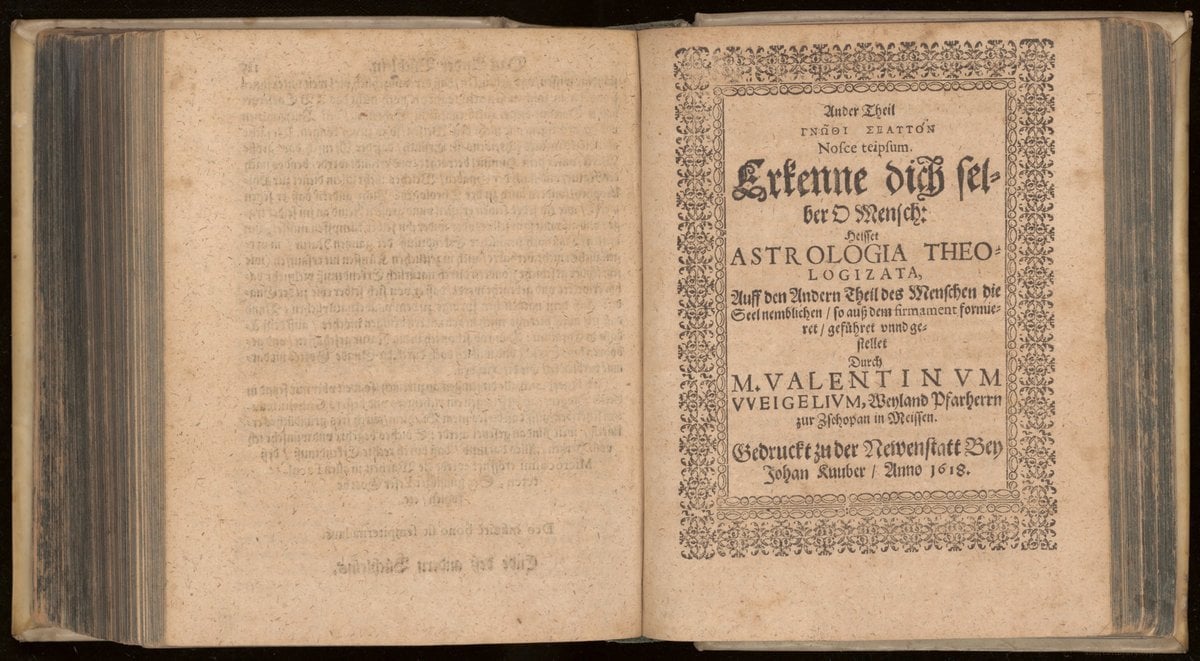
Know Thyself: Astrology Theologized
Weigel, Valentin