


Sub-collections

The Visionary

Visions & Ecstasies

Slavic & Russian Tradition

Christian Mysticism

Theosophical Tradition

Angels & Celestials

Women of the Secret Tradition

German Speculative Mysticism

Yoga, Tantra & Mysticism

Sufi & Eastern Mysticism
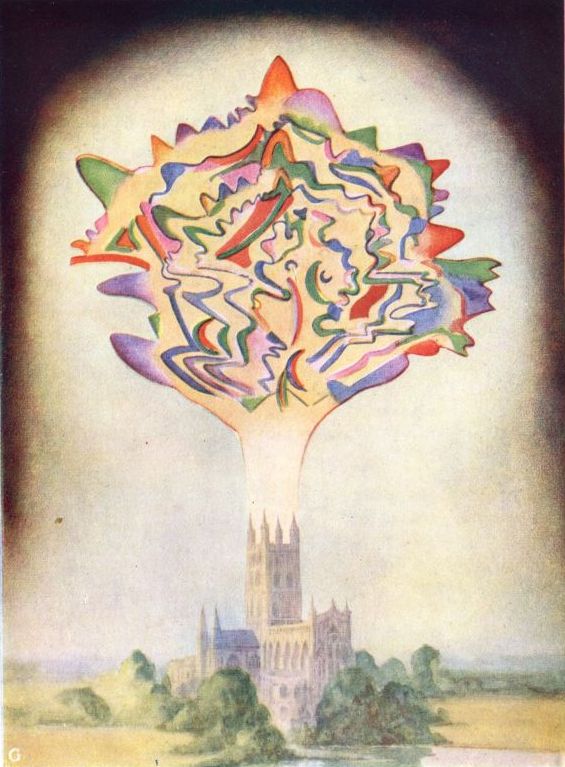
Thought-Forms

Mystical Practice

The Behmenist Underground

Islamic Philosophy Meets Christian Mysticism

The Rhineland Mystics

The Beguine Mystics
Illustrations
Browse all485 images extracted
This intricate engraving serves as an allegorical gateway to the 'Amphitheater of Eternal Wisdom.' It depicts seekers of knowledge standing before a mountain inscribed with divine truths, leading toward a cave entrance that symbolizes the path to spiritual and alchemical enlightenment. The scene masterfully blends landscape, human figures, and sacred text to illustrate the journey toward understanding the mysteries of the creator.
This hand-drawn alchemical emblem depicts the personifications of the Sun and Moon flanking a central vessel. The imagery symbolizes the union of opposites, a core concept in alchemical transformation, with the small figure inside the vessel representing the resulting 'philosopher's stone' or spiritual rebirth. Such illustrations were central to early modern hermetic traditions, serving as visual guides to complex metaphorical processes.
A comparative anatomical illustration from a late 19th or early 20th-century Indian treatise, likely relating to Yoga or Ayurveda. The top figure shows a conventional Western-style sagittal section of the head with English labels, while the bottom figure maps the brain according to Tantric subtle anatomy as the Sahasrara, or thousand-petaled crown chakra. This work represents a historical attempt to reconcile ancient spiritual traditions with modern medical science during the colonial era.
This opening emblem, titled 'Arma Artis' or the Arms of the Art, presents the heraldic symbols of alchemy: the sun and the moon united under a crown. In the background, two figures—likely the author Solomon Trismosin and a companion—observe the symbolic manifestation, representing the philosopher's mastery over the celestial forces of the Great Work.
This striking illustration from the 'Kitab al-Bulhan' (Book of Wonders) personifies the experience of a nightmare. A formidable, dark-skinned jinn with horns and wings is shown pressing down upon a sleeping figure, a literal interpretation of the 'night-mare' or sleep paralysis. The surrounding talismanic symbols and grotesque heads reflect the medieval Islamic world's complex understanding of the unseen realm and its influence on human life.
This intricate diagram depicts a yogi in a meditative pose, illustrating the subtle body's energy centers known as chakras. Each chakra is meticulously rendered with its corresponding deity and symbolic attributes, mapping the spiritual anatomy according to the Shaiva tradition.

This intricate grid of miniatures serves as a visual compendium of various trades and social roles in the early modern Islamic world. Each cell depicts a figure engaged in a specific occupation—ranging from weaving and metalworking to hunting and music—providing a rich record of material culture and daily life. The combination of descriptive imagery and identifying text highlights the manuscript's function as an educational or encyclopedic resource.

This woodcut portrait depicts the renowned Renaissance humanist and philosopher Marsilio Ficino, celebrated for his influential translations of Plato. He is presented in scholarly attire, framed by an elaborate architectural border featuring classical motifs and allegorical figures that underscore his intellectual stature and the cultural values of the era.

This intricate engraving serves as the central visual argument for Robert Fludd's 'Philosophia Moysaica' (1638). It presents a complex cosmological diagram illustrating the relationship between the divine, the celestial, and the terrestrial realms through a series of interlocking circles and symbolic figures. Fludd, a prominent Hermetic philosopher and physician, used such imagery to synthesize biblical narrative with contemporary scientific and mystical thought, representing the unfolding of creation from the divine unity.
Visual Art
Browse all art →60 works of visual art in this collection
 sculpture
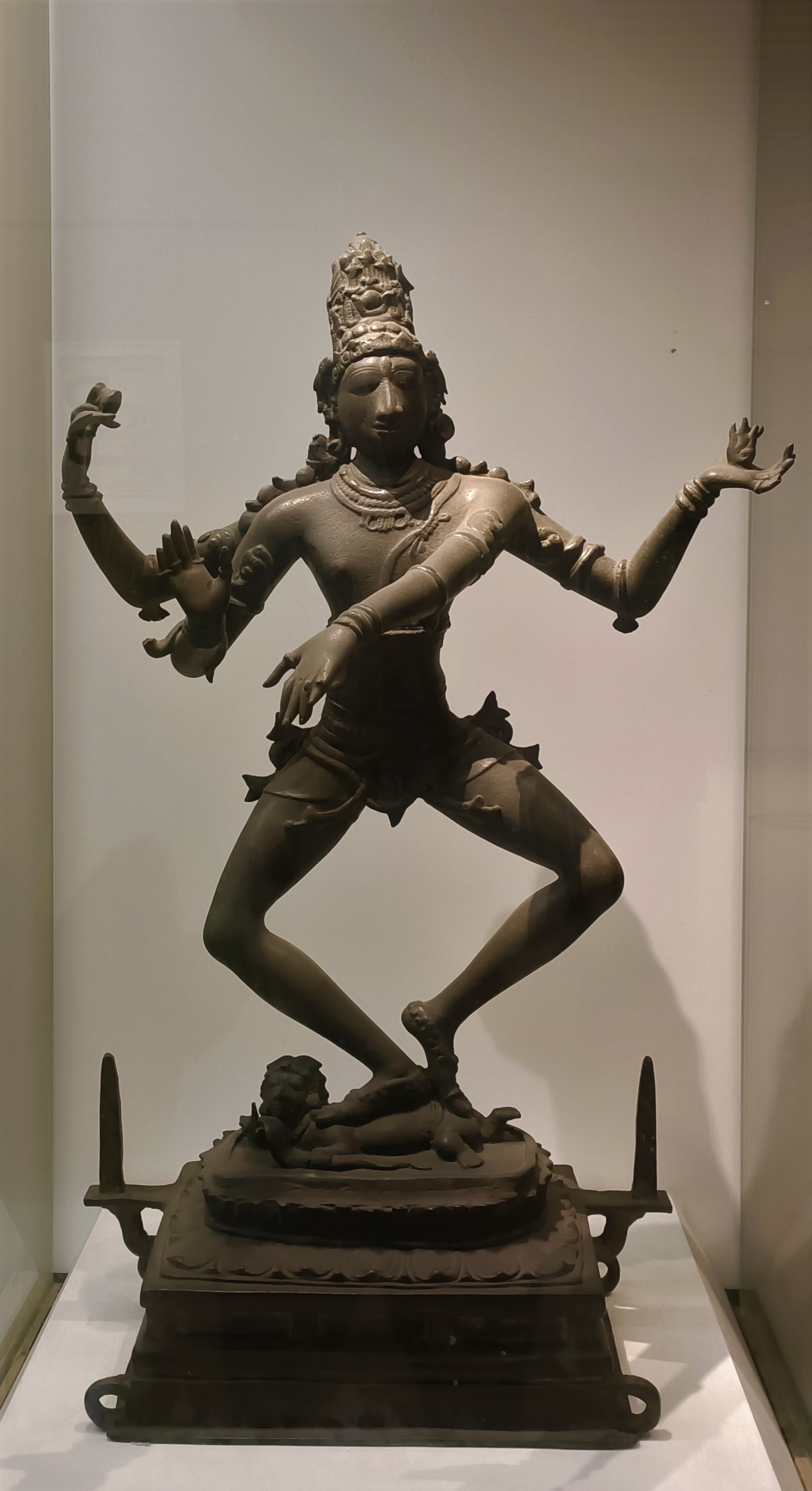
Nataraja. Bronze statue from 12th Century, CE, Tamil Nadu
Aadrit28
 sculpture
Nataraja. Bronze statue from 9th-10th Century, CE, South India
Aadrit28
 sculpture
Nataraja. Stone statue from 19th Century, A.D., South India
Aadrit28
 sculpture
Nataraj at Amer fort
AayushiParekhJain
 painting
Dervish dance
Abdo tahoon
 painting
Dervish dance separating the mind from the heart
Abdo tahoon
 painting
Dervish lover
Abdo tahoon
 painting
The dance of divine love
Abdo tahoon
 sculpture
Constitution Page113 Rammanohar
Abrsinha
 sculpture
Nataraja
Adbh266
 sculpture
Nataraja 3
Adbh266
 sculpture
Nataraja statue
Adbh266
 sculpture
Natarajamurthy
Adbh266
 print
printAbt Anub als kluizenaar
Aegidius Sadeler
Saint Anub, a desert hermit, stands in prayer upon a rocky height as an angel appears to him from a radiant cloud.
 print
printAntonius de Grote als kluizenaar
Aegidius Sadeler
Saint Anthony the Great as a hermit, depicted in prayer while being tempted by various demons and a personification of Vanitas.
The Soul’s Ascent from Hermetic Roots to Visionary Theosophy
Jacob Boehme, a self-taught shoemaker, wrote a manuscript so disruptive to the 17th-century church that he was silenced for years, yet his 'Aurora' would eventually redefine Western spirituality.
The journey of mysticism in the Source Library begins with the Renaissance recovery of ancient wisdom. When Marsilio Ficino translated The Pimander of Hermes Trismegistus in 1481, he sparked a revolution that moved the locus of divinity from the church altar to the human heart. This collection traces that shift through the Neoplatonism of Plotinus and the rigorous theurgical defenses found in Iamblichus's On the Mysteries of the Egyptians, Chaldeans, and Assyrians.
By the 17th century, this stream of 'direct experience' found its most potent voice in Jacob Boehme. His works, such as Dawn rising and Aurora, or the Day-Spring, proposed a universe where the 'wrath' and 'love' of God were physical forces at play in the human soul. This era also saw the rise of 'cosmic anatomy' in the massive, illustrated folios of Robert Fludd, whose Amphitheatre of Anatomy sought to map the exact correspondence between the human body and the celestial spheres.
The collection concludes with the systematized visions of the 18th and 19th centuries. Emanuel Swedenborg reported firsthand accounts of the afterlife in Heavenly Arcana, while later figures like Rudolf Steiner and Helena Blavatsky attempted to synthesize these disparate mystical traditions into a modern 'science of the spirit.' From the 14th-century Arabic demons of the Book of Wonders to the 19th-century chakras described in Description of the Six Chakras, these texts represent a thousand-year effort to document the invisible.

The Hermetic Spark
1450s-1550sThe rebirth of mysticism began with the translation of Greek and Egyptian texts that placed man at the center of a living, breathing universe.
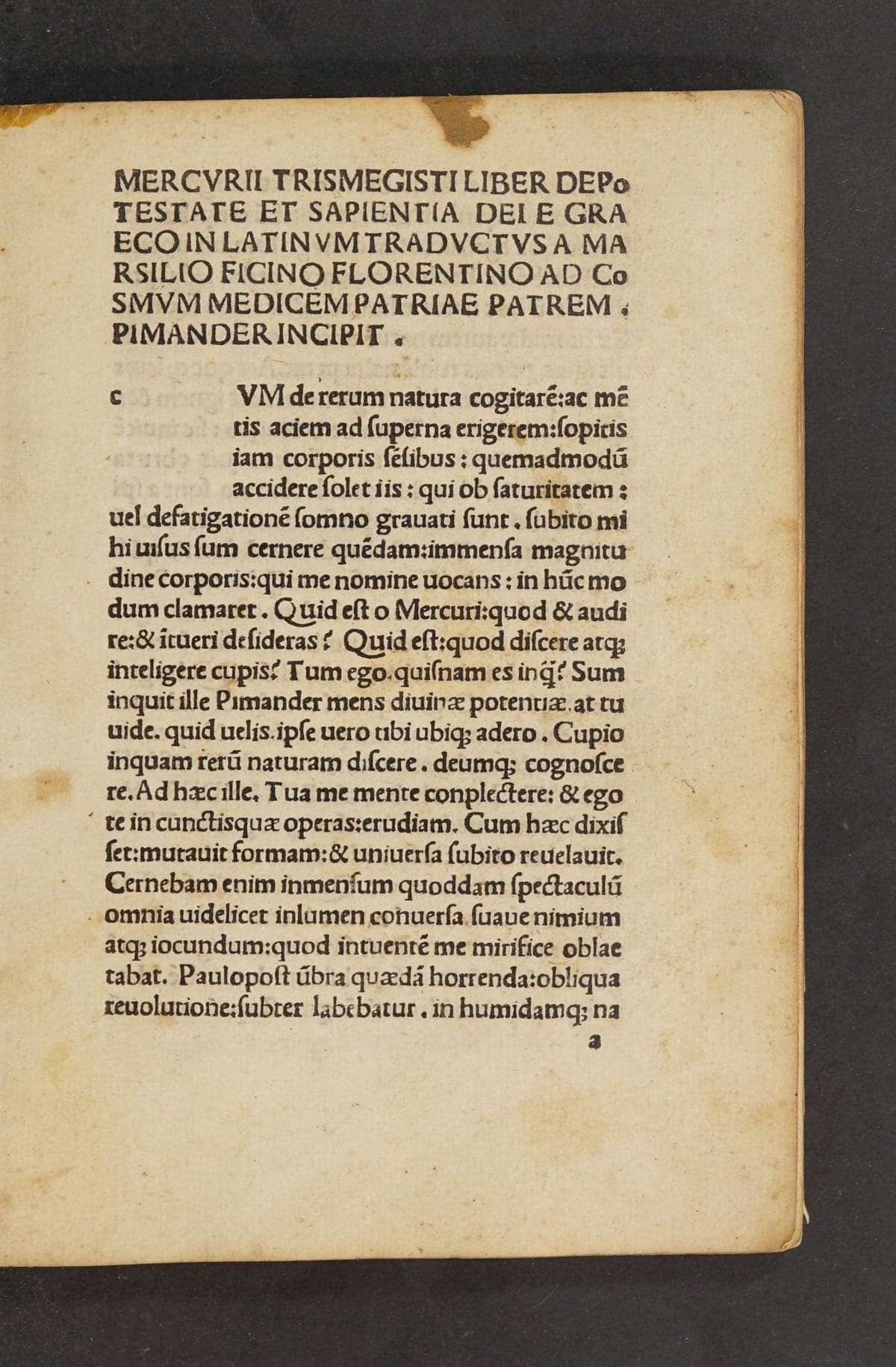
The Pimander of Hermes Trismegistus
Hermes Trismegistus; Ficino, Marsilio (translator), 1481First from Latin
The foundational text of the Renaissance Hermetic tradition, translated by Ficino to prove that Plato’s wisdom descended from an Egyptian priest.
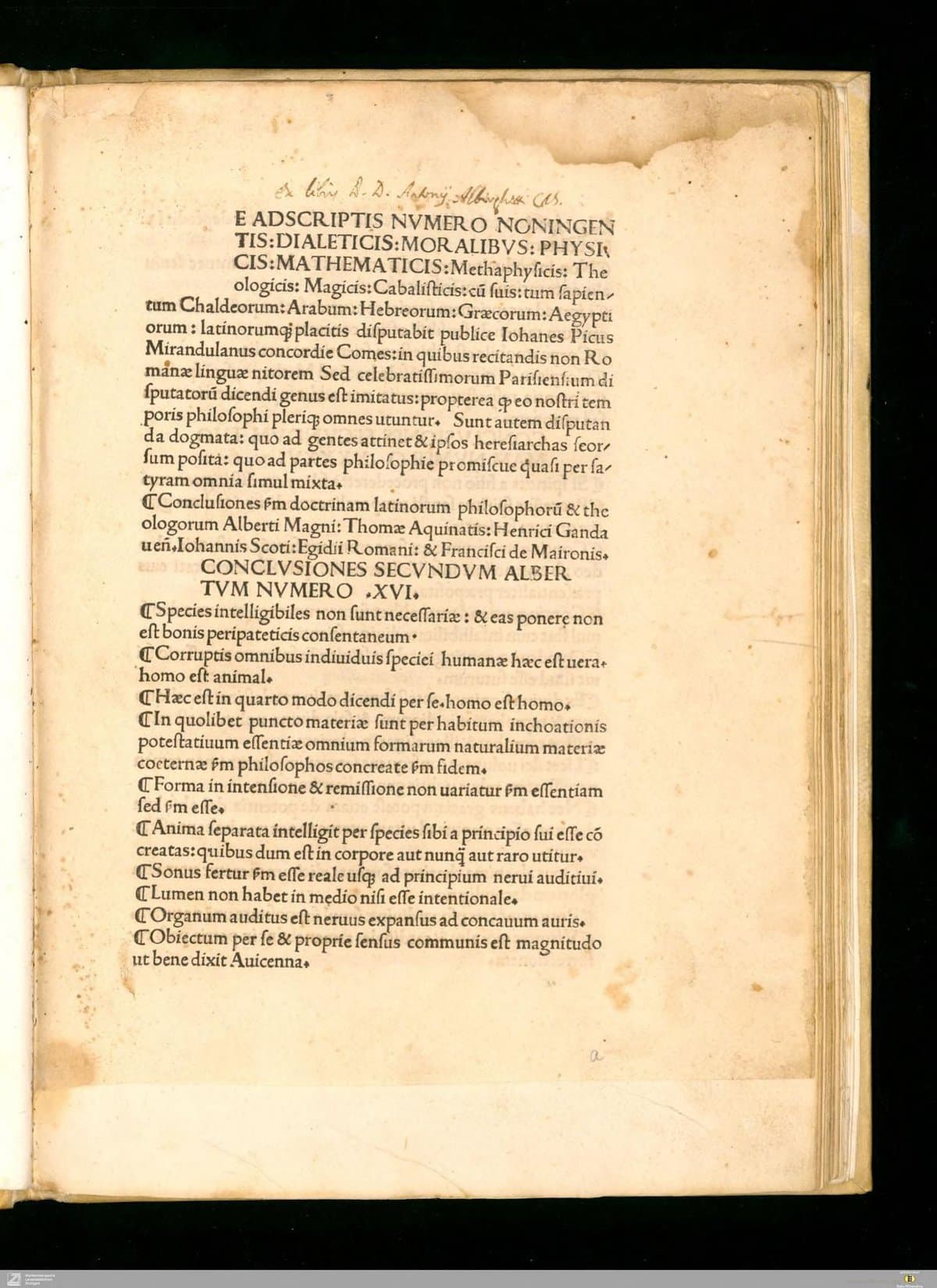
The 900 Theses
Pico della Mirandola, Giovanni (1463-1494), 1486
A daring attempt to harmonize Kabbalah, Magic, and Orphism into 900 universal truths, which led to the author's brief imprisonment.
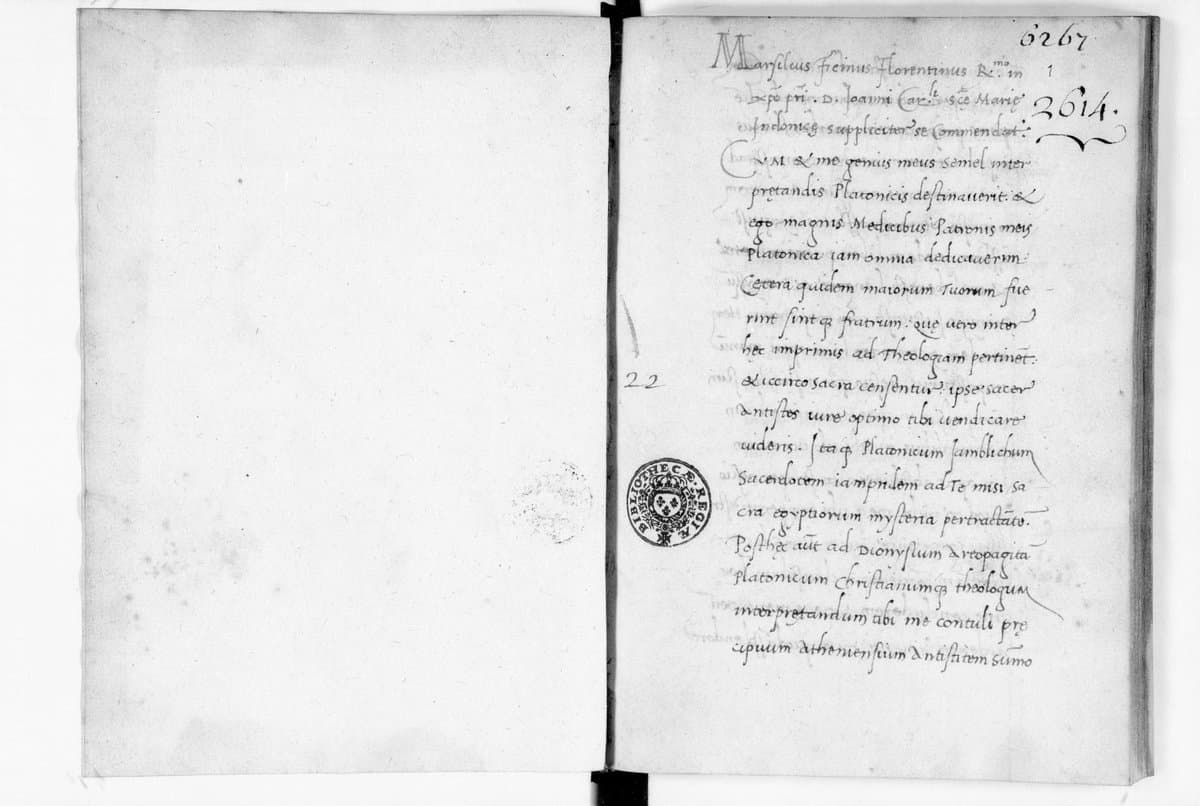
Celestial Hierarchy / Divine Names (Ficino)
Pseudo-Dionysius (trans. Marsilio Ficino), 1501First from Latin
The primary source for the 'Celestial Hierarchy' that defined how angels and souls interact with the Divine Light.
The Teutonic Theosopher & the Inner Light
1600s-1750sJacob Boehme and his followers moved mysticism into the realm of 'Theosophy,' focusing on the internal fire and the dialectic of good and evil within God.
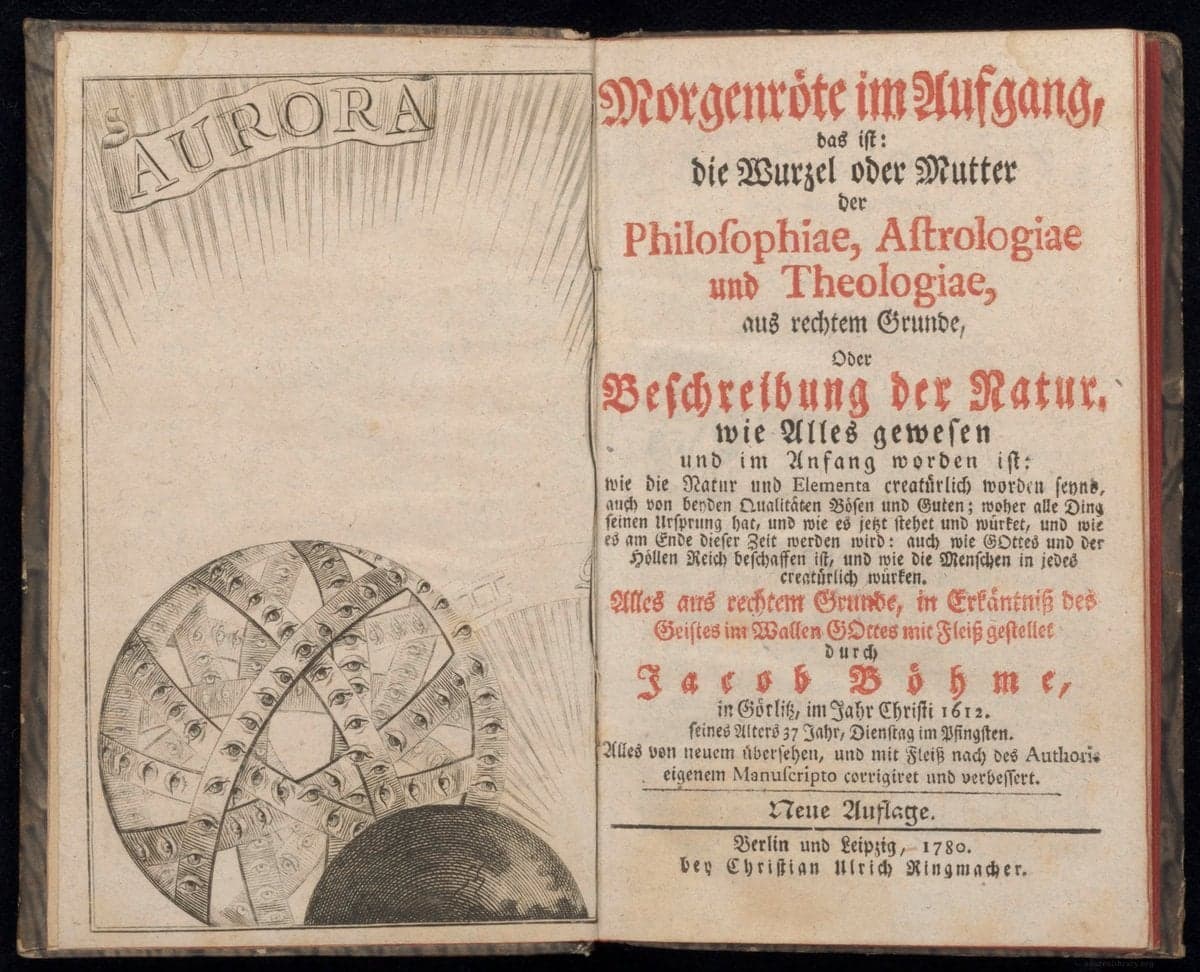
Dawn rising
Boehme, Jacob, 1780
Boehme's first work, which describes the 'Day-Spring' of divine knowledge breaking through the darkness of human reason.
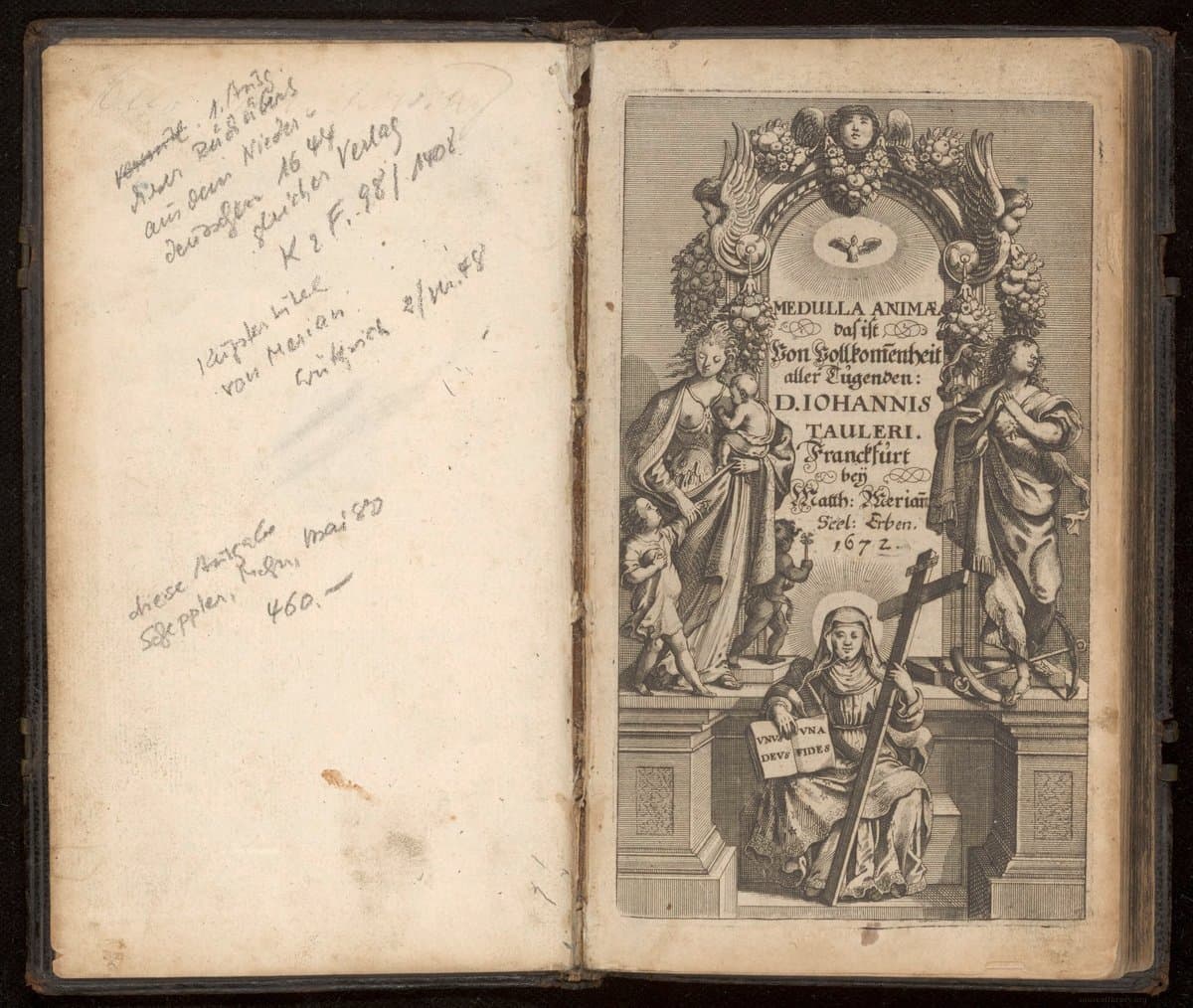
The Marrow of the Soul
Tauler, Johannes, 1672First Translation
A 17th-century printing of the medieval master whose sermons on the 'ground of the soul' deeply influenced the later German mystics.
Four Little Treatises
Pordage, John, 1704First Translation
Pordage was a key English follower of Boehme who claimed to have seen the 'Eternal World' in a series of vivid physical manifestations.
Mapping the Invisible World
1750s-1900sVisionaries of the Enlightenment used the language of science and anatomy to categorize their mystical experiences of other realms.
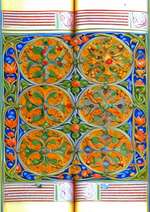
Heavenly Arcana
Emanuel Swedenborg, 1749
A massive multi-volume report on the internal sense of the Bible and the author's daily conversations with angels and spirits.
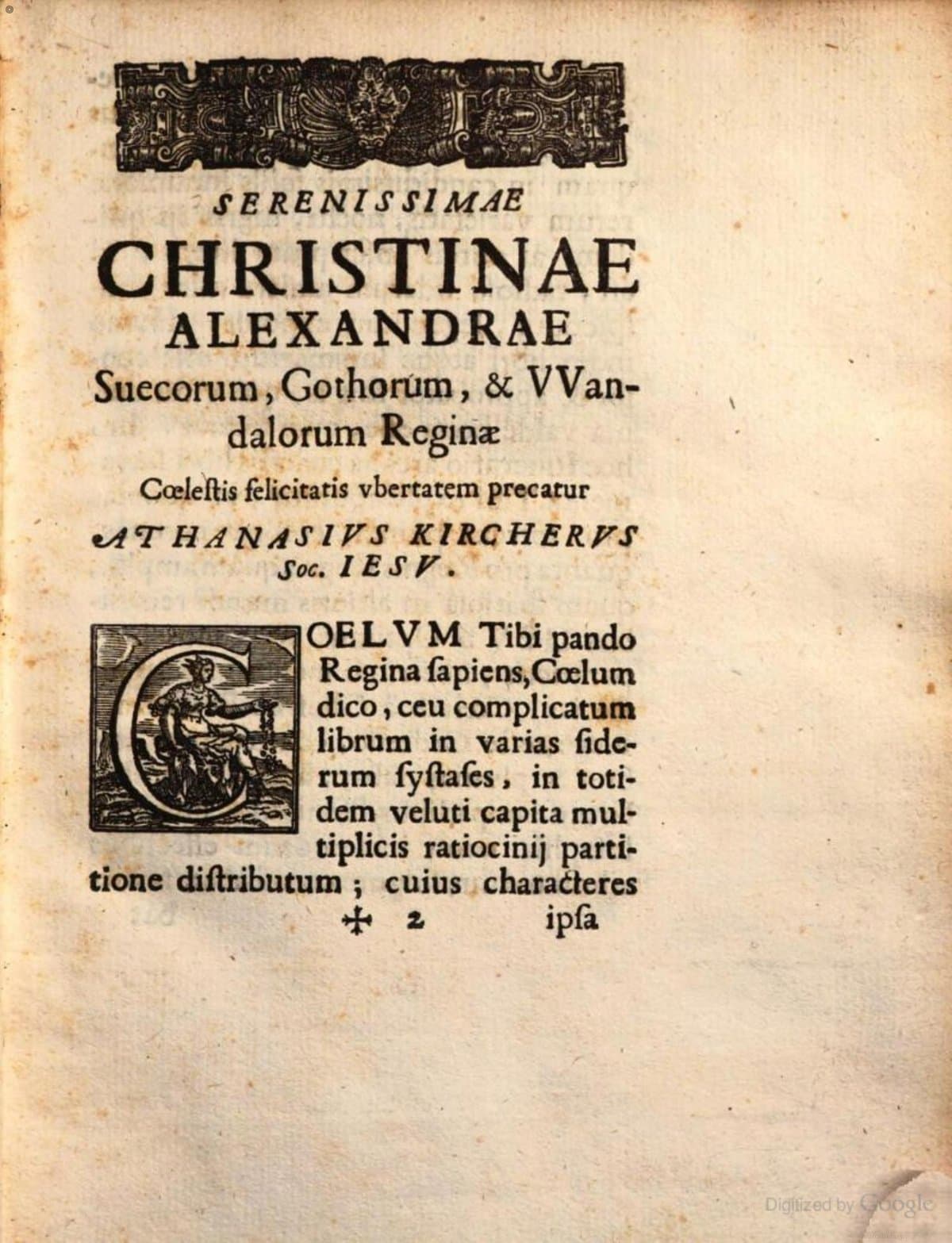
The Ecstatic Journey
Athanasius Kircher, 1656First Translation
A Jesuit polymath’s fictionalized account of a journey through the planets, blending astronomy with mystical ecstasy.
Mystics of the Renaissance
Rudolf Steiner, 1911
Steiner's early 20th-century reappraisal of Renaissance mystics like Nicholas of Cusa and Paracelsus as precursors to modern spiritual science.
Key Figures
Jacob Boehme
1575–1624
A German shoemaker whose sudden mystical illumination led him to describe the universe as a struggle between light and dark 'qualities.'
Dawn risingMarsilio Ficino
1433–1499
The head of the Florentine Academy who synthesized Platonic philosophy with Christian mysticism.
On the MysteriesEmanuel Swedenborg
1688–1772
A Swedish scientist and statesman who, at age 56, began receiving visions of the spiritual world that he recorded with scientific precision.
True Christian Religion“Nature, however, has two qualities within it until the Judgment of God: one lovely, heavenly, and holy; and one fierce, hellish, and thirsty.”
“The soul, however, is indivisible and simple, having no internal separation or distance between parts. Therefore, the motion of the soul is indivisible and simple, and is completed entirely at a single point of time.”


Where to Start
The Philosophically Inclined
Trace the intellectual evolution of the soul from Greek Neoplatonism to 19th-century German Idealism.
- 1The Enneads
Start with Plotinus to understand the 'One' and the soul's descent into matter.
- 2On the Mysteries
Read Ficino to see how these pagan ideas were 'baptized' for the Renaissance.
- 3Lectures on the Philosophy of History
End with Hegel to see how mystical concepts of 'Spirit' were transformed into a philosophy of history.
Seekers of Visionary Art
Explore the collection through its most striking visual and symbolic representations.
- 1Book of Wonders
Examine the 'Book of Wonders' for its unique Islamic perspective on planetary spirits and talismans.
- 2Amphitheater of Eternal Wisdom
Study Khunrath’s 'Amphitheater' for the peak of alchemical and mystical engraving.
All Books
Browse Full Catalog→2,062 books in this collection
Key to the Secrets of Nature
Eckartshausen, Karl von
On the Mysteries
Ficino
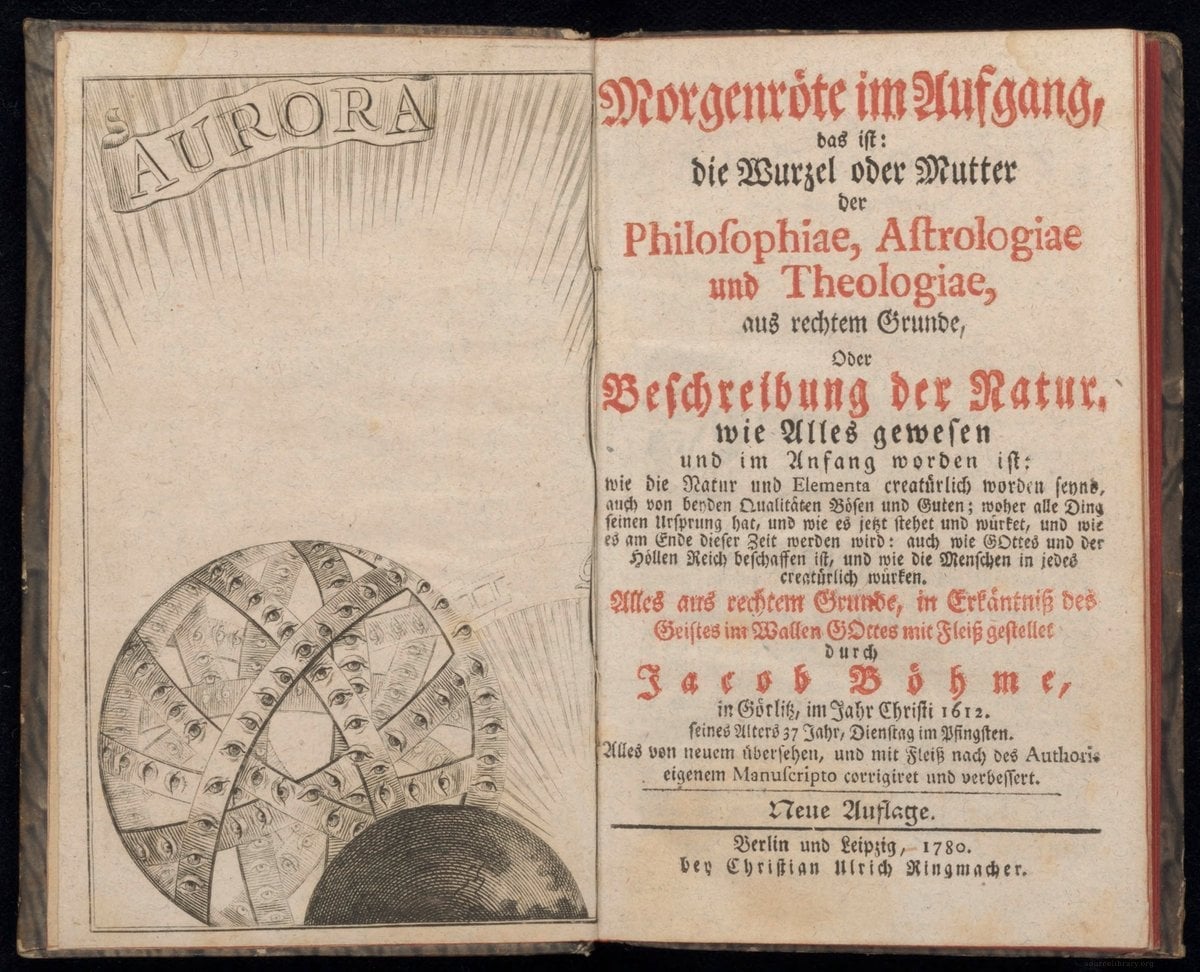
Dawn rising
Boehme, Jacob
Know Thyself
attr. Reger von Ehrenhart, Ernestus Aurelius
Essence of Pomegranates
Gallico, Samuel
Fortress of Science
attr. Grick, Friedrich
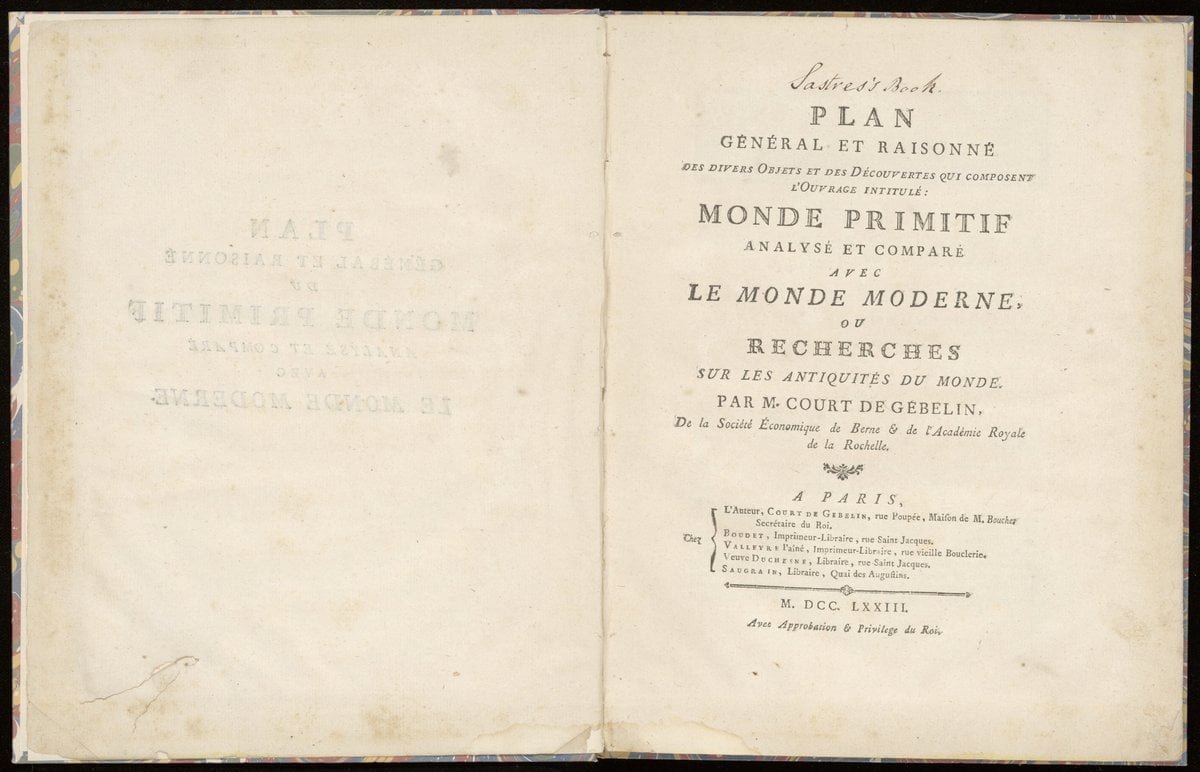
On Presages, Prophecies, and Divinations
Paracelsus, Theophrastus
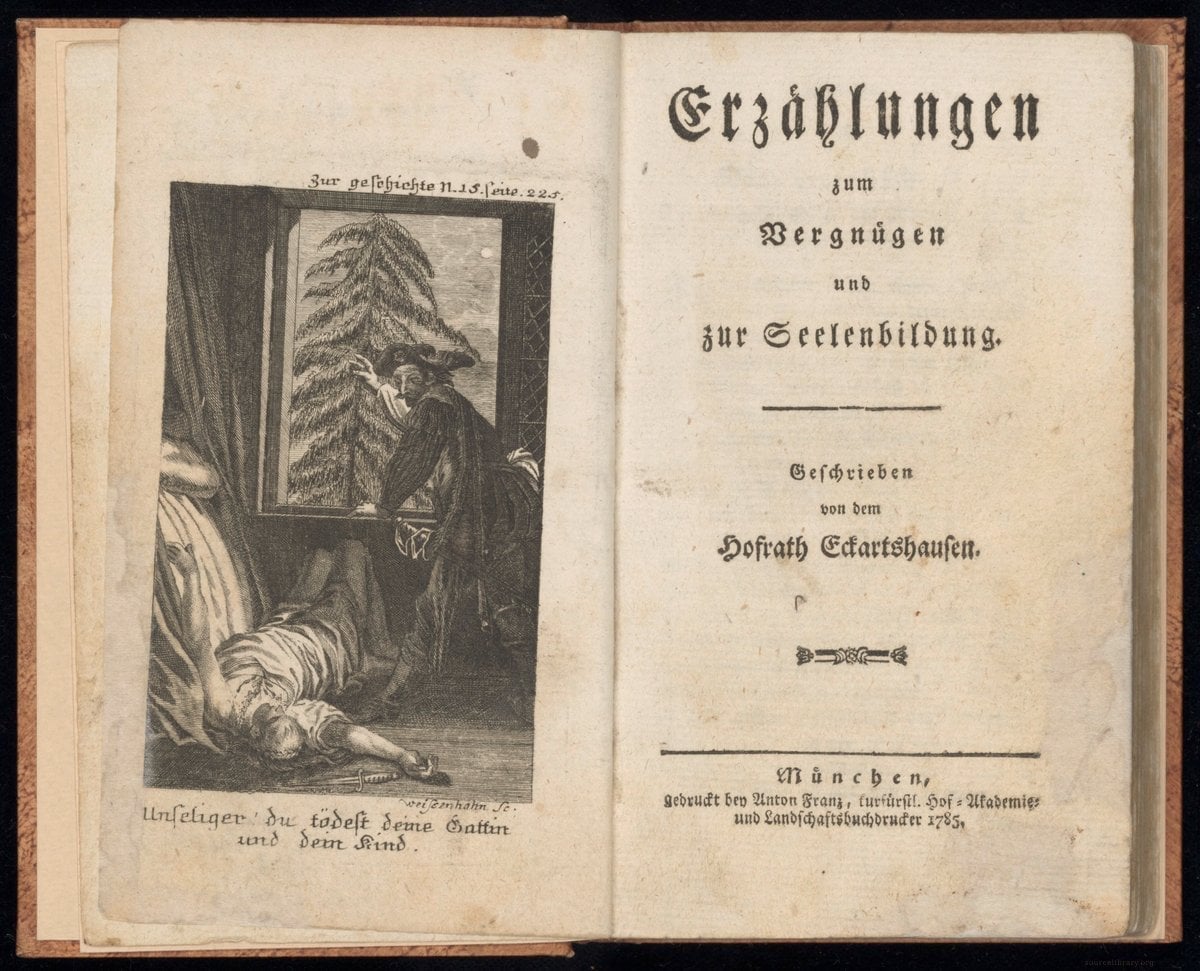
Stories for Pleasure and Edification
Eckartshausen, Karl von
Echo of the Rosicrucian Colloquy
Hilarionus, Benedictus
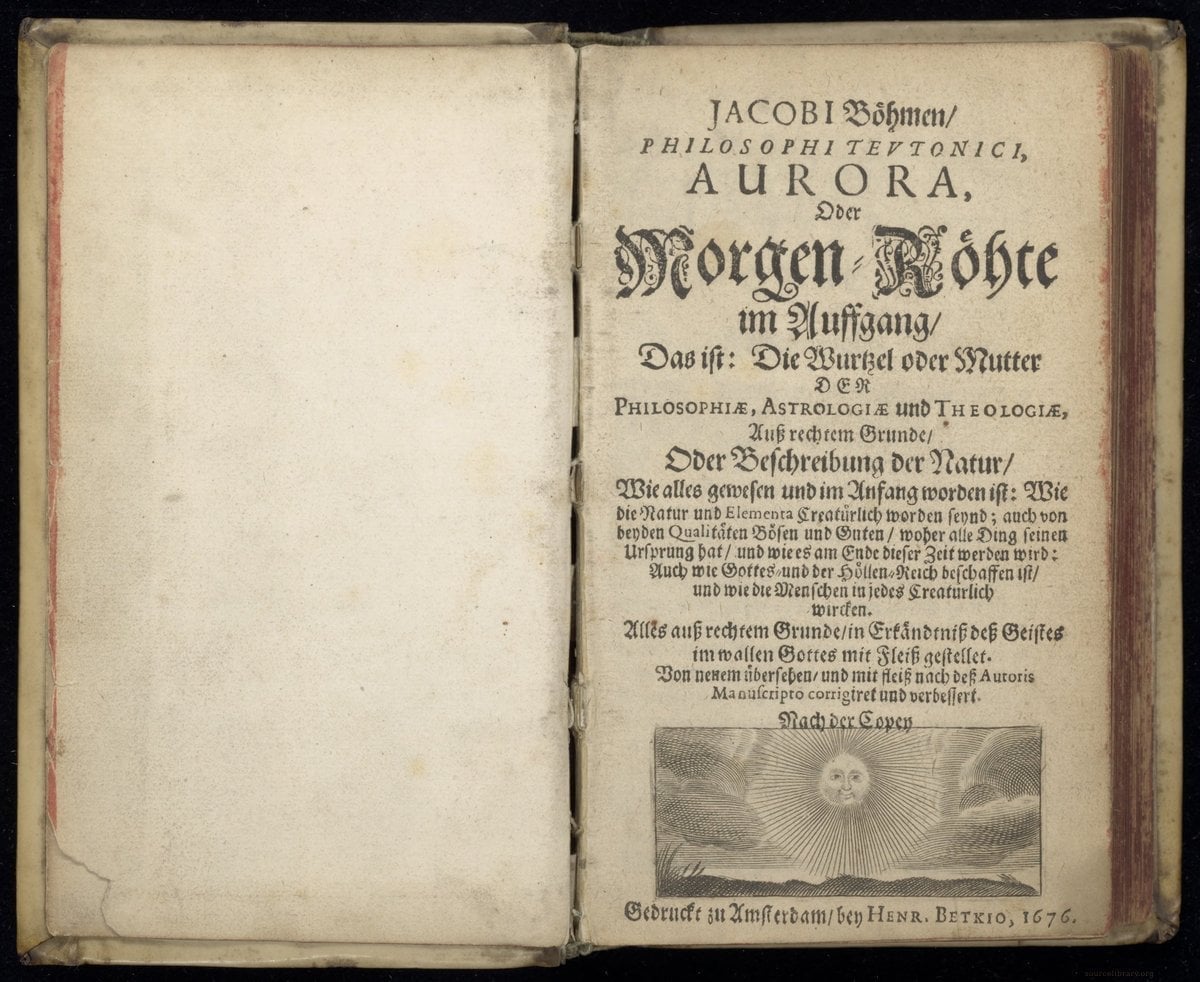
Aurora, or the Day-Spring
Boehme, Jacob
The History of Barlaam and Josaphat
anonymous, Konstanz
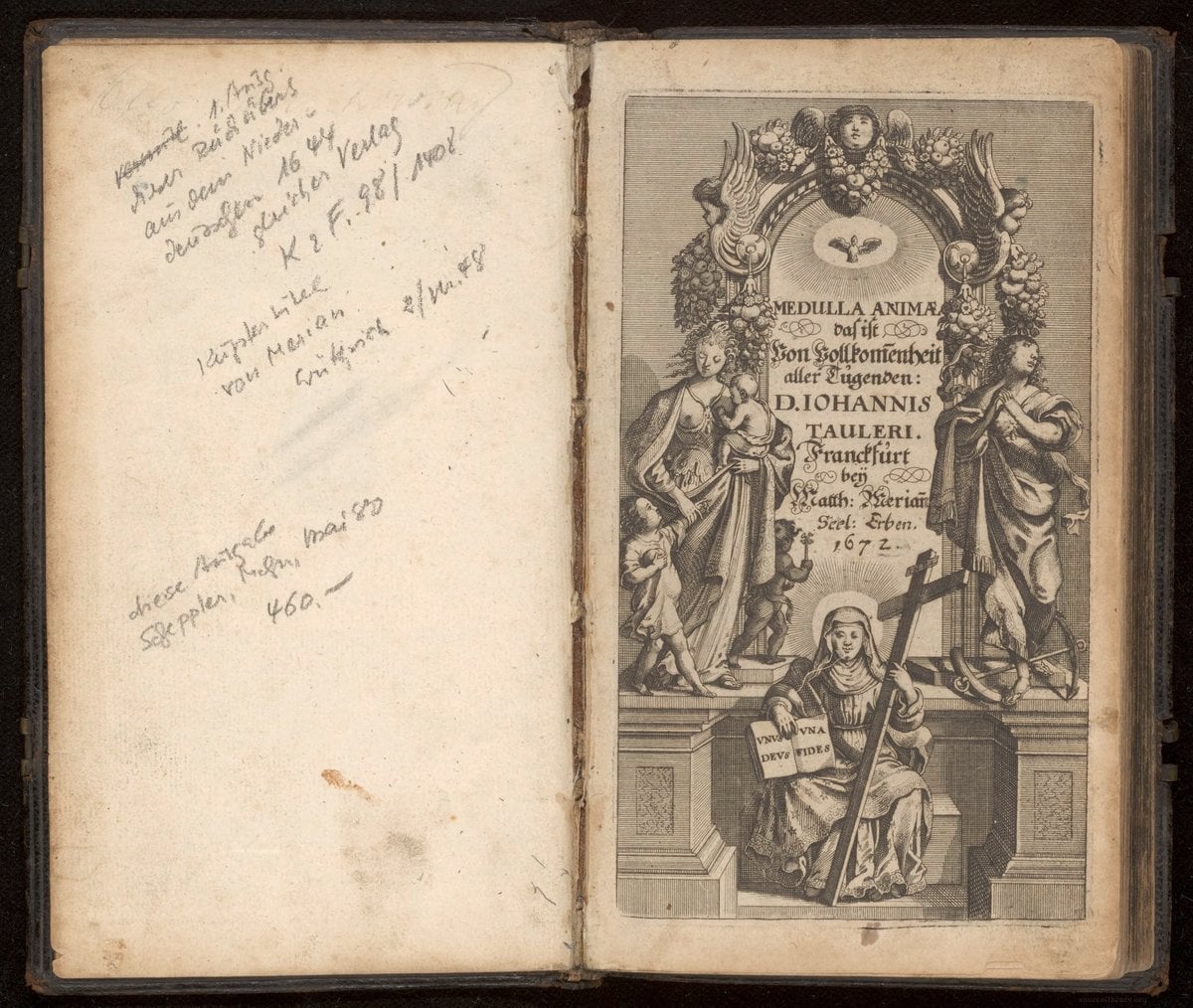
The Marrow of the Soul
Tauler, Johannes
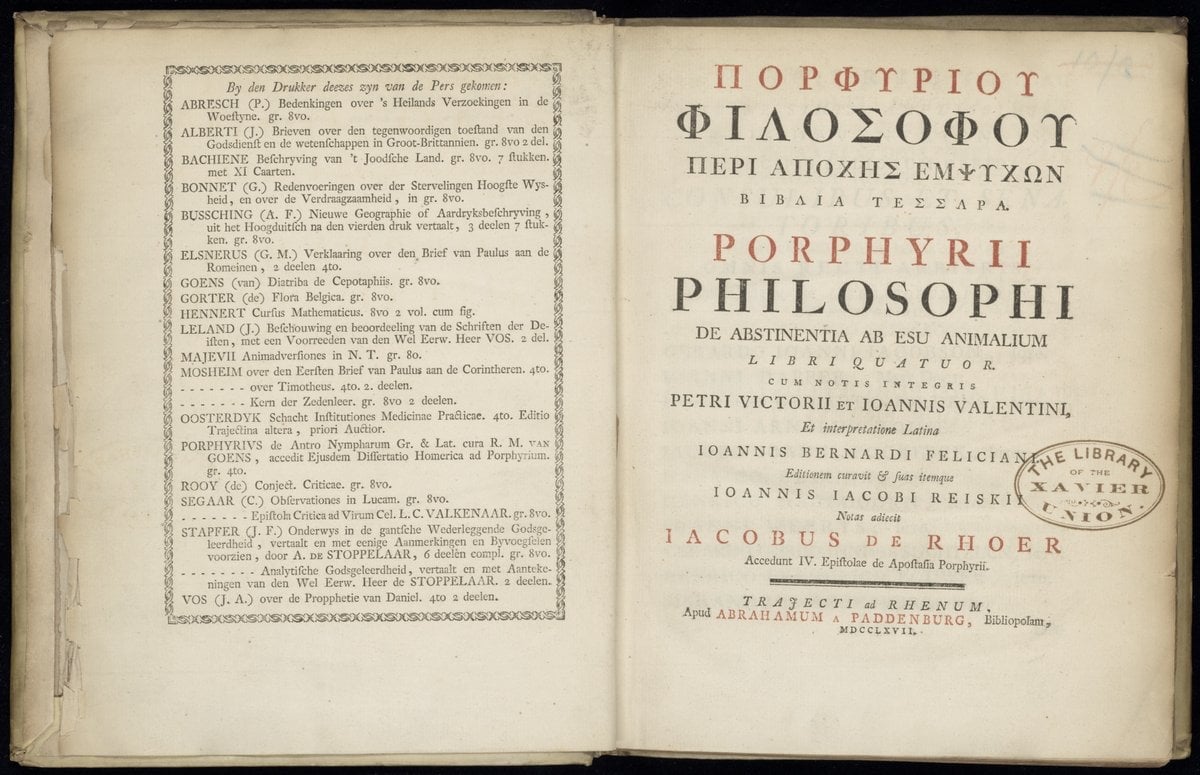
On Abstinence from Animal Food
Porphyrius
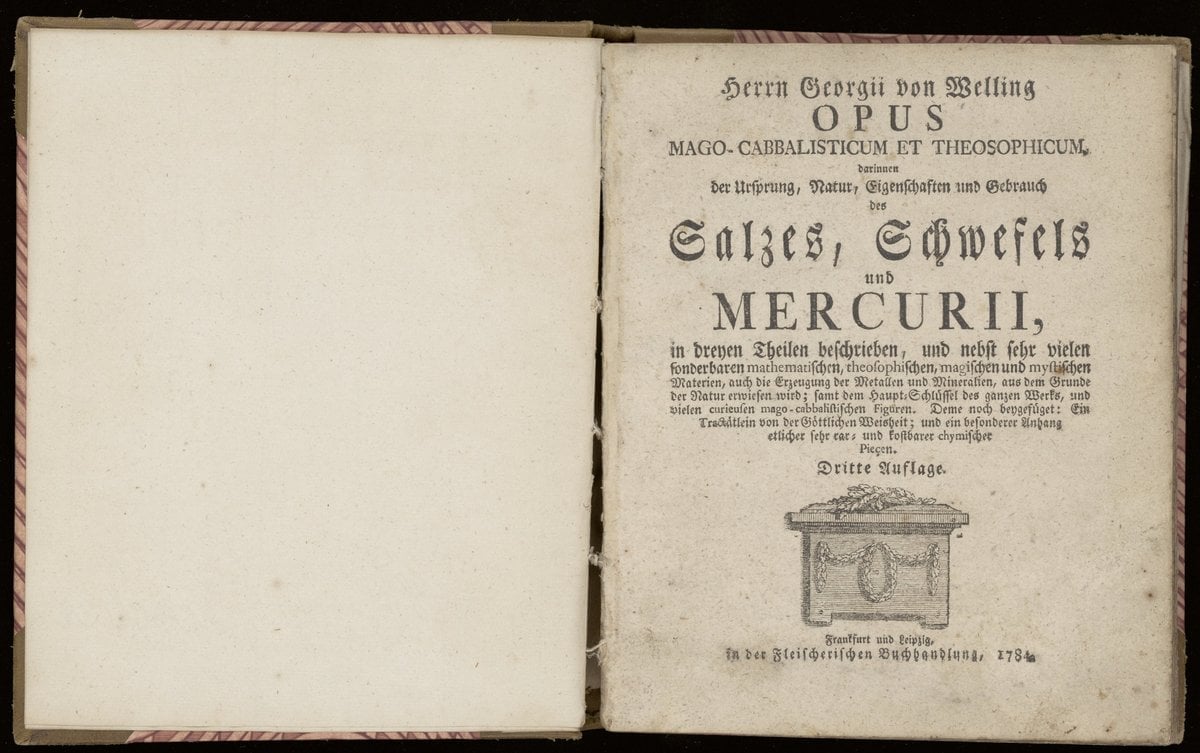
Magico-Cabbalistic and Theosophical Work
Welling, Georg von