


Illustrations
Browse all92 images extracted
This portrait depicts Sequoyah (Sikwâyí), the Cherokee polymath who independently created the Cherokee syllabary in the early 19th century. He is shown holding a tablet displaying the characters of his writing system, wearing a traditional turban and a silver medal, symbolizing his intellectual and cultural leadership. This image is a reproduction of an 1828 painting, capturing a pivotal moment in Cherokee literacy and history.
This woodcut diagram, titled 'Diagram of the Jade Pillow' (玉枕之圖), depicts the back of a human head with various points labeled according to traditional Chinese medical and Daoist alchemical traditions. The 'Jade Pillow' refers to a specific area at the base of the skull considered crucial for the circulation of vital energy (qi). This illustration is part of the Sancai Tuhui, a comprehensive Ming dynasty encyclopedia that aimed to categorize all knowledge of the time.
This woodcut depicts Juyongguan, one of the most strategically vital mountain passes of the Great Wall of China during the Ming dynasty. The scene illustrates the challenging terrain with a winding path and a fortified gate, while porters in the foreground provide a sense of scale and human activity in this remote region.
This circular diagram illustrates the correlation between the twelve Earthly Branches, representing time and direction, and the trigrams of the I Ching. It serves as a visual guide for understanding cosmological cycles and their application in internal alchemy (Neidan) practices, common in early modern Chinese esoteric texts.
This portrait depicts Daman Hongren (601–674), the 32nd Patriarch of Zen Buddhism and the 5th Patriarch of the Chan school in China. He is shown in ceremonial robes, including a richly patterned yellow and red kasaya, symbolizing his high spiritual rank and the transmission of the Dharma.
This woodcut depicts Emma Dai-Ō, the Buddhist King of Hell and judge of the dead. He is shown with his characteristic fierce countenance, wearing the traditional cap of a Chinese magistrate, reflecting his role in weighing the karma of souls.

This diagram illustrates a numerical pattern, likely related to the Hetu or Luoshu, which are foundational to Chinese cosmology and divination. The arrangement of dots and characters represents the harmonious order of the universe and its underlying mathematical principles as understood in traditional Chinese science.

This woodcut illustration depicts a scene from a Japanese tale, featuring a woman in an elaborately patterned kimono. In the background, another figure is seen behind a screen, engaged with a book, illustrating the domestic and literary culture of old Japan. The use of bold lines and flat areas of pattern is typical of the ukiyo-e style that influenced Western art in the late 19th century.

This portrait depicts Tahchee, a prominent Cherokee leader also known as Dutch, as captured in an 1834 painting by George Catlin. Tahchee is shown wearing a distinctive turban with a large feather, reflecting the complex cultural exchanges and evolving identities of Native American leaders during the early 19th century. This image was published as part of the Bureau of American Ethnology's Nineteenth Annual Report, serving as a vital record of Indigenous history and representation.
Visual Art
Browse all art →21 works of visual art in this collection
 religious
Revelation of St. John: St. Michael Fighting the Dragon
Albrecht Dürer
St. Michael the Archangel and a host of other angels engage in battle against a multi-headed dragon and several demonic figures in the sky above a landscape.
 religious
St. Michael Fighting the Dragon, from The Apocalypse
Albrecht Dürer
The Archangel Michael leading a host of angels in battle against the dragon and multi-headed beasts of the Apocalypse.
 religious
The Angel with the Key of the Bottomless Pit, from The Apocalypse
Albrecht Dürer
A woodcut depicting an angel descending to bind the dragon (Satan) with a key and chain, based on the Book of Revelation.
 painting
Demon in Chains
Anonymous (Timurid or Turkoman)
A central horned demon in chains is led by an older bearded man and a female figure.
 religious
Minos and Demons, from the Last Judgment
Cherubino Alberti (after Michelangelo)
The mythological judge Minos is depicted standing, nude, and coiled by a serpent, flanked by two demons in an underworld setting.
 religious
The Temptation of Saint Anthony
Jacques Callot
Saint Anthony the Great is shown kneeling in prayer amidst a chaotic, expansive landscape filled with grotesque monsters, demons, and chimerical creatures.
 religious
The Temptation of Saint Anthony (second version)
Jacques Callot
Saint Anthony the Great is shown kneeling in prayer amidst a chaotic, sprawling landscape filled with grotesque demons, hybrid monsters, and diabolical entities.
 painting
The Crucifixion; The Last Judgment
Jan van Eyck
The left panel depicts the Crucifixion of Jesus Christ flanked by two thieves, with a crowd of Roman soldiers, Jewish priests, and mourning followers including the Virgin Mary and Saint John the Evangelist below; the right panel depicts the Last Judgment, showing Christ as Judge in heaven, surrounded by the Virgin Mary, Saint John the Baptist, apostles, and saints, while the Archangel Michael stands above a chaotic pit of Hell filled with suffering, damned souls and demons.
 religious
The Apocalypse: Satan Bound for a Thousand Years
Jean Duvet
An angel descends to bind Satan in the bottomless pit, a scene from the Book of Revelation depicting the chaining of a dragon-like Satan.
 religious
The Apocalypse: St. Michael and the Dragon
Jean Duvet
In this engraving, God the Father and a surrounding host of angels observe the Woman of the Apocalypse, who stands to the right, and the seven-headed, crowned beast (the Great Dragon) that rises from the waters to her left.
 religious
St. Michael Triumphing Over the Dragon
Jerome Wierix (after Martin de Vos)
The archangel Michael standing upon a defeated, human-headed dragon while holding a palm frond, beneath a celestial arrangement of cherubim.
 drawing
Snail Versus Demon
Kawanabe Kyosai
A humorous ink drawing depicting a man playing a flute while a snail appears to tether a seated demon using a red thread.
 drawing
Zhong Kui (Shoki) — Sketch
Kawanabe Kyosai
The Daoist deity Zhong Kui (Shoki) is depicted riding a mule, accompanied by a small demon pulling the animal, while another demon carries his luggage.
 mythological
The Werewolf, or the Cannibal
Lucas Cranach the Elder
A hairy, wild man (lycanthrope) in the foreground devours a small child, while a woman and child react in horror near a cottage in the background.
 religious
Saint Anthony Tormented by Demons
Martin Schongauer
Saint Anthony the Great is depicted being levitated and assaulted by a group of grotesque, hybrid demons.
Islamic jinn, Hindu rakshasas, Chinese fox spirits, Japanese yokai, Yoruba orisha, Haitian lwa, Cherokee little people, Australian Dreamtime beings. This collection gathers texts on spirit traditions from every inhabited continent — not to reduce them to a single category, but to show how universally humans have populated the world with unseen beings.
Essential Reading
The foundational texts of this tradition
The Influence of Animism on Islam
Samuel Marinus Zwemer, 1920
This book directly addresses the integration of animistic beliefs, including local spirit traditions, into Islamic practices and understanding.
Hindu Mythology, Vedic and Puranic
W.J. Wilkins, 1882
This book directly explores the mythological narratives of Hinduism, which are rich with descriptions of various spirits, demons, and divine entities.
Indian Serpent-Lore, or the Nagas in Hindu Legend and Art
J. Ph. Vogel, 1926
This book specifically focuses on Nagas, a prominent class of serpent-spirits in Hindu mythology, directly aligning with the collection's theme of unseen beings.
Strange Stories from a Chinese Studio, Vol. 2
Pu Songling (tr. Herbert Giles), 1880
This classic collection of Chinese supernatural tales is a primary source for understanding beliefs in fox spirits, ghosts, and other unseen beings.
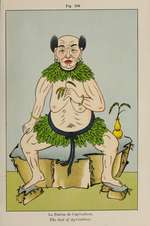
Researches into Chinese Superstitions, Volume 11
Henri Doré, 1926
This volume from a comprehensive study on Chinese superstitions would extensively cover folk beliefs, including those related to spirits, ghosts, and local deities.
Important Works
Significant texts that deepen understanding
Remnants of Arabic Paganism
Julius Wellhausen, 1887First Translation
This work on pre-Islamic Arabian paganism would likely detail ancient beliefs in spirits and deities that influenced later Islamic demonology.
The Religious Attitude and Life in Islam
Duncan Black Macdonald, 1909
This book likely explores popular religious beliefs and practices in Islam, which often include interactions with and beliefs about jinn and other spirits.
The Amulet of Al-Buni
Ahmad al-Buni, 1225First Translation
This work by a renowned Islamic occultist likely details practices involving jinn and other spirits for magical purposes, such as creating amulets.
A Classical Dictionary of Hindu Mythology and Religion
John Dowson, 1879
As a dictionary of Hindu mythology, this work would provide foundational information on various spirits, demons, and divine beings like rakshasas and nagas.
Manual for the Sacrifice to the Nine Planets and the Propitiation of Ganesha
Unknown, 1709First Translation
This manual on propitiation rituals likely details practices for interacting with and appeasing various divine or semi-divine beings, including planetary deities and Ganesha.
Tantra of the Supreme Lord
Unknown, 828First Translation
Tantric texts frequently describe rituals and practices involving the invocation, propitiation, or control of various deities, spirits, and supernatural forces.
The Religion of the Veda
Hermann Oldenberg, 1894
This work on Vedic religion would provide foundational insights into early Indian beliefs concerning deities, spirits, and the supernatural world.
The Gods of Northern Buddhism
Alice Getty, 1928
This book would detail the diverse pantheon of Northern Buddhism, including various deities, protectors, and local spirits that are integrated into its cosmology.
The Garuda Purana
Manmatha Nath Dutt, 1908
As a major Purana, this text contains extensive mythological narratives, including descriptions of various deities, spirits, and the cosmology of the afterlife.
All Books
Browse Full Catalog→65 books in this collection