



Illustrations
Browse all6 images extracted
This circular calligraphic seal is a characteristic feature of Islamic manuscripts, serving as a mark of ownership or authentication. The intricate script is expertly arranged within a circular frame, reflecting the high status of calligraphy as an art form and its practical use in documenting the history of a book.
This emblem serves as the visual identity for 'The Wisdom of the East' series, published by John Murray. It features a stylized rising sun casting rays over water, a classic metaphor for the 'Orient' and the dawning of knowledge. The simple, bold lines are characteristic of early 20th-century book design and branding.
This emblem features a cross entwined with a scroll bearing the Latin phrase 'Domine memento mei cum veneris in regnum tuum' (Lord, remember me when you come into your kingdom). It serves as a devotional publisher's device for this 1896 edition of St. Thomas Aquinas's ethical teachings, reflecting the book's religious subject matter.
This 3x3 grid represents a magic square, a mathematical arrangement used in the medieval Islamic world for talismanic and medicinal purposes. The surrounding text suggests its use as a charm to aid in childbirth, reflecting the historical belief in the power of sacred geometry and numerology.
This striking solid black page is a famous feature from Laurence Sterne's novel 'The Life and Opinions of Tristram Shandy, Gentleman' (1759). It serves as a visual representation of mourning for the character Parson Yorick, signifying a grief so profound that words fail to express it. This early example of experimental typography and conceptual art challenges the traditional boundaries of the printed page and remains one of the most iconic moments in the history of the novel.
This portrait depicts the Persian philosopher and theologian Al-Ghazali in traditional scholarly attire, holding a book to symbolize his intellectual contributions. The woodcut-style illustration serves as a visual introduction to the author of this influential spiritual autobiography.
Al-Ghazali and Meister Eckhart both struggled with the limits of rational theology. Averroes and Aquinas both grappled with Aristotle. Ibn Arabi and the Rhineland mystics both described the soul's annihilation in God. This collection places Islamic and Christian philosophical texts side by side — not to flatten differences, but to reveal the conversation.
Essential Reading
The foundational texts of this tradition
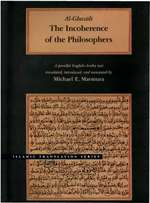
Tahafut al-Falasifa (Incoherence of the Philosophers)
Al-Ghazali, 1927
Al-Ghazali's seminal critique of philosophy directly addresses the limits of rational theology, a core theme of the collection.
Iḥyāʾ ʿUlūm al-Dīn (Revival of the Religious Sciences)
Abū Ḥāmid al-Ghazālī, 1888
Al-Ghazali's magnum opus integrates theology, law, and mysticism, showcasing his resolution to the struggle with rational theology.
Meister Eckhart - Complete Works
Meister Eckhart, 1924
A comprehensive collection of Meister Eckhart's works, foundational for understanding Rhineland mysticism and its struggle with rational theology.
Nicomachean Ethics (with Averroes' Commentary)
Aristotle, 1475First from Latin
Averroes' direct commentary on Aristotle's Ethics exemplifies his grappling with Aristotelian philosophy, a key parallel with Aquinas.

Tahafut al-Tahafut (The Incoherence of the Incoherence)
Averroes (Ibn Rushd); Simon van den Bergh (trans.), 1954
Averroes' direct response to Al-Ghazali's critique of philosophy is central to the 'conversation' between Islamic and Christian traditions.
Important Works
Significant texts that deepen understanding
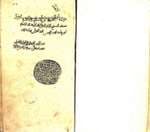
Three Theological Treatises
Abū Ḥāmid al-Ghazālī, 1115
These treatises offer further insight into Al-Ghazali's theological reflections and his evolving views on rational inquiry.
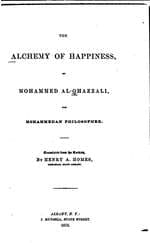
Alchemy of Happiness
Al-Ghazali, 1873First from Arabic-English
This work provides a more accessible summary of Al-Ghazali's later mystical and ethical thought, reflecting his move beyond pure rationalism.
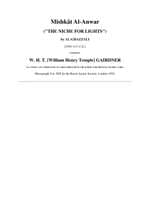
Mishkat al-Anwar (The Niche for Lights)
Al-Ghazali, 1924
Al-Ghazali's mystical treatise explores the nature of divine light and illumination, showcasing his turn towards Sufism.
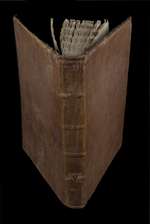
Averroes Metaphysics — Hebrew Translation by Kalonymos
Averroes; Kalonymos ben Kalonymos, 1350First from Hebrew
Averroes' Metaphysics demonstrates his deep engagement with Aristotelian thought, a key aspect of his philosophical contribution.
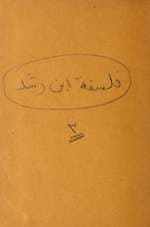
The Philosophy of Averroes
Averroes (Ibn Rushd), 1910
This work provides a general overview of Averroes' philosophical system, which is deeply rooted in his interpretation of Aristotle.
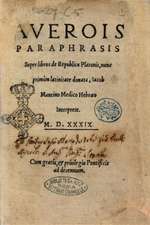
Averroes' Paraphrase of Plato's Republic
Averroes, 1539First from Latin
Averroes' paraphrase of Plato's Republic showcases his broader engagement with classical philosophy, influencing his Aristotelian interpretations.
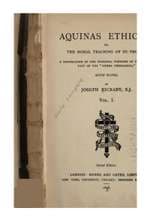
Aquinas Ethicus: Or, The Moral Teaching of St. Thomas
Thomas Aquinas, 1892
Aquinas's ethical teachings are profoundly shaped by Aristotelian philosophy, illustrating his grappling with Aristotle in moral theology.

Questions on the Three Principles / On Being and Essence
Antonius Andreae; Thomas Aquinas, 1475First Translation
De Ente et Essentia is a foundational work by Aquinas, demonstrating his metaphysical thought heavily influenced by Aristotle.
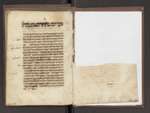
Aristotle Metaphysics — Hebrew Translation
Aristotle; Baruch ibn Ya'ish, 1350First from Hebrew
Aristotle's Metaphysics was a foundational text for both Averroes and Aquinas, shaping their philosophical and theological systems.
All Books
Browse Full Catalog→29 books in this collection