


Making Things Visible
The microscope revealed a world that had always been there.
Illustrations
Browse all72 images extracted
This detailed engraving, labeled Plate IV, presents a collection of fossilized remains, including prehistoric shark teeth and belemnites. Such illustrations were crucial in the 17th and 18th centuries for the emerging field of paleontology, allowing scientists to document and compare specimens from different regions. The use of dramatic lighting and fine crosshatching emphasizes the three-dimensional form and texture of these ancient biological artifacts.
This engraving from Antoni van Leeuwenhoek's pioneering work in microscopy depicts a 'fleshy fiber' (muscle fiber) from a flea. The diagram, meticulously labeled with letters A-H, illustrates the segmented, ring-like structure Leeuwenhoek observed through his hand-crafted lenses, marking a foundational moment in the study of micro-anatomy.
This technical diagram illustrates an experiment on the refractive properties of ice compared to water. It depicts a cylindrical glass vessel containing water and a piece of ice, with light rays traced from a lead weight to an observing eye to demonstrate how refraction alters the perceived position of objects. This illustration is significant for its role in early modern optical science, specifically challenging established theories of light transmission through different media.
This plate, labeled 'Tab. X,' presents a detailed array of ammonite fossils, meticulously rendered through copperplate engraving. Each figure illustrates different aspects of these extinct cephalopods, from the intricate ribbing of their spiral shells to the complex, branching suture patterns that mark their internal chambers. Such illustrations were crucial for early naturalists in classifying the natural world and understanding the history of life on Earth.
This engraving depicts a specialized glass apparatus used for scientific observation, as detailed in the accompanying Latin text 'Experimenta & Contemplationes'. The diagram, featuring a large bulb connected to a graduated tube, likely represents an early instrument for studying fluid dynamics or microscopic particles, reflecting the era's burgeoning interest in empirical experimentation and the development of the scientific method.
This engraving illustrates a scientific experiment conducted for the Royal Society in December 1662. It depicts a balance scale used to measure the pressure exerted by bodies moving through a medium, specifically a glass ball weighted with quicksilver inside a water-filled tube. This diagram exemplifies the rigorous empirical methods and specialized apparatus championed by early modern scientific institutions.
Hooke's Micrographia showed the eye of a fly. Leeuwenhoek found animalcules in pond water. Malpighi discovered capillaries in 34 pages. Swammerdam dissected mayflies with glass needles. This collection gathers the first microscopists and the world they revealed — one that had always existed, just below the threshold of sight.
Essential Reading
The foundational texts of this tradition
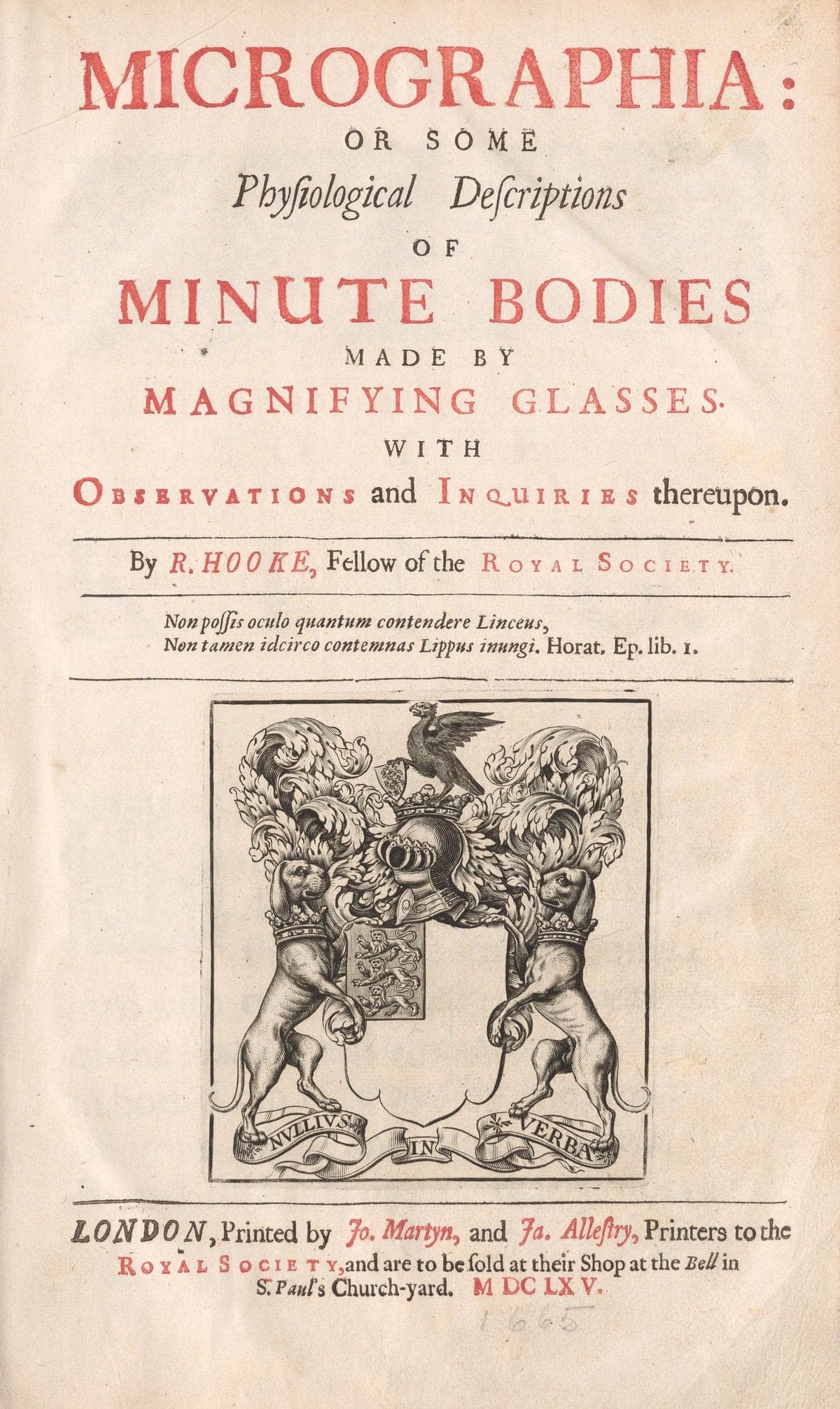
Micrographia
Hooke, Robert, 1665
This foundational text vividly described and illustrated the microscopic world, revealing previously unseen structures and organisms.
Secrets of Nature Discovered
Antony van Leeuwenhoek, 1695First Complete Translation
This foundational work by Leeuwenhoek compiles his revolutionary microscopic discoveries, including the first observations of bacteria and protozoa ("animalcules").
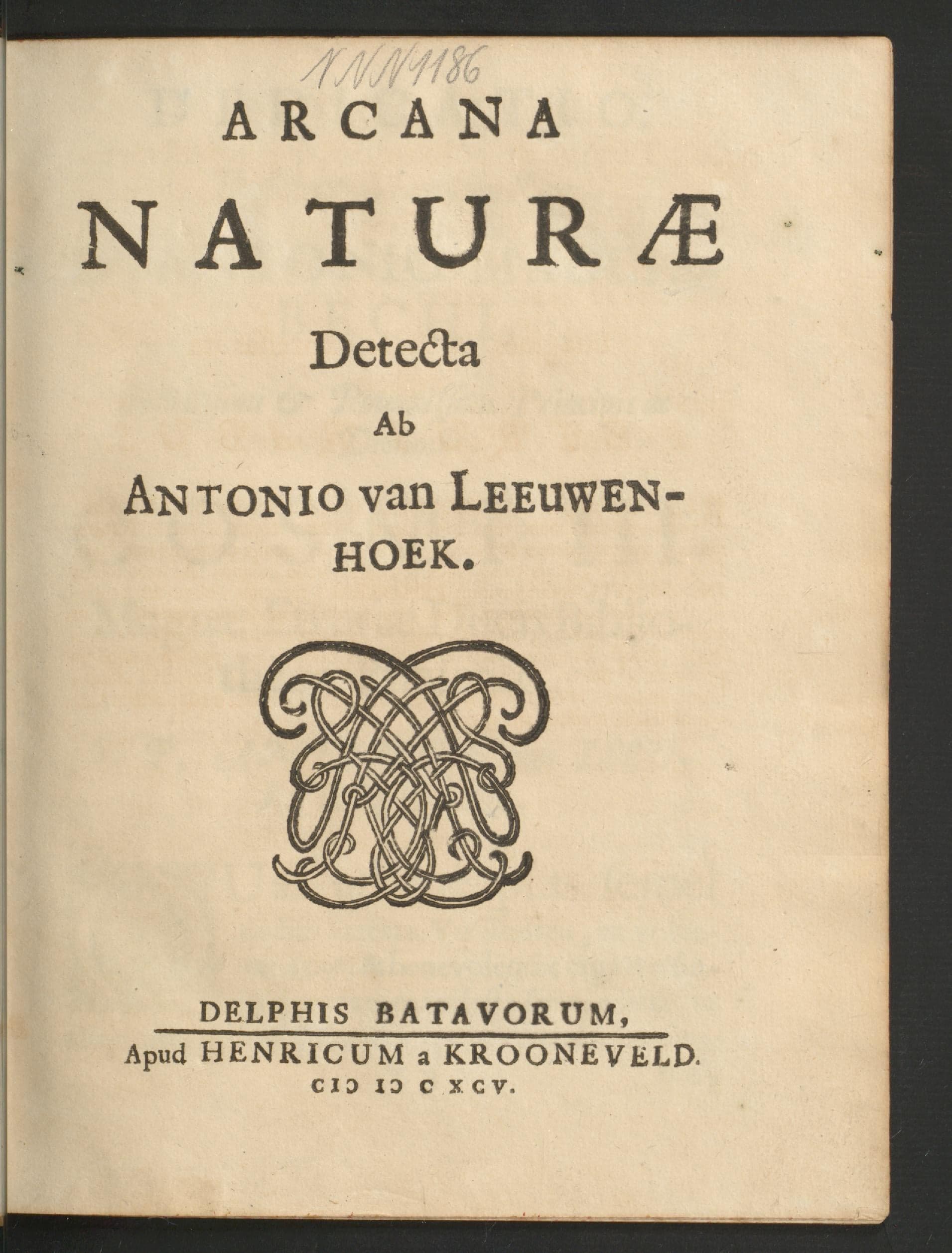
Arcana naturae
Leeuwenhoek, Antoni van, 1695
This work by Leeuwenhoek is central to the collection, presenting his groundbreaking microscopic discoveries of the "secrets of nature."
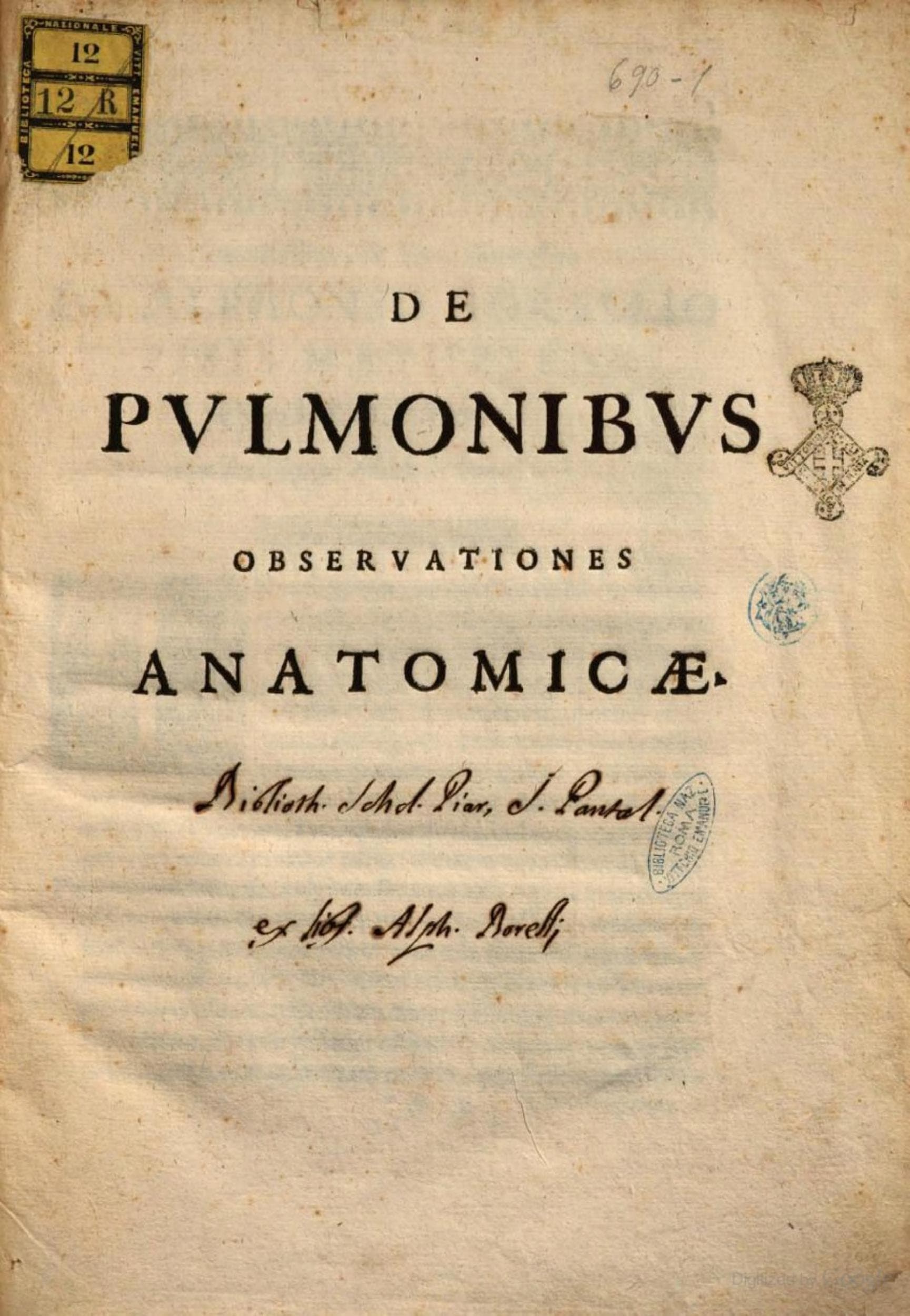
Anatomical Observations on the Lungs
Marcello Malpighi, 1661
This seminal work by Malpighi details his microscopic discovery of capillaries in the lungs, a crucial finding in understanding circulation.
The Life of the Ephemeron
Jan Swammerdam, 1675
This work by Swammerdam details his meticulous microscopic dissections and observations of the mayfly, a direct example of revealing the hidden world of insects.
Important Works
Significant texts that deepen understanding
Micrographia Restaurata
Robert Hooke, 1745
This work likely reproduces or expands upon the microscopic observations and illustrations from Hooke's foundational Micrographia.
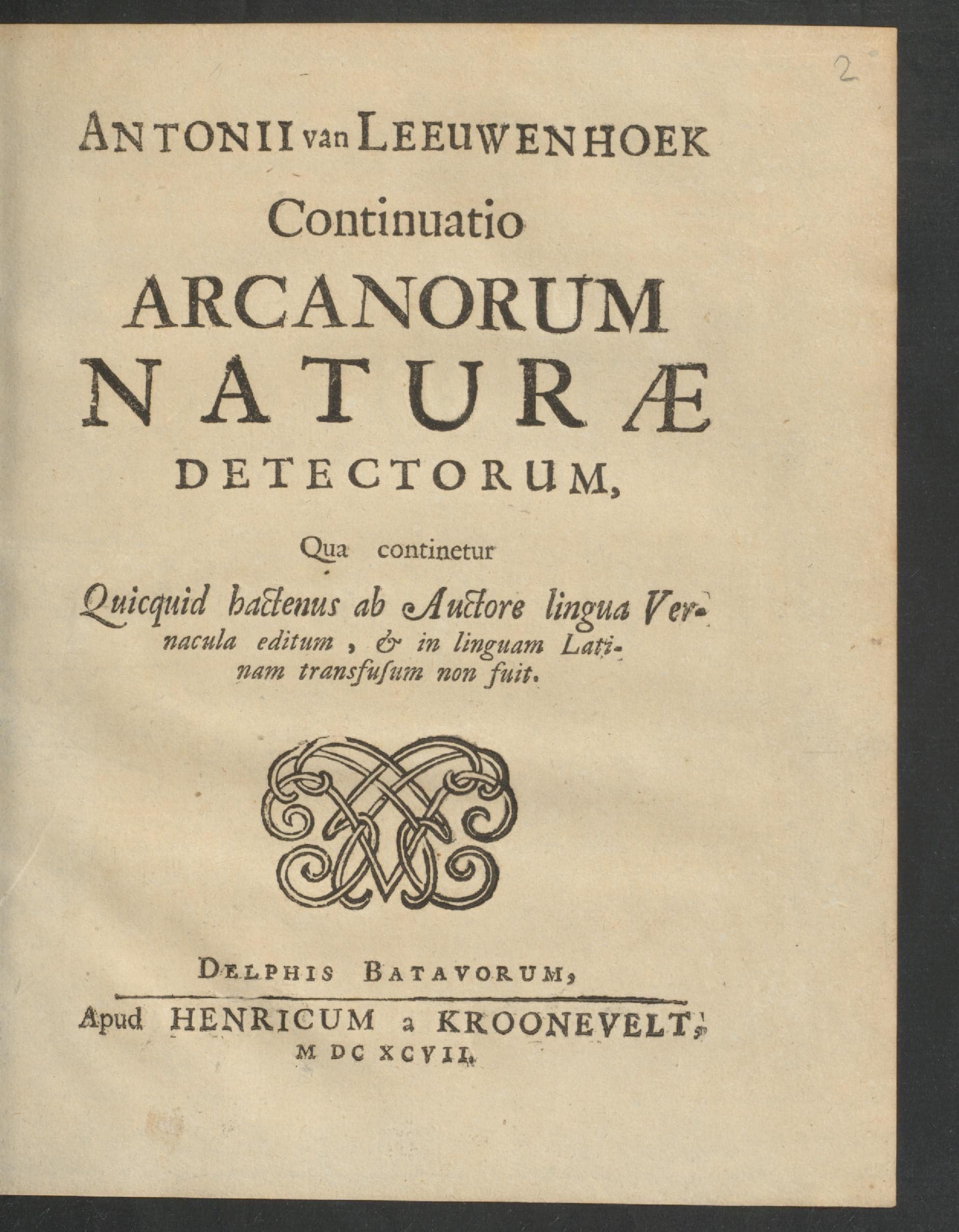
Antonii van Leeuwenhoek Continuatio arcanorum naturae detectorum
Leeuwenhoek, Antoni van, 1697
This work continues Leeuwenhoek's groundbreaking revelations of the "secrets of nature" through his microscopic observations, including his famous "animalcules."
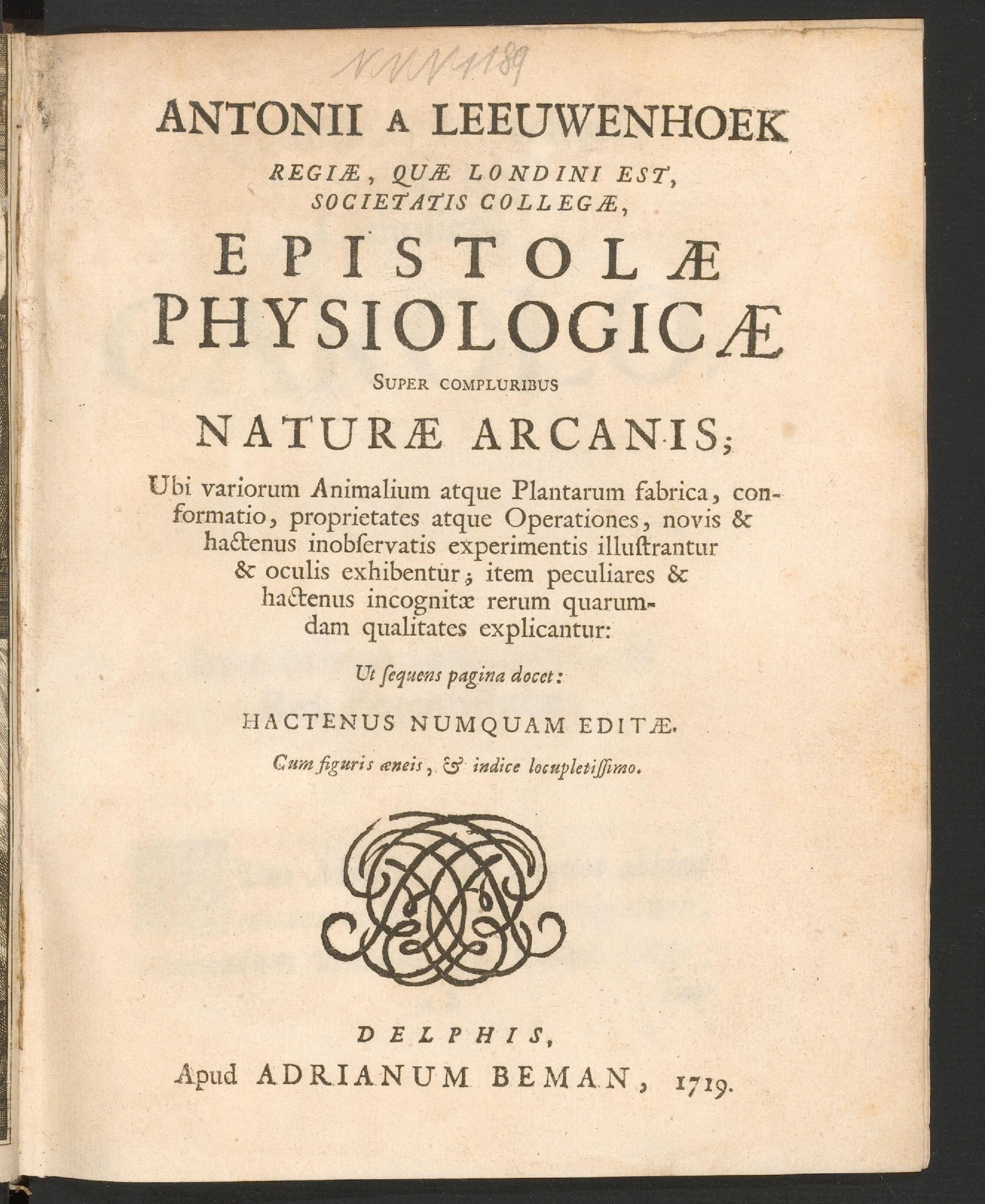
Antonii a Leeuwenhoek ... Epistolae physiologicae super compluribus naturae arcanis
Leeuwenhoek, Antoni van, 1719
These physiological letters contain Leeuwenhoek's detailed descriptions of his microscopic observations, revealing many "secrets of nature."
Antonii A. Leeuwenhoek ... Epistolae ad Societatem Regiam Anglicam, et alio illustres viros seu continuatio mirandorum arcanorum naturae detectorum
Leeuwenhoek, Antoni van, 1719
This collection of letters to the Royal Society details Leeuwenhoek's continued discoveries of the "wonderful secrets of nature" through his pioneering microscopic work.
Physiological Letters, Vol. 2
Antoni van Leeuwenhoek, 1719First Complete Translation
As part of his "Physiological Letters," this volume contains further accounts of Leeuwenhoek's microscopic observations and discoveries.
Letters
Antoni van Leeuwenhoek, 1718
This collection of letters by Leeuwenhoek, likely containing his microscopic observations, served as a primary means of disseminating his discoveries.
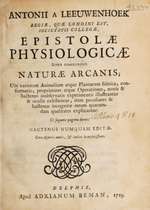
Physiological Letters, Vol. 1
Antoni van Leeuwenhoek, 1719First Translation
This volume of Leeuwenhoek's "Physiological Letters" details his early and significant microscopic observations, revealing the hidden world of microorganisms.
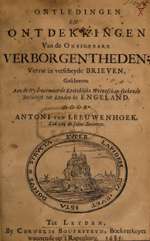
Anatomies and Discoveries
Antoni van Leeuwenhoek, 1685First Complete Translation
This work, detailing "Dissections and Discoveries," likely contains Leeuwenhoek's microscopic examinations of various specimens, revealing their hidden structures.
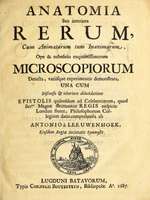
Anatomy or the Interior of Things
Antoni van Leeuwenhoek, 1687
This work focuses on the "Anatomy or Interiors of Things," directly reflecting Leeuwenhoek's use of the microscope to reveal internal structures.
All Books
Browse Full Catalog→22 books in this collection