Illustrations
Browse all500 images extracted

This intricate engraving from Robert Fludd’s 'Philosophia Moysaica' (1638) presents a complex cosmological model of the universe based on the interplay of light and darkness. At the base, the figures of Dionysus and Apollo represent the dualistic forces of destruction and creation, while the central diagram maps the emanation of divine light into the material world. Fludd’s work sought to reconcile biblical scripture with Hermetic philosophy and early scientific observation, making this image a key artifact of the 17th-century intellectual landscape.

This hand-colored engraving presents a complex allegorical figure representing the spiritual state of man within a mystical or alchemical framework. The figure is divided between light and dark, symbolizing internal transformation, while the radiant heart containing a dove signifies divine presence and the 'new birth' described in the German text. Such imagery was central to early modern esoteric traditions, illustrating the microcosm of the human soul as a site of cosmic struggle and enlightenment.

This circular emblem, titled 'SYMBOLA HORI', is taken from Athanasius Kircher's monumental work 'Oedipus Aegyptiacus' (1652–1654). It depicts the Egyptian deity Horus as an allegorical figure representing the manifest world and the divine triad. The figure holds a complex staff featuring a serpent and a bird, while a triangle and globe appear behind him, illustrating Kircher's syncretic interpretation of Egyptian mythology as a precursor to Christian and Hermetic truths.

This intricate frontispiece depicts the author, Athanasius Kircher, being guided by the angel Cosmiel on a celestial journey. The scene integrates the divine, represented by the Hebrew Tetragrammaton in the clouds, with the scientific, shown through a detailed diagram of the Tychonic planetary system. It perfectly encapsulates the 17th-century Jesuit worldview, where theological truth and empirical astronomical observation were harmonized.

This woodcut depicts a male figure inscribed within a circle and a pentagram, illustrating the Renaissance concept of the human body as a microcosm of the universe. Astrological symbols are placed at the extremities and center, linking human anatomy to celestial influences and geometric perfection. This image is a quintessential example of early modern efforts to harmonize science, art, and occult philosophy.

This elaborate frontispiece depicts the mythological hero Oedipus confronting the Sphinx, symbolizing the scholar's quest to solve the riddles of ancient Egypt. Above them, winged personifications of Experience and Reason hold a list of languages and scientific disciplines, representing the polymathic approach of Athanasius Kircher. The background features idealized Egyptian architecture, reflecting the 17th-century European fascination with the mysterious origins of civilization.

This intricate engraving serves as the central visual argument for Robert Fludd's 'Philosophia Moysaica' (1638). It presents a complex cosmological diagram illustrating the relationship between the divine, the celestial, and the terrestrial realms through a series of interlocking circles and symbolic figures. Fludd, a prominent Hermetic philosopher and physician, used such imagery to synthesize biblical narrative with contemporary scientific and mystical thought, representing the unfolding of creation from the divine unity.

This woodcut depicts the 'Isis multimammea,' a syncretic deity combining elements of the Egyptian Isis and the Ephesian Artemis. The figure is adorned with multiple breasts symbolizing universal fertility, a turreted crown representing her role as a protector of cities, and various animals that signify her dominion over nature. This illustration from Athanasius Kircher's Oedipus Aegyptiacus reflects the 17th-century fascination with ancient mystery religions and symbolic interpretation.

This intricate frontispiece from Athanasius Kircher's 'Magnes sive de arte magnetica' (1641) features the double-headed eagle of the Holy Roman Empire, dedicated to Emperor Ferdinand III. The eagle's body serves as a shield for the title, while its talons hold symbols of power and scientific instruments, reflecting Kircher's attempt to unify imperial authority with the study of magnetism. Below, a detailed cityscape provides a terrestrial grounding for the celestial and heraldic symbols above.
Visual Art
Browse all art →60 works of visual art in this collection
 drawing
Mappemonde Fleury
Abbé Abbon
 map
mapRomani Imperii Imago (Map of the Roman Empire)
Abraham Ortelius
This is an engraved map depicting the extent of the Roman Empire across Europe, North Africa, and the Near East, featuring an inset panel illustrating various ancient Roman coins.
 drawing
Ibn Wardi mappa mundi
Abū Ḥafs Zayn al-Dīn ʻUmar ibn al-Muẓaffar Ibn al-Wardī
 drawing
Ibn al Wardi's atlas
Abū Ḥafs Zayn al-Dīn ʻUmar ibn al-Muẓaffar Ibn al-Wardī
 decorative
Floral Mandala Illustration
Adam S. Keck
A symmetrical, radially balanced line drawing consisting of repeating petal-like and flame-like shapes organized around a central point.
 decorative
Mandala Linda
Agus Ginaca
A small, colorful geometric mandala is positioned on the far left of an otherwise empty white field.
 print
printL'Apocalypse (Edition latine) Le Dragon à sept têtes et la Bête aux cornes d'agneau (Bartsch 74), GDUT4129
Albrecht Dürer
The woodcut depicts the Seven-Headed Dragon and the Beast with Lamb's Horns as described in the thirteenth and fourteenth chapters of the Book of Revelation.
 print
printL'Apocalypse (Edition latine) Les Quatre Anges vengeurs (Bartsch 69), GDUT4119
Albrecht Dürer
The four angels of death at the River Euphrates execute divine judgment as the Sixth Trumpet of the Apocalypse sounds.
 decorative
Pentagon Tile 2 * Colour Wheel 1
Alexander Braun
This work depicts a geometric tiling pattern composed of interlocking pentagonal shapes arranged in a radial, segmented color wheel format.
 ritual-object
Rangoli and Flower Offerings, Jodhpur
Ana Raquel S. Hernandes
This image presents a composite of four photographs depicting traditional Indian floor decorations known as rangoli, alongside a circular metal vessel filled with marigold petals and rose blossoms.
 ritual-object
Rangoli Mandala in Jodhpur
Ana Raquel S. Hernandes
A circular rangoli design created on a stone floor, featuring a central medallion surrounded by eight radiating diamond-shaped motifs.
 ritual-object
Rangoli Mandala in Jodhpur
Ana Raquel S. Hernandes
A circular rangoli (mandala) design is drawn on a paved courtyard floor, positioned above a rectangular stone vessel filled with bright orange marigold flower petals.
 allegory
Mandala of the School of Massana
Anaïs Ambdières
This digital collage depicts a circle of eleven Catholic nuns in black and white habits surrounding a central anatomical heart, all enclosed within a wheel of wooden slats inscribed with the letter 'M'.
 ritual-object
Rangoli Mandala Pattern
Animesh Tiwari
A circular mandala pattern is depicted on a flat surface, viewed from a slightly elevated perspective.
 decorative
The Rhythm of Mandala
Animesh Tiwari
A mandala pattern is superimposed onto a photograph of blooming pink rose bushes against a deep blue background.
Fludd's macrocosm-microcosm diagrams. Kircher's cross-sections of the underground world. Gichtel's maps of spiritual anatomy. Besant and Leadbeater's Thought-Forms. This collection gathers the visual tradition of mapping invisible realities — cosmological, spiritual, and occult.
Essential Reading
The foundational texts of this tradition
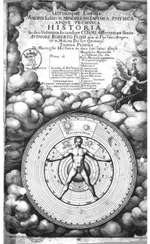
Utriusque Cosmi Historia (1617)
Robert Fludd, 1617First Complete Translation
This is a core work by Robert Fludd, explicitly mentioned in the collection's description for its macrocosm-microcosm diagrams mapping the universe.
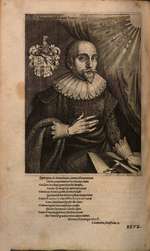
History of the Two Worlds
Robert Fludd, 1626
This volume from Fludd's major work delves into sacred philosophy and cosmic meteorology, providing detailed diagrams of invisible cosmic forces and structures.
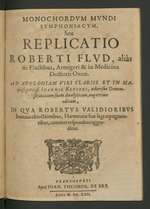
The Symphonic Monochord of the World
Robert Fludd, 1622First Translation
This work features iconic diagrams that visually map the cosmic harmony and the interconnectedness of the universe through musical principles.
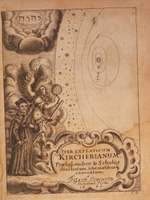
Kircher: Iter Exstaticum Coeleste (1660)
Athanasius Kircher, 1656First Complete Translation
Kircher's 'Ecstatic Journey to the Heavens' explicitly maps celestial realms and their inhabitants, aligning with the collection's focus on cosmological mapping.
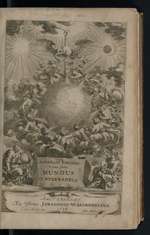
Mundus Subterraneus
Athanasius Kircher, 1678First Translation
Explicitly mentioned in the collection's description, this work features detailed cross-sections and descriptions of the underground world, mapping its hidden structures and forces.
Important Works
Significant texts that deepen understanding
Polygraphy and the Seven Secondary Intelligences
Johannes Trithemius, 1600First Complete Translation
This work describes a hierarchy of invisible intelligences, contributing to the mapping of spiritual and occult realms.

The Sensitive Man and his Relation to the Odic Force, Volume II
Karl von Reichenbach, 1855First Complete Translation
Reichenbach's work details the invisible Odic force, mapping its presence and effects in the natural world.
Three Books of Occult Philosophy
Heinrich Cornelius Agrippa von Nettesheim, 1533
A foundational text of Renaissance occultism, it conceptually maps the interconnectedness of the cosmos and invisible forces.

Conjugial Love
Emanuel Swedenborg, 1871
Swedenborg's detailed descriptions of spiritual worlds and their correspondences serve as a conceptual map of invisible realities.

The Complete Works of Saint Dionysius the Areopagite
Pseudo-Dionysius the Areopagite, 1634
Pseudo-Dionysius describes celestial hierarchies, offering a conceptual map of the invisible spiritual order that influenced later occult thought.
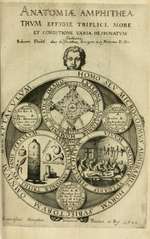
Amphitheatre of Anatomy
Robert Fludd, 1617First Translation
This work by Fludd explores the microcosm, detailing the spiritual and physical anatomy of man in relation to the greater cosmos.

Universal Medicine, or the Mystic Sanctuary of the Healing Art
Fludd, Robert, 1629First Translation
Fludd's medical philosophy is deeply intertwined with his cosmic views, mapping the invisible principles governing health and healing.

Apologetic Treatise Defending the Integrity of the Society of the Rose Cross
Fludd, Robert, 1617
This treatise connects to Rosicrucianism, a tradition deeply involved in mapping occult cosmologies and hidden wisdom.

Kircher Ars Magna Lucis et Umbrae (1646)
Athanasius Kircher, 1646First Complete Translation
This work maps invisible phenomena such as light, shadow, and magnetism, which Kircher viewed as fundamental cosmic forces.
All Books
Browse Full Catalog→426 books in this collection
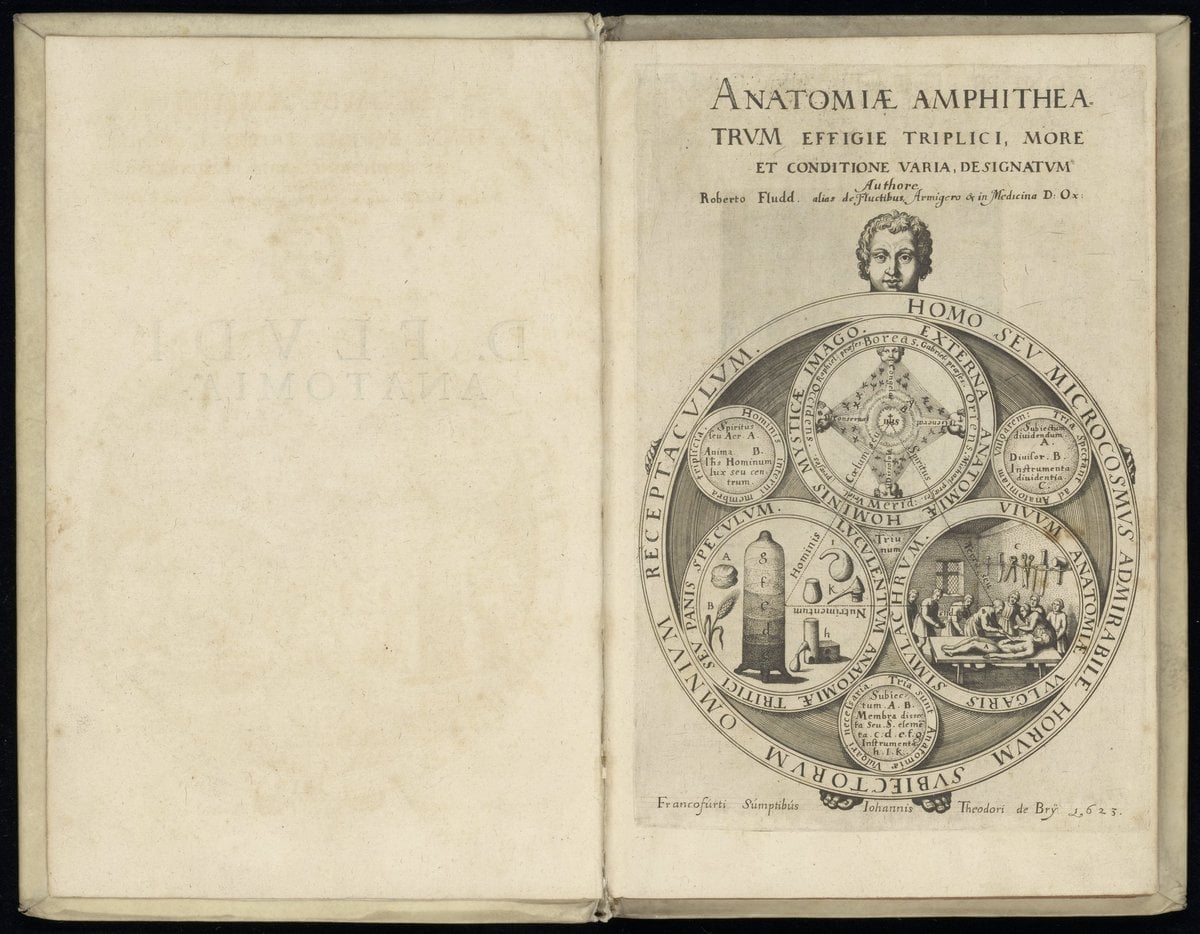
On the Triple Anatomy
Fludd, Robert
Four Little Treatises
Pordage, John
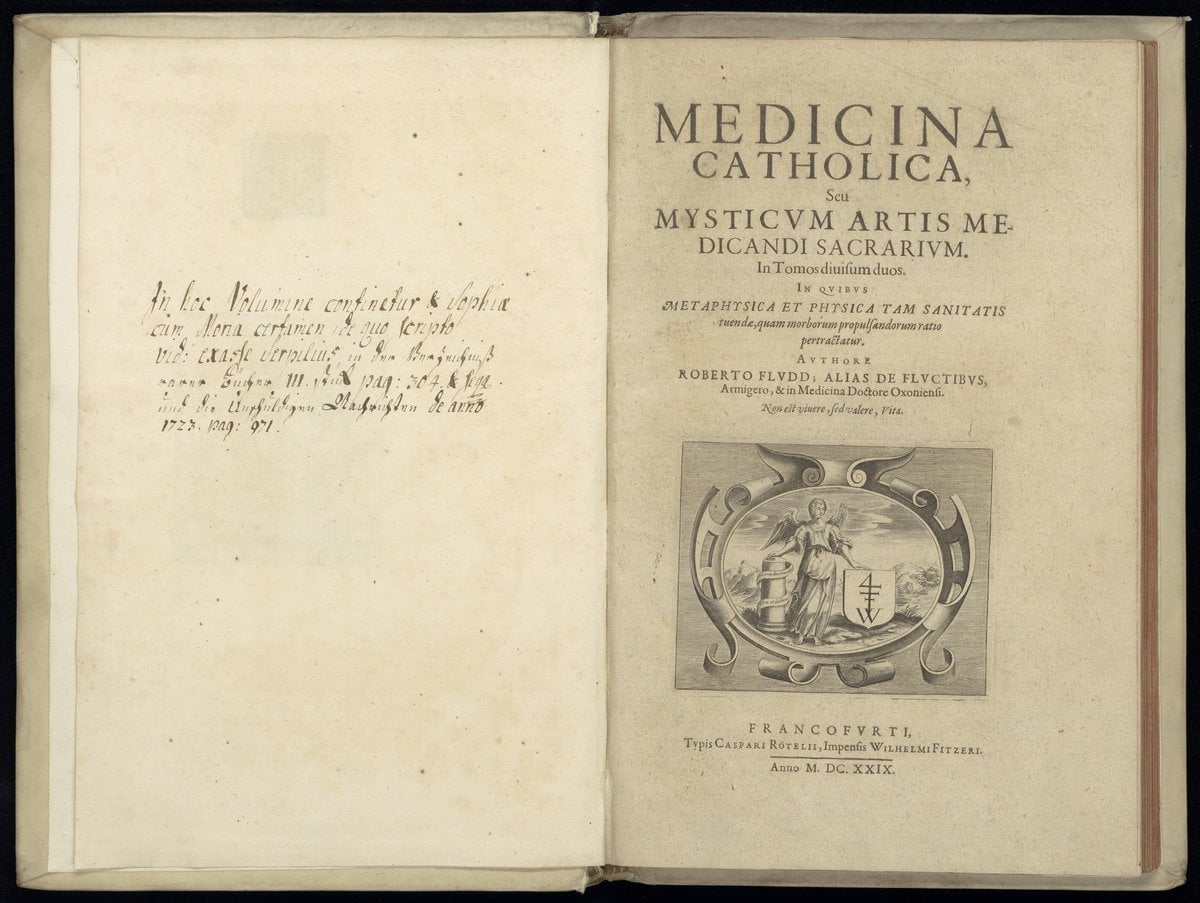
Universal Medicine, or the Mystic Sanctuary of the Healing Art
Fludd, Robert
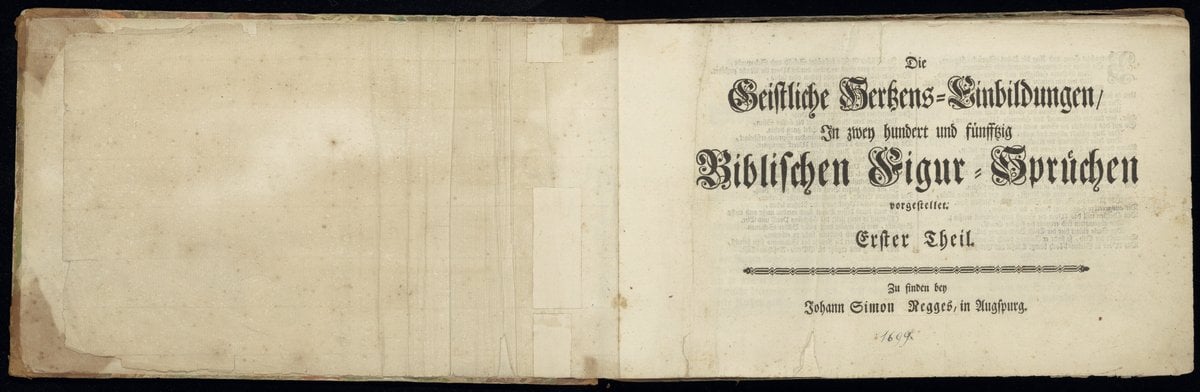
Spiritual Heart-Imaginations
attr. Mattsperger, Melchior
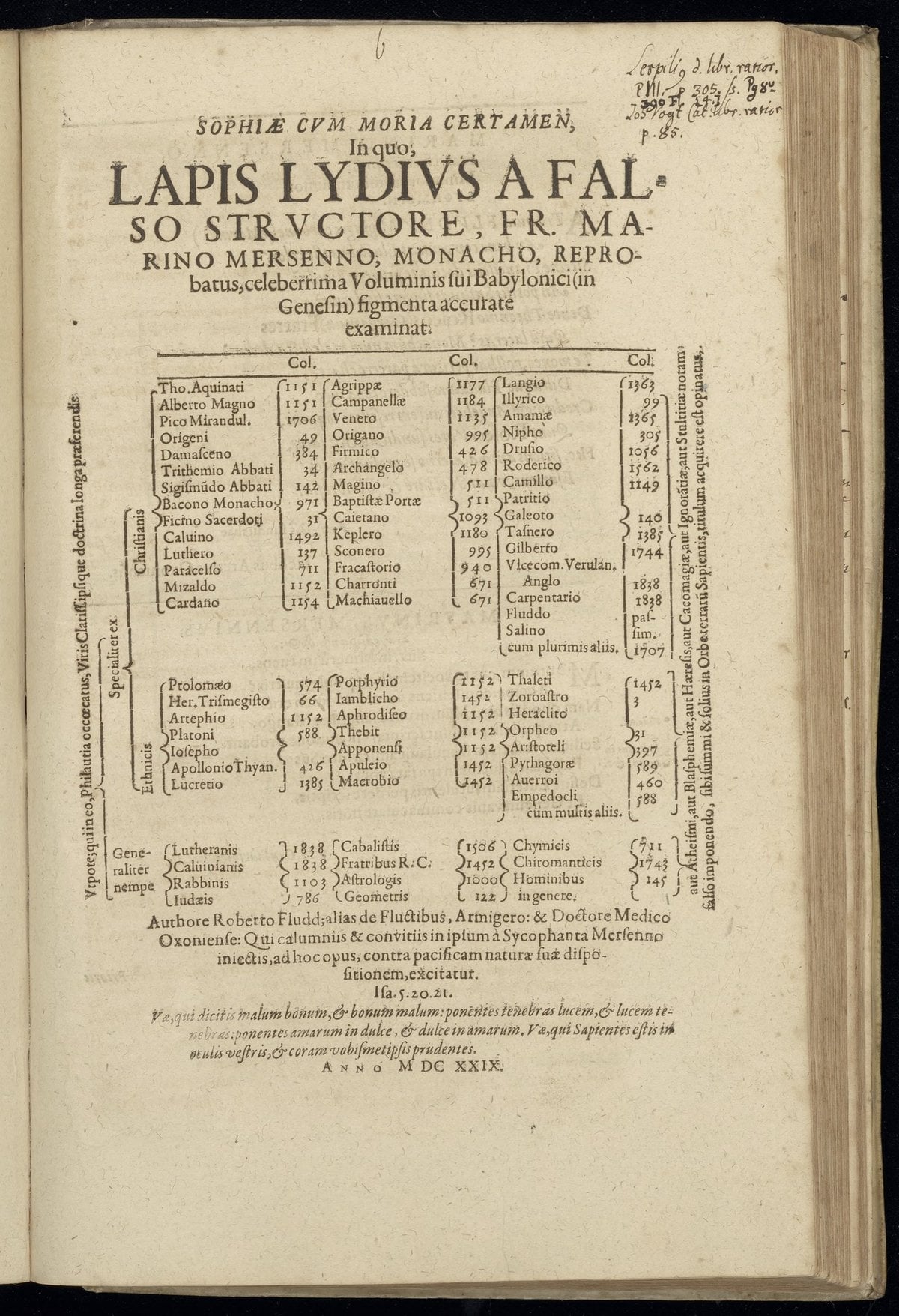
The Contest of Wisdom with Folly
Fludd, Robert
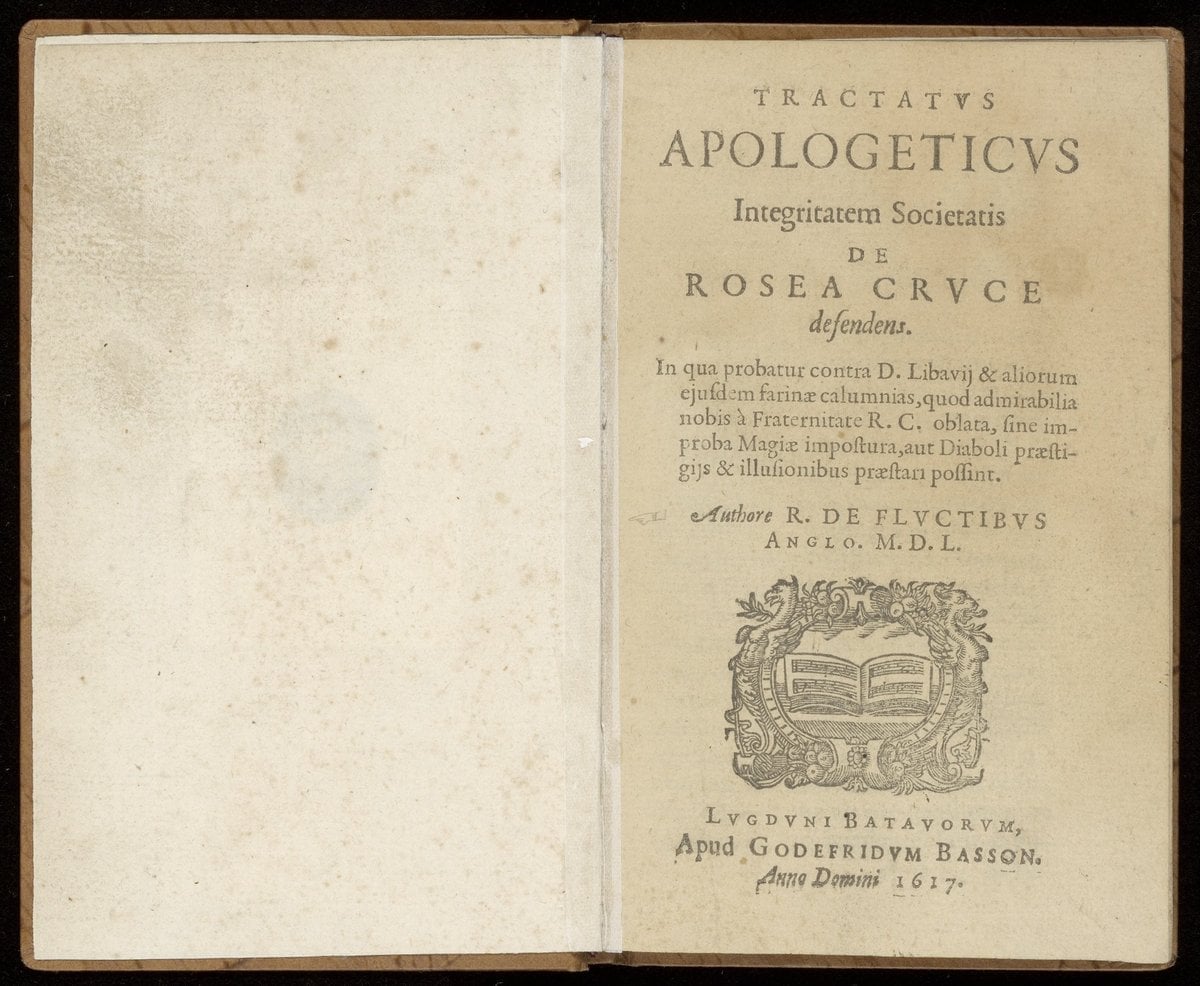
Apologetic Treatise Defending the Integrity of the Society of the Rose Cross
Fludd, Robert
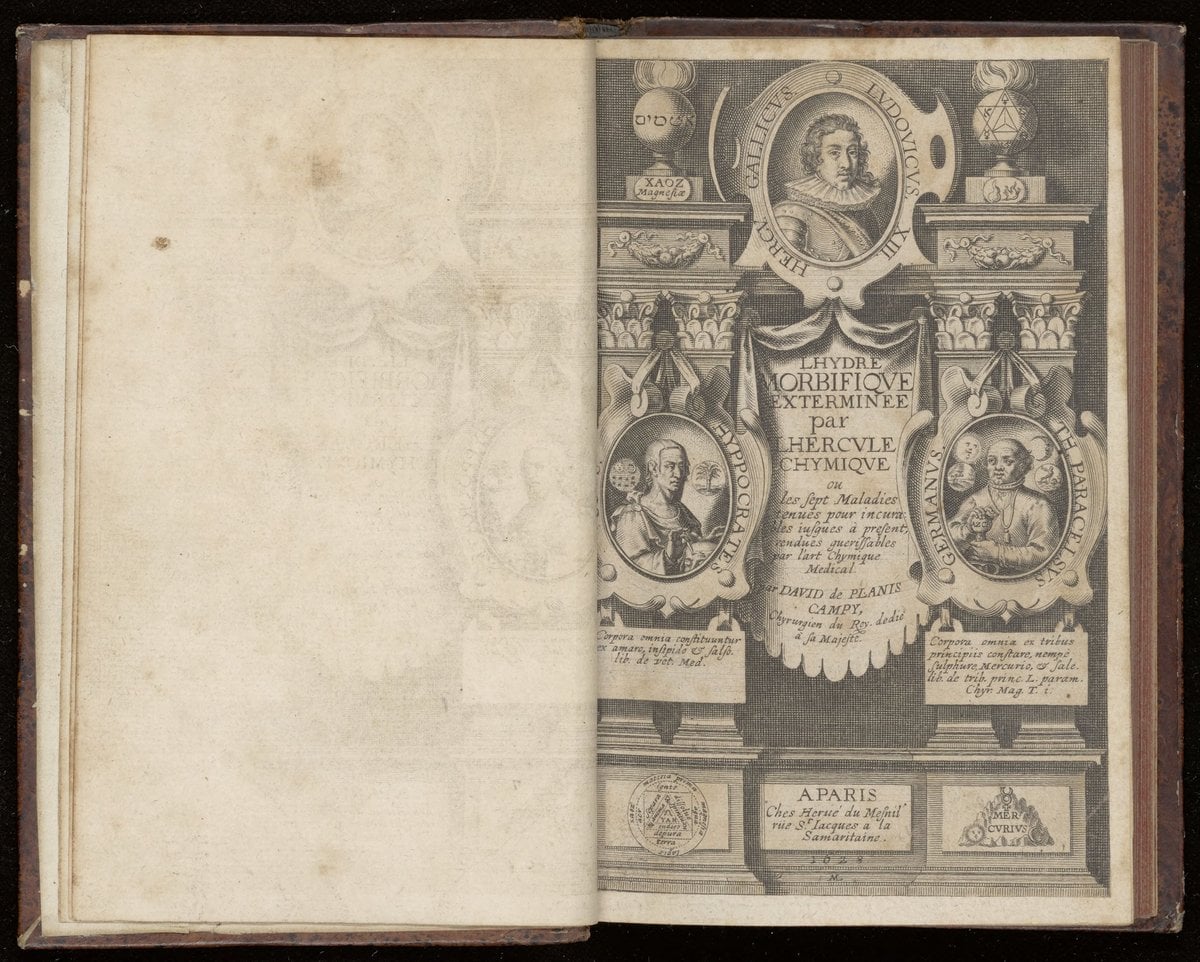
The Morbific Hydra Exterminated by the Chemical Hercules
Planis Campy, David de
On the Preternatural History of Both Worlds
Fludd, Robert