Medieval Heresies
Cathars, Bogomils, Waldensians, and the Dualist Underground
Illustrations
Browse all3 images extracted from 2 books
This intricate bookplate features the seal of Harvard University, 'Academiae Harvardianae in Nov. Ang.', at its center. It is surrounded by allegorical figures representing the arts and sciences, including a globe and books, reflecting the institution's dedication to broad scholarship. The handwritten date 'Aug. 28, 1851' marks its acquisition by the library.
This lithograph portrays Henri Arnaud, the influential pastor and military leader who led the Waldensians during their 'Glorious Return' to their ancestral valleys in 1689. The image is based on a 1691 painting, capturing Arnaud at age 45 in his characteristic clerical collar, symbolizing his spiritual and temporal leadership.
This portrait depicts Henri Arnaud (1641–1721), a prominent pastor and military leader of the Waldensian people. He is best known for leading the 'Glorious Return' (Glorieuse Rentrée) of the Waldensians to their valleys in Piedmont in 1689. This image, based on a 1691 painting, captures Arnaud at age 45, reflecting his dual role as a spiritual and military guide.
Between the tenth and fourteenth centuries, a chain of dualist movements challenged the authority of the Latin and Byzantine churches. The Paulicians of Armenia, whose Key of Truth preserves their own liturgy and doctrine in their own words, transmitted a radical reading of Christianity eastward into the Byzantine Empire, where the Bogomils of Bulgaria developed a full cosmological dualism — the material world as the creation of a fallen or evil demiurge. From the Balkans, these ideas traveled west into Languedoc, where the Cathars (or Albigensians) built a parallel church with its own bishops, rituals, and theology of two principles. The Albigensian Crusade (1209–1229) and the subsequent Inquisition sought to destroy them utterly. Guillaume de Tudèle's La Chanson de la Croisade contre les Albigeois, composed in Occitan by a witness to the events, records the siege of Béziers and the devastation of the Languedoc from inside the conflict.
Most Cathar texts were burned. What survives comes largely through hostile sources: Bernard Gui's Practica Inquisitionis Heretice Pravitatis, the Inquisitor's manual that catalogues heretical beliefs in order to detect and prosecute them, and the depositions preserved in Inquisition archives. Charles Schmidt's Histoire et Doctrine de la Secte des Cathares ou Albigeois (1849) was the first modern attempt to reconstruct Cathar theology from these fragments. The Waldensians of Piedmont, a parallel movement rooted in apostolic poverty rather than cosmological dualism, left a richer textual record — Pierre Boyer's History of the Vaudois (1692) is among the earliest European accounts, while Todd and Bradshaw's Books of the Vaudois documents the surviving Waldensian manuscripts. Philippus van Limborch's History of the Inquisition (1731) provides the broader institutional context in which all these movements were suppressed.
Essential Reading
The foundational texts of this tradition
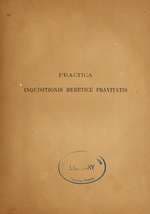
The Practice of the Inquisition of Heretical Depravity
Bernardus Guidonis, 1603
The Inquisitor's handbook. Bernard Gui served as inquisitor in Toulouse from 1307 to 1323 and compiled this manual for detecting and prosecuting heretics — Cathars, Waldensians, Pseudo-Apostles, and others. The ironic primary source: what the Cathars believed, recorded by the institution that destroyed them.
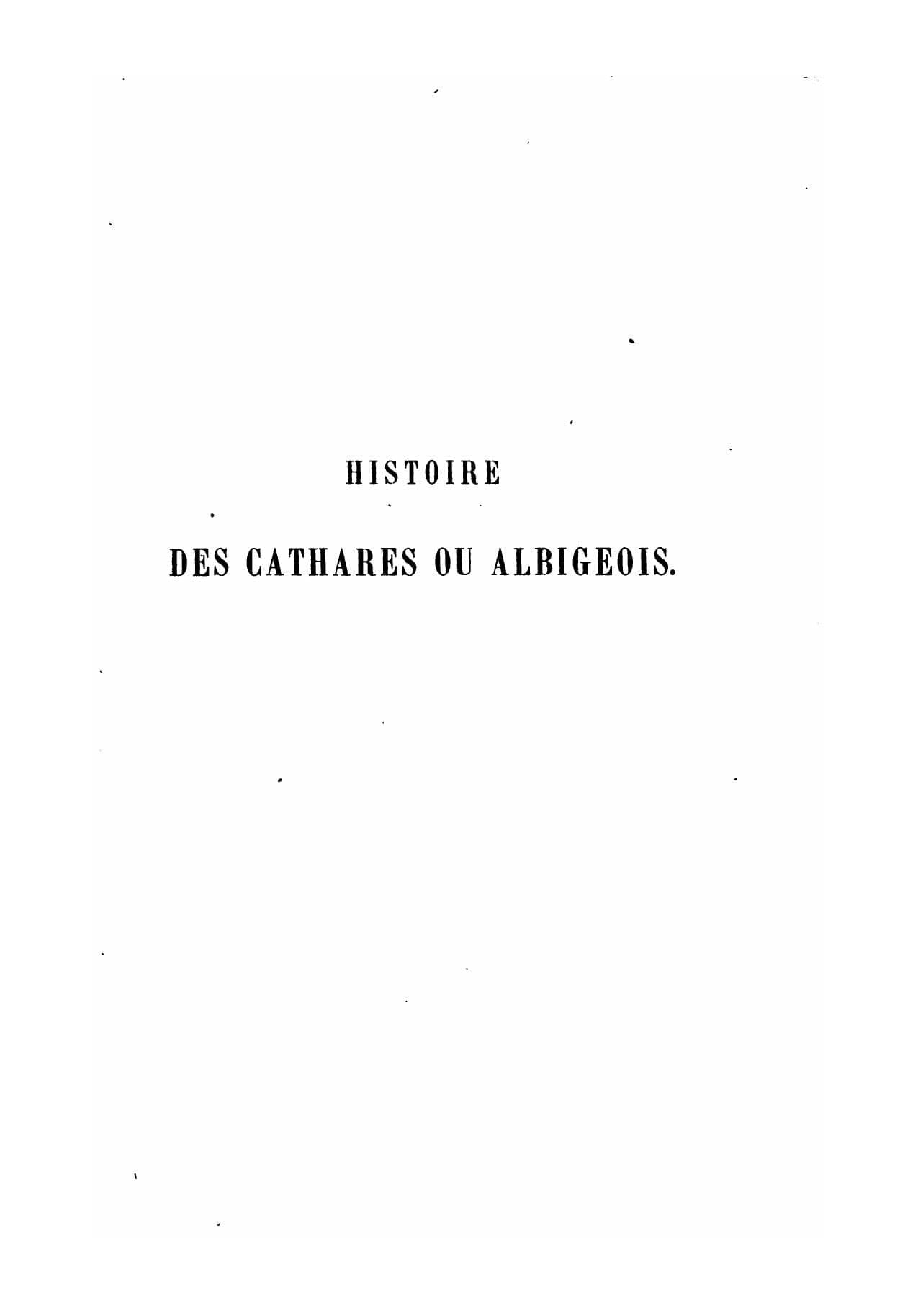
History and Doctrine of the Cathars or Albigensians
Charles Schmidt, 1849First Translation
The foundational modern study of Cathar doctrine and history, reconstructing their theology from Inquisition records and anti-heretical polemics. Schmidt's work established the field of Cathar studies.
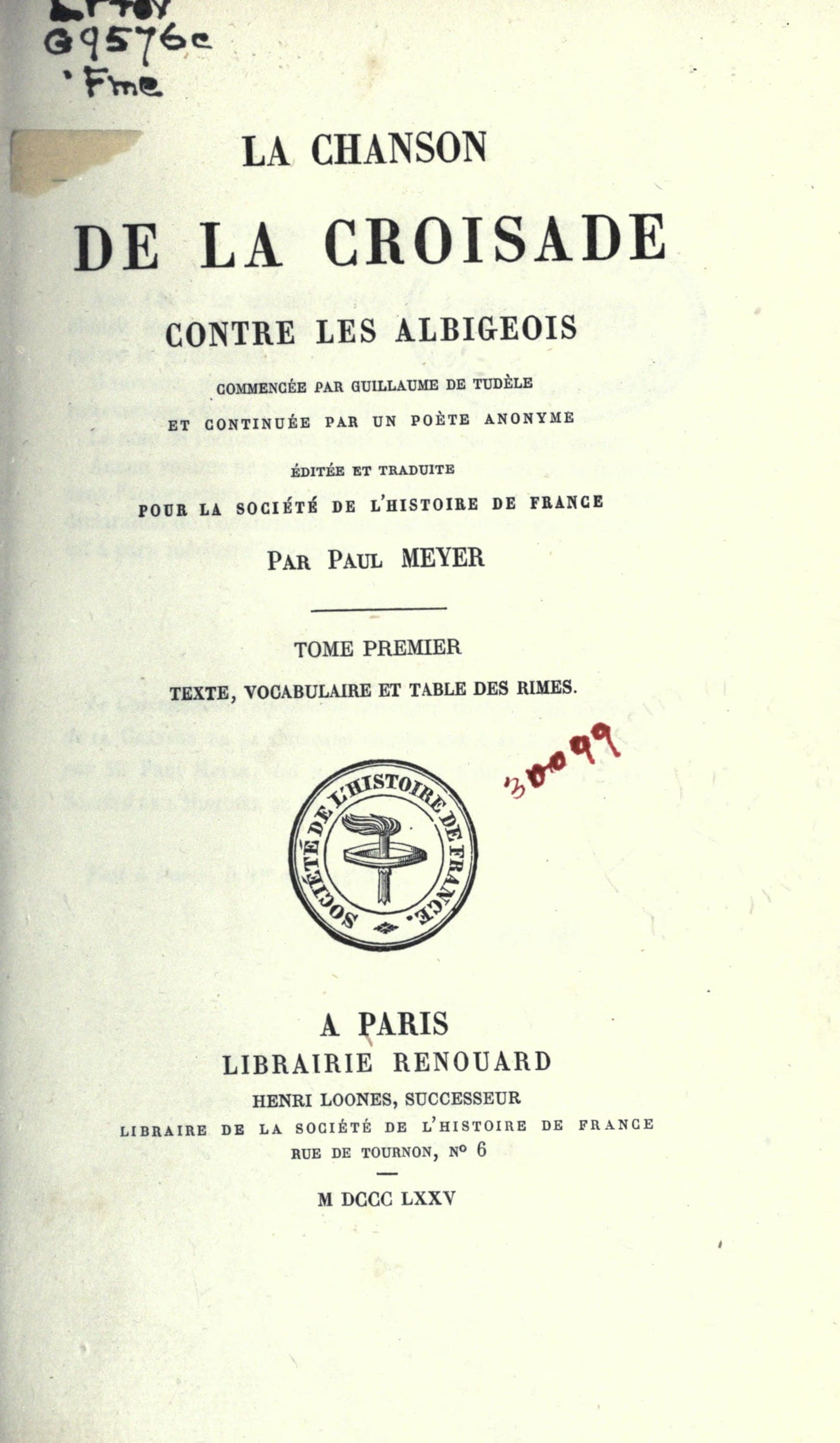
La Chanson de la Croisade contre les Albigeois
Guillaume de Tudèle, 1875
A contemporary Occitan verse chronicle of the Albigensian Crusade, begun by Guillaume de Tudèle (a supporter of the crusade) and continued by an anonymous poet sympathetic to the defenders. One of the few eyewitness accounts of the destruction of Languedoc.
Important Works
Significant texts that deepen understanding
History of the Albigensians: The Albigensians and the Inquisition
Napoléon Peyrat, 1872First Translation
Peyrat's detailed history of the Albigensian movement and the crusade and Inquisition that suppressed it.

The Albigensians: Their Origins and the Action of the Church in the 12th Century
Célestin Douais, 1879First Translation
Douais examines the origins of the Albigensian heresy and the Church's response in the twelfth century.
All Books
Browse Full Catalog→9 books in this collection