


Illustrations
Browse all23 images extracted from 5 books
This image captures the atmospheric interior of the Mithraeum located beneath the Basilica of San Clemente in Rome, one of the best-preserved examples of a Roman mystery cult site. The perspective highlights the vaulted architecture and the placement of the central tauroctony relief, illustrating how these secret societies constructed sacred spaces to mimic the cosmos.
This bas-relief from Konjica depicts the sacred Mithraic banquet, a central ritual in the mystery cult. The scene features figures representing various grades of initiation, including the 'Soldier' and the 'Lion,' gathered around a ritual meal, highlighting the communal and hierarchical nature of the Mithraic faith.
This bas-relief from Konjica, Bosnia, illustrates the sacred banquet central to the Mithraic mysteries. The scene depicts initiates of various grades—including the Raven, the Soldier, and the Lion—partaking in a ritual meal, highlighting the communal and hierarchical nature of the cult.
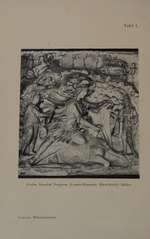
This illustration depicts a scene from a Mithraic ritual, possibly an initiation or a symbolic encounter between Mithras and the Sun god, Helios. One figure, wearing the characteristic Phrygian cap, is shown interacting with a seated figure adorned with a radiant solar crown. The image serves as a visual frontispiece for Albrecht Dieterich's seminal work on the 'Mithras Liturgy' extracted from the Great Magical Papyrus of Paris.
The 'dexiosis,' or ritual handshake, depicted here signifies a pact or divine investiture between a ruler and a deity. This iconography was frequently used in the ancient world to legitimize royal authority through divine sanction.
This striking relief depicts the Mithraic deity Aion, the personification of infinite time, encircled by the twelve signs of the zodiac. The figure is entwined by a serpent and flanked by the four winds, illustrating the profound synthesis of Hellenistic and Oriental cosmological concepts within the Mithraic mysteries.

This engraving captures the central icon of the Mithraic mysteries: the tauroctony, or bull-slaying scene. Mithras, wearing a Phrygian cap, kneels upon the bull, an act of cosmic sacrifice that was believed to bring forth life and order to the universe.

This detailed map illustrates the widespread diffusion of the Mysteries of Mithra across the Roman Empire during antiquity. It highlights specific archaeological sites where Mithraic monuments and sanctuaries (mithraea) have been discovered, providing a visual representation of the cult's extensive geographical reach from Britain to Mesopotamia.
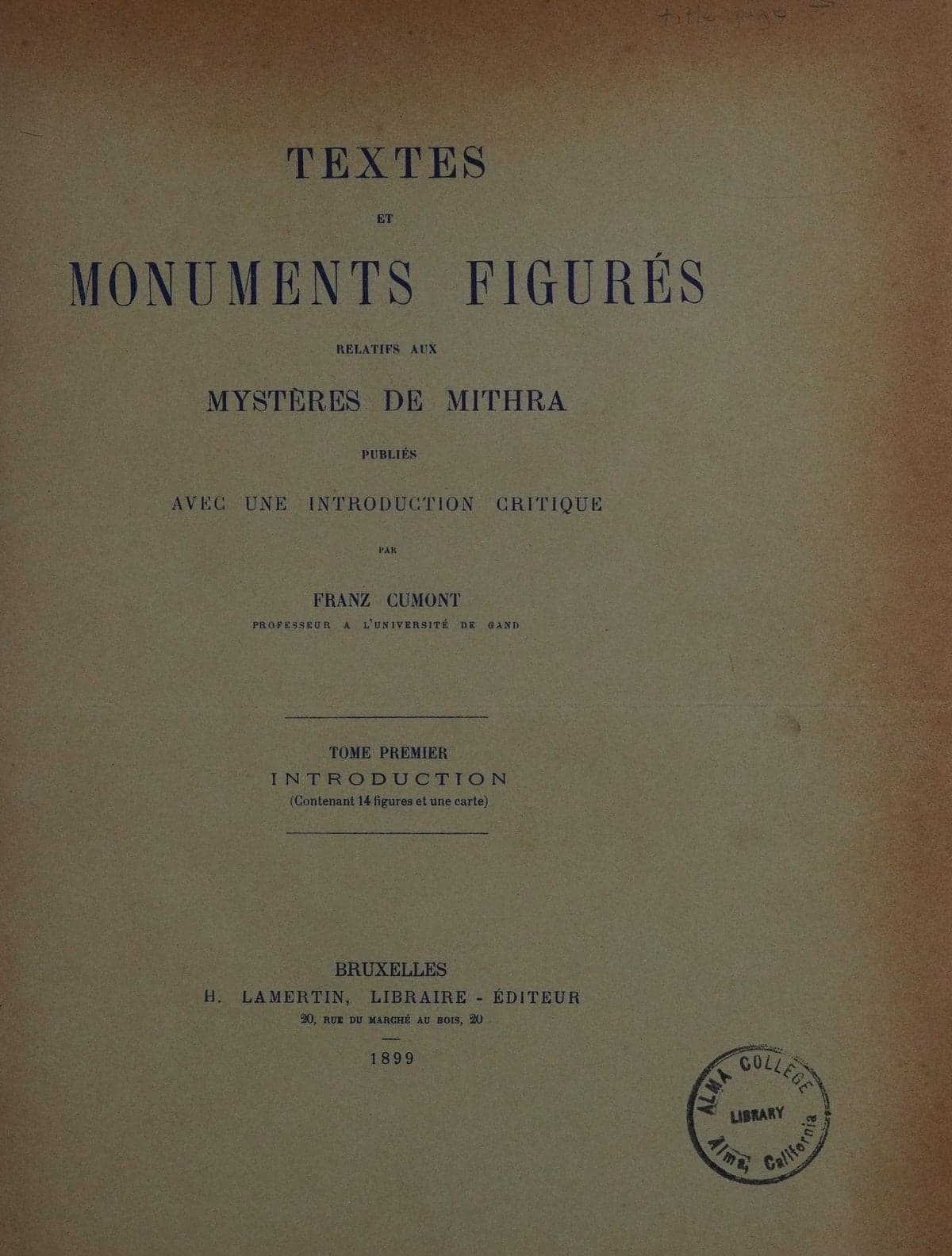
The god Mithras was worshipped across the Roman Empire from the first to the fourth century CE, in windowless underground temples called mithraea. Initiates progressed through seven grades — Corax, Nymphus, Miles, Leo, Perses, Heliodromus, Pater — beneath the iconic tauroctony: Mithras slaying the cosmic bull. The relationship of this Roman cult to the Iranian deity Mithra, invoked in the Avesta as guardian of contracts and cosmic order, remains one of the most debated questions in the study of ancient religion. Franz Cumont's Textes et Monuments Figurés Relatifs aux Mystères de Mithra (1896–99) assembled every known inscription, relief, and literary reference into a monumental two-volume corpus that founded the field. His synthetic Mysteries of Mithra — published simultaneously in French, English, and German in 1902–03 — argued for direct transmission from Persia, a thesis that shaped scholarship for decades.
The collection also preserves the earlier antiquarian tradition: Thomas Hyde's Veterum Persarum et Parthorum et Medorum Religionis Historia (1700), the first European scholarly treatment of Persian religion; Niklas Müller's comparative iconographic study of Mithraic monuments (1833); Hammer-Purgstall's memoir on the solar cult; and Gasquet's 1899 essay on the mysteries. Albrecht Dieterich's Eine Mithrasliturgie (1903) reconstructed a Mithraic ritual text from the Greek magical papyri, while M.J. Vermaseren's Corpus Inscriptionum et Monumentorum Religionis Mithriacae (1956) catalogued every known Mithraic inscription and monument — the archaeological reference standard still in use today. Two classical witnesses round out the sources: Plutarch's De Iside et Osiride, which describes Mithra as the Persian intermediary between the principles of light and darkness, and Porphyry's De Antro Nympharum, which interprets the Mithraic cave as a symbol of the cosmos.
Essential Reading
The foundational texts of this tradition

Texts and Monuments Relating to the Mysteries of Mithra, Vol. 2
Franz Cumont, 1899First Translation
The second volume of Cumont's monument — devoted to the figured monuments, reliefs, and sculptural evidence from mithraea across the Roman world.
Corpus Inscriptionum et Monumentorum Religionis Mithriacae (CIMRM)
M. J. Vermaseren, 1956First Translation
Vermaseren's definitive catalog of all known Mithraic inscriptions and monuments, organized geographically. The standard archaeological reference, still cited in every serious study of Roman Mithraism.
A Mithraic Liturgy
Albrecht Dieterich, 1903First Translation
Dieterich's reconstruction of a Mithraic liturgy from the Paris Magical Papyrus (PGM IV). Controversial but foundational — it opened the question of what Mithraic ritual practice actually looked like.
Select Works of Porphyry
Porphyry, 1823
Thomas Taylor's 1823 translation of Porphyry, including De Antro Nympharum — the ancient philosophical interpretation of the Mithraic cave as a cosmic symbol, with the entrance and exit representing the paths of souls.
Important Works
Significant texts that deepen understanding
Veterum Persarum et Parthorum et Medorum Religionis Historia
Thomas Hyde, 1760First Translation
The first European scholarly treatment of Persian religion, predating Anquetil-Duperron by seventy years. Hyde drew on Arabic and Persian sources available in Oxford.

Essay on the Cult and Mysteries of Mithra
Amédée Gasquet, 1899First Translation
Gasquet's focused study of the Mithraic cult and its ritual practices, published the same year as Cumont's first volume.
Mithras: A Comparative Overview of the Images and Legends
Niklas Müller, 1833First Translation
An early comparative study of Mithraic iconography, cataloguing and interpreting the known monuments and their symbolic imagery.
The Sun and Mithra in the Avesta
Johannes Hertel, 1927First Translation
A study of Mithra's role in the Avesta, tracing the Iranian roots of the deity before the Roman cult.
All Books
Browse Full Catalog→16 books in this collection