


The Music of the Spheres
From Pythagoras to Helmholtz: the idea that the cosmos is tuned like a lyre.

Illustrations
Browse all486 images extracted
This intricate engraving depicts Johannes Kepler's revolutionary cosmological model from his 1596 work, Mysterium Cosmographicum. Kepler proposed that the distances between the six known planets could be explained by nesting the five Platonic solids within a series of spheres. This image represents a pivotal moment in the history of astronomy, blending classical geometry with early modern scientific inquiry.
This seminal engraving depicts the 'Monochordum Mundanum' or World Monochord, a central concept in Robert Fludd's philosophy of universal harmony. A divine hand reaches from a cloud to tune the single string of the universe, which spans from the earthly elements of Earth, Water, Air, and Fire at the base to the highest celestial realms. The diagram meticulously maps musical intervals—such as the diapason and diapente—onto the structure of the cosmos, visually representing the Renaissance belief that the universe is governed by divine mathematical and musical proportions.
This engraving from Johannes Kepler’s 1619 masterpiece, Harmonices Mundi, illustrates his theory that the distances between planetary orbits are determined by the five Platonic solids. The diagram maps the orbits of Saturn and Jupiter relative to the 'Cubus' (cube) and 'Tetrahedron,' culminating in a nested circular model of the inner solar system. It represents a pivotal moment in the history of science where Kepler attempted to reconcile ancient geometric harmony with his new laws of planetary motion.
This detailed engraving depicts Robert Fludd (1574–1637), the English Paracelsian physician and mystic philosopher. He is shown in formal attire, flanked by his family coat of arms and rays of divine light inscribed with biblical verses, symbolizing his pursuit of spiritual and scientific knowledge. The portrait, executed by Matthäus Merian, serves as an authoritative introduction to Fludd's monumental work on the macrocosm and microcosm.
This intricate frontispiece illustrates the philosophical foundations of Kircher’s monumental work on light and shadow. It depicts four sources of knowledge—Sacred Authority, Reason, Profane Authority, and the Senses—interacting with divine light to reveal the secrets of the natural world. The central medallion honors the book's patron, Archduke Ferdinand of Austria, amidst a cosmic display of optical phenomena.
This profound engraving illustrates the divine command 'FIAT' (Let there be) as the catalyst for the creation of the universe. From Robert Fludd's monumental work on the macrocosm and microcosm, the image depicts the emergence of light and spirit from the primordial darkness, symbolized by the radiant ring and the descending dove of the Holy Spirit.

This formal engraving depicts Joannes Fridericus, Count of Waldstein, presented in the grand manner of 17th-century European nobility. He is shown wearing a luxurious ermine-lined robe and a prominent cross, symbols of his high social standing and religious or knightly affiliations. The work, signed by the engraver Hendrik Bary, showcases the technical mastery of intaglio printing through its intricate crosshatching and delicate rendering of light and texture.

This radical monochrome engraving represents the primeval darkness or 'Great Void' that preceded the creation of the universe. Created by the English physician and mystic Robert Fludd for his encyclopedic 'Utriusque Cosmi Historia' (1617), the image is bordered by the phrase 'Et sic in infinitum' (And so on to infinity), emphasizing the boundless, unformed state of the cosmos before the divine light of creation.

This elaborate frontispiece for Athanasius Kircher's 'Mundus Subterraneus' presents a Baroque vision of the Earth's place in the cosmos. Personified winds blow upon a central globe, while divine providence, represented by a hand from the heavens, maintains order. The inclusion of scientific instruments and allegorical figures underscores Kircher's attempt to synthesize theological and empirical knowledge of the natural world.

Pythagoras believed the cosmos was tuned like a lyre — that the distances between planets corresponded to musical intervals, and that creation itself was a form of music. This was not metaphor. For the Pythagorean tradition, mathematical harmony was the deepest structure of reality.
That idea never died. It was transmitted through Plato's Timaeus, formalized by Boethius in his threefold division of music (musica mundana, humana, instrumentalis), and revived spectacularly in the Renaissance. Francesco Giorgi's De Harmonia Mundi (1525) fused Pythagorean ratios with Kabbalistic number mysticism. Robert Fludd drew elaborate diagrams of the cosmic monochord. Kepler spent years trying to derive planetary orbits from musical intervals — and succeeded, in a way, with his third law.
Athanasius Kircher's Musurgia Universalis (1650) attempted the definitive synthesis: a universal science of sound encompassing everything from birdsong to the music of the angels. Mersenne, his contemporary, took a more empirical approach, measuring the speed of sound and the vibration frequencies of strings.
Then something shifted. Chladni's vibrating-plate experiments (1787) made sound literally visible — sand arranging itself into geometric patterns on bowed metal plates, prefiguring modern cymatics. Helmholtz's On the Sensations of Tone (1863) brought the full apparatus of physics to bear on musical perception. The cosmic harmony became measurable.
This collection traces the complete arc: from the Pythagorean conviction that number is the essence of all things, through the Renaissance flowering of harmonic cosmology, to the moment when harmony became a branch of physics. The question it asks: was something lost in that transition, or found?
Essential Reading
The foundational texts of this tradition
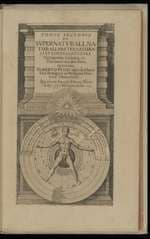
Second Volume of the History of the Microcosm
Fludd, Robert, 1619First Translation
Robert Fludd's work, particularly his cosmic monochord diagrams, is a direct illustration of the collection's theme of cosmic harmony.

Die Lehre von den Tonempfindungen als physiologische Grundlage für die Theorie der Musik
Hermann von Helmholtz, 1863
This is Helmholtz's seminal work, explicitly mentioned as bringing the full apparatus of physics to bear on musical perception and making cosmic harmony measurable.

On the Sensations of Tone
Hermann von Helmholtz, 1912
This is Helmholtz's seminal work, explicitly mentioned as bringing the full apparatus of physics to bear on musical perception and making cosmic harmony measurable.

On the Institution of Music (De institutione musica)
Boethius, 1490
Boethius's *De institutione musica* is a foundational text that formalized the threefold division of music, including *musica mundana*, crucial for the collection's narrative.

Philolaos des Pythagoreers Lehren nebst den Bruchstücken seines Werkes
Philolaus (ed. August Boeckh), 1819First Translation
This edition of Philolaus's work is a primary source for understanding early Pythagorean thought on cosmic harmony, explicitly mentioned in the collection's description.
Important Works
Significant texts that deepen understanding

Greek Musical Writers
Karl von Jan (ed.); Aristotle; Euclid; Nicomachus; Cleonides; Bacchius; Gaudentius; Alypius, 1895First from Greek
This collection includes foundational Greek music theorists like Nicomachus, whose work is central to the Pythagorean tradition of musical harmony.

Computus, Pythagoras & Alcuin — 11th-Century Maillezais MS
Alcuin; Pythagoras; Symphosius, 1050First Translation
An early manuscript directly referencing Pythagoras and computus, which often involved astronomical calculations, is relevant to the historical transmission of Pythagorean ideas.

Works and Days / Golden Verses
Hesiod / Pythagoras, 1581
The 'Golden Verses' are a foundational text attributed to Pythagoras, essential for understanding the origin of the collection's central idea.

Life of Pythagoras (Iamblichus)
Iamblichus; Thomas Taylor (trans.), 1818
Iamblichus's biography of Pythagoras is a crucial ancient source for understanding the life and teachings of the collection's foundational figure.

Life of Pythagoras and Sentences on the Intelligibles
Porphyry (ed. Lucas Holstenius), 1630
Porphyry's *Life of Pythagoras* is another significant ancient source for understanding the foundational figure of the collection.

Macrobius, Bede & Pythagoras — 9th-Century Composite MS
Macrobius; Bede; Sextus Pythagoreus; Proba, 850
This early manuscript includes references to Pythagoras and Macrobius, whose *Commentary on the Dream of Scipio* is a key text for the music of the spheres.

Neoplatonic Translations
Marsilio Ficino (translator), 1475First Translation
Marsilio Ficino's Neoplatonic translations were crucial for the Renaissance revival of Platonic and Pythagorean ideas, including the concept of cosmic harmony.
Pythagoras and Pythagorean Philosophy
A.-Ed. Chaignet, 1873First Translation
This work includes fragments of Philolaus, a key figure mentioned in the collection's description as an early proponent of the music of the spheres.

Boethius, On Arithmetic (9th-century copy — one of oldest in collection)
Boethius, 850
This early manuscript of Boethius's *On Arithmetic* is important for understanding the mathematical foundations of Pythagorean musical ratios.
All Books
Browse Full Catalog→193 books in this collection
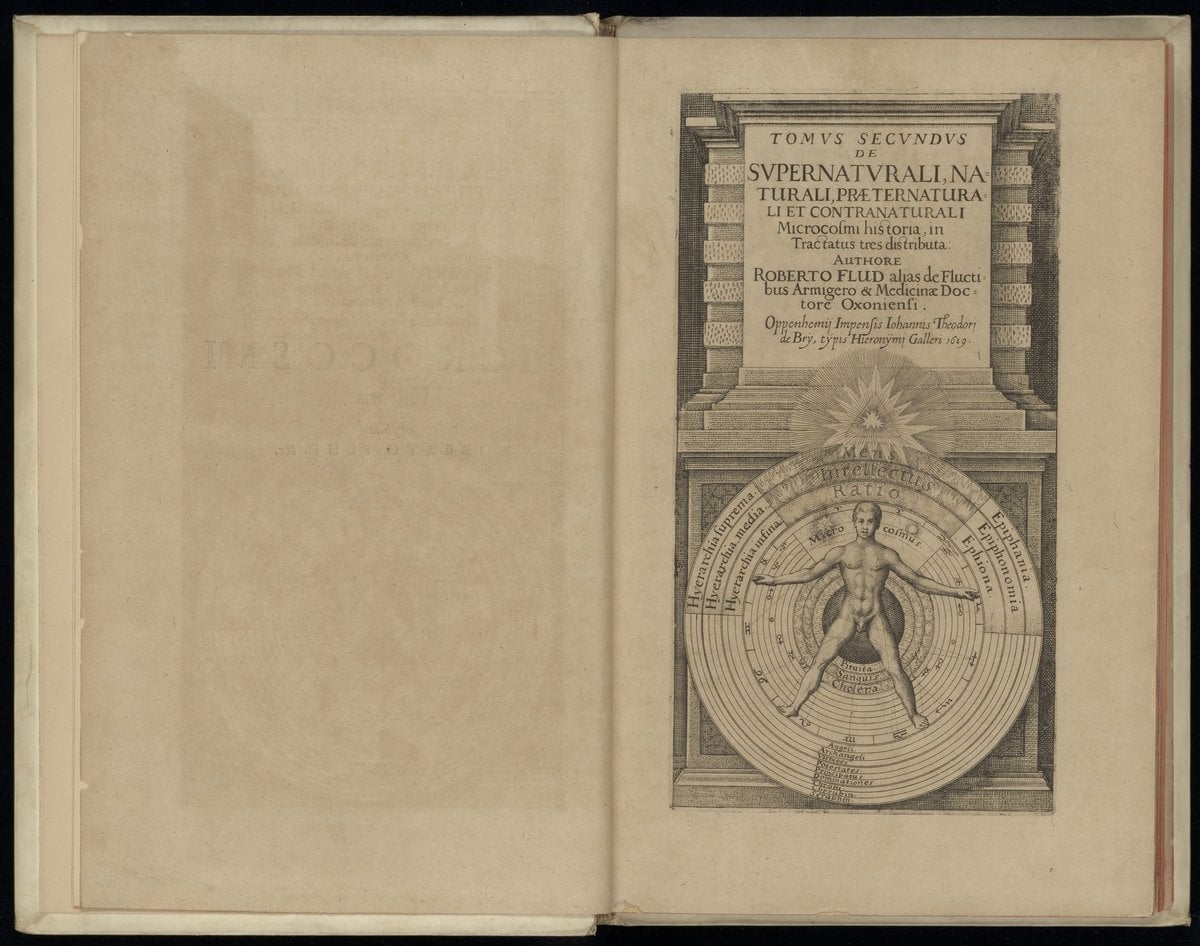
Second Volume of the History of the Microcosm
Fludd, Robert
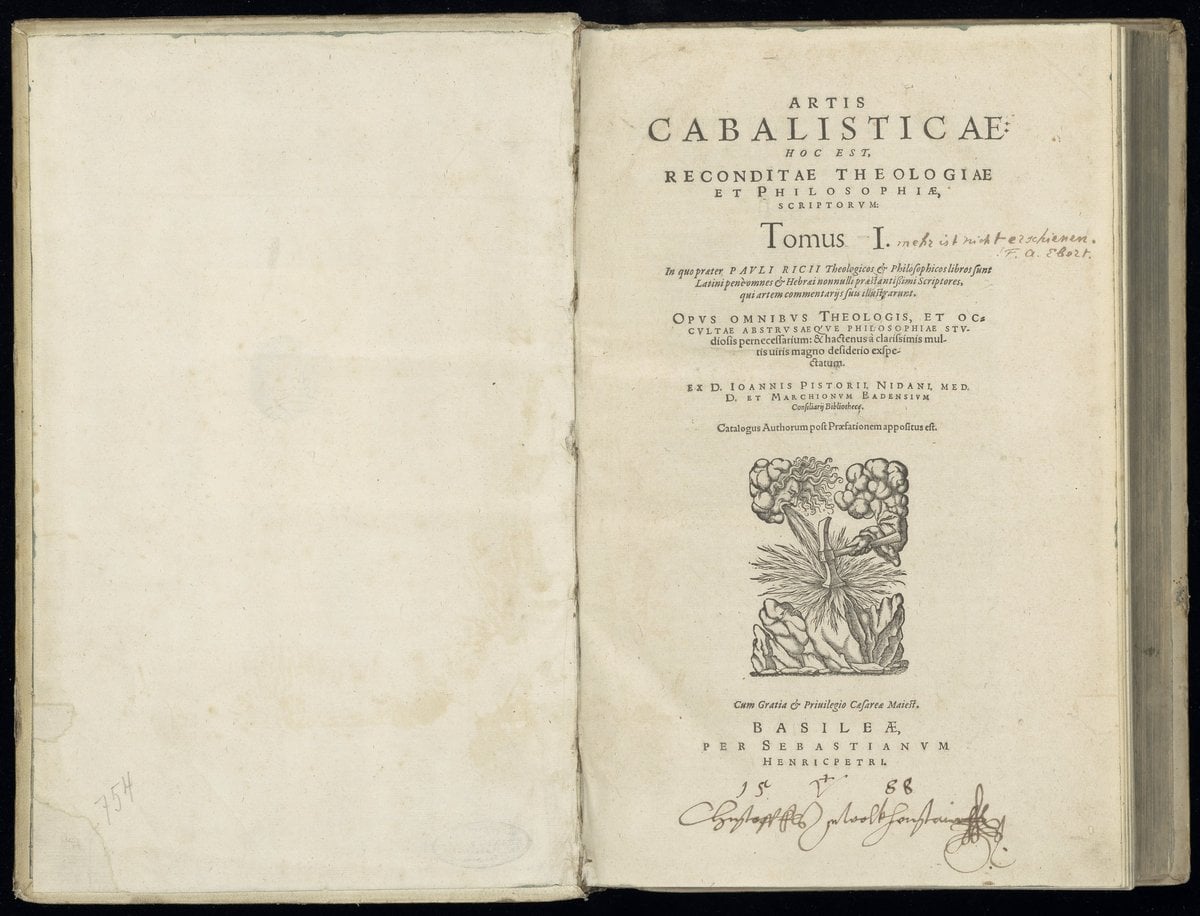
The Cabalistic Art, Volume 1
Pistorius, Johannes
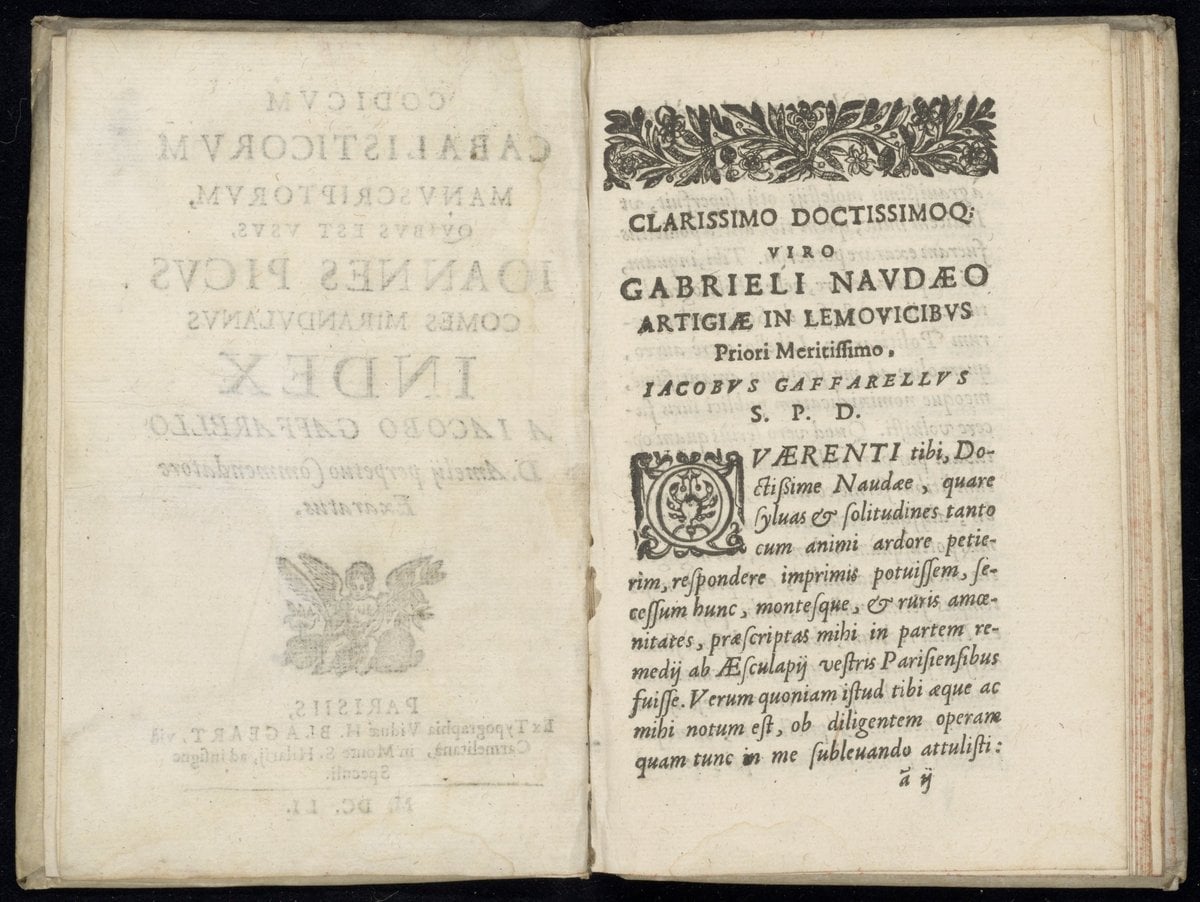
Index of the Kabbalistic Manuscripts of Pico della Mirandola
Gaffarel, Jacques
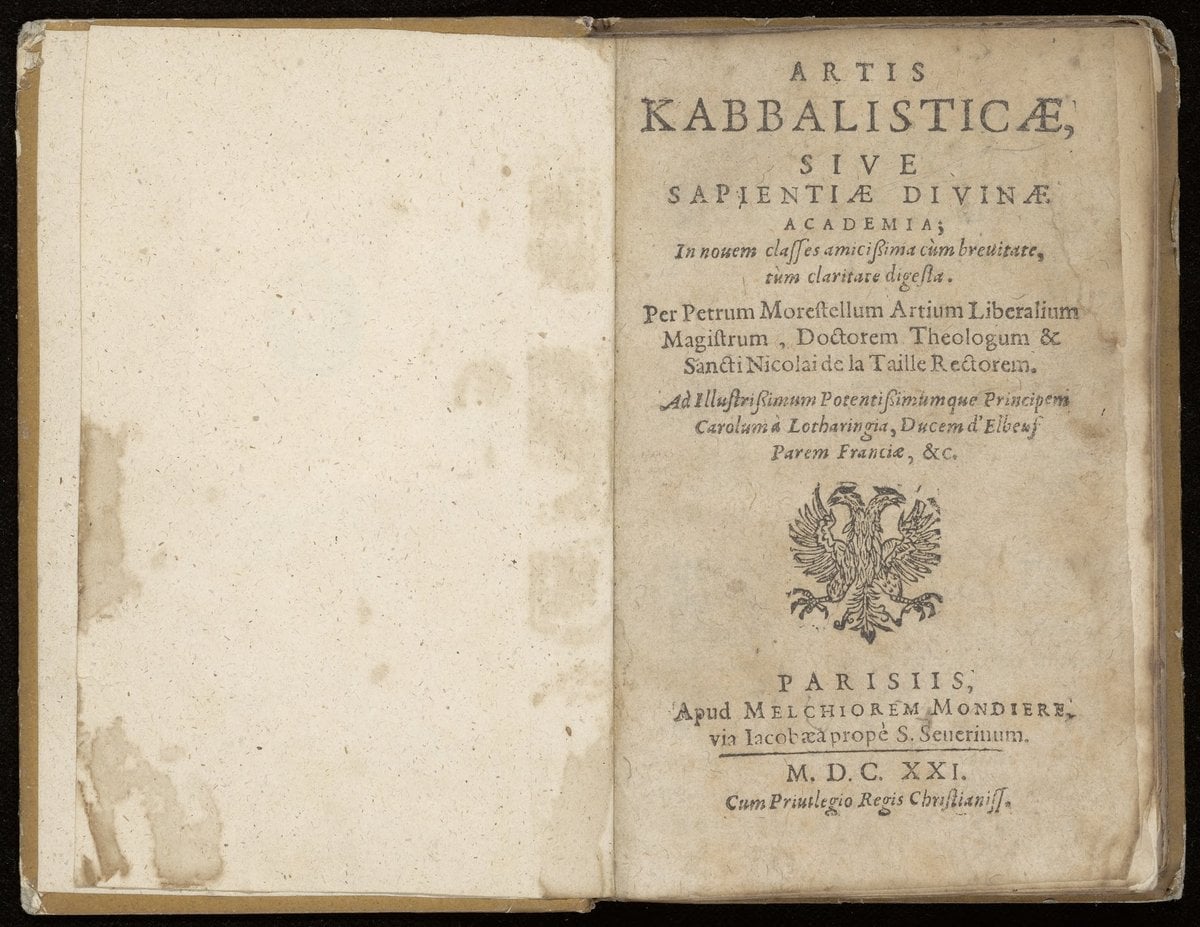
The Academy of the Kabbalistic Art or Divine Wisdom
Morestel, Pierre
Creation through Numbers and Words
attr. Gleichen, Karl Heinrich von
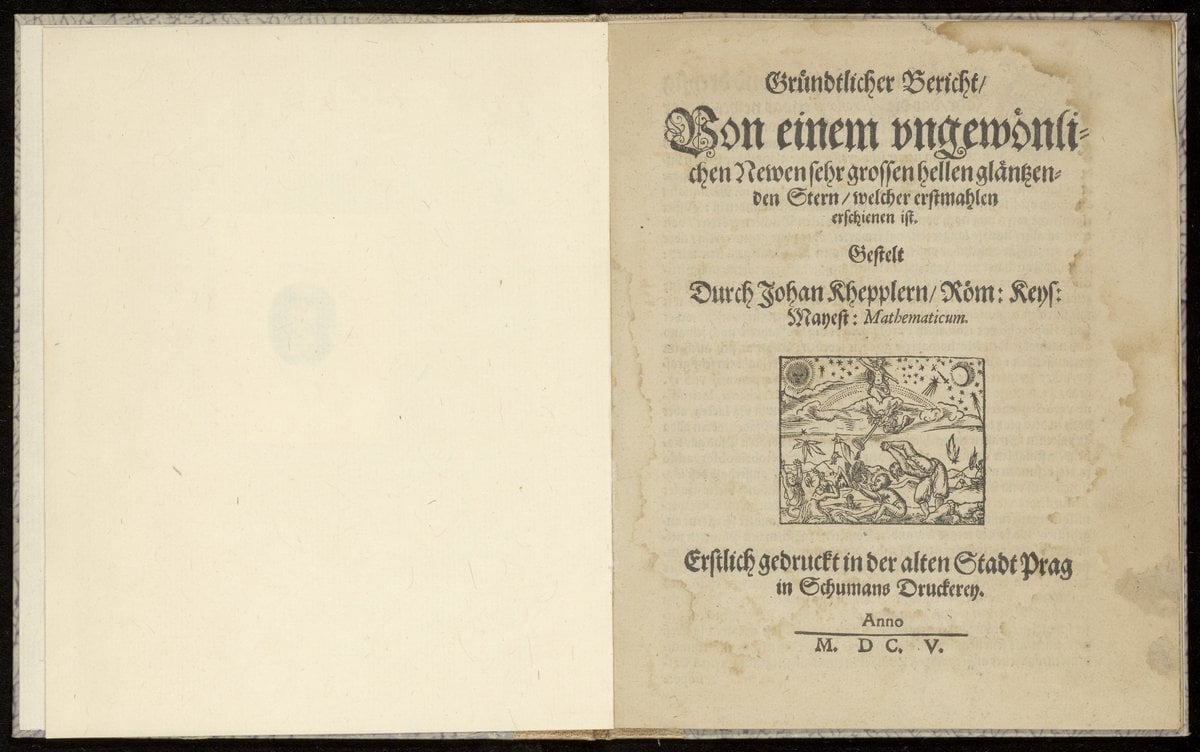
Thorough Report on a New and Unusual Star
Kepler, Johannes

Mosaicall philosophy
Fludd, Robert
Sacred and Truly Christian Philosophy, or Cosmic Meteorology
Fludd, Robert
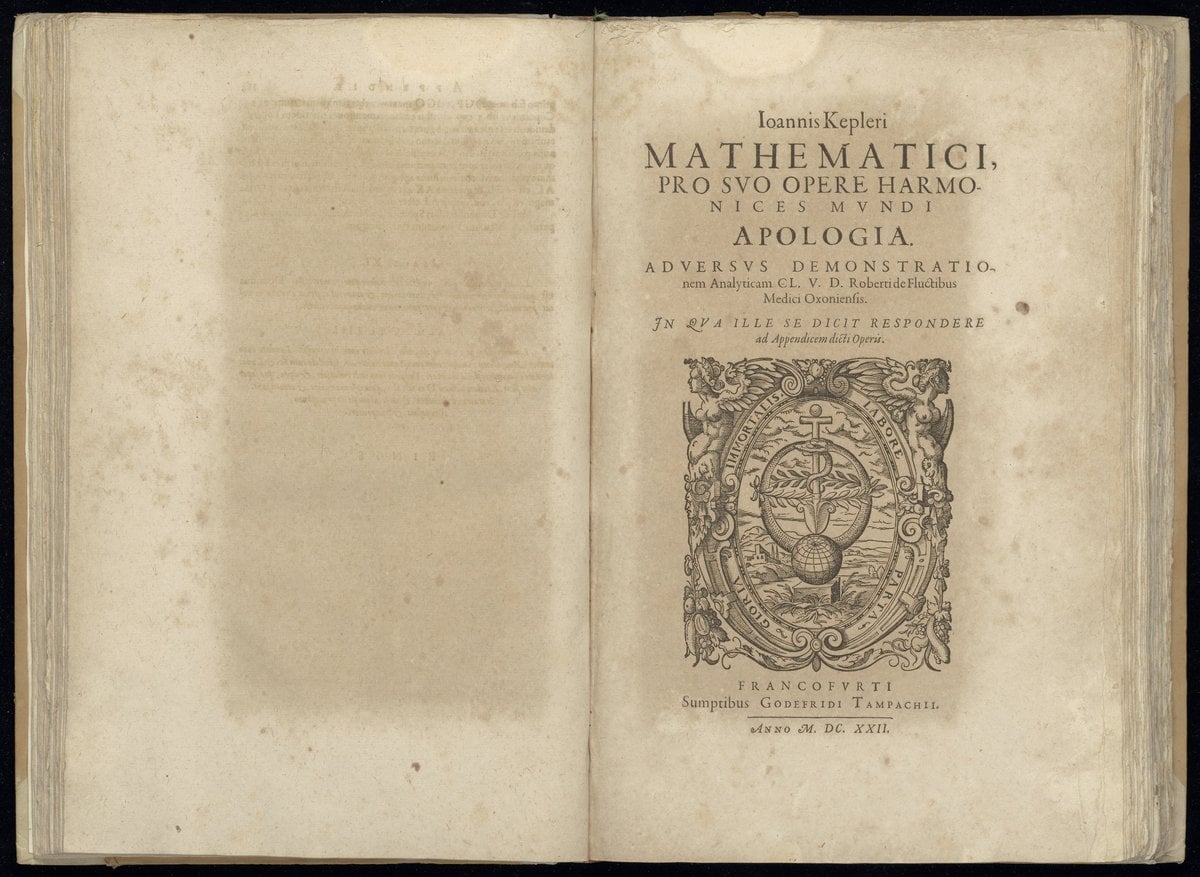
Apology for The Harmony of the World
Kepler, Johannes
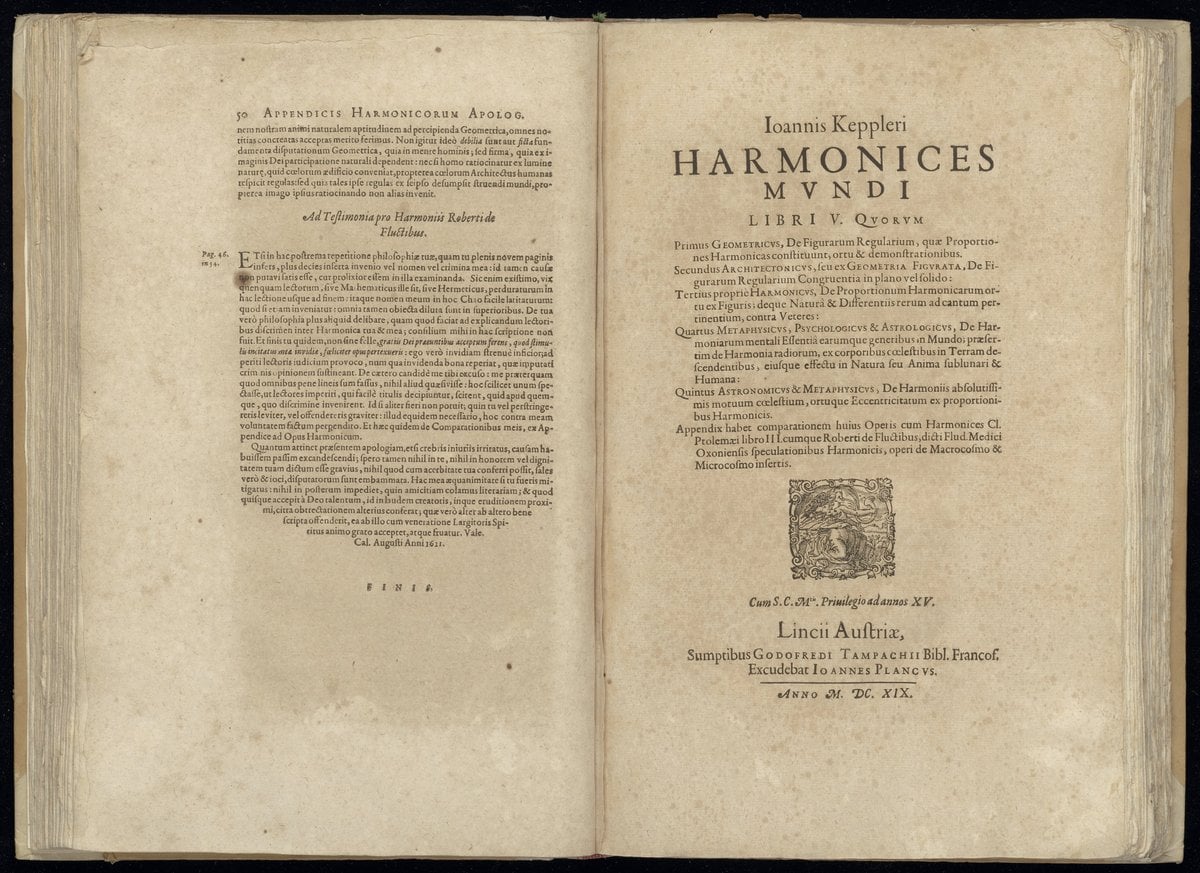
The Harmony of the World
Kepler, Johannes
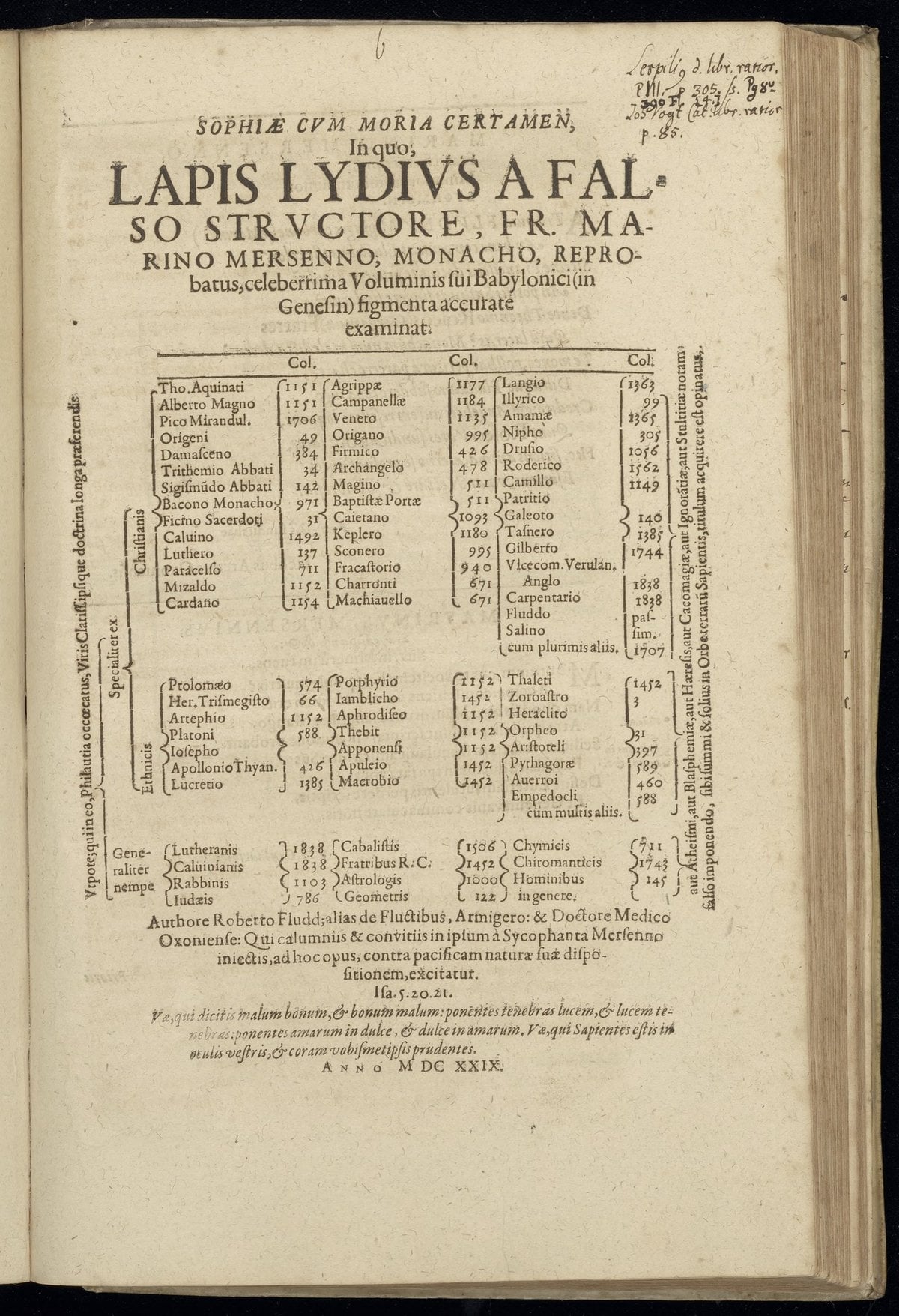
The Contest of Wisdom with Folly
Fludd, Robert
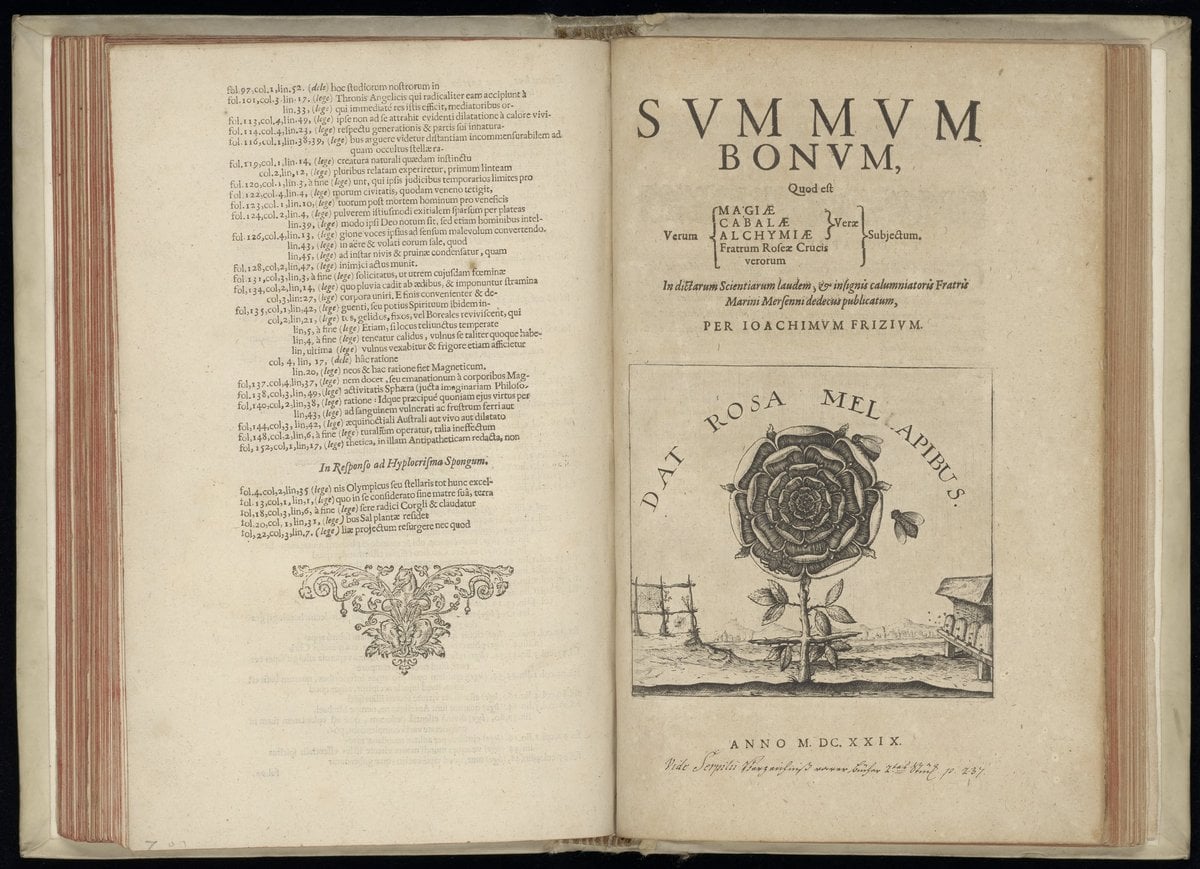
The Highest Good
attr. Fludd, Robert
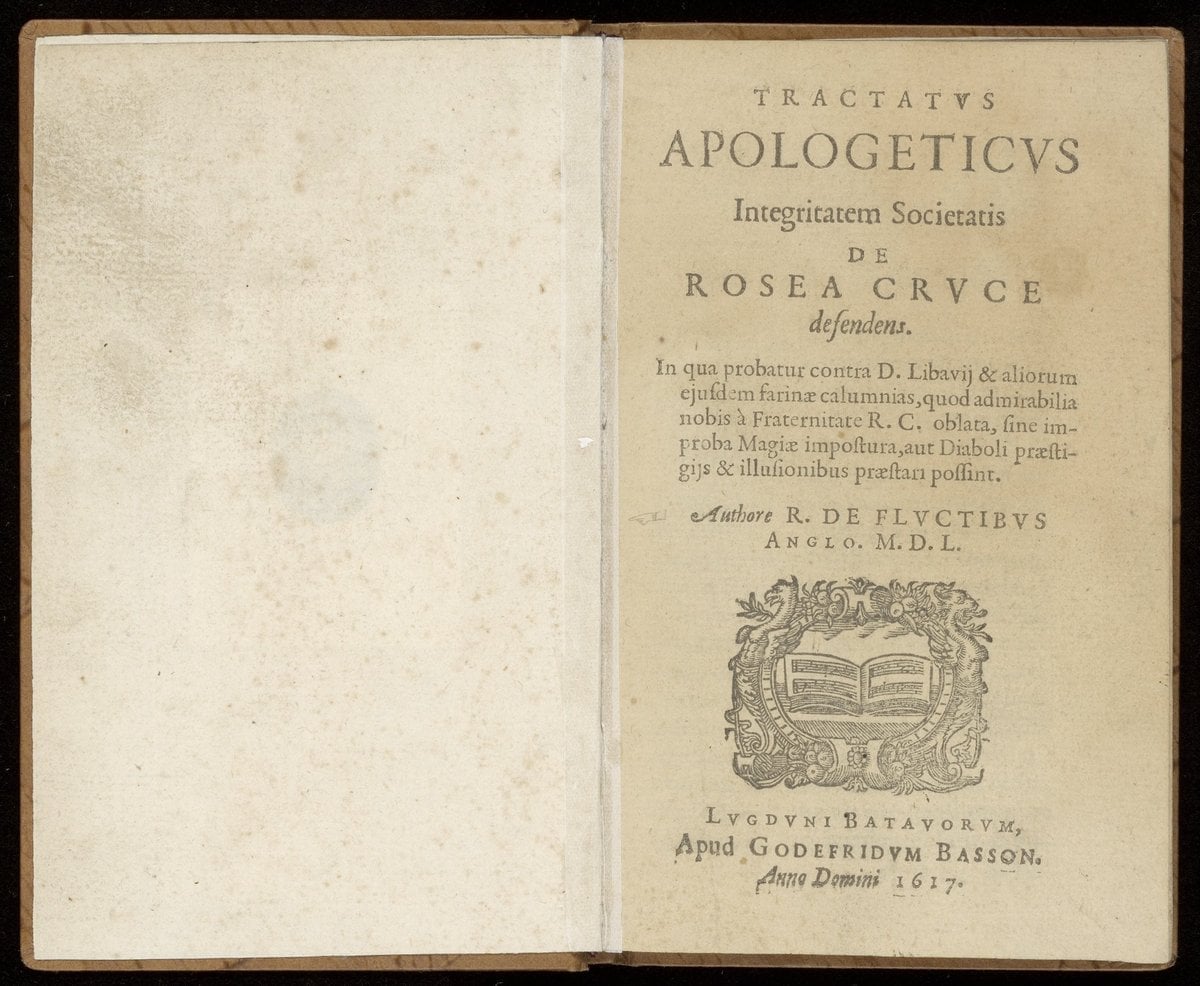
Apologetic Treatise Defending the Integrity of the Society of the Rose Cross
Fludd, Robert
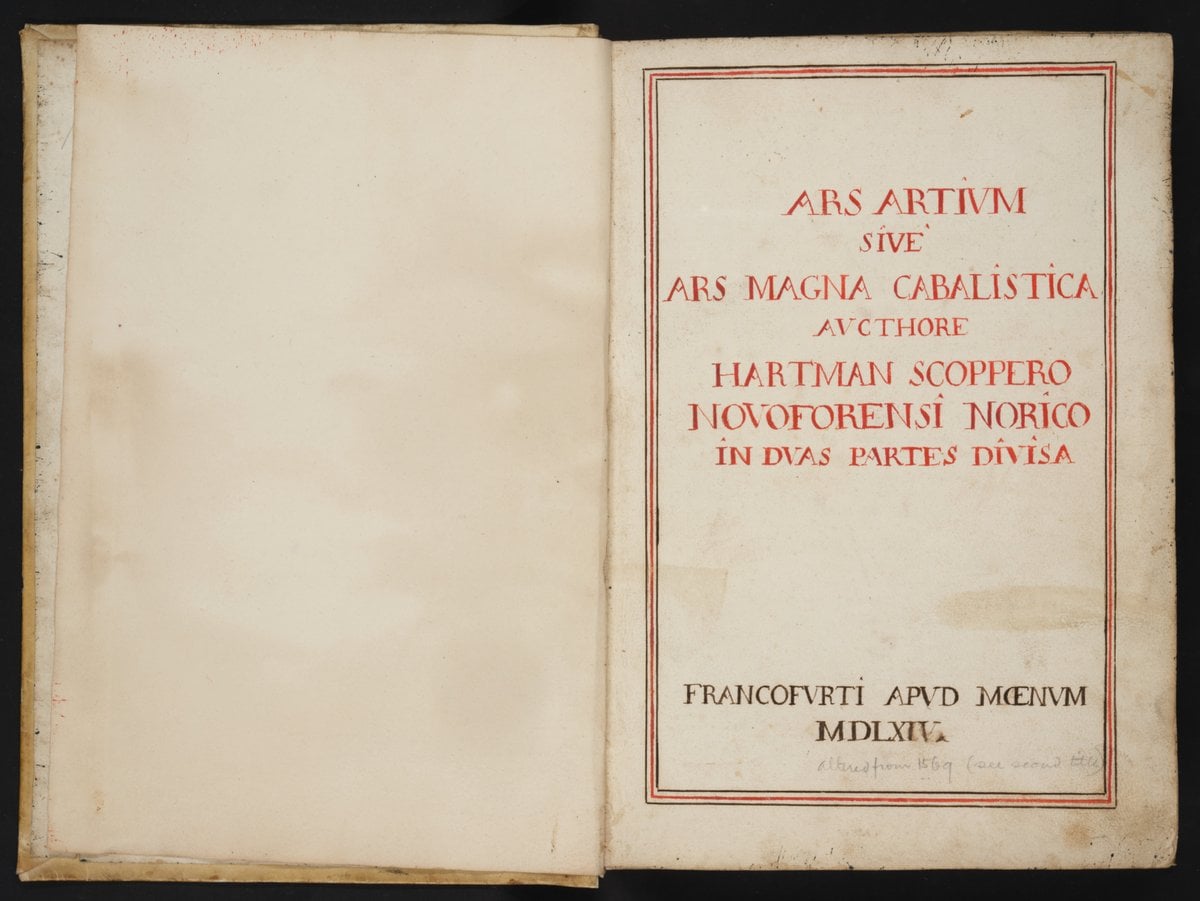
Great Kabbalistic Art — Hartmann Schopper, 1564-1569
Hartmann Schopper