


Music, Harmony & Resonance
Pythagorean Harmonics to Baroque Music Theory
Sub-collections

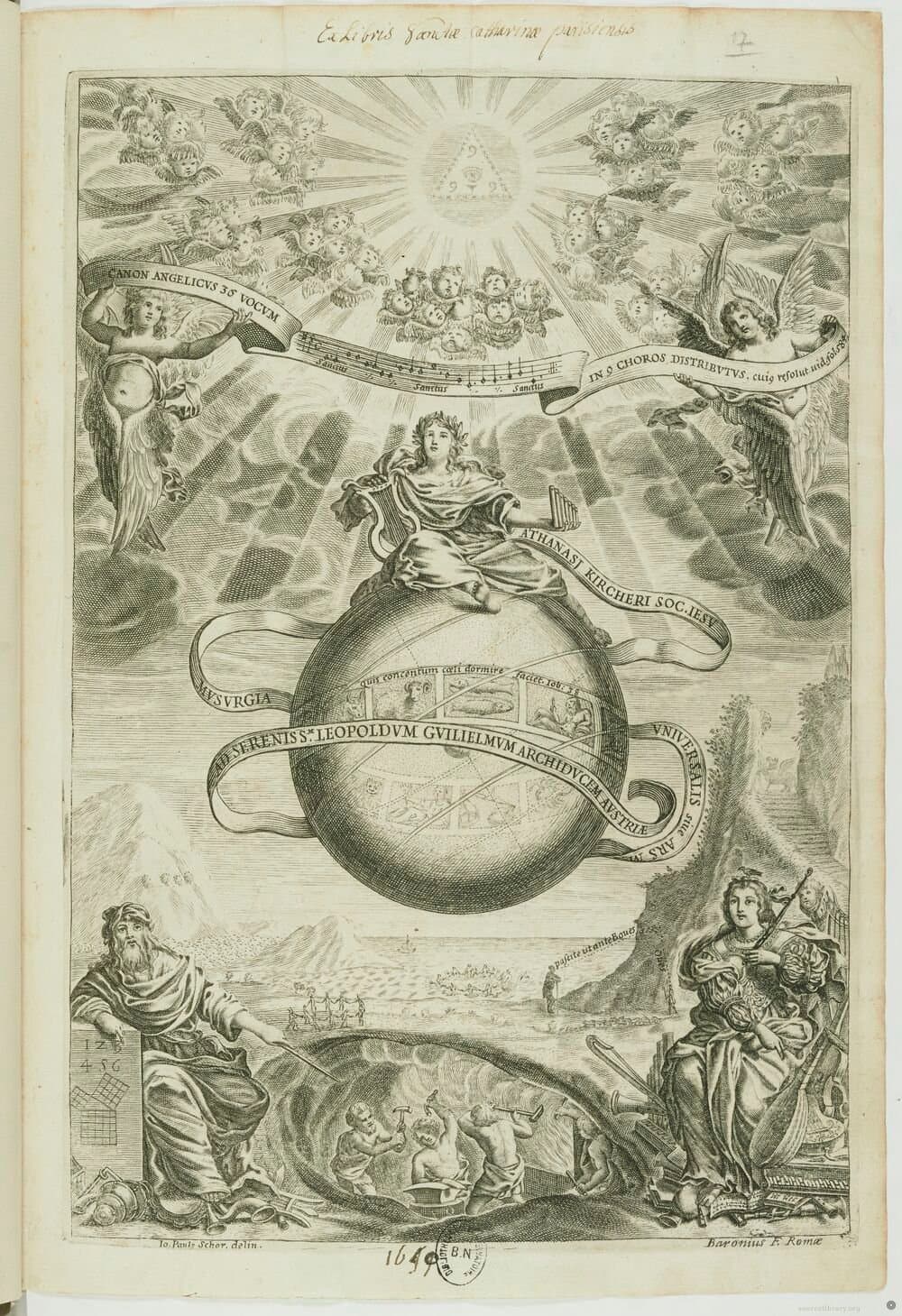
Illustrations
Browse all492 images extracted
This compelling hand-colored woodcut, titled 'EMBLEMA II. De secretis Natura. Nutrix ejus terra est.' (Emblem II. On the secrets of Nature. The Earth is its nurse.), serves as a powerful allegory for the nurturing and life-giving essence of Mother Earth. A central, monumental female figure embodies Nature, her torso transformed into a globe from which human infants emerge, symbolizing humanity's origin and dependence on the planet. Flanking her are scenes of animalistic nurturing: a goat suckling two infants, and a dog or wolf (alluding to classical myths like Romulus and Remus) also providing sustenance to infants. This emblem beautifully encapsulates Renaissance thought on the interconnectedness of all life and the Earth's role as the universal provider, a theme central to early modern natural philosophy and emblem books.
This striking illustration depicts the celestial bodies Sol and Luna as personified figures riding in chariots across the heavens. In the upper register, Sol is shown crowned and holding a banner, drawn by a team of horses against a vibrant red background; below, Luna wears a horned headdress and holds a sphere, pulled by a pair of oxen against a deep blue field. This imagery exemplifies medieval cosmological traditions that visualized the movements of the sun and moon through classical mythological archetypes.
This woodcut illustrates the five Platonic solids, which Johannes Kepler identified as the 'figurae mundanae' or cosmic figures. In 'Harmonices Mundi', Kepler used these geometric forms to explain the structure of the universe, associating them with the classical elements and the spacing of the planetary spheres.
A compelling allegorical scene depicting a powerful, muscular male figure, possibly an elemental spirit or a personification of the wind (Boreas), with his hair and outstretched arms dissolving into swirling clouds. The figure stands in a verdant landscape with a body of water and distant classical architecture, suggesting a primordial or mythical setting. This illustration, Emblema I from a historical book, is deeply rooted in alchemical philosophy, referencing the Emerald Tablet's dictum 'The wind carried him in its belly,' symbolizing the generation and transformation of matter. The hand-colored woodcut technique enhances the dramatic and symbolic impact of this Renaissance-era depiction of natural forces and alchemical principles.
This engraving from Johannes Kepler's 'Harmonices Mundi' (1619) displays various geometric figures and tilings. Kepler used these mathematical proofs to argue for a divinely ordered universe based on harmonic proportions and geometric archetypes.
This iconic engraving from Robert Fludd's 'Utriusque Cosmi Historia' presents a visual summary of the universe as a 'Mirror of Nature.' At the top, the hand of God holds a chain linked to the female personification of Nature, who in turn guides a monkey representing human Art or ingenuity. The surrounding concentric circles detail the hierarchy of existence, from the terrestrial elements and biological kingdoms to the celestial spheres of the planets and fixed stars.

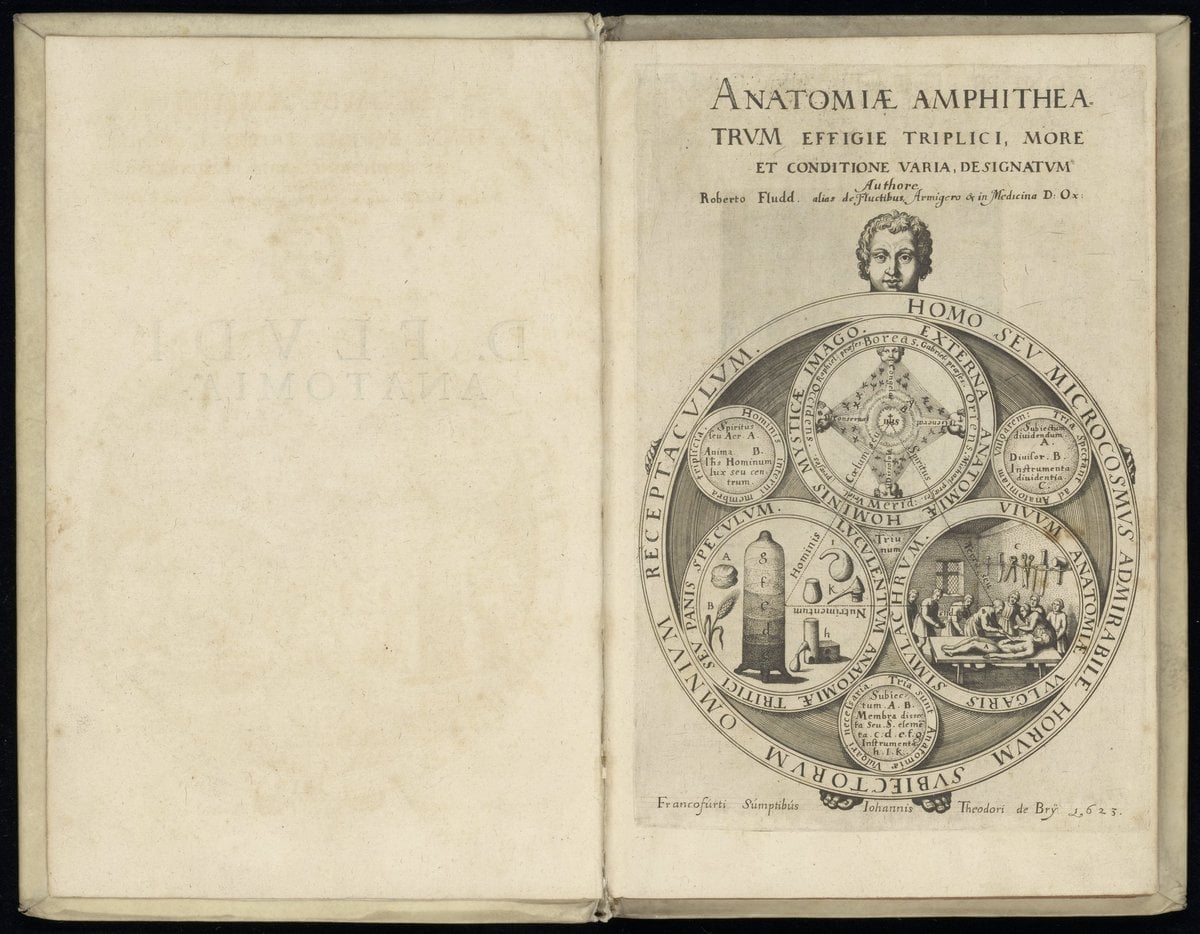
This intricate frontispiece from Robert Fludd's 1623 work, 'Anatomiae Amphitheatrum', illustrates the concept of man as a microcosm. The central circular diagram integrates mystical cosmology, a practical anatomical dissection scene, and the 'anatomy' of bread, reflecting the period's holistic view of science, religion, and the natural world.

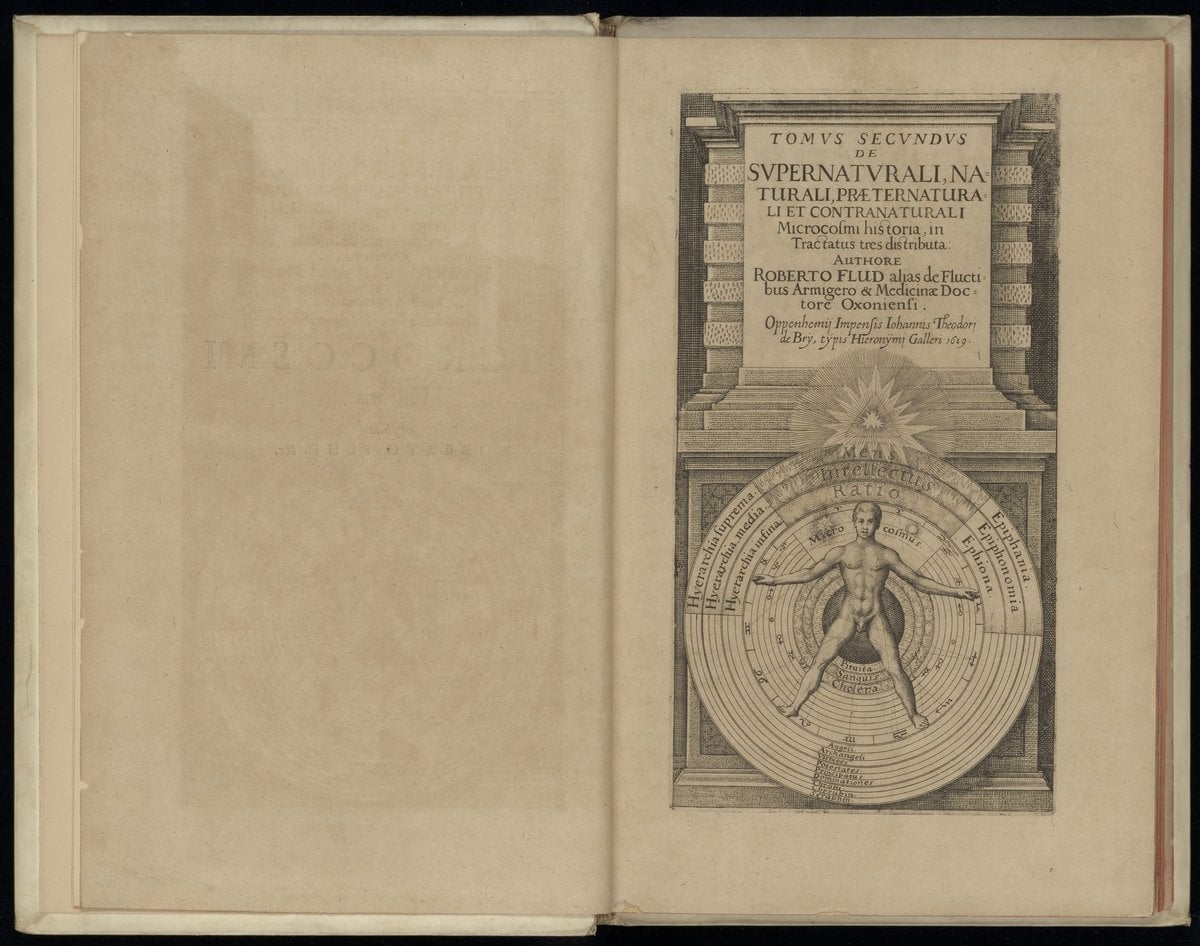
This elaborate frontispiece for Robert Fludd's 'Utriusque Cosmi Historia' (1617) serves as a visual manifesto for the Renaissance concept of the correspondence between the human body and the universe. At the center, a man is depicted as the 'Microcosmus' within the 'Macrocosmus,' surrounded by concentric circles representing the celestial spheres, the zodiac, and the elements. The engraving, likely by Johann Theodor de Bry, masterfully integrates text and image to illustrate the complex metaphysical theories of the period.

This profound engraving illustrates the divine command 'FIAT' (Let there be) as the catalyst for the creation of the universe. From Robert Fludd's monumental work on the macrocosm and microcosm, the image depicts the emergence of light and spirit from the primordial darkness, symbolized by the radiant ring and the descending dove of the Holy Spirit.
Visual Art
Browse all art →2 works of visual art in this collection
 painting
Devagandhari Ragini — Women Worshiping a Shiva Linga
Anonymous (Pahari)
A Pahari miniature painting depicting a ragini—a personification of a musical mode—seated with an attendant.
 painting
Maru Ragini — Ragamala (Garland of Melodies)
Anonymous (Rajput, Amber/Deccan)
A Ragamala painting depicting the Maru Ragini, showing a royal couple on a palace balcony with attendants below and musicians performing.
Works on music theory, acoustics, and the philosophical tradition that understood harmony as a key to cosmic order. These texts trace the idea — from Pythagoras through Kepler — that mathematical ratios governing musical intervals also govern the structure of the universe.
The collection includes Al-Farabi's Kitab al-Musiqa al-Kabir (c. 950), one of the most important medieval treatises on music theory; Heinrich Glareanus's Dodecachordon (1547), which reshaped Western modal theory; and Marin Mersenne's Harmonie Universelle (1636–1637), a landmark of acoustical science. Francesco Giorgi's De Harmonia Mundi (1525) and Athanasius Kircher's Musurgia Universalis (1650) represent the tradition of cosmic harmony — music as metaphysical principle rather than mere art. Michael Maier's Atalanta Fugiens (1618), with its alchemical fugues, sits at the intersection of music, emblem, and esoteric philosophy.
Essential Reading
The foundational texts of this tradition
The Universal Art of Music, Volume II
Athanasius Kircher, 1650First Complete Translation
Continuing Kircher's encyclopedic vision, this second volume delves deeper into the practical and theoretical aspects of music, further cementing its role as a key to understanding the universe's divine order. It completes the most comprehensive musical treatise of the Baroque era.

The Harmony of the World
Kepler, Johannes, 1619
Kepler's magnum opus unites geometry, music, and astronomy, revealing the mathematical harmonies that govern planetary motion and the structure of the cosmos. It is essential for grasping the profound connection between music and the 'music of the spheres' in early modern science.
Universal Harmony, Volume I
Marin Mersenne, 1636First Complete Translation
Mersenne's 'Universal Harmony' is a monumental work that bridges ancient mystical harmony with the empirical physics of the Scientific Revolution. This first volume explores the physical properties of sound and the mathematical basis of musical intervals.
Universal Harmony, Volume II
Marin Mersenne, 1637First Complete Translation
The second volume of Mersenne's comprehensive treatise continues to explore the scientific and philosophical dimensions of music, making it a crucial source for understanding 17th-century acoustics and the rationalization of musical theory.

The Great Book of Music
Al-Farabi, 950First Translation
Al-Farabi's 'Great Book of Music' is a landmark of Islamic intellectual history, meticulously detailing music theory and practice while bridging ancient Greek concepts with the rich musical traditions of the Islamic Golden Age. It is a foundational text for understanding non-Western musical thought.
Important Works
Significant texts that deepen understanding
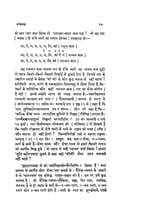
Compendium of Music
Dattila, 50
The 'Dattilam' is one of the earliest and most significant Sanskrit treatises on ancient Indian music theory, systematically detailing concepts of melody and rhythm. It offers a foundational insight into the sophisticated musical traditions of India.
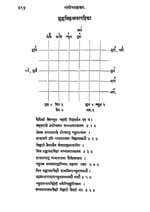
Ocean of Music, Volume 1
Sarngadeva, 1898
Sarngadeva's 'Ocean of Music' is a monumental synthesis of Indian musicology, covering both theoretical and practical aspects of music, dance, and drama. It remains an unparalleled resource for understanding the depth and breadth of classical Indian musical thought.

Practical Music
Bartolomeo Ramis de Pareja, 1482
Ramis de Pareja's 'Practical Music' is a revolutionary text that challenged long-standing authorities on tuning and intervals, marking a significant transition from medieval mysticism to Renaissance humanism in music theory. It is crucial for understanding the development of Western harmony.

On the Harmony of the World
Francesco Giorgi (Zorzi), 1525First Translation
Giorgi's 'On the Harmony of the World' is a breathtaking Renaissance synthesis of Christian theology, Neoplatonic philosophy, and Kabbalah, positing the universe as a grand musical composition. It is essential for understanding the mystical dimensions of cosmic harmony.

Atalanta Fleeing
Michael Maier, 1618
Maier's 'Atalanta Fleeing' is a unique 17th-century 'multimedia' work that synthesizes alchemy, music, and mythology into a transformative journey. It offers a fascinating perspective on the interplay between sound, symbolism, and the pursuit of esoteric knowledge.

The Proscenium of Truth
Robert Fludd, 1621First Translation
Fludd's 'Proscenium of Truth' is a provocative manifesto of Hermetic philosophy and a direct challenge to Kepler's mathematical approach to cosmic harmony. It illuminates the intellectual debate between mystical and scientific worldviews in the 17th century.
The Symphonic Monochord of the World
Robert Fludd, 1622First Translation
This work by Robert Fludd serves as a vigorous rebuttal to Kepler's mathematical criticisms, defending a system of cosmic harmony rooted in Hermetic and Neoplatonic traditions. It is vital for understanding the philosophical clash between mystical and empirical science.
Defense of The Harmony of the World
Johannes Kepler, 1622
Kepler's 'Defense of The Harmony of the World' is a masterclass in scientific rigor, where he defends his life's work against the hermetic mysticism of Robert Fludd. This text provides crucial insight into the intellectual battles that shaped the Scientific Revolution.

Phonurgia Nova
Athanasius Kircher, 1673First Complete Translation
In 'Phonurgia Nova,' Kircher presents a revolutionary 'marriage' between natural philosophy and mechanical art, transforming the mysterious behavior of sound into a rigorous mathematical discipline. It is a key text for understanding the early history of acoustics.
Also Notable
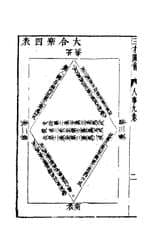
Collected Illustrations of the Three Realms, Volume 73
王圻, 王思義, 1609First Complete Translation
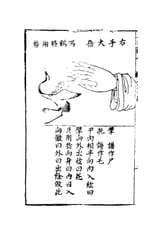
Sancai Tuhui (Vol. 65)
王圻, 王思義, 1609First Complete Translation
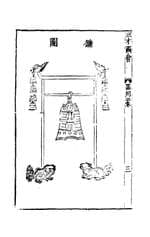
Sancai Tuhui (Vol. 45)
王圻, 王思義, 1609First Complete Translation
The Musician and Master
Pietro Cerone, 1613First Complete Translation
A Philosophical Essay of Musick
Francis North, Baron Guilford, 1677

A General Collection of the Ancient Irish Music
Edward Bunting, 1796
All Books
Browse Full Catalog→211 books in this collection
Second Volume of the History of the Microcosm
Fludd, Robert
On the Triple Anatomy
Fludd, Robert

Atalanta Fleeing
Maier, Michael
Practical Geometry
Bovelles, Charles de
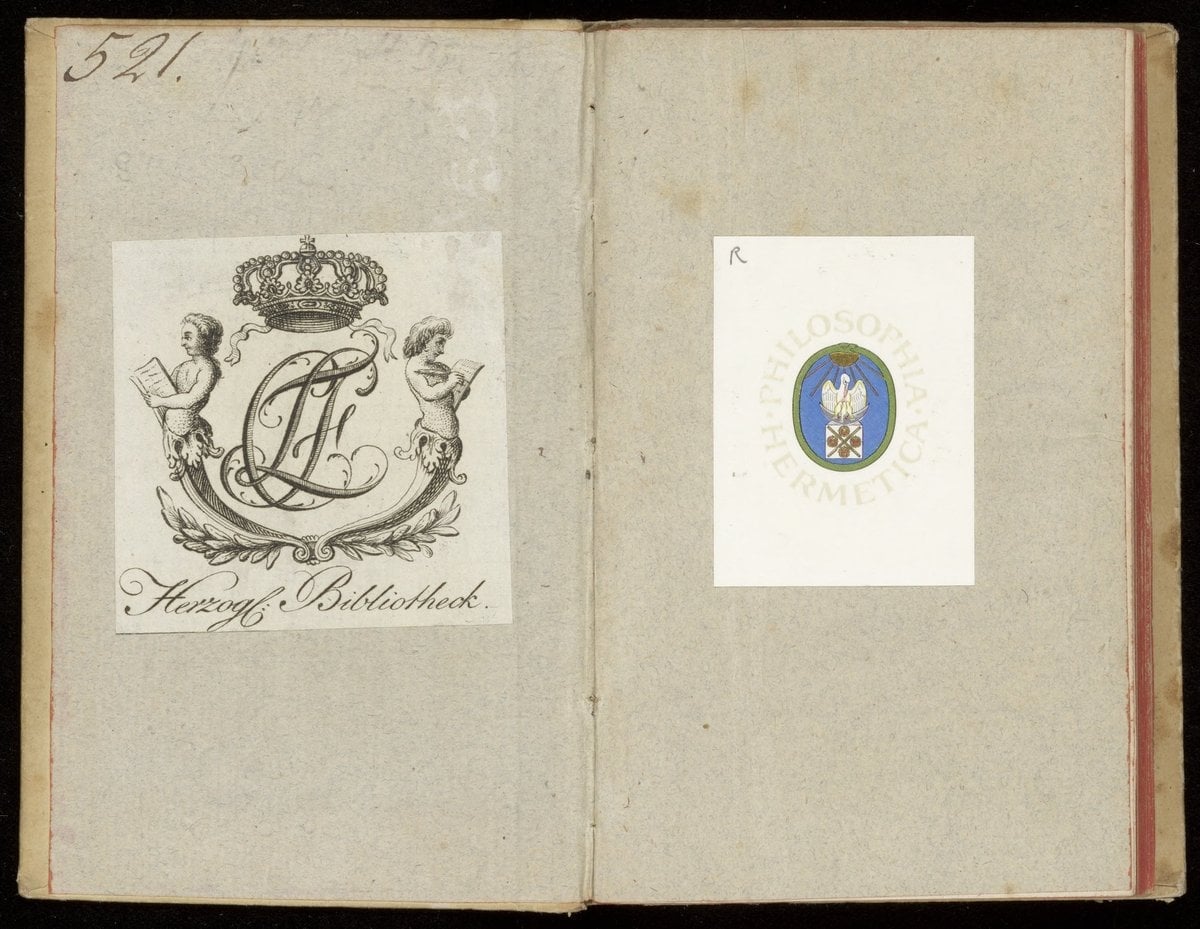
Defense of the Authenticity of the Rosicrucian Society
Fludd, Robert
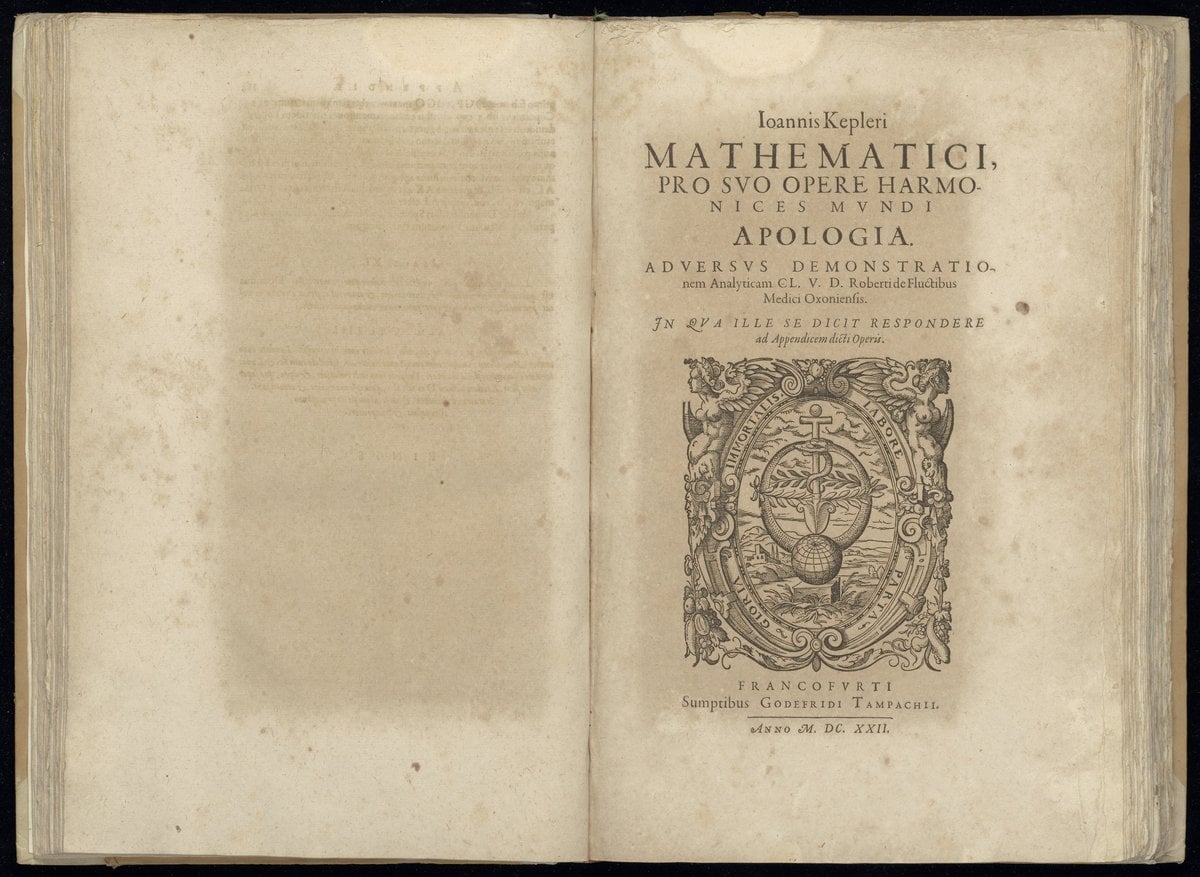
Apology for The Harmony of the World
Kepler, Johannes
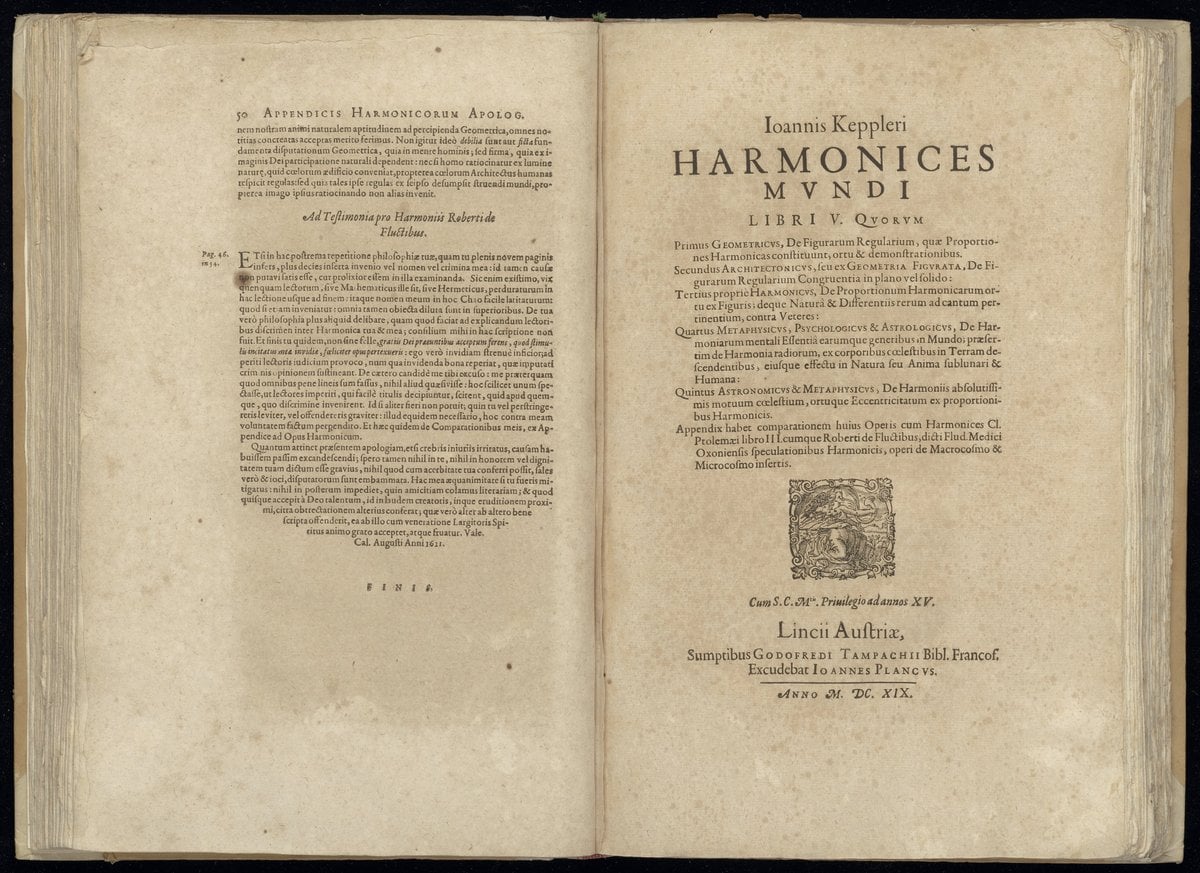
The Harmony of the World
Kepler, Johannes
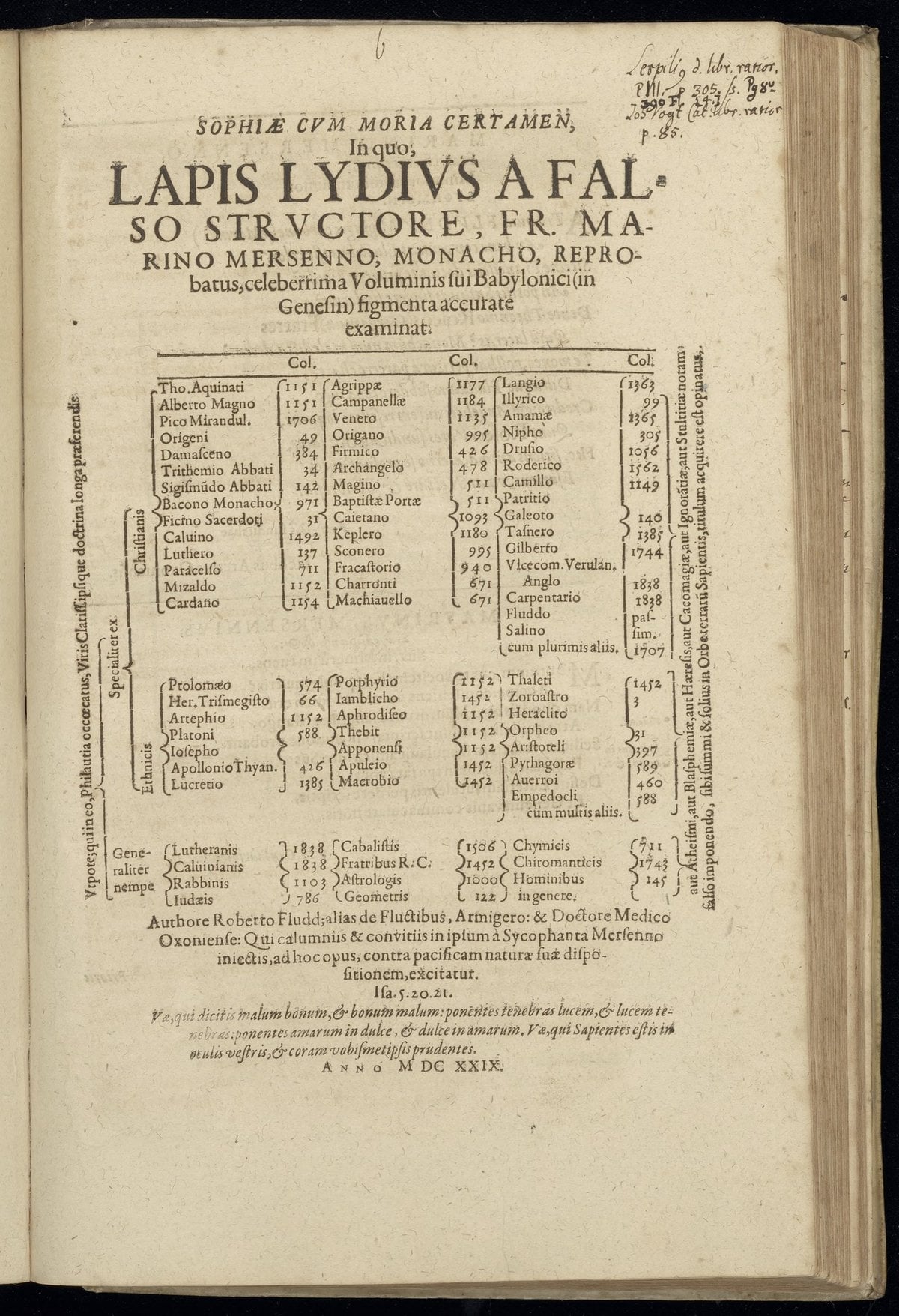
The Contest of Wisdom with Folly
Fludd, Robert
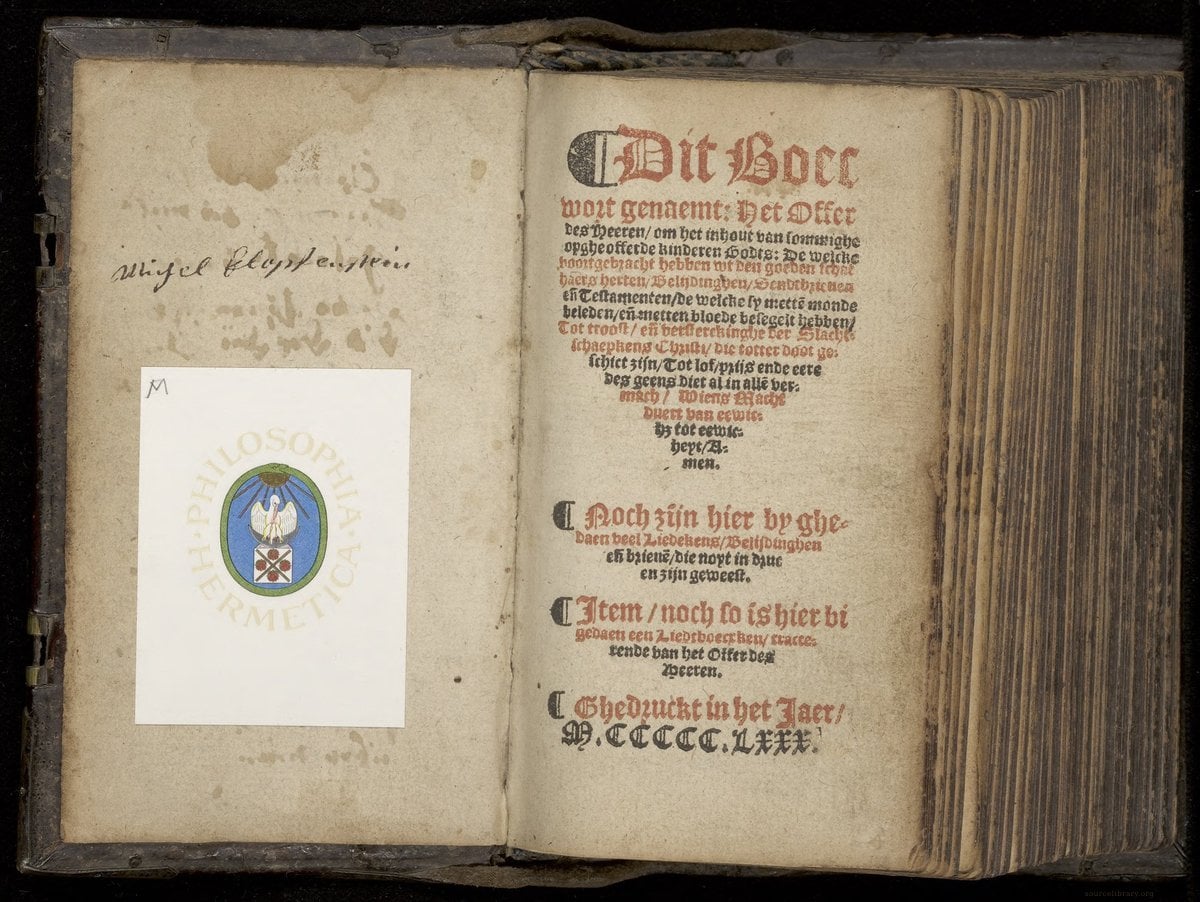
The Sacrifice of the Lord
Anonymous

Literary History of the Troubadours
attr. Millot, Claude-François-Xavier
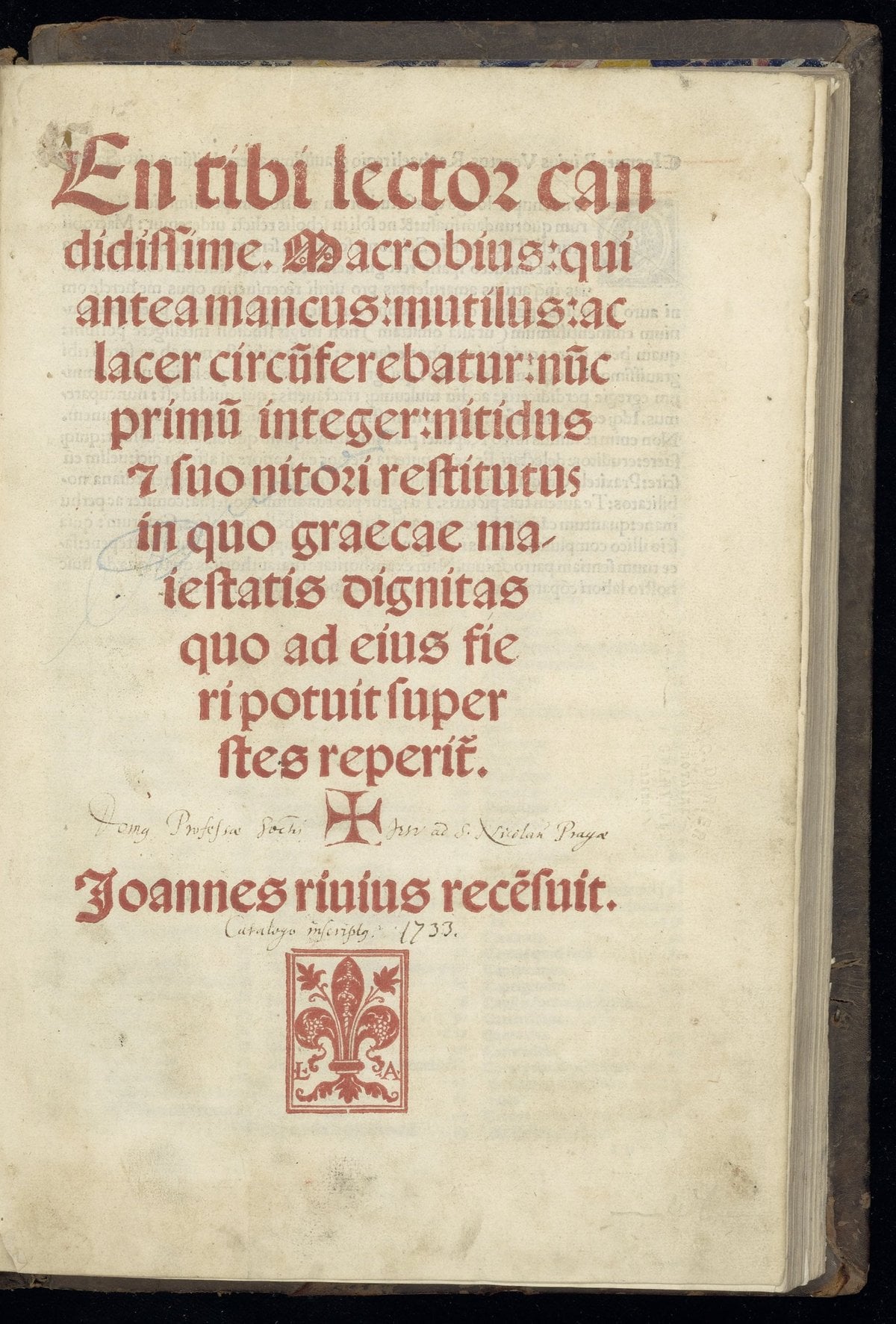
The Collected Works of Macrobius
Macrobius, Ambrosius Theodosius
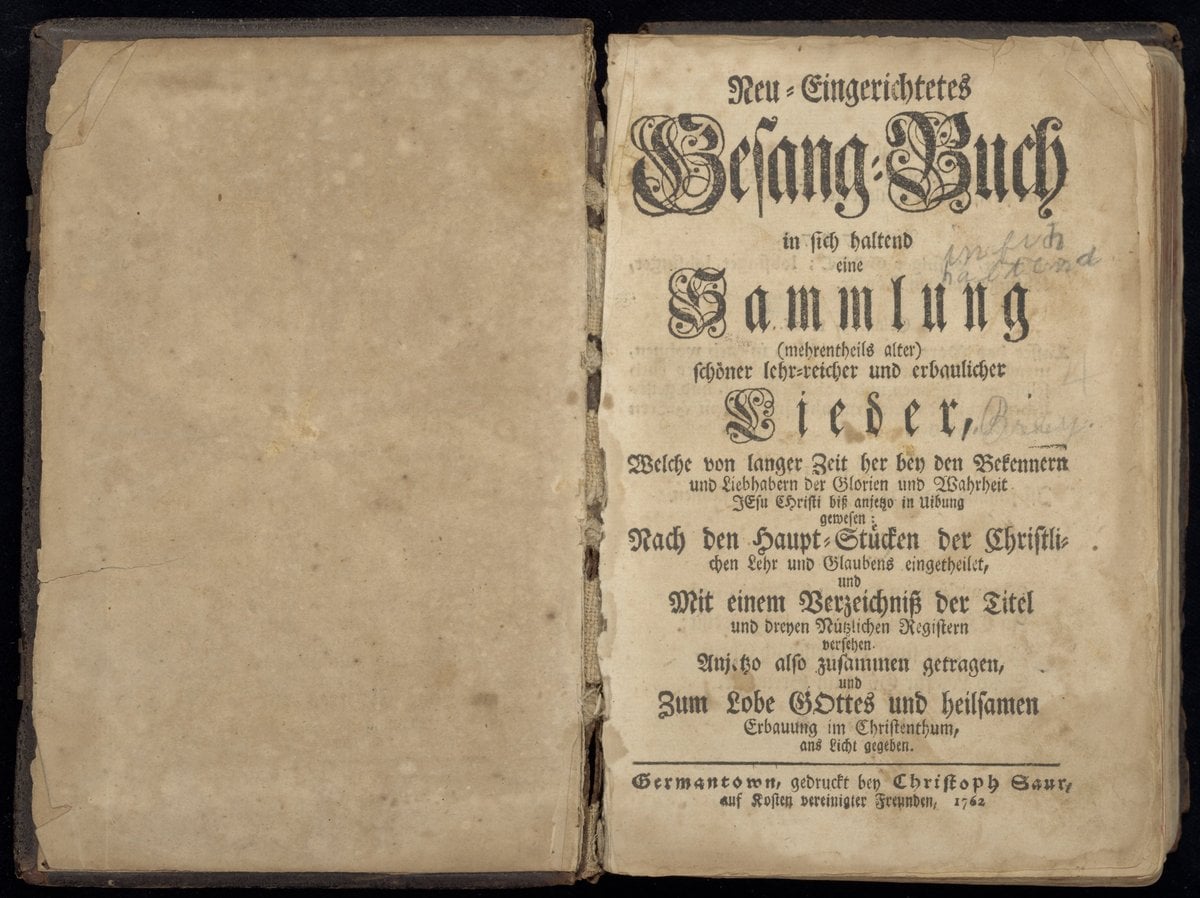
Newly Arranged Hymnbook
Unknown
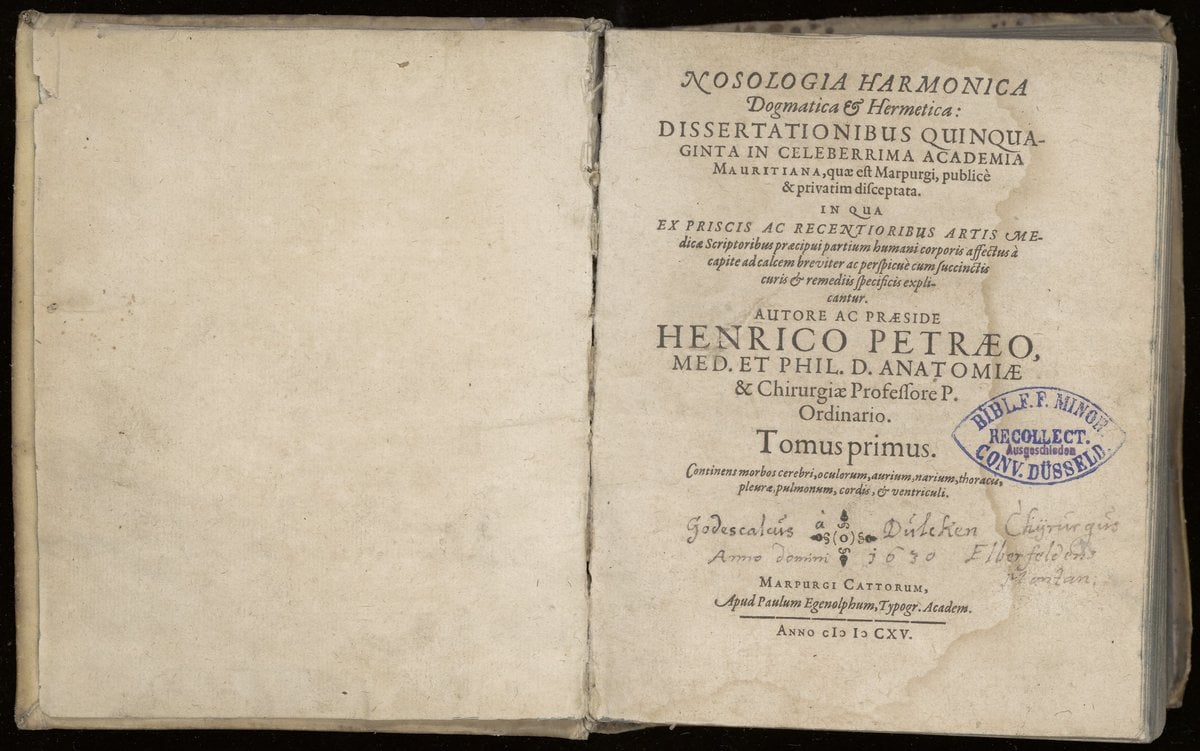
Harmonic, Dogmatic, and Hermetic Nosology
Petraeus, Henricus
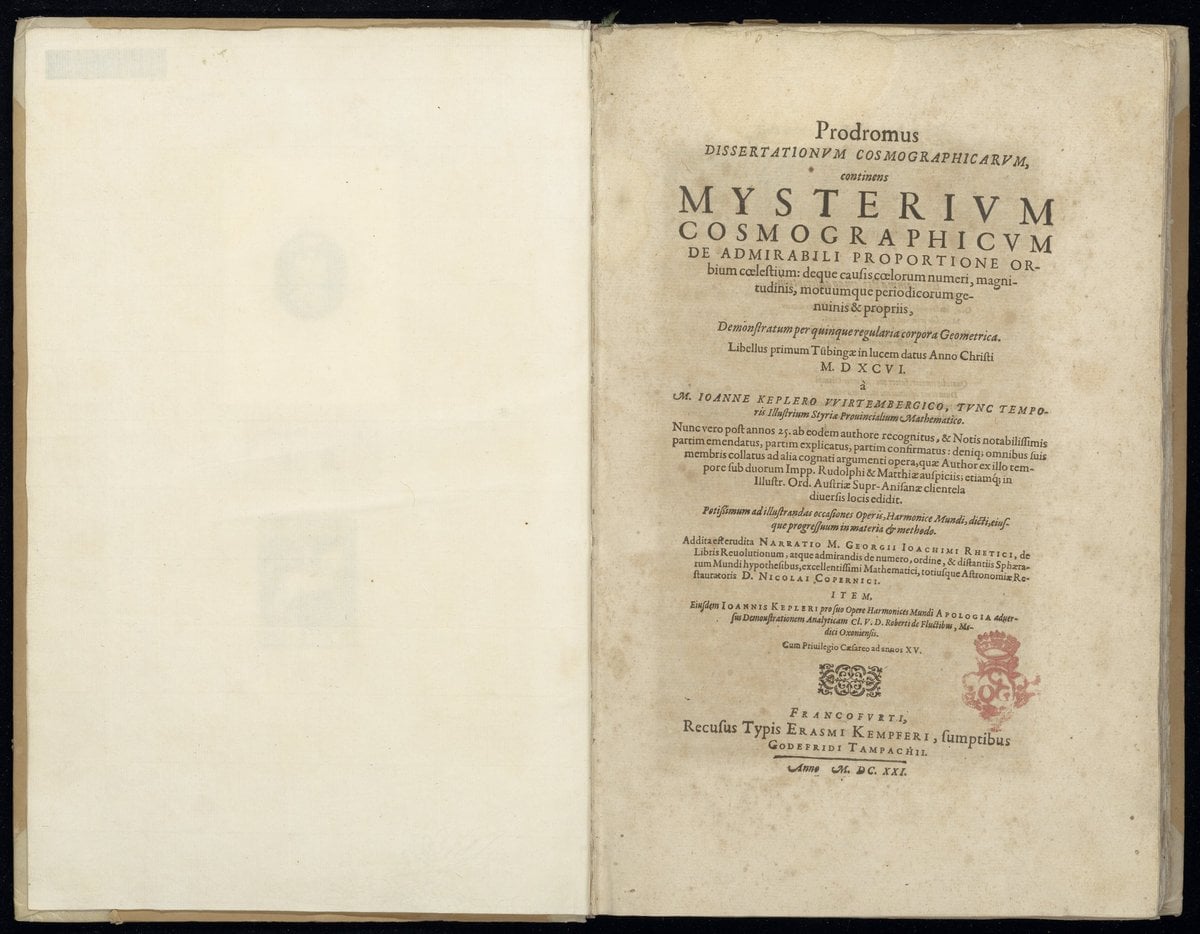
Forerunner of the Cosmographic Dissertations
Kepler, Johannes