


Myths & Epics
Gilgamesh, Enmerkar, Lugalbanda, the Flood — the narrative imagination of the ancient Near East
Illustrations
Browse all18 images extracted from 3 books
This plate features the Yale Tablet, a crucial Old Babylonian source for the Epic of Gilgamesh. The fragments display the intricate cuneiform script used to record one of the world's oldest known works of literature, detailing the adventures of King Gilgamesh.
This engraving is the official seal or frontispiece of the Andover Theological Seminary, established in 1807. It features a classical temple structure with the Hebrew name of God (יהוה) in a radiant sunburst above and an open Bible below, symbolizing the institution's commitment to divine revelation and scholarly pursuit.
This vibrant miniature from a 1544 Armenian version of the 'Romance of Alexander' depicts Alexander the Great (right) in dialogue with a seated figure, likely his tutor Aristotle or a religious authority. The use of gold leaf, rich pigments, and celestial symbols like the starry firmament reflects the legendary, almost divinized stature of Alexander in medieval Armenian tradition. The figures are rendered in a stylized, flat manner characteristic of the period's manuscript art, emphasizing their symbolic importance over naturalistic representation.
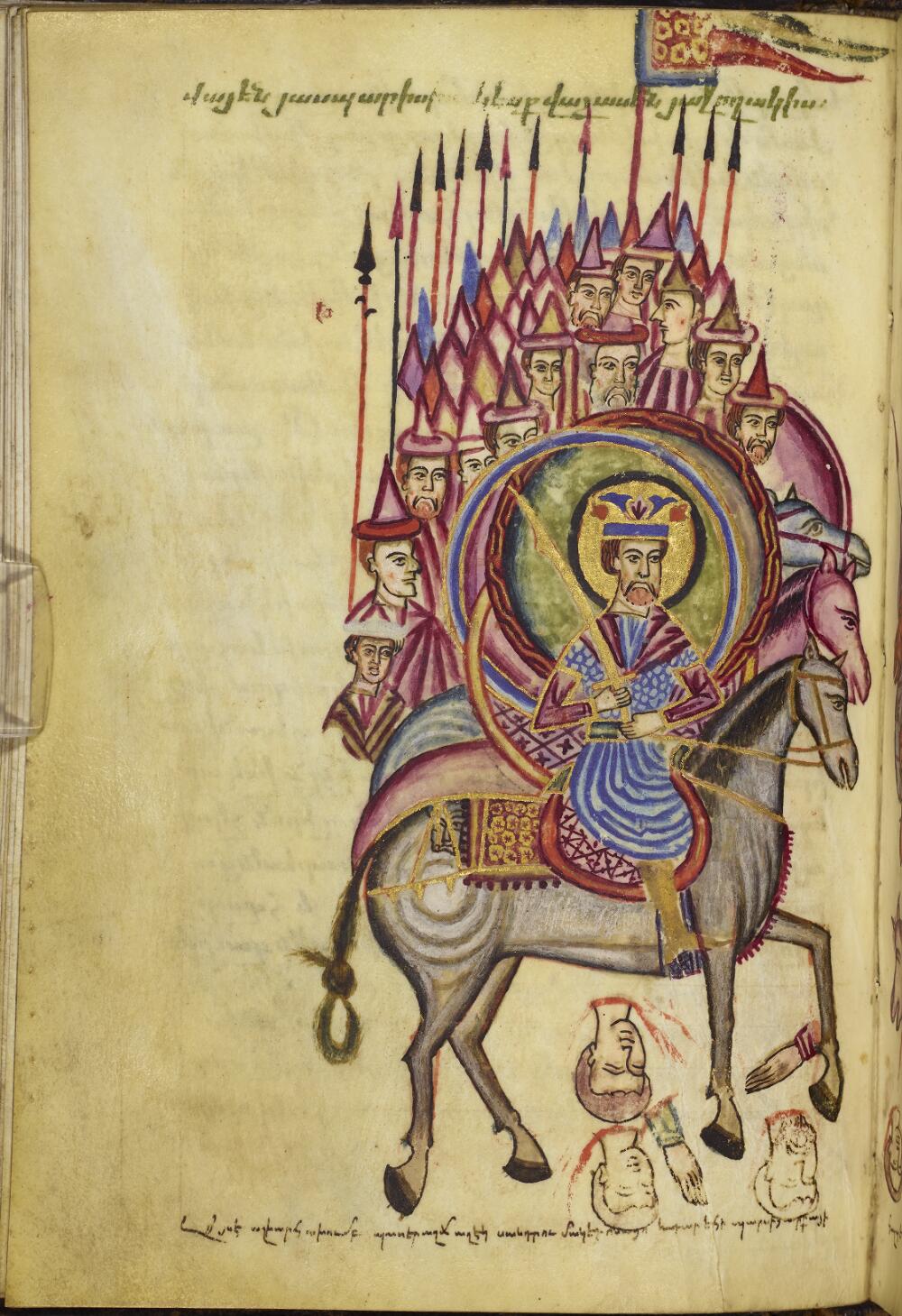
This vibrant miniature from a 1544 Armenian version of the 'Romance of Alexander' depicts the legendary conqueror leading his army into battle. Alexander is distinguished by a golden halo, a common iconographic feature in this tradition that elevates him to a heroic, almost saint-like status, while the gruesome imagery of severed limbs beneath his horse's hooves serves as a stark symbol of his military triumph.
All Books
Browse Full Catalog→48 books in this collection