Renaissance Letters & Humanism
Petrarch, Boccaccio, humanist dialogues — the culture of the studia humanitatis
Illustrations
Browse all256 images extracted
A detailed technical drawing of a giant crossbow, or 'balester', designed by Leonardo da Vinci. This illustration from the Codex Atlanticus showcases Leonardo's fascination with military engineering and his ability to conceptualize large-scale mechanical devices. The drawing includes intricate details of the carriage, the bow's construction, and the mechanical trigger mechanism, accompanied by his characteristic mirror writing.
This woodcut illustrates the 'Triumph of Death' (Triumphus Mortis), a central theme from Petrarch's allegorical poem 'I Trionfi'. A skeletal personification of Death stands atop a triumphal chariot drawn by oxen, which ruthlessly tramples a mass of people from all walks of life, signifying the universal and inescapable nature of mortality. The composition is framed by an elaborate decorative border characteristic of early modern book production.
This engraving depicts the iconic visage of Leonardo da Vinci, characterized by his long, venerable beard and thoughtful expression. As a frontispiece to a collection of his writings, it serves to humanize the polymath whose intellectual legacy is explored within the volume.
This plate features the celebrated self-portrait of Leonardo da Vinci, originally executed in red chalk. It depicts the artist in his later years, characterized by his long, flowing beard and contemplative profile, embodying the Renaissance ideal of the 'universal man'. This reproduction is from a 1900 collection of his writings, sourced from the Royal Library at Windsor.
This iconic red chalk drawing is widely accepted as a self-portrait of Leonardo da Vinci, executed around 1512. It depicts the artist as a venerable sage with a long, flowing beard and deeply lined face, embodying the Renaissance ideal of the 'universal man'.
This striking profile portrait captures the weathered features of an elderly man, exemplifying Leonardo da Vinci's deep interest in human physiognomy and the physical manifestations of aging. Likely a reproduction of one of his many anatomical sketches, the illustration uses intricate cross-hatching to define the subject's intense expression and the textures of his skin and garments.

This plate features a series of dynamic sketches exploring the form of the equestrian monument. The central figure shows a rider on a rearing horse, captured with energetic, fluid lines that suggest a study for a sculpture or a larger painting. Below, smaller variations depict the horse and rider atop ornate pedestals, illustrating the artist's process in conceptualizing a public monument.

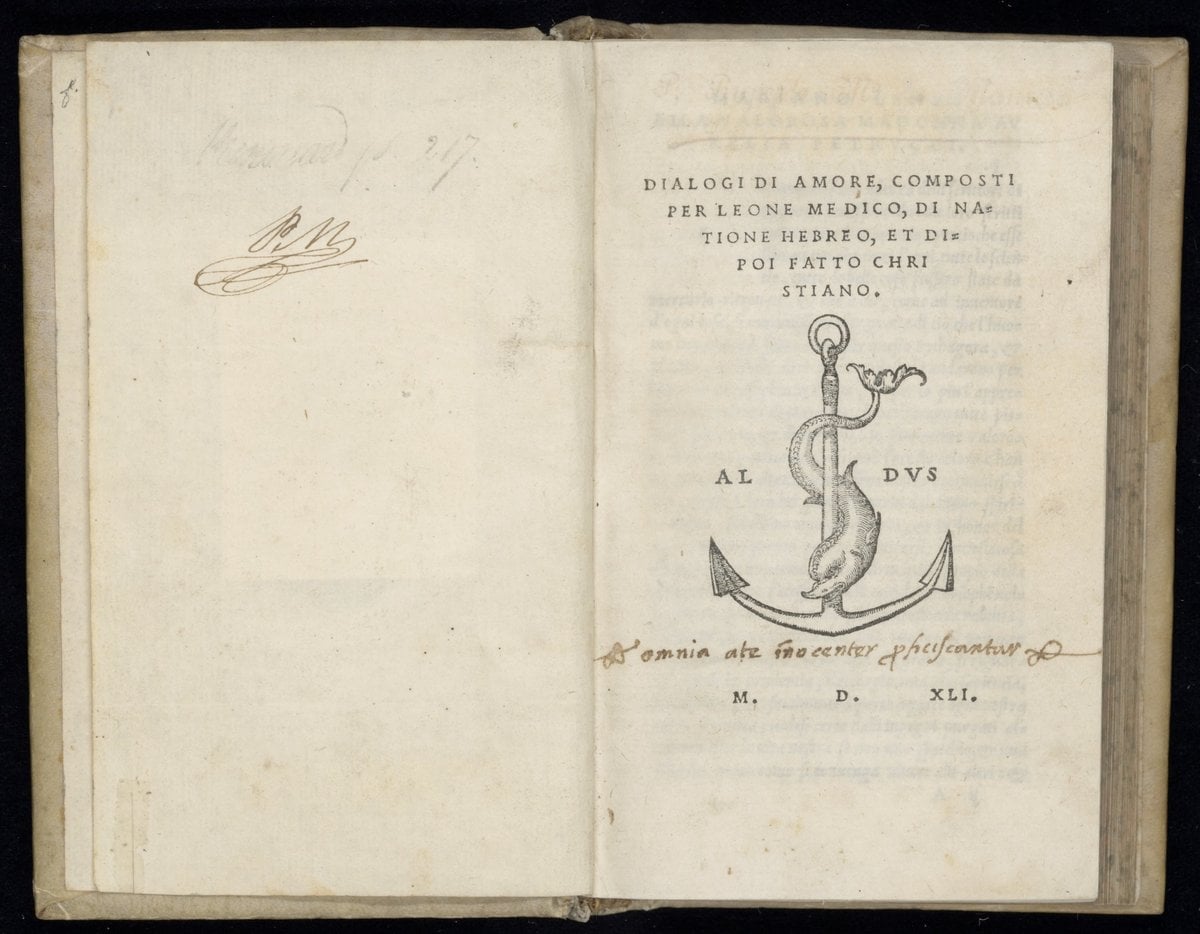
This is the celebrated printer's mark of Aldus Manutius, the renowned Venetian printer and humanist. The image of a dolphin entwined around an anchor symbolizes the motto 'Festina Lente' (make haste slowly), balancing the speed of the dolphin with the stability of the anchor.

This plate features a series of equestrian studies, likely reproductions of drawings by Leonardo da Vinci for a planned monument. The sketches capture the powerful musculature and dynamic movement of the horse, demonstrating the artist's profound understanding of animal anatomy and proportion.
All Books
Browse Full Catalog→86 books in this collection