


Sacred Books of the East
Max Müller's 50-volume Victorian attempt to put all religions on one shelf.
Illustrations
Browse all14 images extracted
This portrait depicts the Persian philosopher and theologian Al-Ghazali in traditional scholarly attire, holding a book to symbolize his intellectual contributions. The woodcut-style illustration serves as a visual introduction to the author of this influential spiritual autobiography.
This cover illustration for James Legge's translation of the I Ching features a systematic arrangement of the sixty-four hexagrams. The circular composition and radiating lines evoke a sense of cosmic order and the cyclical nature of change central to the text's philosophy, reflecting the mathematical precision inherent in this ancient system of divination.
This emblem serves as the visual identity for 'The Wisdom of the East' series, published by John Murray. It features a stylized rising sun casting rays over water, a classic metaphor for the 'Orient' and the dawning of knowledge. The simple, bold lines are characteristic of early 20th-century book design and branding.
This detailed map illustrates the southeastern coast of China and the island of Formosa (modern-day Taiwan) as they were documented in 1904. It highlights provincial divisions, major urban centers, and significant geographical features like the Yangtze River and Lake Poyang, providing essential spatial context for the historical events discussed in the text.
The Harvard University coat of arms is depicted here as a library mark, featuring three open books that spell out 'VERITAS,' the Latin word for truth. This emblem represents the foundational values of the university and its library, signifying a dedication to the pursuit of knowledge and scholarly integrity.
This engraving depicts the official seal of the Library of Congress, which was established in 1800. An American bald eagle with outstretched wings is perched atop a circular frame containing the institution's name and founding date. This emblem represents the authority and national significance of the United States' oldest federal cultural institution.

This engraving depicts the official seal of the Library of Congress, which was established in 1800. An American bald eagle with outstretched wings is perched atop a circular band inscribed with the institution's name, representing the preservation of national knowledge and heritage.

This diagram represents the 'He Tu' or 'River Map,' a foundational symbol in ancient Chinese cosmology and numerology. It uses patterns of light (odd/yang) and dark (even/yin) circles to illustrate the 'numbers of heaven and earth,' which are central to the philosophical interpretation of the I Ching. According to legend, this scheme was revealed to the mythical sage Fuxi on the back of a dragon-horse emerging from the Yellow River.
Between 1879 and 1910, Friedrich Max Müller edited 50 volumes of translations from the Hindu, Buddhist, Zoroastrian, Islamic, Confucian, Taoist, and Jain traditions for Oxford University Press. Patronizing in places, groundbreaking in ambition — the first serious attempt to make the world's religious literatures available in English. All 50 volumes.
Essential Reading
The foundational texts of this tradition
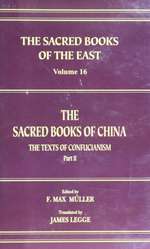
The Dhammapada (Sacred Books of the East, Vol. 10)
F. Max Müller / V. Fausbøll (trans.), 1881
This is an original volume from the core 'Sacred Books of the East' series, edited by Max Müller himself.
Tao Te Ching
Lao Tzu / James Legge (trans.), 1891
This is an original volume from the core 'Sacred Books of the East' series.

Pahlavi Texts: Bundahishn (Sacred Books of the East, Vol. 5)
E. W. West (trans.), 1880
This is an original volume from the core 'Sacred Books of the East' series.
Sacred Books of the East: General Index (SBE Vol. 50)
F. Max Müller (ed.), 1910
This is the general index, completing the 50-volume 'Sacred Books of the East' series.
The Sacred Books of China: Li Ki, Part 1 (SBE Vol. 27)
James Legge (trans.), 1885
This is an original volume from the core 'Sacred Books of the East' series.
Important Works
Significant texts that deepen understanding
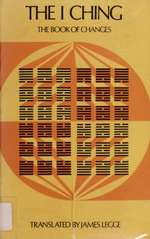
I Ching
James Legge, 1882
This is James Legge's translation of the I Ching, a key text from the Chinese traditions covered by the SBE.
Hymns of the Atharva-Veda
Maurice Bloomfield, 1897
This is a significant English translation of a Hindu sacred text, published within the SBE's operational timeframe.
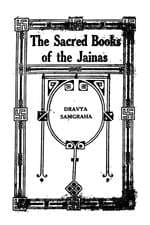
Compendium of Substances (Dravyasamgraha)
Nemichandra (trans. Sarat Chandra Ghoshal), 1917
This is a volume from a parallel 'Sacred Books of the Jainas' series, directly relevant to the Jain tradition covered by the SBE.
The Essence of the Soul (Samayasara)
Kundakunda (trans. J.L. Jaini), 1926First from Sanskrit
This is a volume from a parallel 'Sacred Books of the Jainas' series, directly relevant to the Jain tradition covered by the SBE.
The Yi King (I Ching): Sacred Books of China
James Legge (trans.), 1882
This is James Legge's English translation of the I Ching, a foundational text from the Chinese traditions covered by the SBE.
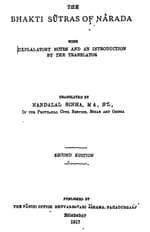
Narada Bhakti Sutra
Nandalal Sinha, 1911
This is a volume from a parallel 'Sacred Books of the Hindus' series, directly relevant to the Hindu tradition covered by the SBE.
The Sankhya Karika
Ishvarakrishna (trans. John Davies), 1881
This is an English translation of a significant Hindu philosophical text, published contemporaneously with the SBE series.

The Sarva-Darsana-Samgraha: Review of the Different Systems of Hindu Philosophy
Madhava Acharya (trans. E.B. Cowell & A.E. Gough), 1882
This is an English translation of a comprehensive review of Hindu philosophical systems, published contemporaneously with the SBE series.
The Sarva-Darsana-Samgraha, or Review of the Different Systems of Hindu Philosophy
Madhava Acharya / E.B. Cowell / A.E. Gough, 1882
This is an English translation of a comprehensive review of Hindu philosophical systems, published contemporaneously with the SBE series.
All Books
Browse Full Catalog→44 books in this collection