Illustrations
Browse all61 images extracted
This iconic illumination from the Book of Kells (Folio 7v) depicts the Virgin Mary enthroned with the Christ Child. Surrounded by four angels and a small group of figures, the composition is a prime example of Insular art, characterized by its flat, stylized figures and dense, geometric ornamentation. It represents one of the earliest known portraits of the Virgin in a Western manuscript, blending Byzantine influences with Celtic decorative traditions.
This intricate alchemical allegory from the 'Buch der heiligen Dreifaltigkeit' depicts a central female figure, representing the soul or a stage of transformation, with a 'philosophical tree' growing from her head. She stands upon a furnace (athanor) containing alchemical vessels, flanked by the sun and moon, symbolizing the union of opposites required for the Great Work.
This plate displays a segment of the Papyrus of Ani, an exquisite example of the Egyptian Book of the Dead dating to approximately 1250 BCE. The columns of hieroglyphs shown here comprise a hymn to the sun-god Ra at his rising, intended to assist the scribe Ani in his journey through the Duat, or underworld. Such manuscripts were essential funerary equipment for the elite, providing the spells and knowledge necessary to achieve eternal life.
This vibrant illustration is a facsimile from the Papyrus of Ani, a version of the Egyptian Book of the Dead. It depicts the critical 'Weighing of the Heart' ceremony, where the deceased's heart is balanced against the feather of Maat (truth and justice) to determine their eligibility for the afterlife. The scene features the deceased and his wife entering the Hall of Judgment, overseen by a tribunal of gods and the jackal-headed Anubis at the scales.
This woodcut portrait depicts the author, likely Albubather or Hermes Trismegistus, in a scholarly setting with a celestial globe. It serves as an authorial illustration for this 1485 treatise on astrology and nativities, emphasizing the intellectual and scientific nature of the work.
This intricate woodcut serves as a major illustration for a work on astrology. It depicts the ancient astronomer Ptolemy seated on a throne, flanked by the personifications of Astronomy and the muse Urania, all set within a celestial framework of zodiac signs and stars.

This manuscript page displays a structured diagram where text is organized within hand-drawn arched columns. This architectural framing was a common technique in Syriac book production to categorize and present complex information clearly. The layout serves as both a functional tool for the reader and a decorative element of the page design.

This intricate circular diagram from the 11th-century 'Book of Curiosities' represents a sophisticated understanding of medieval Islamic astronomy. The concentric rings and radial divisions, populated with Arabic script and red dots, likely map the celestial spheres or the positions of stars. It serves as a testament to the advanced scientific knowledge and cartographic skills prevalent in Egypt during the Fatimid period.

This intricate alchemical illustration from the 'Buch der heiligen Dreifaltigkeit' (1420) depicts the process of spiritual and material transformation. It features a central vessel from which numerous birds emerge, symbolizing the volatile spirits released during distillation, surrounded by figures representing different stages or aspects of the Great Work.
The Gutenberg Bible (1455). The Diamond Sutra (868 CE) — the oldest dated printed book. The Book of Kells. The Papyrus of Ani. Five Qurans spanning a thousand years. The Codex Argenteus in Gothic script. This collection is not about what these texts say — it's about what they are as objects. The physical vessels of the sacred.
Essential Reading
The foundational texts of this tradition
Book of Kells Facsimile
Edward Sullivan, 1927
As a facsimile, it directly represents the physical artistry and form of the iconic Book of Kells, central to the collection's focus on objects.
Egyptian Book of the Dead
E. A. Wallis Budge, 1895
This facsimile directly showcases the physical form and ancient artistry of the Papyrus of Ani, a key example of a sacred object.
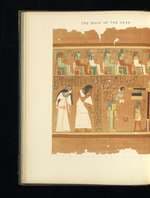
Book of the Dead - Papyrus of Ani Facsimile
British Museum, 1895
This facsimile provides a direct representation of the Papyrus of Ani as a physical artifact, aligning with the collection's focus on sacred objects.
Important Works
Significant texts that deepen understanding
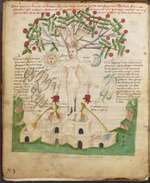
Book of the Holy Trinity
Anonymous, 1420First Translation
As an early 15th-century manuscript, it represents a significant pre-printing era sacred text as a physical artifact.
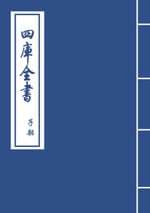
Elucidation of the Seal of the Unity of the Three
Yu Yan (俞琰), 1300First Complete Translation
This 14th-century Chinese text represents an important historical manuscript from a non-Western tradition, embodying sacred knowledge as a physical object.
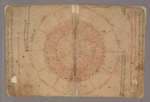
The Book of Curiosities
Anonymous (Egypt), 1020
This 11th-century Arabic manuscript is a valuable historical artifact, showcasing the physical transmission of knowledge in the Islamic world.
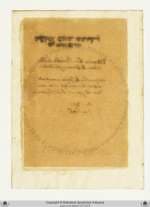
The Book of Splendor
Moses de Leon, 1310
As a 14th-century Hebrew text, it represents a significant historical manuscript of Kabbalistic tradition.
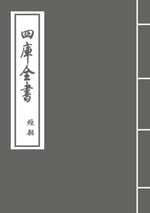
Cleansing the Heart through the Book of Changes, Vols. 1-2
Unknown, 1550First Translation
This 16th-century Chinese edition of a commentary on the foundational I Ching represents an important historical printed object from East Asia.
All Books
Browse Full Catalog→16 books in this collection