


Theatres of Machines
The gorgeous illustrated engineering books of the Renaissance.
Illustrations
Browse all67 images extracted
This plate, designated as 'Tab: XV' from the second volume of a scientific treatise, features six detailed geometric diagrams. Each figure explores the relationships between various curves, tangents, and intersections, reflecting the advanced mathematical studies of the 18th century. Such precise engravings were fundamental to the dissemination of new mathematical concepts during the Enlightenment.
This intricate engraving illustrates a sophisticated canal lock system designed for river navigation, likely from Agostino Ramelli's 'Le diverse et artificiose machine' (1588) or a similar engineering treatise. The scene depicts three boats within a circular basin, managed by massive wooden gates and surrounded by supporting structures and workers, showcasing the advanced hydraulic engineering of the late 16th century. The use of lettered labels (A-F) indicates its function as a technical diagram intended to explain the mechanical operation of the lock.
This engraving from Samuel Marolois's 1627 treatise on fortification illustrates the practical application of geometry and perspective in military engineering. The diagrams demonstrate methods for calculating distances and heights of structures like towers and ramparts, which were essential skills for both the construction and the siege of fortifications in the early modern period.
This intricate engraving from Vittorio Zonca’s 1607 treatise illustrates the 'Carro delle Zaffosina,' a specialized mechanism designed for heavy transport. The plate masterfully combines technical plan views of the machine's components with a dynamic perspective scene showing the device in operation within a riverside structure, exemplifying the sophisticated mechanical engineering of the early 17th century.
This elaborate title block introduces Peter Apian's 'Astronomicum Caesareum' (1540). It features intricate Renaissance scrollwork, putti, and the imperial double-headed eagle, reflecting the work's dedication to Emperor Charles V and its status as a masterpiece of 16th-century printing.
This striking circular diagram from Peter Apian's 'Astronomicum Caesareum' uses the imagery of dragons to represent the nodes of the moon's orbit and the occurrence of eclipses. At the center is the 'Umbra Terre' or Earth's shadow, illustrating the complex celestial mechanics of the 16th century through vivid, mythological allegory.

This woodcut serves as a visual anchor for the title page of Giambattista della Porta's influential work on natural philosophy, 'Natural Magick'. It depicts a group of figures in a pastoral or garden setting, perhaps representing the 'riches and delights' of the natural sciences discussed in the text. Such illustrations were common in 17th-century scientific treatises to signal the accessibility and wonder of the natural world.

This technical diagram illustrates a component of an ancient war machine, as described by Hero of Alexandria. The use of alphabetical labels allows the reader to follow the complex mechanical explanations in the accompanying Greek and Latin text. Such illustrations were crucial for the early modern rediscovery and reconstruction of classical engineering feats.

This engraving illustrates various mathematical scales and surveying instruments used in the design of fortifications. Such tools were essential for the precise geometric calculations required in 17th-century military engineering. The diagram showcases the sophisticated level of technical drawing and scientific measurement of the era.
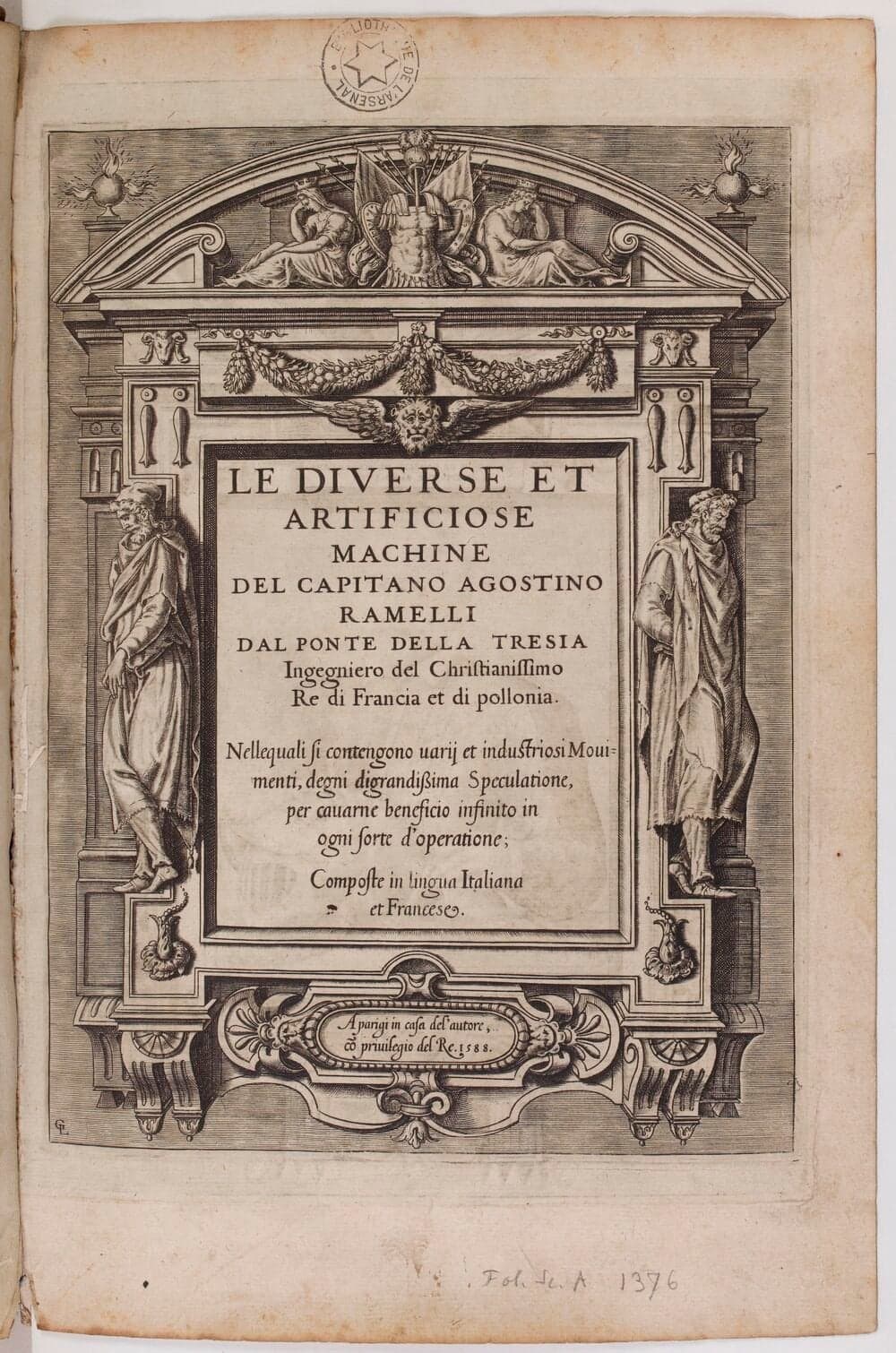
During the late Renaissance, the study of engineering underwent a dramatic transformation as it moved from the workshop to the prestigious folio. This era gave birth to the genre known as the theatre of machines, where complex mechanisms were presented as visual spectacles for the elite. These volumes were not merely technical manuals but grand displays of human ingenuity meant to impress patrons and scholars alike. In works such as The Various and Ingenious Machines by Agostino Ramelli (1588), we see the pinnacle of this artistic approach, where intricate engravings depict everything from water-lifting devices to mobile siege bridges, blending practical design with Mannerist flair.
The movement was pioneered by figures like Jacques Besson, whose Theater of Mathematical and Mechanical Instruments by Jacques Besson (1578) set a new international standard for technical illustration. By framing technology within a theater, authors invited readers to witness the mastery of nature through mechanical intervention. This tradition was furthered in the Theatrum instrumentorum et machinarum Iacobi Bessoni Delphinatis ... by Besson, Jacques (1582), which expanded the repertoire of mechanical instruments available to the early modern world. Theoretical foundations for these wonders were also explored in texts like The Book of Mechanics by Guidobaldo del Monte (1589), which sought to provide a rigorous mathematical basis for the physical feats displayed in these lavish engravings.
As the seventeenth century progressed, the focus shifted from individual inventions to the broader industrial landscape. The Novo teatro di machine et edificii (New Theater of Machines and Buildings) by Vittorio Zonca (Unknown) showcased the inner workings of mills and factories, signaling a move toward the systematic documentation of labor and production. Later, authors refined this vision in the New Theater of Machines by Georg Andreas Böckler (1673), while Kaspar Schott explored the intersection of physics and wonder in P. Gasparis Schotti ... mechanica hydraulico-pneumatica by Schott, Kaspar (1657). These works turned the invisible forces of air and water into tangible, controllable systems.
By the eighteenth century, the genre reached its encyclopedic peak. The massive undertaking of Jacob Leupold, seen in Theater of Machines: Lifting Devices by Jacob Leupold (Unknown) and The Theater of Hydraulic Machines, Volume II by Jacob Leupold (Unknown), attempted to categorize the entirety of mechanical knowledge into distinct, accessible volumes. Whether exploring the playful hydraulics of a garden or the brute strength of a mining crane, these books represent a unique moment in history where technology became art. This collection invites you to step into these paper theaters and witness the birth of the modern mechanical world through the eyes of the master engineers who first dared to visualize it.
Essential Reading
The foundational texts of this tradition
Theater of Mathematical and Mechanical Instruments
Jacques Besson, 1578First Translation
Explicitly mentioned in the essay as a pioneering work that set new standards for technical illustration in the genre.
Theatre of Instruments and Machines
Jacques Besson, 1578
A foundational work by Jacques Besson, explicitly mentioned in the essay as expanding the repertoire of mechanical instruments.
New Theater of Machines and Buildings
Vittorio Zonca, 1607First Translation
Explicitly mentioned in the collection description as a key author and work within the 'theatre of machines' genre.
Important Works
Significant texts that deepen understanding
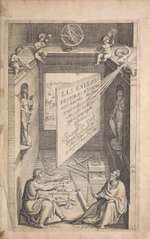
The Reasons of Motive Forces
Salomon de Caus, 1615First Translation
Authored by Salomon de Caus, a key figure mentioned for his hydraulic automata, this work directly explores the principles of motive forces.
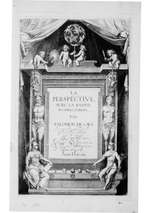
Perspective, with the Reason of Shadows and Mirrors
Salomon de Caus, 1612First Translation
By Salomon de Caus, a key figure in the collection, this work contributes to the visual and technical artistry central to the 'theatre of machines' genre.
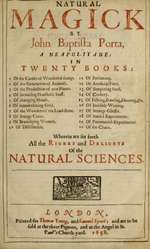
Natural Magick (1658 English)
Giambattista della Porta, 1607
This influential work by della Porta features descriptions of mechanical devices, automata, and optical illusions, embodying Renaissance mechanical ingenuity and spectacle.
All Books
Browse Full Catalog→55 books in this collection