


Illustrations
Browse all157 images extracted
This circular emblem, titled 'SYMBOLA HORI', is taken from Athanasius Kircher's monumental work 'Oedipus Aegyptiacus' (1652–1654). It depicts the Egyptian deity Horus as an allegorical figure representing the manifest world and the divine triad. The figure holds a complex staff featuring a serpent and a bird, while a triangle and globe appear behind him, illustrating Kircher's syncretic interpretation of Egyptian mythology as a precursor to Christian and Hermetic truths.
This intricate engraving depicts a central holy figure, likely Saint Joseph, holding lilies as a symbol of purity and a staff of authority. He is framed by a celestial clock face with Roman and Arabic numerals, suggesting his role within divine providence and the eternal nature of sacred time. The fine crosshatching and radiating light effects are characteristic of high-quality 17th-century devotional prints.
This illustration depicts Ardhanarishvara, the composite androgynous form of the Hindu deities Shiva and Parvati, labeled here as 'ADA NARI.' The figure is set within a hexagram, symbolizing the union of opposites, and is flanked by a bull and a lion, representing the mounts of the two deities. This image reflects 19th-century Western esoteric interests in Eastern mysticism and the concept of the 'dual man' as discussed in the surrounding text.
This intricate hand-colored diagram from Georg von Welling's 1719 work illustrates the complex relationship between the planetary spheres and the celestial hierarchy of angels. At the top, a hexagram is surrounded by the seven classical planets, while the lower section maps out the various orders of angels, from Seraphim to Angeli, within a series of concentric circles representing the structure of the universe.
This delicate engraving features a central female figure, possibly an allegorical representation of Spring or Nature, cradling a bouquet of flowers. She is enveloped in a complex web of sinuous, organic lines and floral patterns characteristic of the Art Nouveau style. The ethereal quality of the print highlights the movement's emphasis on fluid forms and the beauty of the natural world.
Title page of a 1615 edition of the 'Fama Fraternitatis', the first Rosicrucian manifesto, printed in Danzig by Andreas Hünefeldt. The central woodcut emblem features an hourglass and flowering plants, accompanied by the Latin motto 'SICVT FLOS AGRI SIC FLORET HOMO' (As a flower of the field, so man flourishes), a common vanitas motif. This publication announced the existence of a secret brotherhood to the scholars of Europe, initiating a significant era of intellectual and spiritual inquiry known as the Rosicrucian Enlightenment.

This circular emblem is a classic representation of Rosicrucian symbolism, featuring a five-pointed star overlaid with a cross and five blooming roses at its center. The imagery encapsulates the synthesis of spiritual and material realms, reflecting the esoteric philosophies of the Renaissance mystics explored in Rudolf Steiner's text.

This intricate emblem features a hexagram containing the four living creatures of the Tetramorph—the man, eagle, lion, and bull—surrounding a central human face. The word 'ADONAI,' a Hebrew name for God, is inscribed across the top, signifying the divine nature of this symbolic synthesis. This illustration from H.P. Blavatsky's 'Isis Unveiled' reflects the 19th-century synthesis of Kabbalistic, Gnostic, and Hermetic traditions.

This intricate diagram presents the 'Seven Seals' as interpreted by Rudolf Steiner, drawing on apocalyptic imagery from the Book of Revelation. Each seal represents a stage of cosmic and human evolution, featuring complex symbolism such as the Lamb of God, the seven trumpets, and the angel with the book. This work illustrates the intersection of traditional Christian mysticism and early 20th-century Western esotericism.
All Books
Browse Full Catalog→164 books in this collection
Know Thyself
attr. Reger von Ehrenhart, Ernestus Aurelius
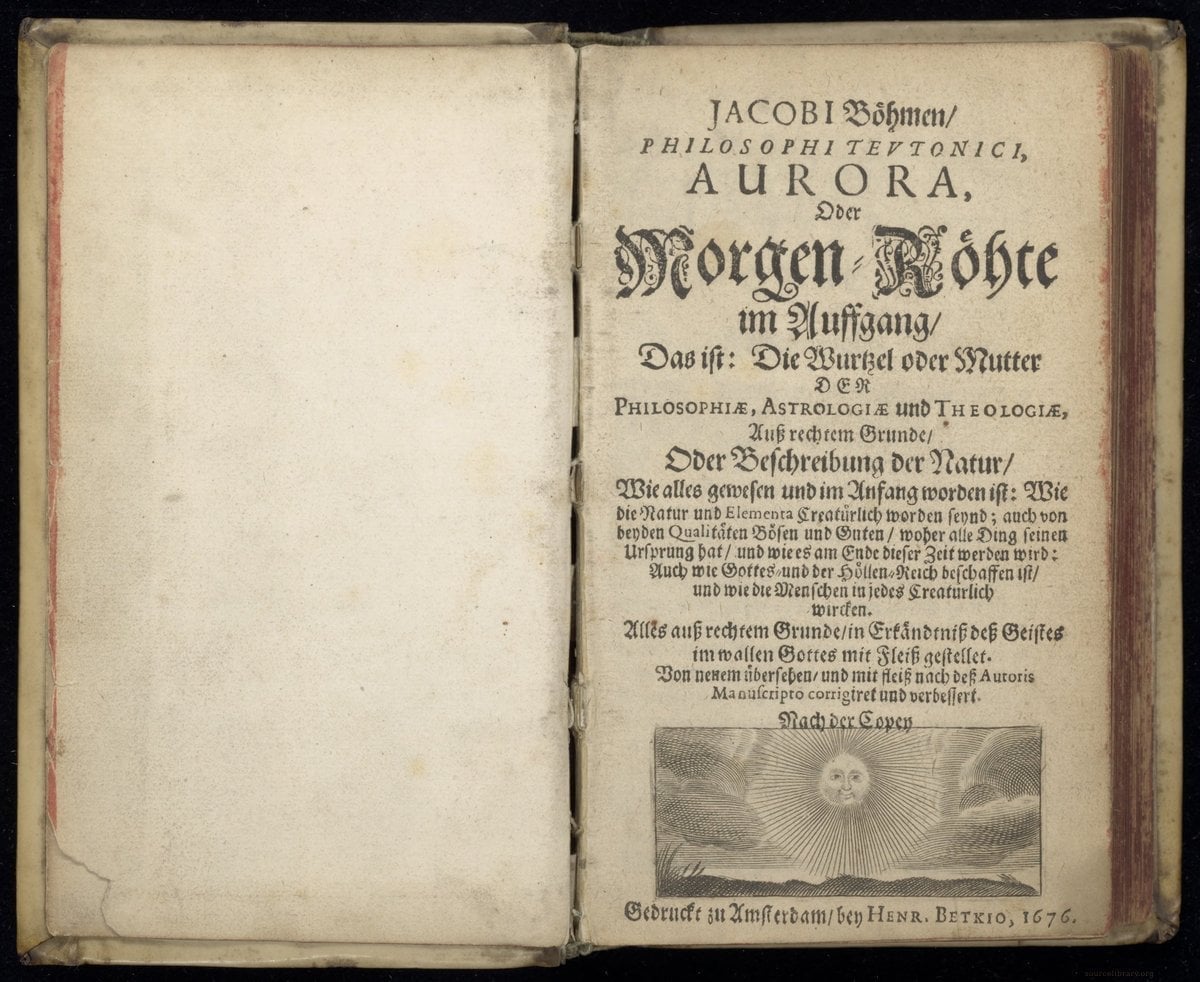
Aurora, or the Day-Spring
Boehme, Jacob
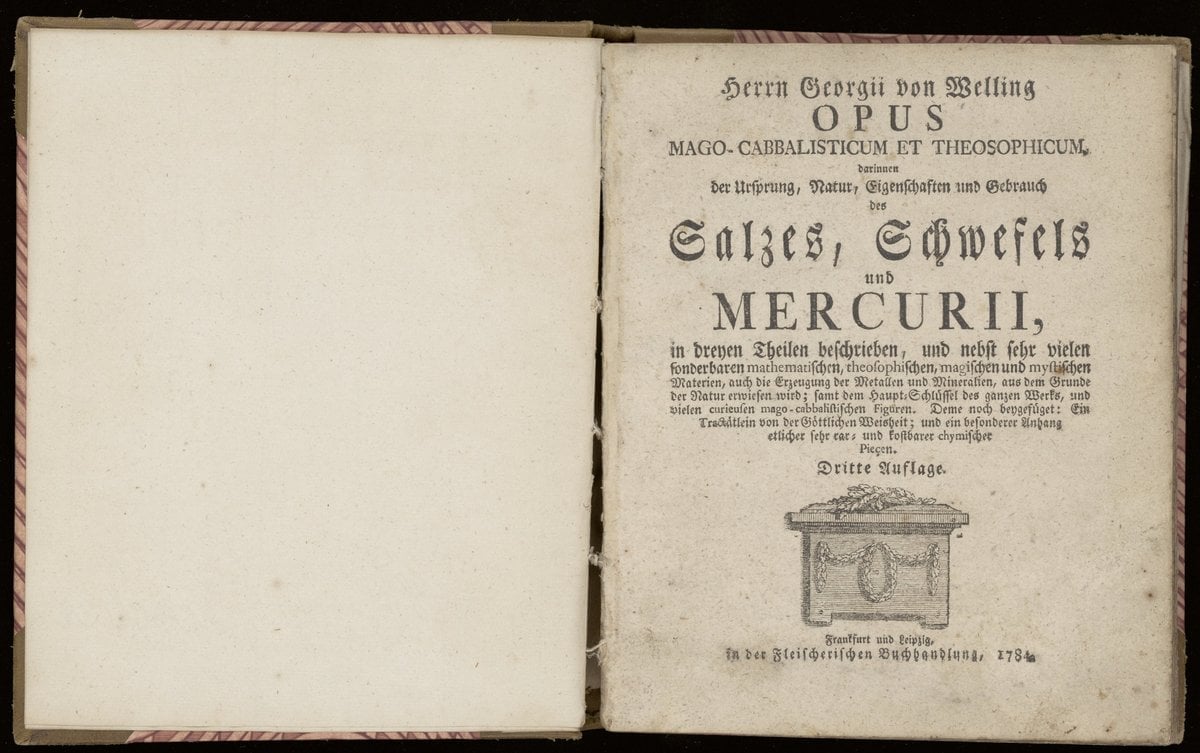
Magico-Cabbalistic and Theosophical Work
Welling, Georg von
High and Deep Grounds of the Threefold Life of Man
Boehme, Jacob
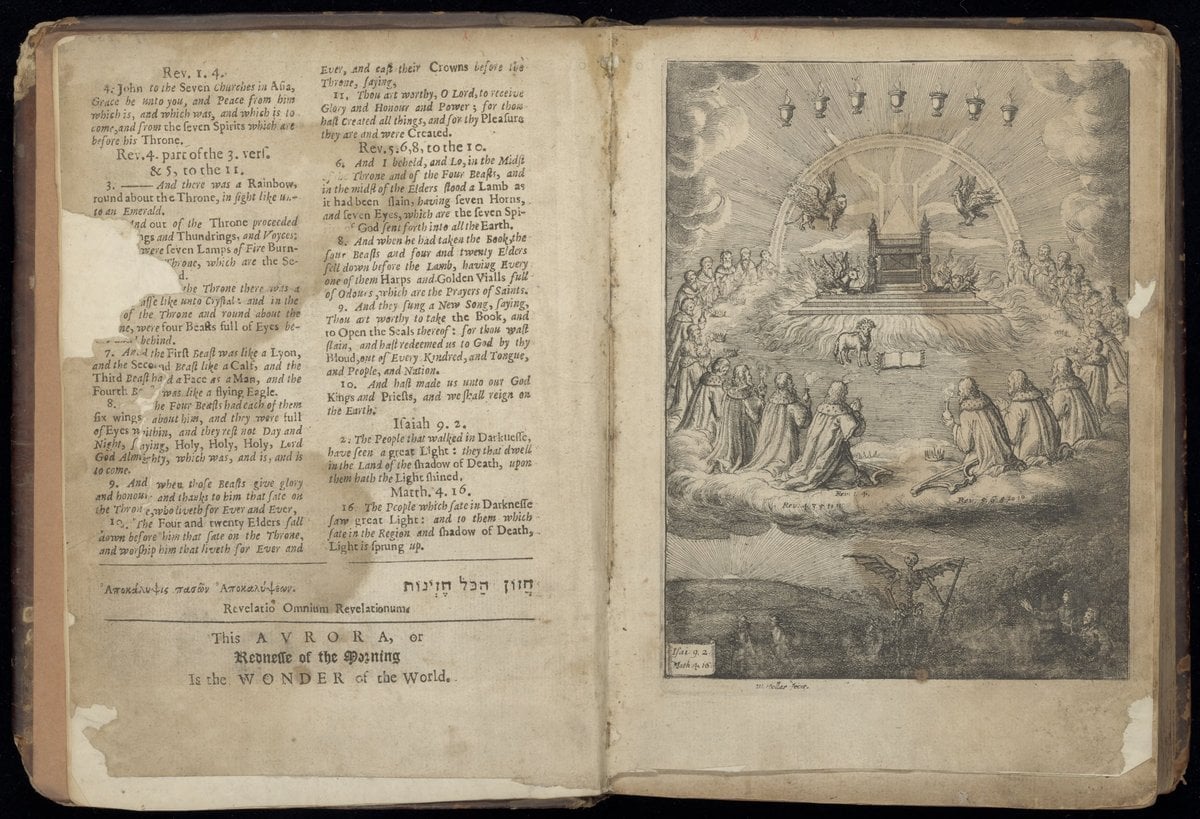
Aurora. That is, the day-spring
Boehme, Jacob
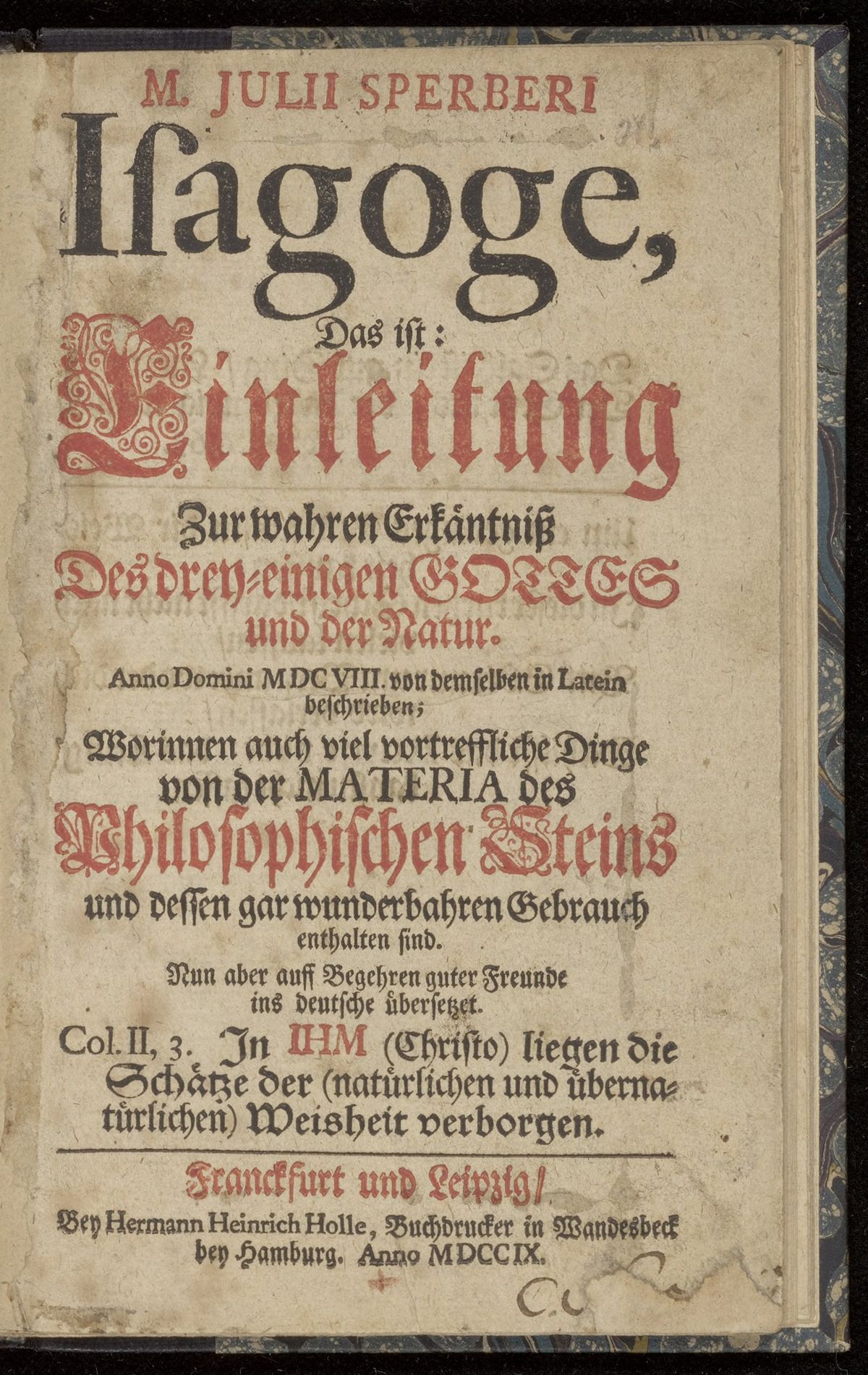
Introduction to the True Knowledge of the Triune God and Nature
Sperber, Julius
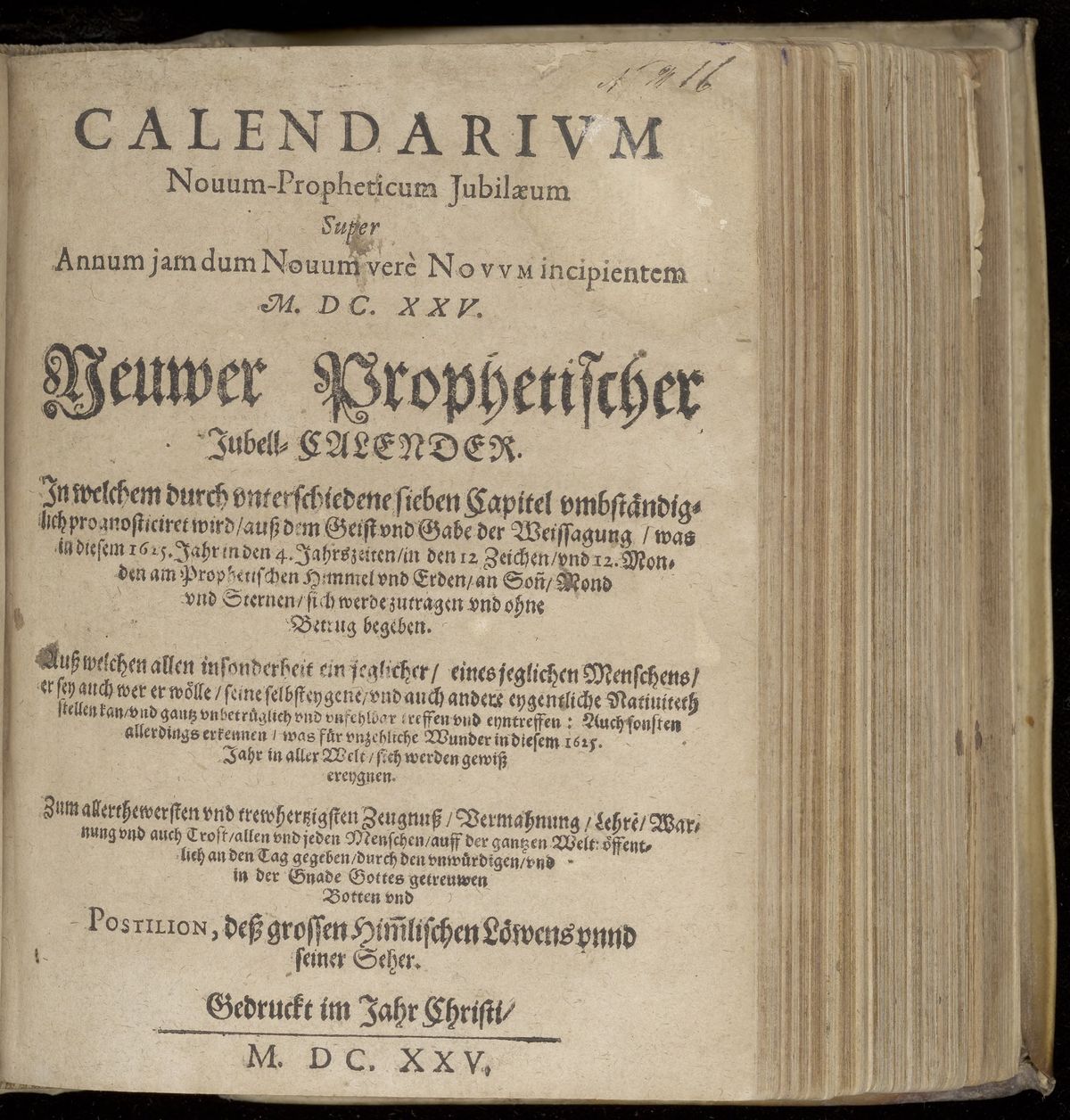
New Prophetic Jubilee Calendar
attr. Felgenhauer, Paulus
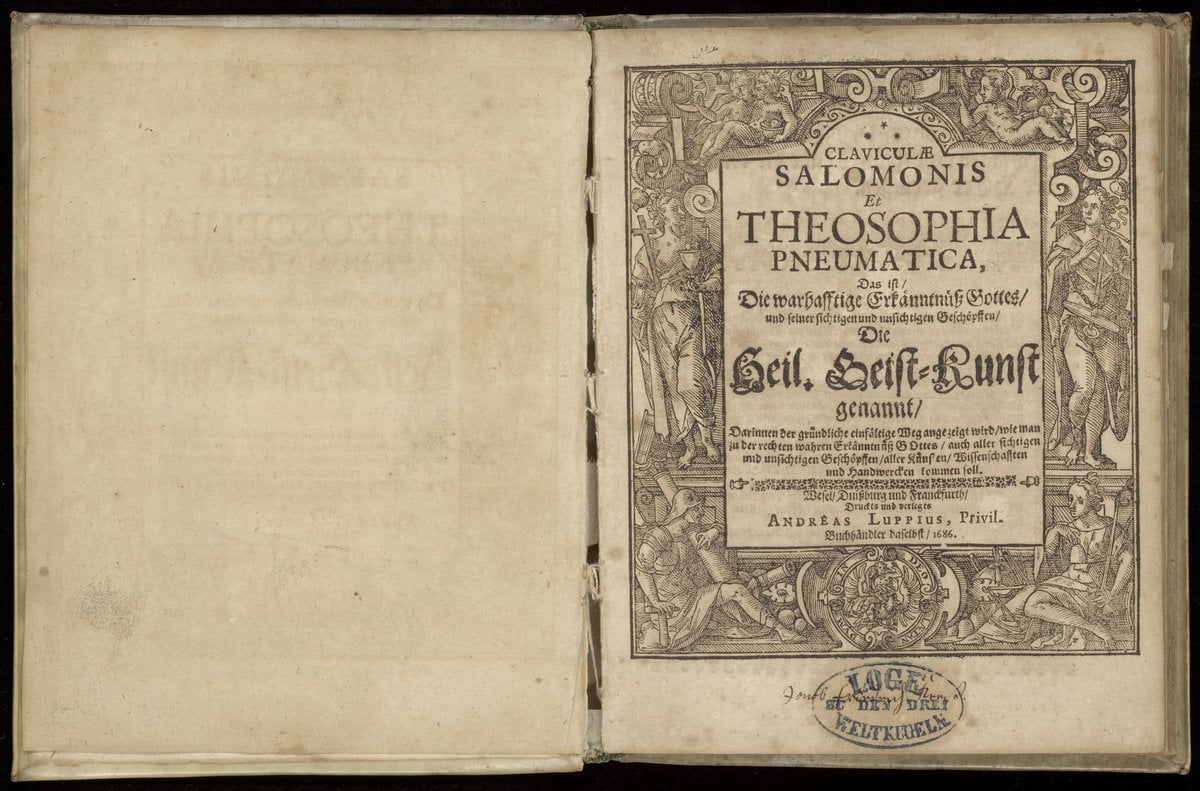
The Key of Solomon and Pneumatic Theosophy
Anonymous
Horus or Astrognostic Final Judgment
attr. Wuensch, Christian Ernst
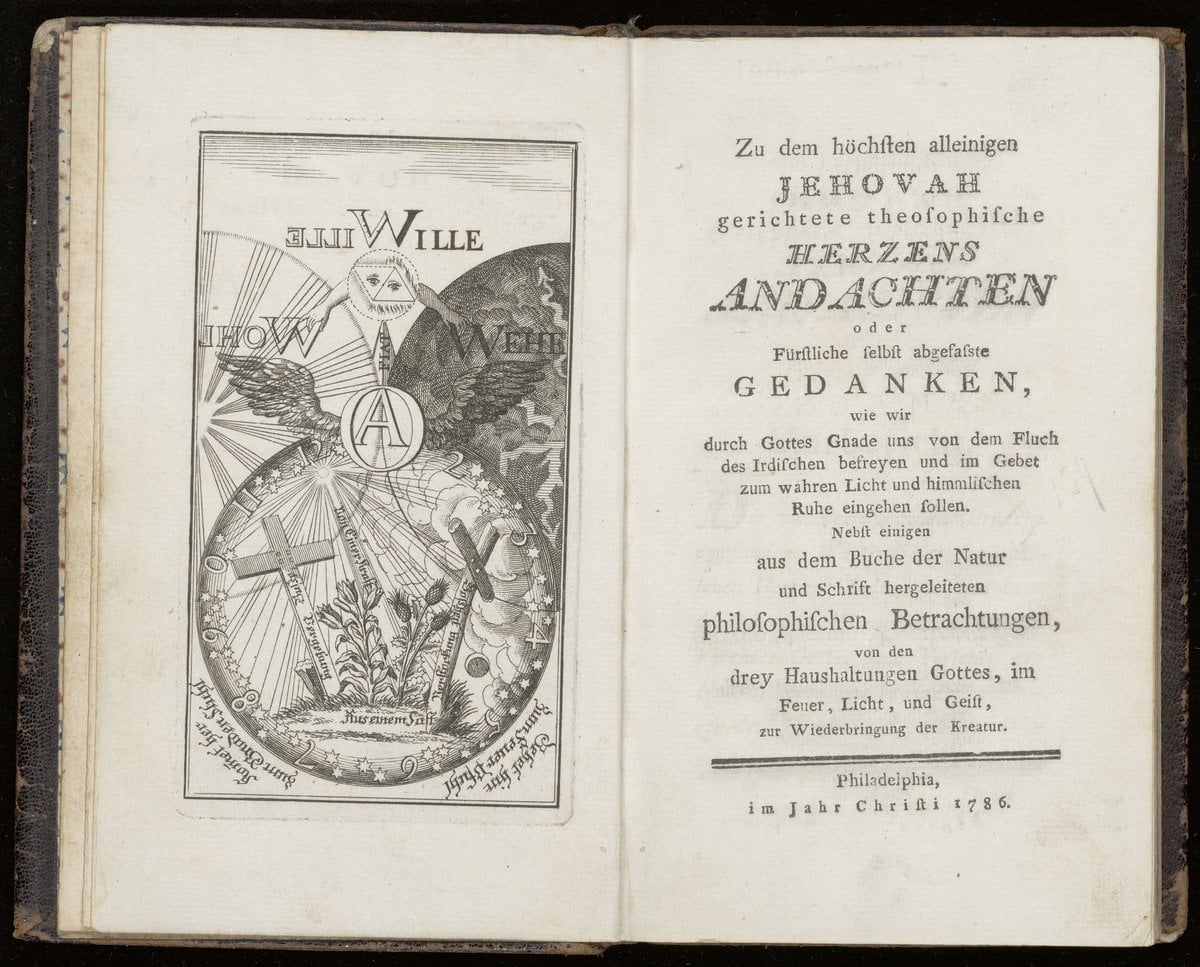
Theosophical Devotions of the Heart
attr. Ernst August, Herzog von Sachsen Weimar
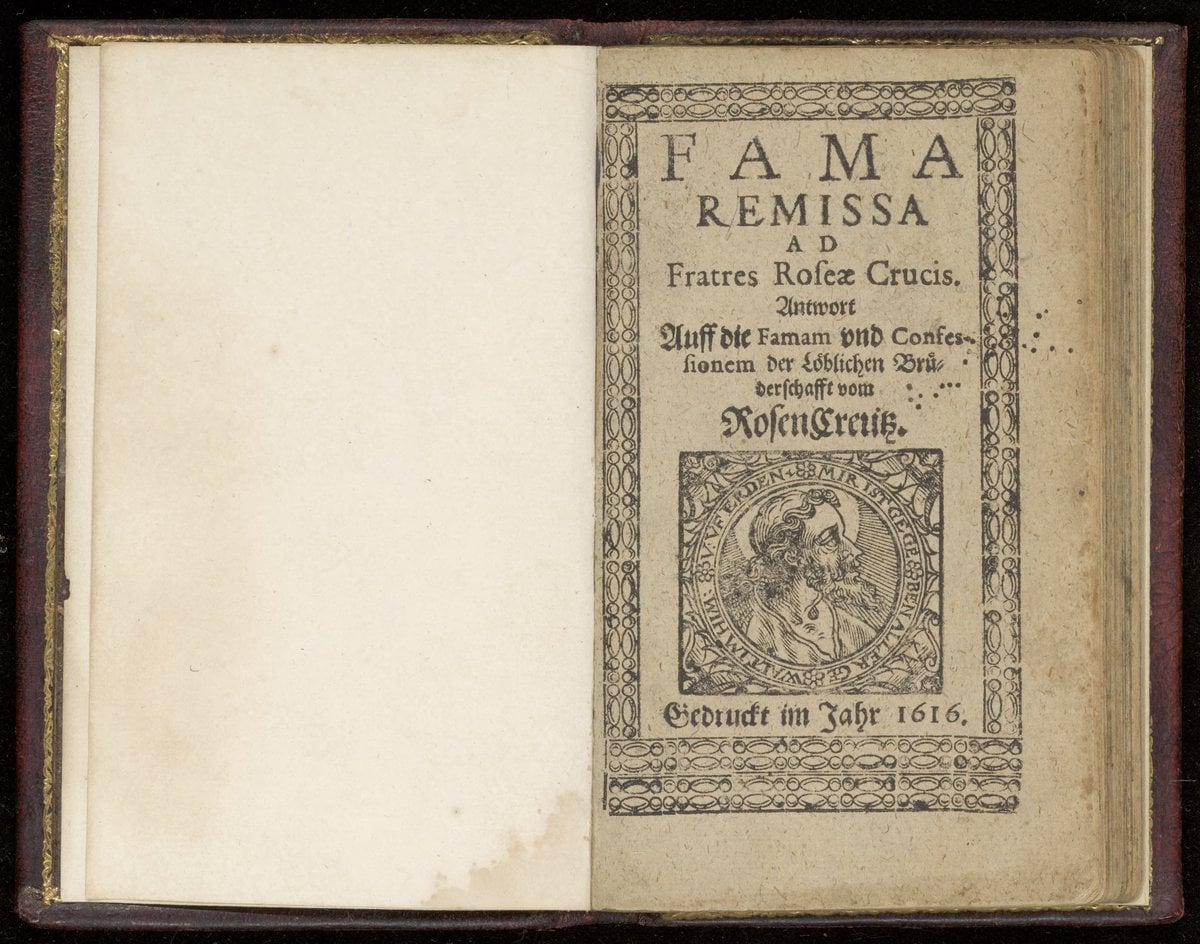
Fama Remissa: Answer to the Fama and Confession of the Rosy Cross
attr. Neuheuser, Wilhelm Eo
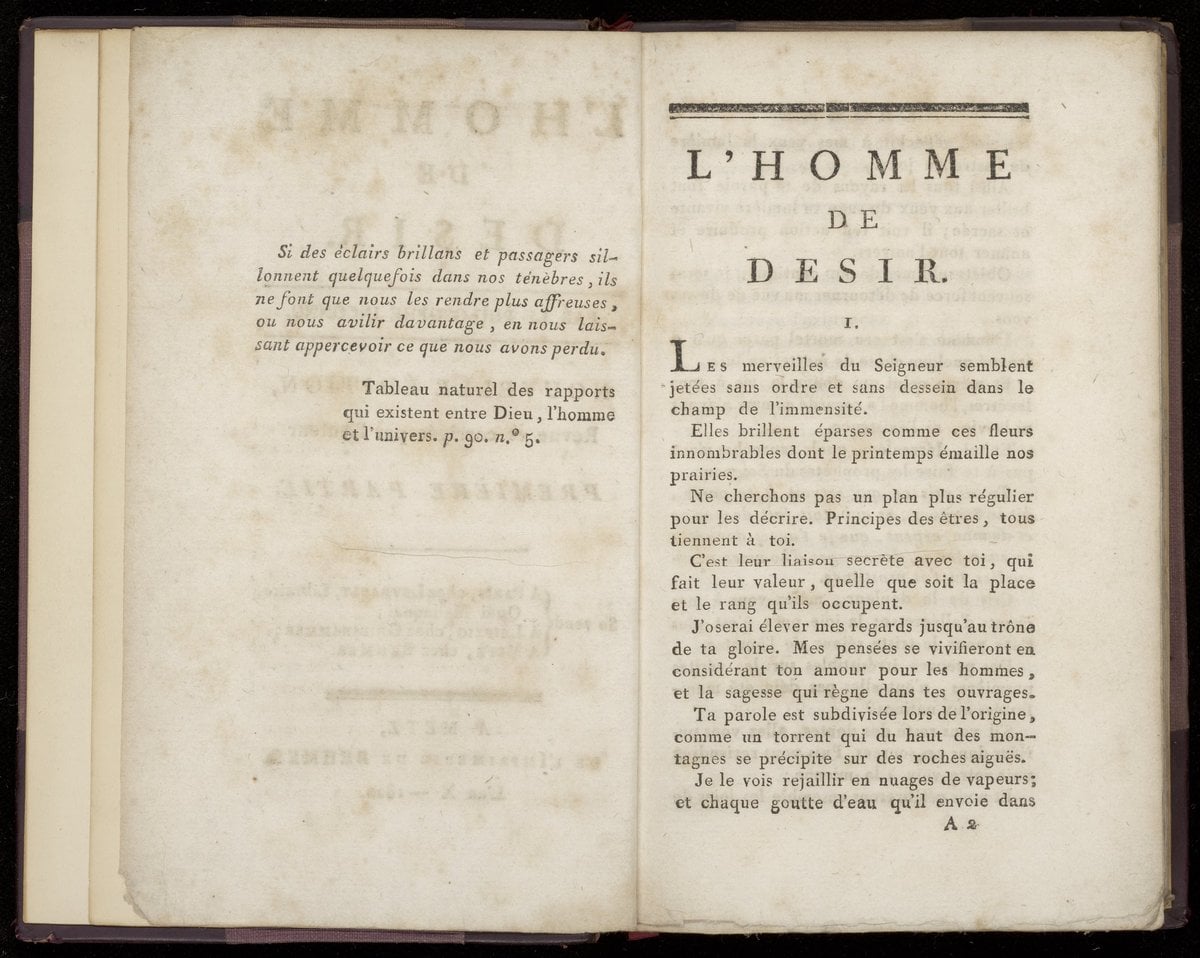
The Man of Desire
attr. Saint-Martin, Louis Claude de

Sessions of the Normal Schools
attr. Saint-Martin, Louis Claude de
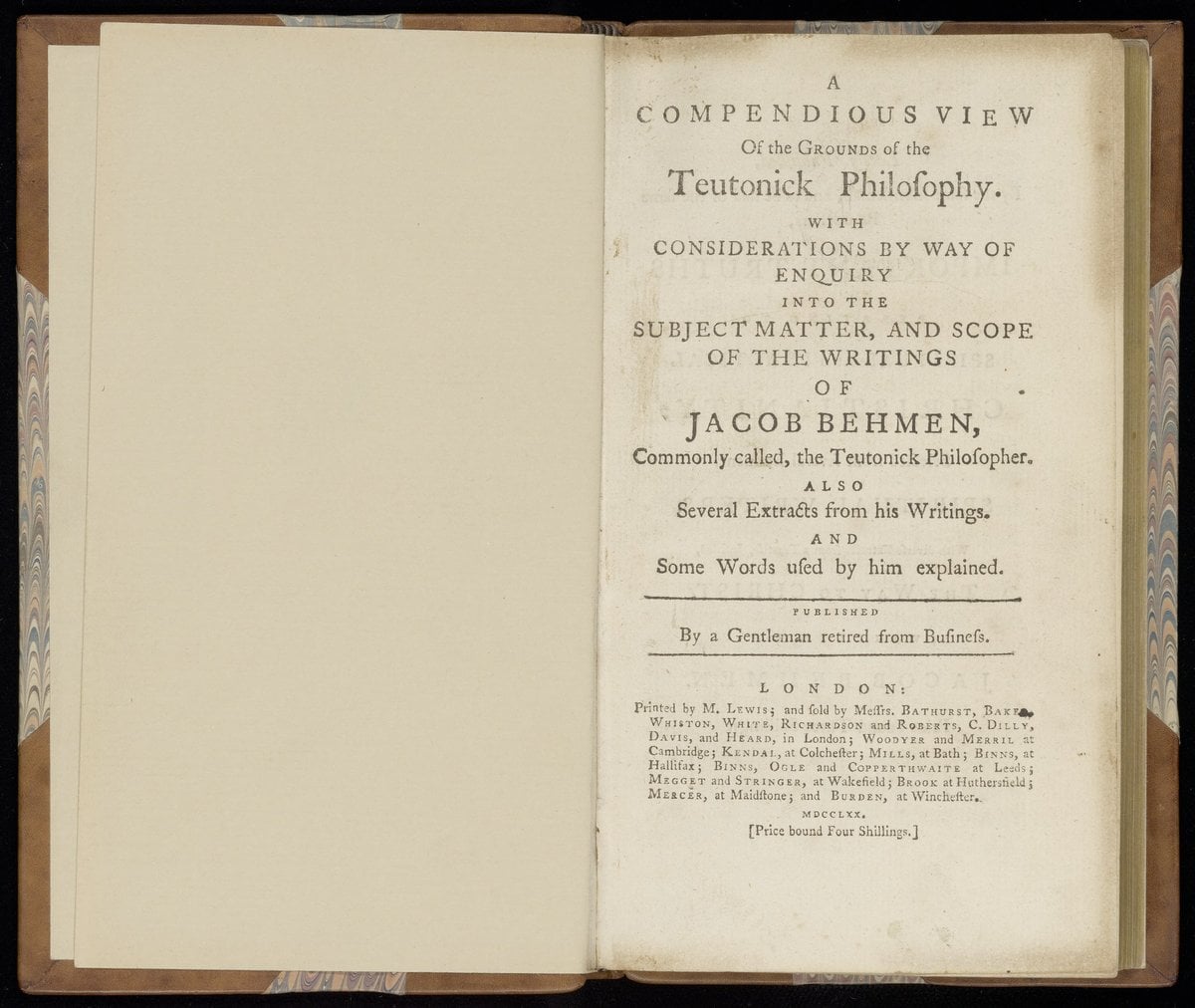
A compendious view of the grounds of the teutonick philosophy
Boehme, Jacob