


The Weapon Salve Controversy
Can you heal a wound by treating the weapon that caused it?
Illustrations
Browse all500 images extracted
This profound engraving illustrates the divine command 'FIAT' (Let there be) as the catalyst for the creation of the universe. From Robert Fludd's monumental work on the macrocosm and microcosm, the image depicts the emergence of light and spirit from the primordial darkness, symbolized by the radiant ring and the descending dove of the Holy Spirit.
This intricate engraving illustrates a star-shaped fortress, a hallmark of early modern military architecture designed to eliminate blind spots and resist artillery. The scene captures the technical complexity and chaos of a siege, with cannons discharging smoke in the foreground and infantry units maneuvering outside the bastions, providing a vivid look at 17th-century 'Arte Militari'.
This intricate engraving serves as a visual introduction to a treatise on music, depicting Apollo, the god of music and light, surrounded by the Muses. Each Muse is identified by name and associated with specific arts and sciences, illustrating the divine inspiration behind human knowledge and creativity. The scene is rich with symbolic objects, including musical instruments and books, emphasizing the intellectual and artistic themes of the text.
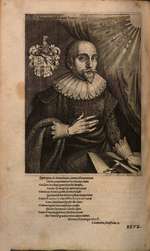
This detailed engraving depicts Robert Fludd (1574–1637), the English Paracelsian physician and mystic philosopher. He is shown in formal attire, flanked by his family coat of arms and rays of divine light inscribed with biblical verses, symbolizing his pursuit of spiritual and scientific knowledge. The portrait, executed by Matthäus Merian, serves as an authoritative introduction to Fludd's monumental work on the macrocosm and microcosm.
This iconic engraving from Robert Fludd's 'Utriusque Cosmi Historia' presents a visual summary of the universe as a 'Mirror of Nature.' At the top, the hand of God holds a chain linked to the female personification of Nature, who in turn guides a monkey representing human Art or ingenuity. The surrounding concentric circles detail the hierarchy of existence, from the terrestrial elements and biological kingdoms to the celestial spheres of the planets and fixed stars.
This intricate frontispiece from Robert Fludd’s monumental work on the microcosm illustrates the Renaissance concept of man as a reflection of the universe. A central human figure is positioned within a series of concentric spheres that map out the physical, celestial, and divine hierarchies, all illuminated by the radiant light of the Creator. Engraved by Johann Theodor de Bry, this image is a masterpiece of early 17th-century scientific and mystical illustration.

This elaborate frontispiece for Robert Fludd's 'Utriusque Cosmi Historia' (1617) serves as a visual manifesto for the Renaissance concept of the correspondence between the human body and the universe. At the center, a man is depicted as the 'Microcosmus' within the 'Macrocosmus,' surrounded by concentric circles representing the celestial spheres, the zodiac, and the elements. The engraving, likely by Johann Theodor de Bry, masterfully integrates text and image to illustrate the complex metaphysical theories of the period.

This intricate engraving from Robert Fludd’s 'Philosophia Moysaica' (1638) presents a complex cosmological model of the universe based on the interplay of light and darkness. At the base, the figures of Dionysus and Apollo represent the dualistic forces of destruction and creation, while the central diagram maps the emanation of divine light into the material world. Fludd’s work sought to reconcile biblical scripture with Hermetic philosophy and early scientific observation, making this image a key artifact of the 17th-century intellectual landscape.

This engraving illustrates the concept of the 'Microcosm,' depicting the human body as a reflection of the larger universe. Inscribed within a perfect circle, the figure demonstrates the harmonious proportions believed to link man to the divine order of the macrocosm. This image is central to early modern philosophical and alchemical texts exploring the relationship between the physical and spiritual realms.
In 1613, Rudolph Goclenius published De Magnetica Vulnerum Curatione, arguing that wounds could be healed by applying a salve to the weapon. Robert Fludd agreed enthusiastically. Jean Baptiste van Helmont was dragged before the Inquisition for defending it. The debate became the central argument about action at a distance — and helped birth modern physics.
Essential Reading
The foundational texts of this tradition
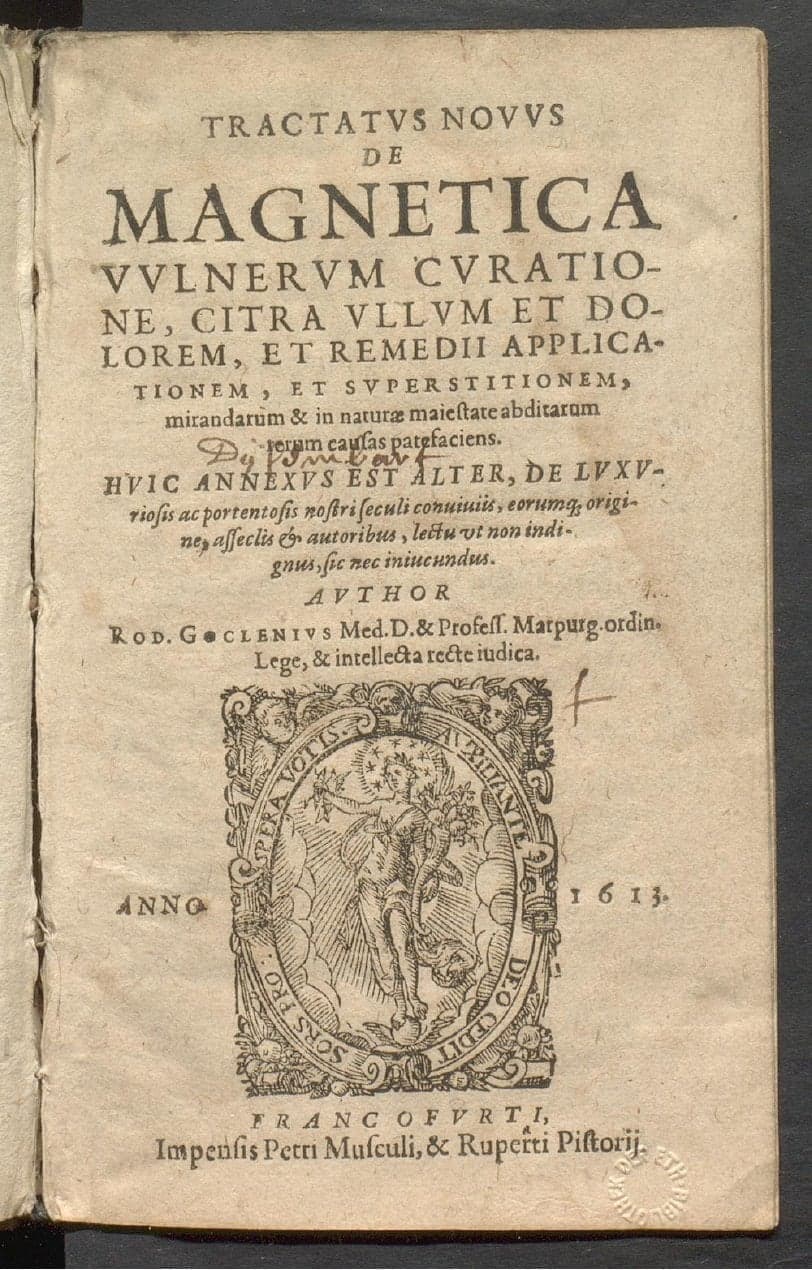
Tractatus novus de magnetica vulnerum curatione, citra ullum et dolorem, et remedii applicationem, et superstitionem, mirandarum & in naturae maiestate abditarum rerum causas patefaciens
Goclenius, Rudolph, 1613
This is another foundational text by Goclenius directly addressing magnetic wound healing, central to the controversy.
Response to Foster's Weapon-Salve Sponge
Fludd, Robert, 1638First Complete Translation
This is a direct polemical response by Robert Fludd defending the weapon salve against a critic, making it central to the controversy.
Important Works
Significant texts that deepen understanding
History of the Macrocosm and Microcosm
Robert Fludd, 1617First Complete Translation
This major work by Fludd lays out his cosmological and philosophical framework, which underpins his belief in sympathetic action and the weapon salve.
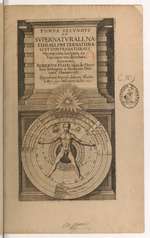
History of the Microcosm, Volume II
Robert Fludd, 1619First Complete Translation
As part of Fludd's Utriusque Cosmi Historia, this volume contributes to the philosophical context for his views on sympathetic action.
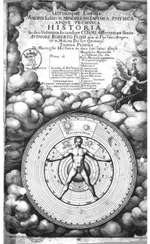
Utriusque Cosmi Historia (1617)
Robert Fludd, 1617First Complete Translation
This foundational work by Fludd establishes his comprehensive philosophical system, which includes principles of sympathetic action relevant to the weapon salve.
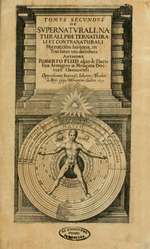
History of the Two Worlds, Volume 2
Robert Fludd, 1619First Complete Translation
As part of Fludd's Utriusque Cosmi Historia, this volume contributes to the philosophical context for his views on sympathetic action.
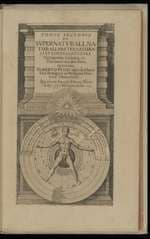
Second Volume of the History of the Microcosm
Fludd, Robert, 1619First Translation
As part of Fludd's Utriusque Cosmi Historia, this volume contributes to the philosophical context for his views on sympathetic action.
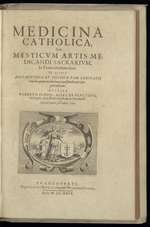
Universal Medicine, or the Mystic Sanctuary of the Healing Art
Fludd, Robert, 1629First Translation
This work by Fludd on universal medicine likely discusses his broader theories of healing, which could encompass sympathetic methods like the weapon salve.
History of the Two Worlds
Robert Fludd, 1626
As part of Fludd's Utriusque Cosmi Historia, this volume contributes to the philosophical context for his views on sympathetic action.
On the Preternatural History of Both Worlds
Fludd, Robert, 1621First Translation
As part of Fludd's Utriusque Cosmi Historia, this volume contributes to the philosophical context for his views on sympathetic action.
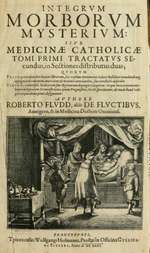
Integrum Morborum Mysterium (Medical Mysteries)
Robert Fludd, 1631First Translation
This work on medical mysteries by Fludd likely explores his theories of disease and healing, which may include discussions relevant to sympathetic cures.
All Books
Browse Full Catalog→25 books in this collection
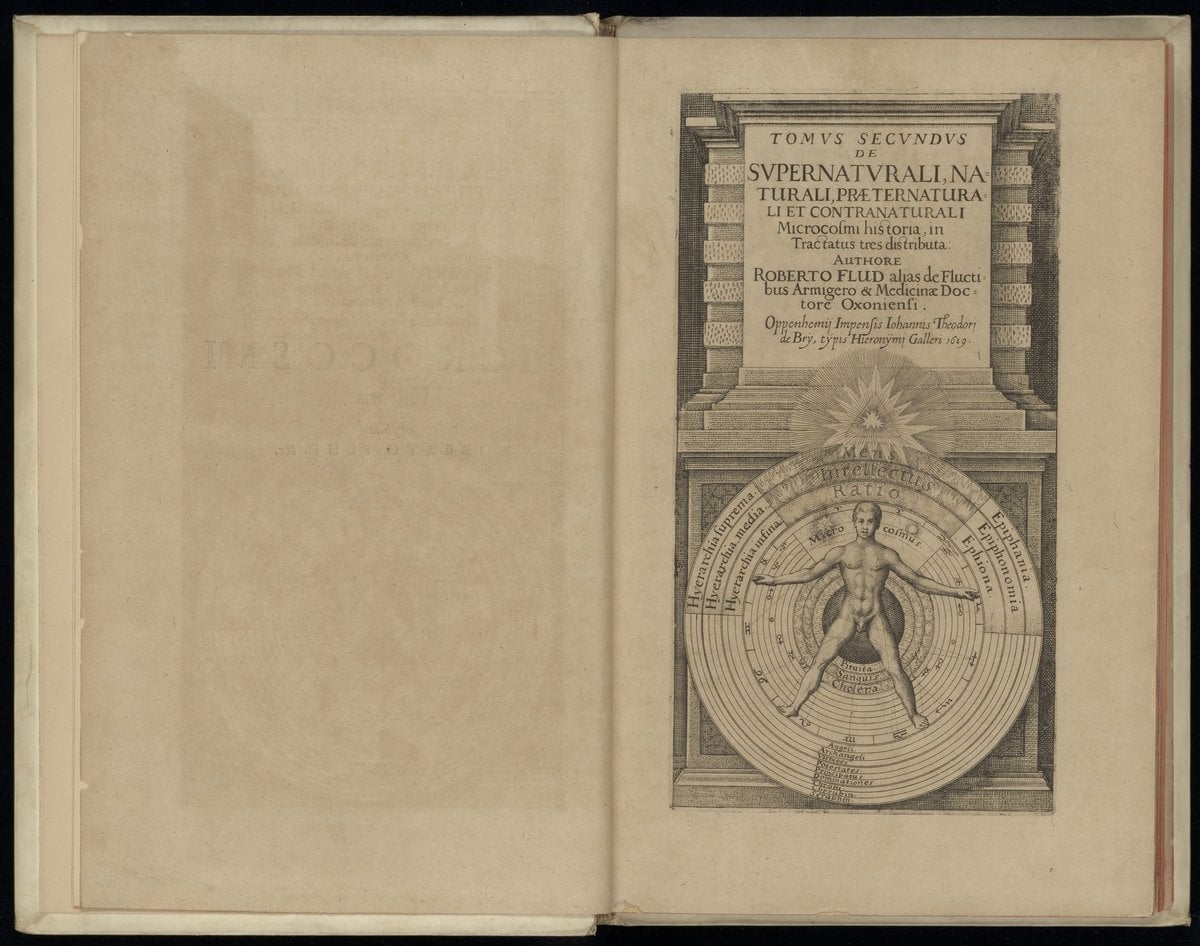
Second Volume of the History of the Microcosm
Fludd, Robert
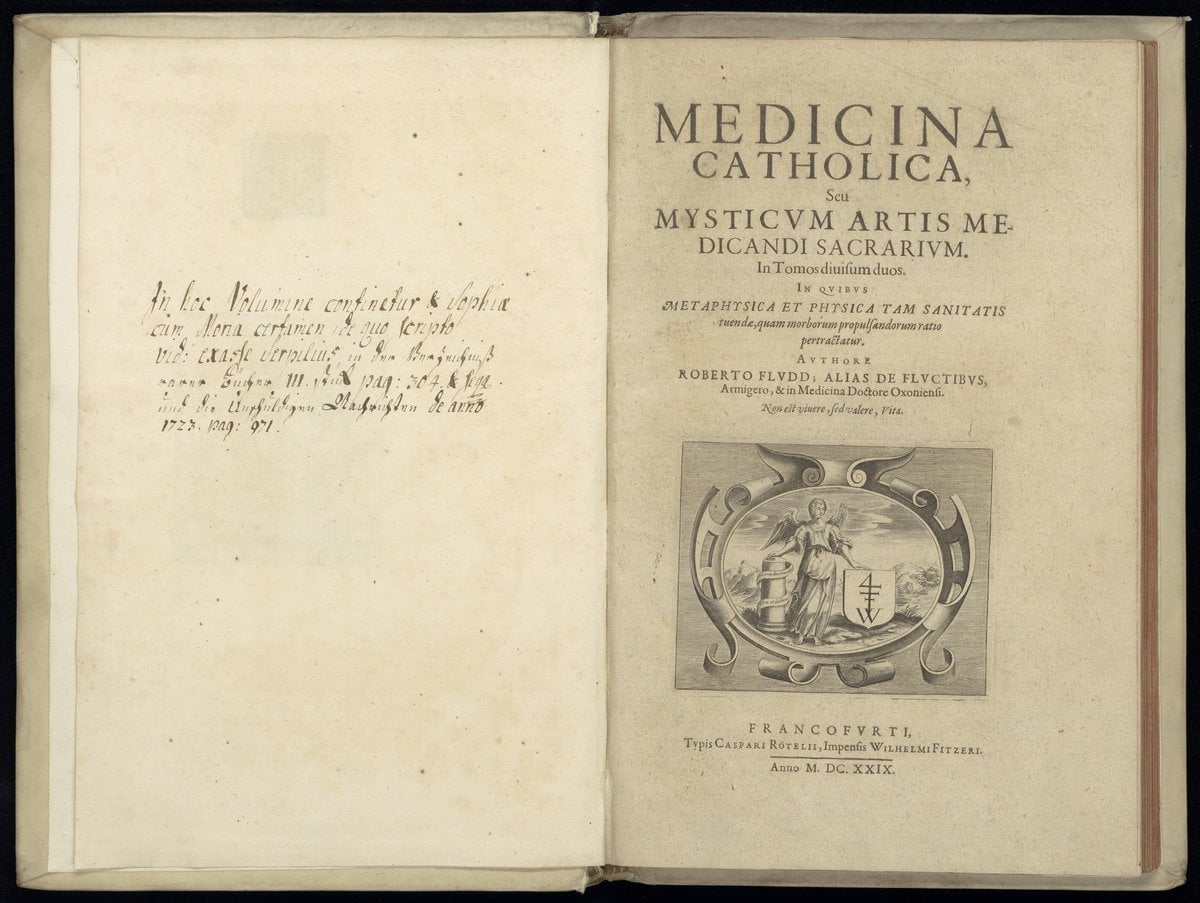
Universal Medicine, or the Mystic Sanctuary of the Healing Art
Fludd, Robert
Mosaicall philosophy
Fludd, Robert
Sacred and Truly Christian Philosophy, or Cosmic Meteorology
Fludd, Robert
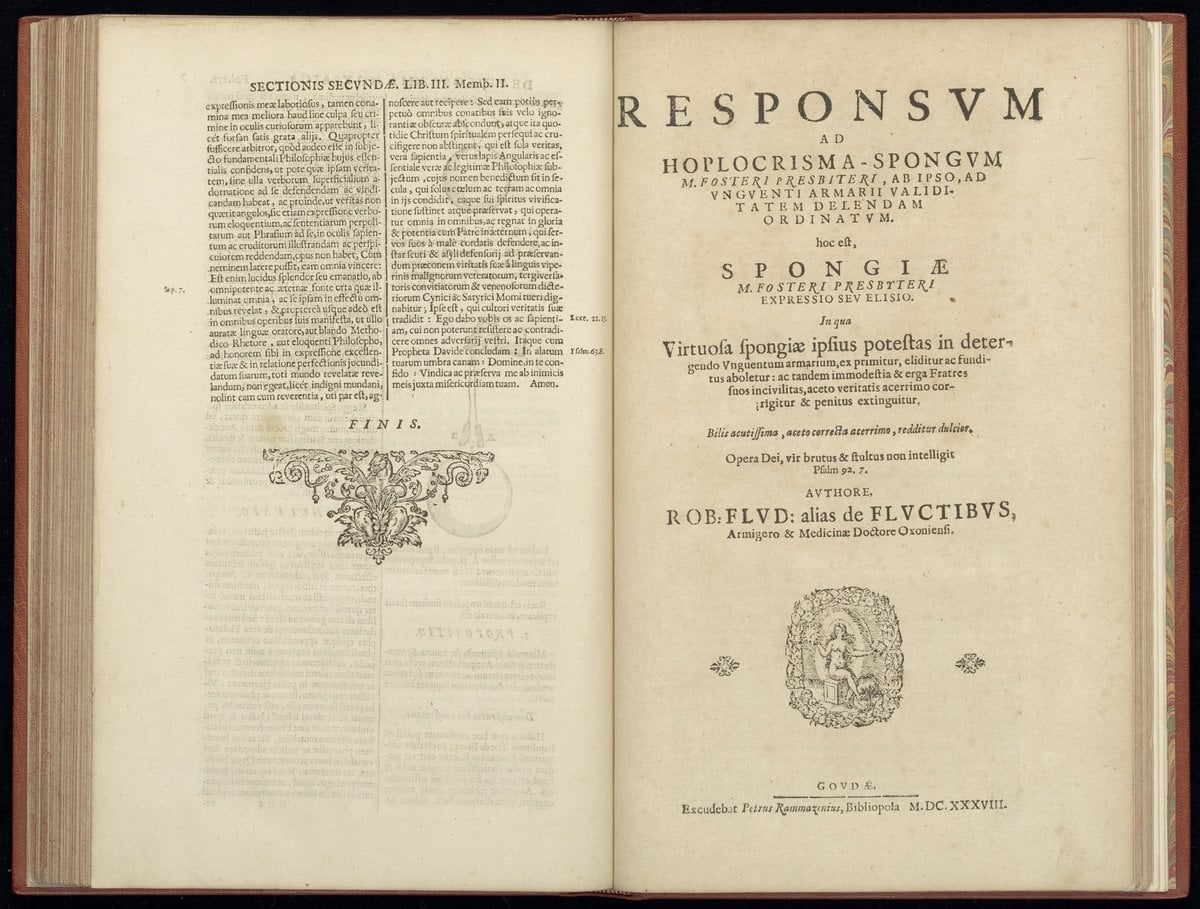
Response to Foster's Weapon-Salve Sponge
Fludd, Robert
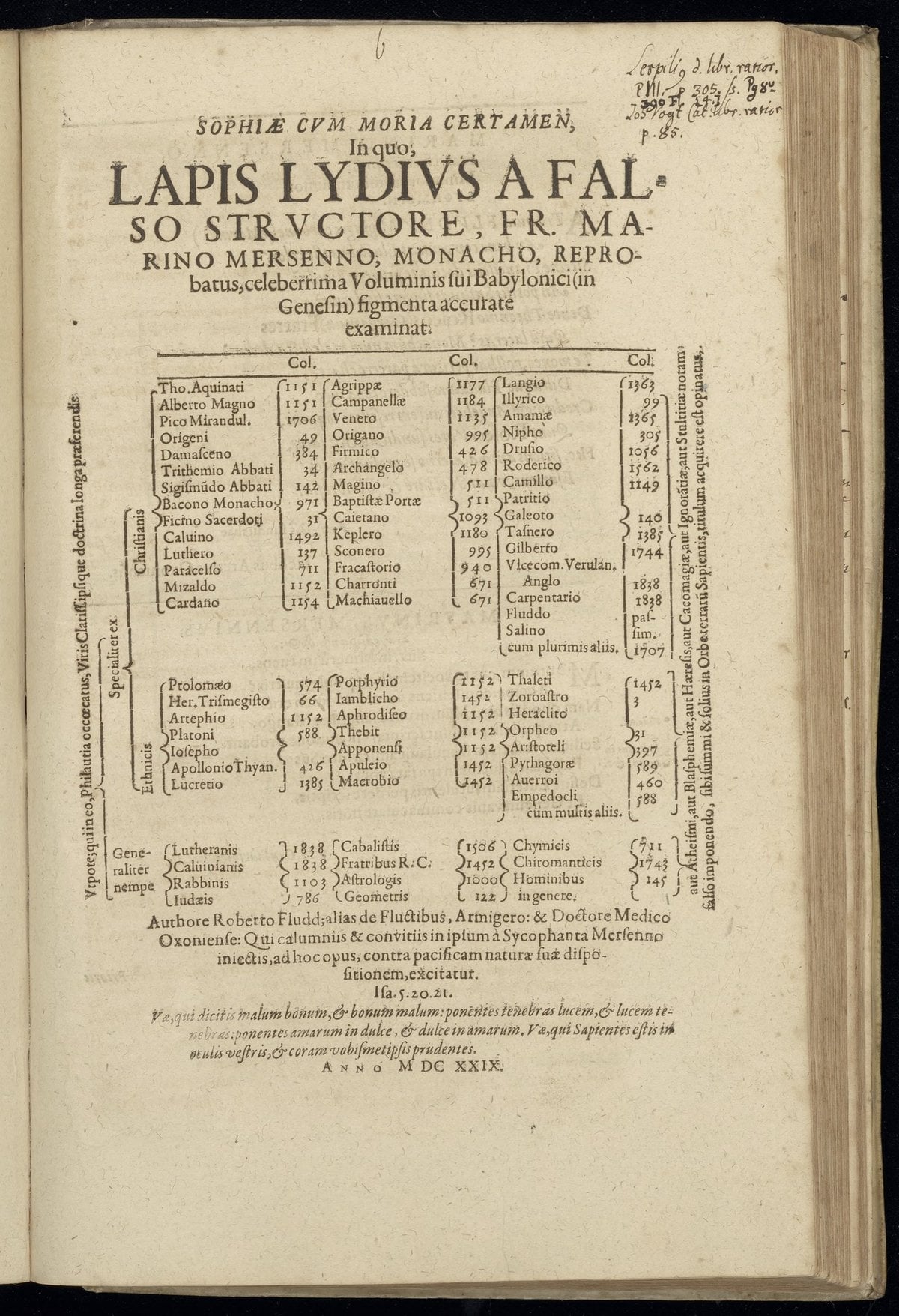
The Contest of Wisdom with Folly
Fludd, Robert
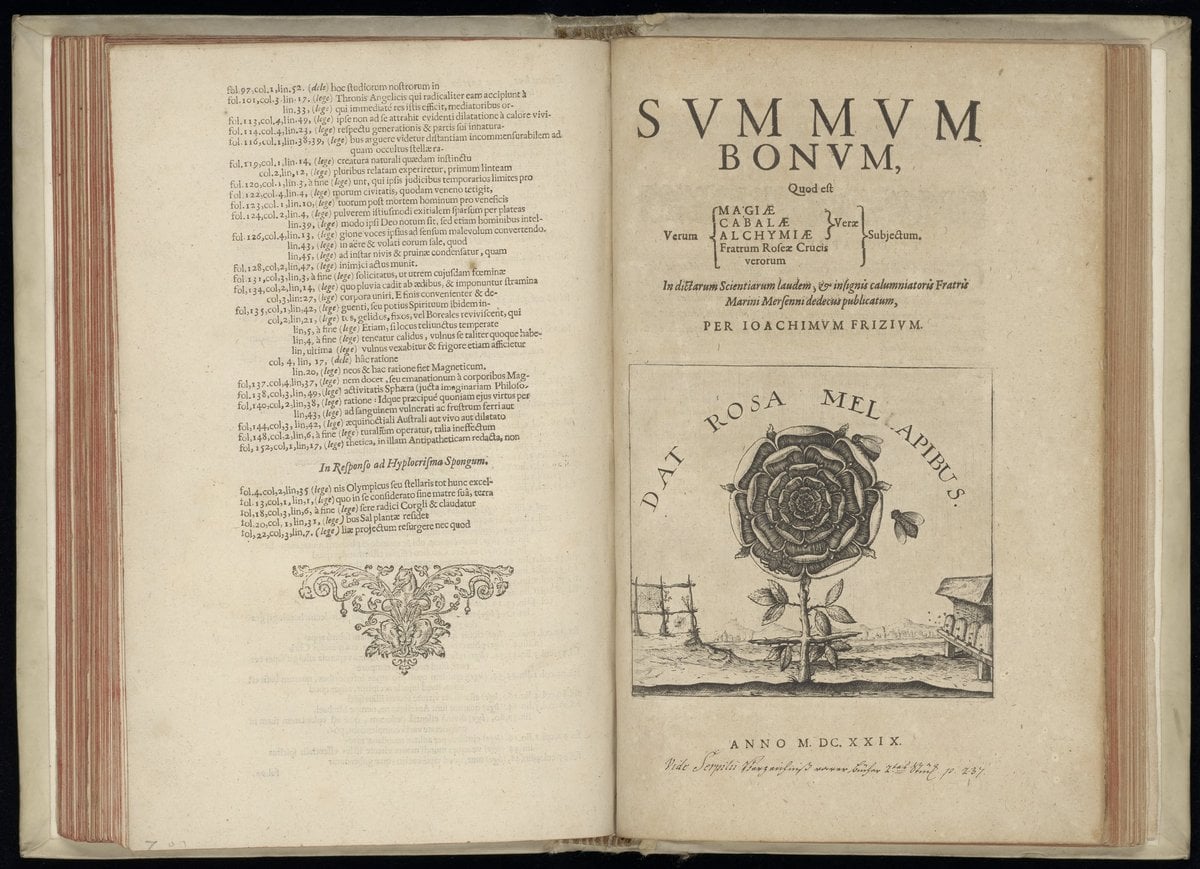
The Highest Good
attr. Fludd, Robert
On the Preternatural History of Both Worlds
Fludd, Robert