


Cosmology & Astronomy
From Ptolemy to Copernicus, Brahe, Kepler, and Galileo — the investigation of the heavens
Illustrations
Browse all500 images extracted
This woodcut diagram from Chapter 1 of Kepler's 'Astronomia Nova' illustrates the traditional geocentric view of the celestial sphere. It depicts the apparent daily motion of the stars and the sun relative to the cardinal directions, serving as the starting point for Kepler's revolutionary investigation into the elliptical orbit of Mars.
This formal engraved portrait depicts Sir Isaac Newton at the age of 83, seated in a high-backed chair. Created by George Vertue in 1726 after a painting by John Vanderbank, it captures the renowned scientist in his later years, symbolizing his enduring intellectual legacy. The fine detail of the engraving highlights the prestige and gravity associated with the author of the Principia Mathematica.
This plate from Johannes Kepler’s 1619 masterpiece, 'Harmonices Mundi' (The Harmony of the World), illustrates his exploration of geometric forms as the foundation of cosmic order. It notably features the first known depictions of 'Kepler-Poinsot' polyhedra—star-shaped solids—alongside traditional Platonic solids embellished with symbols representing the elements and celestial bodies. Kepler used these complex shapes to argue that the mathematical laws of geometry were the 'archetypes' used by God to design the structure of the universe.
This woodcut illustrates the 'Sextans Astronomicus,' an astronomical sextant designed by Tycho Brahe for measuring the altitudes of celestial bodies. The diagram meticulously labels the instrument's components, including the sighting arm and the plumb line used for precise leveling, reflecting the unprecedented accuracy Brahe brought to pre-telescopic astronomy.
This intricate engraving, likely from Robert Fludd's monumental work 'Utriusque Cosmi' (1617-1621), illustrates a pneumatic experiment designed to demonstrate the principles of air expansion and contraction. The apparatus consists of a large leaden sphere (A) connected by a curved tube (E) to a water-filled vessel (C), showing how heat—symbolized by the sun in the upper corner—affects the pressure and movement of fluids. Fludd's work is a prime example of the early modern synthesis of empirical observation, mechanical philosophy, and hermetic mysticism.
Engraved by the master Wenceslaus Hollar, this frontispiece illustrates the mystical visions of Jakob Böhme. The upper register depicts the celestial court from the Book of Revelation, featuring the Lamb of God and the twenty-four elders surrounding the divine throne, while the lower register shows a winged skeleton representing Death looming over the earthly realm. This work serves as a visual gateway to Böhme's 'Aurora', symbolizing the transition from the darkness of the material world to the 'Day-Spring' of divine wisdom.

This iconic frontispiece, etched by Stefano della Bella for the 1632 edition of Galileo's 'Dialogue', depicts three figures representing the competing world systems of the time: Aristotle, Ptolemy, and Copernicus. Their animated discussion serves as a visual introduction to the book's central debate between the geocentric and heliocentric models of the universe. The inclusion of a ship in the background alludes to the practical applications of astronomy in navigation.

This illustration depicts the 'Zodiac Man' (Homo Signorum), a fundamental image in medieval medical and astrological thought. It maps the twelve signs of the zodiac onto the human body, indicating which sign governs each part, from Aries at the head to Pisces at the feet. Physicians used these diagrams to determine the most auspicious times for medical procedures, such as bloodletting, according to the celestial alignment.

This elaborate frontispiece for Robert Fludd's 'Utriusque Cosmi Historia' (1617) serves as a visual manifesto for the Renaissance concept of the correspondence between the human body and the universe. At the center, a man is depicted as the 'Microcosmus' within the 'Macrocosmus,' surrounded by concentric circles representing the celestial spheres, the zodiac, and the elements. The engraving, likely by Johann Theodor de Bry, masterfully integrates text and image to illustrate the complex metaphysical theories of the period.
Visual Art
Browse all art →13 works of visual art in this collection
 scientific
Orion — Signs of the Zodiac
Anonymous
A hand-coloured engraving depicting the constellation Orion, personified as a warrior holding a club and the pelt of a lion.
 scientific
Taurus — Astrological Constellation
Anonymous
A hand-coloured celestial chart depicting the constellation Ophiuchus (Serpentarius) entwined with the serpent (Serpens) and accompanied by the short-lived constellation Taurus Poniatowski.
 map
mapThe Oriental Zodiac — Coloured Engraving
Anonymous
A circular celestial map known as 'Smith’s New Moveable Planisphere' used to determine the positions of stars and constellations at any given time.
 map
mapThe Zodiac — Etching
Anonymous
A circular celestial map depicting constellations and mythological figures associated with the zodiac and stellar groupings.
 scientific
Ursa Major — The Great Bear
Anonymous
A coloured engraving of the Ursa Major constellation depicted as a bear with stars marked by Greek letters and proper names.
 object
Telescope Stand
Anonymous (European)
A 17th-century adjustable iron and brass telescope stand with a tripod base and a bifurcated, crescent-shaped support cradle.
 object
Microscope — Claude-Siméon Passemant
Claude-Siméon Passemant
A table microscope created by Claude-Siméon Passemant, featuring a shagreen-covered tube on an ornate gilt-bronze Rococo stand.
 mythological
Woman Examining an Armillary Sphere
Master F. P.
This sheet contains multiple etchings by Master F.P. depicting mythological scenes, including a figure identified as Endymion observing an armillary sphere.
 object
Planispheric Astrolabe
Muhammad Zaman al-Munajjim al-Asturlabi
A brass planispheric astrolabe featuring an intricate rete with star pointers and Arabic calligraphy.
 object
Astrolabe of Regiomontanus
Regiomontanus (Johannes Müller)
A copper alloy astrolabe featuring a star map (rete) engraved with the names of celestial constellations and fixed stars.
 scientific
Telescope with Its Bag
Ryūryūkyo Shinsai
A woodblock print depicting a portable telescope resting on its patterned fabric case.
 mythological
Rock of the Philosophers — Mount Parnassus
Stefano della Bella
This etching depicts the Muses' Mount Parnassus, with various figures (poets and philosophers) ascending the rocky peak and congregating at its base under the watchful gaze of Apollo and the Muses in the heavens.
 genre-scene
Sidrophel Examining the Kite Through His Telescope
William Hogarth
The astrologer Sidrophel (from Samuel Butler's 'Hudibras') peers through a telescope at a kite to which a lantern has been attached, mistaking it for a new star or celestial phenomenon.
All Books
Browse Full Catalog→193 books in this collection
Detailed Report on the Use of the Physico-Astrological Instrument
Hafenreffer, Samuel
![Fama syderea nova. Gemein offentliches Aussschreiben [...] anlangend den neuen, und ein sonderbare Invention lang zuvor prognosticirten Cometstern](/_next/image?url=https%3A%2F%2Fimages.sourcelibrary.org%2Fpages%2F697c8e0f0db04f9b26df0d05%2F0004.jpg&w=3840&q=85)
Fama syderea nova. Gemein offentliches Aussschreiben [...] anlangend den neuen, und ein sonderbare Invention lang zuvor prognosticirten Cometstern
Faulhaber, Johannes
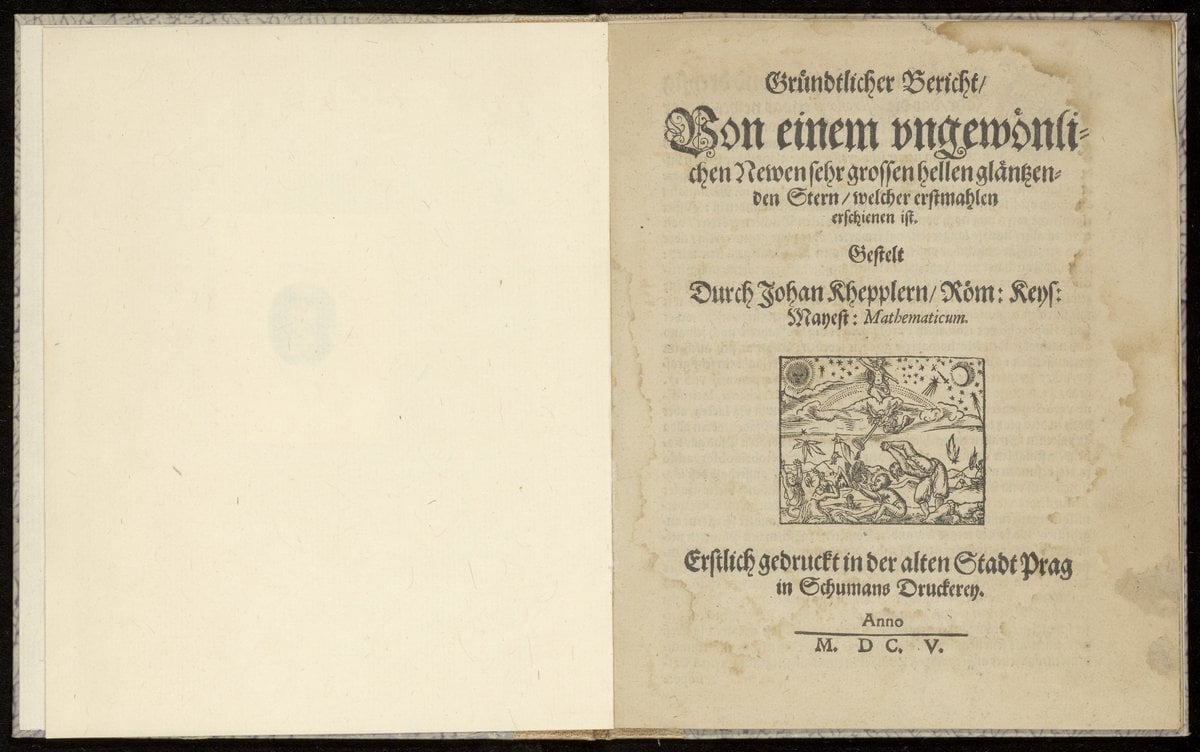
Thorough Report on a New and Unusual Star
Kepler, Johannes
Sacred and Truly Christian Philosophy, or Cosmic Meteorology
Fludd, Robert
Apology for The Harmony of the World
Kepler, Johannes
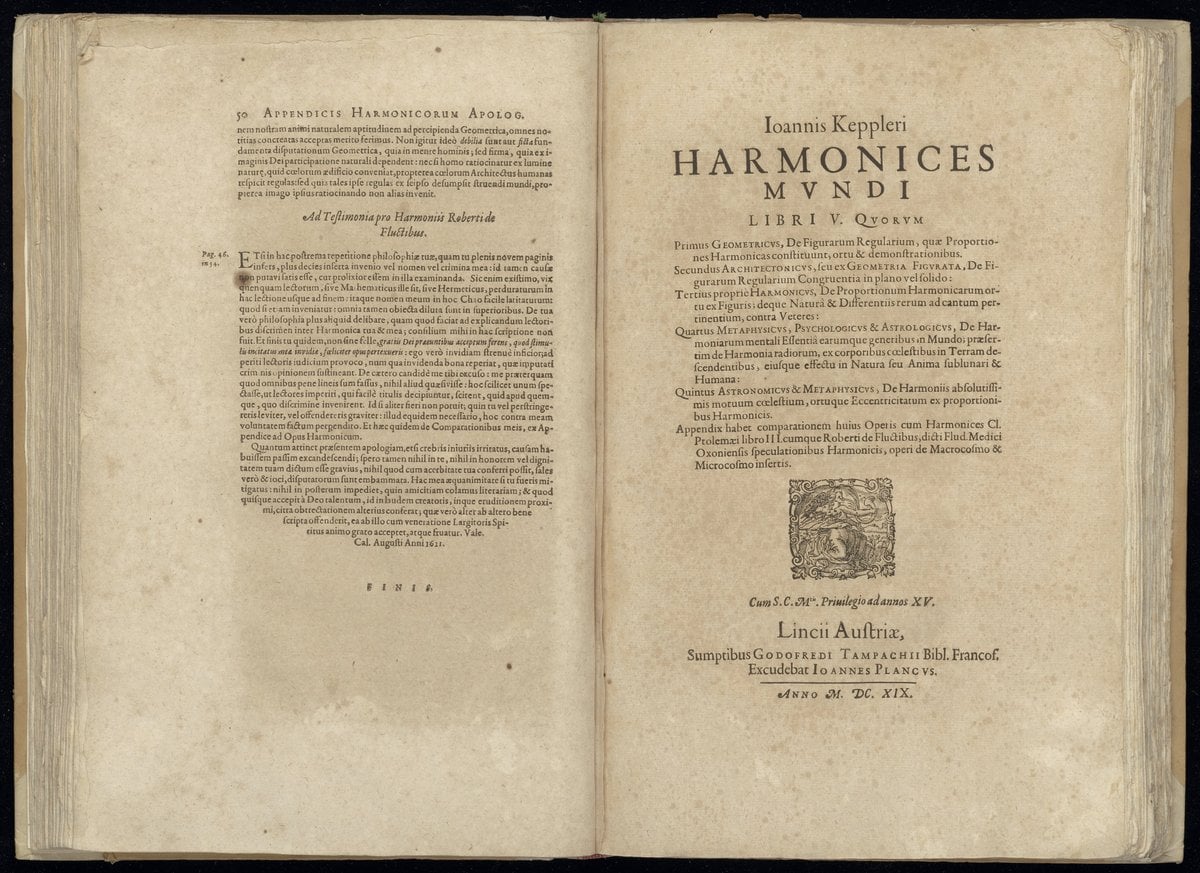
The Harmony of the World
Kepler, Johannes
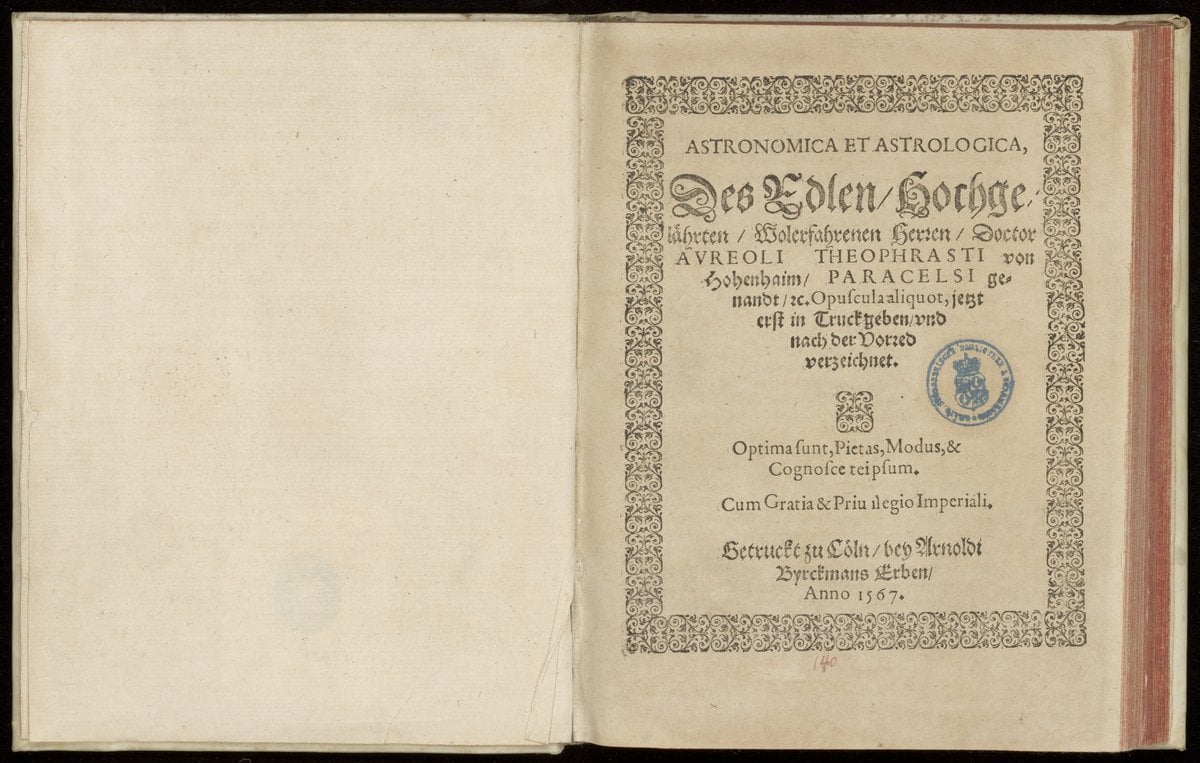
Astronomical and Astrological Works
Paracelsus, Theophrastus
A Useful Little Treatise on the Place of the World
Weigel, Valentin
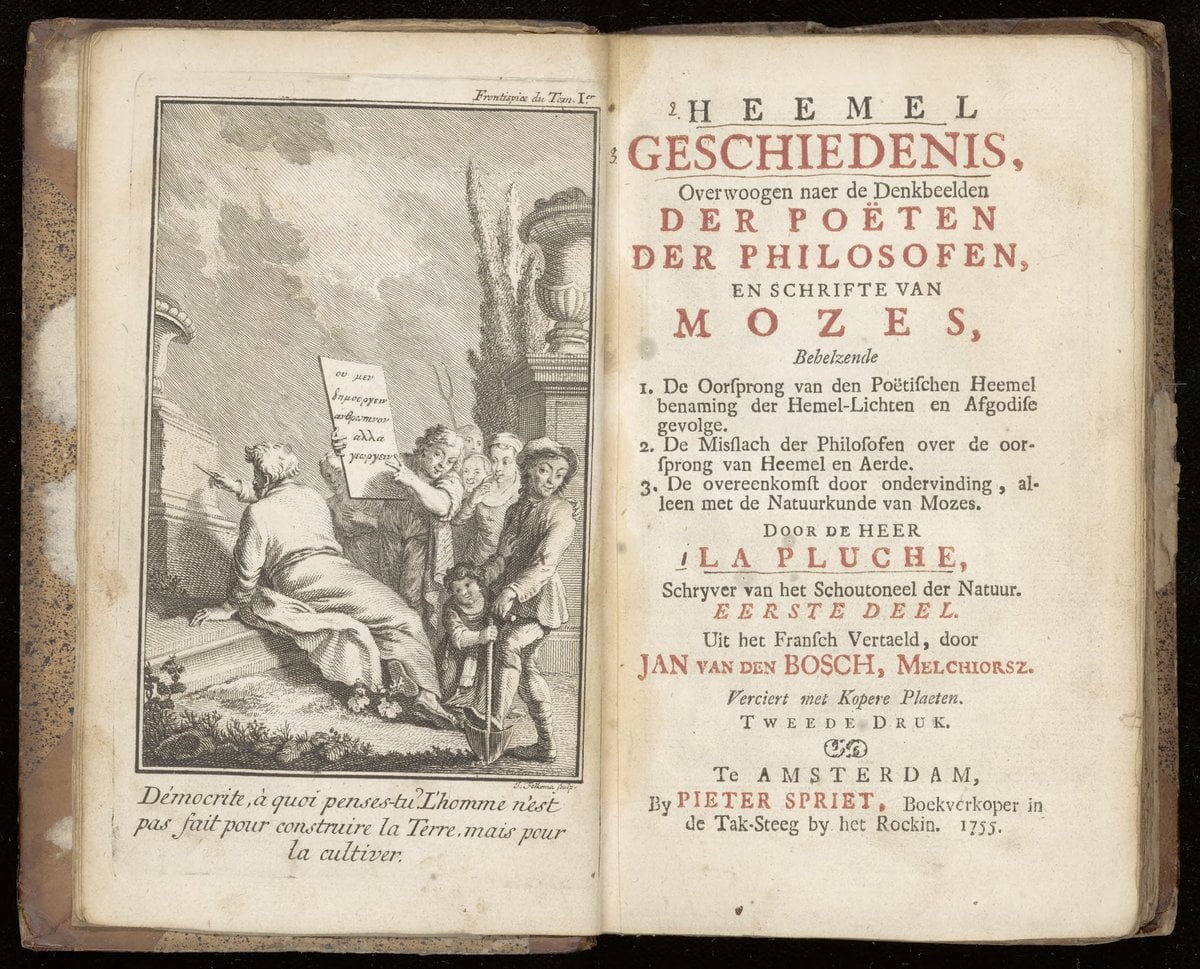
The History of the Heavens
Pluche, Antoine
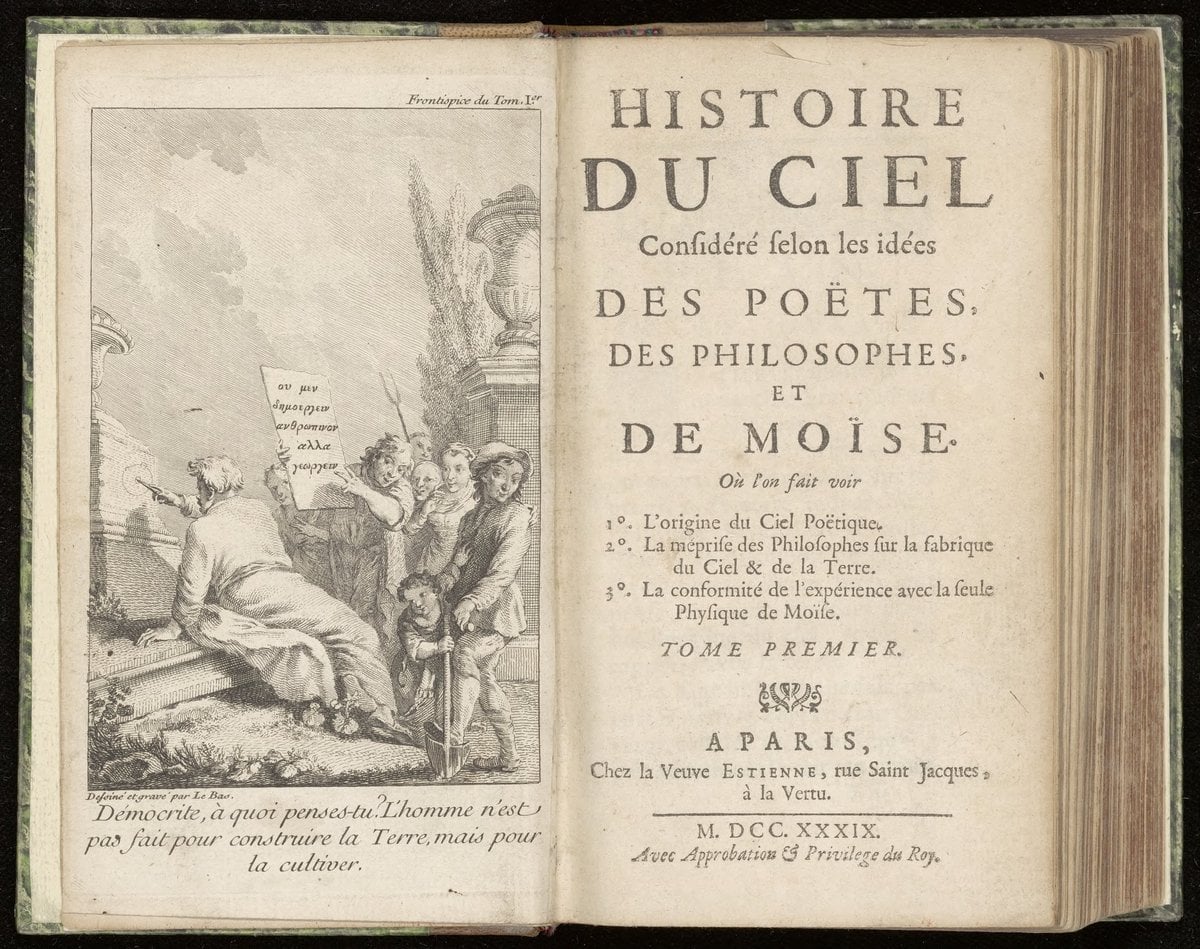
History of the Heavens
attr. Pluche, Antoine
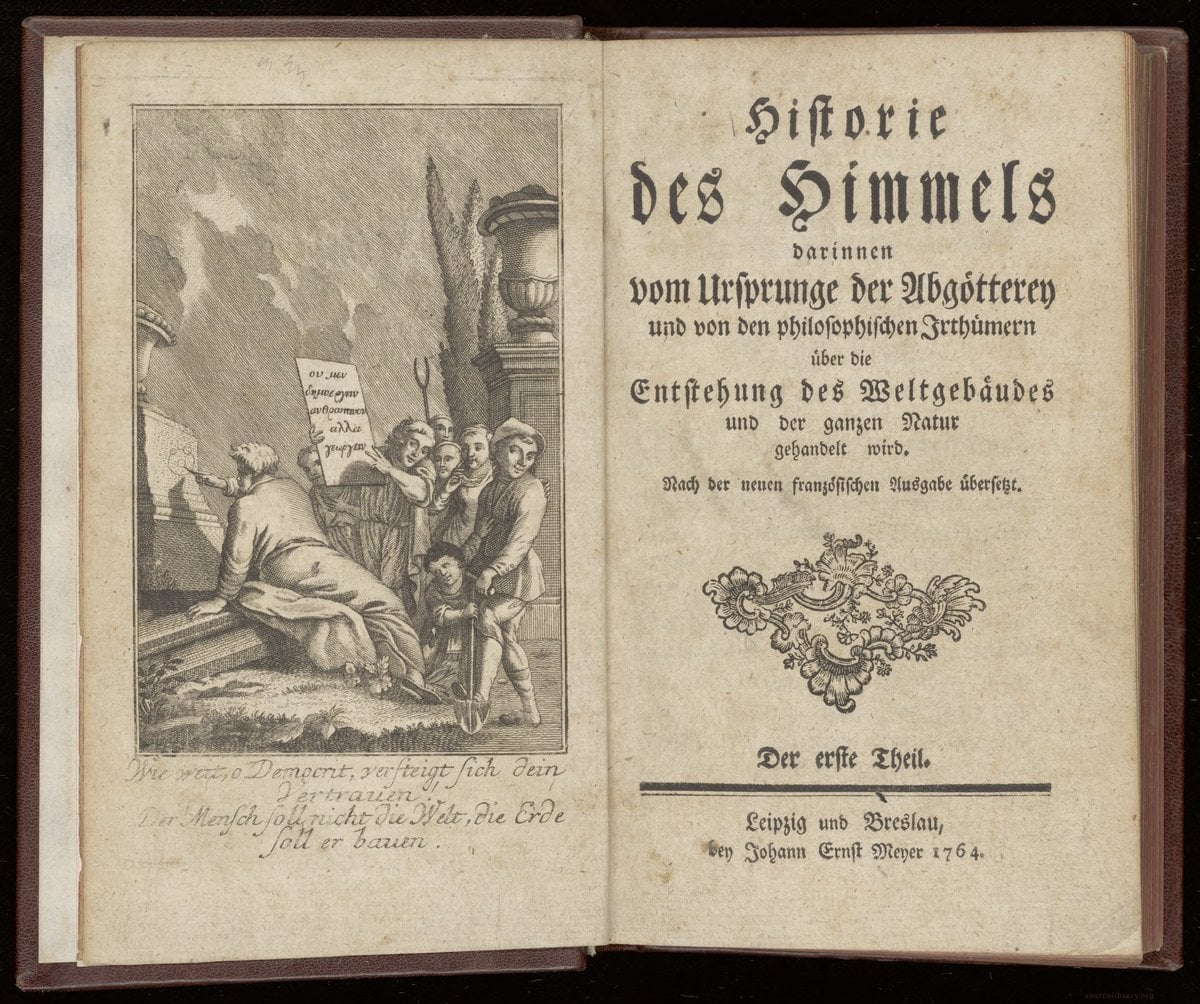
The History of the Heavens
attr. Pluche, Antoine
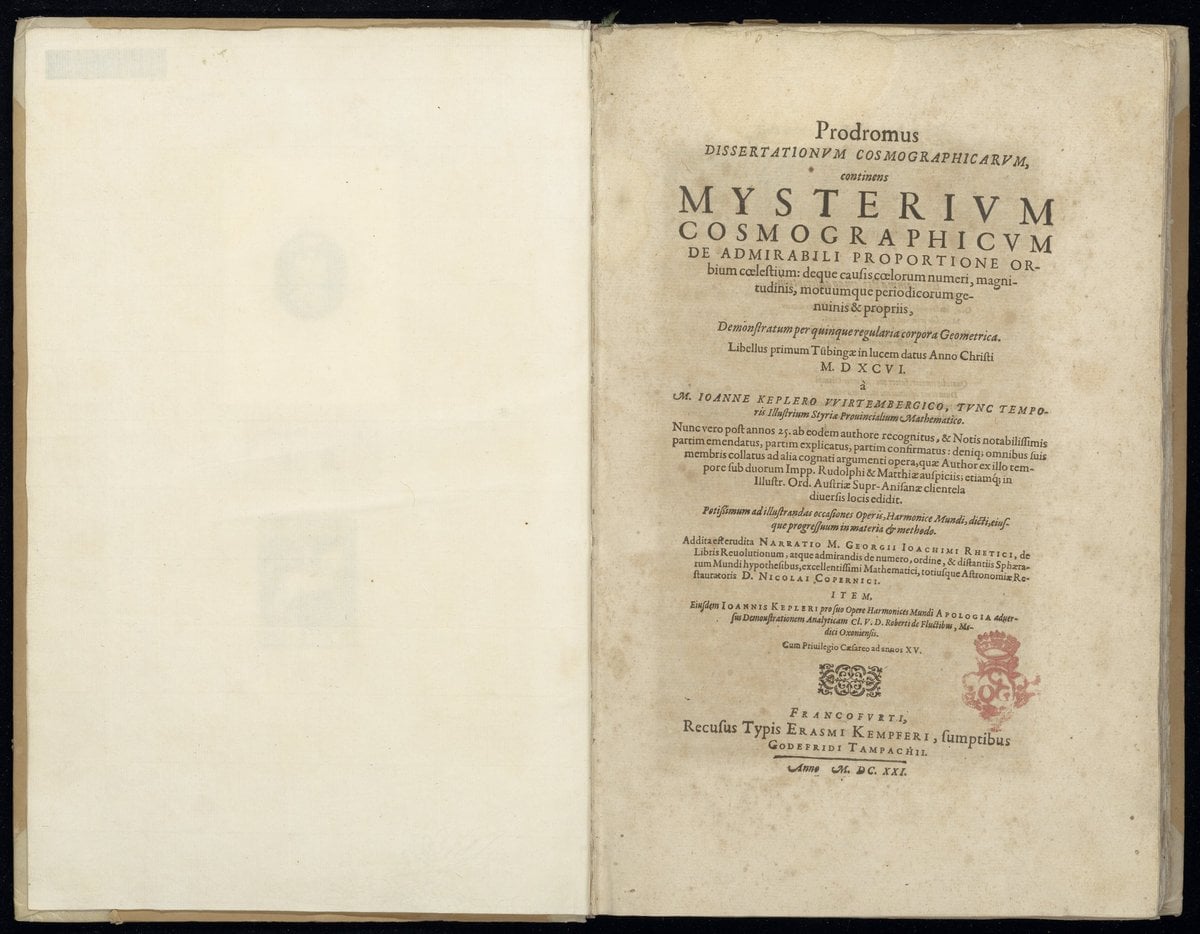
Forerunner of the Cosmographic Dissertations
Kepler, Johannes