


Forbidden Books
Books that got their authors burned, imprisoned, or excommunicated.
Illustrations
Browse all497 images extracted
This detailed engraving presents a portrait of the renowned Italian philosopher and astronomer Giordano Bruno. Created for an 1830 edition of his works, the image reflects the 19th-century's renewed interest in Bruno as a martyr for science and free thought.
A title and meeting record page from a Camden Society publication, dated 1842, showcasing the society's official seal featuring a portrait of the Elizabethan historian and antiquary William Camden (1551–1623). The document details a general meeting held at the Freemasons' Tavern in London, illustrating the formal administrative activities of Victorian-era scholarly organizations dedicated to the preservation of early historical and literary remains. The composition utilizes classic mid-19th-century typography centered around a finely detailed engraved medallion.
This intricate woodcut serves as the title page for John Dee's seminal 1564 work, Monas Hieroglyphica. The central oval displays Dee's 'Hieroglyphic Monad,' a complex symbol intended to represent the unity of the cosmos through a synthesis of astrological and geometric forms. Surrounded by an architectural frame adorned with elemental labels and celestial figures, the page encapsulates the Renaissance quest to decode the hidden laws of nature.
This celebrated frontispiece by Stefano della Bella introduces Galileo's seminal work, 'Dialogue Concerning the Two Chief World Systems.' It portrays an imagined meeting between Aristotle, Ptolemy, and Copernicus, representing the clash between ancient geocentric models and the emerging heliocentric theory. Copernicus is shown holding a model of the sun-centered universe, signaling the revolutionary shift in scientific thought that Galileo's book would champion.
This woodcut portrait depicts Heinrich Cornelius Agrippa von Nettesheim (1486–1535), the renowned German polymath, physician, and occult philosopher. Shown in profile wearing scholarly attire, this 'vera effigies' (true likeness) serves as the central image for his influential work De Occulta Philosophia, signaling the author's authority and intellectual stature.
This woodcut from Heinrich Cornelius Agrippa's 'De Occulta Philosophia' (1533) illustrates the human body as a perfectly proportioned microcosm, harmoniously inscribed within a square. Surrounded by symbolic attributes such as the all-seeing eye and the serpent, the figure represents the intersection of physical form and divine order. This imagery was central to Renaissance thought, bridging the gap between natural philosophy, geometry, and the spiritual realm.

This intricate woodcut, titled 'Atrium Veneris' (Atrium of Venus), is one of the complex geometric diagrams used by Giordano Bruno to illustrate his theories on the 'triple minimum' and the structure of the universe. The diagram serves as a mnemonic device, where the nested shapes and lettered points represent a synthesis of mathematics, metaphysics, and memory palace techniques. Published just nine years before his execution, it reflects Bruno's radical attempt to map the infinite through finite geometric relations.

This woodcut illustrates the concept of the microcosm, where the human body is seen as a reflection of the greater universe. The figure is positioned within a circle, holding pentagrams that symbolize the five elements and the dominion of the spirit over matter. Such imagery was central to the esoteric teachings of the 16th century, most notably in the works of Heinrich Cornelius Agrippa.

This woodcut portrait depicts Gabriel de Collange, the French translator of Trithemius's 'Polygraphia,' at the age of 37. He is shown surrounded by the tools of his trade—mathematical instruments and scrolls with moralizing Latin mottos—emphasizing the intellectual and scientific nature of his work on secret writing.
Throughout the early modern period, the boundary between divine revelation and heretical transgression was often drawn in ink. To possess a book was to possess a perspective, and for many, that perspective was deemed a threat to both the soul and the state. This collection explores the legacy of those who dared to document the fringes of human thought, from the mystical ecstasies of the condemned to the rigorous cosmological theories that unraveled the medieval world. The mirror of simple souls, though appearing here in a version from 1927, carries the weight of its author Marguerite Porete’s execution in 1310, serving as a reminder that ideas could be as lethal as they were profound. Similarly, the Giordano Bruno — Infinite Universe, 17th-Century English MS from 1670 preserves the visionary and ultimately fatal philosophy of a man who refused to recant his belief in a boundless cosmos.
The shadow of the Inquisition looms large over these volumes, documented through the very tools used to suppress them. Works like the Index Librorvm Prohibitorvm : Actorum XIX. Mvlti Avtem Ex Eis Qvi Fverant Curiosa sectati, contulerunt Libros & combusserunt coram omnibus from 1667 functioned as both a shield for the faithful and a bibliography for the curious, listing the titles that the Church sought to erase from public memory. Meanwhile, the dark obsession with heresy took physical form in manuals like The Hammer of Witches, first printed in 1486 by Heinrich Kramer, and its later iteration Malleus Maleficarum (The Hammer of Witches) in 1487. These texts, alongside Tractatus de Officio Sanctissimae Inquisitionis, provided the legal and theological framework for the persecution of those accused of practicing the dark arts or challenging religious orthodoxy.
Despite the threat of the pyre, a clandestine network of scholars and occultists ensured the survival of forbidden wisdom. The Goal of the Wise, appearing in manuscripts between 1500 and 1525, and the Picatrix (Ghāyat al-Ḥakīm) offered a synthesis of astral magic and philosophy that crossed linguistic and religious borders in secret. These grimoires, including the Sepher Raziel - Sixteenth Century English Grimoire and the Grimorium Verum (The True Grimoire), were copied by hand in the dead of night, preserved by those who believed that the secrets of the universe were worth the risk of damnation. Even as Friedrich Spee von Langenfeld questioned the validity of witch trials in Cautio Criminalis, seu De Processibus Contra Sagas, the fascination with the forbidden persisted, eventually finding a new audience in later centuries through volumes such as the Collected Works of Giordano Bruno the Nolan and Arthur Edward Waite’s 1910 study, The Book of Black Magic and of Pacts.
Essential Reading
The foundational texts of this tradition
Giordano Bruno — Infinite Universe, 17th-Century English MS
Giordano Bruno, 1670
This manuscript preserves Bruno's visionary and ultimately fatal philosophy of a boundless cosmos, explicitly mentioned in the collection's essay.
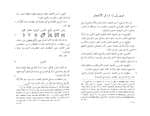
Picatrix (Ghāyat al-Ḥakīm)
al-Majriti (attrib.), 1000
This original Arabic text of the Picatrix is a foundational grimoire explicitly mentioned as circulating in secret due to its forbidden magical content.
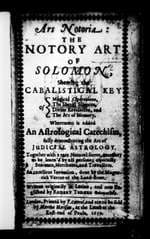
Ars Notoria: The Notory Art of Solomon
Robert Turner, 1584
This text was explicitly condemned by the Church for its magical practices, directly fitting the collection's theme of forbidden knowledge.
Important Works
Significant texts that deepen understanding
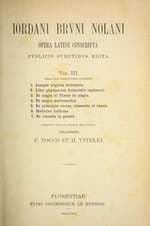
Latin Works Vol. III (On Magic, On Bonds)
Giordano Bruno, 1891First Complete Translation
Contains Bruno's works on magic and bonds, subjects often deemed heretical and contributing to his condemnation.
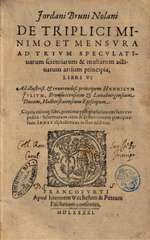
On the Threefold Minimum and Measure
Giordano Bruno, 1591
An original philosophical work by Bruno, contributing to the cosmological theories for which he was condemned.
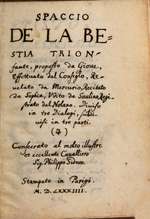
The Expulsion of the Triumphant Beast
Giordano Bruno, 1584
A satirical work by Bruno criticizing religious dogma, which contributed to the charges of heresy against him.
The Incantation of Circe
Giordano Bruno, 1582First Translation
An early work by Bruno exploring memory and magical arts, subjects often viewed with suspicion by the Church.
The Heroic Frenzies
Giordano Bruno, 1585
A philosophical dialogue by Bruno expressing his mystical and pantheistic views, which were considered heretical.
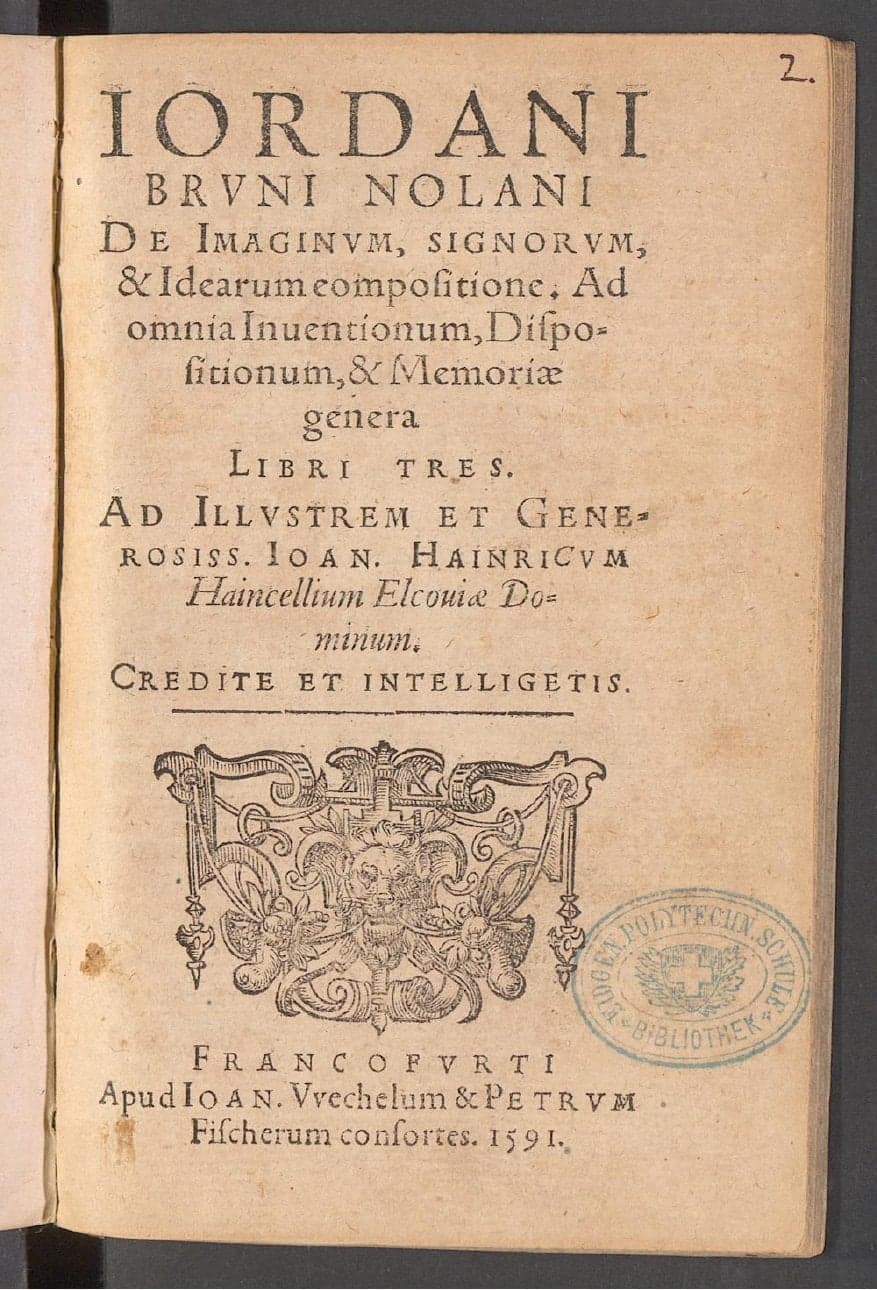
Iordani Bruni Nolani de imaginum, signorum, & idearum compositione
Bruno, Giordano, 1591
An original work by Bruno on images and ideas, reflecting his complex and often controversial philosophical system.
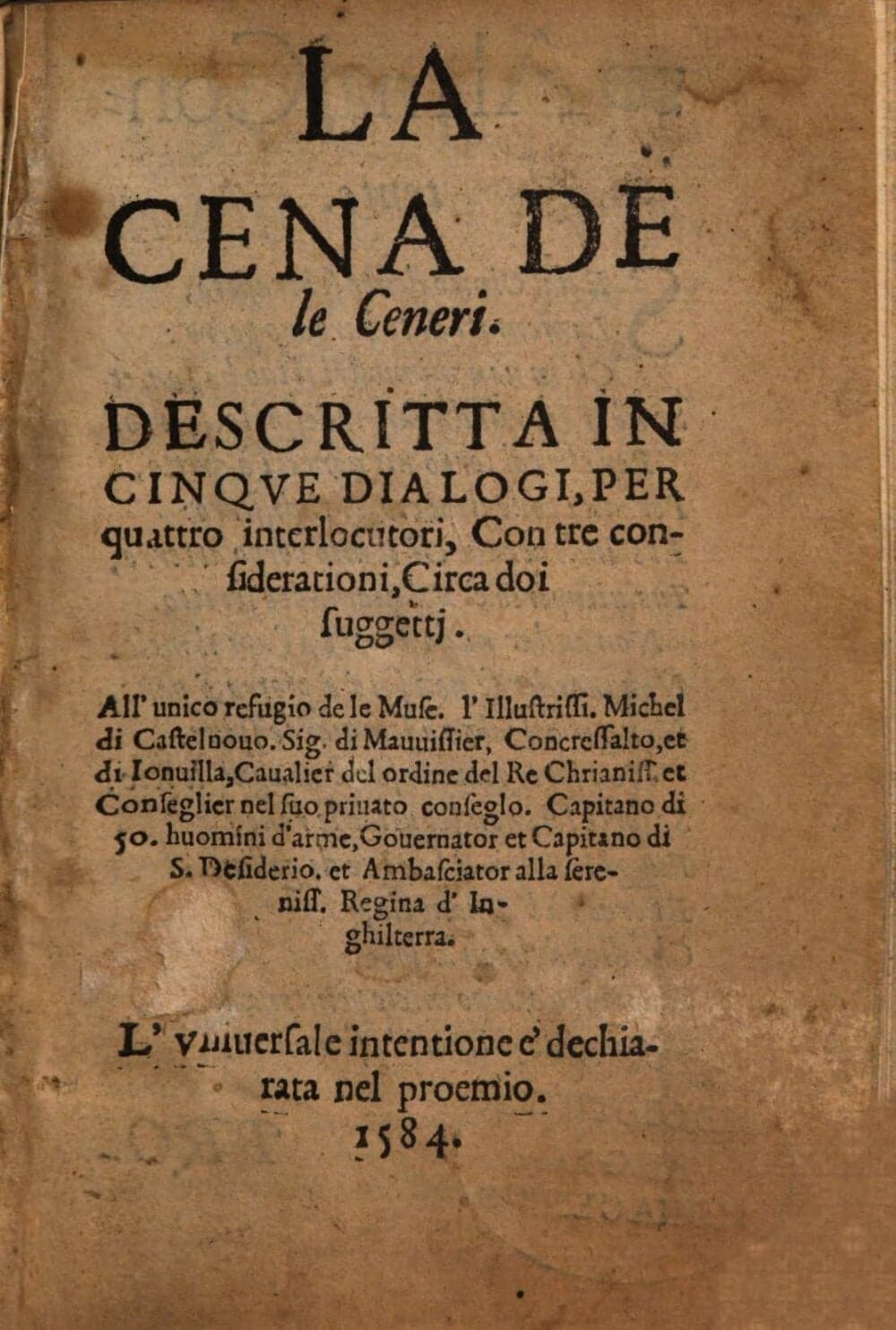
The Ash Wednesday Supper
Bruno, Giordano, 1584
A dialogue by Bruno where he discusses his cosmology and criticizes societal norms, contributing to his reputation as a dangerous thinker.
Jordani Bruni Nolani de triplici minimo et mensura ad trium speculativarum scientiarum & multarum activarum artium principia libri V ...
Bruno, Giordano, 1591
An original philosophical work by Bruno, contributing to the cosmological theories for which he was condemned.
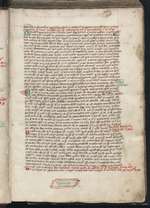
The Goal of the Wise
Pseudo-Maslama, 1200
This Latin translation of the Picatrix was a widely circulated grimoire of forbidden magic in Europe, explicitly mentioned in the collection's description.
All Books
Browse Full Catalog→158 books in this collection
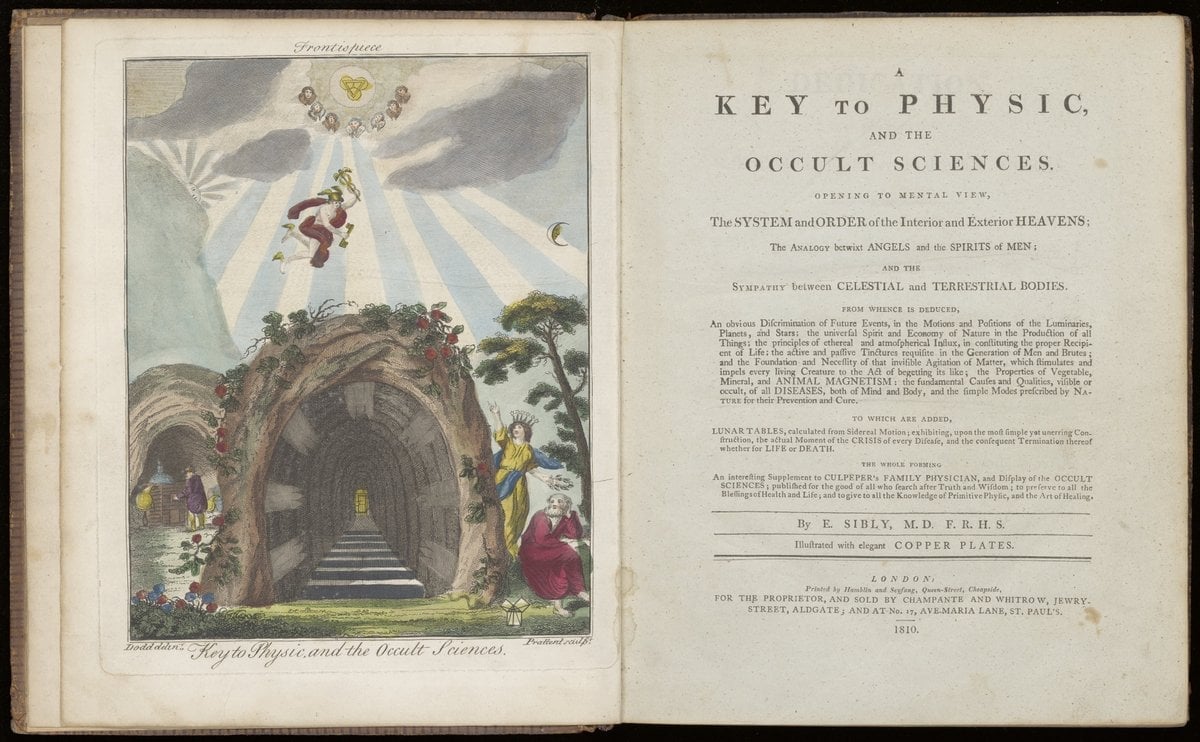
A key to physic, and the occult sciences
Sibly, Ebenezer
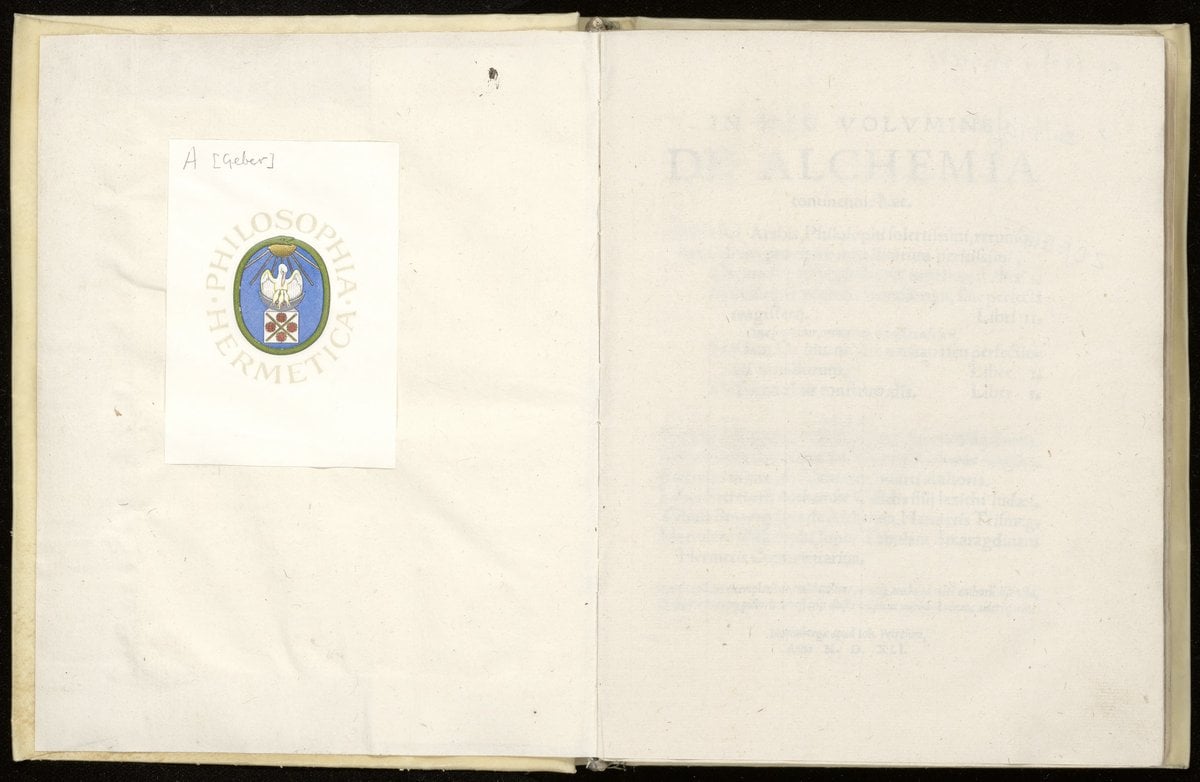
On Alchemy
Geber|Bacon, Roger|Richardus Anglicus|Calid|Hermes Trismegistus|Hortulanus
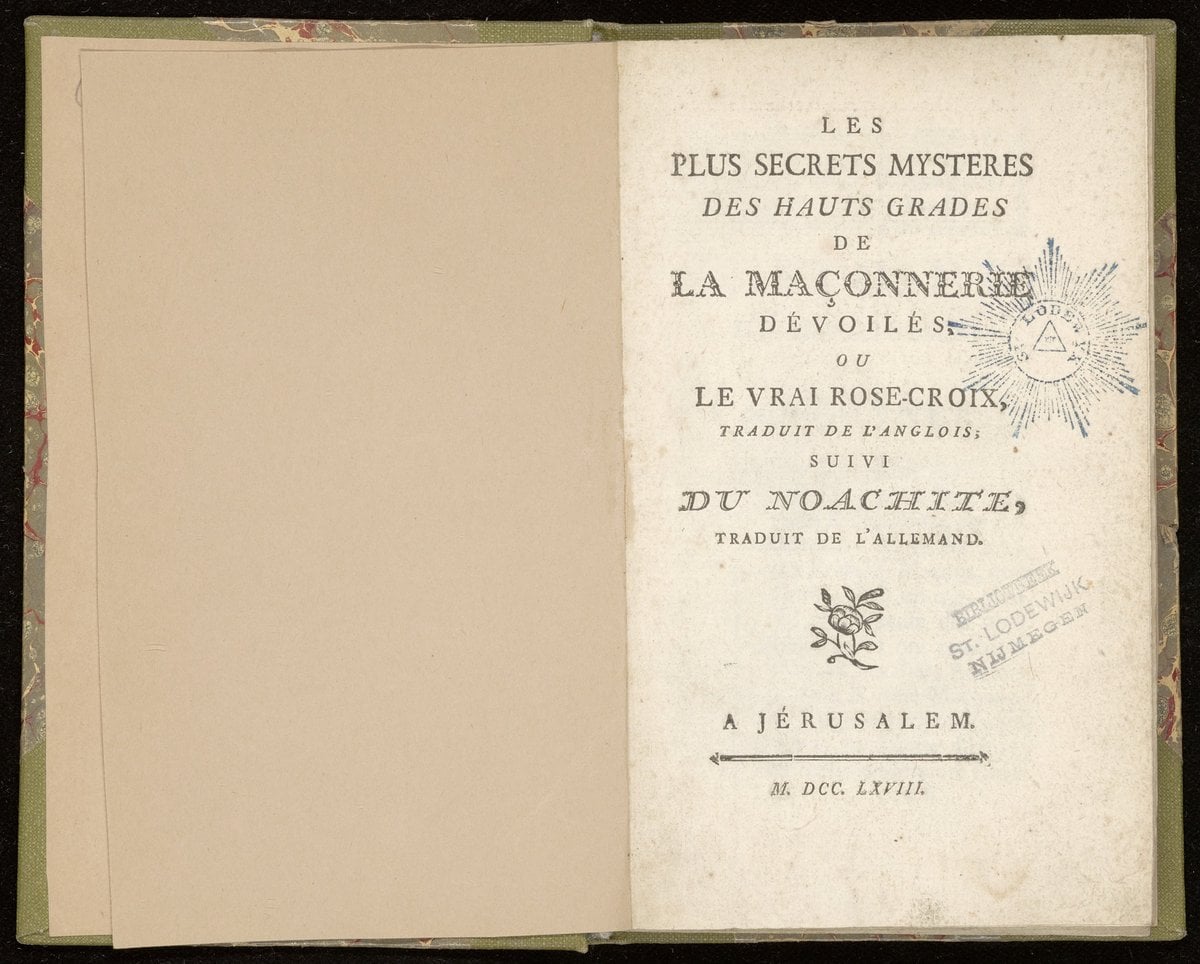
The Most Secret Mysteries of the High Degrees of Freemasonry Unveiled
attr. Köppen, Karl Friedrich
Bruno, or On the Divine and Natural Principle of Things
Schelling, Friedrich Wilhelm Joseph von
The Reformed Sky
Bruno, Giordano
Discovery of Certain Secret Dealings of the Jesuits
Anonymous
An Attempt at a History of Arianism
attr. Starck, Johann August von
Short and Clear Refutation of John Calvin's Arguments on the Punishment of Heretics
Castellio, Sebastiano
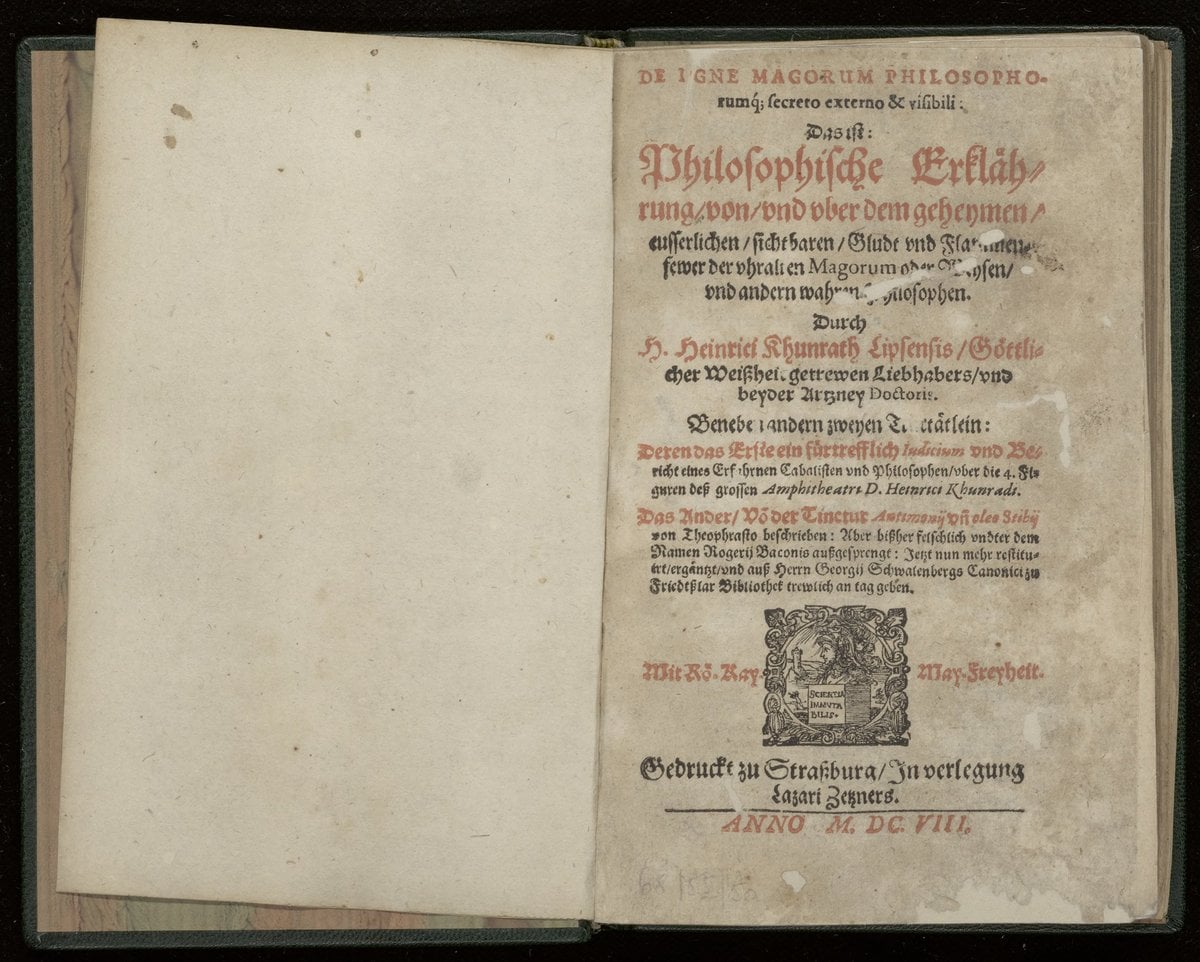
On the Secret External and Visible Fire of the Magi and Philosophers
Khunrath, Heinrich
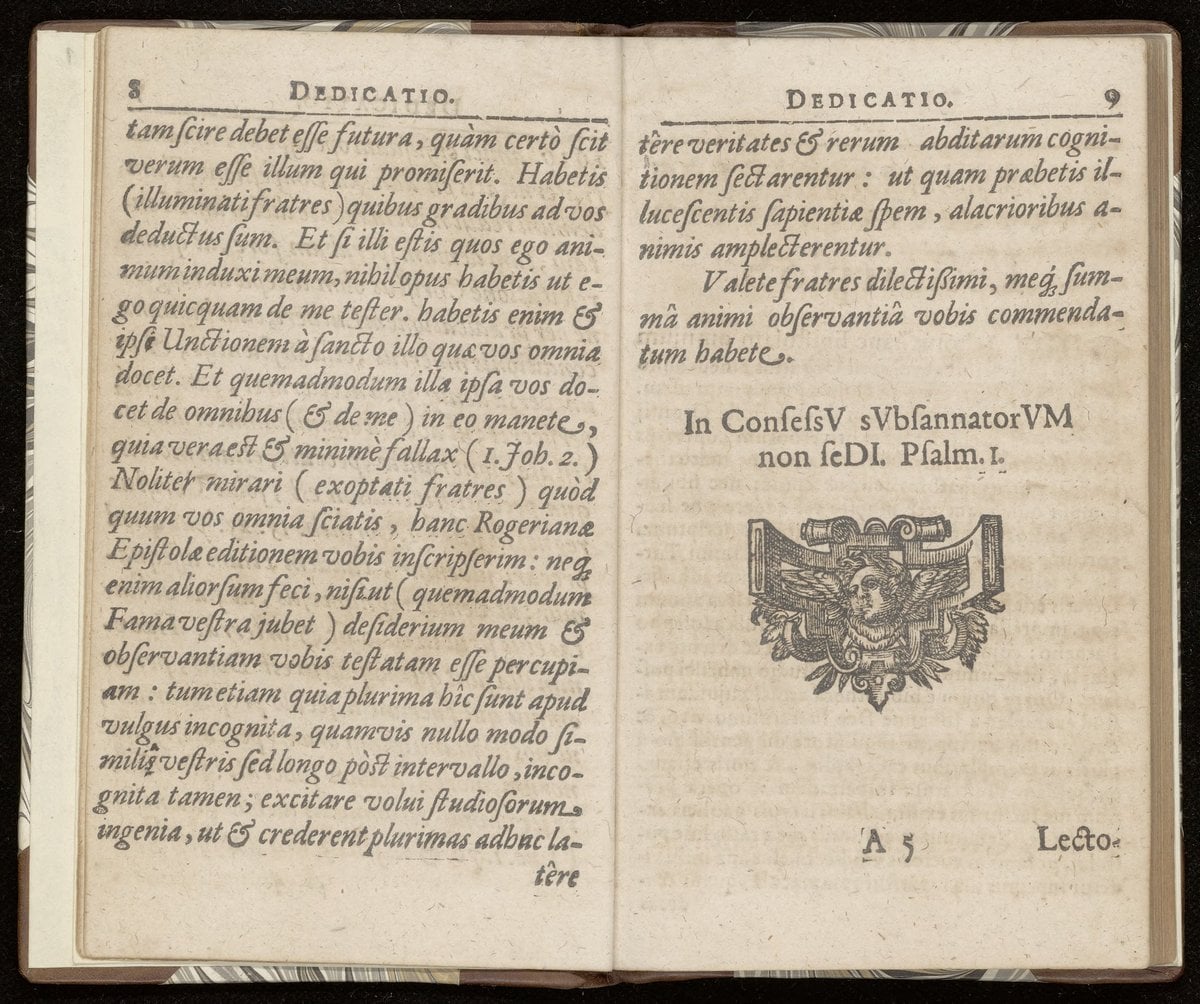
Letter on the Secret Works of Art and Nature
Bacon, Roger
On the External and Visible Secret Fire of the Magi and Philosophers
Khunrath, Heinrich|Arndt, Johann
On Occult Philosophy
Basilius Valentinus
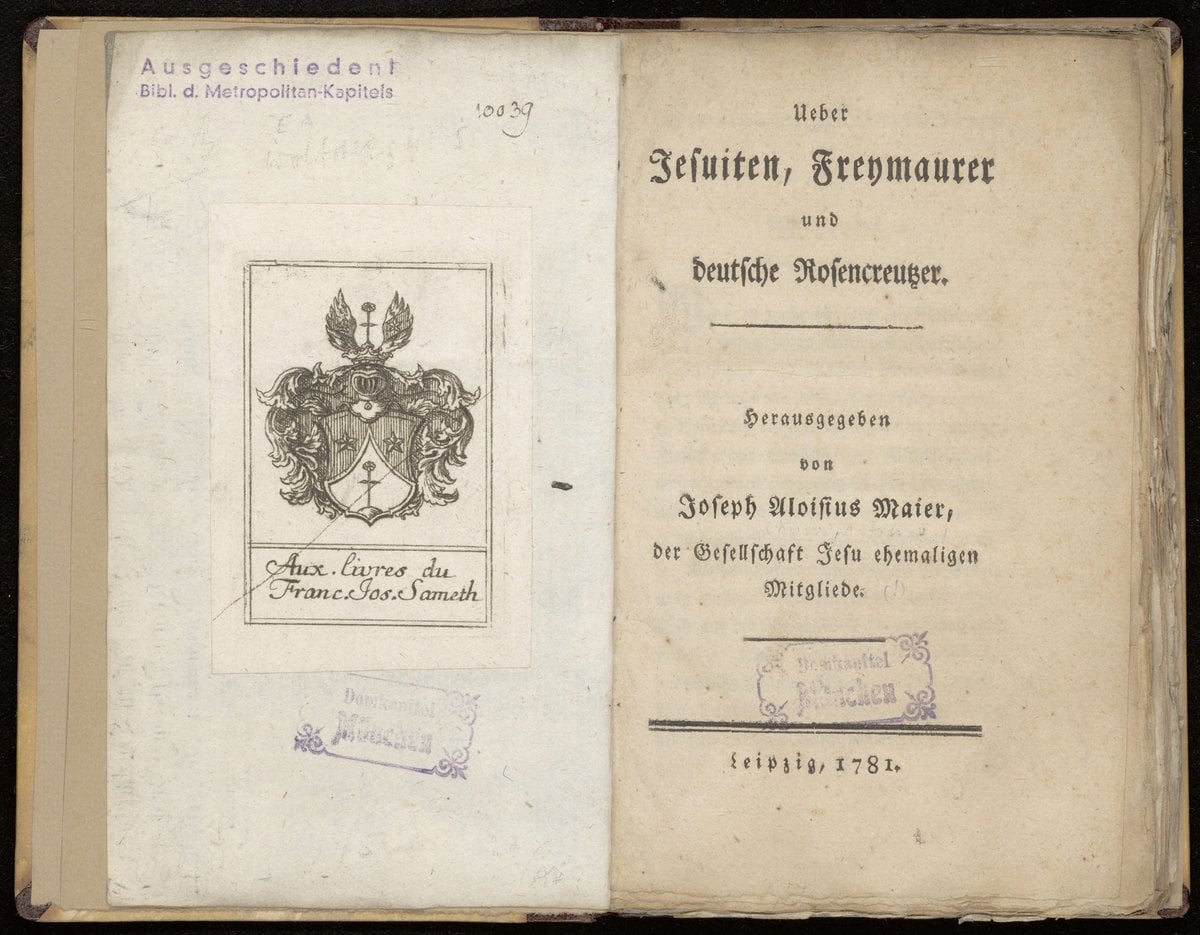
On Jesuits, Freemasons, and German Rosicrucians
attr. Knigge, Adolf von
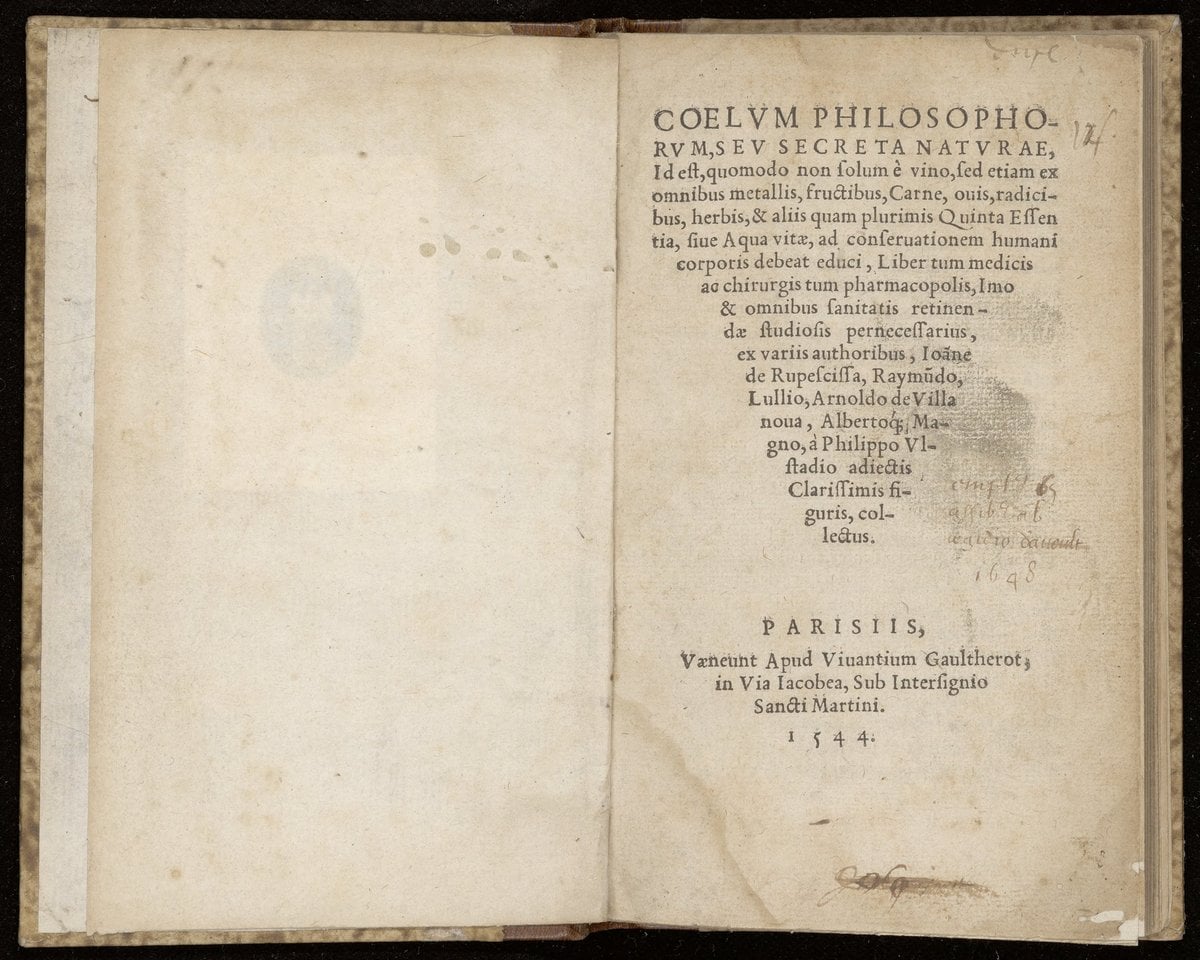
The Heaven of the Philosophers
Ulstad, Philip