



Illustrations
Browse all500 images extracted

This intricate diagram is a 'Chakra' from the Jyotirvidabharanam, a classical Sanskrit text on astrology. It serves as a computational tool for astrological predictions, with the grid and surrounding Sanskrit characters representing various celestial positions and influences. Such diagrams were essential for practitioners of Jyotisha (Vedic astrology) to calculate planetary movements and their perceived effects on human affairs.

This vibrant geometric diagram is a Sarvatobhadra Chakra, a sacred grid used in Hindu rituals and Vedic astrology for planetary propitiation (Graha Shanti). The central lotus and the specific arrangement of colored squares represent a cosmic map used to invoke various deities and celestial powers. This illustration from a 1920 Sanskrit text exemplifies the traditional use of color and geometry in Indian spiritual practices.

This emblem is the official seal of the Theosophical Society, founded in 1875. It incorporates symbols from various traditions—the Egyptian ankh, the Hindu swastika, the Jewish hexagram, and the Gnostic ouroboros—to represent the synthesis of science, religion, and philosophy.

This diagram represents a traditional North Indian astrological chart, known as a Kundli, from the 10th-century Sanskrit text 'Chamatkara Chintamani'. It illustrates the twelve houses of the zodiac, each labeled with its primary name and numerical order, serving as a fundamental tool for astrological calculations and interpretations in Vedic tradition.

This intricate diagram, rendered in red ink, represents various 'chakras' or astrological charts used in traditional Indian divination. The left portion shows a nested rectangular structure, while the right features three distinct grids labeled for different types of predictions. Such diagrams were essential tools for practitioners of Jyotisha (astrology) to calculate and visualize celestial influences.

This diagram represents a traditional North Indian astrological chart, known as a Kundali. It features a square grid divided into twelve houses, used to map the positions of celestial bodies at a specific moment. Such diagrams were essential tools in Jyotish (Vedic astrology) for making predictions and determining auspicious timings.

This diagram from a Telugu publication illustrates early aviation technology, comparing the capabilities of an airplane and a dirigible. It features detailed annotations in Telugu regarding speed, range, and altitude, reflecting the global interest in aeronautics at the turn of the century. The illustration provides a fascinating glimpse into how modern scientific concepts were communicated in regional Indian languages during the colonial period.

This detailed diagram illustrates the pioneering technology of pigeon photography from the early 1900s. It features a carrier pigeon equipped with a miniature breast-mounted camera, alongside technical views of the camera's shutter mechanism and a mobile horse-drawn pigeon loft. Such innovations represent early milestones in the history of aerial reconnaissance and remote sensing.

This vibrant illustration depicts a multi-armed deity, possibly a form of the goddess Durga or another powerful divinity, seated upon her celestial vehicle. She brandishes a variety of symbolic weapons and objects, representing her diverse powers and role in maintaining cosmic balance. The use of bold outlines and a striking blue for the animal mount is characteristic of traditional South Asian manuscript illustration styles.
Visual Art
Browse all art →60 works of visual art in this collection
 painting
Green Tara
Aniko (Nepalese, active in Tibet mid- to late 1200s)
The Buddhist deity Green Tara seated in the posture of royal ease on a lotus throne within an ornate architectural gateway.
 object
Durga Slaying the Buffalo Demon Mahisha
Anonymous (Central India)
A fragmentary stone sculpture depicting the Hindu goddess Durga in the act of slaying the buffalo demon Mahisha.
 object
Varaha — Boar Incarnation of Vishnu
Anonymous (Central India)
A wide-mouthed, carinated sandstone vessel decorated with horizontal registers of swirling wave-like patterns and stylized figures of deer or ibex.
 painting
Tantric Buddha Vairochana as Vajrasattva
Anonymous (Central Tibet)
This painting depicts the central figure of Vairochana in the guise of Vajrasattva, seated in meditation with his hands in the dharmachakra mudra, surrounded by a retinue of bodhisattvas and other deities.
 painting
Mahakala, Protector of the Tent
Anonymous (Central Tibetan)
The wrathful deity Mahakala (specifically the two-armed Panjarnata form) stands centrally, surrounded by an entourage of secondary protective deities and lineage lamas.
 object
Monkey General Hanuman — Chola Bronze
Anonymous (Chola, South India)
This object is a small, rectangular bronze plaque featuring champlevé enamel decoration in geometric and floral patterns, likely used as an architectural or furniture fitting.
 object
Nataraja — Shiva as the Lord of Dance
Anonymous (Chola, South India)
A bronze sculpture of the Hindu deity Shiva depicted as Nataraja, the Lord of Dance, performing the Ananda Tandava within a flaming circular aureole.
 object
Siddhartha at the Bodhi Tree — Gandhara
Anonymous (Gandhara)
A schist fragment depicting a yakshi or female attendant figure, often associated with Buddhist narrative reliefs from Gandhara.
 object
Scenes from the Life of Buddha — Gandhara Relief
Anonymous (Gandhara, Kushan period)
A fragmentary schist relief depicting the torso and limbs of the Buddha, showing his characteristic posture and soft, idealized physique.
 painting
Diagrams of the Universe — The Two-and-a-Half Continents
Anonymous (Gujarat)
A miniature painting depicting a courtly scene with a prince on horseback encountering women, one of whom is on a swing, set within a lush landscape.
 object
Goddess Durga Slaying the Demon Mahisha
Anonymous (Indian)
The Hindu goddess Durga is depicted in her Mahishasura-mardini form, multi-armed and standing over the buffalo demon Mahishasura as she strikes him with a trident.
 object
Yashoda with the Infant Krishna
Anonymous (Indian)
A copper alloy sculpture depicting Yashoda nursing the infant Krishna, a central episode from the life of the deity Krishna.
 object
Krishna Killing the Horse Demon Keshi
Anonymous (Indian, Gupta period)
The Hindu deity Krishna is depicted struggling with and killing the horse-demon Keshi.
 object
Durga Destroying the Buffalo Demon
Anonymous (Kashmir or Himachal Pradesh)
This stone sculpture depicts the Hindu deity Vishnu seated on his mount, the mythical bird-man Garuda.
 object
Standing Shiva Mahadeva
Anonymous (Kashmir)
A gold solidus coin featuring the Byzantine Emperor Justinian I on the obverse and a winged Victory holding a cross on the reverse.
Texts from the Hindu, Buddhist, Jain, and syncretic spiritual traditions of South Asia. The collection spans from medieval Sanskrit manuscripts to nineteenth-century compilations, covering yoga, tantra, Vedic philosophy, jyotish (astrology), ayurveda, and devotional literature across multiple Indic languages.
Holdings include Purnananda Yati's Satchakranirupanam on the six chakras (1577), the Gheranda Samhita on hatha yoga (c. 1675), Daivagya Ramacharya's Muhurta Chintamani on electional astrology (1590), and the Surya Siddhanta astronomical treatise (1603 edition). The collection contains 63 first-ever English translations — primarily Sanskrit works on astrology, yoga, tantra, and Vedic ritual that have never before been available in English. These include texts on nakshatras, planetary remediation, nadi divination, and esoteric physiology.
Essential Reading
The foundational texts of this tradition
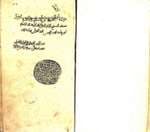
Three Theological Treatises
Abū Ḥāmid al-Ghazālī, 1115
These texts mark a pivotal shift in Vedic thought, moving from ritual sacrifice to profound philosophical inquiry into the nature of Brahman (ultimate reality) and Atman (the self).
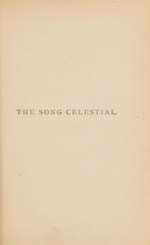
Bhagavad Gita (The Song Celestial)
Edwin Arnold (trans.), 1885
This iconic dialogue within the Mahabharata synthesizes diverse Vedic philosophies, offering a timeless guide to dharma, karma, devotion (bhakti), and the path to liberation.
Yoga-Darsana: Sutras with the Commentary of Vyasa
Patanjali / Vyasa, 1910
Patanjali's Yoga Sutras, accompanied by Vyasa's essential commentary, provide the foundational framework for classical Yoga, outlining the eight limbs for mental and spiritual discipline.
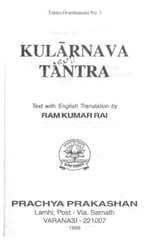
Kularnava Tantra
Traditional, 1917
A cornerstone of Tantric wisdom, this text presents the Kula path as a unique synthesis of philosophical systems, promising both worldly enjoyment and spiritual liberation.

Tibetan Book of the Dead (Bardo Thodol)
Padmasambhava / Evans-Wentz, 1927First from Tibetan
This seminal text guides the deceased through the intermediate state (bardo) between death and rebirth, offering profound insights into consciousness, karma, and the path to liberation in Tibetan Buddhism.
Important Works
Significant texts that deepen understanding
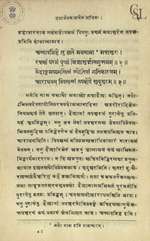
Surya Siddhanta with the Exposition of the Hidden Meaning
Ranganatha, 1603
This monumental text synthesizes divine mythology with sophisticated mathematical astronomy, serving as a primary source for understanding ancient Indian cosmology and timekeeping.
Aryabhatiya with the Bhatadipika Commentary
Aryabhata, 1431First Complete Translation
Aryabhata's 5th-century work is a seminal text in Indian mathematics and astronomy, introducing concepts like place-value notation, trigonometry, and a geocentric model of the solar system.
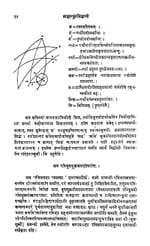
The Correctly Established Doctrine of Brahma, Volume 2
Brahmagupta, 1817First Complete Translation
Brahmagupta's work is a pivotal text in the history of science, introducing the concept of zero as a number and laying down rules for arithmetic operations with negative numbers.
Compendium of the Essence of Mathematics
Mahaviracharya, 850
As the earliest Indian text entirely devoted to mathematics, this work by Mahaviracharya showcases advanced arithmetic, algebraic, and geometric concepts, marking a significant departure from astrological focus.
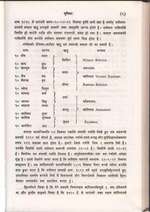
The Great Compilation
Varahamihira; ed. Baldev Prasad Misra, 1900
Varahamihira's encyclopedic work is a monumental synthesis of ancient Indian sciences, covering diverse topics from astronomy and meteorology to architecture, gemology, and social ethics.
The Jewel of All Meanings
Venkatesa Daivagya, 1350
This foundational pillar of Vedic Astrology offers an exhaustive exploration of the twelve houses of the natal chart, providing unprecedented detail for interpreting life's journey.
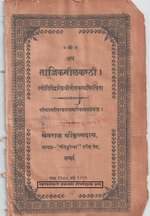
Nilakantha's Annual Astrology
Nilakantha, 1587
Nilakantha’s work is a groundbreaking synthesis of traditional Indian astrology with Perso-Arabic (Tajika) systems, offering sophisticated methods for timing pivotal life moments.
Light on the Yoga of Force with Commentaries
Svatmarama, 1450
This classical manual presents Hatha Yoga as a powerful path to spiritual realization, detailing postures, breathing techniques, and purification practices for physical and mental mastery.
The Science of Breath
Unknown, 1898
This text presents a radical perspective on human existence, asserting that the breath is the "manifest Great Lord" and the essential animating principle, offering techniques for breath control and subtle body awareness.
Also Notable
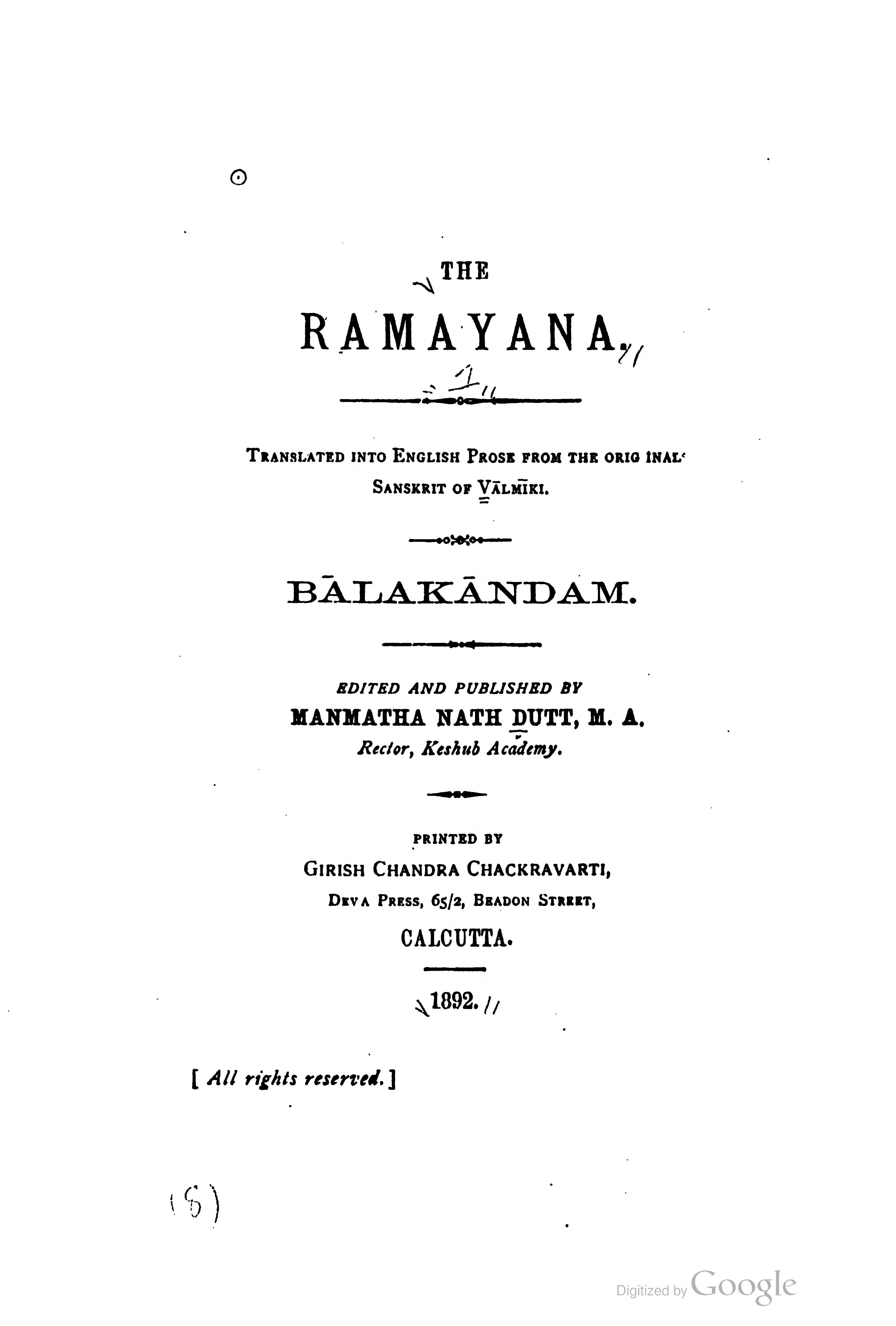
The Ramayana, Book 1: Bala Kanda
Manmatha Nath Dutt, 1891
The Garuda Purana
Manmatha Nath Dutt, 1908
Raja Yoga - Swami Vivekananda
Swami Vivekananda, 1896
Illustrated Description of the Six Chakras
Swami Hansa Swaroop, 1900First Translation
Hymn to Kali (Karpuradi Stotram) with Commentary
Vimalananda Svami; Arthur Avalon, 1922First from Sanskrit-English
Esoteric Buddhist Ritual Mandalas and Iconography
Unknown, 900First Complete Translation
Geomancy (Ramala Shastra)
Balakrishna Malhara Lada, 1700First Translation
Ocean of Victory in War
Unknown, 1800First Translation
All Books
Browse Full Catalog→864 books in this collection
The History of Barlaam and Josaphat
anonymous, Konstanz
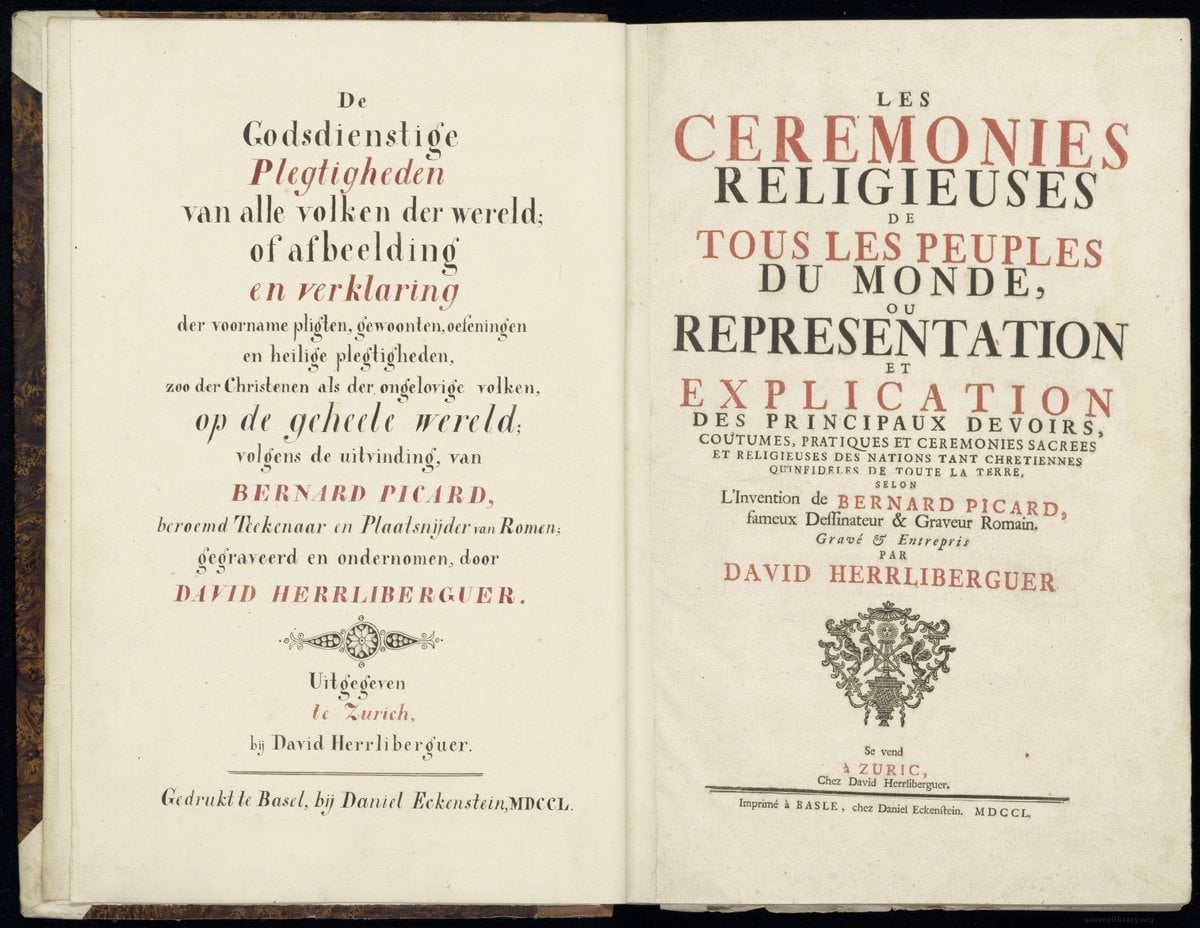
Religious Ceremonies
Picard, Bernhard|Herrliberguer, David
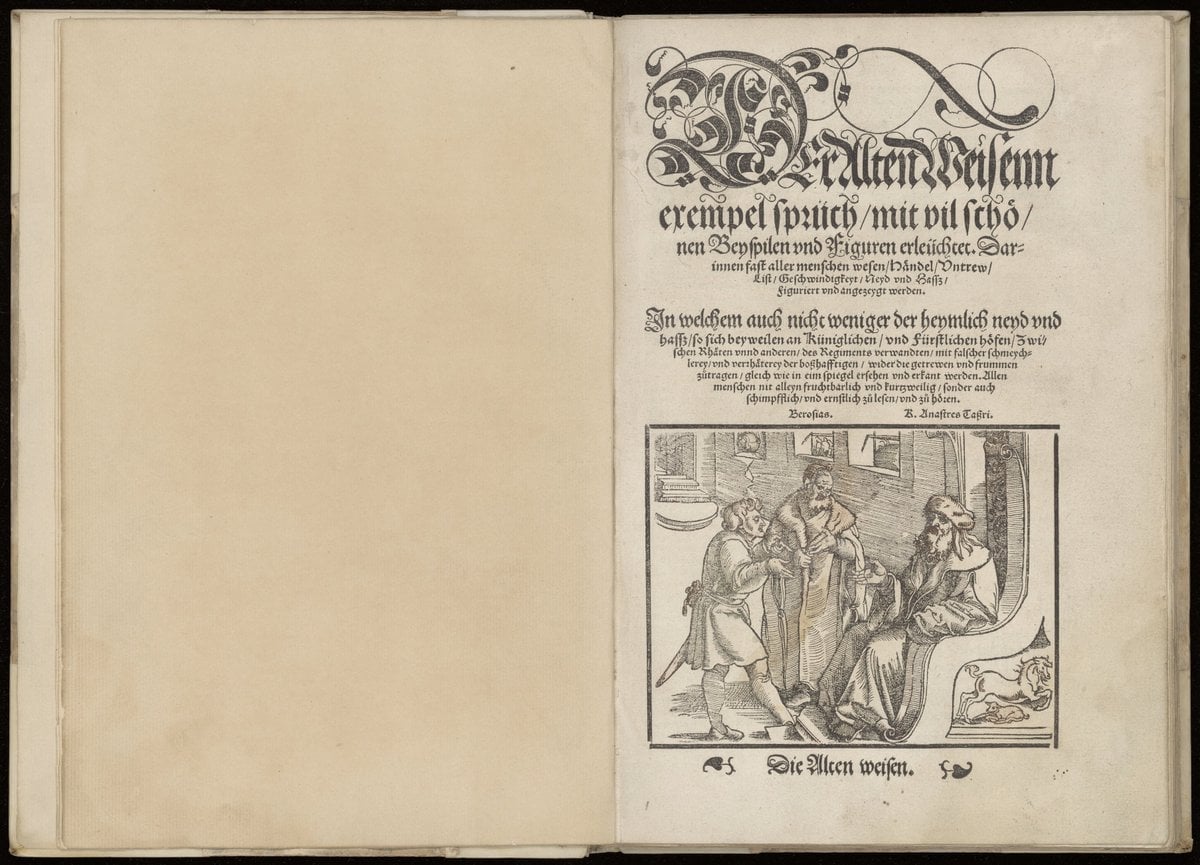
The Proverbs and Fables of the Ancient Sages
attr. Bidpai
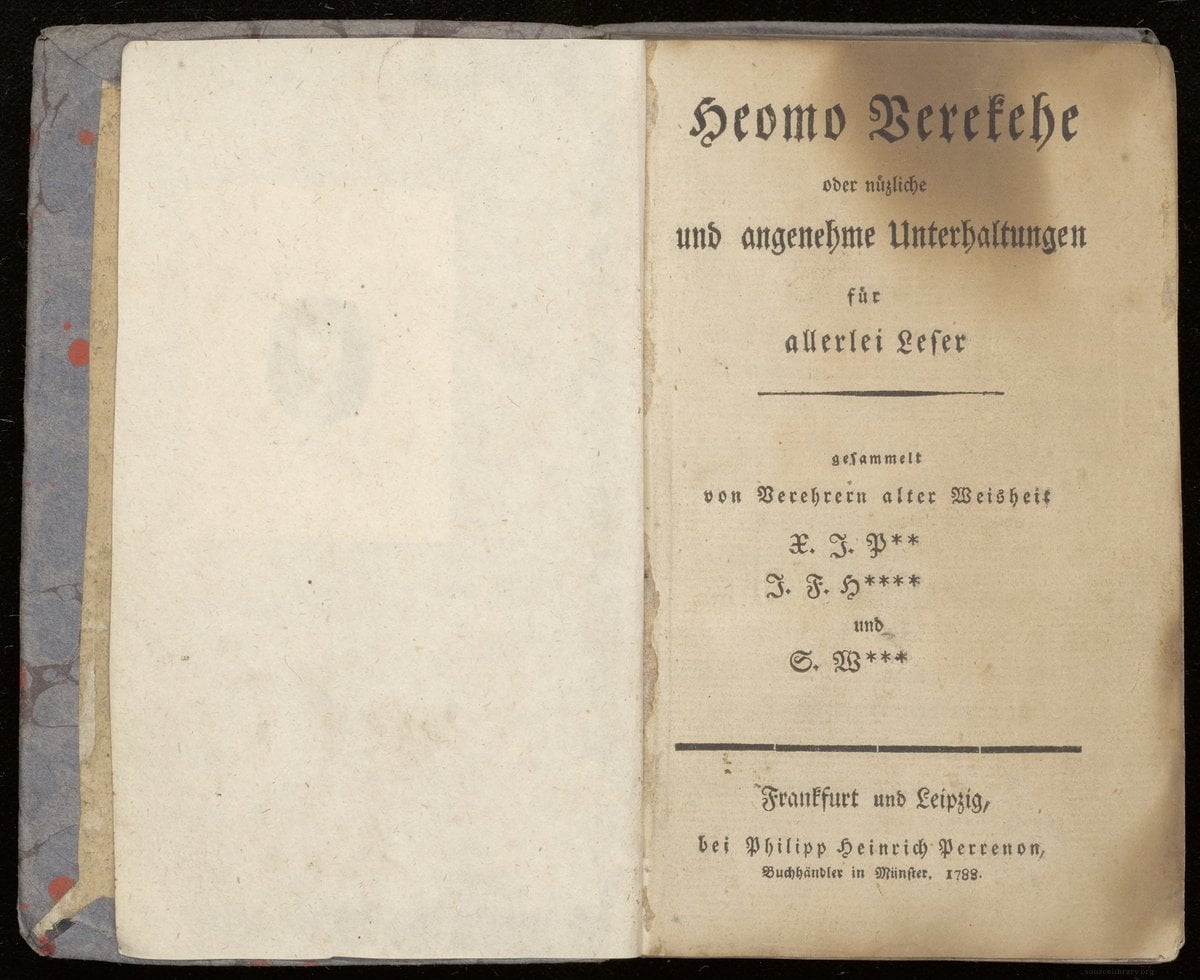
Heomo Verekehe, or Useful and Pleasant Entertainments
X.J.P|J.F.H|G.W
The Brahmanic Religious System
Kleuker, Johann Friedrich
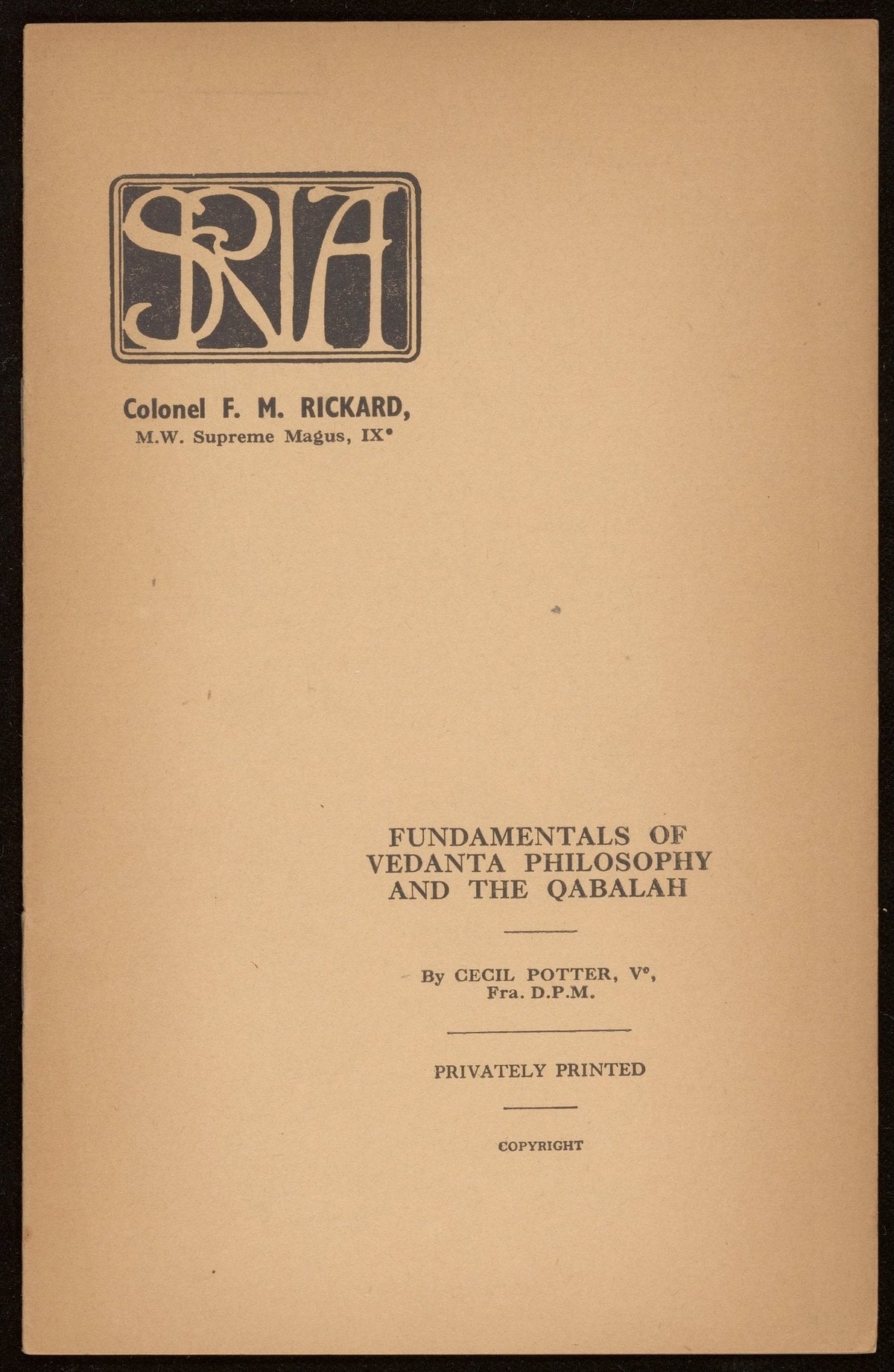
Fundamentals of Vedanta philosophy and the Qabalah
Potter, Cecil