


Illustrations
Browse all60 images extracted from 7 books
This engraving represents the 'Sixth Key' of Basil Valentine, illustrating the 'Chemical Wedding' or the union of opposites (Sulfur and Mercury). A bishop presides over the marriage of a King and Queen, symbolizing the conjunction of solar and lunar principles, while laboratory operations involving distillation and heating occur in the background. The imagery serves as an allegorical recipe for the creation of the Philosopher's Stone, emphasizing the balance and union required for successful transmutation.
This finely detailed engraving depicts Michael Maier, the author of Atalanta fugiens, at the age of 49 in 1617. Maier was a celebrated physician, alchemist, and counselor to Holy Roman Emperor Rudolf II; he is shown here with symbols of his learning and status, including a book and his family crest.
This intricate emblem from the 1582 'Splendor Solis' depicts the alchemical 'conjunction' through the figures of a King and Queen standing beneath dual suns. The scrolls they hold, labeled 'Lac Virginum' (Virgin's Milk) and 'Coagula', refer to the transformative chemical processes required to achieve the Philosopher's Stone. The scene is framed by a lush botanical border and a predella showing a battle scene involving Alexander the Great, linking alchemical mastery to worldly conquest.
An allegorical engraving from Heinrich Khunrath's 'Amphitheatrum Sapientiae Aeternae' (1602) depicting the entrance to the Cave of Eternal Wisdom. The scene shows an initiate approaching a radiant cavern inscribed with Latin maxims and the Hebrew name of God, symbolizing the arduous spiritual and intellectual journey toward enlightenment. The composition serves as a visual guide to the Hermetic path, explicitly warning the 'profane' to stay away while inviting the purified seeker to ascend the seven stages of wisdom.
This striking emblem, titled 'Hic Pater devorat Filium' (Here the Father devours the Son), illustrates the alchemical process of 'solutio' or the dissolution of the fixed into the volatile. The king represents the prime matter consuming its own offspring to achieve a higher state of spiritual purity, while the winged figure symbolizes the release of the soul and spirit from the body. It is the thirteenth figure from the influential 'Book of Lambspring' included in the 1678 edition of the Musaeum Hermeticum.
This intricate engraving, known as the 'Oratorium et Laboratorium,' illustrates the alchemist's dual pursuit of spiritual enlightenment and physical transmutation. The scene balances a sacred prayer space on the left with a practical laboratory on the right, emphasizing Khunrath's belief that true alchemical success requires both divine grace and rigorous scientific labor.

This is the title page of Michael Maier's 'Atalanta Fugiens' (1618), one of the most famous alchemical emblem books. The intricate engraving by the De Bry workshop illustrates the myth of Atalanta's race against Hippomenes and Hercules' quest for the golden apples, serving as complex allegories for the chemical secrets of nature. The border scenes depict the various stages of these myths, including the transformation of the lovers into lions, which carries deep esoteric meaning in the context of Great Work.

This intricate engraving depicts the 'Emerald Tablet' of Hermes Trismegistus, a foundational text of Western alchemy, inscribed onto a massive rock face within a symbolic landscape. The scene integrates the text with allegorical elements like a flowing river, a bridge, and various animals, representing the interconnectedness of the macrocosm and microcosm. It is a key illustration from Heinrich Khunrath's influential work, 'Amphitheatrum sapientiae aeternae,' which sought to harmonize alchemy, magic, and Christian mysticism.

This monumental engraving serves as a visual encyclopedia of musical theory and its mathematical foundations. The structure is a 'Temple of Music,' where architectural elements like columns and arches house organ pipes and complex tables that illustrate the ratios of musical intervals. At the base, figures are shown in a workshop, perhaps referencing the legendary discovery of musical proportions by Pythagoras in a blacksmith's forge, while the upper levels connect earthly music to the celestial harmony of the spheres.
Visual Art
Browse all art →60 works of visual art in this collection
 print
printSplendor Solis - Traité d'Alchimie - Mercure - La reine bleue (Les Sept Flasques)
Artistes anonymes du XVIème siècle
A crowned woman in white robes, representing the White Queen, stands inside a glass alchemical vessel topped with a golden crown.
 print
printSplendor Solis. Image 13 - Jupiter - Les trois oiseaux
Auteurs anonymes du XVIème siècle
An alchemical glass flask containing three birds (black, white, and red) is heated over a fire and topped with a golden crown.
 print
printSplendor Solis. Image 14 - Mars - L'oiseau à trois têtes
Auteurs anonymes du XVIème siècle
A triple-headed white bird, each head bearing a crown, contained within a crowned glass philosopher's egg heated by fire.
 print
printAlchemists Revealing Secrets from the Book of Seven Seals, The Ripley Scroll (detail), ca. 1700
George Ripley
A central diagram from the Ripley Scroll depicting two figures holding the Book of Seven Seals, surrounded by seven alchemical operations.
 print
printRipley Scroll
George Ripley
A long, vertical alchemical diagram depicting the stages of the Great Work, featuring symbolic figures, vessels, and mythological creatures.
 print
printRipley Scroll (Huntington Library)
George Ripley
A sequence of alchemical allegories detailing the preparation of the Philosopher's Stone, featuring Hermes Trismegistus, the Bird of Hermes, and the Red and Green Lions.
 print
printAmphitheatrum sapientiae aeternae - Alchemist's Laboratory
Heinrich Khunrath
An engraving of a massive interior space divided into an 'Oratorium' for prayer and a 'Laboratorium' for chemical experimentation, populated by an alchemist and his dog.
 print
printAmphitheatrum sapientiae aeternae - The cosmic rose
Heinrich Khunrath
A complex circular diagram centered on Christ as the Logos, surrounded by the ten Sephirot of the Kabbalah and divine names in Hebrew and Latin.
 print
printAmphitheatrum sapientiae aeternae - The hermaphrodite
Heinrich Khunrath
The alchemical Rebis or Hermaphrodite standing upon a terrestrial globe, surrounded by dense philosophical and alchemical inscriptions.
 print
printAutograph of H. Khunrath; from Amphitheatrum...
Heinrich Khunrath
A satirical emblem featuring an owl wearing spectacles, flanked by lit candles and crossed torches.
 print
printHoughton Typ 620.09.482 Heinrich Khunrath, Amphitheatrvm sapientiae aeternae
Heinrich Khunrath
A monumental rock formation in a landscape inscribed with the Latin and German text of the Emerald Tablet of Hermes Trismegistus and a passage from the Poimandres.
 print
printImage-Amphitheatrum sapientiae aeternae - Alchemist's Laboratory with text
Heinrich Khunrath
A circular engraving depicting the 'Oratorium-Laboratorium', an alchemist's workspace divided between a place of prayer and a chemical laboratory.
 print
printPorta Amphitheatri Sapientiae Aeternae
Heinrich Khunrath
The engraving depicts the entrance to the 'Amphitheater of Eternal Wisdom,' showing a massive stone archway inscribed with Latin instructions leading into a radiant tunnel of light.
 print
printSmaragdtafel - Amphitheatrum sapientiae aeternae
Heinrich Khunrath
A massive stone monolith inscribed with the Emerald Tablet of Hermes Trismegistus set within a symbolic landscape.
 print
printThe Four, the Three, the Two, and the One
Heinrich Khunrath
A complex circular cosmological diagram featuring a central human figure surrounded by Hebrew, Greek, and Latin inscriptions representing the Hermetic path from multiplicity to divine unity.
This collection contains 290 rare books from C.G. Jung's personal alchemical library at ETH Zürich, digitized from the volumes he owned and studied while writing his major works on psychology and alchemy. The collection spans 1481 to 1920, covering five centuries of alchemical, philosophical, and esoteric thought in Latin, German, French, English, Greek, and Italian.
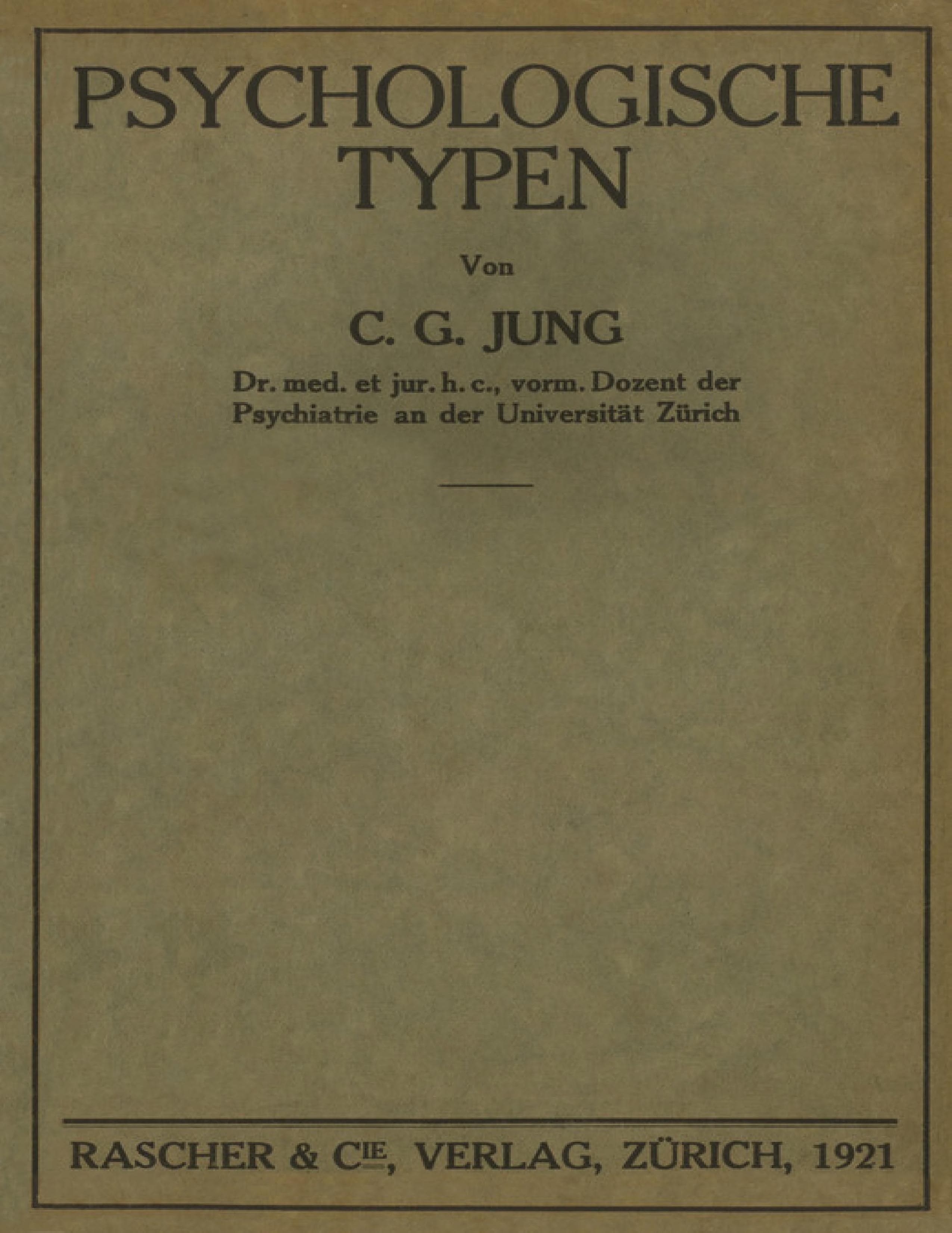
Among the treasures: the Rosarium Philosophorum (1550), Khunrath's Amphitheatrum Sapientiae Aeternae (1609), Michael Maier's Atalanta Fugiens (1617), the Theatrum Chemicum in multiple editions (1602-1659), the Kabbala Denudata (1677), and Jakob Böhme's Aurora (1656). Also included are Jung's early German-language works from before 1930 — his 1902 doctoral dissertation on occult phenomena, the groundbreaking Wandlungen und Symbole der Libido (1912), Psychologische Typen (1921), and the Jahrbuch für psychoanalytische Forschungen he co-edited with Freud. The pre-1929 English translations that introduced Jung to the English-speaking world are here as well: Psychology of the Unconscious (1916), Analytical Psychology (1916), and Psychological Types (1923).
Essential Reading
The foundational texts of this tradition
Psychology of the Unconscious
Carl Gustav Jung, 1912
The 1912 work that broke with Freud and founded analytical psychology. Jung argues that libido is not merely sexual but a general psychic energy expressed through mythological symbols.
Zur Psychologie und Pathologie sogenannter occulter Phänomene
Carl Gustav Jung, 1902
Jung's 1902 doctoral dissertation on spiritualist séances and dissociative phenomena — his earliest encounter with the autonomous psyche and the work that launched his career.
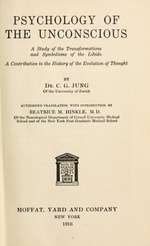
Psychology of the Unconscious
C.G. Jung, 1916
Beatrice Hinkle's 1916 English translation of Wandlungen — the text that introduced Jung to the English-speaking world and broke open the mythological interpretation of the unconscious.
Important Works
Significant texts that deepen understanding

Rosarium philosophorum. Secunda pars alchimiae de lapide philosophico vero modo praeparando, continens exactam eius scientiae progressionem. Cum figuris rei perfectionem ostendentibus
[s.n.], 1550
The Rosarium Philosophorum (1550) — the alchemical text Jung analyzed most extensively, tracing the stages of the coniunctio through its woodcut illustrations.
Amphitheatrum sapientiae aeternae, solius verae, christiano-kabalisticum, divino-magicum, nec non physico-chymicum, tertriunum, catholicon
Khunrath, Heinrich, 1609
Khunrath's Amphitheatrum Sapientiae Aeternae (1609) — the great Hermetic-Kabbalistic-alchemical synthesis, from Jung's own copy.
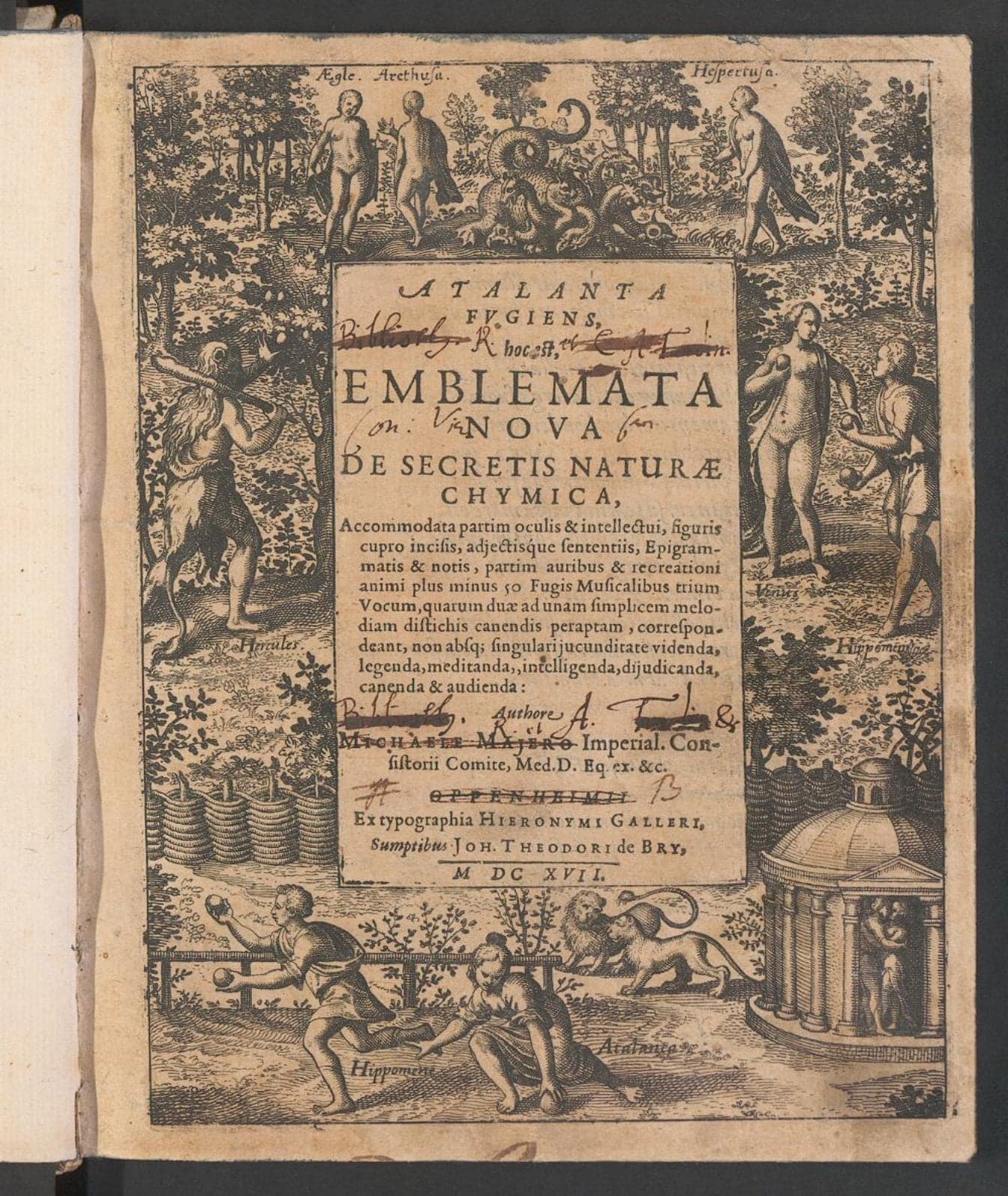
Atalanta fugiens, hoc est, emblemata nova de secretis naturae chymica, accommodata partim oculis & intellectui, figuris cupro incisis, adiectisque sententiis, epigrammatis & notis, partim auribus & recreationi animi plus minus 50 fugis musicalibus trium vocum, quarum duae ad unam simplicem melodiam distichis canendis peraptam, correspondeant, non absque singulari iucunditate videnda, legenda, meditanda, intelligenda, diiudicanda, canenda & audienda
Maier, Michael, 1617
Michael Maier's Atalanta Fugiens (1617) — 50 alchemical emblems with fugues, the masterpiece of alchemical emblem literature.
Kabbala denudata, seu, doctrina Hebraeorum transcendentalis et metaphysica atque theologica : opus antiquissimae philosophiae barbaricae variis speciminibus refertissimum ...
Knorr von Rosenroth, Christian, 1677
The Kabbala Denudata (1677) — the Latin translation that made Kabbalistic thought accessible to Christian Europe.
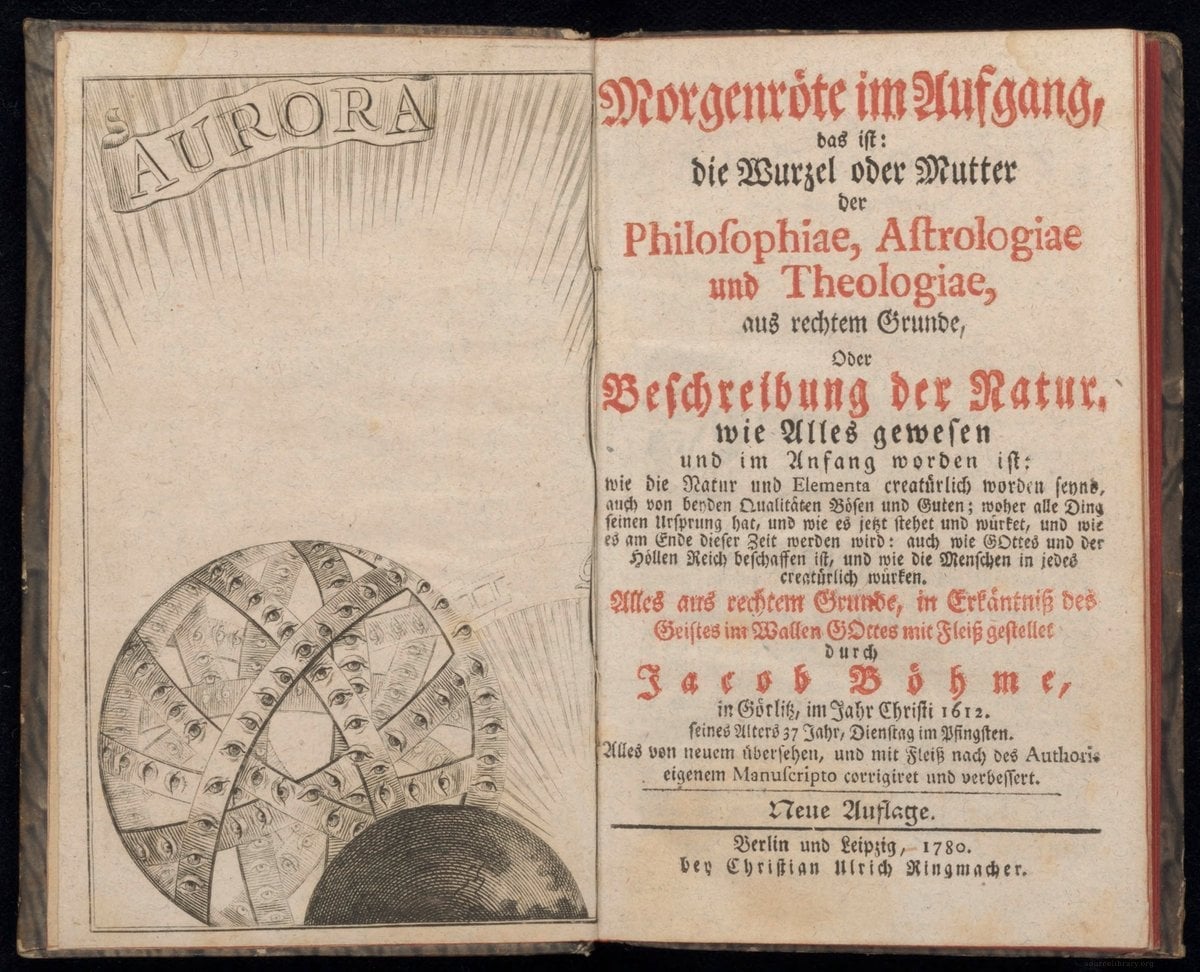
Morgen-Röte im Aufgangk das ist die Wurtzel oder Mutter der Philosophiae, Astrologiae und Theologiae, aus rechtem Grunde oder Beschreibung der Natur ...
Böhme, Jakob, 1656
Jakob Böhme's Aurora (1656) — the visionary theosopher whose work Jung considered a bridge between alchemy and modern psychology.
![Erster [- zehender] Theil der Bücher und Schrifften des edlen, hochgelehrten und bewehrten philosophi und medici Philippi Theophrasti Bombast von Hohenheim ...](/_next/image?url=https%3A%2F%2Fimages.sourcelibrary.org%2Fpages%2F69bd9d546120d54bd0375241%2F0001-thumb.jpg&w=3840&q=75)
Erster [- zehender] Theil der Bücher und Schrifften des edlen, hochgelehrten und bewehrten philosophi und medici Philippi Theophrasti Bombast von Hohenheim ...
Huser, Johannes, 1589
The Theatrum Chemicum (1602) — the largest alchemical compendium ever published, containing hundreds of treatises Jung drew on constantly.
All Books
Browse Full Catalog→480 books in this collection
Dawn rising
Boehme, Jacob
On Presages, Prophecies, and Divinations
Paracelsus, Theophrastus
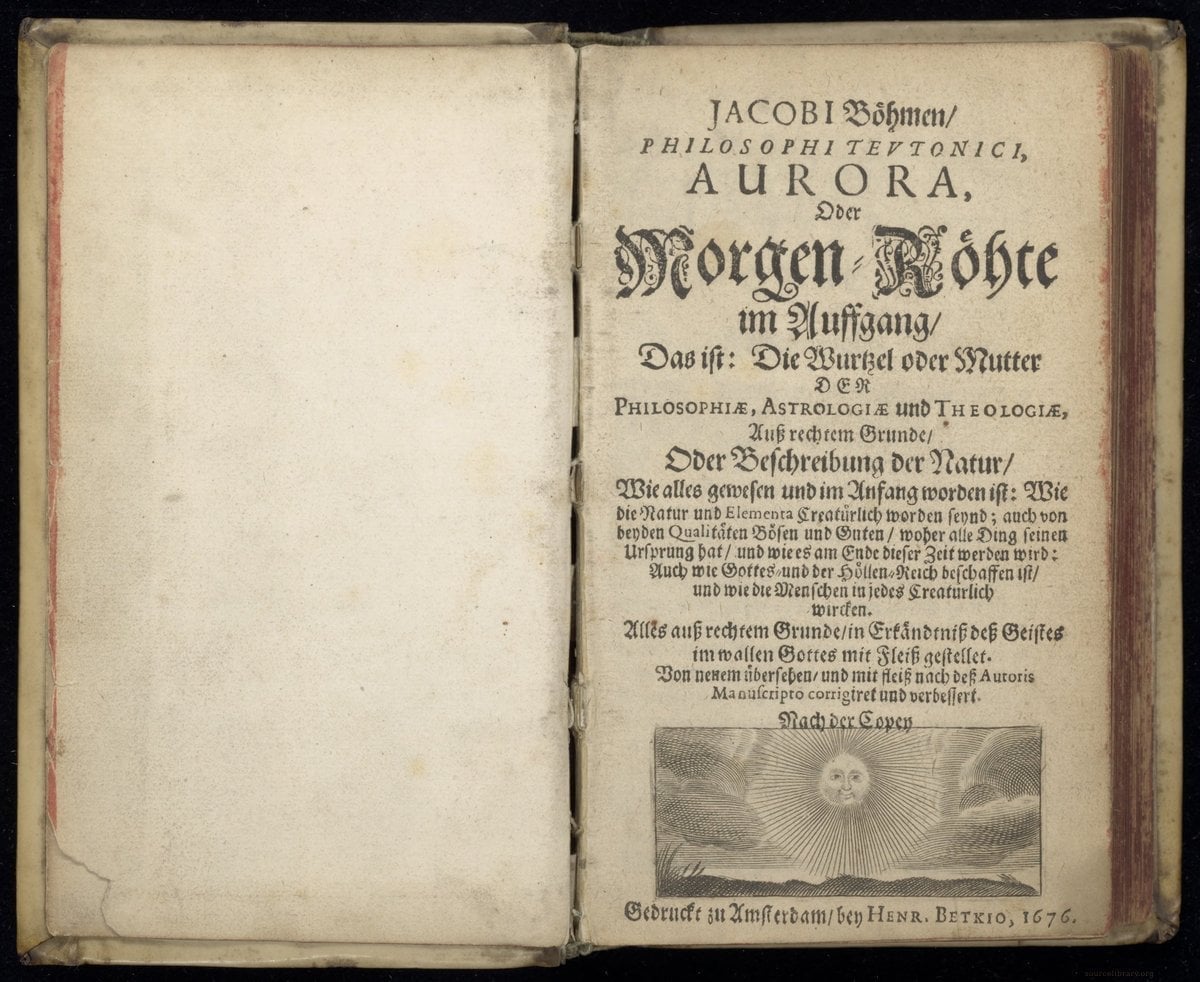
Aurora, or the Day-Spring
Boehme, Jacob
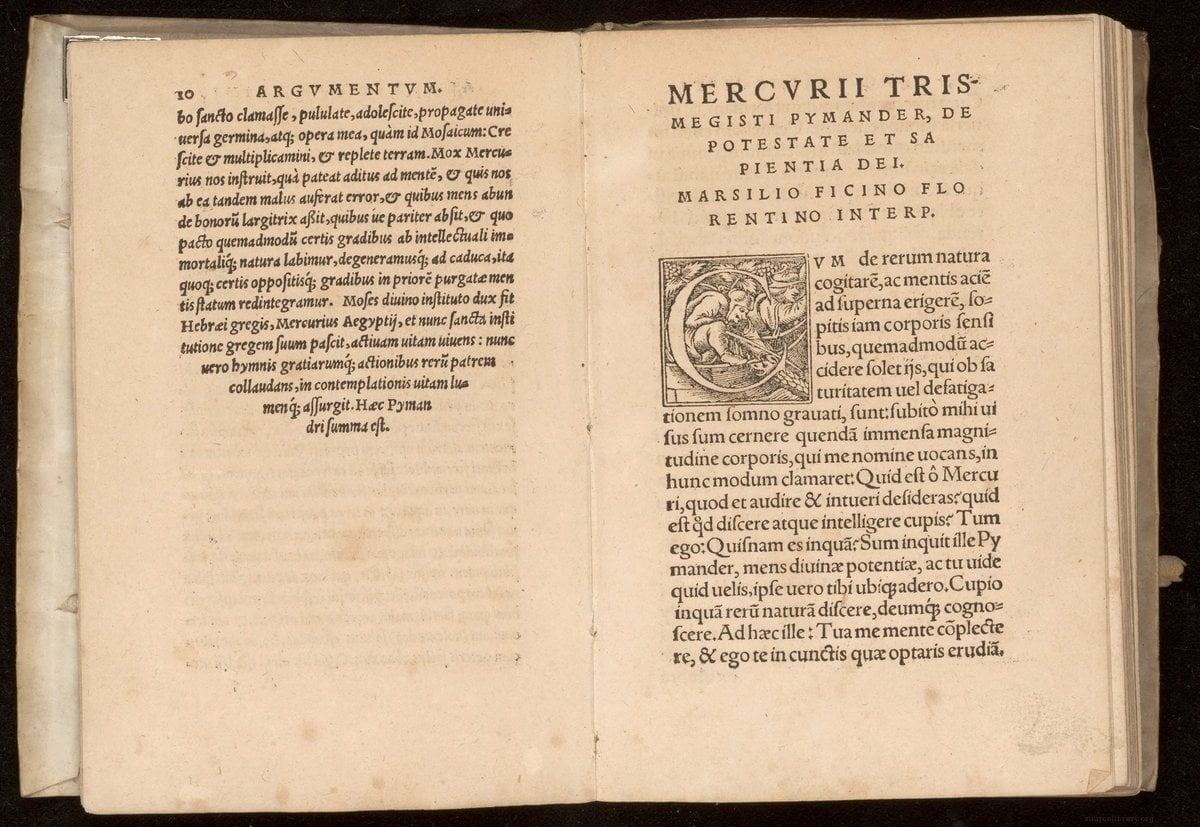
Pymander. Asclepius. On the Mysteries of the Egyptians. On Plato's Alcibiades, on the Soul and the Daemon. On Sacrifice.
Hermes Trismegistus|Jamblichus|Proclus
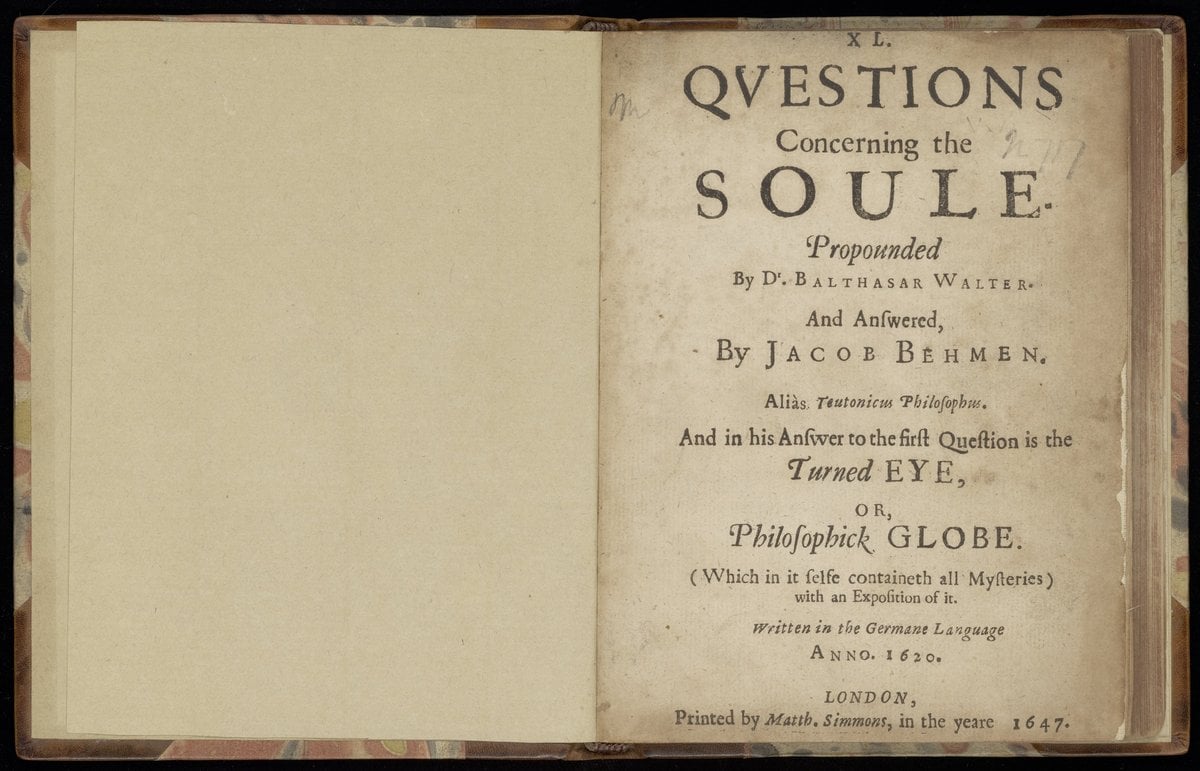
40 questions concerning the soule. Propounded by dr. Balthasar Walter
Boehme, Jacob
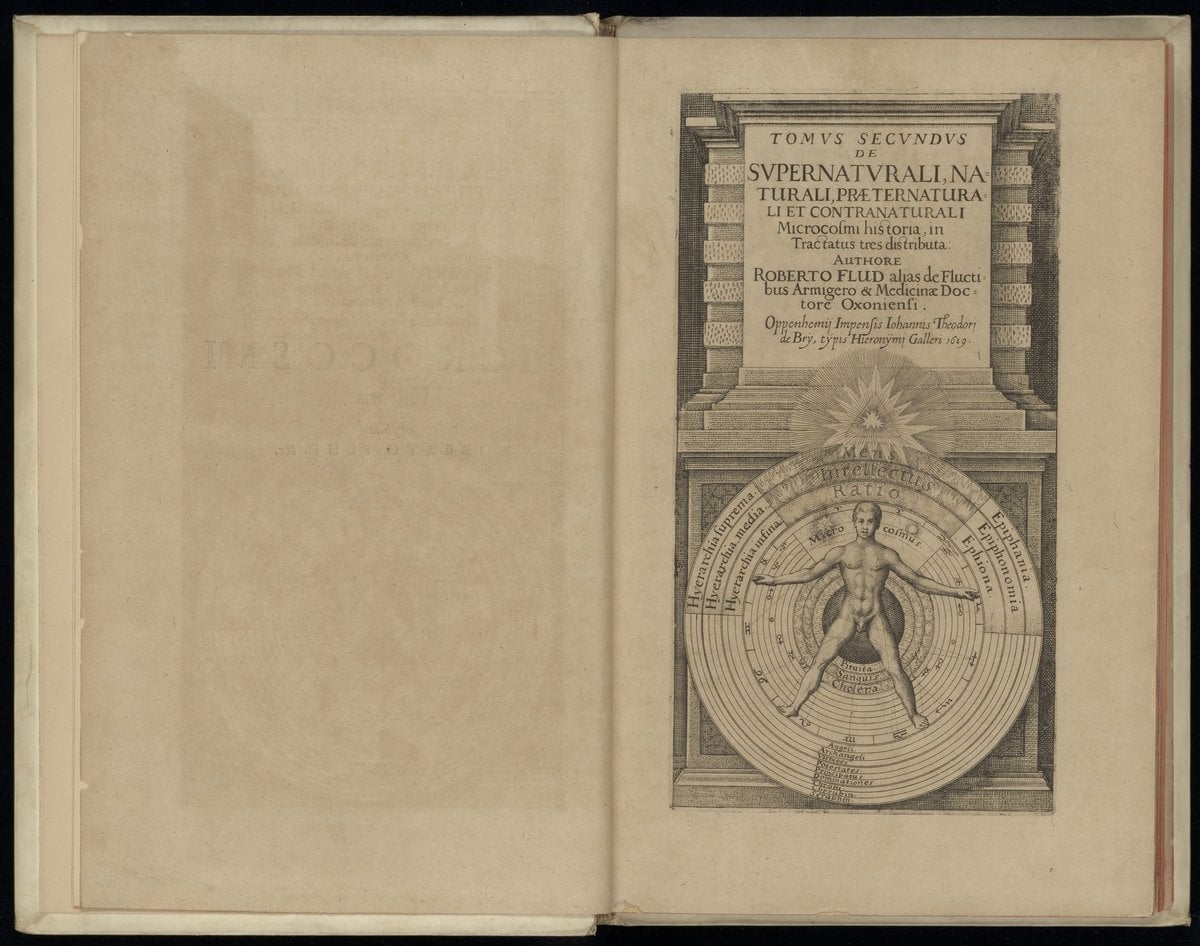
Second Volume of the History of the Microcosm
Fludd, Robert
On Alchemy
Geber|Bacon, Roger|Richardus Anglicus|Calid|Hermes Trismegistus|Hortulanus
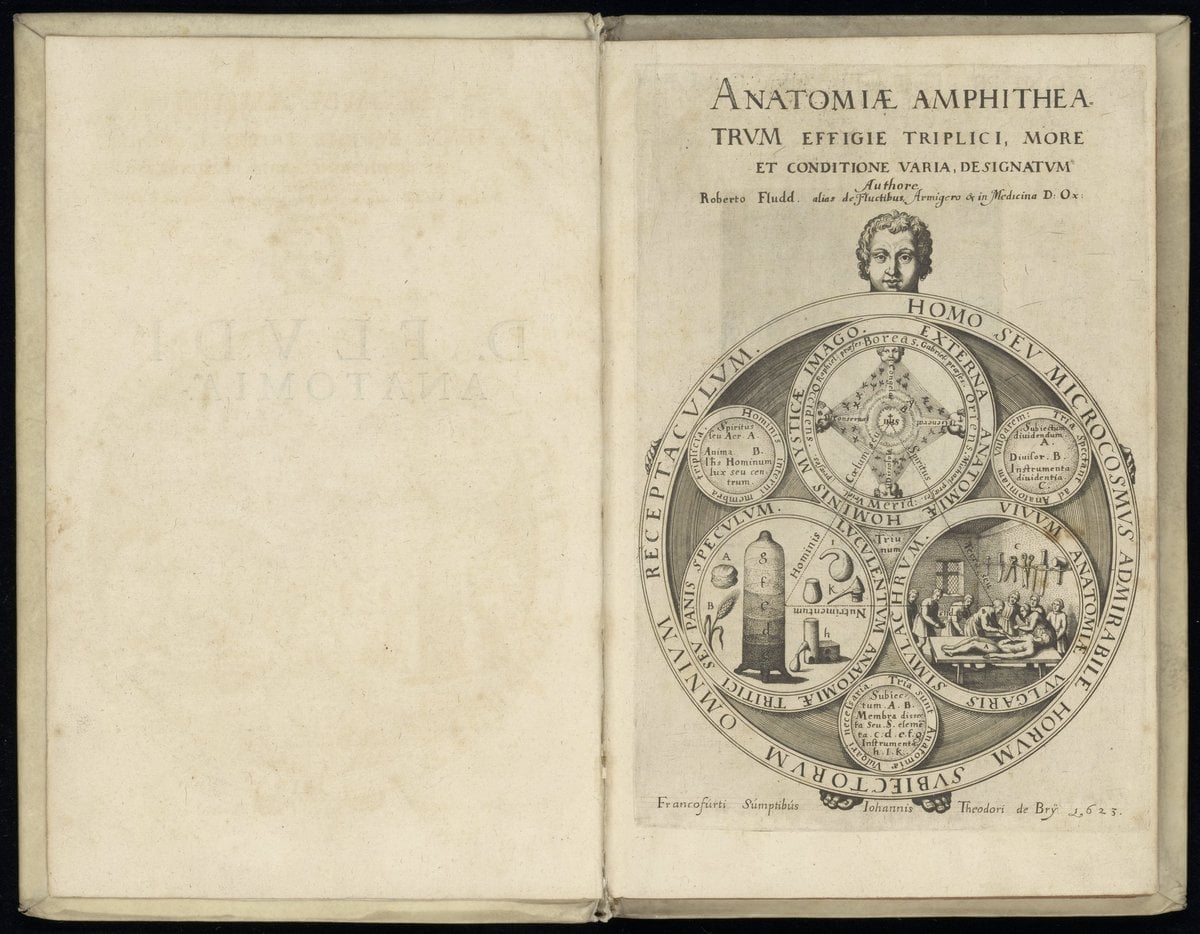
On the Triple Anatomy
Fludd, Robert
High and Deep Grounds of the Threefold Life of Man
Boehme, Jacob

Atalanta Fleeing
Maier, Michael
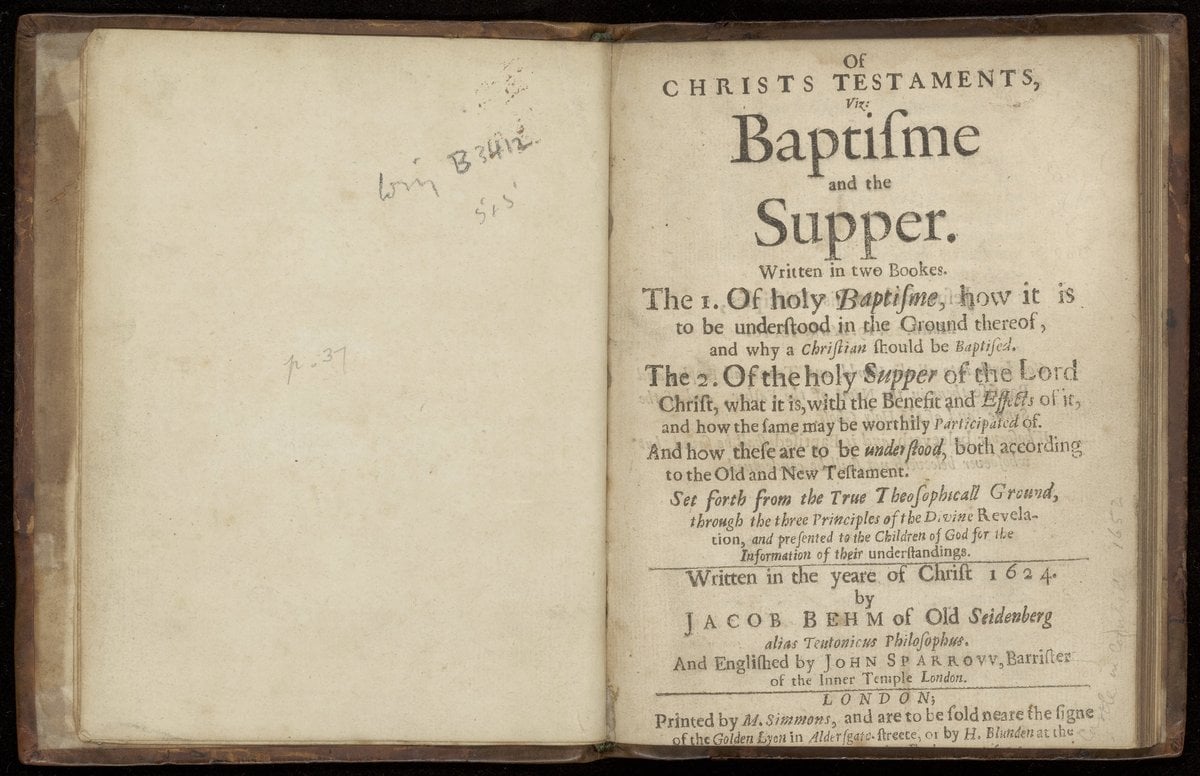
Of Christs testaments
Boehme, Jacob
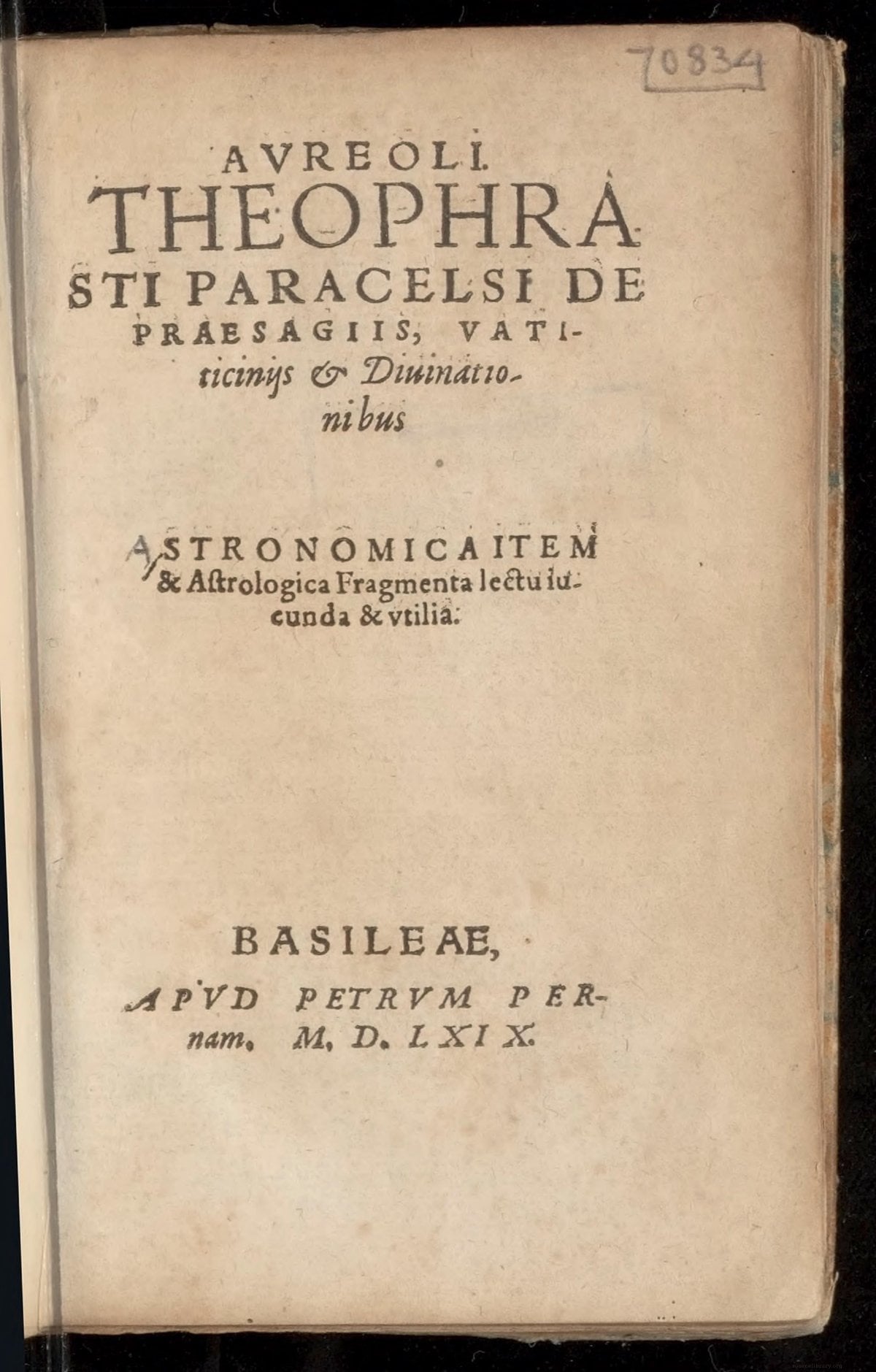
On Presages, Divination, and Astrological and Astronomical Fragments
Paracelsus
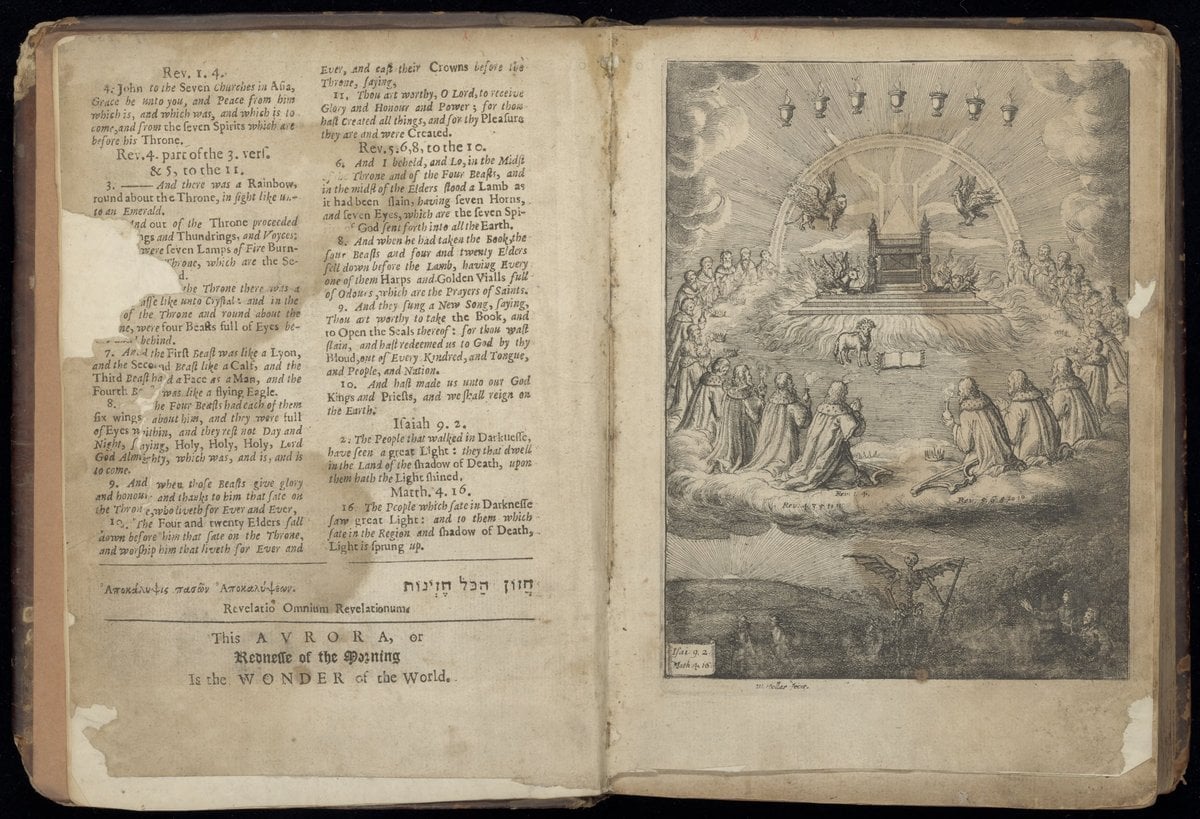
Aurora. That is, the day-spring
Boehme, Jacob
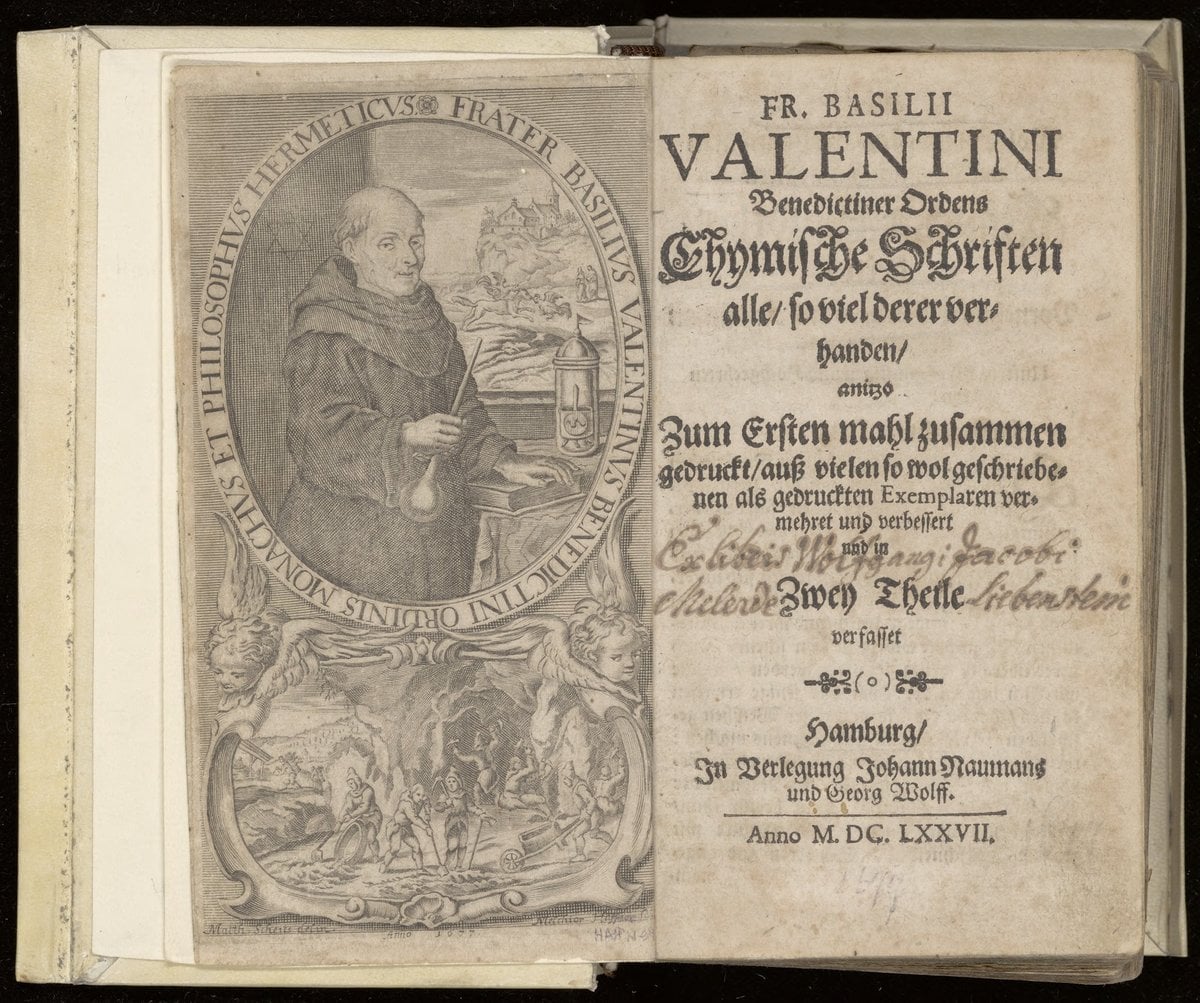
The Chemical Writings
Basilius Valentinus