


Illustrations
Browse all1 images extracted
Visual Art
Browse all art →14 works of visual art in this collection
 map
mapRomani Imperii Imago (Map of the Roman Empire)
Abraham Ortelius
This is an engraved map depicting the extent of the Roman Empire across Europe, North Africa, and the Near East, featuring an inset panel illustrating various ancient Roman coins.
 painting
St. Nicholas of Bari Predella: Rescue of Sailors
Gentile da Fabriano
Saint Nicholas of Bari appears in a golden aura to rescue sailors and their foundering ship from a storm.
 print
printPrometheus Forms Man and Animates Him with Fire from Heaven
Hendrick Goltzius
Prometheus stands before a newly fashioned clay figure of a man, using a torch of celestial fire to animate him while the goddess Minerva watches from the clouds.
 print
printAdam Naming the Animals
Jan Saenredam
Adam stands in the Garden of Eden, surrounded by various animals and birds to whom he is giving names.
 print
printAbrahami patriarchae peregrinatio et vita Abrahamo Ortelio Antverpiano auctore
Ortelius, Abraham
This print depicts the geographical journey of the biblical patriarch Abraham, centered on a map of Mesopotamia and the Levant, surrounded by twenty-two circular medallions illustrating key biographical episodes from his life.
 print
printNew Map of America, 1587
Ortelius, Abraham
This print depicts a map of the Western Hemisphere, specifically North and South America, as conceptualized in the late sixteenth century.
 print
printBelgii veteris typvs ex conatibus geographicis Abrahami Ortelij
Ortelius, Abraham
This is a 16th-century map of ancient Belgica (Low Countries), featuring a cartographic representation of the region oriented with the coast on the left, including decorative title cartouches, heraldic shields, and topographical markers.
 print
printGeographia sacra ex conatibus geographicis Abrahami Ortelij
Ortelius, Abraham
This is a map of the ancient world focusing on the Mediterranean, Near East, and North Africa, designed to illustrate the biblical and historical geographies of antiquity.
 print
printGermaniae veteris, typus ex conatibus geographicis Abrahami Ortelij
Ortelius, Abraham
This is a detailed cartographic engraving depicting the territories of 'Germaniae Veteris' (Ancient Germany) as reconstructed by Abraham Ortelius, featuring topographical details of mountain ranges, river systems, and regional tribal labels.
 print
printTvrcici Imperii descriptio
Ortelius, Abraham
This is a detailed engraved map of the Ottoman Empire (Turcici Imperii descriptio) by Abraham Ortelius, depicting the geographical expanse from Southeast Europe and the Mediterranean to the Middle East, the Arabian Peninsula, and parts of North Africa, featuring a decorative cartouche and sea monsters.
 print
printTypvs orbis terrarvm
Ortelius, Abraham
A world map in an oval projection (Typus Orbis Terrarum) depicting the continents of the Americas, Europe, Africa, Asia, and a large hypothetical southern continent (Terra Australis Nondum Cognita) surrounded by strapwork ornamentation.
 print
printPlato Charming Animals with Music
Various
The Greek philosopher Plato, depicted as a Mughal sage, plays a pipe organ in a wilderness to enchant a gathering of wild animals.
 print
printMaga con animali - Caroselli
Various
The mythological enchantress Circe is depicted sitting in a dark landscape surrounded by humans she has transformed into animals.
 print
printOrpheus and the animals
Various
The Greek hero Orpheus is shown seated in a mountain wilderness, charming various wild animals with the music of his lute.
The study of the soul predates the discipline that bears its name. From Aristotle's De Anima through the medieval dream books and Renaissance treatises on the passions, the question of what the psyche is and how it operates has wound through philosophy, medicine, and religion for two millennia. This collection traces that history from its ancient and early modern roots through the emergence of psychology as a modern science in the nineteenth century.
The founding generation worked across what now seem like distant fields. Gustav Theodor Fechner's Elemente der Psychophysik (1860) established the mathematical measurement of sensation, but he also wrote Nanna, oder über das Seelenleben der Pflanzen on the soul-life of plants, and Zend-Avesta on cosmic consciousness. William James's Principles of Psychology (1890) defined the field for the English-speaking world, while his Varieties of Religious Experience explored mystical states with the same empirical rigor. Franz Anton Mesmer's work on animal magnetism opened the door to hypnosis and the unconscious decades before Freud. Pierre Janet's L'automatisme psychologique mapped the dissociative processes that Jung would later reinterpret as autonomous complexes. Christian Wolff's Psychologia empirica and Psychologia rationalis — the works that gave the discipline its name — stand alongside Carl du Prel's Philosophie der Mystik, which treated dreams, somnambulism, and clairvoyance as legitimate objects of psychological inquiry.
Essential Reading
The foundational texts of this tradition
The Principles of Psychology (Vol. I)
William James, 1890
James defined the field of psychology for the English-speaking world. His treatment of the stream of consciousness, habit, emotion, and the self remains essential reading over a century later.
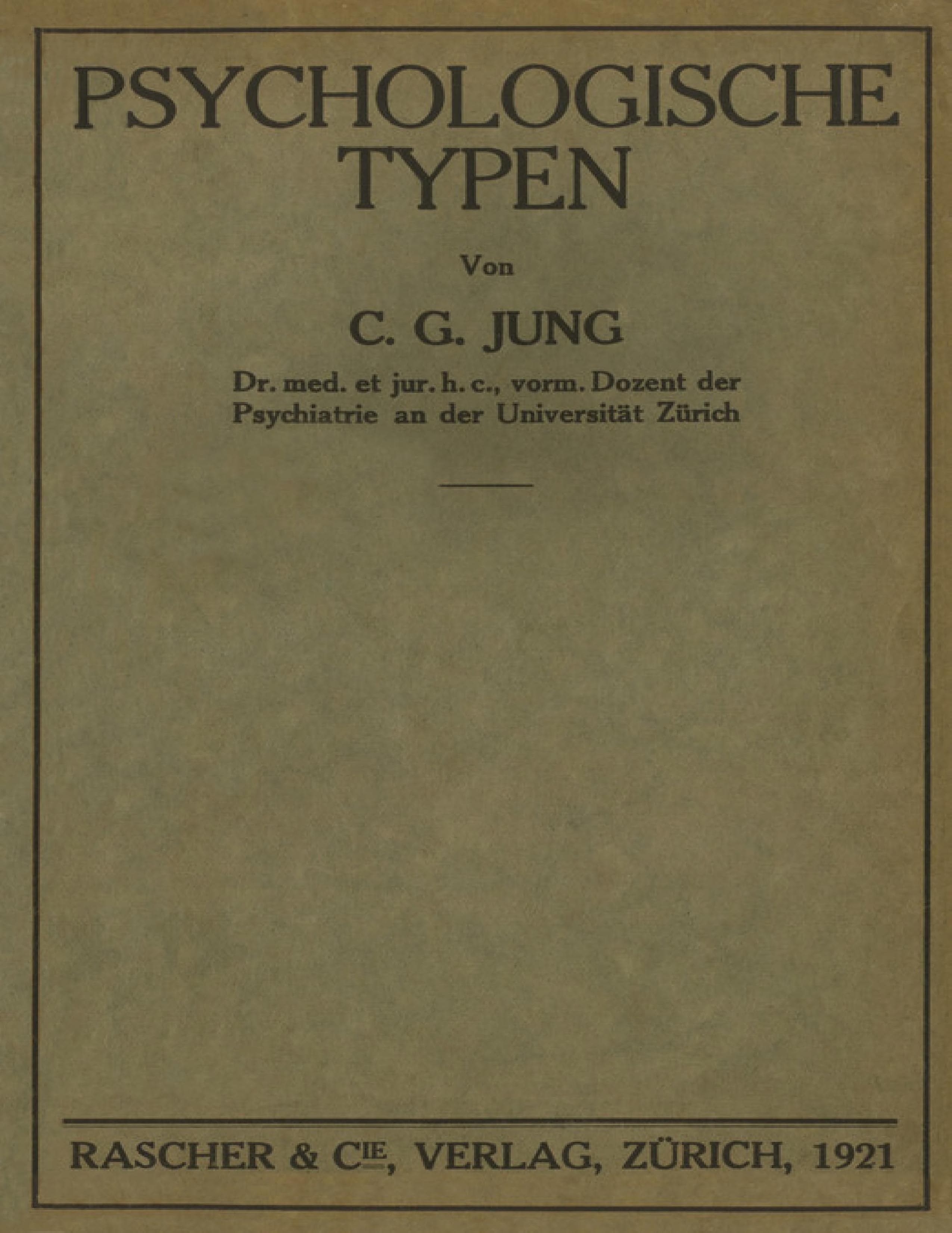
Psychological Types
C.G. Jung, 1921
Jung's foundational typology — introversion and extraversion, the four psychological functions. The 1921 German original.

Psychological Automatism
Pierre Janet, 1889First Translation
Janet's mapping of psychological automatism — dissociation, subconscious fixed ideas, and the narrowing of consciousness. A direct precursor to both Freud's and Jung's theories of the unconscious.
The Varieties of Religious Experience
William James, 1902
James's Gifford Lectures on the psychology of religious experience — mysticism, conversion, saintliness studied with empirical precision.
Important Works
Significant texts that deepen understanding
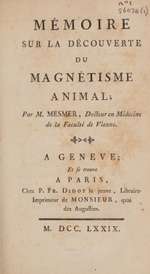
Mémoire sur la découverte du magnétisme animal
Franz Anton Mesmer, 1779
Mesmer's foundational text on animal magnetism — the discovery that opened the door to hypnosis, suggestion, and the unconscious.
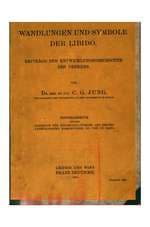
Psychology of the Unconscious
Carl Gustav Jung, 1912
The 1912 work that broke with Freud and founded analytical psychology, arguing that the unconscious speaks through mythological symbols.
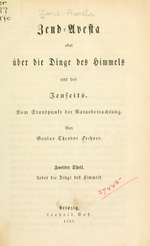
On the Things of Heaven and the Afterlife
Gustav Theodor Fechner, 1851First Complete Translation
Fechner's visionary cosmology — the idea that consciousness pervades all nature, from atoms to stars. Psychology meets panpsychism.
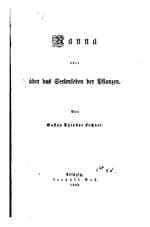
Nanna, or On the Soul-Life of Plants
Gustav Theodor Fechner, 1848First Translation
Fechner argues that plants have souls — a radical extension of psychophysics into universal animation.

Dream Pool Essays
Shen Kuo, 1088
Fechner's three-stage theory of life, death, and the afterlife of consciousness.
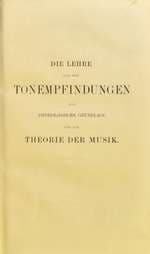
Die Lehre von den Tonempfindungen als physiologische Grundlage für die Theorie der Musik
Hermann von Helmholtz, 1863
Helmholtz's physiological acoustics — experimental psychology applied to the perception of sound.
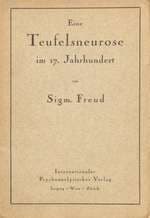
A Seventeenth-Century Demonological Neurosis
Sigmund Freud, 1923
Freud's analysis of a seventeenth-century demonic possession case as neurosis — psychoanalysis applied to historical sources.
Also Notable
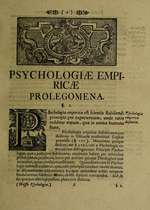
Empirical Psychology
Christian Wolff, 1732First Complete Translation
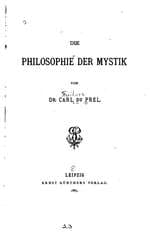
Die Philosophie der Mystik
Carl du Prel, 1885
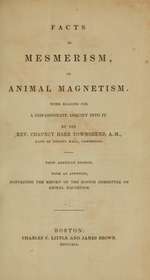
Facts in Mesmerism, or Animal Magnetism
Chauncy Hare Townshend, 1840
Jakob Böhme: His Life and Writings
Gustav Theodor Fechner, 1857First Translation

On the Soul-Question
Gustav Theodor Fechner, 1861

Historical Sketch of Animal Magnetism
Franz Anton Mesmer, 1781
All Books
Browse Full Catalog→267 books in this collection
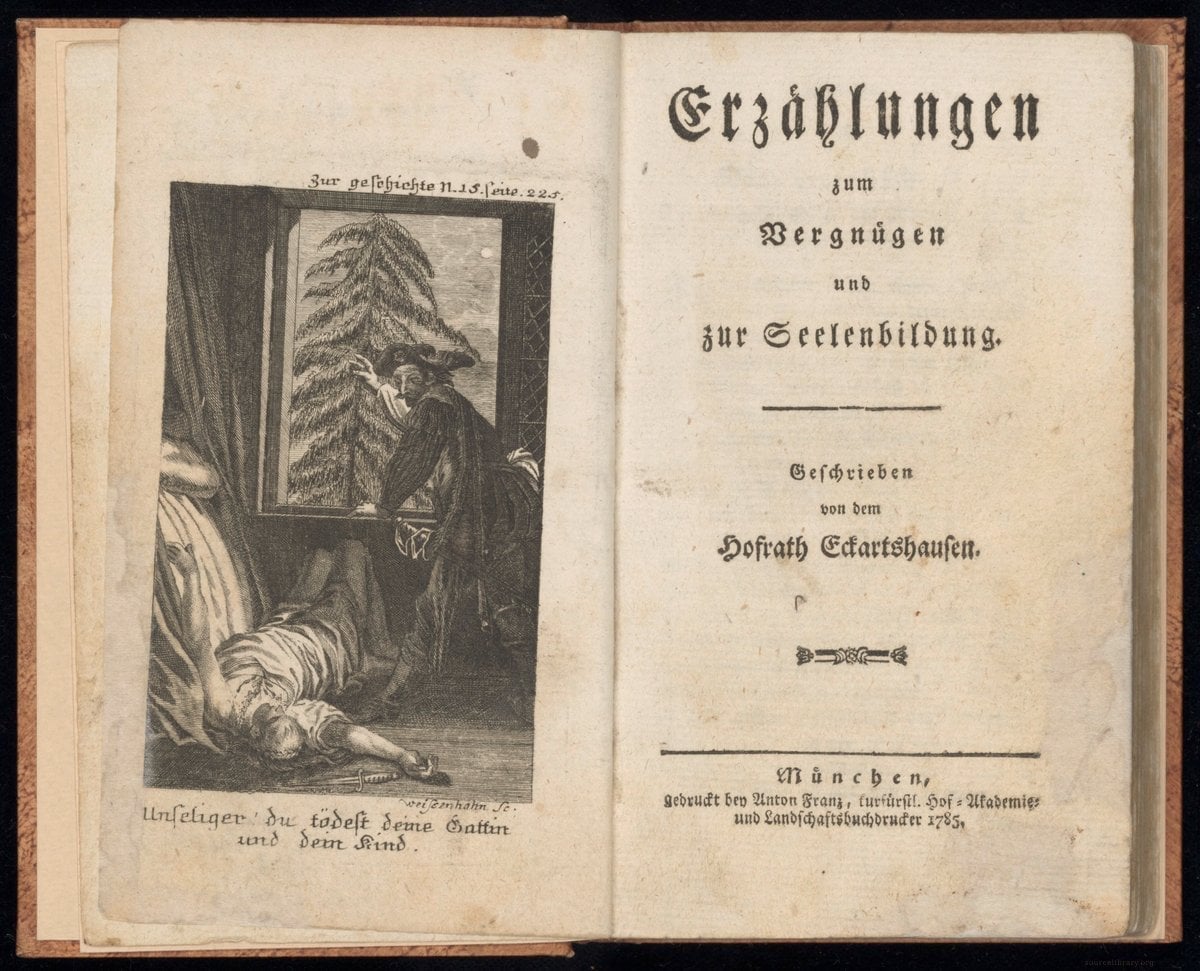
Stories for Pleasure and Edification
Eckartshausen, Karl von
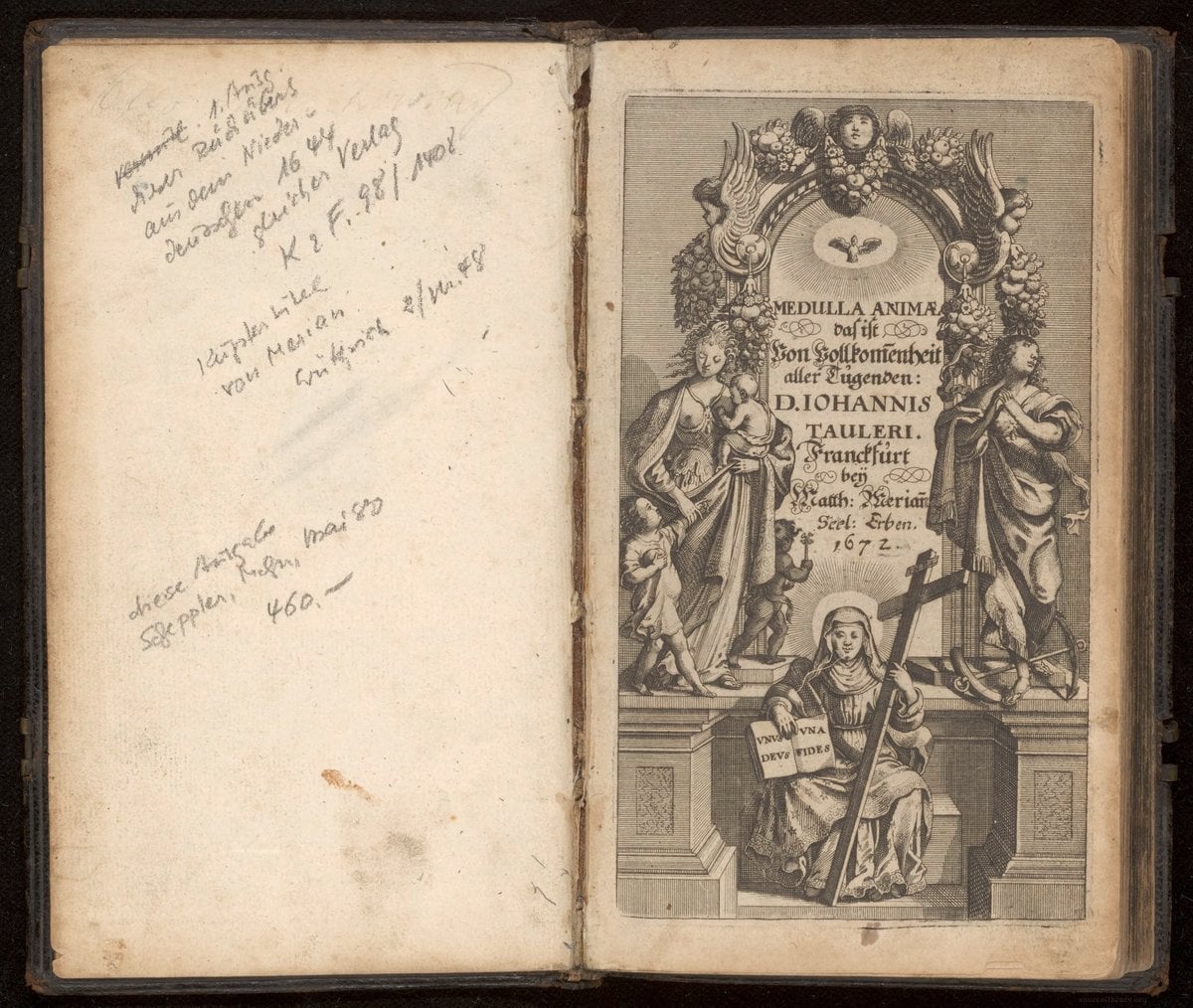
The Marrow of the Soul
Tauler, Johannes
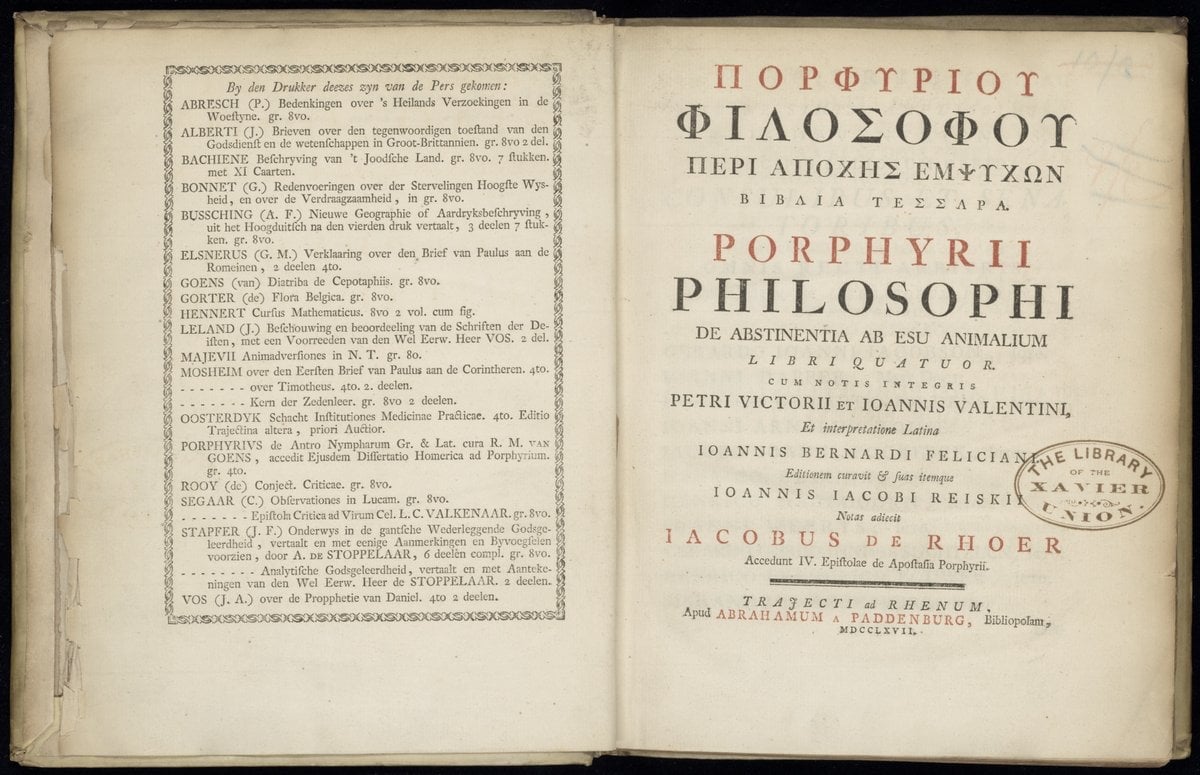
On Abstinence from Animal Food
Porphyrius
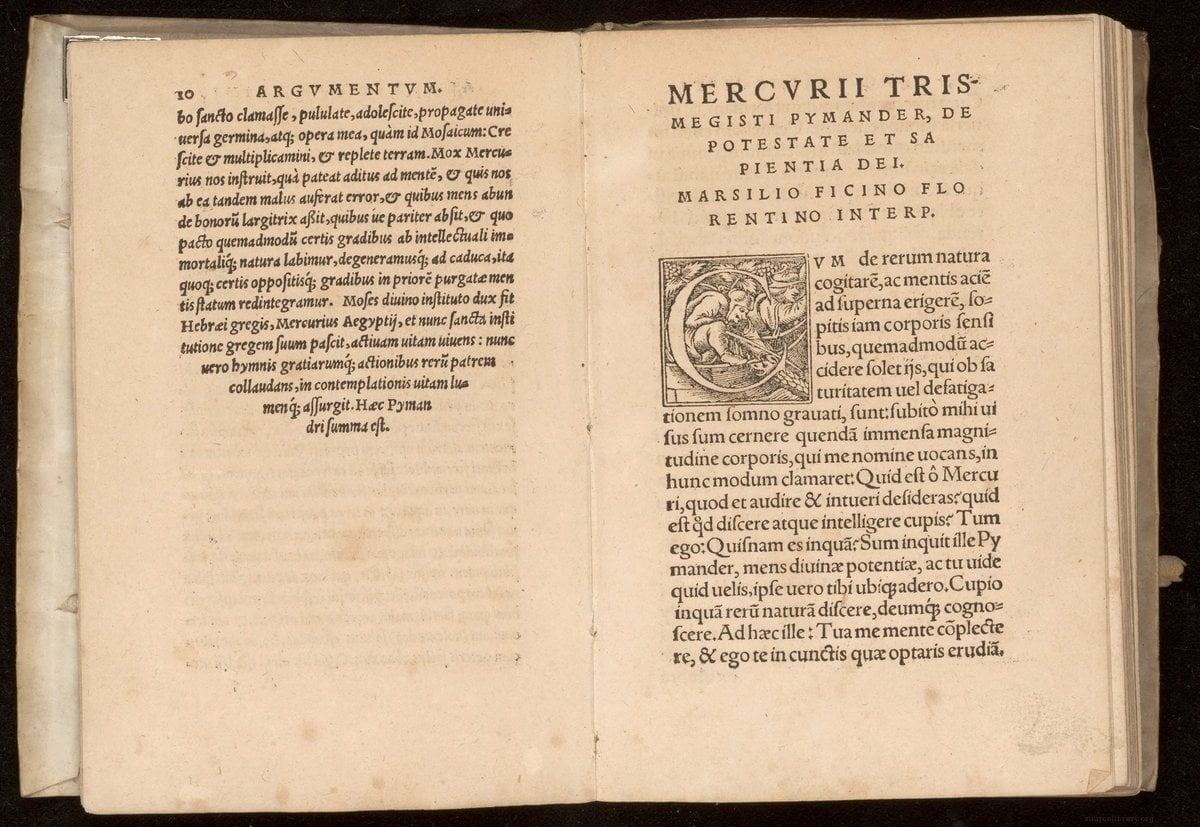
Pymander. Asclepius. On the Mysteries of the Egyptians. On Plato's Alcibiades, on the Soul and the Daemon. On Sacrifice.
Hermes Trismegistus|Jamblichus|Proclus
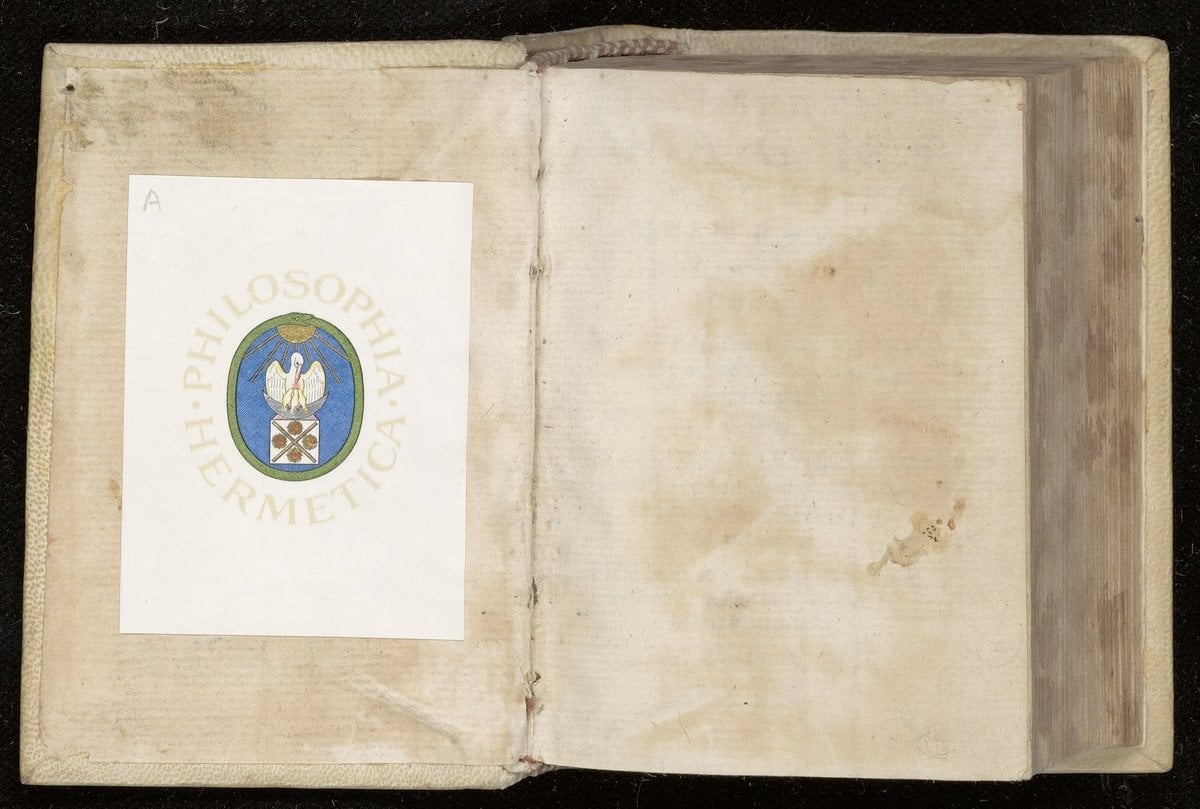
On the secrets of women. On the virtues of herbs, stones, and animals. On the wonders of the world. On falcons, goshawks, and hawks.
Albertus Magnus
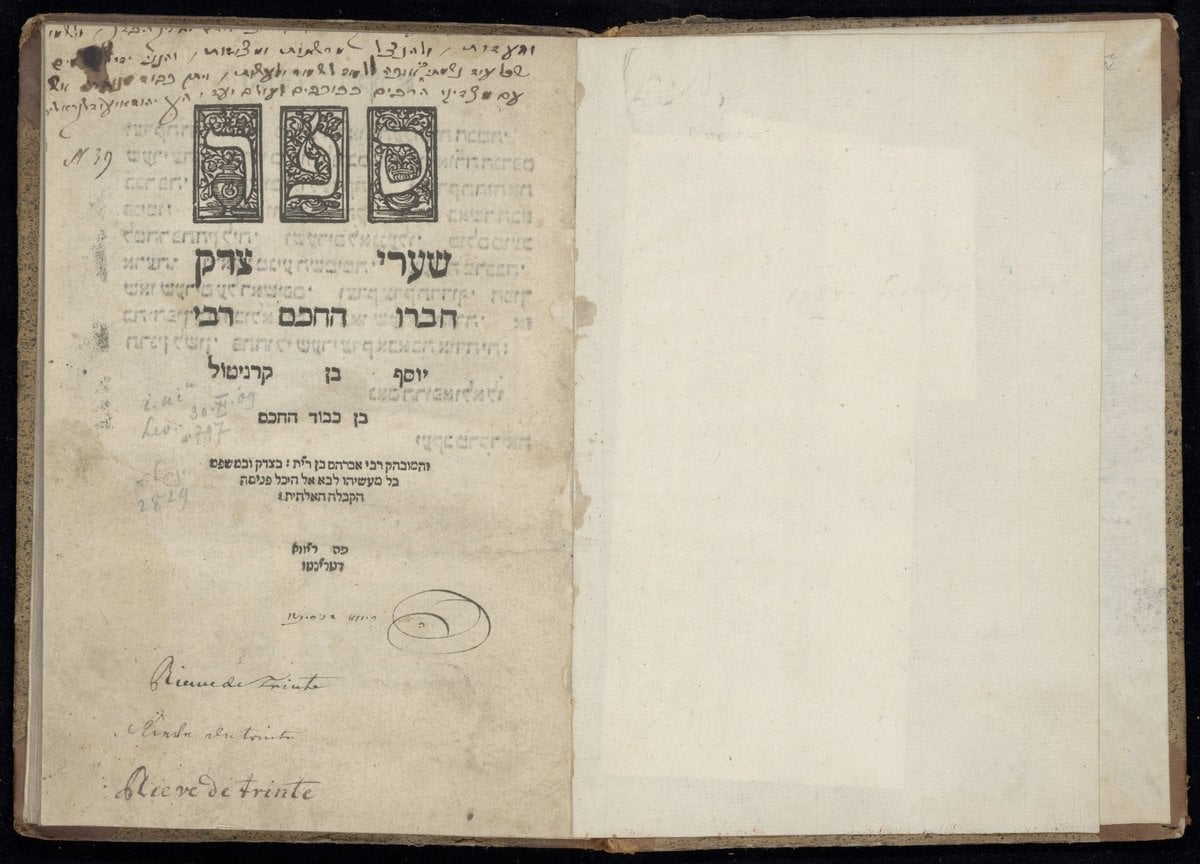
Gates of Righteousness
Gikatilla, Joseph ben Abraham
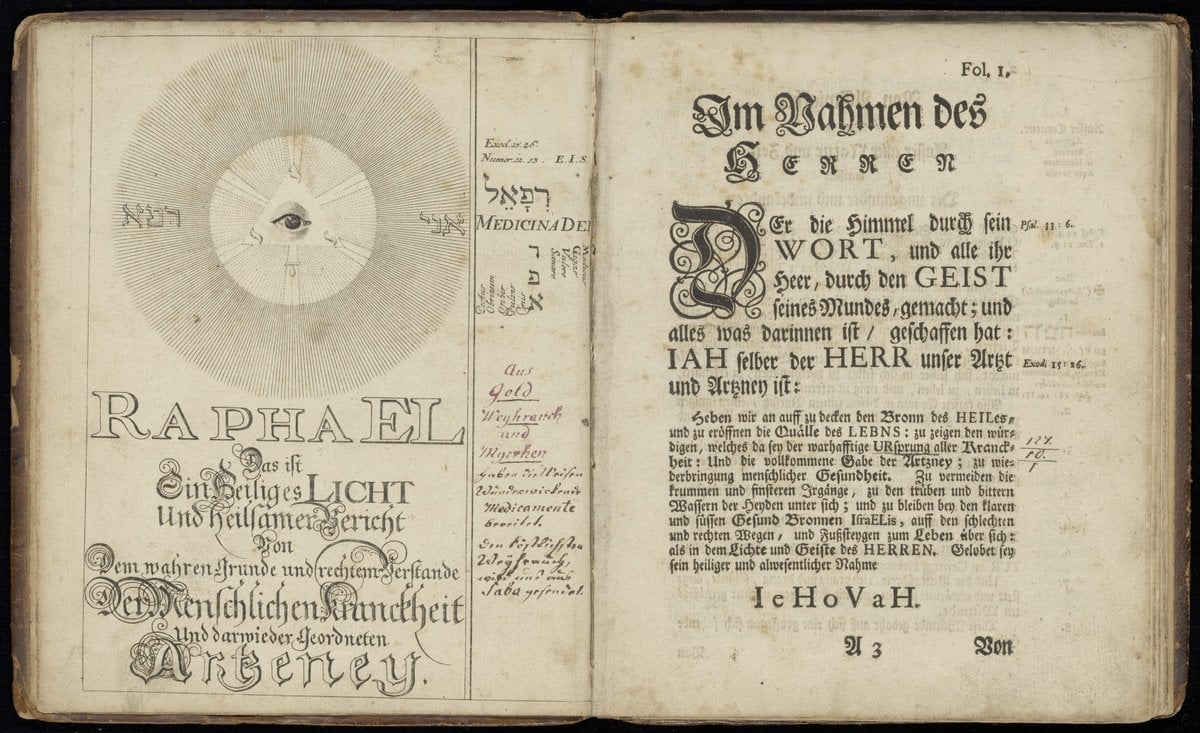
Raphael, or the Physician-Angel
Franckenberg, Abraham von
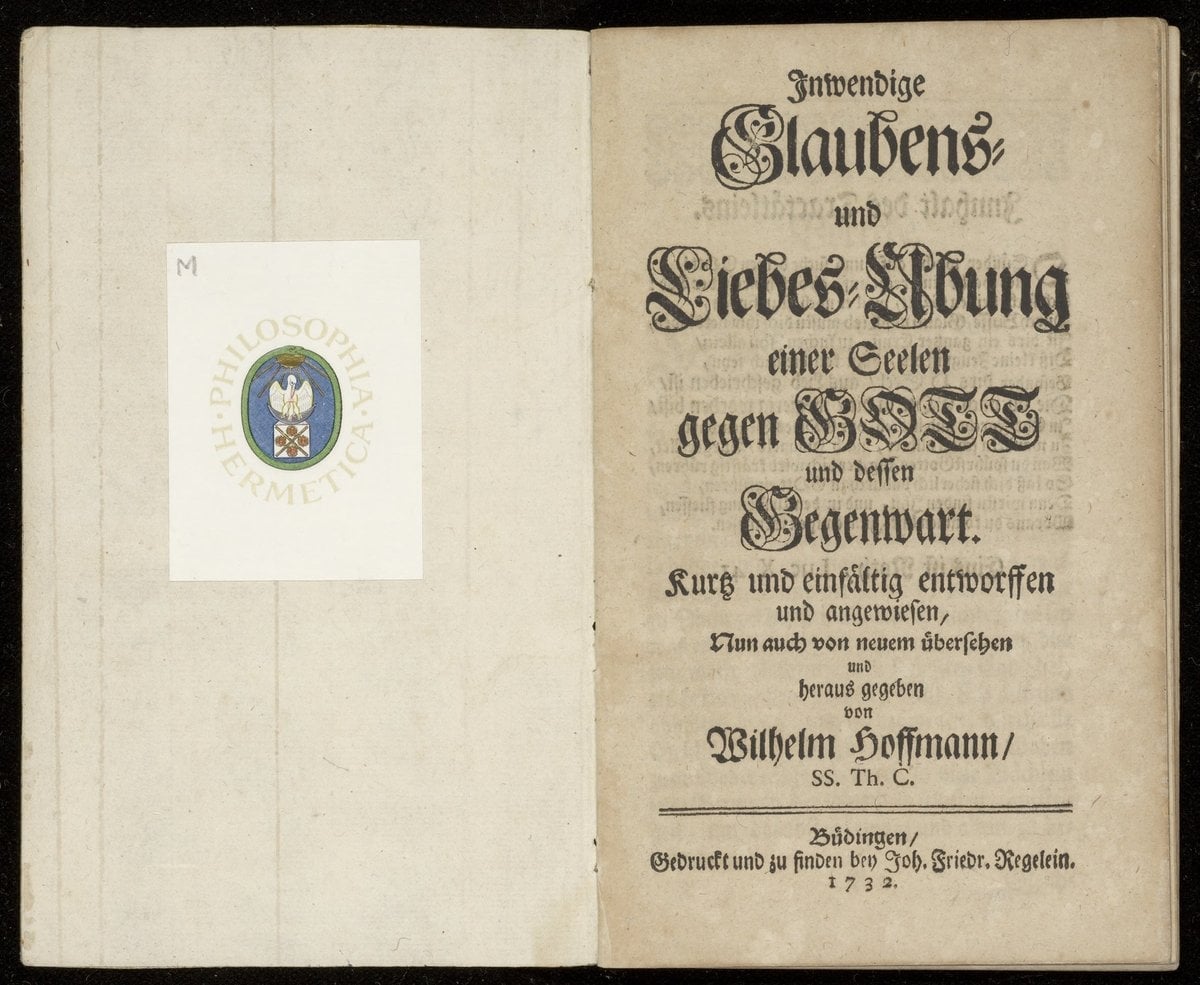
Inner Exercise of Faith and Love of a Soul
Hoffmann, Wilhelm
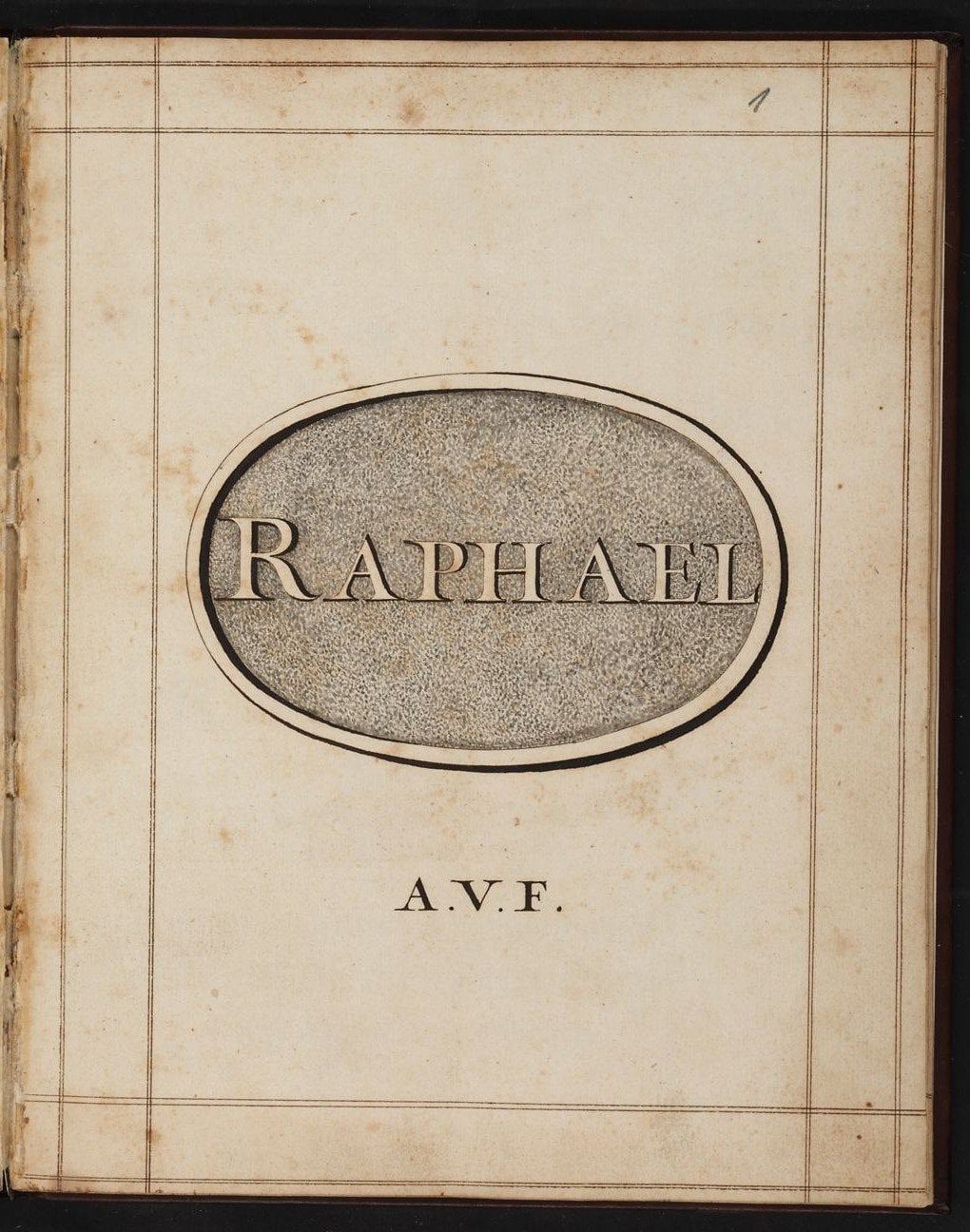
Franckenberg — Raphael, Holy Light of Medicine, 18th-Century MS
Abraham von Franckenberg
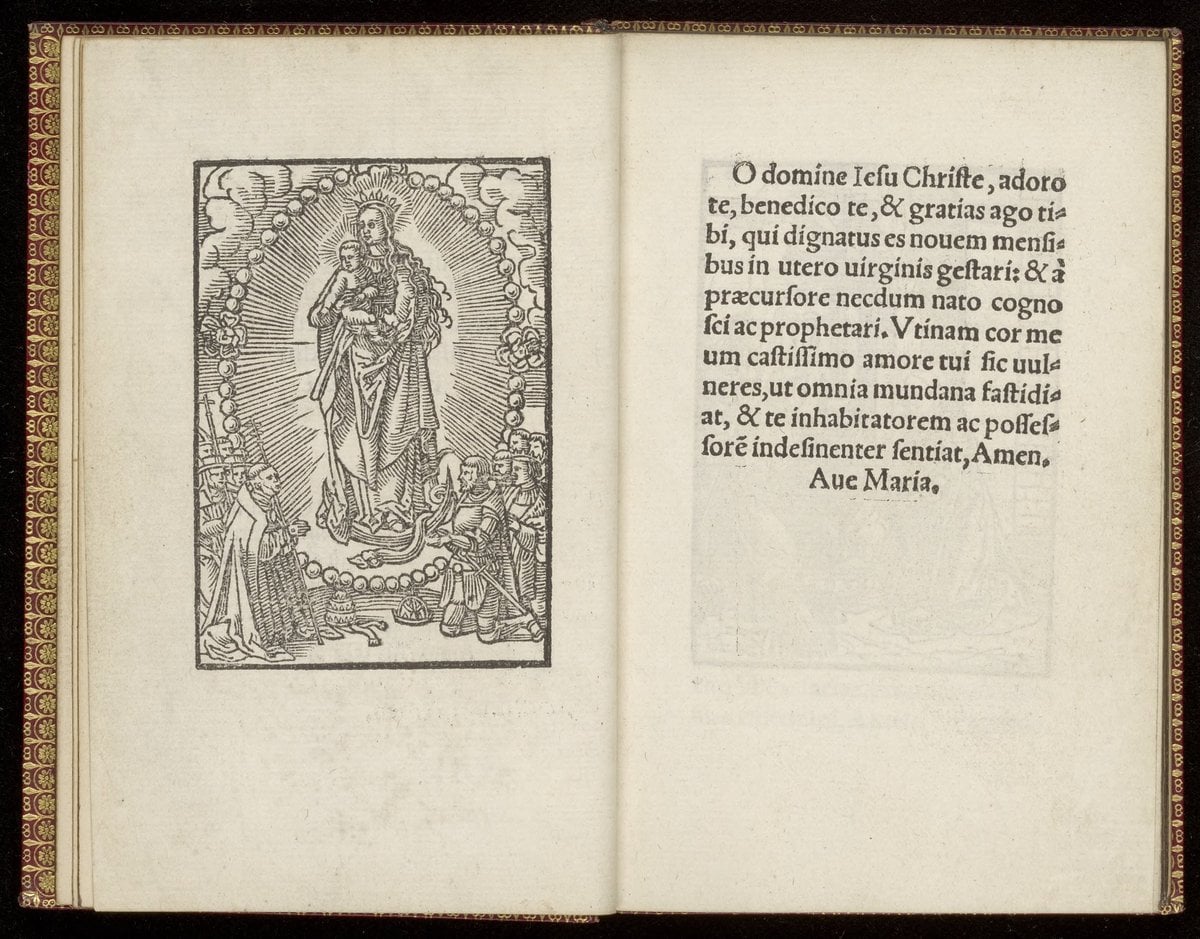
Mystical Rosary of the Faithful Soul
Anonymous
![[Greek] Gemma magica oder magisches Edelgestein](/_next/image?url=https%3A%2F%2Fimages.sourcelibrary.org%2Fpages%2F69c878b16c6f3cc53c8582fd%2F0005.jpg&w=3840&q=85)
[Greek] Gemma magica oder magisches Edelgestein
Franckenberg, Abraham von
![[Hebrew: Mafteach ha-Zohar]](/_next/image?url=https%3A%2F%2Fimages.sourcelibrary.org%2Fpages%2F69c8552d6c6f3cc53c853a69%2F0004.jpg&w=3840&q=85)
[Hebrew: Mafteach ha-Zohar]
attr. Rovigo, Abraham
![[Hebrew: Sefer eshel Avraham]](/_next/image?url=https%3A%2F%2Fimages.sourcelibrary.org%2Fpages%2F69c7b2da25ec2ba5ccd7f49a%2F0003.jpg&w=3840&q=85)
[Hebrew: Sefer eshel Avraham]
Rovigo, Abraham
![[Hebrew: Sefer neveh shalom]](/_next/image?url=https%3A%2F%2Fimages.sourcelibrary.org%2Fpages%2F69c7f4546c6f3cc53c841836%2F0003.jpg&w=3840&q=85)
[Hebrew: Sefer neveh shalom]
Shalom, Abraham ben Isaac