


Illustrations
Browse all95 images extracted
This intricate tailpiece engraving features an eagle with outstretched wings presiding over a star-filled cartouche. Surrounded by lush acanthus leaf scrollwork, such decorative elements were commonly used in 18th-century scientific and philosophical texts to mark the end of a section and add a sense of prestige and classical authority to the work.
This series of woodcuts illustrates various alchemical apparatuses used for distillation and heating, accompanying the text of Giambattista della Porta's 'Magiae Naturalis' (Natural Magic). The diagrams depict brick furnaces, known as athanors, supporting specialized glass and ceramic vessels, providing a visual guide to the experimental procedures of the 16th century. Such illustrations were crucial for disseminating practical knowledge during the transition from traditional alchemy to the foundations of modern chemistry.
This decorative woodcut tailpiece features a central palm tree, a traditional symbol of victory and endurance, flanked by two figures. One figure holds a shield bearing the initials 'ER', likely a printer's mark or a royal cipher, illustrating the common practice of using ornamental motifs to fill space and denote provenance in 18th-century scientific texts.
An engraving of Friedrich Roth-Scholtz, the editor of the 'Deutsches Theatrum Chemicum'. He is depicted in a library, symbolizing his role as a curator and publisher of alchemical and scientific texts during the early 18th century.
This page marks the beginning of the 'Summa perfectionis magisterii', a foundational alchemical treatise attributed to the 8th-century polymath Geber (Jabir ibn Hayyan). The text is introduced by a large, historiated woodcut initial 'T' featuring two climbing putti, a common decorative motif in European printing of the mid-1500s. The work represents the translation and dissemination of Islamic scientific knowledge into the Latin West, detailing the principles of transmutation and the 'perfection' of metals.
This woodcut illustrates various pieces of alchemical apparatus, including a large cylindrical furnace known as an athanor, used for maintaining constant heat. Accompanying it are specialized vessels and a perforated lid, demonstrating the sophisticated practical setups used by early modern practitioners of the 'Great Art.' This image from Geber's influential work highlights the transition from mystical theory to experimental practice in the history of chemistry.

This intricate emblem features an eagle perched upon an anchor, entwined with a caduceus, symbolizing a union of swiftness, stability, and wisdom. The Latin motto 'Non est mortale quod opto' (I desire that which is not mortal) suggests a focus on spiritual or intellectual pursuits over worldly concerns. The surrounding ornate cartouche and laurel branches further elevate the symbolic importance of the central imagery.

This woodcut diagram, labeled 'Figura II', illustrates the precise masonry layout for an alchemical furnace. It provides a top-down view of the 'lapidum coctorum' (fired stones), demonstrating the practical engineering required for the high-heat chemical transformations described in Müller's 'Miracula et mysteria chymico-medica'.

This woodcut illustrates the 'Turba Philosophorum' (Assembly of the Philosophers), one of the oldest and most influential Latin alchemical texts. It depicts a group of sages engaged in debate, with speech scrolls bearing fundamental alchemical principles such as 'Solue Coagula' (dissolve and coagulate). The central crowned figure and the fire at the base symbolize the transformative power of the alchemical process.
All Books
Browse Full Catalog→71 books in this collection
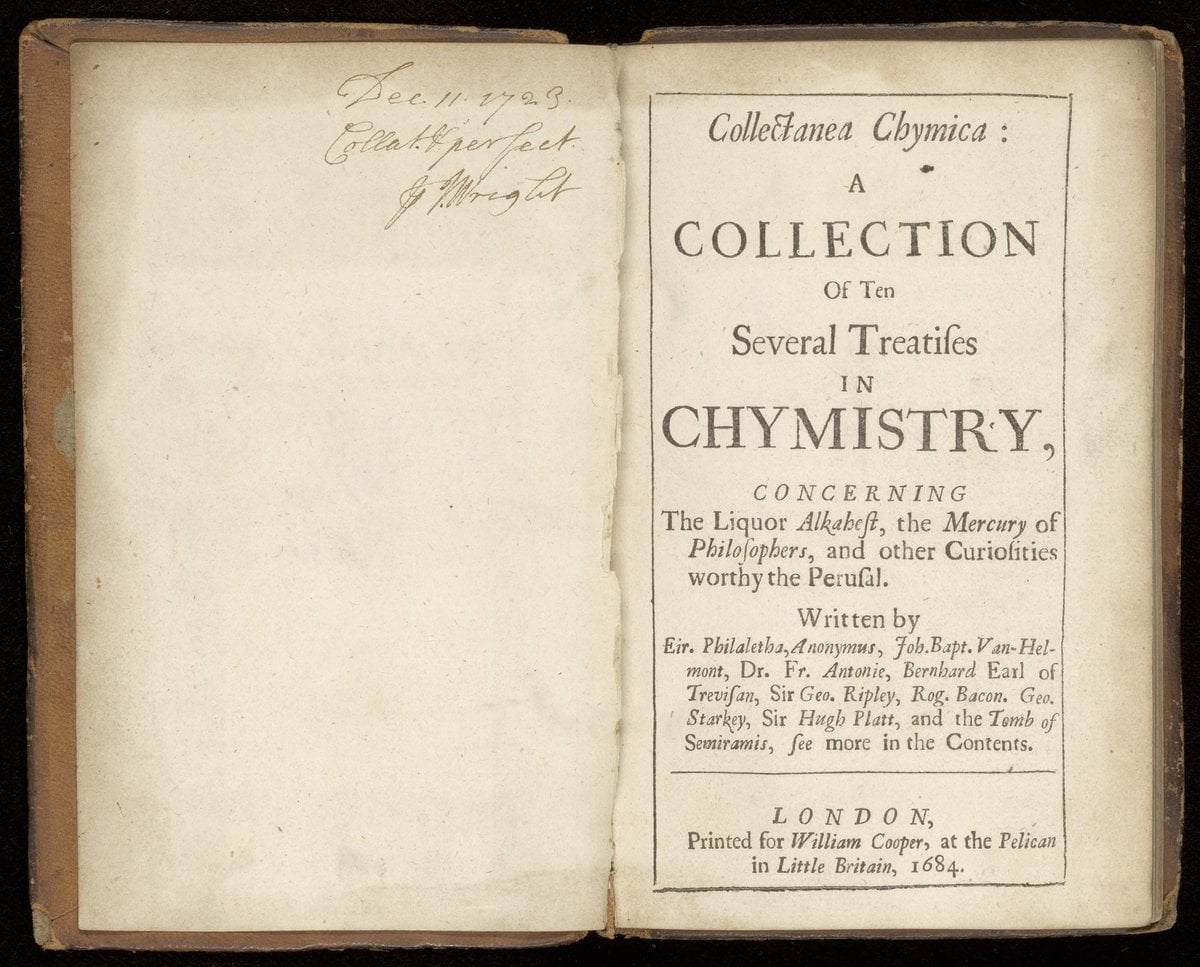
Collectanea chymica: a collection of ten several treatises in chymistry
Anonymous
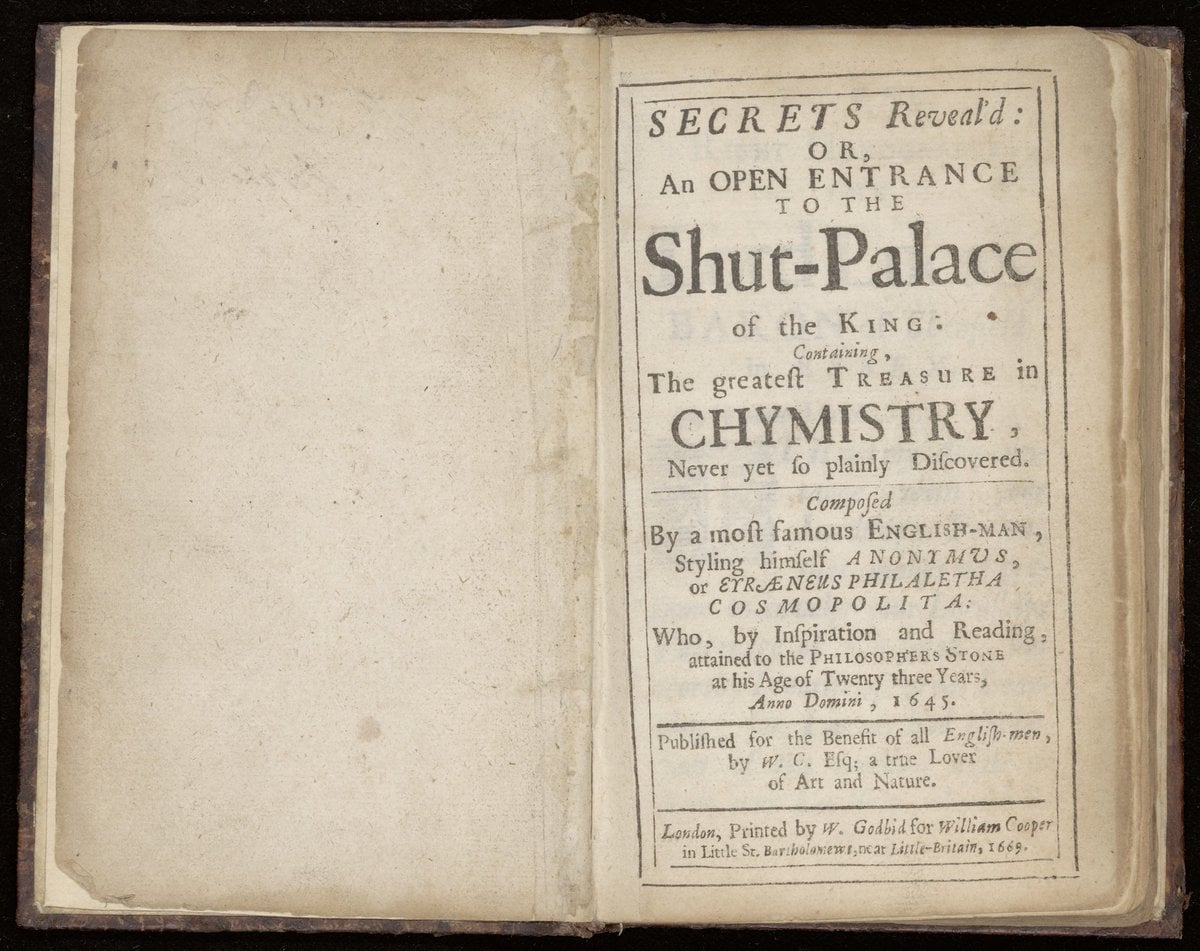
Secrets reveal'd: or, an open entrance to the shut palace
attr. Starkey, George
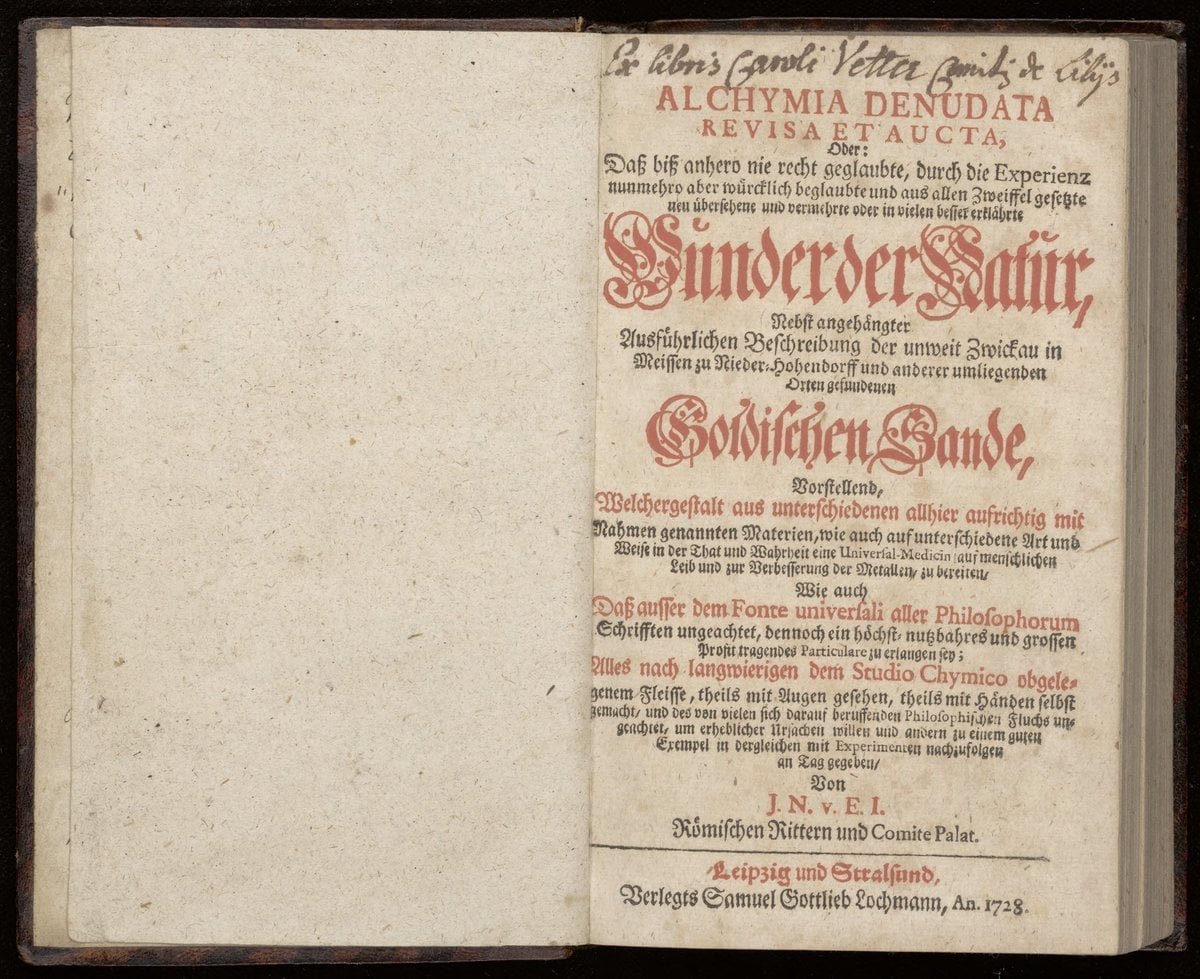
Alchemy Unveiled
attr. Naxagoras, Ehrd de
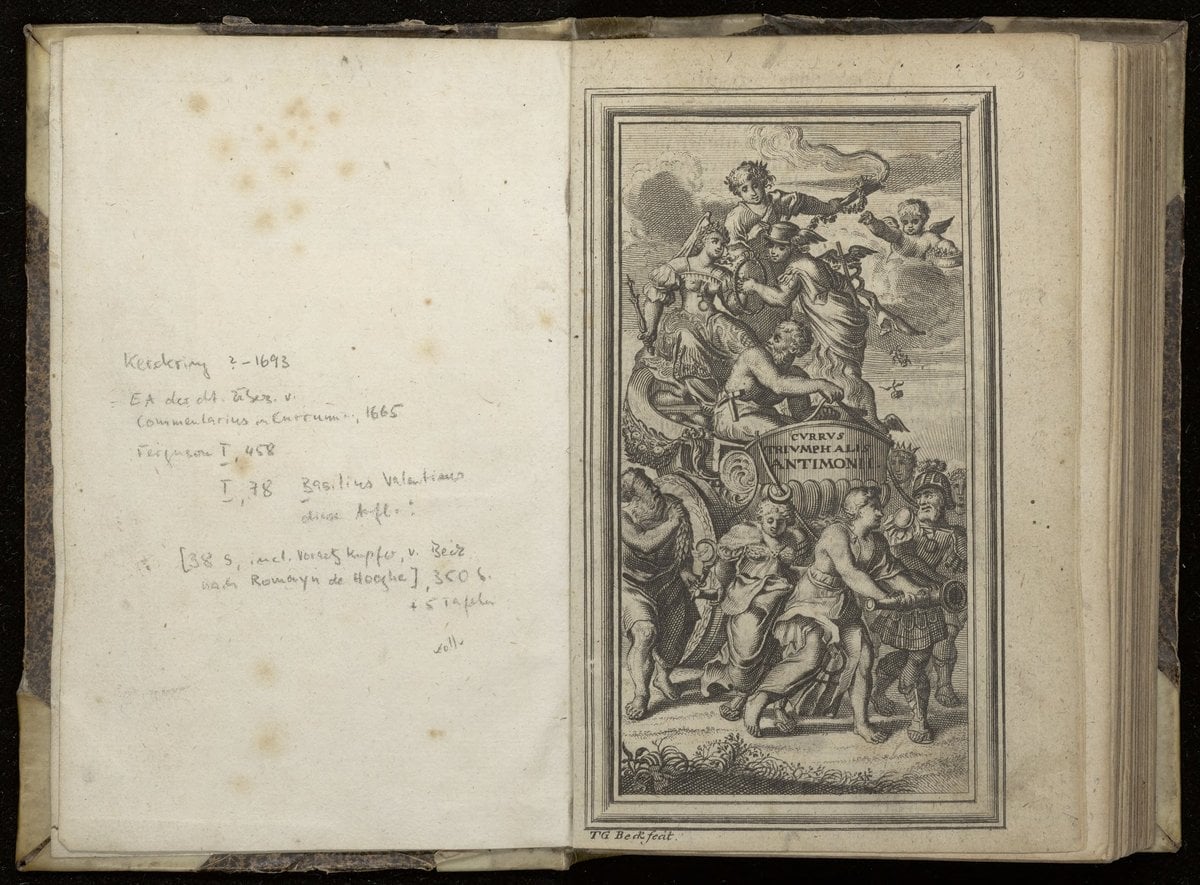
Remarks on Basil Valentine's Triumphal Chariot of Antimony
Kerckring, Theodor
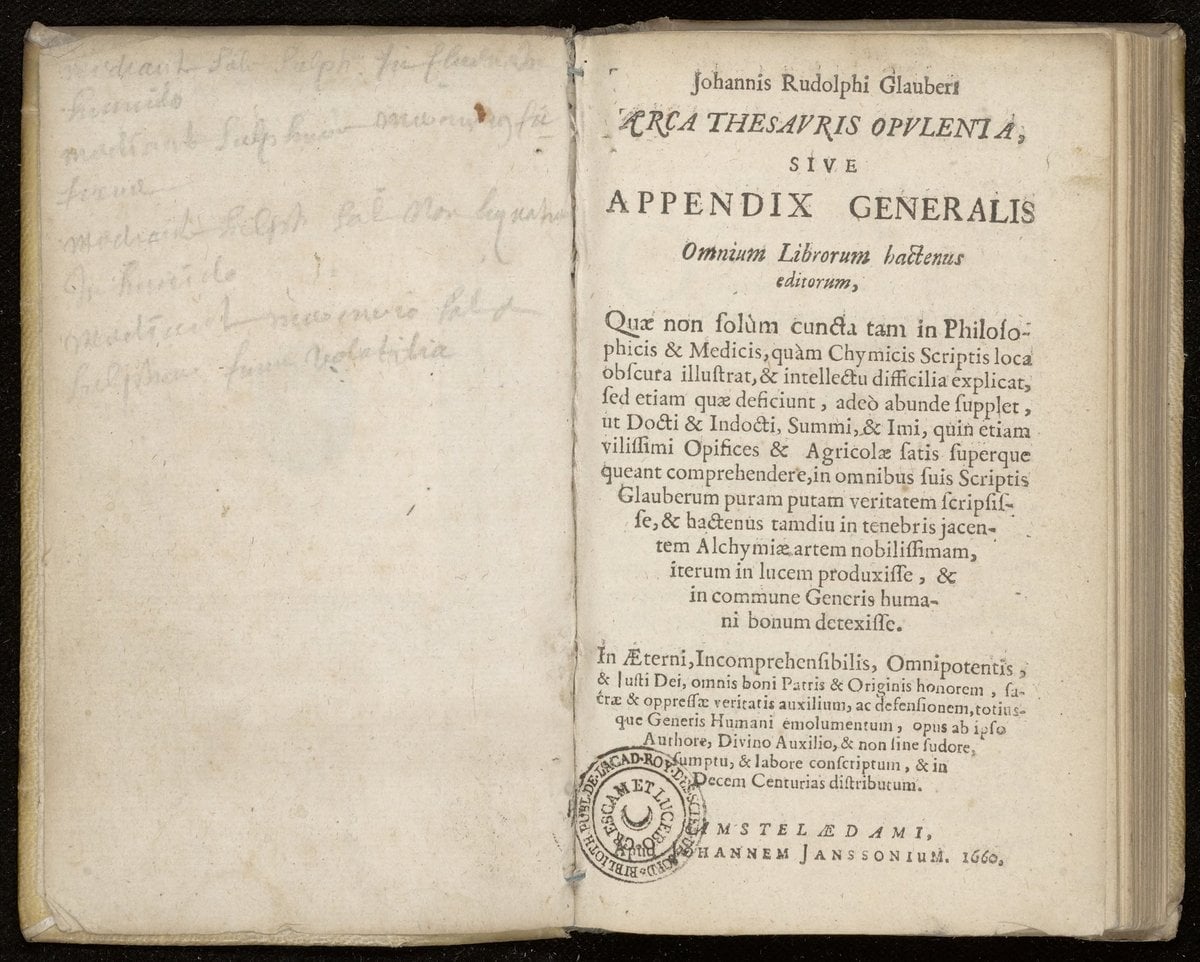
A Chest Rich in Treasures
Glauber, Johann Rudolph
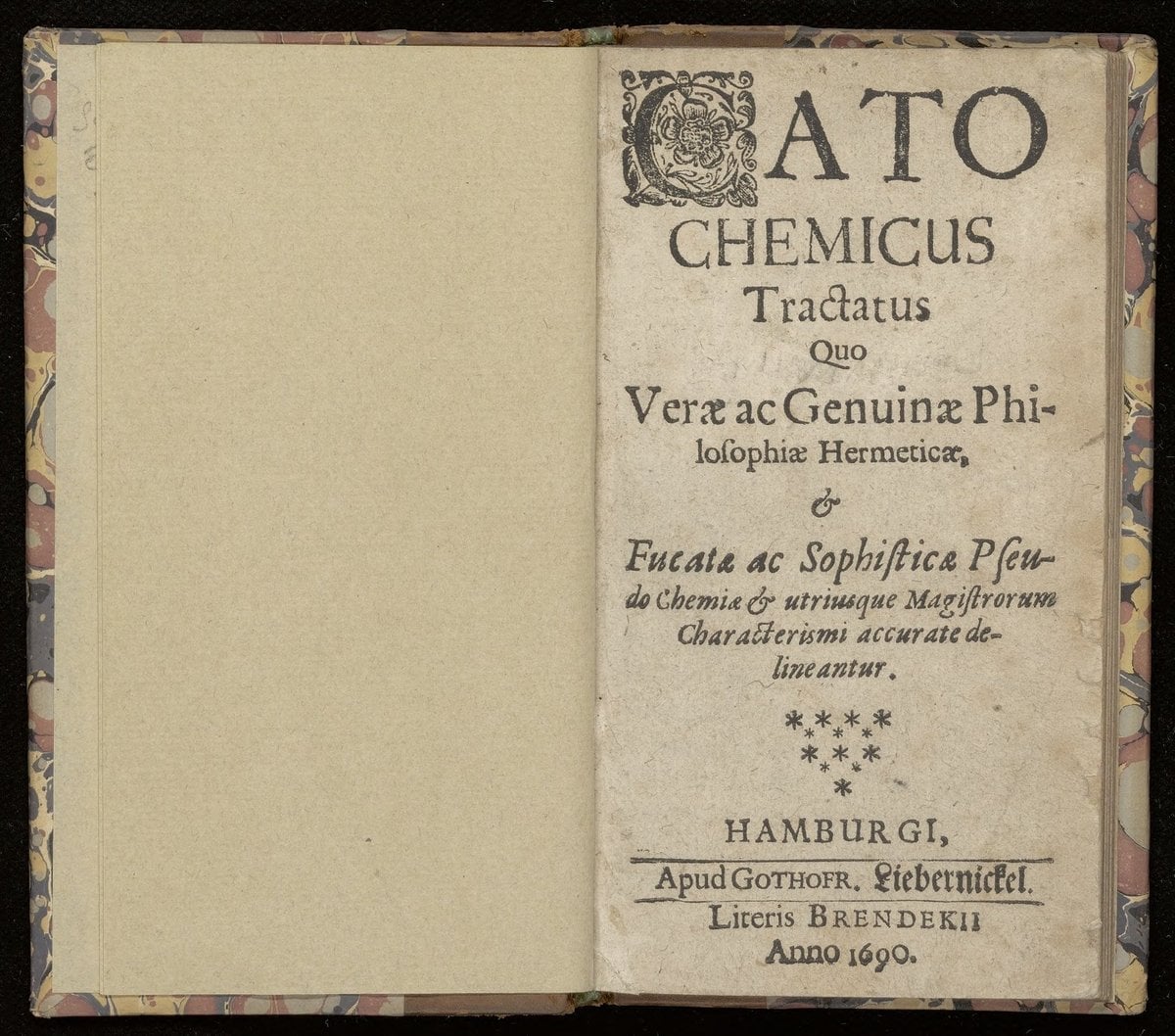
The Chemical Cato
attr. Hanneman, Johann Ludwig
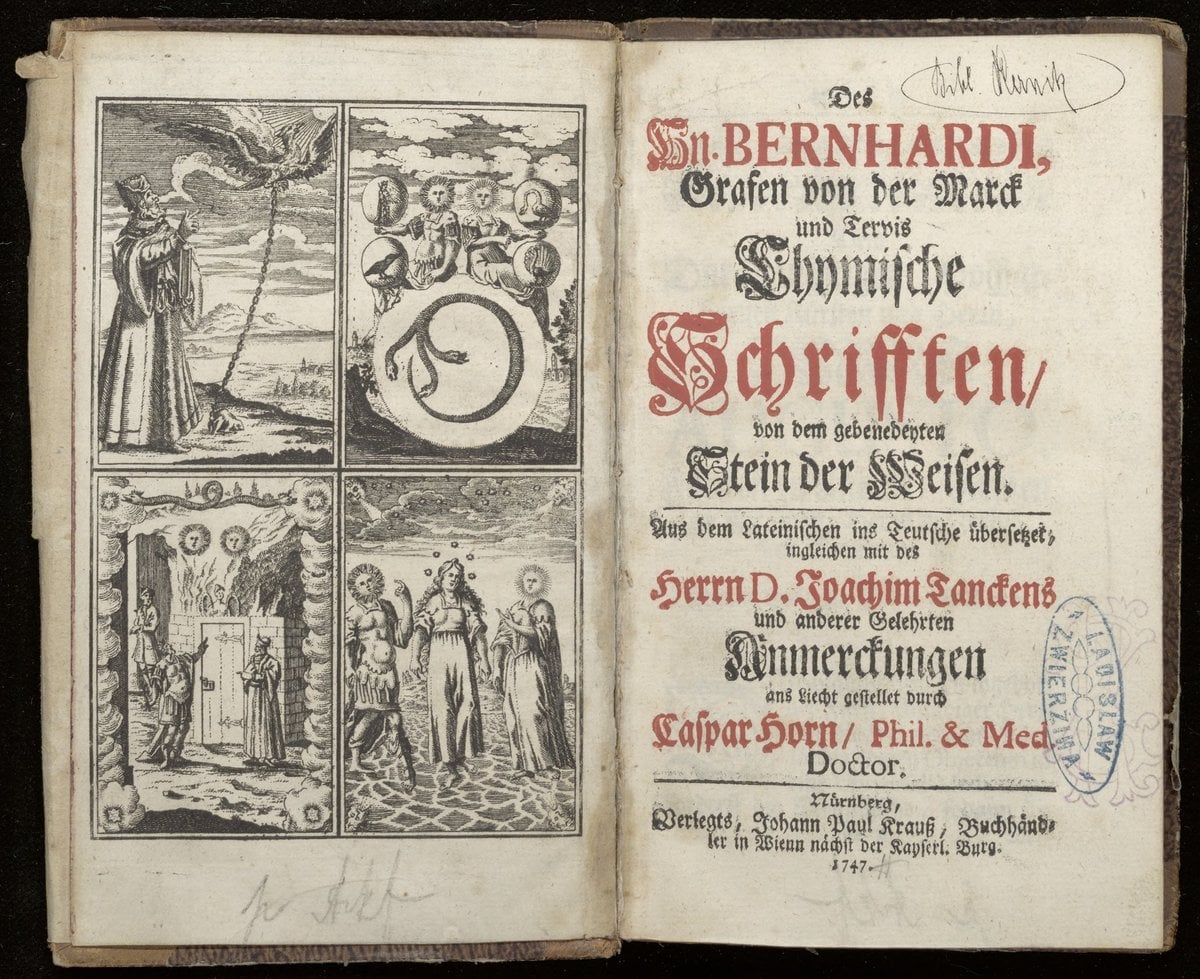
Alchemical Writings
Bernhardus Trevisanus
New Experiments in Artificial Saltpeter Production
Eckartshausen, Karl von
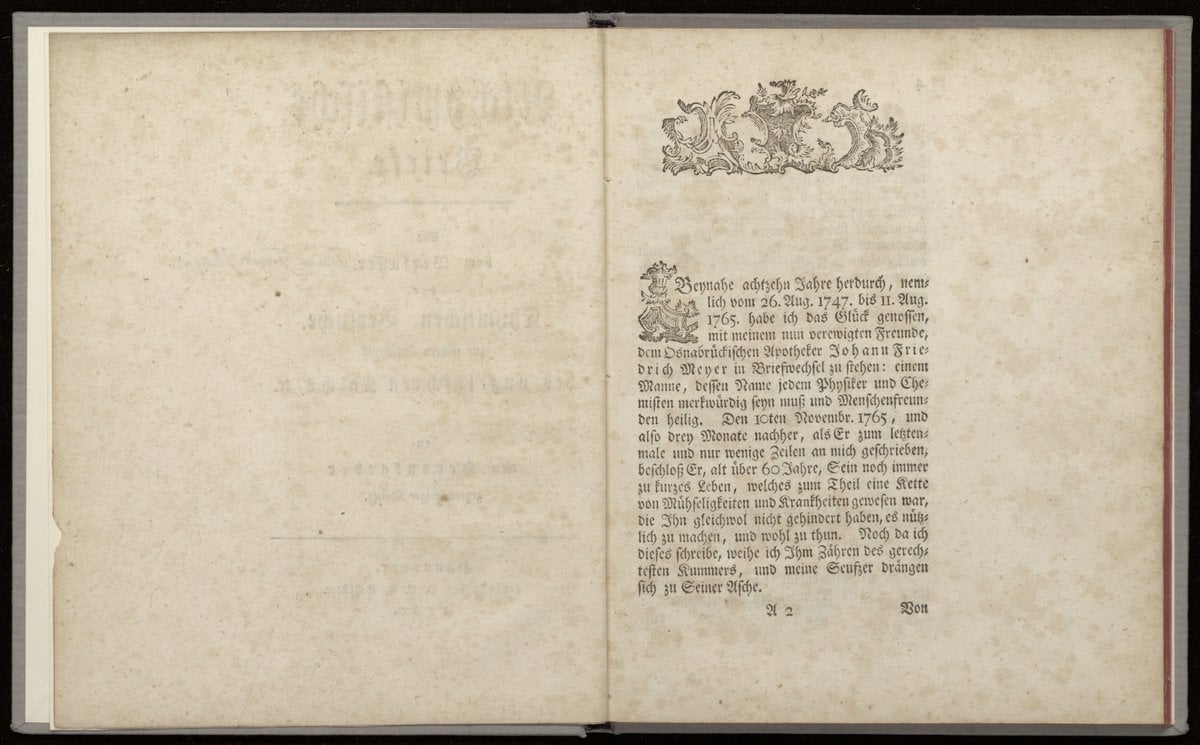
Alchemical Letters
attr. Meyer, Johann Friedrich
Two Chemical Treatises: An Open Entrance to the Closed Palace of the King
[Starkey, George]|Ferrarius
The Contracted Chemical Library
Albineus, Nathan
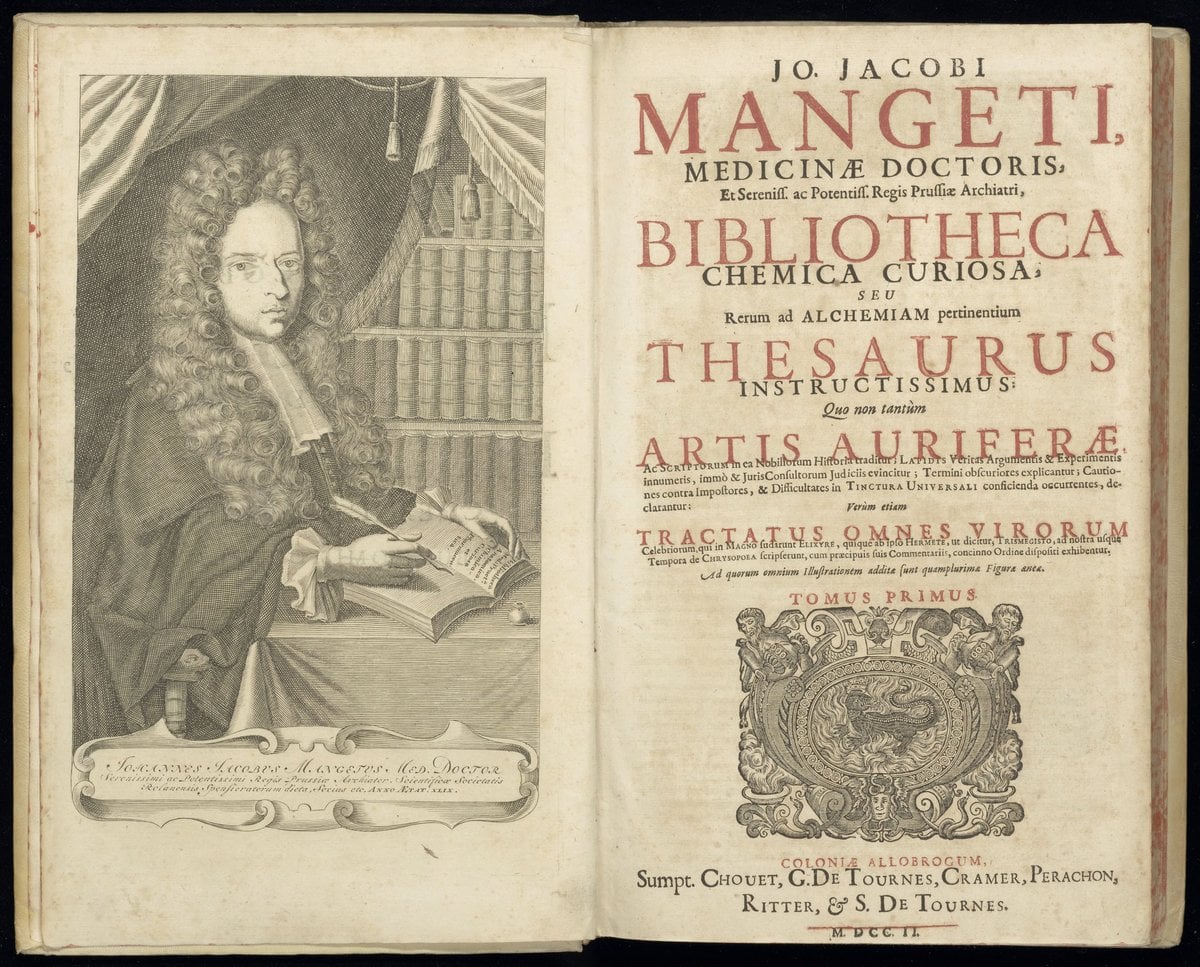
The Curious Chemical Library
Manget, Jean Jacques
The Lover of Truth Illustrated
Faust, Johannes Michael
Examination of the New Philosophy
Libavius, Andreas