


Illustrations
Browse all120 images extracted
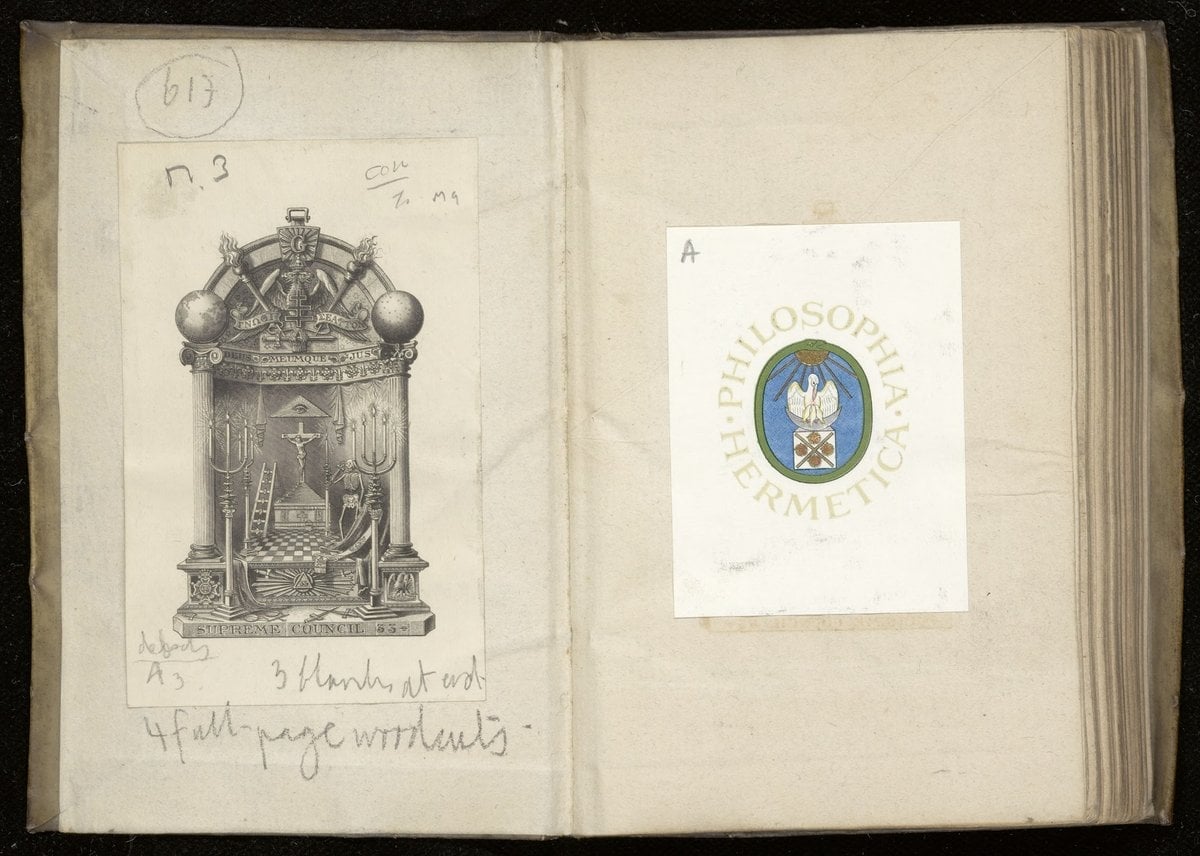
This intricate engraving serves as a symbolic representation of the 33rd degree of the Supreme Council of Freemasonry. It features a dense array of iconography, including the Eye of Providence, a double-headed eagle, and a memento mori in the form of a skeleton, all set within a classical architectural frame. The image encapsulates the complex blend of religious, philosophical, and fraternal traditions that characterize high-degree Masonic ritual and thought.
This intricate alchemical frontispiece for 'La Toyson d'Or' (The Golden Fleece) presents a comprehensive visual summary of the Hermetic Great Work. At its center is the VITRIOL acronym—'Visita Interiora Terrae Rectificando Invenies Occultum Lapidem'—surrounded by planetary symbols and allegorical figures representing the stages of transmutation. The imagery, including the green lion devouring the sun and the alchemist holding a flask, serves as a symbolic map for the practitioner seeking the philosopher's stone.
This finely detailed engraving depicts David de Planis Campy (1589–c. 1644), a prominent French surgeon and alchemist known as 'L'Edelphe.' Shown at age 38, he is surrounded by the tools of his trade—chemical furnaces and retorts—while his hand rests on a book of 'microcosm' and 'macrocosm' diagrams, bridging the gap between medicine and alchemy.
This woodcut depicts the Swiss physician and alchemist Paracelsus (Theophrastus von Hohenheim) at the age of 45. The portrait is accompanied by his famous motto, 'Alterius non sit, qui suus esse potest' (Let no man belong to another who can belong to himself), reflecting his fiercely independent spirit and revolutionary approach to medicine and science during the Renaissance.
This woodcut illustrates the 'Turba Philosophorum' (Assembly of the Philosophers), one of the oldest and most influential Latin alchemical texts. It depicts a group of sages engaged in debate, with speech scrolls bearing fundamental alchemical principles such as 'Solue Coagula' (dissolve and coagulate). The central crowned figure and the fire at the base symbolize the transformative power of the alchemical process.
This woodcut represents the 'First Key' of Basil Valentine, illustrating the purification of gold. The wolf jumping over the fire symbolizes 'the wolf of antimony' used to consume impurities from the King (gold), while the skeletal figure of Saturn represents the process of leaden decay and the necessity of 'killing' the base metal to release its essence.

This woodcut illustrates the 'Second Key' of Basil Valentine, representing the purification of matter through the symbolic union of opposites. At the center, a winged Mercury holds two caducei, signifying the volatile and fixed principles, while the surrounding figures and celestial bodies represent the chemical marriage required to produce the Philosopher's Stone.

This hand-colored woodcut emblem from 'La Toyson d'Or' (The Golden Fleece) depicts the solar principle, a central concept in alchemical transformation. The shield and crest both feature the sun with a human face, symbolizing 'Sol' or the masculine, active principle in the Great Work of alchemy.

This opening emblem, titled 'Arma Artis' or the Arms of the Art, presents the heraldic symbols of alchemy: the sun and the moon united under a crown. In the background, two figures—likely the author Solomon Trismosin and a companion—observe the symbolic manifestation, representing the philosopher's mastery over the celestial forces of the Great Work.
All Books
Browse Full Catalog→75 books in this collection
Know Thyself
attr. Reger von Ehrenhart, Ernestus Aurelius
On Presages, Prophecies, and Divinations
Paracelsus, Theophrastus
On the Ancient Hermetic Medicine of the Egyptians and the New Paracelsian Medicine
Conring, Hermann
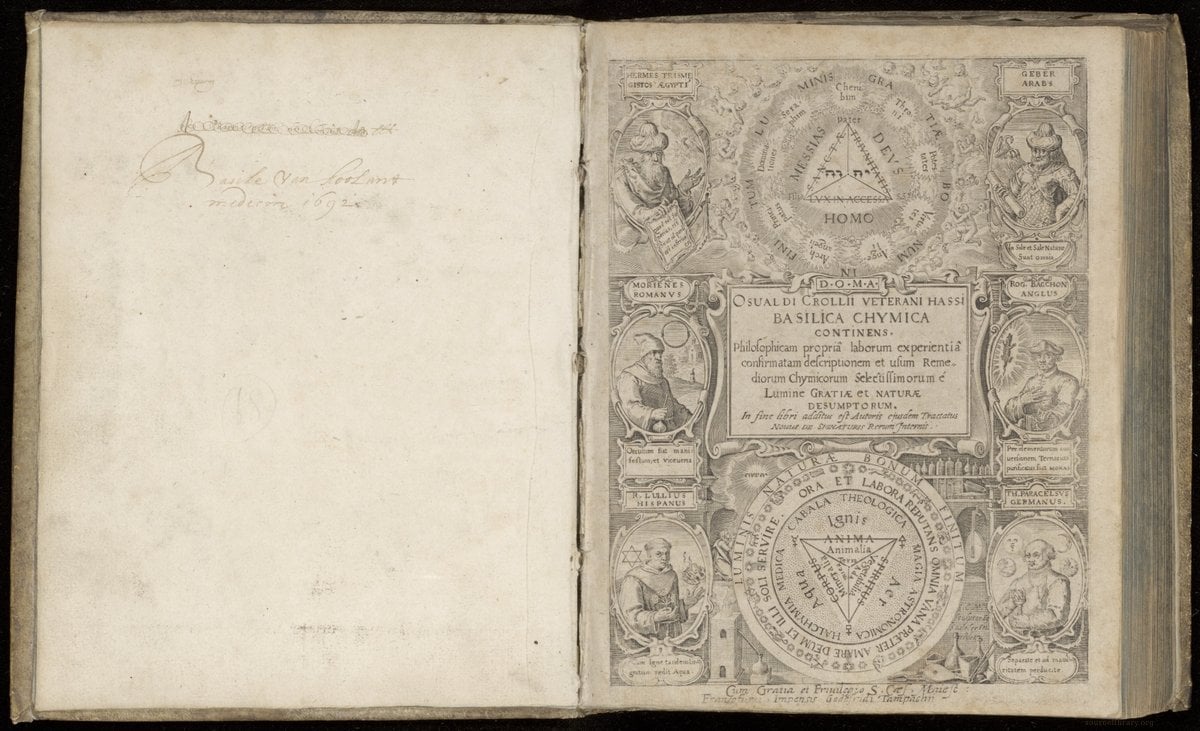
The Chemical Basilica and Treatise on Signatures
Crollius, Oswaldus
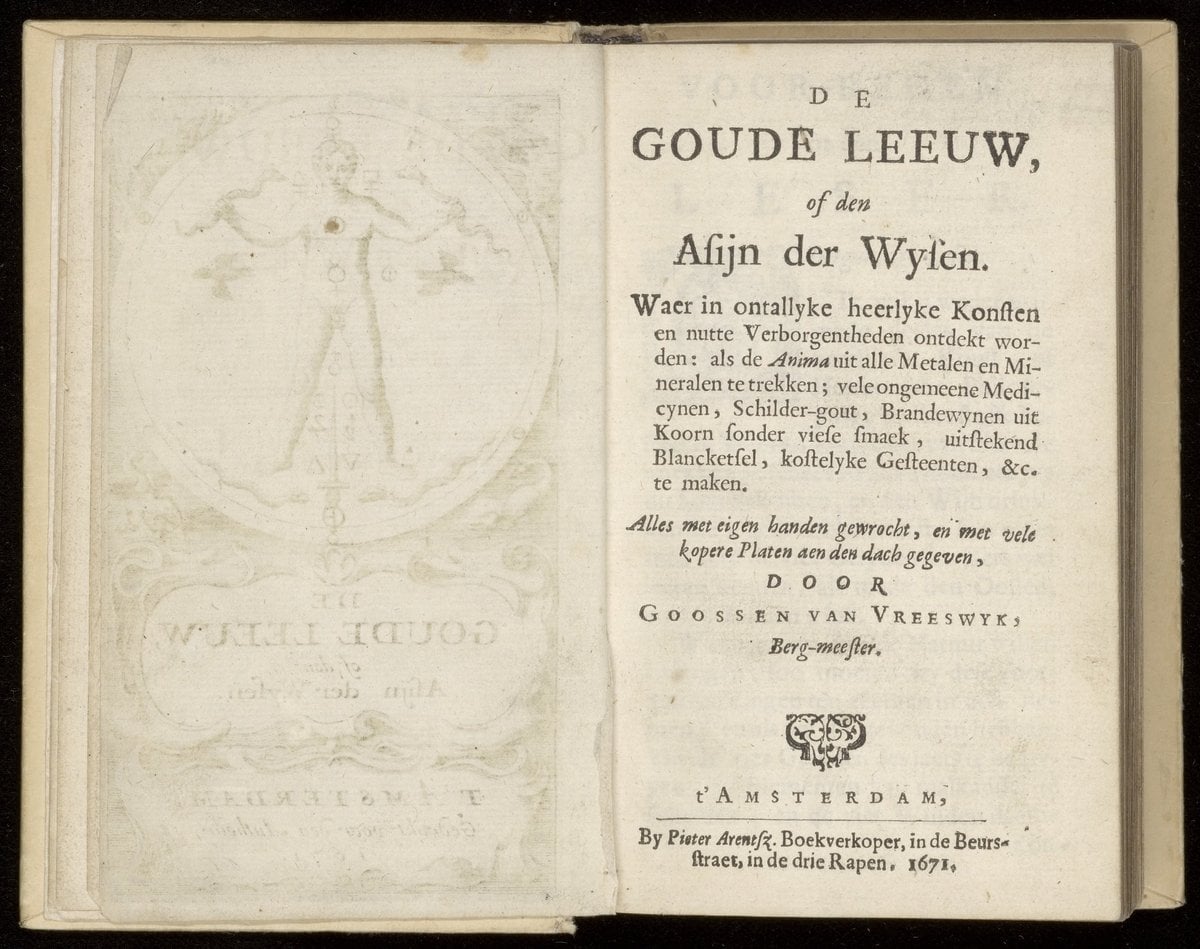
The Golden Lion, or the Vinegar of the Sages
Vreeswyk, Goossen van
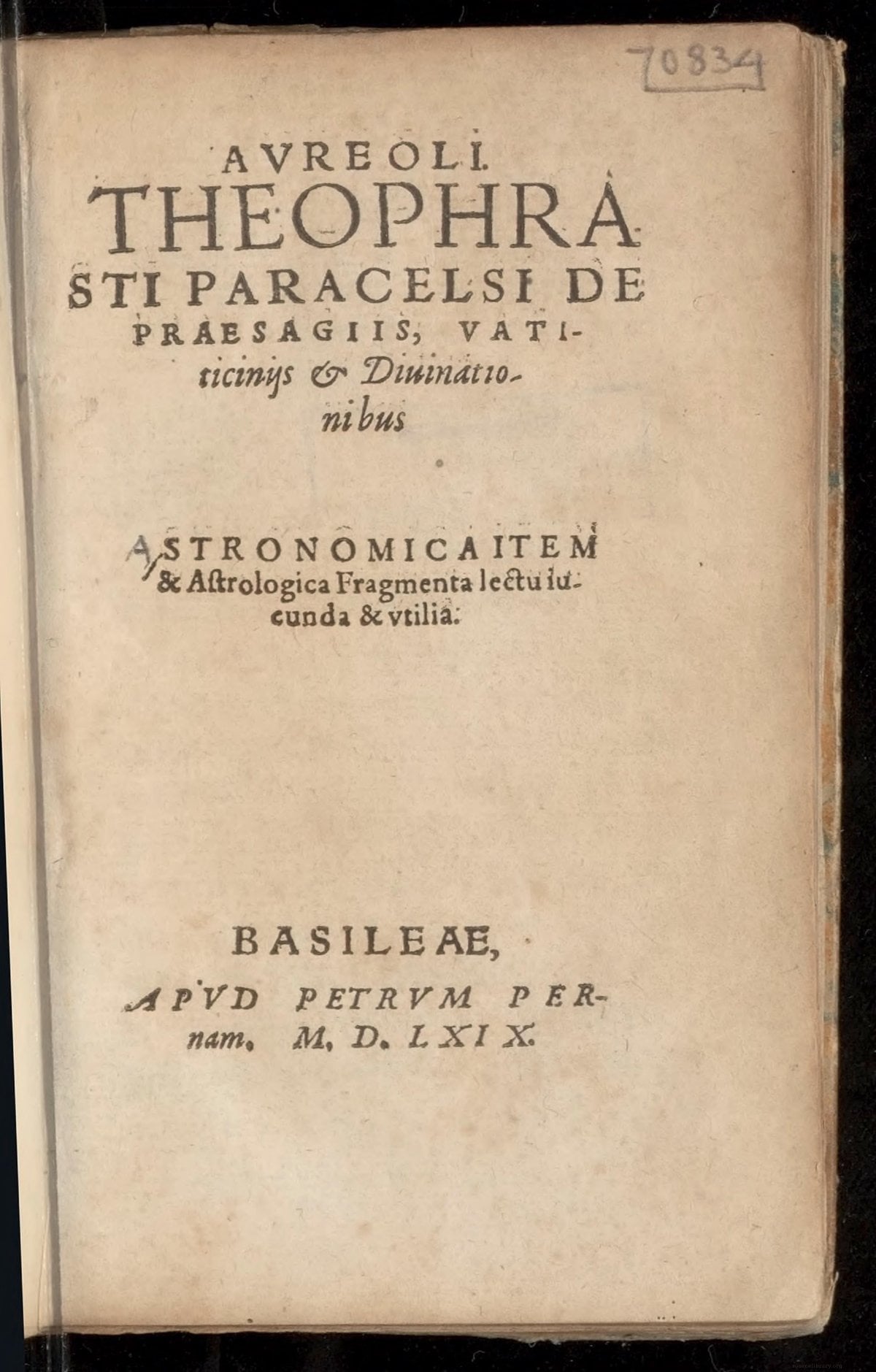
On Presages, Divination, and Astrological and Astronomical Fragments
Paracelsus
Fountain of Wisdom and Knowledge of Nature
Anonymous
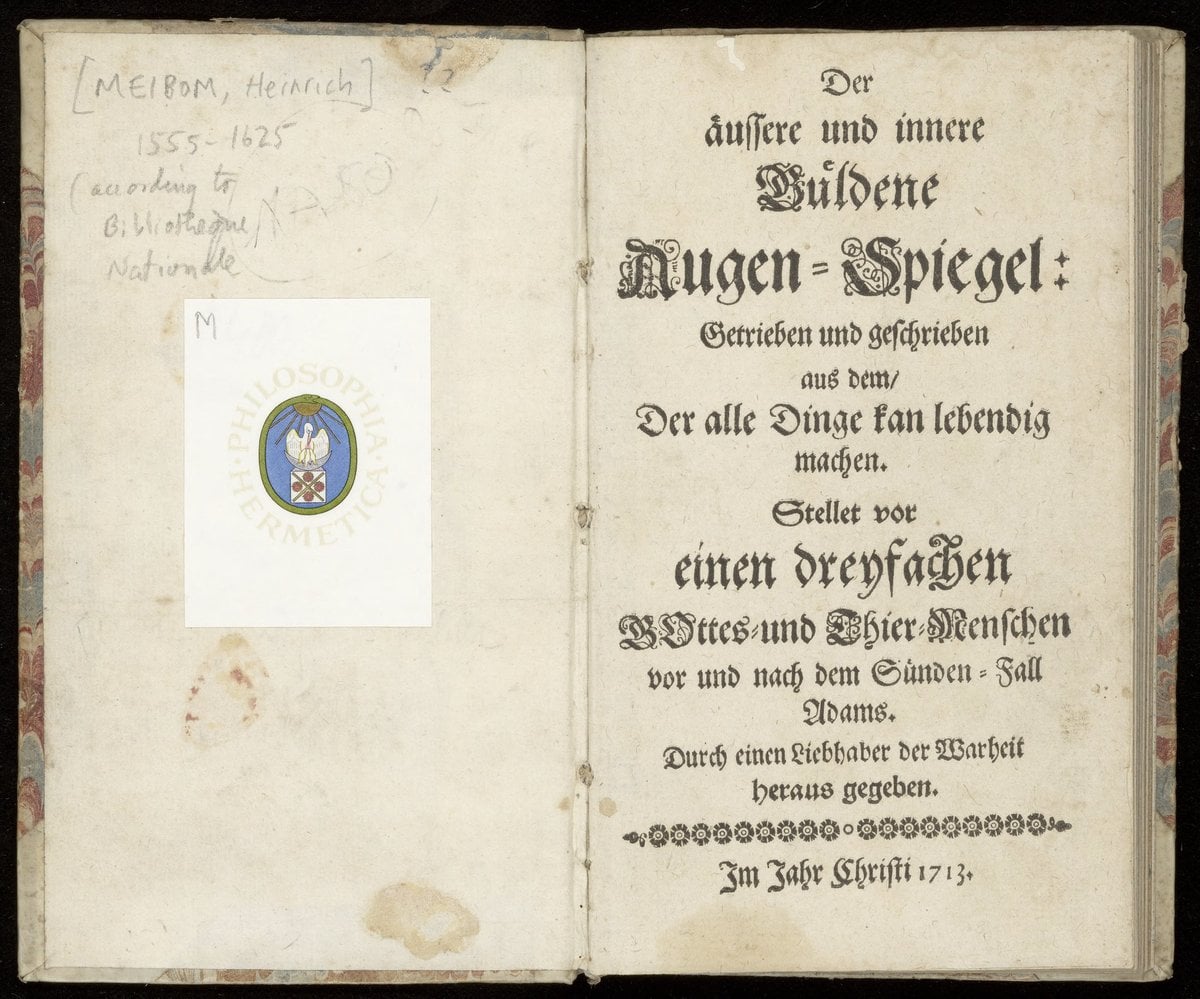
The Outer and Inner Golden Eye-Mirror
Anonymous
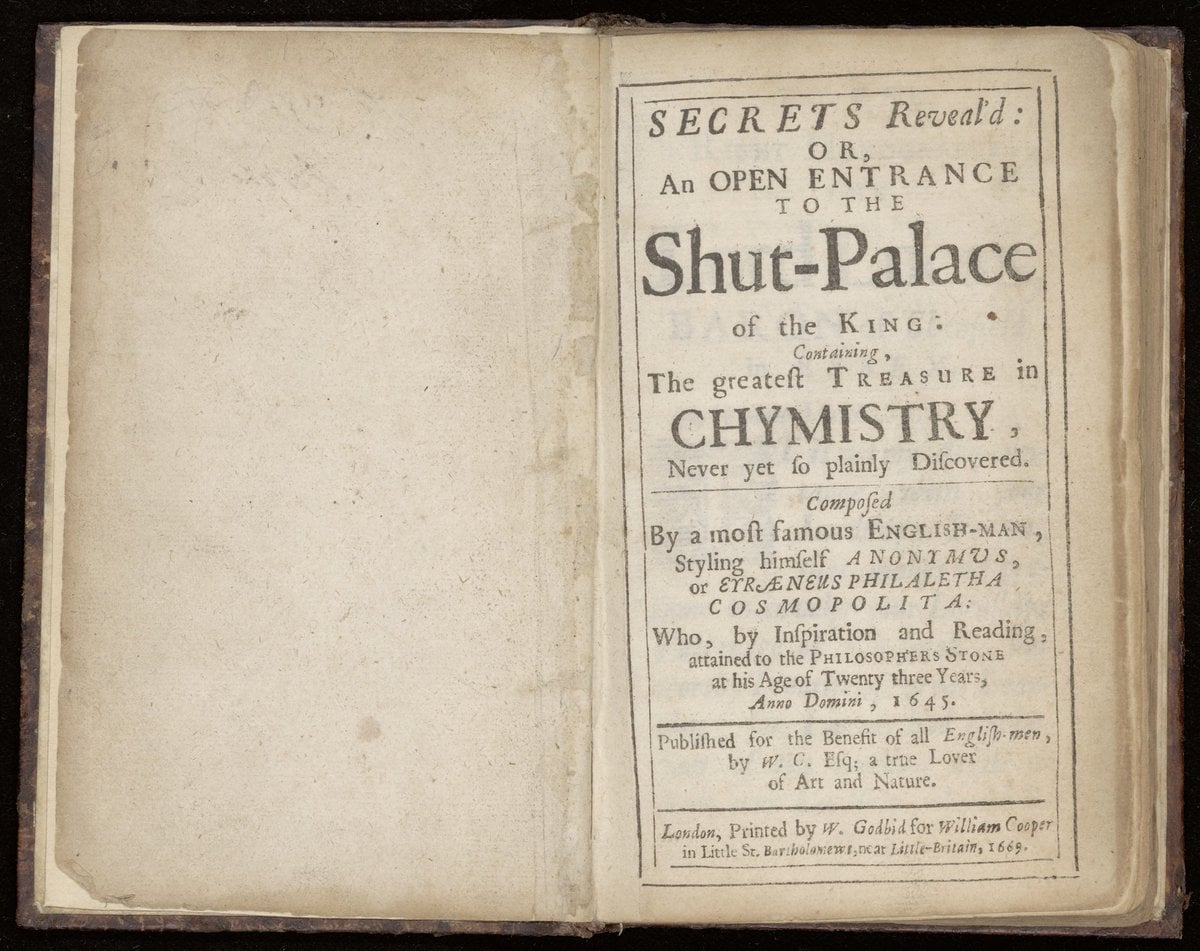
Secrets reveal'd: or, an open entrance to the shut palace
attr. Starkey, George
The Book of Meteors; Fourth Book of Paramirum on the Matrix
Paracelsus, Theophrastus
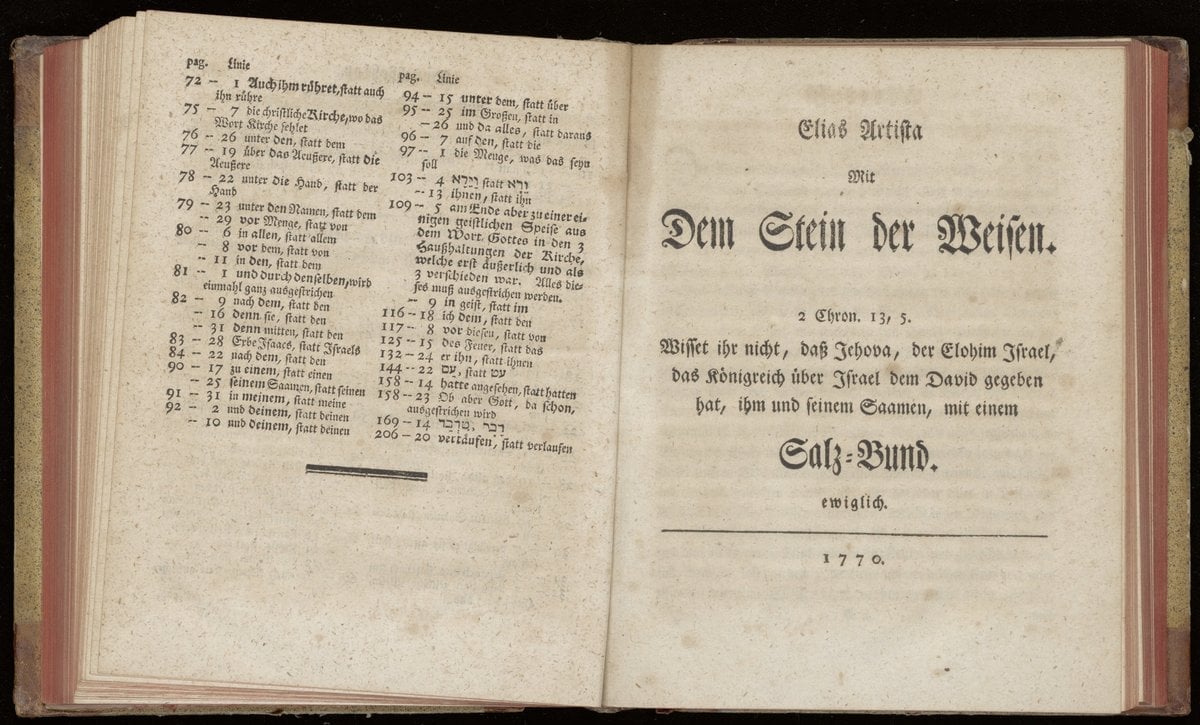
Elias the Artist with the Philosopher's Stone
attr. Müller, Johann Daniel
Aurora, and the Treasure of the Philosophers: The Water-Stone of the Wise Men
Paracelsus, Theophrastus|[Siebmacher, Johann Ambrosius]
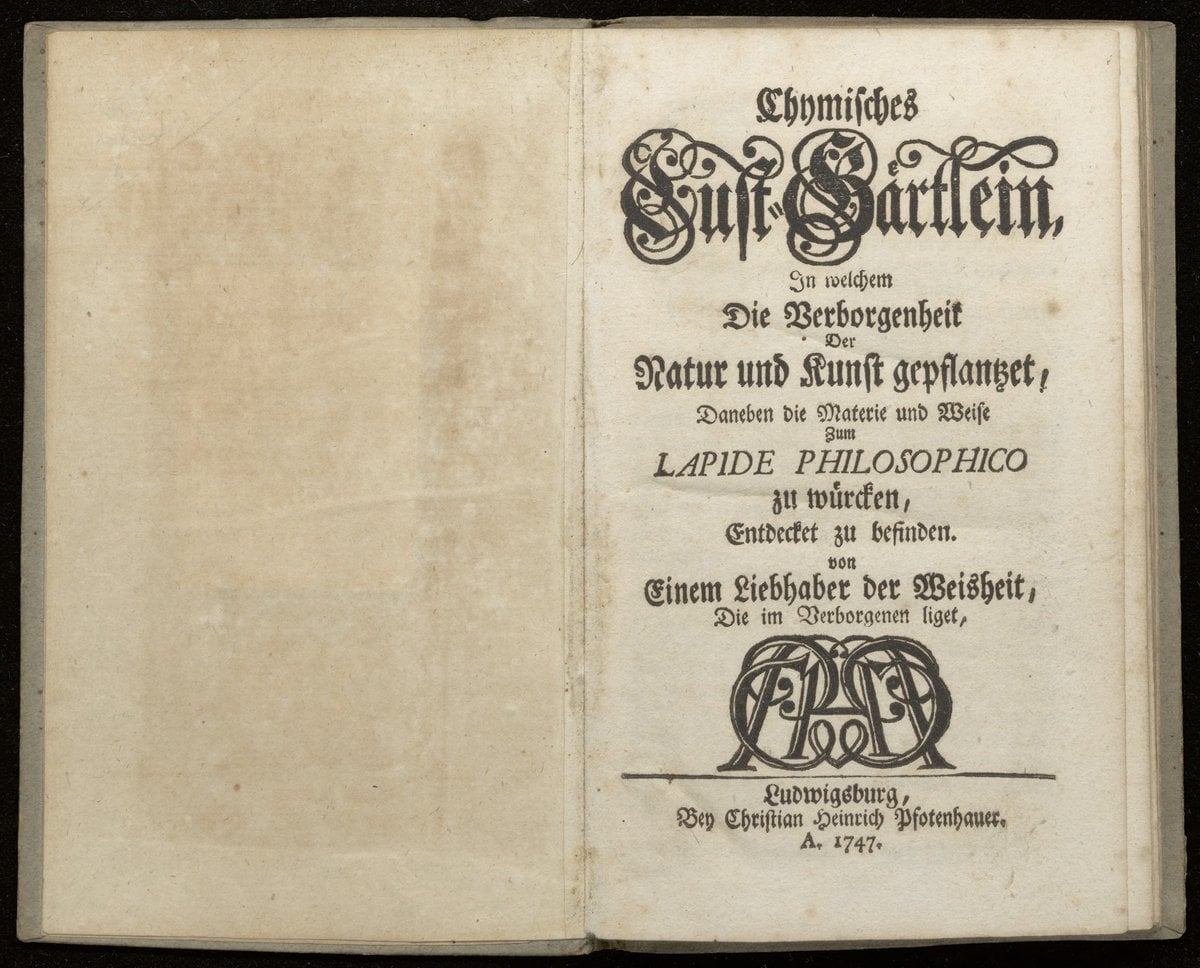
Chemical Pleasure Garden
Anonymous
The Key to the Whole of Chemical Philosophy
Dorn, Gerhard