


Philosophical Theology
Theology in dialogue with Platonic, Aristotelian, and Hermetic philosophy
Illustrations
Browse all468 images extracted
This intricate engraving from Robert Fludd’s 'Philosophia Moysaica' (1638) presents a complex cosmological model of the universe based on the interplay of light and darkness. At the base, the figures of Dionysus and Apollo represent the dualistic forces of destruction and creation, while the central diagram maps the emanation of divine light into the material world. Fludd’s work sought to reconcile biblical scripture with Hermetic philosophy and early scientific observation, making this image a key artifact of the 17th-century intellectual landscape.
This intricate engraving serves as the central visual argument for Robert Fludd's 'Philosophia Moysaica' (1638). It presents a complex cosmological diagram illustrating the relationship between the divine, the celestial, and the terrestrial realms through a series of interlocking circles and symbolic figures. Fludd, a prominent Hermetic philosopher and physician, used such imagery to synthesize biblical narrative with contemporary scientific and mystical thought, representing the unfolding of creation from the divine unity.
This engraving depicts John Pordage (1607–1681), an English physician and mystic who was a prominent follower of Jakob Böhme. He is presented in a formal oval frame resting on a pedestal that identifies him as a 'Med: Doctor,' reflecting his dual role as a man of science and spirit. The portrait serves as the frontispiece to his work on metaphysics, establishing the author's authority and intellectual stature.
This formal portrait depicts Mary Baker Eddy (1821–1910), the author of 'Science and Health with Key to the Scriptures' and the founder of the Christian Science movement. The detailed engraving presents Eddy in a dignified manner, reflecting her status as a prominent religious leader and author in the late 19th century.
This formal frontispiece depicts Henry More (1614–1687), a leading figure among the Cambridge Platonists. The engraving shows More in clerical dress, framed by a lush foliate wreath and a heraldic shield, signifying his status as a scholar and divine. The inscription below provides biographical details, marking his death in 1687 at the age of 72.
This woodcut from Heinrich Cornelius Agrippa's 'De Occulta Philosophia' (1533) illustrates the human body as a perfectly proportioned microcosm, harmoniously inscribed within a square. Surrounded by symbolic attributes such as the all-seeing eye and the serpent, the figure represents the intersection of physical form and divine order. This imagery was central to Renaissance thought, bridging the gap between natural philosophy, geometry, and the spiritual realm.

This intricate engraving depicts an Egyptian obelisk inscribed with a series of symbolic hieroglyphs, crowned by the double-headed eagle of the Holy Roman Empire. Created during a period of intense fascination with ancient Egypt, the image serves as a political allegory for the wisdom and power of Emperor Ferdinand III, as indicated by the Latin text. The juxtaposition of ancient Egyptian forms with contemporary imperial symbols reflects the Baroque desire to connect modern rulers with the primordial wisdom of antiquity.

This woodcut vignette depicts two figures in scholarly attire engaged in a formal disputation or dialogue. Set within a circular frame, the scene allegorically represents the process of logical judgment and the exchange of ideas discussed in the accompanying Latin text on 'Judicio in Specie'.

This intricate woodcut illustrates Mount Randa in Mallorca, a location central to the life and mystical experiences of the philosopher Ramon Llull. The image depicts a winding path that serves as a metaphor for spiritual ascent, guiding the viewer from the bustling activity of the coast and valley up to the quiet contemplation of the mountaintop sanctuary. The inclusion of a procession and various architectural landmarks highlights the site's importance as a place of pilgrimage and intellectual retreat.
All Books
Browse Full Catalog→252 books in this collection
Essence of Pomegranates
Gallico, Samuel
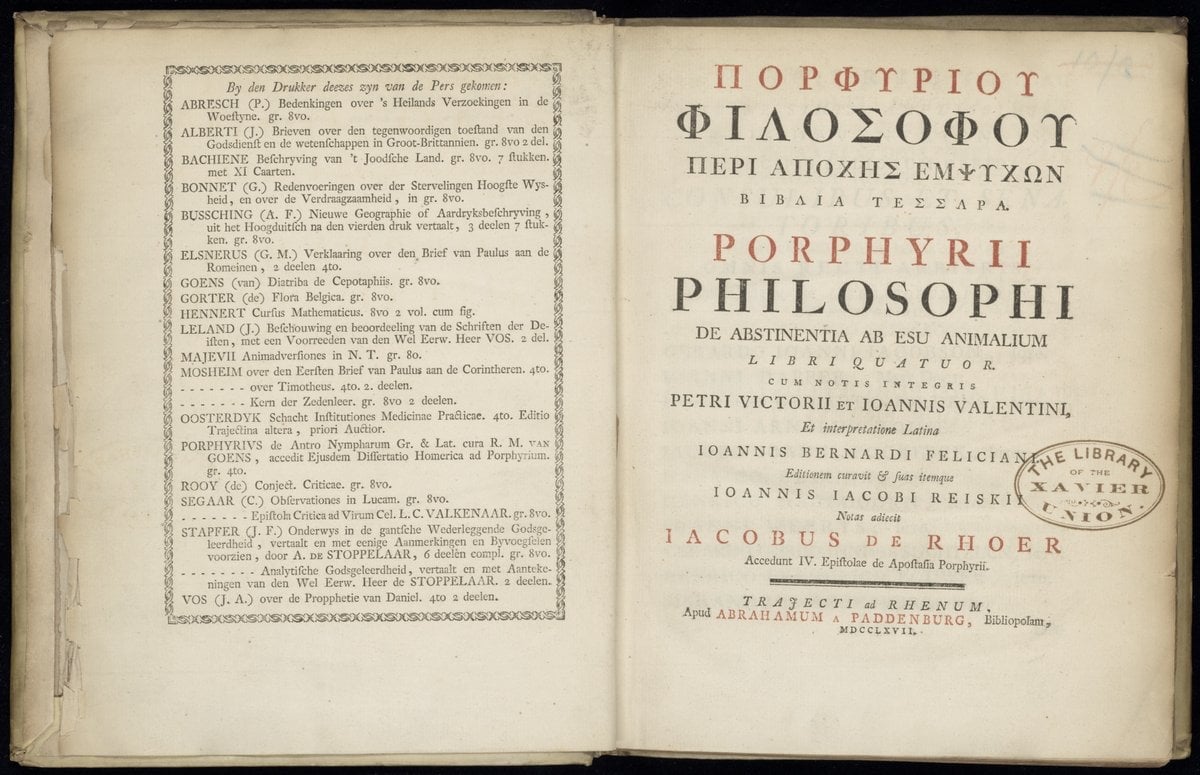
On Abstinence from Animal Food
Porphyrius
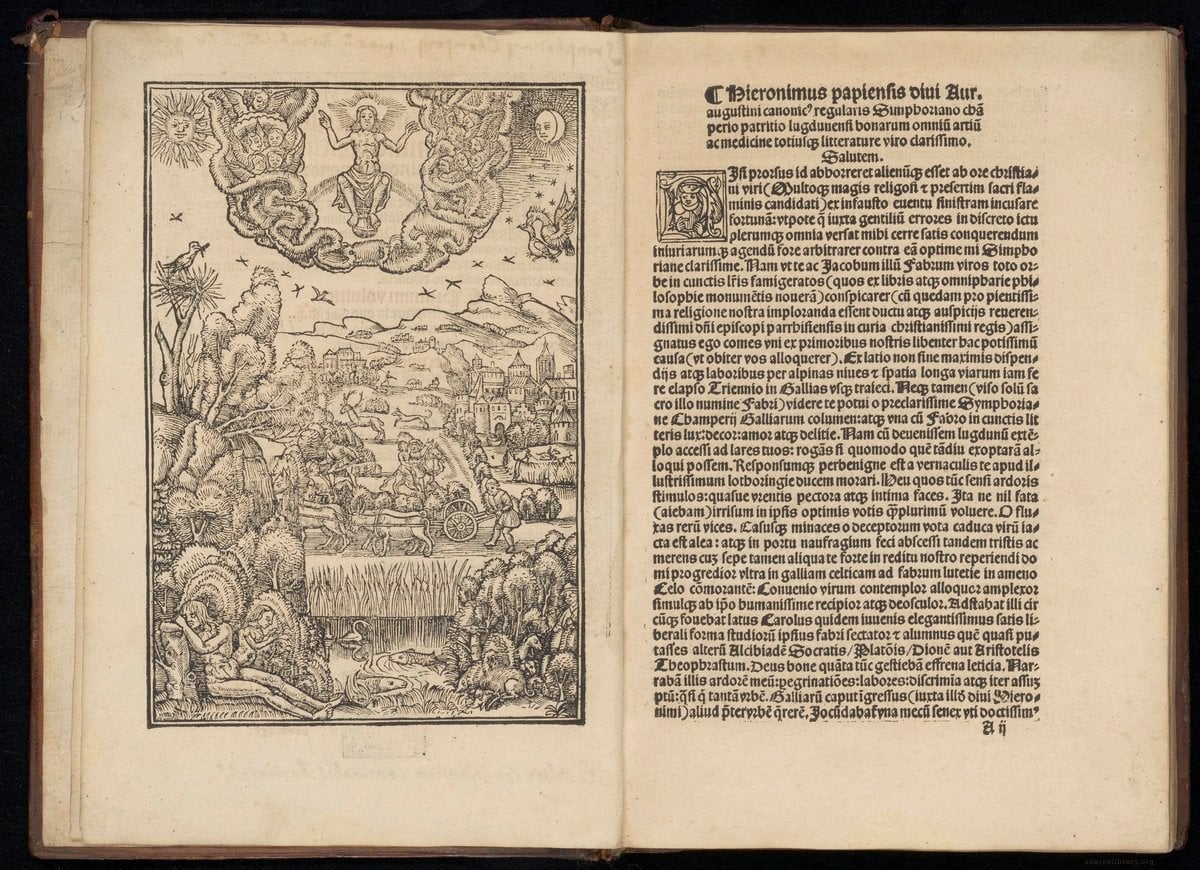
Four Volumes of Divine and Human Marvels
Champier, Symphorien
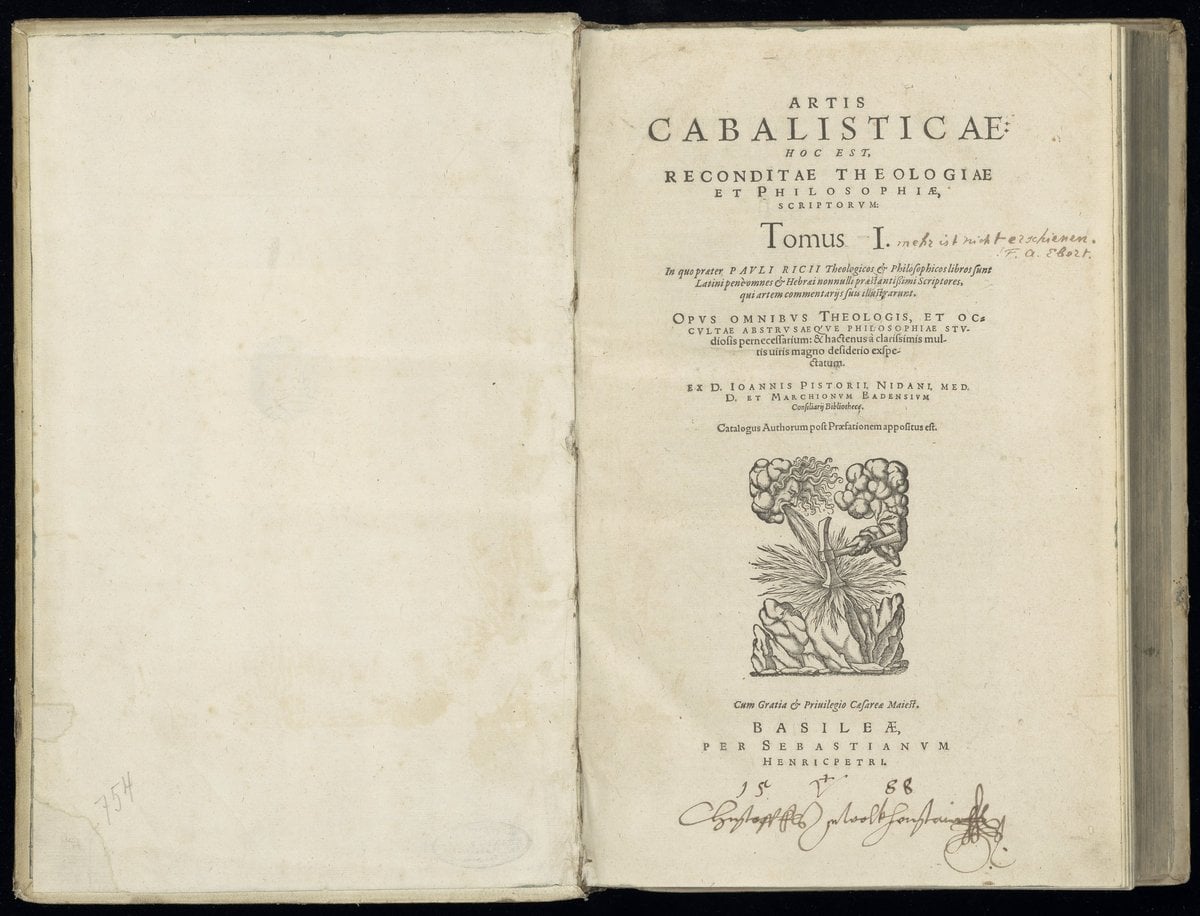
The Cabalistic Art, Volume 1
Pistorius, Johannes
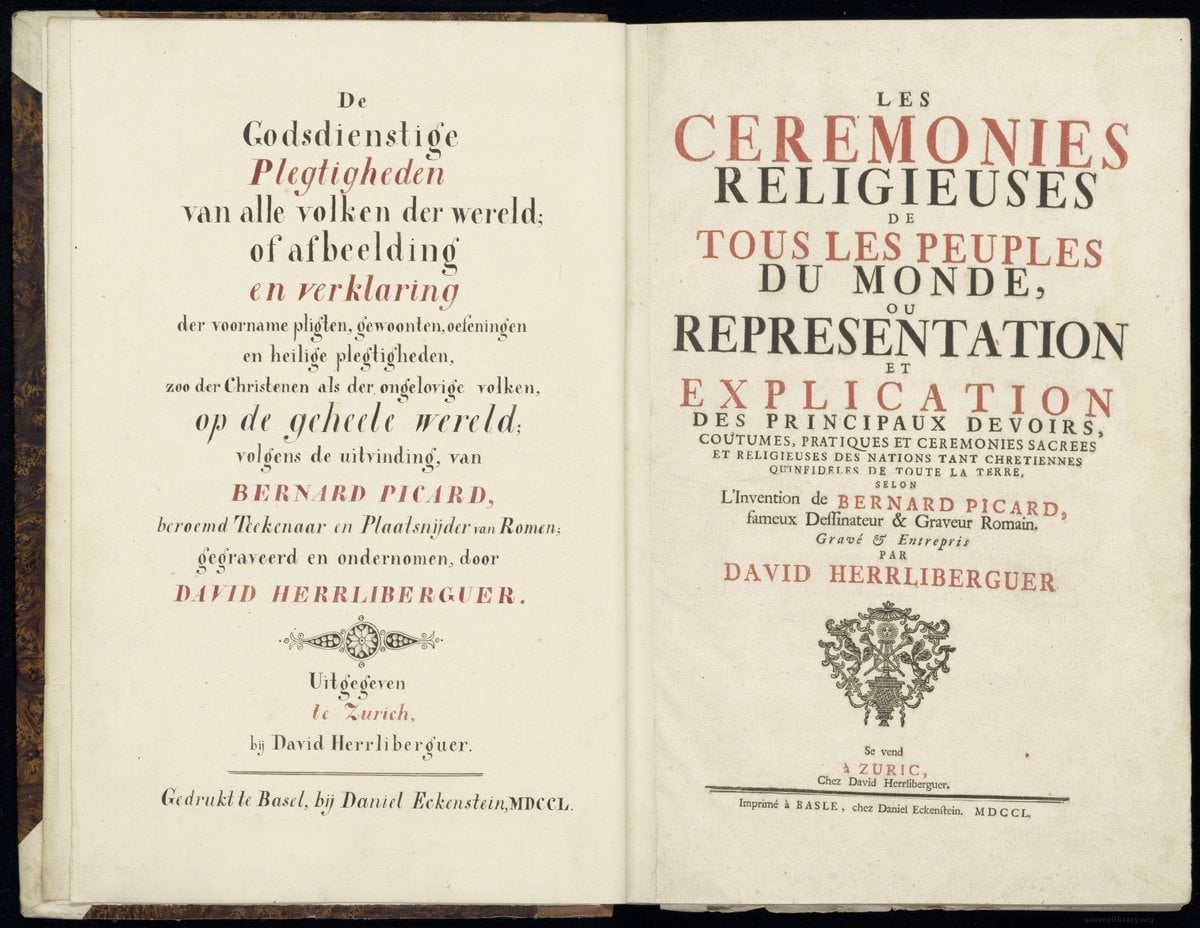
Religious Ceremonies
Picard, Bernhard|Herrliberguer, David
Menippus, or Satirical Dialogues
Andreae, Johann Valentin
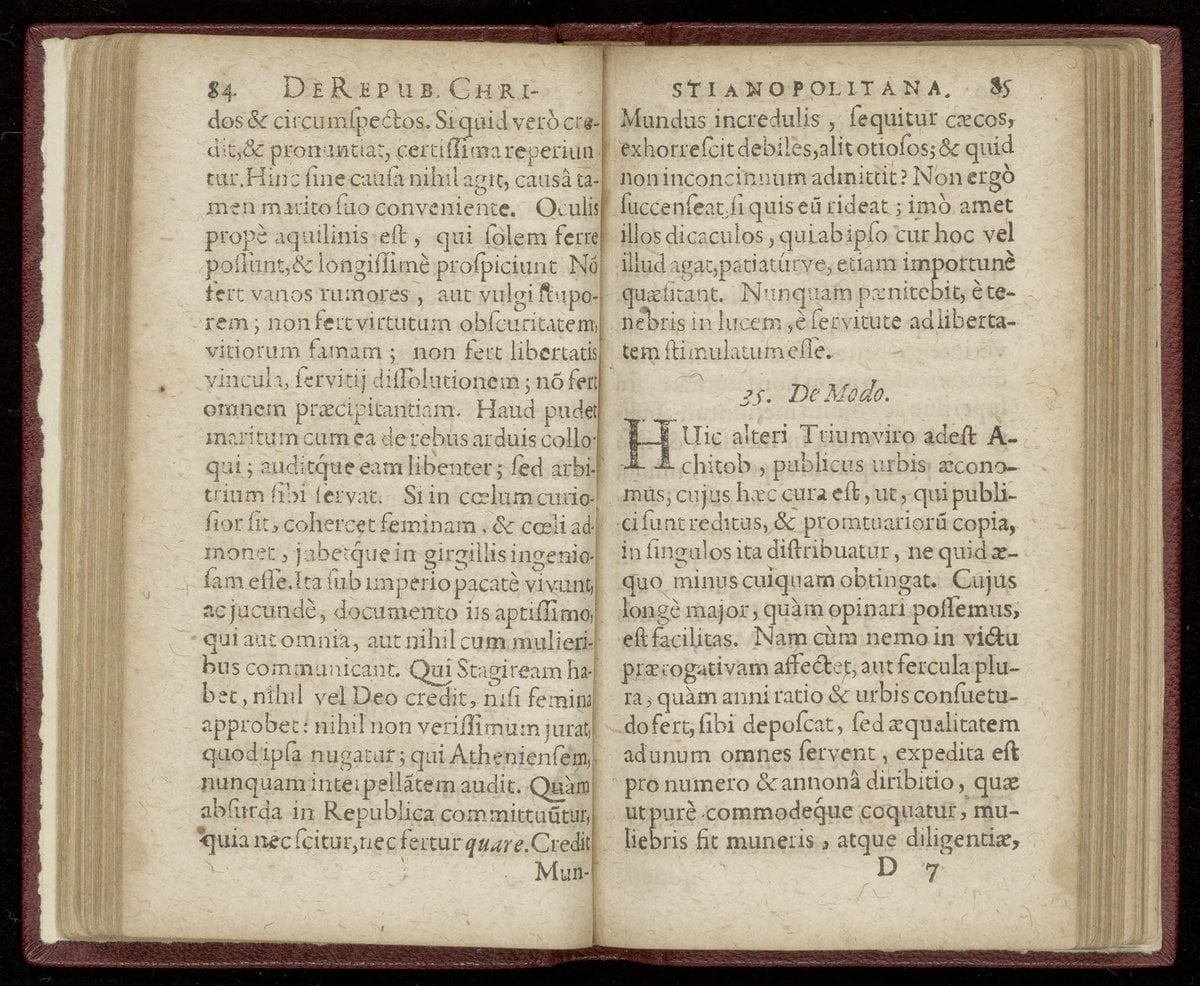
Description of the Republic of Christianopolis
attr. Andreae, Johann Valentin
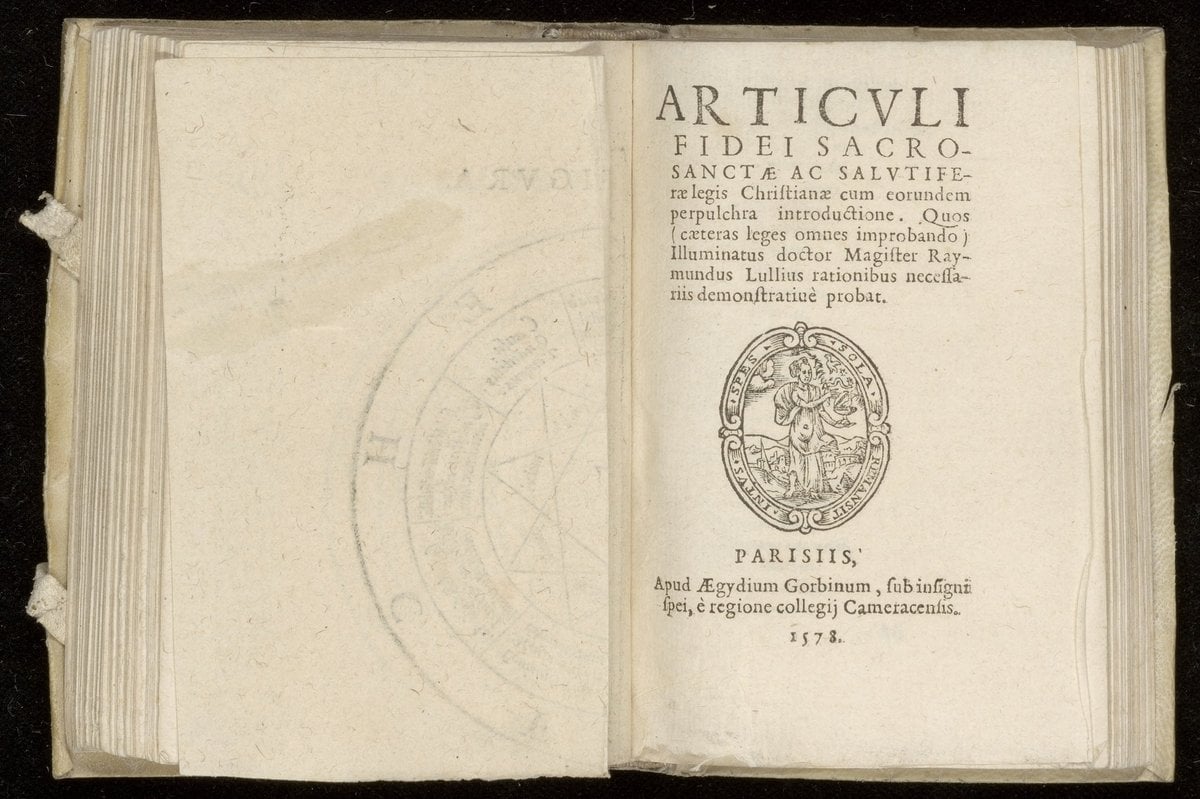
Articles of the Holy Faith
Lull, Ramón
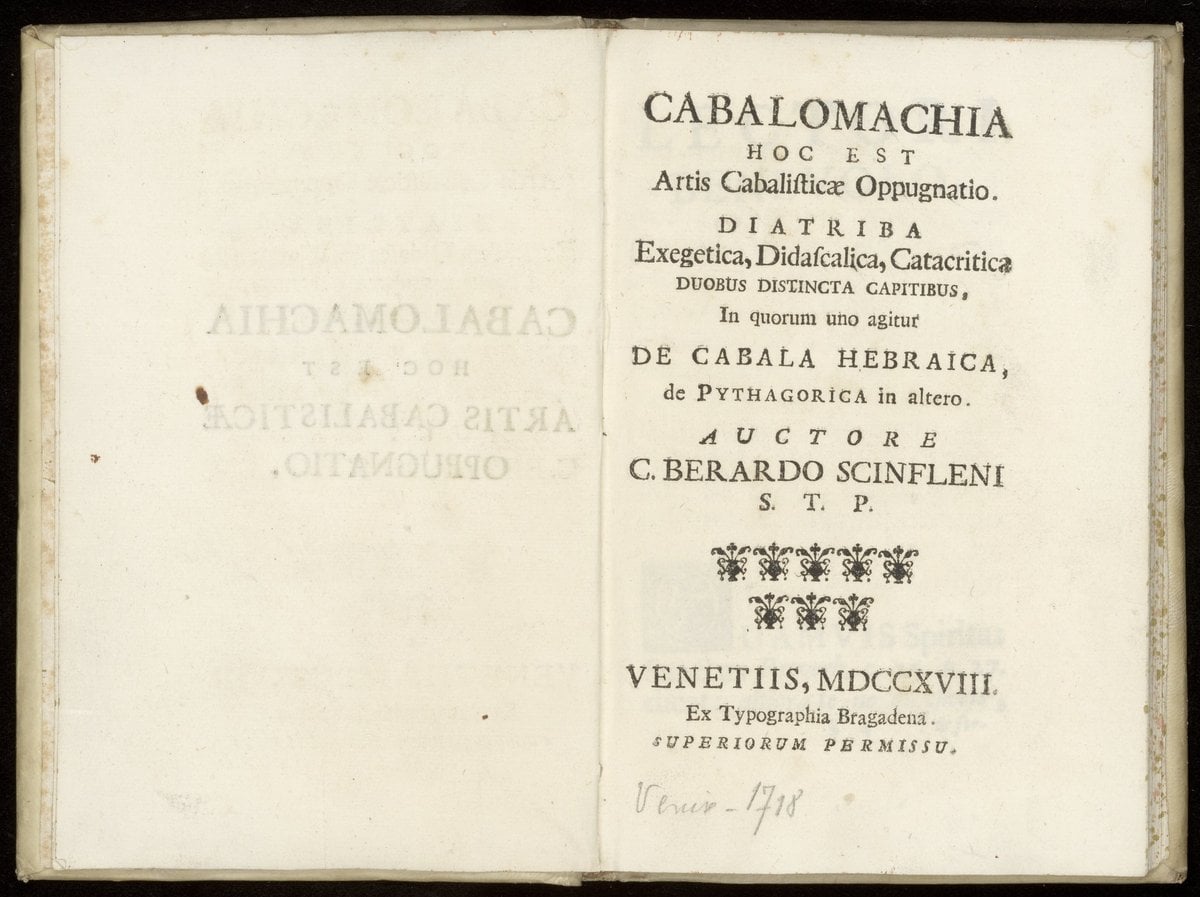
The Battle Against the Kabbalah
attr. Berlendi, Francesco
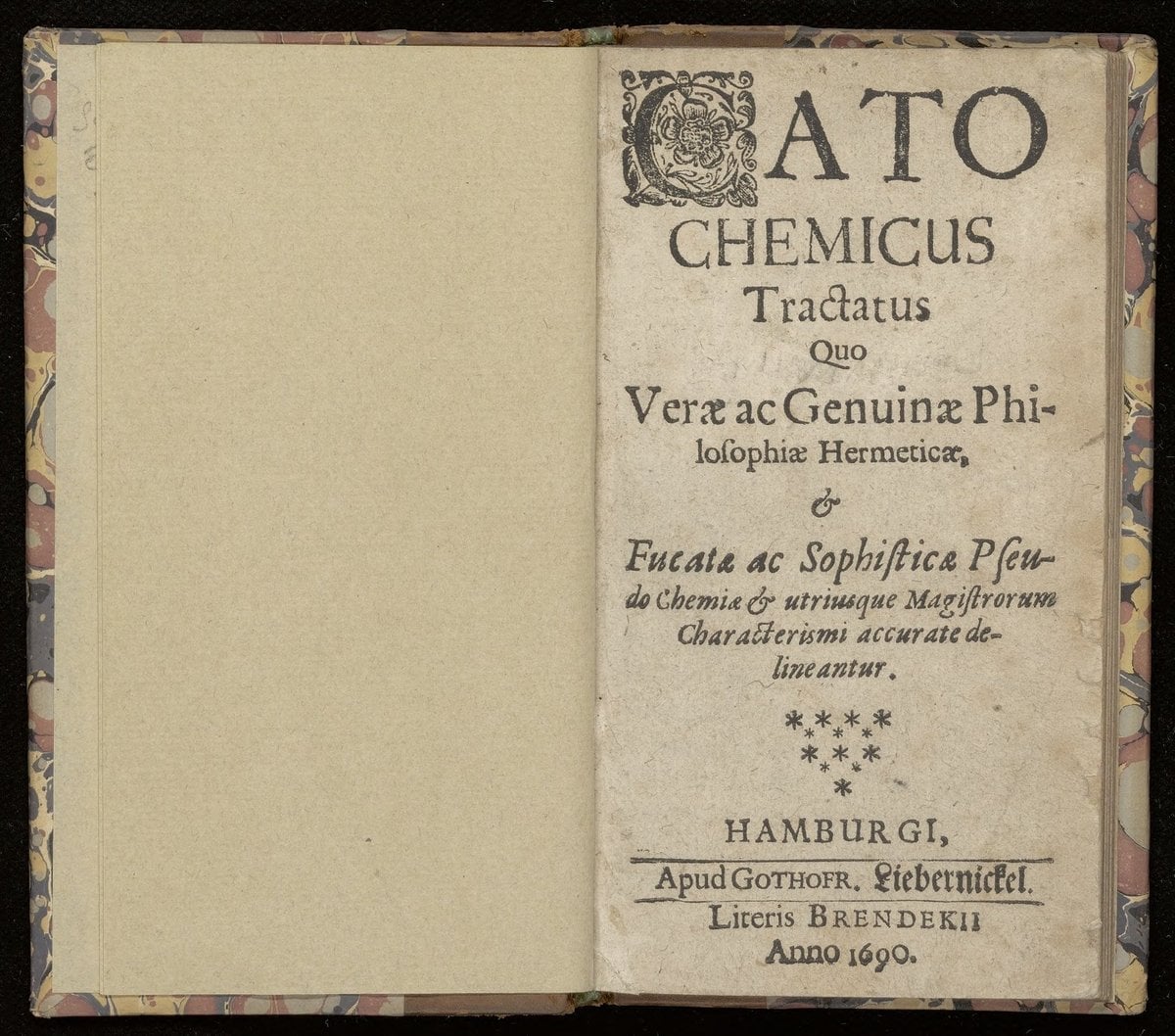
The Chemical Cato
attr. Hanneman, Johann Ludwig
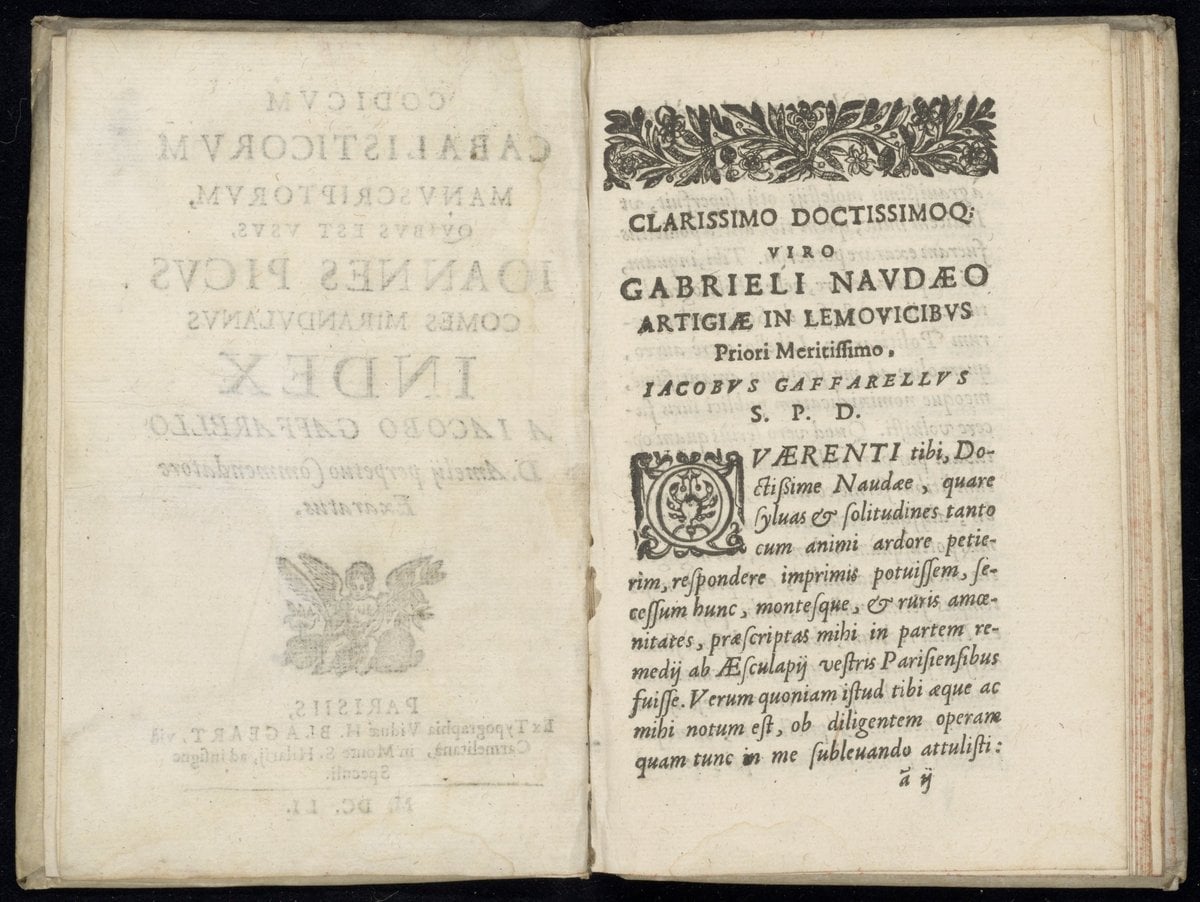
Index of the Kabbalistic Manuscripts of Pico della Mirandola
Gaffarel, Jacques
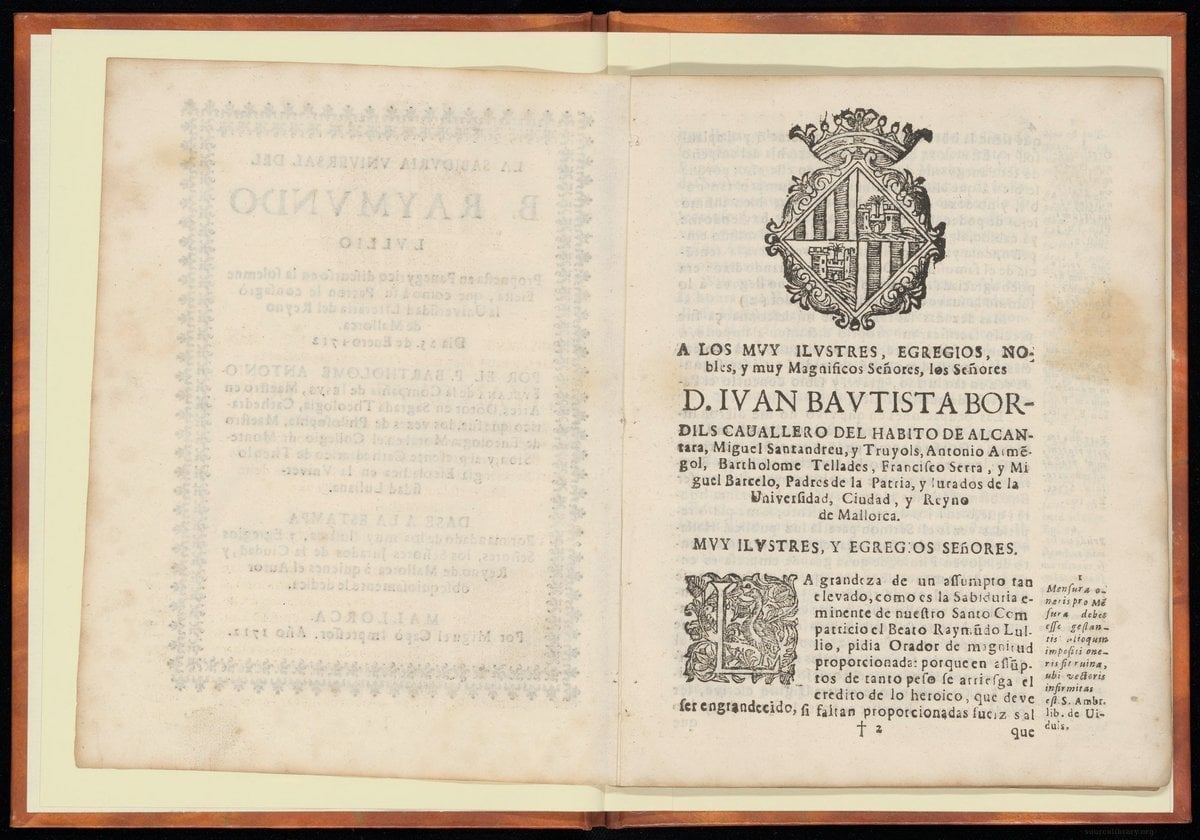
The Universal Wisdom of Raymond Lull
Fullana, Bartolomeus Antonius
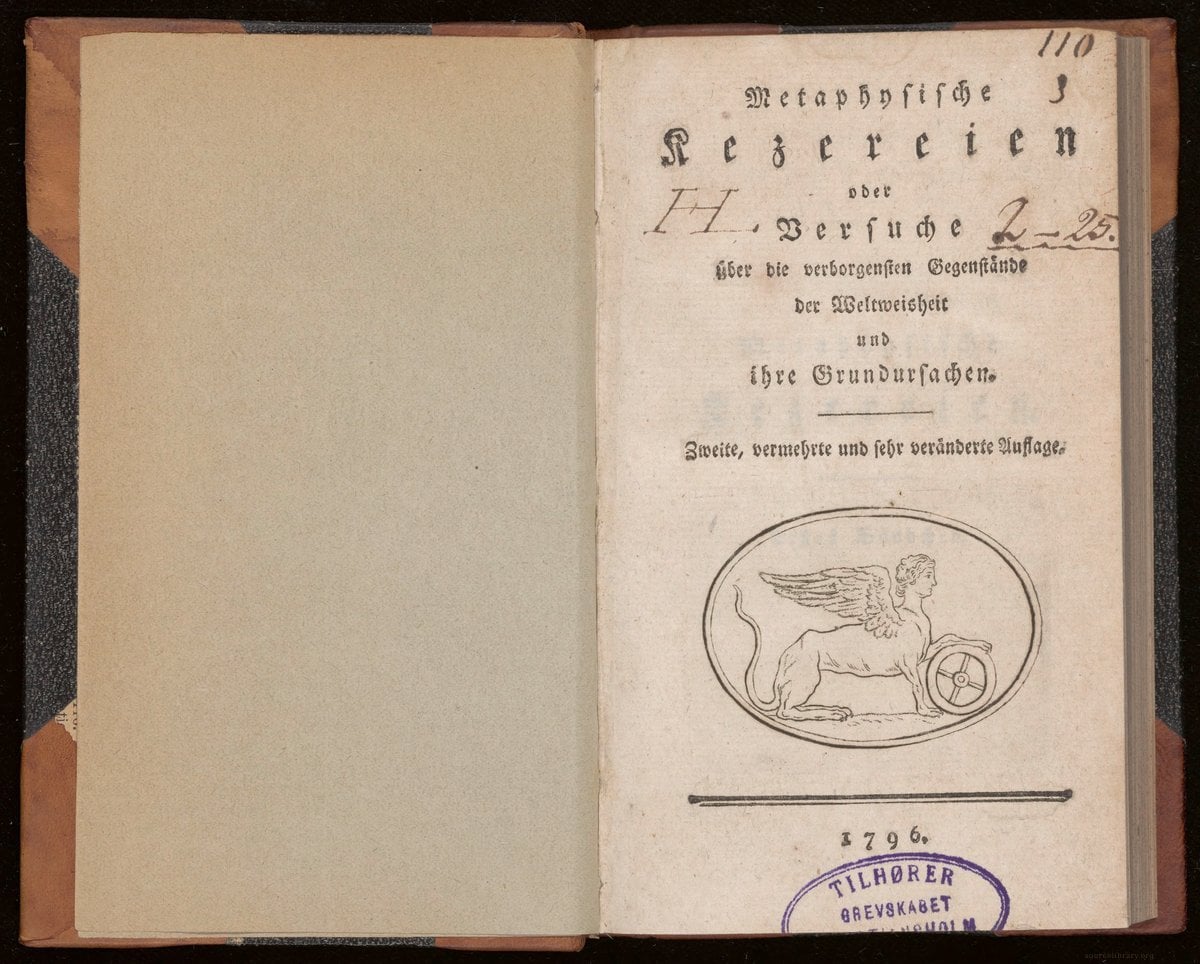
Metaphysical Heresies
attr. Gleichen, Karl Heinrich von
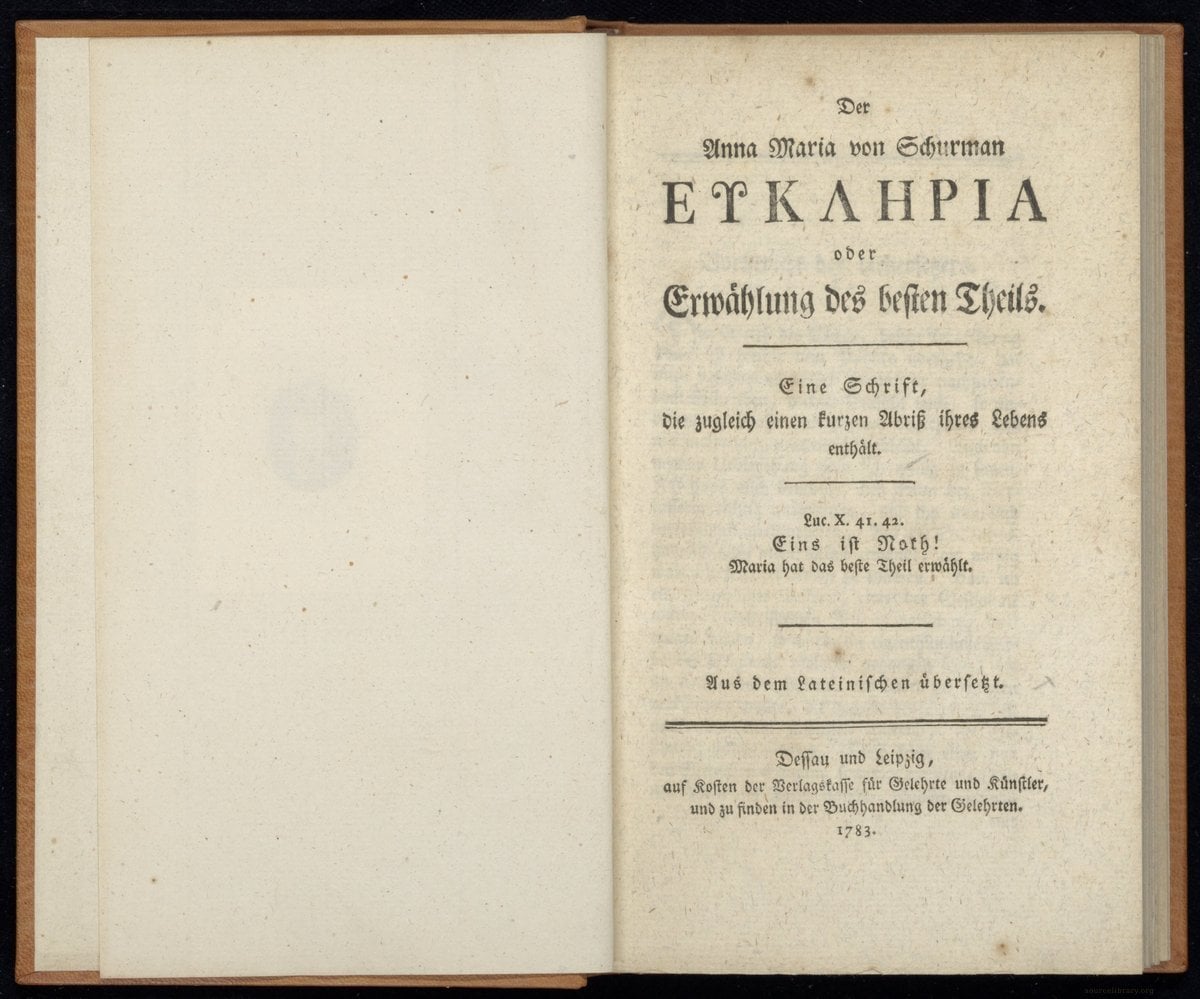
Eukleria, or Choosing the Better Part
Schurman, Anna Maria van