Zoroastrian Tradition
The Avesta and the Religion of Ancient Iran

Illustrations
Browse all12 images extracted from 5 books
This refined engraving presents a scholar in his study, surrounded by the tools of his intellectual trade. The portrait captures the gravity and prestige associated with early modern authorship, serving as a visual testament to the subject's erudition.
This refined engraving captures a scholar in his study, surrounded by the tools of intellectual inquiry, including a terrestrial globe and volumes of knowledge. The composition emphasizes the Renaissance ideal of the 'universal man,' whose mastery of geography and literature reflects the era's expanding horizons.
This intricate bookplate for W. F. Wislicenus features a hand raising a flaming torch into a starry night sky, symbolizing the light of knowledge and reason. The central scene is enclosed within a decorative border of intertwined thorny branches and blooming roses, characteristic of the Jugendstil aesthetic. The design elegantly combines personal identification with allegorical motifs of enlightenment and intellectual pursuit.
This hand-colored emblem represents 'Philosophia Hermetica' (Hermetic Philosophy). It depicts a pelican in its piety, a symbol of self-sacrifice and transformation, positioned above a shield with three roses, reflecting the alchemical and Rosicrucian themes prevalent in 18th-century esoteric literature.
This refined engraving captures a scholar in his study, surrounded by the tools of intellectual inquiry, including a terrestrial globe and volumes of knowledge. The composition emphasizes the humanist ideal of the active, learned life, serving as a testament to the era's reverence for global exploration and scientific discovery.
This formal portrait depicts Shams-ul-Ulama Dastur Peshotanji Behramji Sanjana, a distinguished scholar and the High Priest of the Parsee community in Bombay during the late 19th century. He is shown in traditional priestly vestments, including a white robe and turban, reflecting his high religious status and the cultural heritage of the Zoroastrian community in India.

This refined portrait depicts a scholar surrounded by the tools of his trade, emphasizing the importance of geography and literature in the early modern intellectual tradition. The inclusion of the terrestrial globe suggests a global perspective, characteristic of the era's burgeoning scientific curiosity.

This portrait depicts Sir Jamsetjee Jejeebhoy (1783–1859), a prominent Parsi merchant and philanthropist who was the first Indian to receive a baronetcy. He is shown wearing a traditional Parsi pagri and a medal, signifying his high social standing and his pivotal role in supporting the publication of Zoroastrian religious texts like the Dinkard.

This portrait depicts Sir Jamsetjee Jejeebhoy, the first Indian baronet and a renowned Parsi philanthropist. He is shown in traditional Parsi dress, including the distinctive pheta hat, reflecting his cultural heritage and high social standing in 19th-century India.
Visual Art
Browse all art →2 works of visual art in this collection
 painting
King Luhrasp Ascends the Throne — Shahnama
Anonymous (Safavid)
This painting depicts the legendary Persian King Luhrasp ascending the throne, surrounded by his court and attendants.
 painting
The Feast of Sada — Shahnama of Shah Tahmasp
Sultan Muhammad
The Persian king Hushang and his court celebrate the discovery of fire during the Feast of Sada in a stylized mountain landscape.
In 1771, Abraham Hyacinthe Anquetil-Duperron published the first European translation of the Zend-Avesta — the sacred scriptures of Zoroastrianism, the religion of ancient Iran. It was a landmark in the history of scholarship: a French orientalist had traveled to Surat, studied with Parsi priests, and returned with texts that revealed an entire theological system unknown to Europe. The Avesta contains hymns (Yashts) to divine beings including Mithra, Anahita, and the supreme Ahura Mazda; liturgical texts (Yasna) including the ancient Gathas attributed to Zarathustra himself; and the Vendidad, a code of ritual purity and cosmic law. This collection gathers the major European editions that made these texts accessible: Anquetil-Duperron's pioneering 1771 Zend-Avesta, Friedrich Spiegel's critical German edition (1853), Karl Friedrich Geldner's Avesta (1896) — still the scholarly standard — and James Darmesteter's English and French translations in the Sacred Books of the East series and his own expanded three-volume Traduction nouvelle.
Alongside the Avesta proper, the collection includes the Bundahishn, a Pahlavi (Middle Persian) text preserving Zoroastrian cosmogony — the creation of the world, the cosmic battle between good and evil, and the role of the yazatas (divine beings) in sustaining the universe. Westergaard's 1851 Latin-Pahlavi edition was the first European scholarly treatment. Eugène Burnouf's Commentaire sur le Yaçna (1833) established Avestan philology as a discipline, applying comparative Indo-European linguistics to decode the sacred language. Johannes Hertel's Die Sonne und Mithra im Awesta traces the solar theology underlying the Avestan hymns. Together these texts document a religious tradition that profoundly shaped Judaism, Christianity, and Islam through its concepts of cosmic dualism, angels, resurrection, final judgment, and a savior figure — ideas that entered the wider world during the Persian Empire's long contact with the Mediterranean civilizations.
Essential Reading
The foundational texts of this tradition

Avesta: The Sacred Books of the Parsis
Karl Friedrich Geldner, 1912
Geldner's critical edition of the Avesta in the original Avestan script, published in 1896. It remains the standard scholarly text — every modern translation and commentary references this edition.
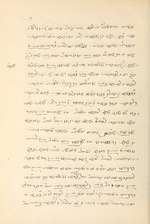
Bundehesh: Liber Pehlvicus
Niels Ludvig Westergaard, 1891
The first European scholarly edition of the Bundahishn, the Zoroastrian creation narrative preserved in Pahlavi (Middle Persian). Documents the cosmic battle between Ahura Mazda and Angra Mainyu and the role of the yazatas.
Important Works
Significant texts that deepen understanding

Avesta, die heiligen Schriften der Parsen, Erster Band
Friedrich Spiegel, 1853First Translation
Spiegel's German critical edition of the Avesta — the first rigorous philological treatment, setting the standard for textual criticism.
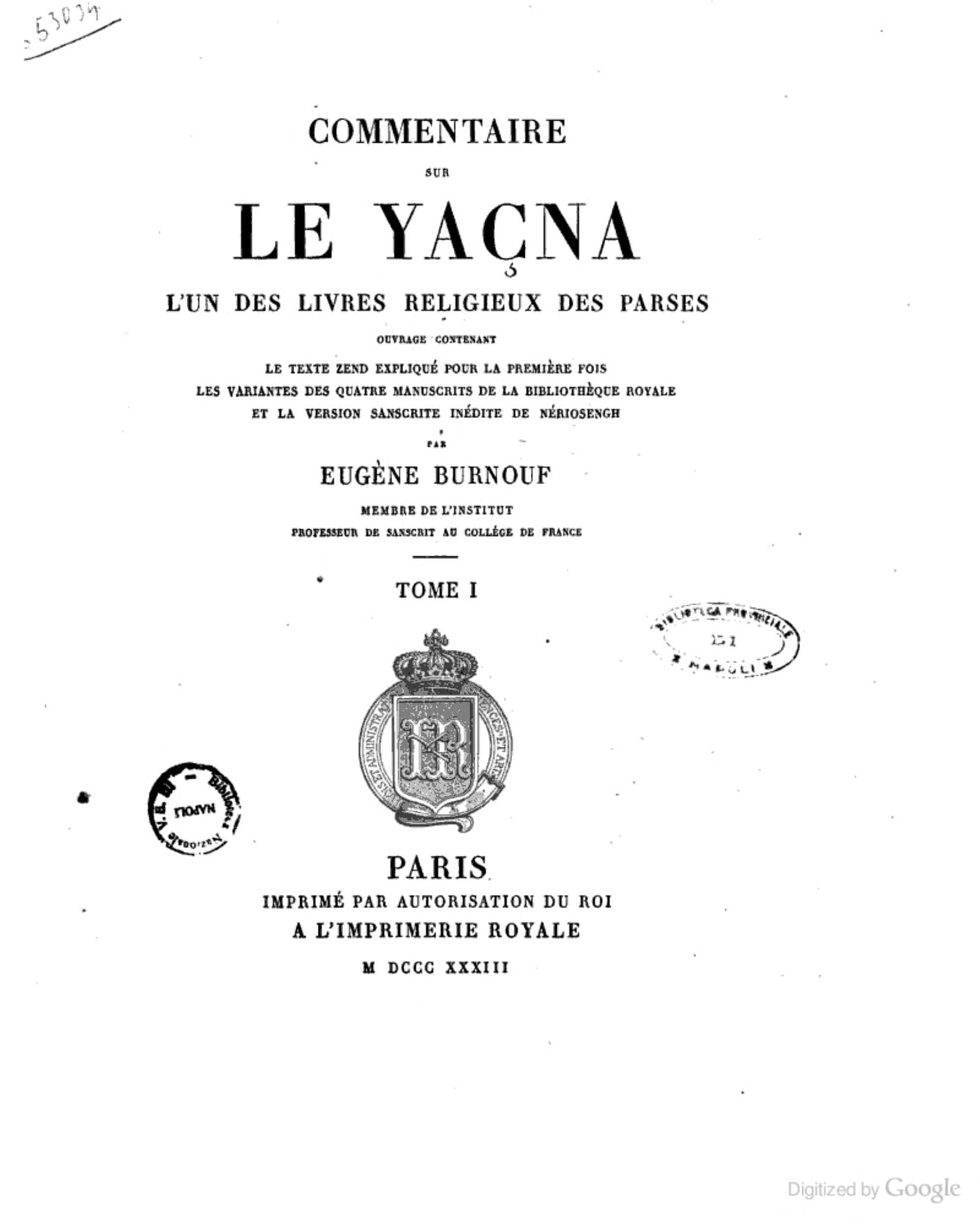
Commentaire sur le Yaçna
Eugène Burnouf, 1891
Burnouf's foundational commentary on the Yasna, applying comparative Indo-European linguistics to decode the Avestan language for the first time.

The Zend-Avesta: A New Translation
James Darmesteter, 1892First Translation
Darmesteter's expanded French translation with full philological commentary — more detailed than the English Sacred Books of the East version.
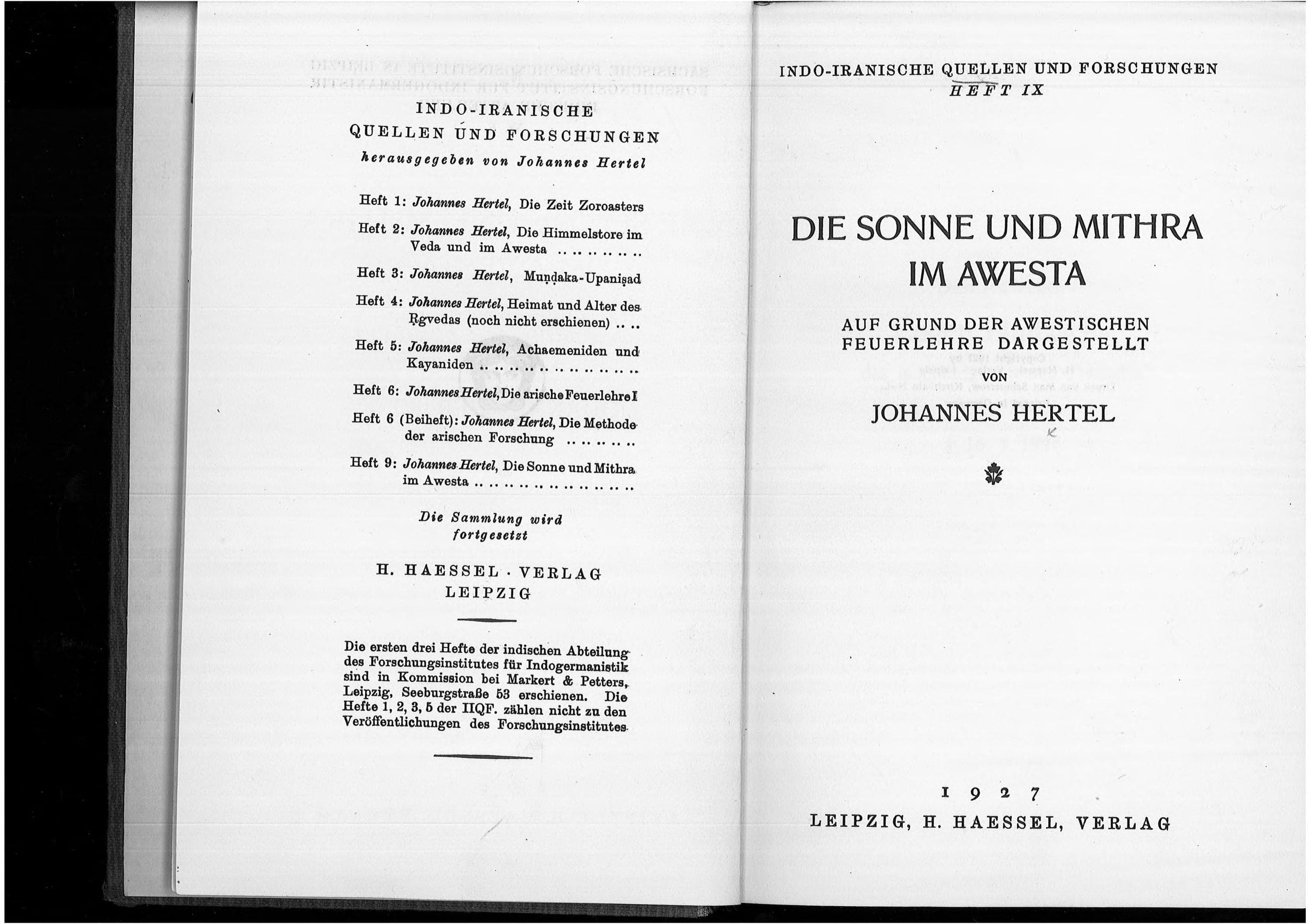
The Sun and Mithra in the Avesta
Johannes Hertel, 1927First Translation
Hertel traces the solar theology underlying the Avestan hymns, focusing on the relationship between the sun and the yazata Mithra.


All Books
Browse Full Catalog→32 books in this collection