


Illustrations
Browse all60 images extracted from 12 books
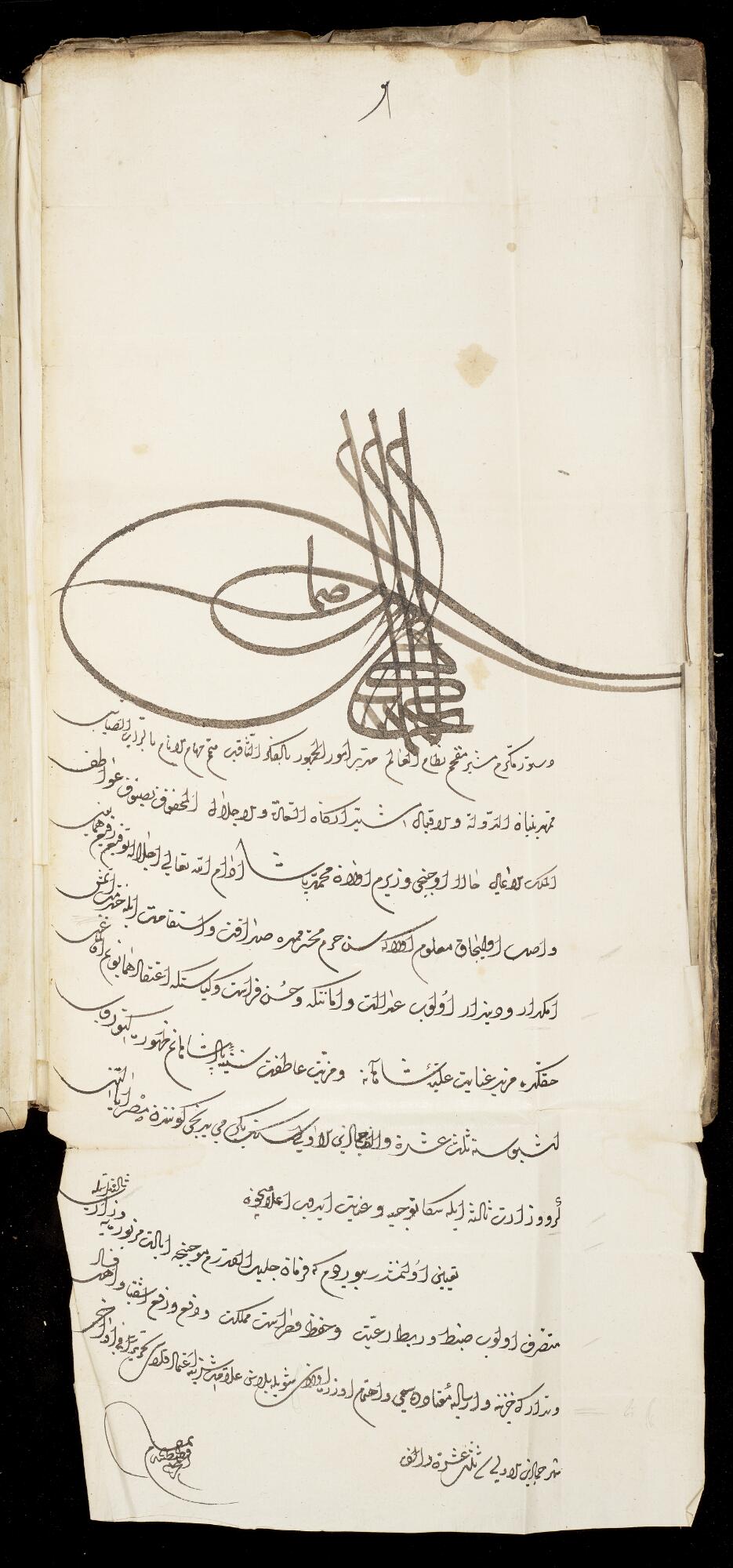
This page features a Tughra, the elaborate calligraphic monogram of an Ottoman Sultan. Functioning as both a signature and a seal of state, the Tughra's complex interlacing lines symbolize the absolute authority of the ruler. It is a quintessential example of the high art of Ottoman calligraphy used in official diplomatic correspondence.

This series of woodcuts from the 1595 Latin edition of Avicenna’s Canon of Medicine illustrates mechanical methods for treating spinal dislocations. The panels depict the use of traction and leverage, showing a physician—distinguished by his turban—applying pressure to a patient’s back. These images highlight the enduring influence of Islamic medical knowledge on European surgical practice during the early modern period.
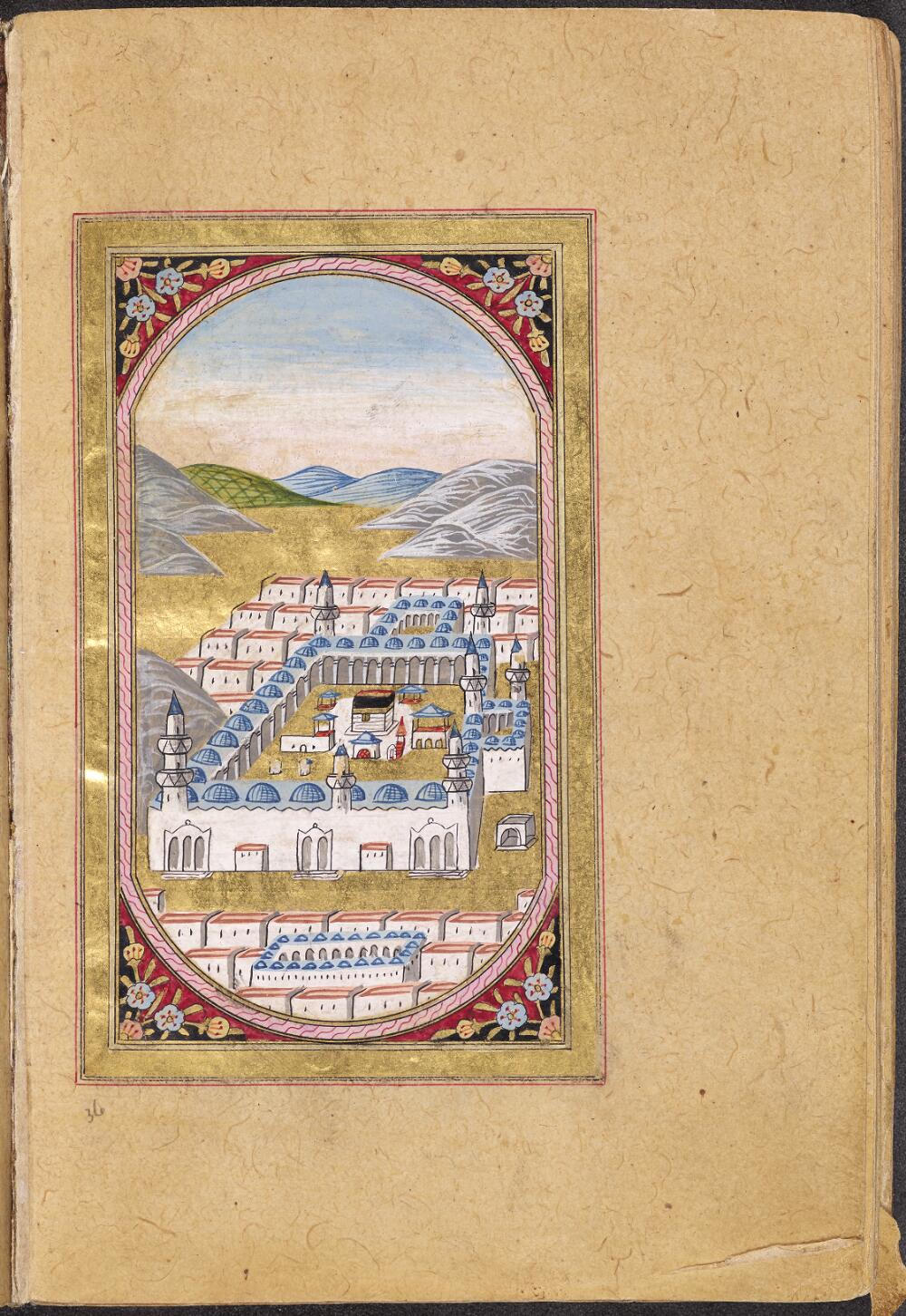
This exquisite miniature depicts the Masjid al-Haram in Mecca, centering on the Kaaba within its sacred courtyard. Such illustrations were common in devotional manuscripts to provide the reader with a visual focus for prayer and meditation on the holy city.

These three woodcut panels from Avicenna's Canon Medicinae illustrate the treatment of spinal dislocations. The scenes depict a physician applying manual pressure and traction to a patient's back, demonstrating the practical application of Greco-Arabic medical knowledge in a 16th-century European context. The figures are shown in contemporary Eastern attire, reflecting the work's origins while serving as a vital instructional tool for Renaissance surgeons.

This relief from the top of the diorite stele of Hammurabi depicts the king standing in a gesture of prayer before the sun god Shamash. Shamash, seated on a throne and wearing a tiered robe and horned headdress, extends the rod and ring, symbols of royal power and justice, to Hammurabi. This scene legitimizes Hammurabi's rule and the laws inscribed below by presenting them as divinely ordained.

This woodcut serves as the title illustration for Albumasar's 'Introductorium in astronomiam' (1506). It depicts a scholar, likely the author himself, amidst a landscape of knowledge, holding an armillary sphere and dividers to measure the heavens. The presence of the personified sun and moon, along with discarded books, emphasizes the transition from theoretical study to active observation of the cosmos.

This woodcut depicts an alchemist in his workshop, standing beside a complex furnace known as an athanor. He holds a large glass cucurbit, used for distillation and sublimation processes. The image serves as a technical illustration of the sophisticated apparatus described in Geber's influential alchemical treatise.

A rare and significant schematic map of the Indian Ocean from the 11th-century Egyptian manuscript 'Book of Curiosities'. The map depicts the sea in green, with various islands shown as circles and coastal ports represented by stylized fan-like structures protruding from the shoreline. It provides invaluable insight into the geographical knowledge and maritime trade routes of the medieval Islamic world.

This powerful woodcut depicts the 'Man of Sorrows,' showing Christ standing upright with his wounds visible, emerging from a tomb or positioned before the cross. He is surrounded by deeply expressive figures, likely including the Virgin Mary and St. John, who mourn his sacrifice. Such images were central to late medieval 'Devotio Moderna,' designed to provoke intense personal meditation on the physical and emotional suffering of Christ.
Visual Art
Browse all art →27 works of visual art in this collection
 painting
Bahram Chubineh Captured by Khusrau Parviz — Shahnama
Anonymous (Ilkhanid)
A dense block of Persian calligraphy from the Shahnama, detailing the capture of the usurper Bahram Chubineh by the Sasanian King Khusrau Parviz.
 painting
Bahram Gur Slays a Dragon — Shahnama
Anonymous (Ilkhanid)
The Sasanian king Bahram Gur is depicted slaying a dragon with his sword while his horse stands nearby.
 painting
Khusrau Parviz Fleeing Bahram Chubineh, Saved by Angel Sarush — Shahnama
Anonymous (Ilkhanid)
This painting depicts the Persian king Khusrau Parviz fleeing from the rebel general Bahram Chubineh, while the angel Sarush appears to guide and protect him.
 painting
Portrait of Nushirwan the Just — Shahnama
Anonymous (Ilkhanid)
The Sasanian King Nushirwan (Khosrow I) is depicted seated on a throne in court, surrounded by his advisors and attendants.
 painting
Rustam Captures the Shah of Sham and the Shah of Berber — Shahnama
Anonymous (Ilkhanid)
The Persian mythological hero Rustam engages in combat with the Shah of Sham and the Shah of Berber.
 painting
Rustam Pleads for Tus Before Kai Khusrau — Shahnama
Anonymous (Ilkhanid)
The legendary Persian hero Rustam pleads with the king Kai Khusrau on behalf of the commander Tus.
 painting
Rustam is Thrown into the Sea by the Div Akvan — Shahnama
Anonymous (Ilkhanid)
The Persian hero Rustam is being hurled into the sea by the demon Akvan, as described in the Shahnama.
 painting
The Combat between the Khan of Chin and the Haitalians — Shahnama
Anonymous (Ilkhanid)
A page from the Shahnama featuring the epic combat between the Khan of Chin and the Haitalians, presented as an illuminated text block.
 painting
Battle between Manuchihr and Tur — Mughal Shahnama
Anonymous (Mughal, court of Jahangir)
This painting depicts the legendary battlefield encounter between the Iranian prince Manuchihr and the Turanian prince Tur, an episode from the Persian epic the Shahnama.
 painting
Aulad Tied to a Plane Tree — Shahnama
Anonymous (Safavid)
This painting depicts the episode from the Shahnama where the figure Aulad is found bound to a plane tree.
 painting
King Luhrasp Ascends the Throne — Shahnama
Anonymous (Safavid)
This painting depicts the legendary Persian King Luhrasp ascending the throne, surrounded by his court and attendants.
 painting
Nushirwan Listens to the Owls — Shahnama
Anonymous (Safavid)
The Sasanian King Nushirwan (Khosrow I) is depicted on a hunt, listening to his vizier Buzurgmihr interpret the prophetic hooting of owls perched on ruined walls.
 painting
Rustam Brings the Div King to Kai Kavus for Execution — Shahnama
Anonymous (Safavid)
The Persian hero Rustam presents the captive Div King (Arzhang Div) to King Kai Kavus for execution, as recounted in the Shahnama.
 painting
Rustam Kills the White Div — Shah-nama
Anonymous (Safavid)
The Persian hero Rustam defeats the White Div (White Demon) inside a dark cave, a pivotal scene from Ferdowsi's Shahnameh.
 painting
Rustam Meets the Challenge of Ashkabus — Shahnama
Anonymous (Safavid)
The Persian hero Rustam engages the Turanian warrior Ashkabus in combat before the eyes of the two armies.
The Falsafa tradition and Islamic intellectual sciences — from Al-Kindi and the Baghdad translators through Avicenna and Averroes to Suhrawardi's Illuminationism and Ibn Arabi's theosophy. Includes the Arabic reception of Greek philosophy that shaped medieval Europe.
All Books
Browse Full Catalog→217 books in this collection
Alchemical Compendium — Rupescissa, Aquinas, Rhazes, mid-1500s
Johannes de Rupescissa; Thomas Aquinas; al-Razi
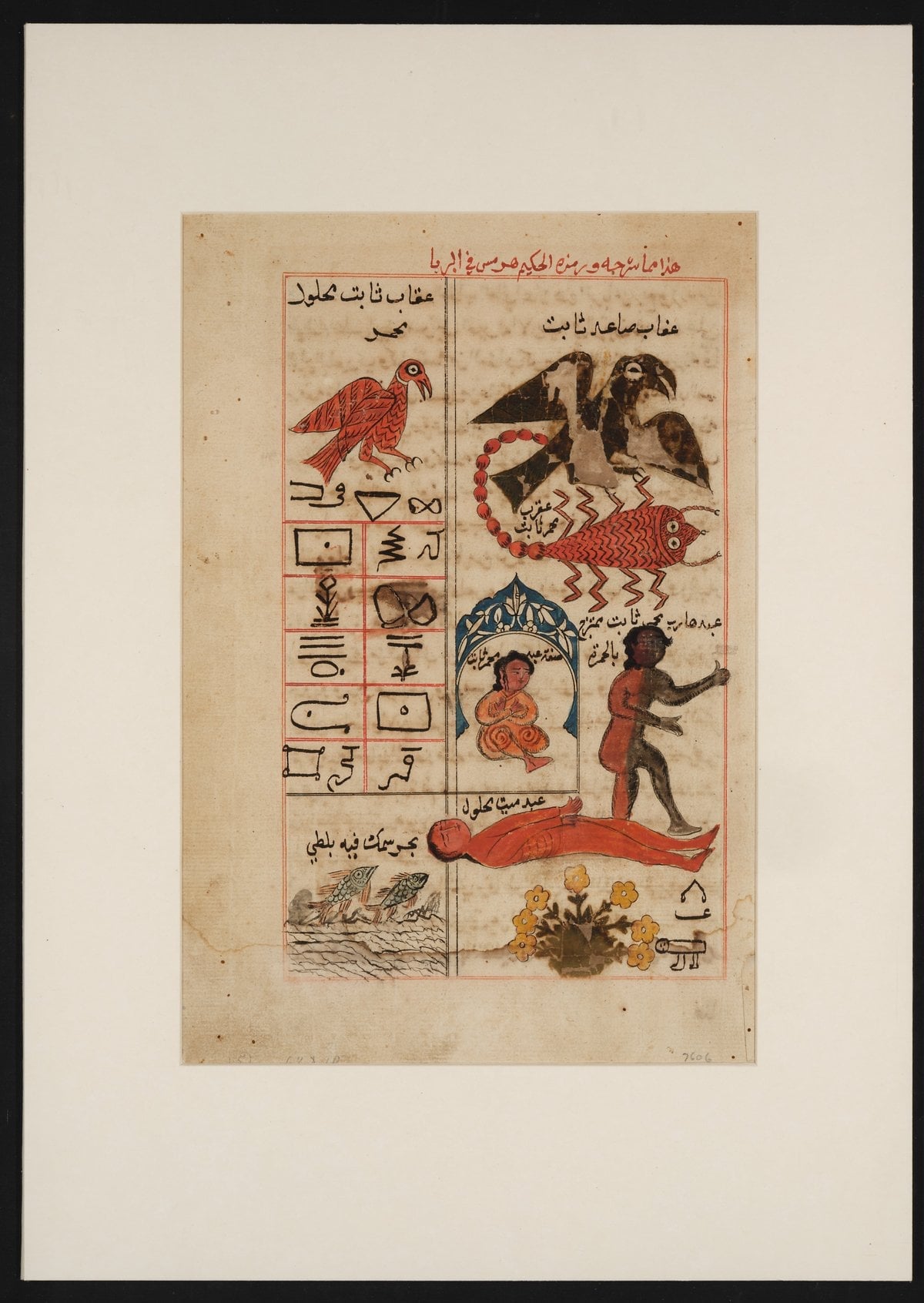
Islamic Alchemical Fragment — Arabic MS, 18th C.
Unknown
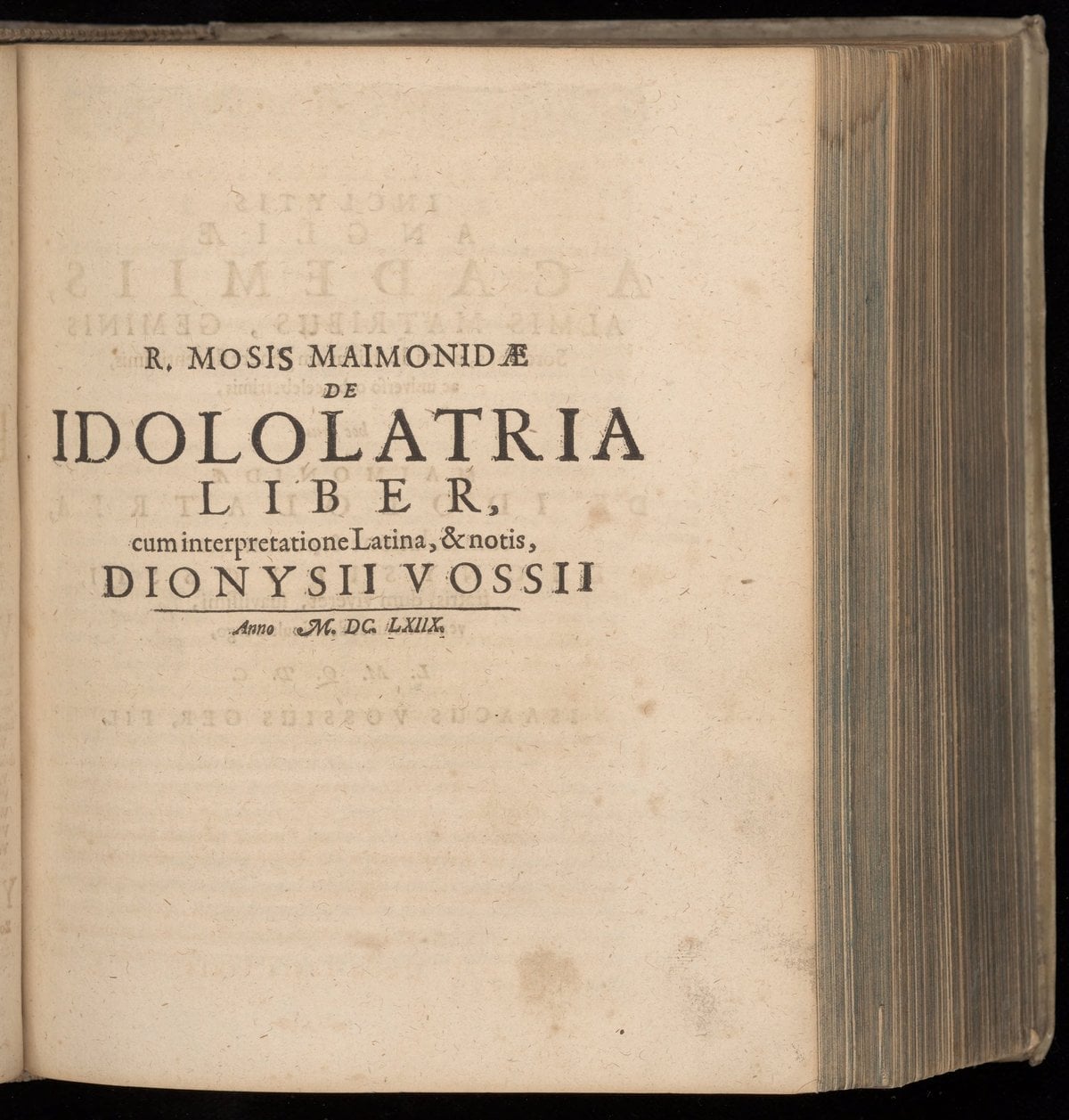
De idolatria liber
Maimonides, Moses
Logica et philosophia
Ghazali, Abu Hamid ibn Muhammad al-
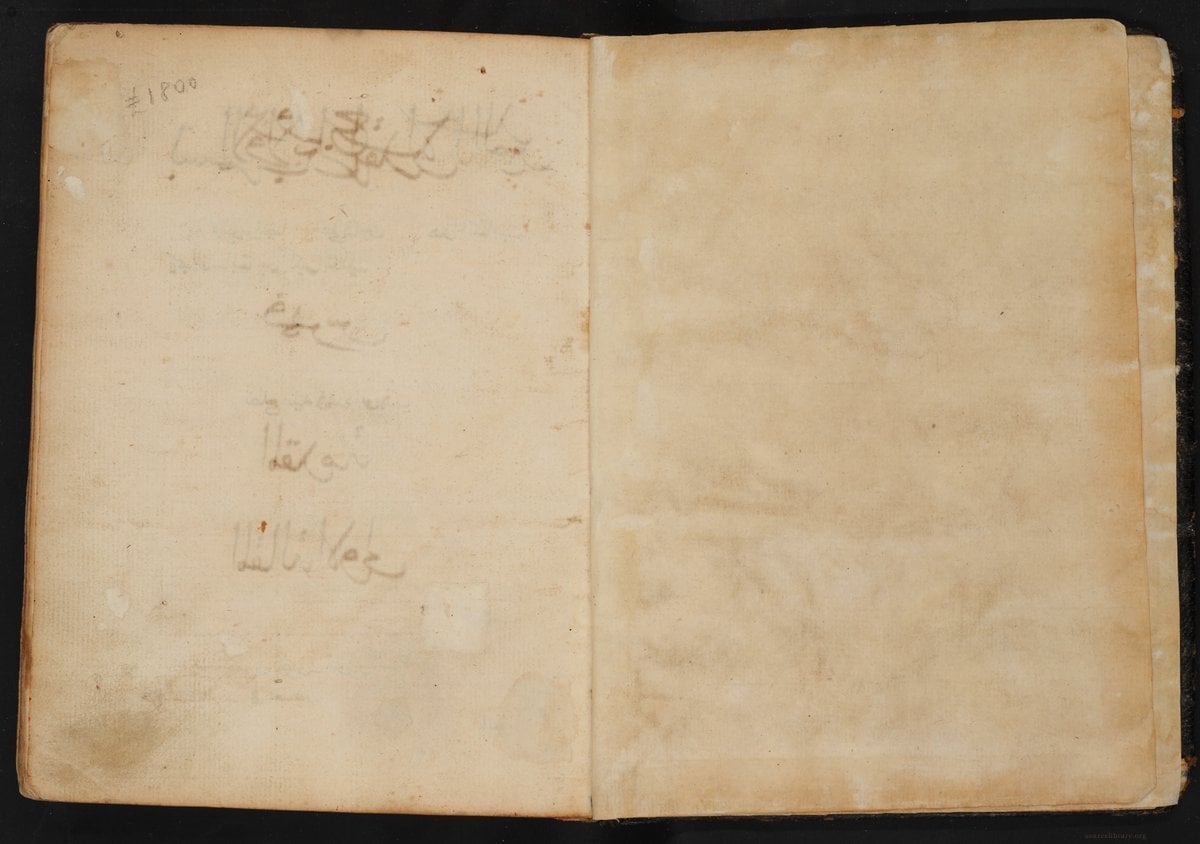
Paracelsus in Arabic — Kīmiyā al-Malakīyah (Royal Chemistry)
Paracelsus; Salih ibn Nasrallah ibn Sallum