


Illustrations
Browse all376 images extracted
This formal portrait depicts Michael Maier (1568–1622), the celebrated German physician, alchemist, and counselor to Holy Roman Emperor Rudolf II. Engraved in 1617 for his work 'Symbola aureae mensae', the image captures Maier at age 49, emphasizing his intellectual authority through the inclusion of a book and his noble status via the imperial coat of arms. The Latin inscription below reflects on his titles and his ultimate devotion to living and dying in Christ.
This intricate engraving serves as a symbolic representation of the 33rd degree of the Supreme Council of Freemasonry. It features a dense array of iconography, including the Eye of Providence, a double-headed eagle, and a memento mori in the form of a skeleton, all set within a classical architectural frame. The image encapsulates the complex blend of religious, philosophical, and fraternal traditions that characterize high-degree Masonic ritual and thought.
This circular emblem from Edward Kelly's alchemical treatise illustrates several stages of the Great Work through allegory. It features a phoenix feeding its young with its own blood, a symbol of sacrifice and regeneration, alongside a husbandman sowing seeds, representing the preparation of the alchemical 'earth' for growth and transformation.
This engraving illustrates the 'First Key' of Basil Valentine, a seminal text in early modern alchemy. It depicts the symbolic marriage of the King and Queen, representing the union of opposites, while the wolf leaping over the crucible signifies the purification of gold using antimony. The figure of Saturn with his scythe underscores the role of time and the transformative power of fire in the alchemical Great Work.
This compelling hand-colored woodcut, titled 'EMBLEMA II. De secretis Natura. Nutrix ejus terra est.' (Emblem II. On the secrets of Nature. The Earth is its nurse.), serves as a powerful allegory for the nurturing and life-giving essence of Mother Earth. A central, monumental female figure embodies Nature, her torso transformed into a globe from which human infants emerge, symbolizing humanity's origin and dependence on the planet. Flanking her are scenes of animalistic nurturing: a goat suckling two infants, and a dog or wolf (alluding to classical myths like Romulus and Remus) also providing sustenance to infants. This emblem beautifully encapsulates Renaissance thought on the interconnectedness of all life and the Earth's role as the universal provider, a theme central to early modern natural philosophy and emblem books.
This intricate emblem, titled 'Typus Artis Aurificae' (Model of the Gold-Making Art), illustrates the symbolic stages of the alchemical Great Work. Within a large vessel, we see the 'Chymical Wedding' of the King and Queen, flanked by the alchemical lion and eagle, while the dragon at the base represents the prima materia. Published in Andreas Libavius's 'Alchymia' (1597), it serves as a visual synthesis of the chemical and spiritual transformations required to create the Philosopher's Stone.

This elaborate frontispiece for 'The Hermetic Museum' presents a visual compendium of alchemical and mythological symbolism. The central title is framed by vignettes depicting planetary deities, allegorical figures, and symbolic creatures like the phoenix, all representing the transformative processes of the Great Work. Such intricate title pages served as both a decorative entrance to the text and a symbolic summary of its esoteric contents.

This intricate engraving from the 'Musaeum Hermeticum' illustrates the 'Mirability of Nature' (Mirabilitas Naturae). It presents a cosmological map where the central sun is encircled by planetary symbols, the four classical elements (Aer, Ignis, Terra, Aqua), and the twelve signs of the zodiac, reflecting the Hermetic belief in the interconnectedness of the celestial and terrestrial realms.

This elaborate woodcut frontispiece introduces the alchemical works of Geber, the Latinized name for the 8th-century polymath Jabir ibn Hayyan. The architectural frame is flanked by a soldier in Renaissance armor and a 'wild man' with a club, symbolizing the intersection of human artifice and raw nature that the alchemical tradition sought to master.
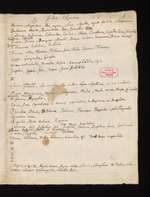
For centuries, the image of Sir Isaac Newton was that of the ultimate rationalist, the architect of the Enlightenment who mapped the heavens with cold mathematics. Yet, hidden within his private archives was a different man—a tireless seeker who spent decades immersed in the fires of the laboratory and the enigmas of ancient scripture. This collection, Newton's Other Science, brings together the works his heirs once deemed too dangerous or eccentric for public view, including the papers they tried to suppress to protect his reputation. Through documents like Notes of experiments in chemistry and alchemy (MS Add.3973) by Isaac Newton (1690), we witness a mind that saw no division between the laws of gravity and the transformative power of the philosopher’s stone.
Newton was a meticulous student of the Hermetic tradition, viewing the legendary Hermes Trismegistus not as a myth, but as a source of primordial wisdom. His library was filled with foundational texts, including the Hermes Trismegistus — Pimander (1472 Editio Princeps) by Hermes Trismegistus; Marsilio Ficino (trans.) (1472) and The Divine Pymander of Hermes Mercurius Trismegistus by Hermes, Trismegistus, ca. 2./4. Jh. (1630). He pored over the cryptic instructions in The Emerald Tablet of Hermes Trismegistus, Founder and Monarch of the Phoenicians and Egyptians by Kriegsmann, Wilhelm Christoph (1657) and studied the practical laboratory advice found in A New Chemical Light with Twelve Secret Chemical Tables by Sendivogius, Michael|Orthelius (1682). To Newton, alchemy was a sacred chemistry, an attempt to understand the very spirit of matter that animated the universe.
Beyond the crucible, Newton applied his rigorous analytical methods to the timeline of human history and the end of the world. In works such as Observations upon the prophecies of Daniel and the apocalypse of St. John by Newton, Isaac (1733), he treated biblical prophecy as a mathematical puzzle to be solved. His obsession with the deep past is evident in the Historical Description of the Antiquities of the Greeks, Egyptians, Assyrians, Babylonians, Medes, and Persians by Newton, Isaac (1763), where he synchronized secular history with sacred texts. By including volumes like The Chronology of Ancient Nations by Al-Biruni (trans. E. Sachau) (Unknown), this collection illustrates Newton’s belief that the ancients possessed a lost knowledge that he was destined to recover. These papers reveal a man for whom the search for truth was a single, unified quest through science, soul, and time.
Essential Reading
The foundational texts of this tradition
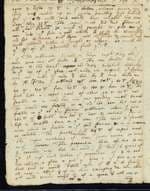
Notes of experiments in chemistry and alchemy (MS Add.3973)
Isaac Newton, 1690
Explicitly mentioned in the essay, these are Newton's personal laboratory notebooks on chemistry and alchemy, central to the collection's theme.

Observations upon the prophecies of Daniel and the apocalypse of St. John
Newton, Isaac, 1733
This work reveals Newton's extensive studies in biblical chronology and prophecy, a key aspect of his 'other science' that was often suppressed.
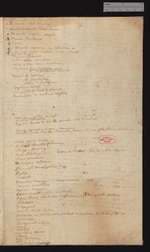
Bibliography of Alchemical Authors
Isaac Newton, 1690First Translation
Newton's own bibliography of alchemical authors underscores his meticulous study and immersion in the alchemical tradition.
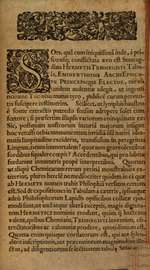
The Emerald Tablet of Hermes Trismegistus, Founder and Monarch of the Phoenicians and Egyptians
Kriegsmann, Wilhelm Christoph, 1657First Translation
This edition of 'The Emerald Tablet' is explicitly mentioned in the essay as a foundational Hermetic text Newton 'pored over' for its cryptic instructions.
Corpus Hermeticum and Plotinus' Enneads (Cambridge, Trinity College, MS B.9.9)
Hermes Trismegistus; Plotinus, 1550First Translation
The 'Corpus Hermeticum' is a foundational text of the Hermetic tradition, which the essay states Newton viewed as a source of primordial wisdom.
Important Works
Significant texts that deepen understanding
Historical Description of the Antiquities of the Greeks, Egyptians, Assyrians, Babylonians, Medes, and Persians
Newton, Isaac, 1763
This work by Newton on ancient history and antiquities aligns with his interest in biblical chronology and primordial wisdom, part of his 'other science'.
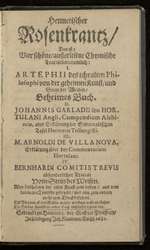
Hermetic Rosary
anonymous|Artephius|Hortulanus|Arnaldus de Villanova|Bernhardus Trevisanus, 1682First Translation
As a significant Hermetic and alchemical text, this work represents the tradition Newton studied and engaged with in his pursuit of the philosopher's stone.
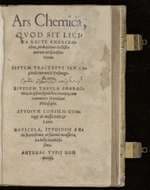
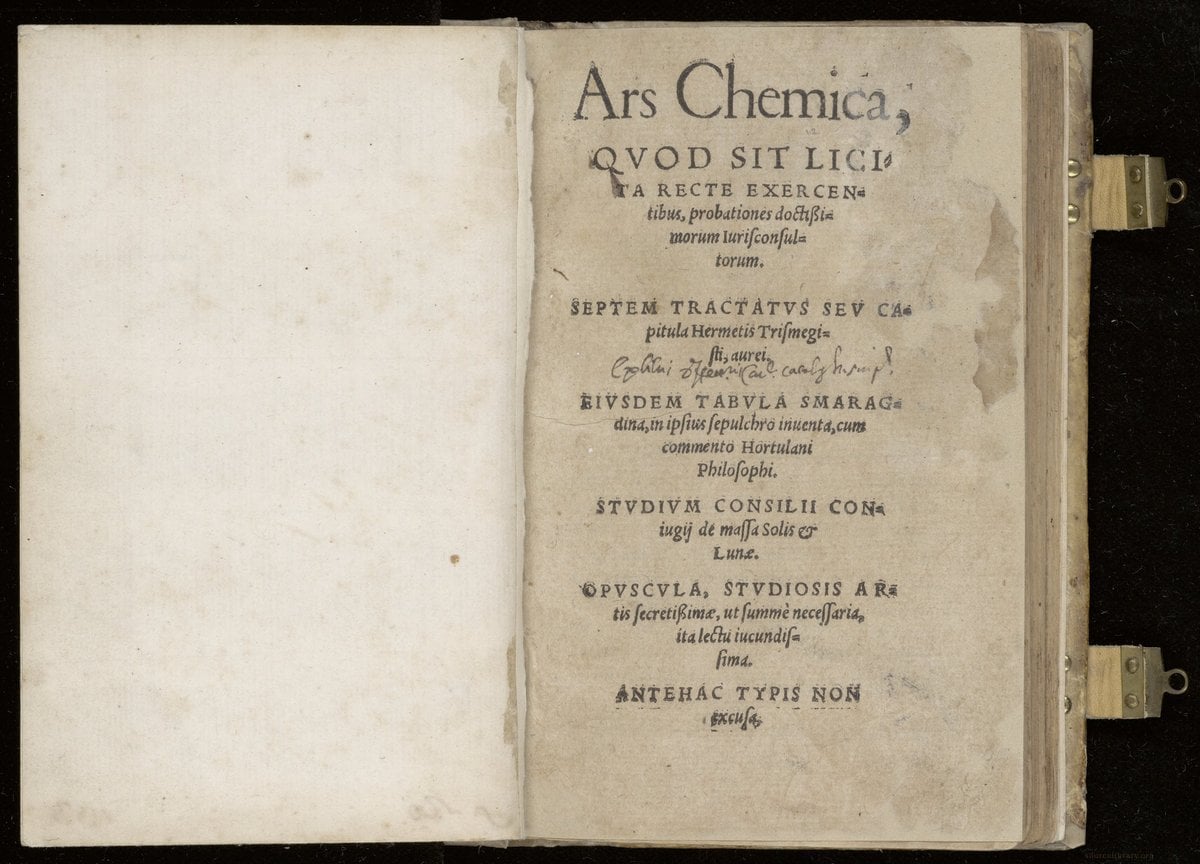
The Chemical Art
Hermes Trismegistus, 1566
Attributed to Hermes Trismegistus, this alchemical text is directly relevant to Newton's deep study of the Hermetic tradition and its alchemical practices.
The Contracted Chemical Library
Albineus, Nathan, 1653First Translation
This collection of chemical and alchemical texts would have been a valuable resource for Newton's laboratory work and theoretical studies in alchemy.
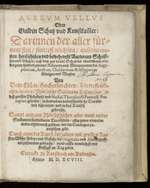
The Golden Fleece
Trissmosin, Salomon, 1598First Complete Translation
A prominent alchemical text, 'The Golden Fleece' reflects the kind of literature Newton would have consulted in his quest for alchemical knowledge.
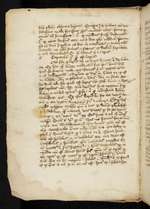
Alchemical texts (Cambridge, Trinity College, MS O.2.47)
Winandus de Rufo Clipeo; annotated by John Dee, 1436First Translation
This manuscript of alchemical texts from Trinity College, annotated by John Dee, provides direct insight into the alchemical scholarship available and studied in Newton's academic environment.

Alchemical Texts (Cambridge, Trinity College, MS O.8.25)
Giles Du Wes (compiler), Geber, Rasis, pseudo-Arnald of Villanova, 1510First Translation
This collection of alchemical texts from Trinity College, featuring prominent alchemists, represents the kind of primary sources Newton would have studied in his alchemical pursuits.

The Golden Fleece
Naxagoras, Ehrd de, 1715First Translation
Another significant alchemical text titled 'The Golden Fleece' would have been part of the broader alchemical literature Newton engaged with.
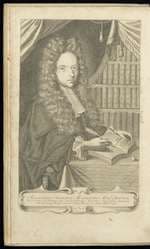
The Curious Chemical Library
Manget, Jean Jacques, 1702First Complete Translation
This 'Curious Chemical Library' represents another collection of alchemical and chemical texts that would have been relevant to Newton's studies and experiments.
All Books
Browse Full Catalog→210 books in this collection
Echo of the Rosicrucian Colloquy
Hilarionus, Benedictus
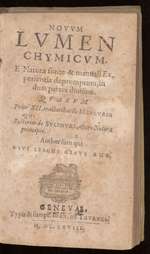
A New Light of Alchemy
attr. Sendivogius, Michael
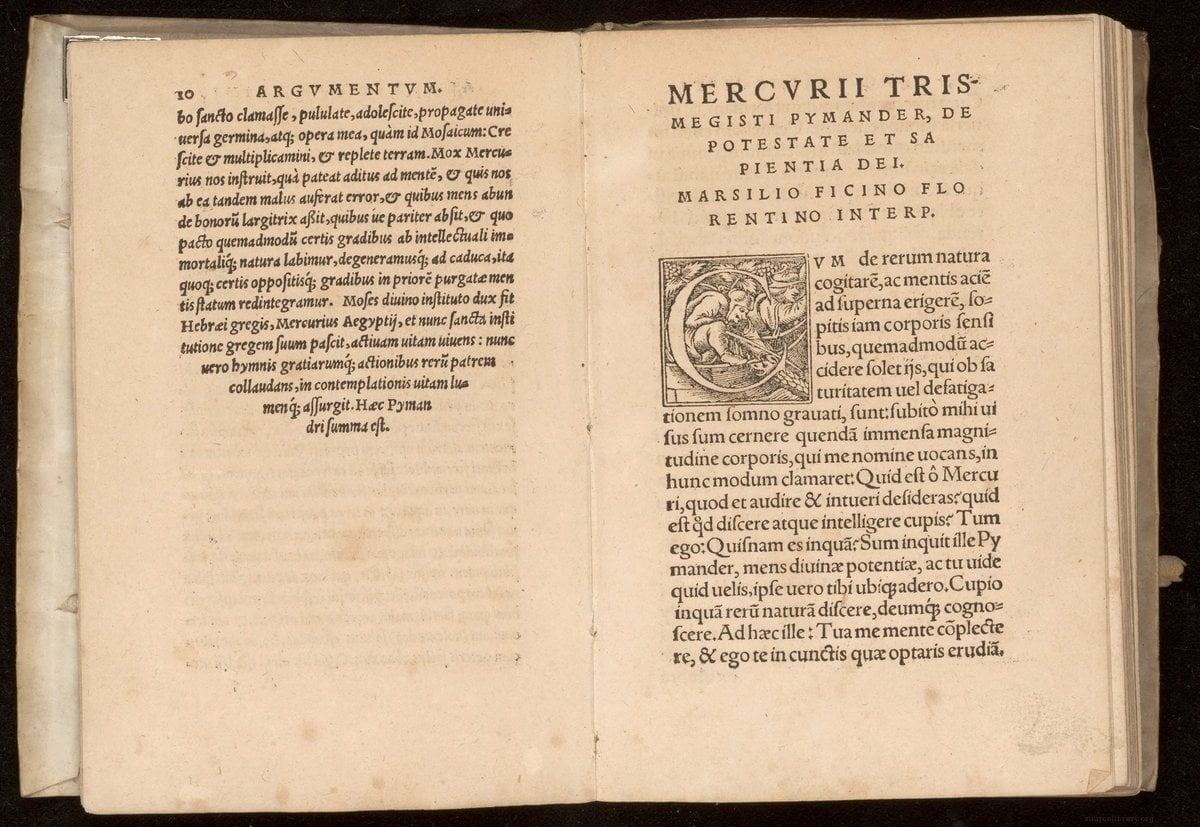
Pymander. Asclepius. On the Mysteries of the Egyptians. On Plato's Alcibiades, on the Soul and the Daemon. On Sacrifice.
Hermes Trismegistus|Jamblichus|Proclus
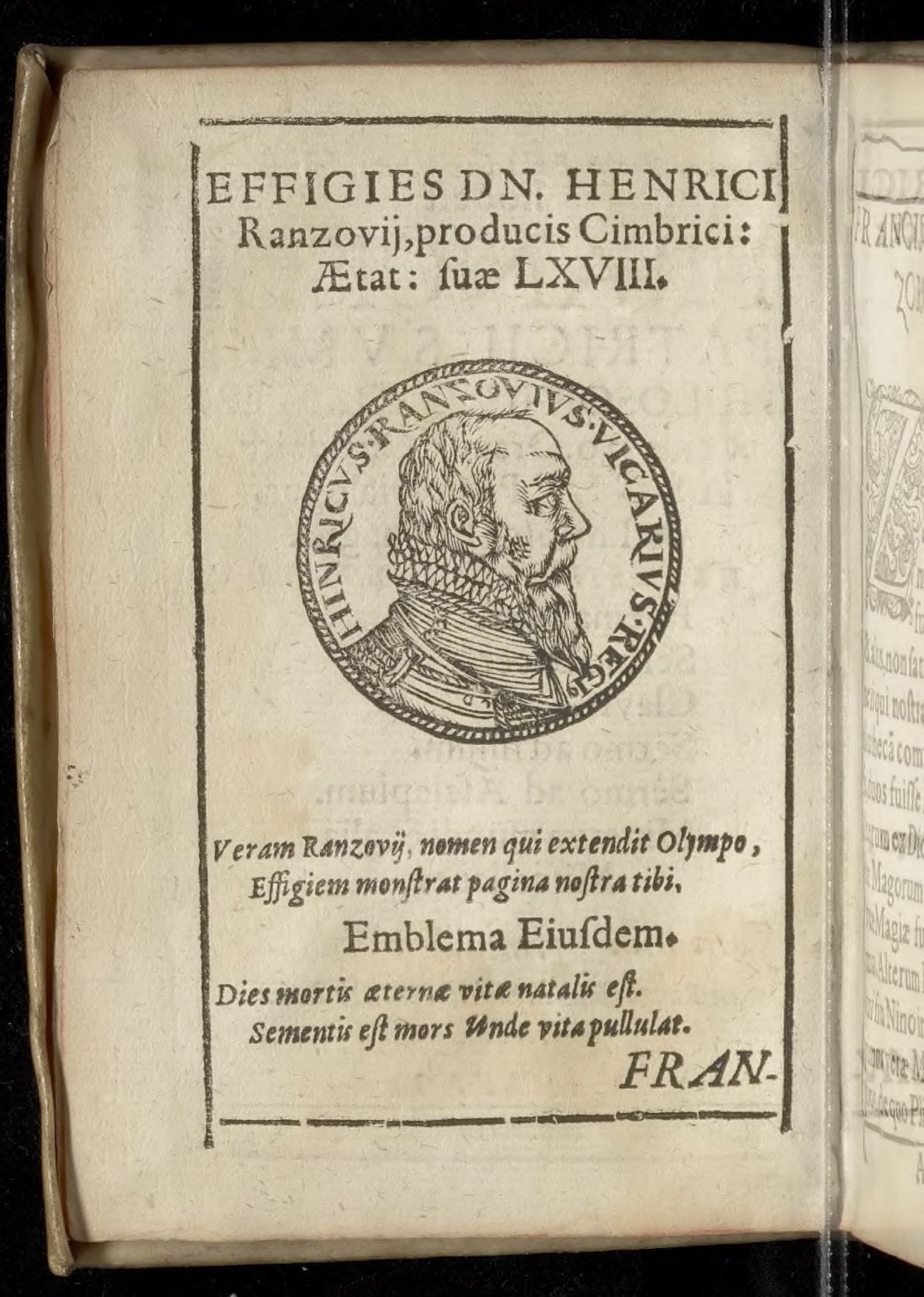
Philosophical Magic
Patrizi, Francesco|Zoroaster|Hermes Trismegistus
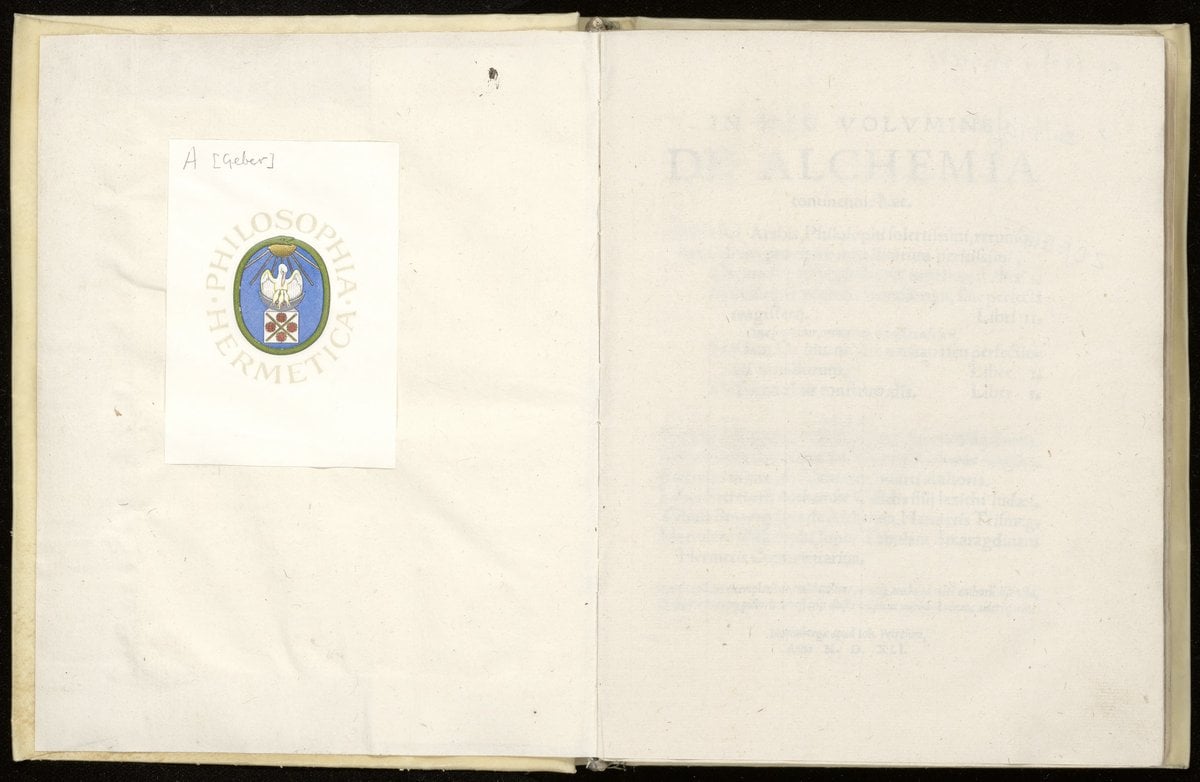
On Alchemy
Geber|Bacon, Roger|Richardus Anglicus|Calid|Hermes Trismegistus|Hortulanus

Atalanta Fleeing
Maier, Michael
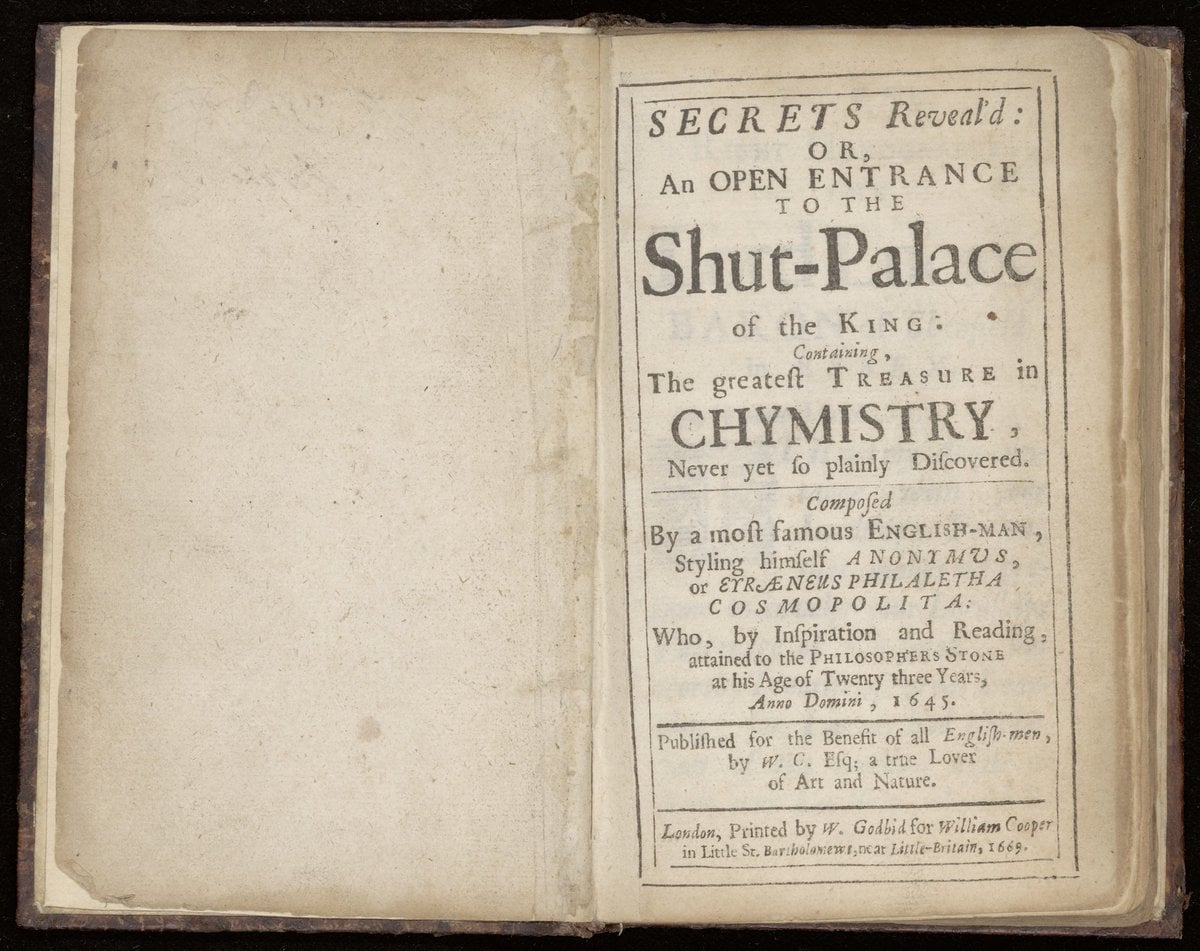
Secrets reveal'd: or, an open entrance to the shut palace
attr. Starkey, George
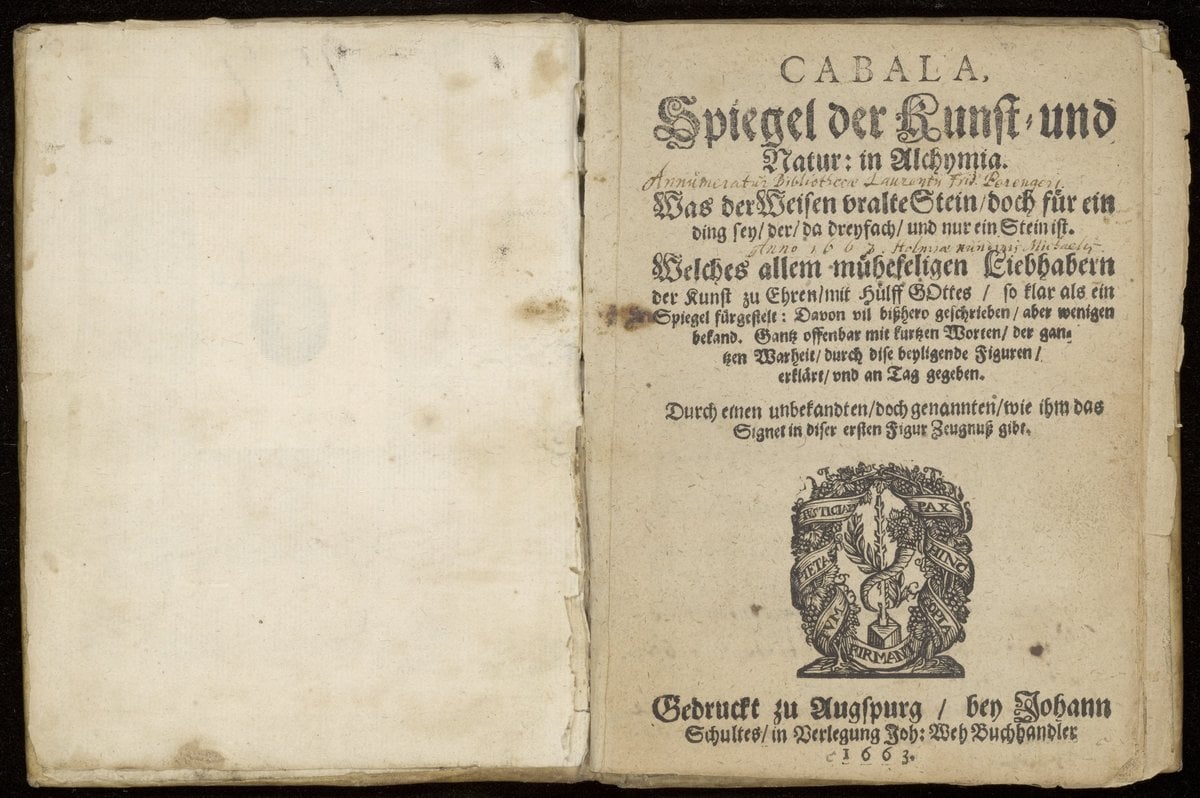
Cabala: Mirror of Art and Nature in Alchemy
attr. Michelspacher, Stephan
The Divine Pymander, Asclepius, and On the Mysteries
Hermes Trismegistus | Jamblichus | Proclus
The Chemical Art
Hermes Trismegistus
Aurora, and the Treasure of the Philosophers: The Water-Stone of the Wise Men
Paracelsus, Theophrastus|[Siebmacher, Johann Ambrosius]
Chemical Cabinet
Maier, Michael
Two Chemical Treatises: An Open Entrance to the Closed Palace of the King
[Starkey, George]|Ferrarius
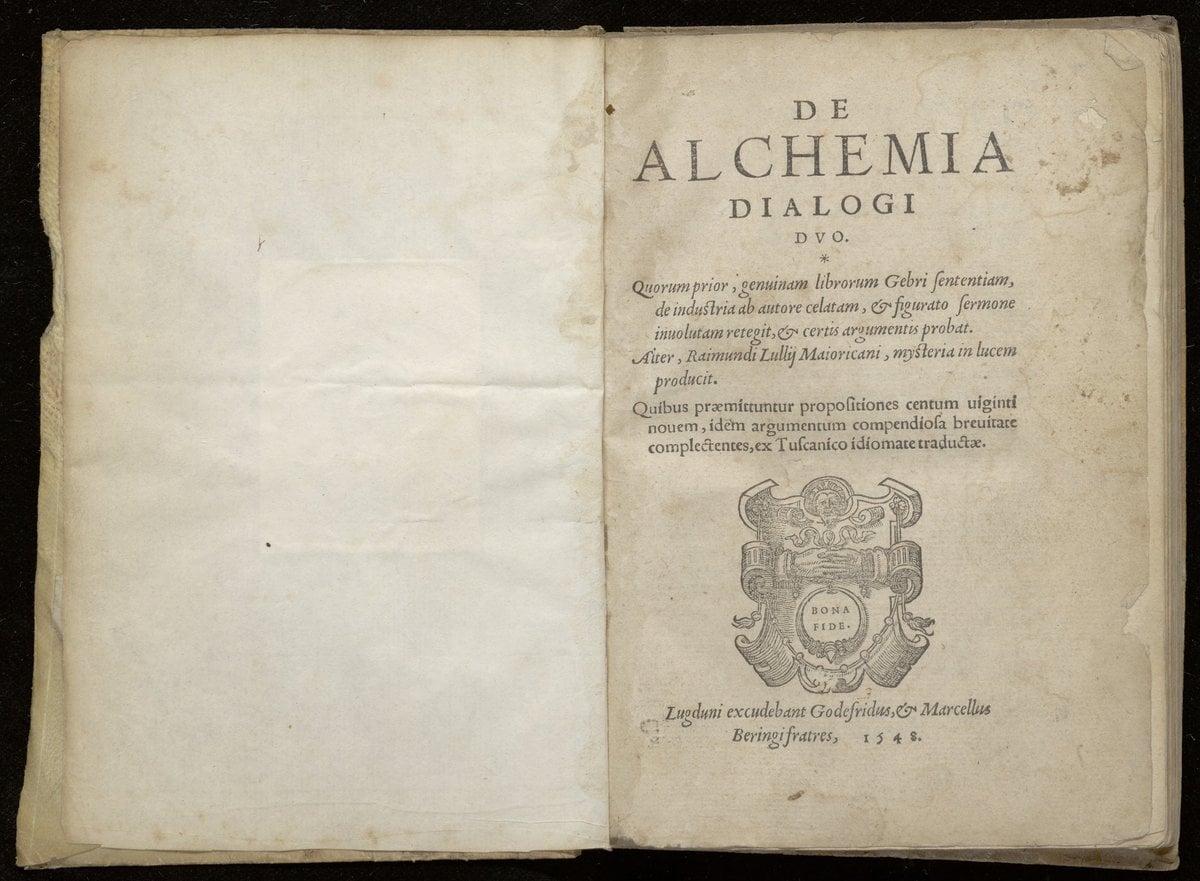
Two Dialogues on Alchemy, The Sentence, and the Tree of Life
[Bracesco, Giovanni]|Geber|Lull, Ramón