


Astrology & Divination
Celestial Science & the Mantic Arts


Illustrations
Browse all494 images extracted
This intricate volvelle is a rare surviving example of a medieval paper instrument used for astronomical or calendrical calculations. The rotating wheels allowed scholars to track celestial movements or determine dates by aligning the various numerical scales. The central figures likely represent authoritative scholars or personifications of time, adding an allegorical layer to this functional scientific tool.
This 11th-century diagram illustrates the classical system of the twelve winds, a fundamental element of medieval cosmological and meteorological knowledge. Each wind is depicted as a winged head blowing a stream of air toward the center, accompanied by Latin labels identifying their names and directions, demonstrating the sophisticated integration of art and science in the Ramsey Abbey scriptorium.
This vibrant miniature depicts the court of King Parikshit (Raja Prikhshat Sabha), a pivotal figure in the Bhagavata Purana. The upper register shows the king in humble discourse with the sage Shukadeva, who is narrating the sacred text to him before his destined death. The lower register illustrates the assembly of sages and courtiers witnessing this profound spiritual transmission, rendered in a style characteristic of traditional Indian manuscript illustration.
This engraving from Johannes Kepler’s 1619 masterpiece, Harmonices Mundi, illustrates his theory that the distances between planetary orbits are determined by the five Platonic solids. The diagram maps the orbits of Saturn and Jupiter relative to the 'Cubus' (cube) and 'Tetrahedron,' culminating in a nested circular model of the inner solar system. It represents a pivotal moment in the history of science where Kepler attempted to reconcile ancient geometric harmony with his new laws of planetary motion.
This radical monochrome engraving represents the primeval darkness or 'Great Void' that preceded the creation of the universe. Created by the English physician and mystic Robert Fludd for his encyclopedic 'Utriusque Cosmi Historia' (1617), the image is bordered by the phrase 'Et sic in infinitum' (And so on to infinity), emphasizing the boundless, unformed state of the cosmos before the divine light of creation.
This vibrant illustration depicts the Hindu deity Ganesha, the remover of obstacles, seated majestically upon a lotus throne. He is sheltered by the multi-headed serpent Shesha, symbolizing cosmic protection and eternity. The intricate detailing and bold use of color are characteristic of 19th-century Indian manuscript illumination, reflecting the devotional and artistic traditions of the period.

This intricate engraving, likely from Robert Fludd's monumental work 'Utriusque Cosmi' (1617-1621), illustrates a pneumatic experiment designed to demonstrate the principles of air expansion and contraction. The apparatus consists of a large leaden sphere (A) connected by a curved tube (E) to a water-filled vessel (C), showing how heat—symbolized by the sun in the upper corner—affects the pressure and movement of fluids. Fludd's work is a prime example of the early modern synthesis of empirical observation, mechanical philosophy, and hermetic mysticism.

This diagram is a yantra, a mystical or astrological chart common in Sanskrit manuscripts on Jyotish (astrology). It features a series of nested squares containing specific Devanagari characters, likely representing planetary positions or numerical values used for divination or calculation.

This intricate illumination is from the 'Libro de los juegos' (Book of Games), commissioned by King Alfonso X of Castile in the late 13th century. It depicts a game of chess being played by figures of different social backgrounds, reflecting the king's interest in intellectual pursuits and the cultural synthesis of medieval Spain. The scene is framed by a decorative architectural canopy, a common motif in Alfonsine manuscripts that signifies the importance of the activity depicted.
Visual Art
Browse all art →60 works of visual art in this collection
 decorative
Minchiate Card Back (Geometric Stipple Pattern)
A. Baragioli
The image depicts a non-representational, repeating geometric pattern resembling a cellular or craquelure structure.
 decorative
9 of Batons (Minchiate deck)
A. Baragioli
This image depicts the nine of batons card from a traditional Florentine Minchiate deck, represented by nine vertically arranged and crisscrossed wooden batons or staves.
 decorative
10 of Batons (Minchiate Card Deck)
A. Baragioli
This playing card depicts ten batons (staves) arranged in a symmetrical, interlaced cross-hatch pattern.
 ritual-object
Jack of Batons (Minchiate Deck)
A. Baragioli
A male figure stands in a defensive, warrior-like posture, holding a flaming torch raised in his right hand and a large, circular shield in his left.
 mythological
Knight of Batons (Minchiate Deck)
A. Baragioli
A centaur, depicted with a human torso and the body of a lion, is rearing up on its hind legs while holding a baton over its shoulder and a circular blue shield.
 decorative
Queen of Batons (Minchiate deck)
A. Baragioli
A crowned female figure sits holding a long, baton-like staff diagonally across her lap.
 ritual-object
King of Batons (Minchiate Card)
A. Baragioli
A bearded king wearing a crown and breastplate sits on a throne, holding a large baton capped with a red pommel.
 ritual-object
Ace of Coins (Minchiate Deck)
A. Baragioli
The card depicts a central golden circular coin featuring a recumbent lion standing before a lily (fleur-de-lis), surmounted by a golden crown with red detailing, set above a stylized landscape with a single large tree and distant hills.
 decorative
Minchiate Card: Two of Coins
A. Baragioli
The card depicts two circular medallions arranged vertically, each containing a profile or semi-profile portrait of a person.
 ritual-object
3 of Coins (Minchiate Card Deck)
A. Baragioli
A Minchiate playing card depicting three vertically stacked circular medallions, each containing the profile or bust of a different figure: a soldier in a helmet, a man with a mustache in a turban, and a woman looking upward.
 decorative
4 of Coins (Minchiate Deck)
A. Baragioli
An archer in a red tunic and blue breeches rides atop a brown elephant, aiming a golden arrow upward, surrounded by four circular medallions each containing a profile portrait of a man.
 decorative
5 of Coins (Minchiate card deck)
A. Baragioli
This card depicts five circular medallions arranged in a quincunx pattern, each containing the profile or portrait of an unidentified classical-style figure.
 decorative
Six of Coins (Minchiate Card Deck)
A. Baragioli
The card depicts six individual portraits of historical or idealized figures in profile and three-quarter view, arranged in two columns of three within circular coin-like borders.
 decorative
Seven of Coins (Minchiate Deck, Florence)
A. Baragioli
This playing card depicts seven individual portraits contained within circular medallions arranged in an interlocking hexagonal grid.
 ritual-object
Minchiate Deck: Eight of Coins
A. Baragioli
This playing card depicts eight circular medallions, each containing the profile or frontal bust of a human figure, arranged in a traditional suit pattern for the number eight.
Mapping the Celestial Alphabet from Sanskrit Jyotisha to Renaissance Magic
John Dee, the court astrologer to Queen Elizabeth I, warned that those who did not understand the 'celestial alphabet' of the stars should remain silent or begin to learn.
The Source Library's Astrology & Divination collection traces the human attempt to decode the cosmos, ranging from the mathematical precision of Sanskrit Jyotisha to the symbolic complexity of the European Renaissance. Central to this collection is the work of Marsilio Ficino, whose Three Books on Life sought to harmonize the human spirit with the planetary rays, and John Dee, whose The Hieroglyphic Monad attempted to condense the entire universe into a single, potent symbol.
Beyond the Western tradition, this digital library holds an unparalleled wealth of Eastern mantic arts. Varahamihira, the 6th-century polymath, provides the foundational Great Compendium of Horoscopy, while the 17th-century Chinese strategist 茅元儀 (Mao Yuanyi) integrates celestial observation into military logistics in his Treatise on Armament Technology: Logistics for River Crossings. These texts demonstrate that astrology was never merely a superstition, but a rigorous 'celestial science' used for statecraft, medicine, and spiritual navigation.
The collection also features rare Arabic manuscripts like the Book of Wonders by Abd al-Hasan al-Isfahani, which blends talismanic magic with planetary lore. Through the works of Johannes Kepler and Nicolaus Copernicus, we witness the pivotal moment when the mantic arts began to diverge from modern astronomy, yet retained their hold on the human imagination through the search for a 'Harmony of the World'.

The Mathematical Heavens
1540-1650The shift from medieval geocentrism to the heliocentric revolution, where planetary motion was redefined as a divine harmonic system.
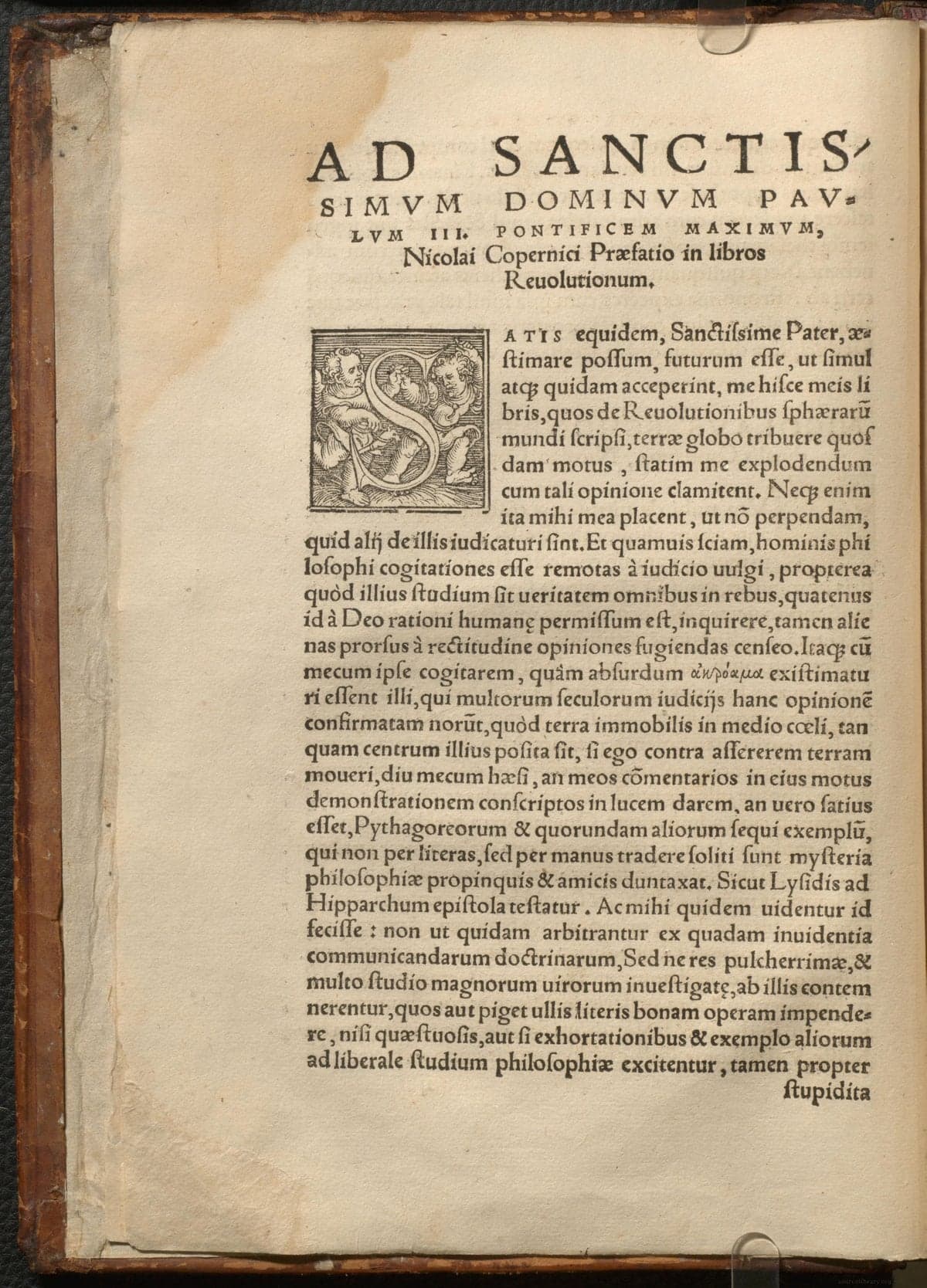
On the Revolutions of the Heavenly Spheres
Nicolaus Copernicus, 1543
Nicolaus Copernicus's foundational text that displaced the Earth from the center of the universe.
The Harmony of the World
Kepler, Johannes, 1619
Johannes Kepler's attempt to prove that the distances between planets correspond to the five Platonic solids.
Utriusque Cosmi Historia - Tomus Primus (De Macrocosmi)
Robert Fludd, 1617First Complete Translation
Robert Fludd's monumental visual history of the macrocosm, linking music and geometry to the stars.
Sanskrit Jyotisha & The Science of Light
500s-1900sVedic traditions of auspicious timing, natal horoscopy, and the calculation of planetary cycles that remain in use today.
The Great Compendium of Horoscopy
Varahamihira, 966
A 10th-century translation of Varahamihira's essential guide to natal astrology and omens.
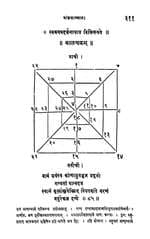
The Path of Inquiry
Nilakantha, 1649
Nilakantha's 17th-century manual which synthesized Persian and Indian astrological techniques.
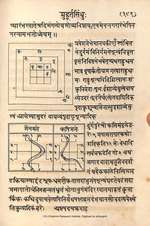
The Great Ocean of Auspicious Timing
Pandit Devaki Nandan, 1800First Translation
A comprehensive 19th-century manual for determining the exact auspicious moments for rituals and life events.
The Mantic Arts: Geomancy and Palmistry
1400-1850Practical methods of divination using the earth (geomancy), the hand (chiromancy), and the casting of lots.
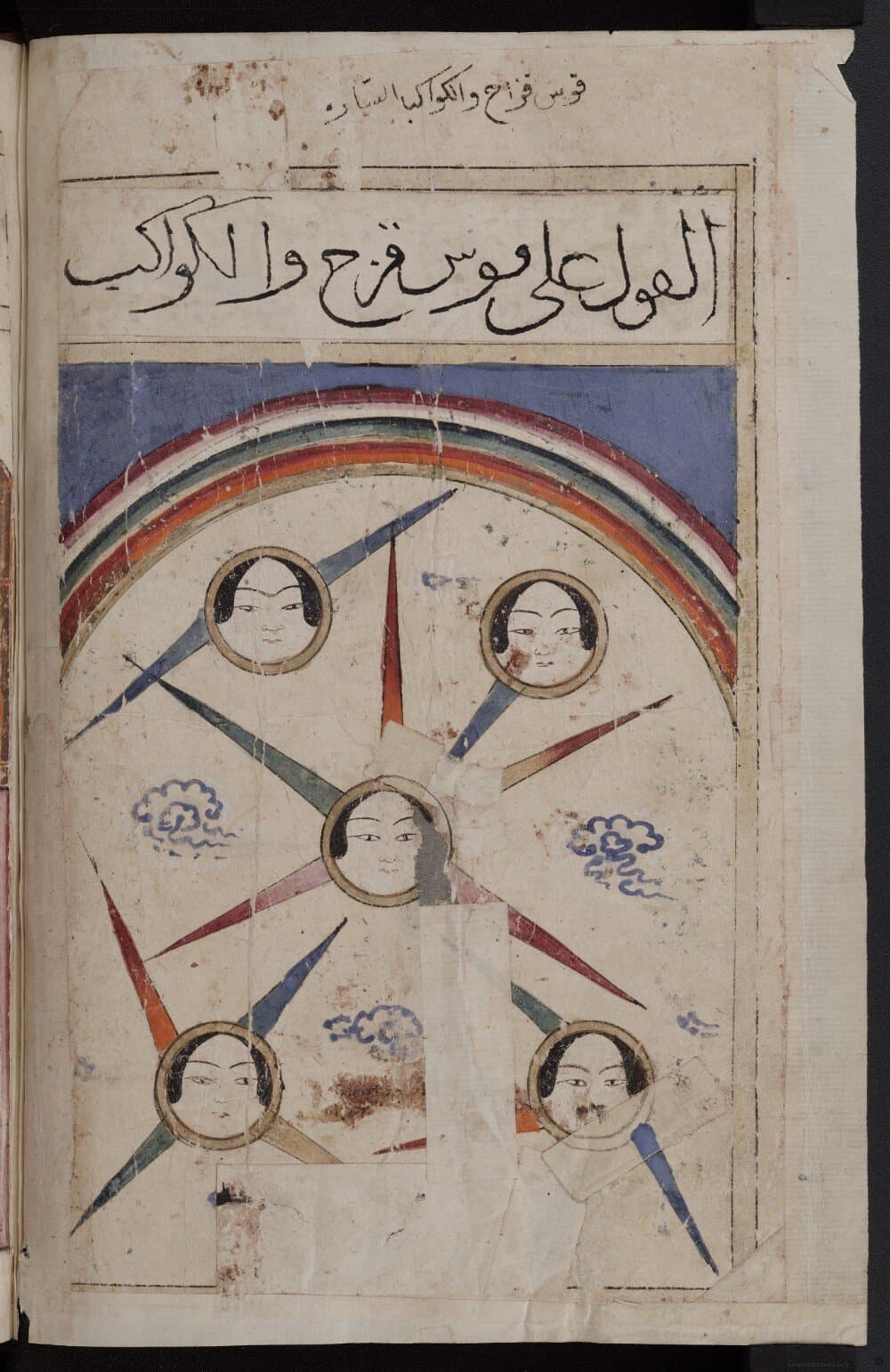
Book of Wonders
Abd al-Hasan al-Isfahani, 1400
A 15th-century Arabic compendium of esoteric wisdom including planetary spirits and dream interpretation.
Brief Instruction in Geomancy
Anonymous, 1686First Translation
An anonymous German guide to the 'science of the sand', a popular form of earth-based divination.
Nine Gems of Geomancy
Param Sukh Upadhyaya, 1875First Translation
Param Sukh Upadhyaya's rare Sanskrit treatise on the Nine Gems of Geomancy.
Key Figures
Marsilio Ficino
1433–1499
The leading philosopher of the Italian Renaissance who revived Neoplatonism and astrological medicine.
Three Books on LifeVarahamihira
c. 505–587
The Indian astronomer whose 'Pancha-Siddhantika' codified the five major astronomical traditions of his era.
The Five Astronomical CanonsJohn Dee
1527–1608
Mathematician and advisor to Elizabeth I who sought to unify science and magic through a universal symbolic language.
The Hieroglyphic MonadHeinrich Cornelius Agrippa
1486–1535
The author of the most influential textbook on occult philosophy in the early modern period.
Three Books of Occult Philosophy“He taught him knowledge—the very substance of life and the means of living after death—and gave him the power of speech in various languages express the intentions within his heart.”
Illustrations from the Collection


Where to Start
The Renaissance Scholar
Explore how astrology informed the medicine and philosophy of the humanists.
- 1Three Books on Life
Start with Ficino to understand how the planets were thought to influence physical health and temperament.
- 2Three Books of Occult Philosophy
Continue to Agrippa to see how these planetary influences were systematized into a total occult philosophy.
- 3The Hieroglyphic Monad
Conclude with John Dee's attempt to condense this entire system into a single glyph.
The Eastern Diviner
Trace the development of Indian and Chinese mantic traditions.
- 1The Great Compendium of Horoscopy
Begin with the foundational Sanskrit compendium of Varahamihira.
- 2Treatise on Armament Technology: Logistics for River Crossings
See how these principles were applied to military strategy and river crossings in the Chinese tradition.
- 3Neelakantha's Persian Astrology
Examine the cross-cultural exchange in Neelakantha's 'Persian Astrology'.
All Books
Browse Full Catalog→1,484 books in this collection
Introduction to Primitive Cabalistic Science
Anonymous
Eight Books on Astrology
Julius Firmicus Maternus
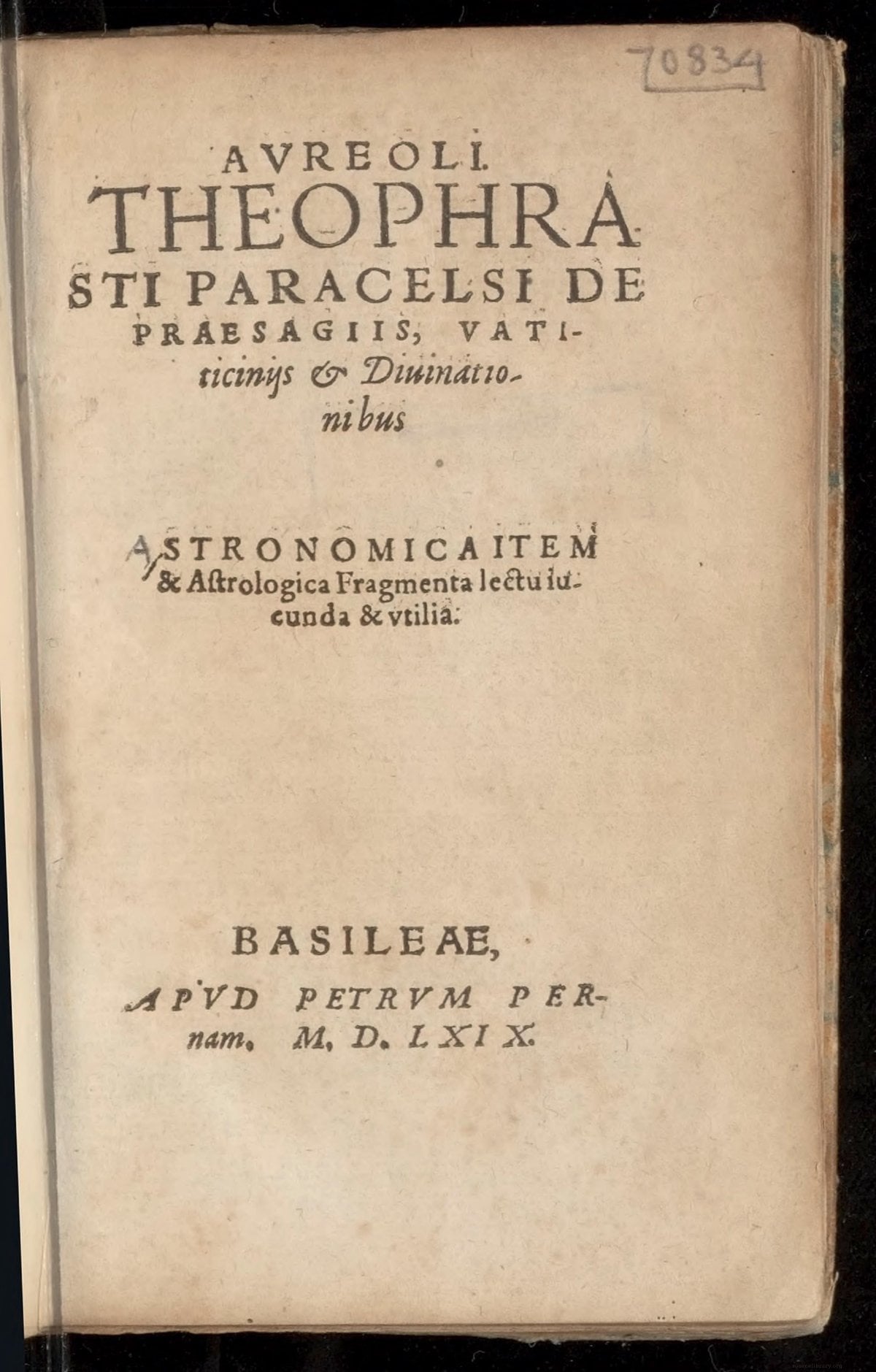
On Presages, Prophecies, and Divinations
Paracelsus, Theophrastus
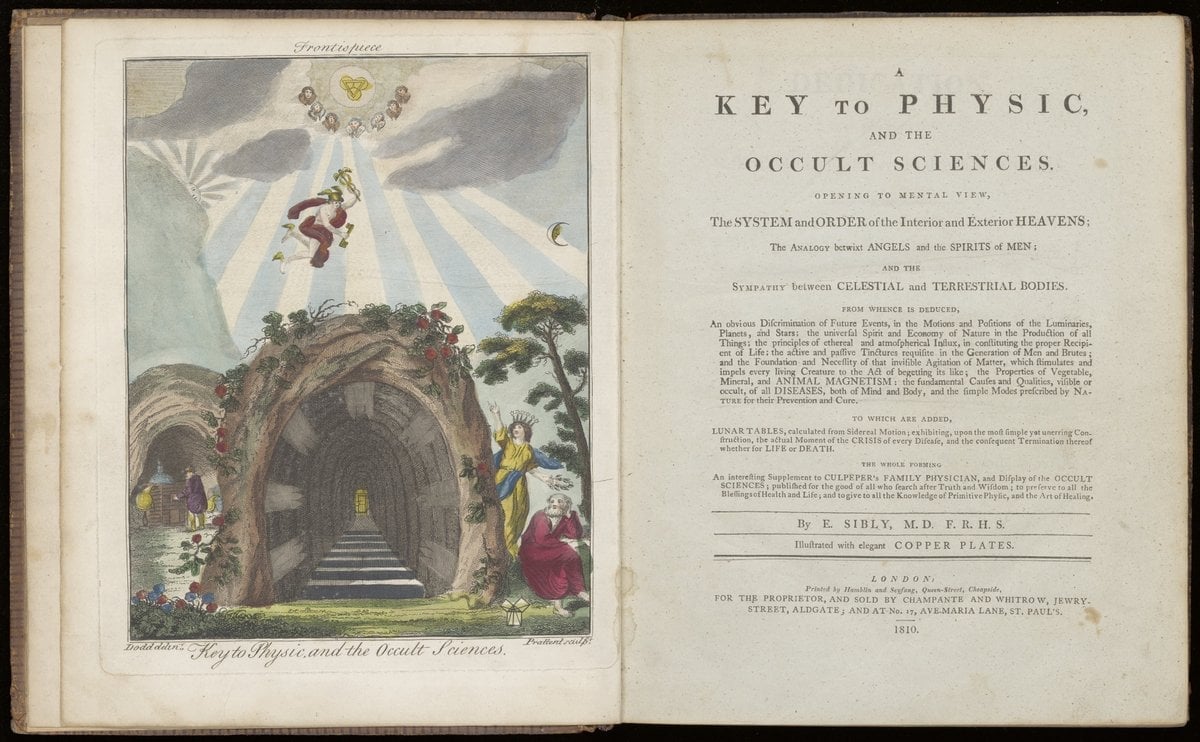
A key to physic, and the occult sciences
Sibly, Ebenezer
Aphoristic Astrology of Ptolemy, Hermes, and Others
Anonymous
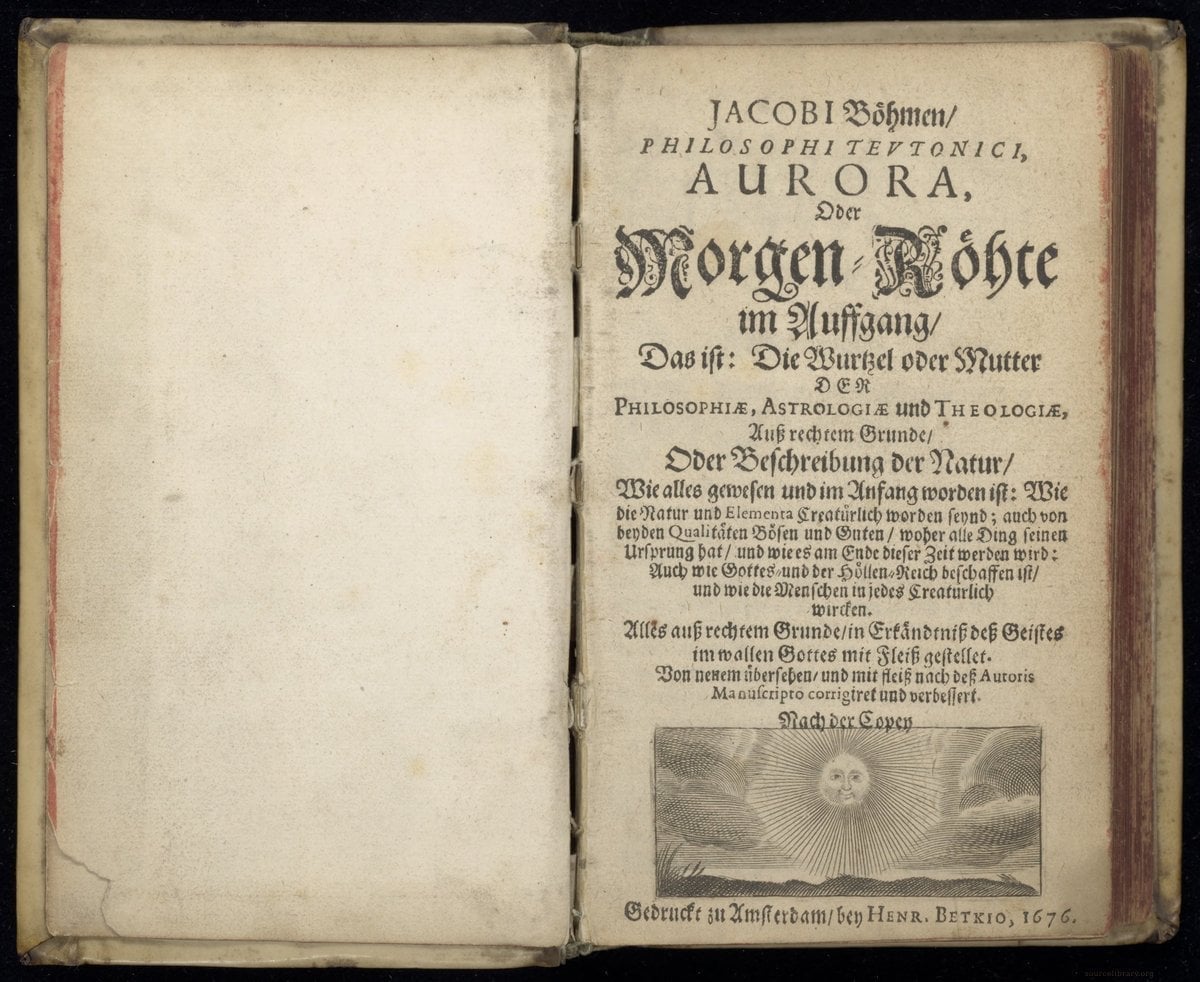
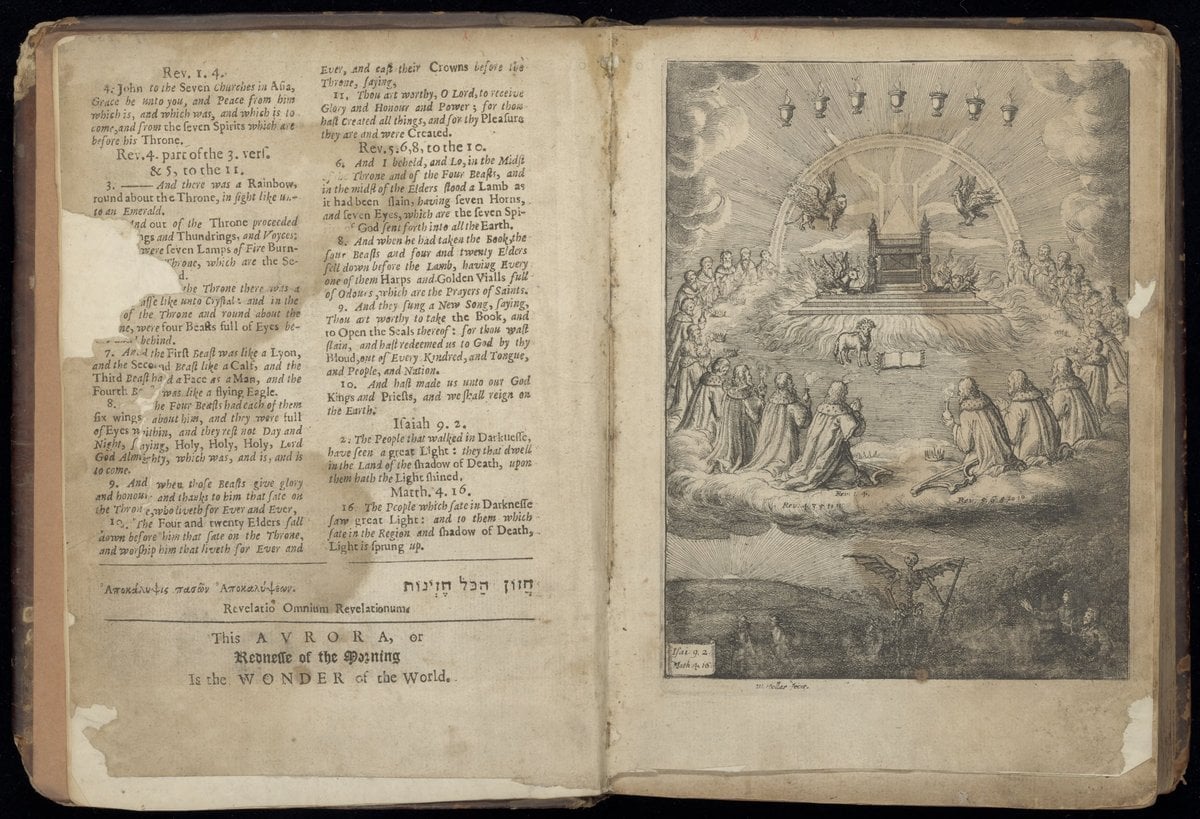
Aurora, or the Day-Spring
Boehme, Jacob
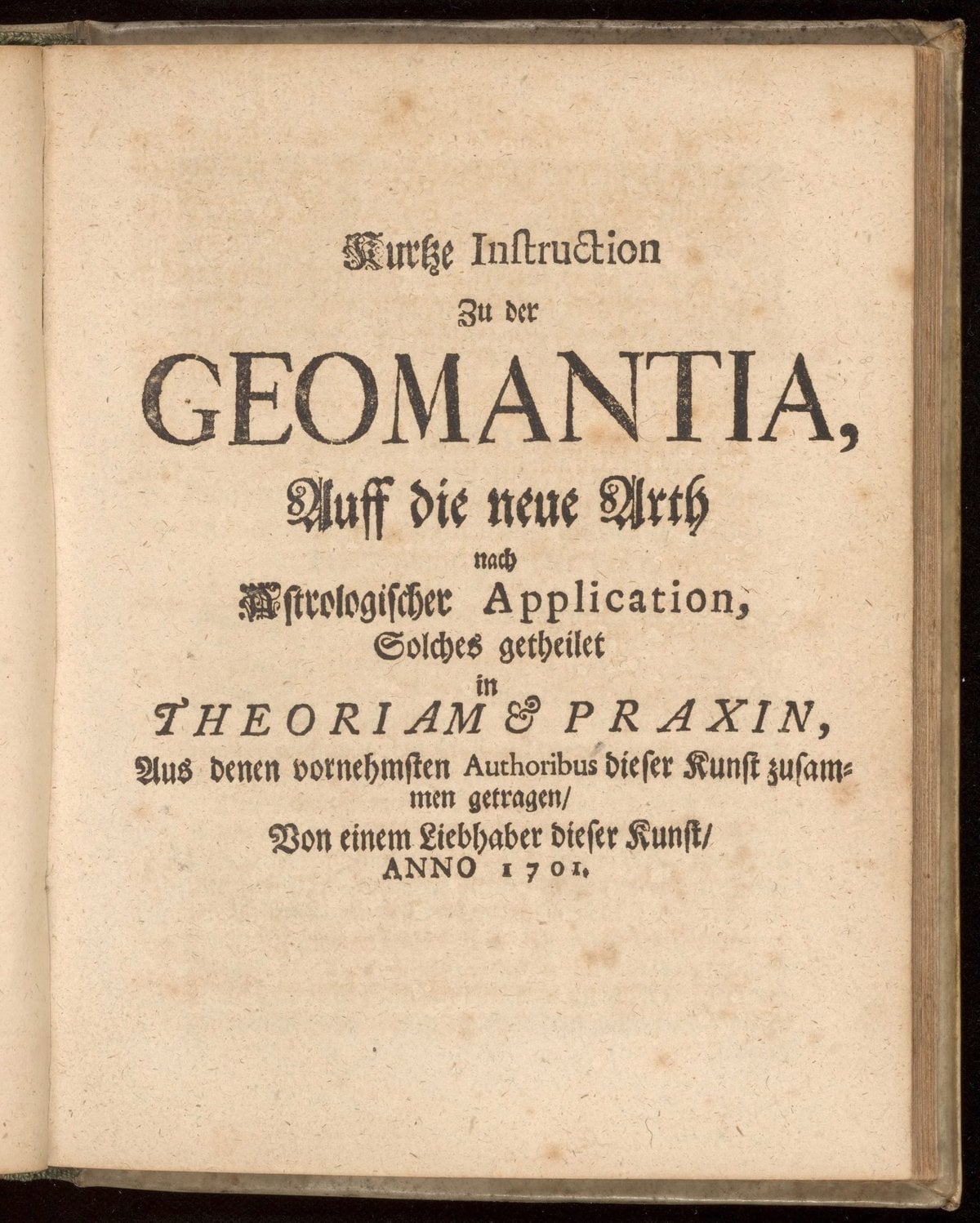
Brief Instruction in Geomancy
Anonymous
Detailed Report on the Use of the Physico-Astrological Instrument
Hafenreffer, Samuel
Raphael Explaining the Art of Medicine
Hafenreffer, Samuel
On the secrets of women. On the virtues of herbs, stones, and animals. On the wonders of the world. On falcons, goshawks, and hawks.
Albertus Magnus
Telescope of Zoroaster, or the key to the great divinatory cabala of the magi
attr. Nerciat, Andrea de?
Astrologie theologized
Weigel, Valentin
On Presages, Divination, and Astrological and Astronomical Fragments
Paracelsus
Aurora. That is, the day-spring
Boehme, Jacob