


Illustrations
Browse all477 images extracted
This intricate emblem from the 1582 'Splendor Solis' depicts the alchemical 'conjunction' through the figures of a King and Queen standing beneath dual suns. The scrolls they hold, labeled 'Lac Virginum' (Virgin's Milk) and 'Coagula', refer to the transformative chemical processes required to achieve the Philosopher's Stone. The scene is framed by a lush botanical border and a predella showing a battle scene involving Alexander the Great, linking alchemical mastery to worldly conquest.
This intricate diagram, titled 'The Constituent Parts of Man,' originates from the 1781 edition of Jakob Böhme's works edited by William Law. It illustrates Böhme's complex mystical psychology, mapping the human mind's alignment with three realms: the 'Hellish-Mindedness' of darkness, the 'Earthly-Mindedness' of the temporal world, and the 'Heavenly-Mindedness' of divine light. The use of overlapping circles and triangles serves as a visual mnemonic for the soul's struggle and potential for transformation within Böhme's theosophical system.
This woodcut diagram from Girolamo Cardano's 'De Subtilitate' (1550) illustrates the mechanics of a siphon. It demonstrates Cardano's investigation into 'subtle' natural phenomena, specifically how water can be made to ascend against its natural inclination through the principles of vacuum and atmospheric pressure.
This compelling hand-colored woodcut, titled 'EMBLEMA II. De secretis Natura. Nutrix ejus terra est.' (Emblem II. On the secrets of Nature. The Earth is its nurse.), serves as a powerful allegory for the nurturing and life-giving essence of Mother Earth. A central, monumental female figure embodies Nature, her torso transformed into a globe from which human infants emerge, symbolizing humanity's origin and dependence on the planet. Flanking her are scenes of animalistic nurturing: a goat suckling two infants, and a dog or wolf (alluding to classical myths like Romulus and Remus) also providing sustenance to infants. This emblem beautifully encapsulates Renaissance thought on the interconnectedness of all life and the Earth's role as the universal provider, a theme central to early modern natural philosophy and emblem books.
The frontispiece to the 1678 edition of the 'Musaeum Hermeticum', engraved by Matthäus Merian, serves as a visual compendium of Hermetic philosophy. It depicts the four elements personified in oval medallions, the Muses at the top, and a central scene at the bottom showing an alchemist following the 'path of nature' guided by a star. The intricate imagery emphasizes the synthesis of classical mythology and chemical transformation central to the Great Work.
This profound engraving illustrates the divine command 'FIAT' (Let there be) as the catalyst for the creation of the universe. From Robert Fludd's monumental work on the macrocosm and microcosm, the image depicts the emergence of light and spirit from the primordial darkness, symbolized by the radiant ring and the descending dove of the Holy Spirit.

This dramatic engraving depicts the 16th-century occultist Edward Kelly and his associate John Dee performing a necromantic ritual in a moonlit graveyard. Standing within a protective magic circle inscribed with names of power, Kelly invokes the spirit of a deceased person, who appears before them wrapped in a burial shroud. This iconic image, originally from Ebenezer Sibly's 'A New and Complete Illustration of the Occult Sciences', reflects the enduring fascination and fear surrounding early modern practices of spirit communication.

This intricate alchemical emblem from a 1590 manuscript depicts a king and his companions observing a figure in a ritual bath, a common metaphor for the purification of matter. The distant rock surmounted by a cross and stars symbolizes the spiritual goal of the Great Work. The vibrant colors and detailed composition are characteristic of high-status Hermetic manuscripts of the late 16th century.

This woodcut depicts one of Tycho Brahe's precision brass quadrants, used for measuring the altitude and azimuth of celestial bodies. Published in his 1598 'Astronomiae Instauratae Mechanica', the illustration highlights the sophisticated leveling screws and graduated scales that allowed Brahe to achieve unprecedented accuracy in his observations before the invention of the telescope.
Visual Art
Browse all art →60 works of visual art in this collection
 object
Masonic Quart Bottle — Clasped Hands, Square & Compass
A. R. Samuels
Two mold-blown aquamarine glass bottles, one embossed with Masonic symbols including clasped hands and a square and compass, the other featuring a factory building and the name 'S. HUERSEY'.
 print
printChristelijke emblemen
Aegidius Sadeler
The Circumcision of Christ is depicted in a central panel, surrounded by an elaborate emblematic border featuring the Holy Name, a flaming heart, and butterflies.
 print
printFabel van de feniks
Aegidius Sadeler
A phoenix stands with outspread wings on a burning pyre of aromatic branches beneath a radiant sun.
 print
printGheschiedenissen Israels in de Woestyne
Aegidius Sadeler
Moses and the Brazen Serpent in the wilderness as described in the Book of Numbers.
 print
printOprichting van de staak met de koperen slang
Aegidius Sadeler
The biblical scene of Moses erecting the Brazen Serpent to heal the Israelites from a plague of fiery serpents.
 genre-scene
The Alchemist
Albrecht Dürer
A bearded, middle-aged man in a wide-brimmed hat sits at a workbench inside a stone archway, reading an open book while surrounded by alchemical apparatus.
 print
printSalvator Mundi
Albrecht Dürer
A pen and ink drawing depicting a personified sun and crescent moon positioned above a basilisk, a mythical creature with the head of a rooster and the tail of a dragon.
 allegory
Melencolia I
Albrecht Dürer
A winged personification of Melancholy sits in a dejected posture among scattered scientific and architectural tools, while a putto writes on a tablet nearby and a sleeping dog lies on the ground.
 emblem
Alchemical Angel of Air
Anonymous
This engraving depicts a complex alchemical cosmology featuring a central sphere supported by two kneeling male figures, topped by a trinity of celestial figures, and containing within it various elemental symbols, lions, and a bird.
 drawing
Alchemical Conjunction — Donum Dei
Anonymous
A glass alchemical vessel containing a couple in coitus, surrounded by detached human heads, with an angel on the neck and a flowering plant emerging from the top.
 genre-scene
Alchemists Attempting to Make Gold
Anonymous
This engraving depicts three figures in an alchemical laboratory, with one central figure seated and pointing at a text while others observe, surrounded by various vessels and tools.
 allegory
Fire — The Four Elements
Anonymous
An allegorical depiction of the element of Fire, featuring an elderly alchemist working at a furnace while a female figure holding a chain of gold coins leans over his shoulder.
 allegory
Hermes Trismegistus and the Emerald Tablet
Anonymous
Hermes Trismegistus is depicted seated beneath an arch, flanked by assistants, holding an open book or tablet containing alchemical celestial symbols.
 emblem
The Androgynous Rebis
Anonymous
A central winged, two-headed androgynous figure, known as the Rebis, stands upon a crescent moon above a landscape with a tree bearing human faces and a bird.
 emblem
The Green Lion Devouring the Sun
Anonymous
A green lion devouring a human-faced sun, accompanied by a banderole containing German text.
From the Laboratory Furnace to the Music of the Spheres
In the alchemical world, if you do not understand the symbols, you should either be silent or learn.

Alchemy is not merely the pursuit of gold; it is the 'Art of Transmutation'—a systematic attempt to bridge the gap between matter and spirit. In the 17th century, this field reached its zenith through works like The Hermetic Museum, Restored and Enlarged, which gathered the era's most secretive metallurgical and philosophical tracts. Authors like Michael Maier argued that alchemical secrets were so majestic they had to be grasped by the intellect before the senses could perceive them.
The collection at the Embassy of the Free Mind highlights the transition from laboratory chemistry to spiritual 'Theosophy.' While Paracelsus focused on the medical application of minerals in his Complete Medical, Chemical, and Surgical Works of Paracelsus, later thinkers like Jacob Boehme used alchemical language to describe the inner rebirth of the human soul. In Dawn rising, Boehme treats nature as a 'precious tree' growing in a garden of divine wisdom, where the fierce and the lovely qualities of existence are reconciled.
Visual culture is inseparable from these texts. John Dee used a single mathematical character in The Hieroglyphic Monad to summarize the entire cosmos, while Robert Fludd produced massive folios like The History of the Two Worlds to map the correspondence between the macrocosm of the stars and the microcosm of the human body. These books served as both scientific manuals and meditative tools, using engravings to bypass the limitations of spoken language.
“Nature, however, has two qualities within it until the Judgment of God: one lovely, heavenly, and holy; and one fierce, hellish, and thirsty.”
The Musical and Emblematic Tradition
1617-1618Where alchemical processes were encoded as musical fugues and complex visual allegories.
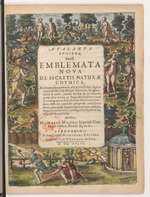
Atalanta Fleeing
Michael Maier, 1618
A multimedia masterpiece where each alchemical stage is accompanied by a musical fugue and an allegorical engraving.
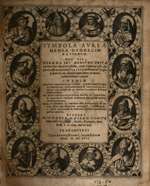
Symbols of the Golden Table of the Twelve Nations
Michael Maier, 1617
Maier defends alchemy as a noble, ancient science by seating twelve famous practitioners at a symbolic golden table.
The Macrocosmic Maps of Robert Fludd
1617-1629Massive encyclopedic efforts to chart the harmony between the universe and the human form.
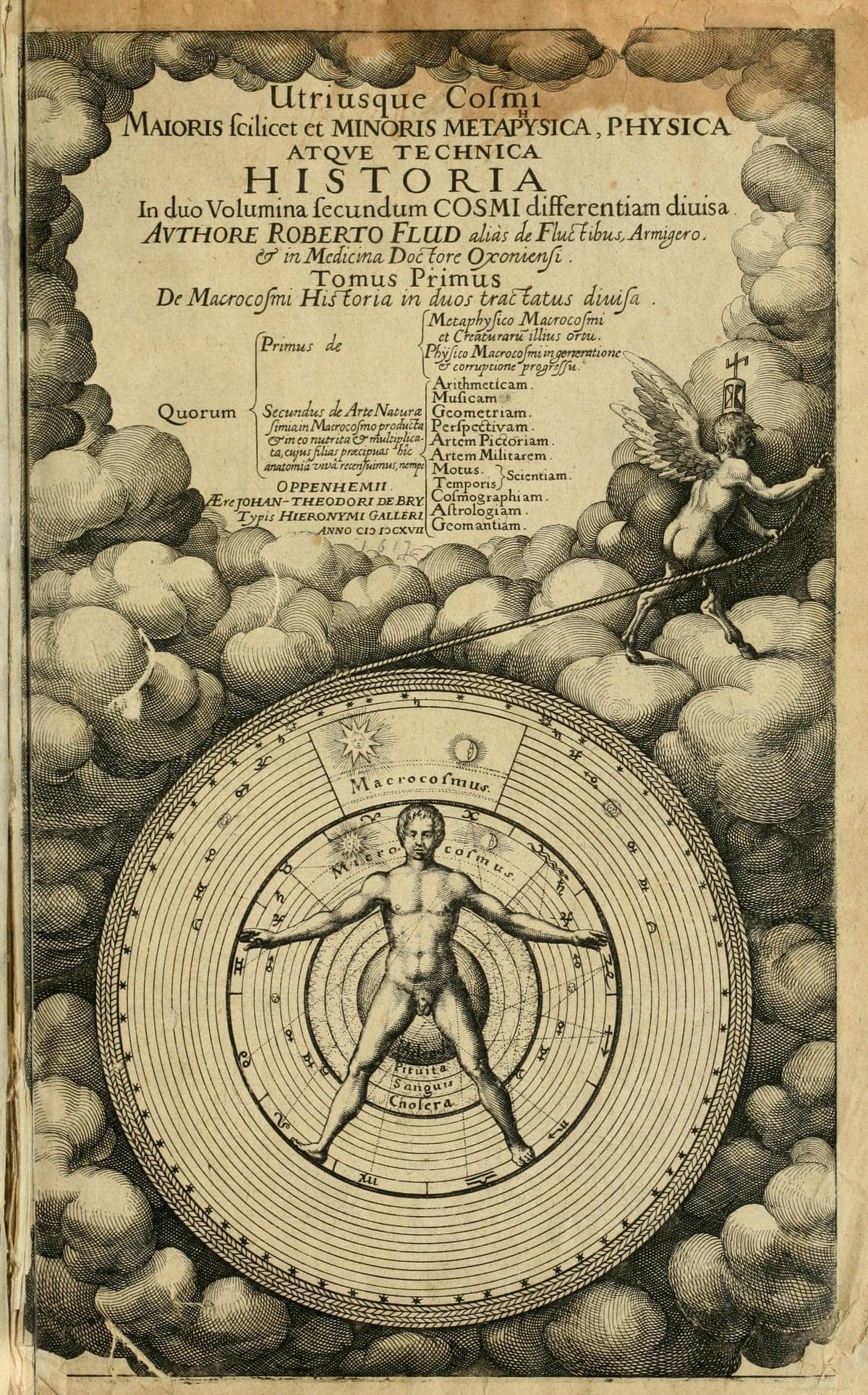
The History of the Two Worlds
Robert Fludd, 1617First Complete Translation
Contains the famous 'Mirror of Nature' engraving showing the chain of being from God to the mineral kingdom.
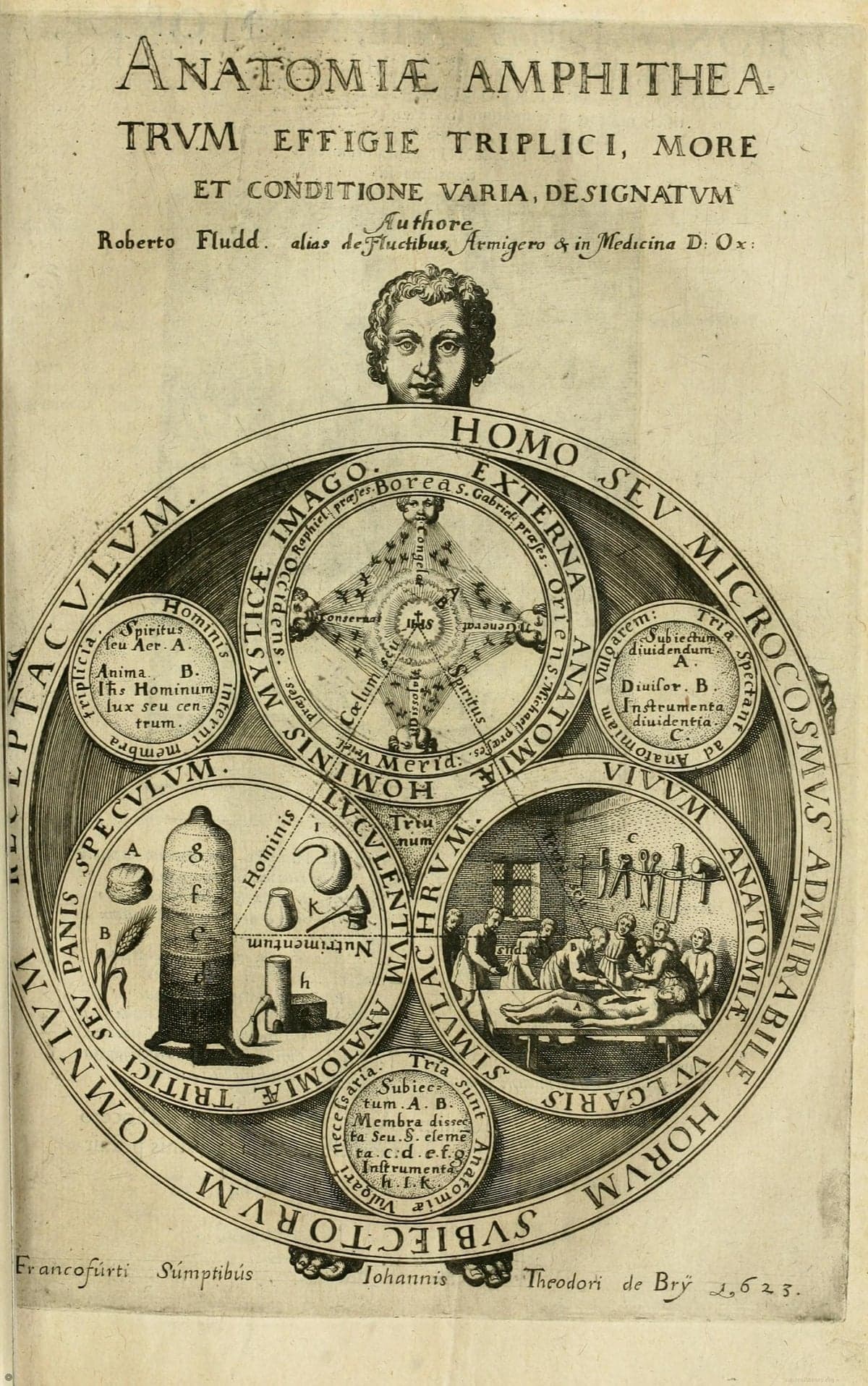
Amphitheatre of Anatomy
Robert Fludd, 1617First Translation
Treats the human body as a chemical laboratory, mapping the 'triple anatomy' of spirit, soul, and flesh.
Spiritual Alchemy and Theosophy
1647-1780The movement of the 'Great Work' into the internal theater of the human soul.
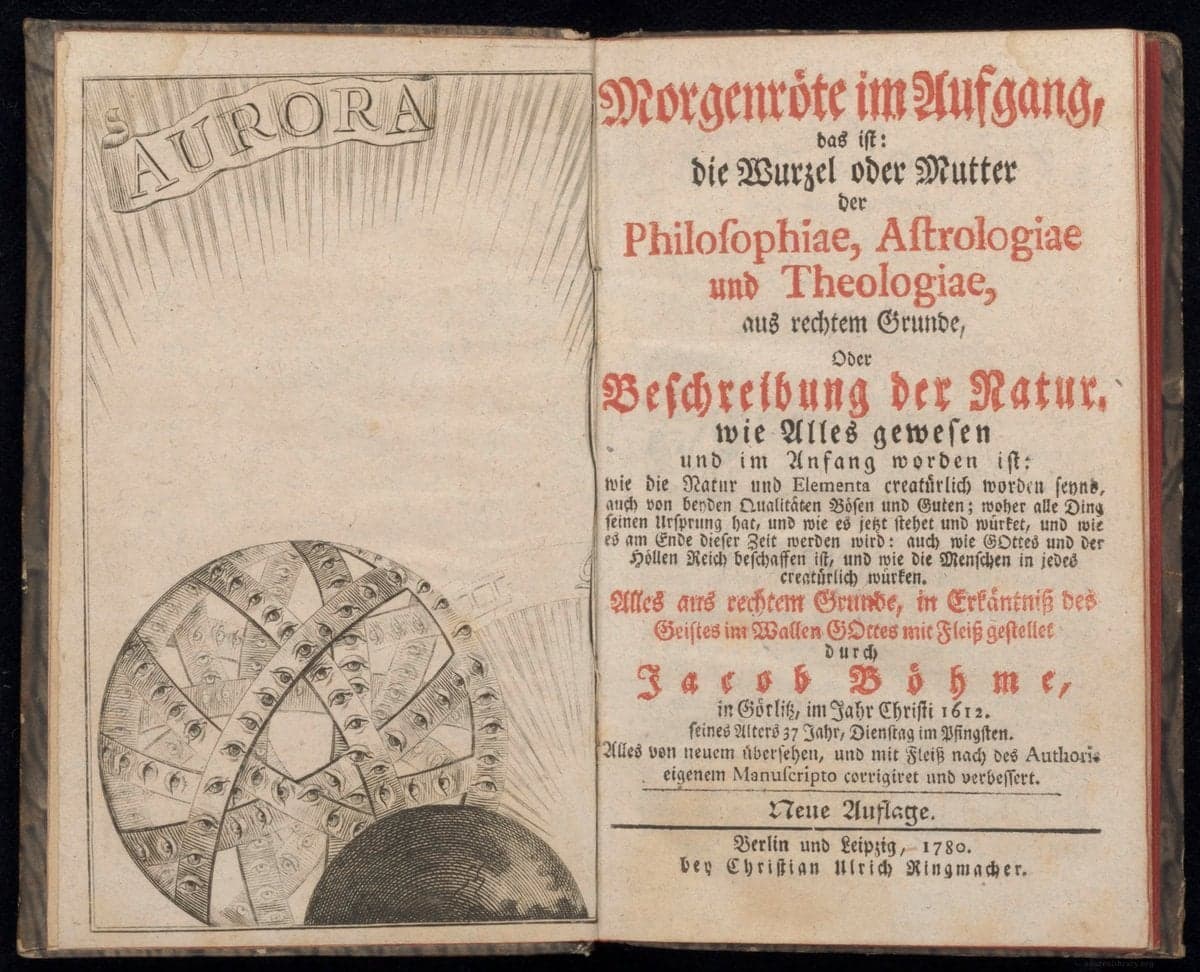
Dawn rising
Boehme, Jacob, 1780
Boehme's first work, describing a divine 'flash' of insight that reveals the inner workings of the cosmos.
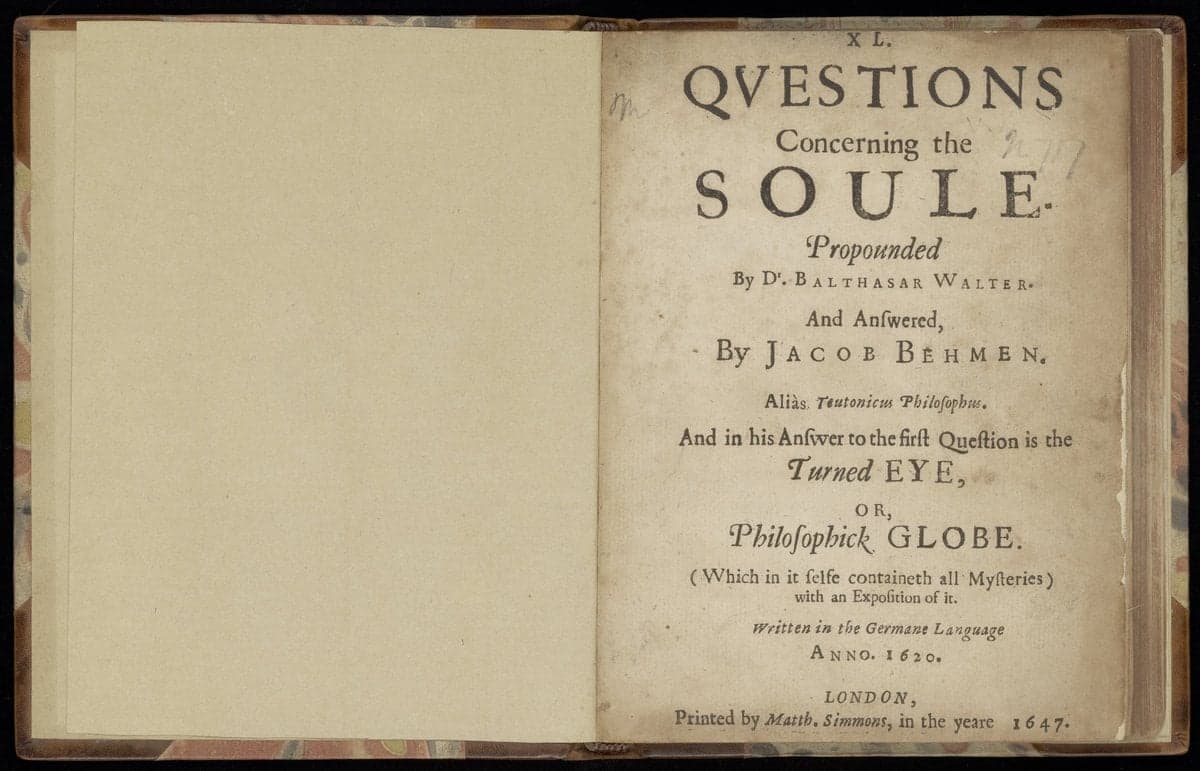
40 questions concerning the soule. Propounded by dr. Balthasar Walter
Boehme, Jacob, 1647
A rigorous interrogation of the soul's origin using the terminology of alchemical 'tinctures'.
The Laboratory Foundations
1545-1678Practical works on metallurgy, saltpeter production, and the medical 'spagyric' art.
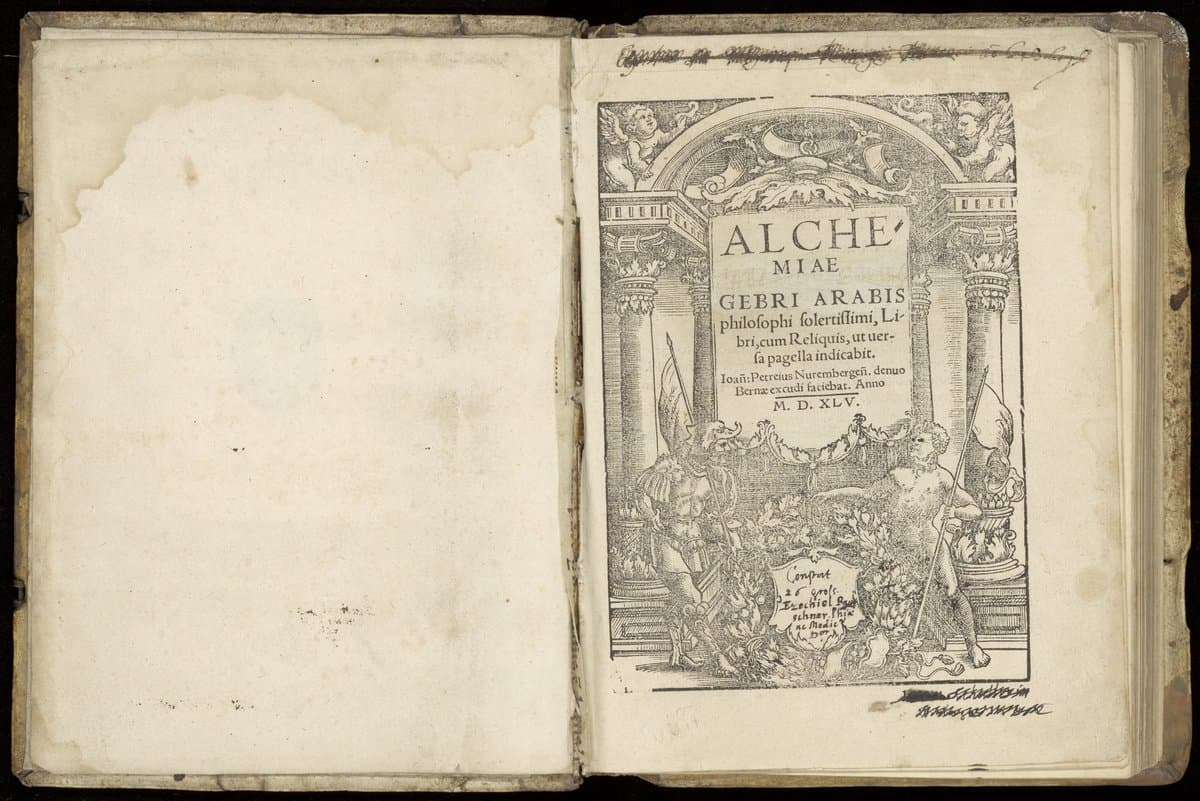
Books of Alchemy
Geber, 1545
The core texts of the medieval Arabic tradition, translated into Latin to serve as the base for European chemistry.
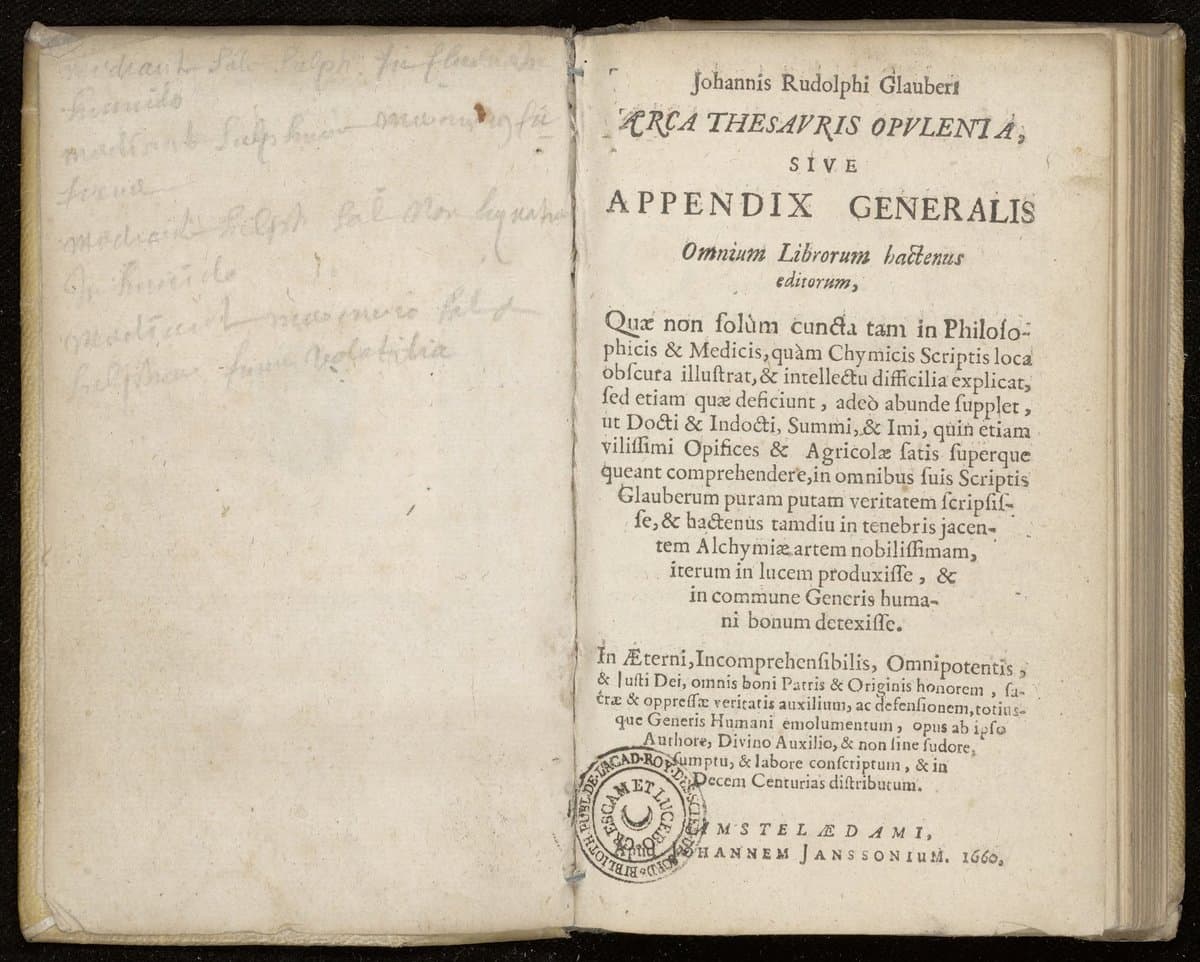
A Chest Rich in Treasures
Glauber, Johann Rudolph, 1660First Modern Translation
Glauber's practical guide to chemical apparatus and the extraction of medicinal salts.
Key Figures
Michael Maier
1568–1622
Physician to Rudolf II who integrated music, poetry, and alchemy into a single sensory experience.
Atalanta FleeingRobert Fludd
1574–1637
English Paracelsian physician known for his monumental visual encyclopedias of the macrocosm and microcosm.
The History of the Two WorldsJacob Boehme
1575–1624
A German shoemaker whose mystical visions redefined alchemy as a process of spiritual regeneration.
Dawn risingJohn Dee
1527–1608
Advisor to Elizabeth I who sought a universal mathematical language for the alchemical arts.
The Hieroglyphic MonadTimeline
The definitive Hermetic Museum is enlarged and restored


Where to Start
The Visual Learner
Follow the progression of alchemical imagery from mathematical symbols to baroque allegories.
- 1
- 2
- 3
The Spiritual Seeker
Trace the evolution of alchemy from lab work to the internal transformation of the soul.
- 1
- 2
- 3
All Books
Browse Full Catalog→1,209 books in this collection
Two Treatises on the Nature of the Elements and the Fifth Essence
Drebbel, Cornelius
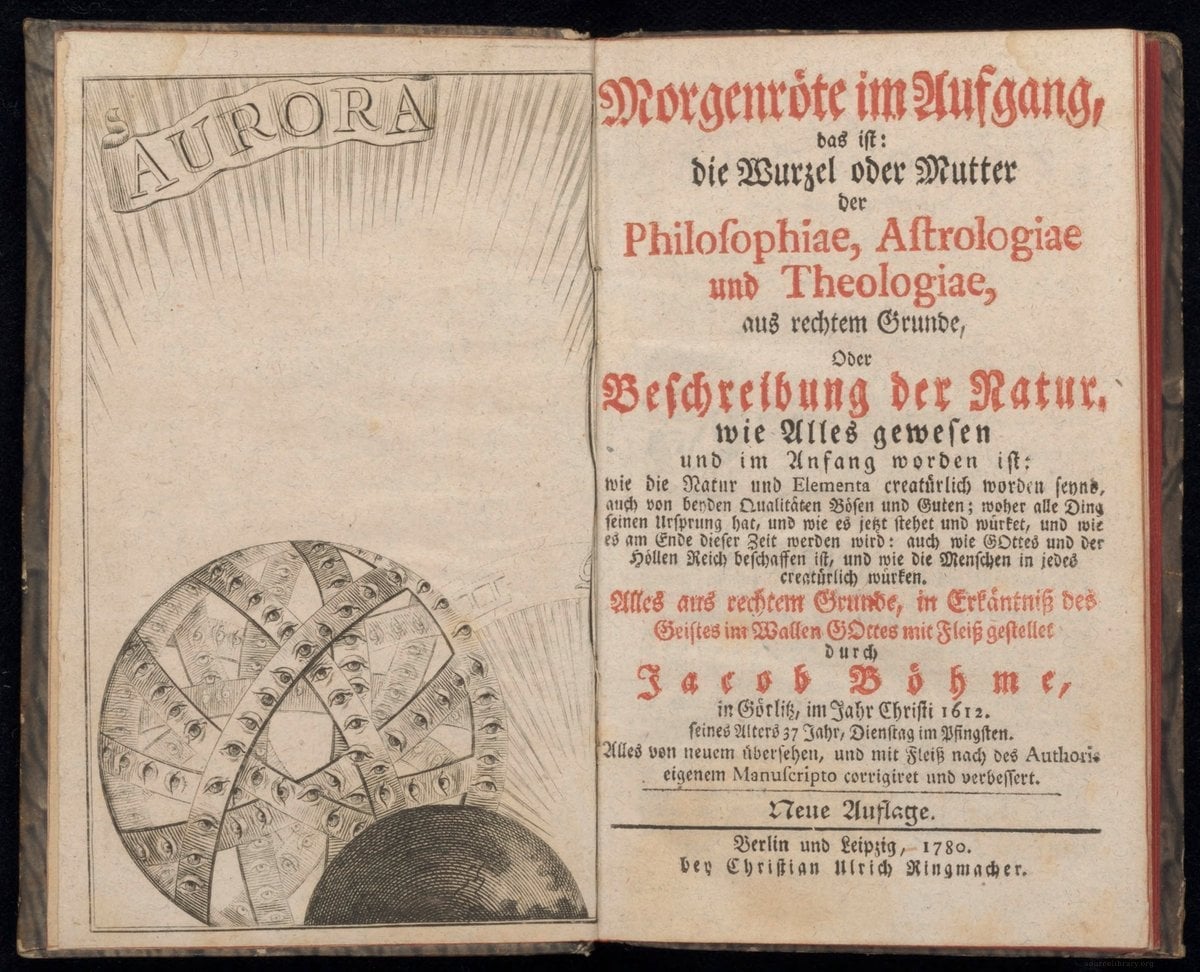
Dawn rising
Boehme, Jacob
Know Thyself
attr. Reger von Ehrenhart, Ernestus Aurelius
Fortress of Science
attr. Grick, Friedrich
Echo of the Rosicrucian Colloquy
Hilarionus, Benedictus
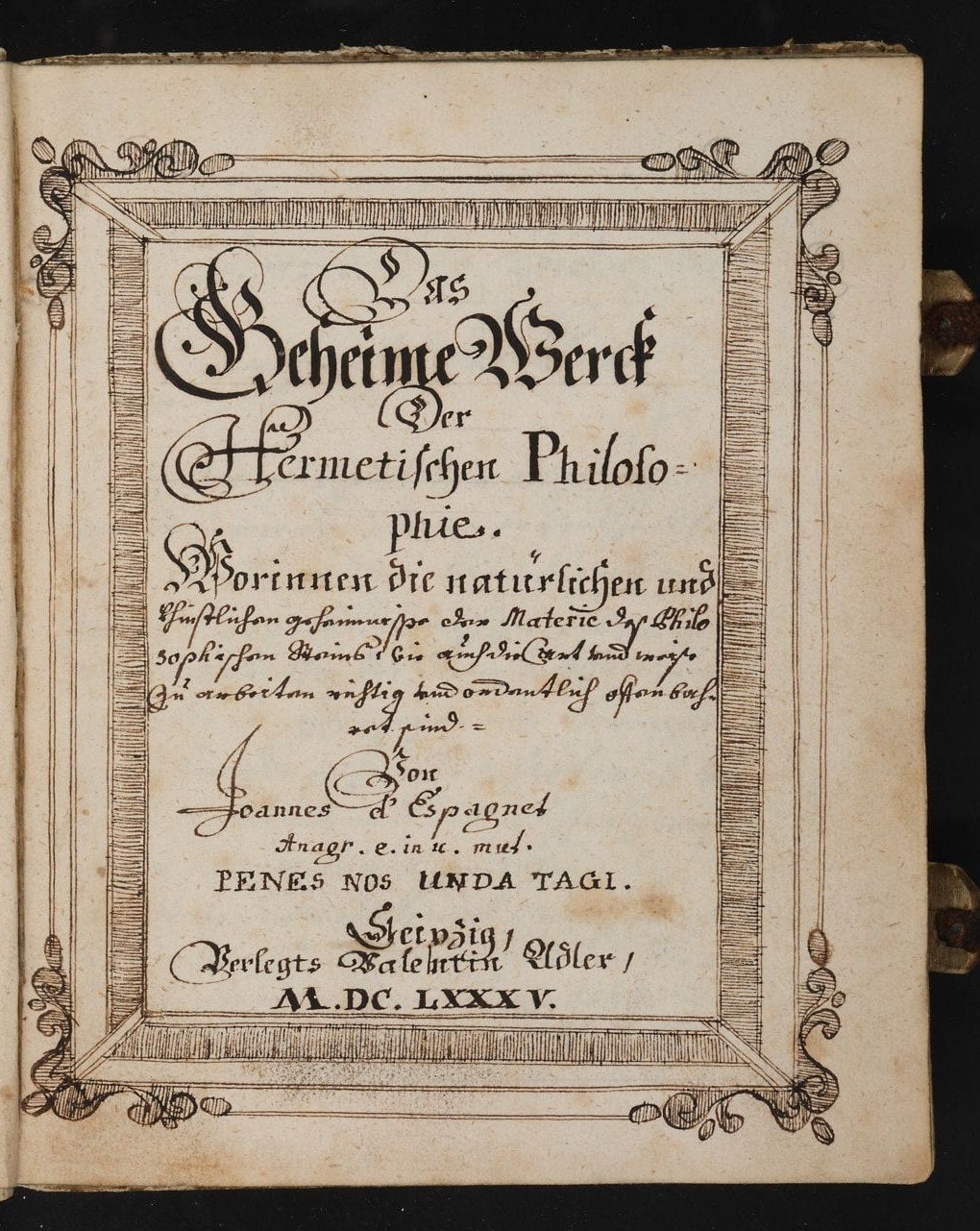
d'Espagnet — Secret Work of Hermetic Philosophy, post-1685
Jean d'Espagnet
A New Light of Alchemy
attr. Sendivogius, Michael
On the Ancient Hermetic Medicine of the Egyptians and the New Paracelsian Medicine
Conring, Hermann
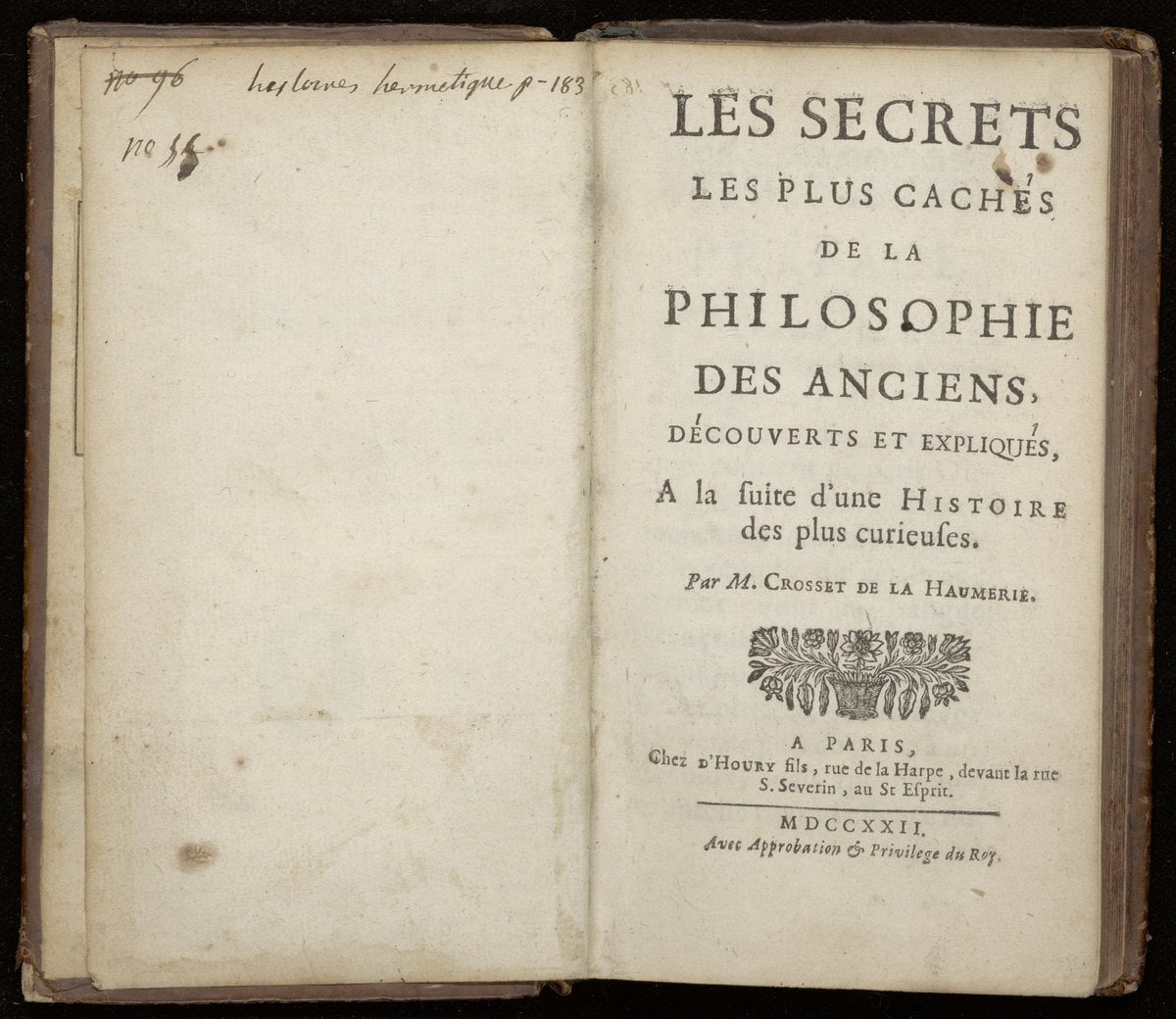
The Most Hidden Secrets of the Philosophy of the Ancients
attr. Colonne, François-Marie-Pompée
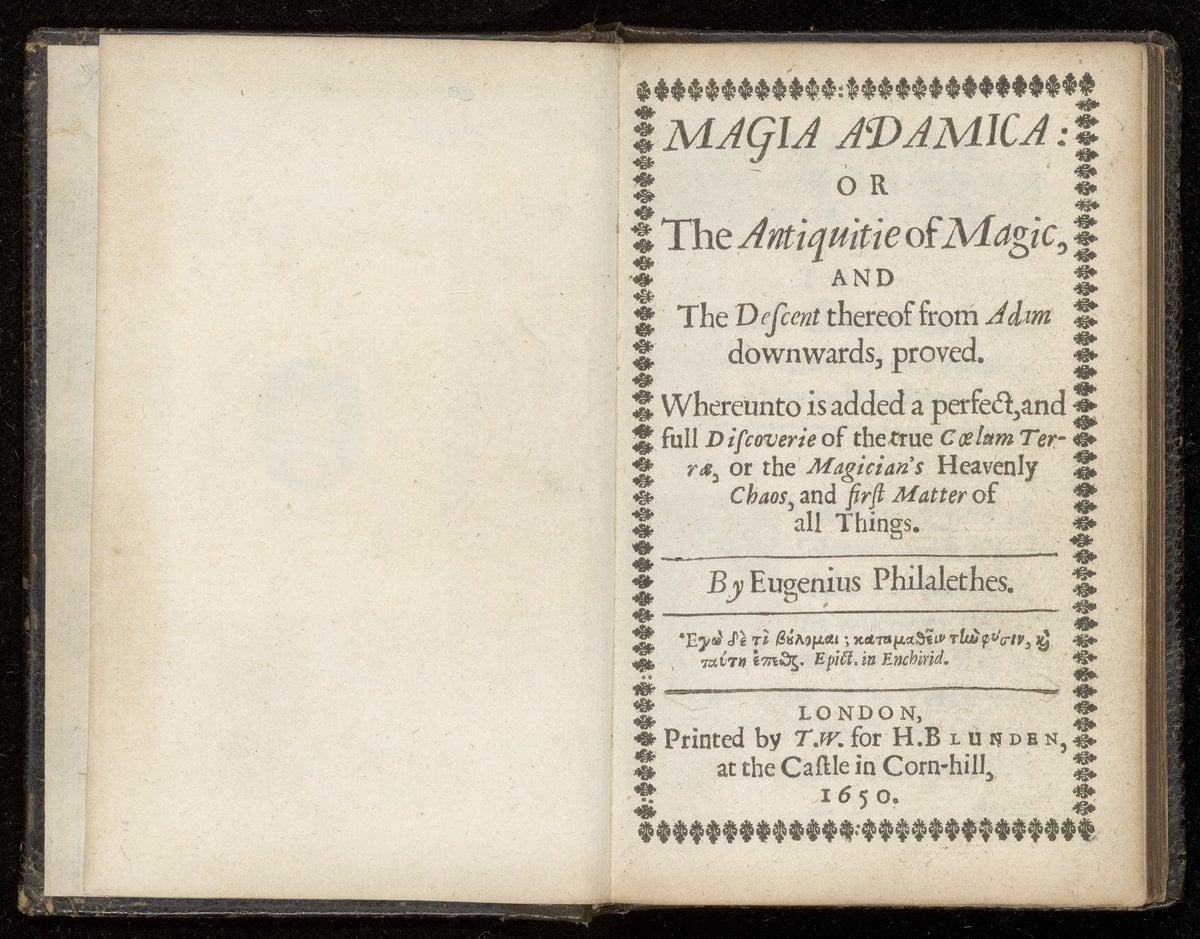
Adamic Magic, or the Antiquity of Magic
attr. Vaughan, Thomas
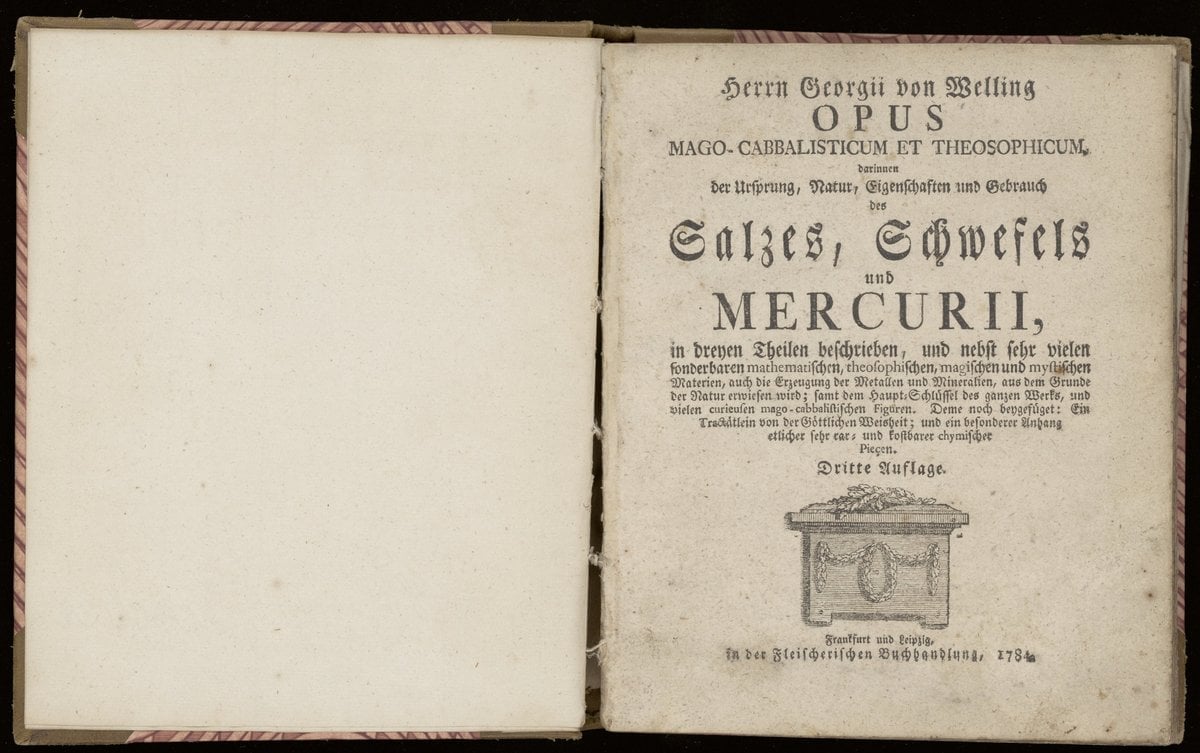
Magico-Cabbalistic and Theosophical Work
Welling, Georg von
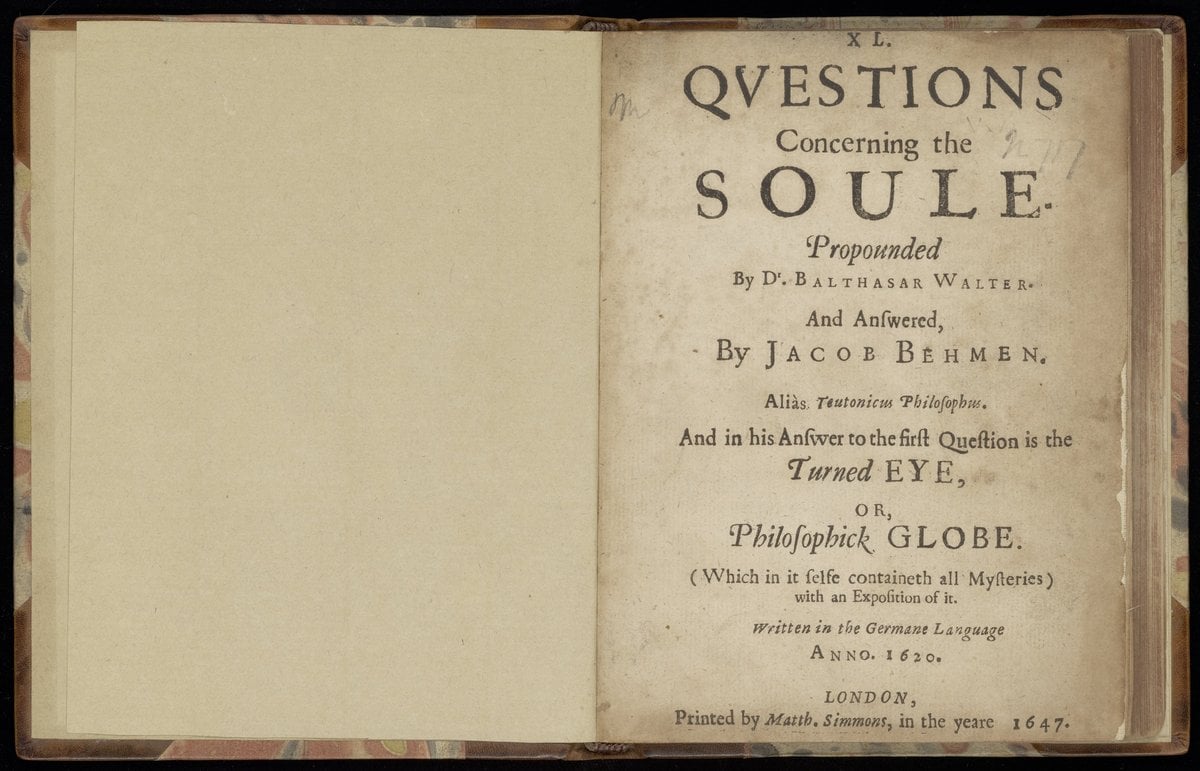
40 questions concerning the soule. Propounded by dr. Balthasar Walter
Boehme, Jacob
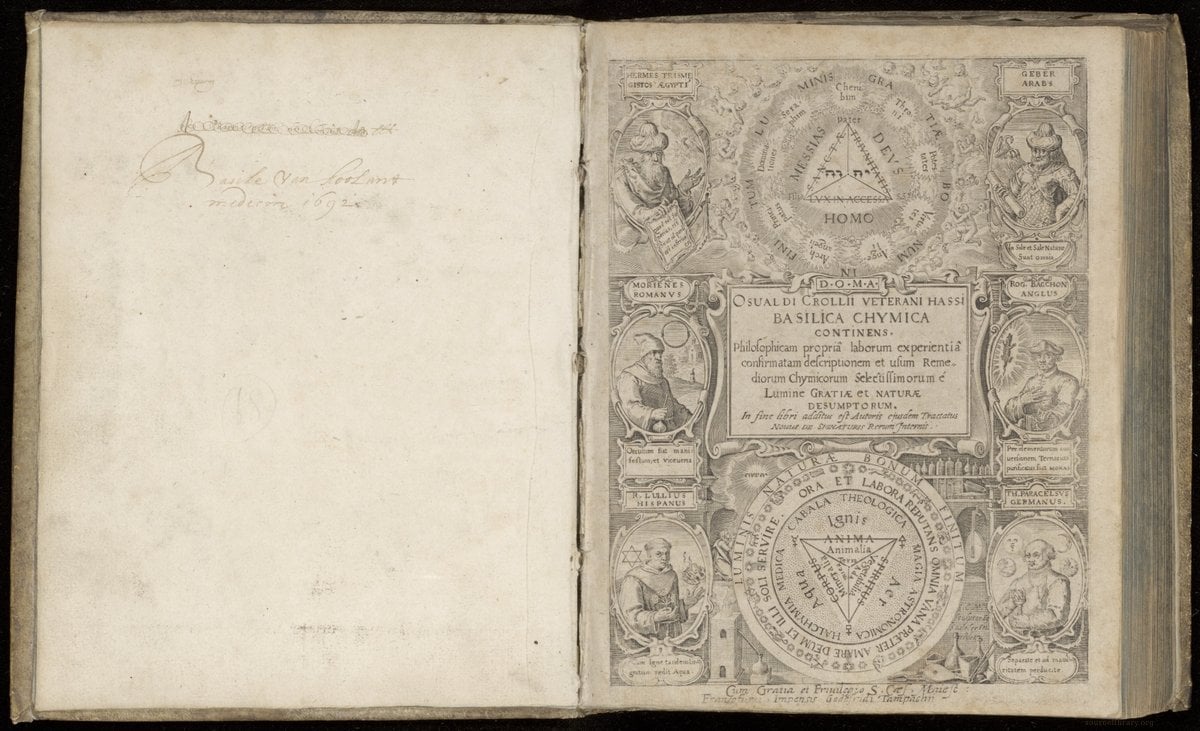
The Chemical Basilica and Treatise on Signatures
Crollius, Oswaldus
On Alchemy
Geber|Bacon, Roger|Richardus Anglicus|Calid|Hermes Trismegistus|Hortulanus